First Light Productions

investigative journalism

Posts from the “SANCTUARY” Category

Friendly encounters

Posted on November 13, 2016

Despite appearances. Unlike our current political state.

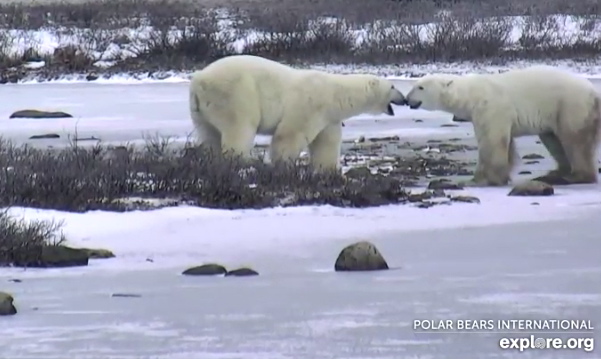
Live scenes from the annual polar bear migration to Churchill, Manitoba.

polar-bear-cam-6

Polar Bear cam

Hosted by nonprofit Polar Bears International, which is dedicated to conserving polar bears and the sea ice they depend on, and Frontiers North Adventures.

Reading, Writing and Anti-Poaching

Posted on June 1, 2014

Tisha Wardlow's avatarFight for Rhinos

According to studies, children’s academic performance in science, math, English and social sciences increase when they have experience with nature and the outdoors—not to mention their sense of ownership and responsibility to their surroundings.(Wildlife Federation)

kenyan school childrenSo it only makes sense to include conservation as part of their education. Afterall, who better to entrust our future generations of rhinos and elephants to than the children?

There are organizations throughout Africa who give the opportunity of conservation education to children. But Kenya has taken it a step further,  getting with the times by introducing anti-poaching and conservation curriculum to secondary schools in the Masai Mara and Serengeti areas.

We decided to introduce lessons on wildlife conservation to these schools to sensitise communities that neighbour the Mara and Serengeti parks on the need to end poaching. The students will visit villages to educate locals on the dangers posed by the menace,”
 said Nick Murero, the Mara-Serengeti…

View original post 178 more words

Saving sharks

Posted on May 30, 2014

Western Australia

A heartfelt film.


Shout out: Ann Novek–With the Sky as the Ceiling and the Heart Outdoors.

The Big Nasty

Posted on May 27, 2014

Wallowa County, Oregon.

Wallowa County, Oregon.

For those patient enough to read more than 140 characters, high country garbageman Rick Bombaci has some observations about man’s imprint on the wilderness.


Shout out: High Country News.

Equal Opportunity Genocide

Posted on May 25, 2014

Tisha Wardlow's avatarFight for Rhinos

Thai poaching  ring-leader Chumlong Lemtongthai Thai poaching leader-Chumlong Lemtongth

Dawie Groenewald, Sariette Groenewald Dawie & Sariette Groenewald, convicted rhino poachers from South Africa.

rhino with US flag American trophy hunters.

Kenyan poachers Kenyan poachers set to appear in Nairobi court.

Russian trophy hunter Russian trophy hunter Rashid Sardarov.

Our rhinos are dying. In Kenya and Sumatra, in Zimbabwe and Assam…killed by poachers, by trophy hunters…from Thailand, South Africa, America, Kenya, Russia, and yes…China.

It is a fact that China and Vietnam are the driving force, the demand for our rhinos’ horn. The frustration of this can become overwhelming at times, I admittedly find myself thinking…”China again?!”.  But it’s easy to confuse China for the Chinese, a.k.a. the forest for the trees. Not All Chinese use rhino horn any more than All Americans are trophy hunters.

Racism and bias are intolerable. There is no time or space for this in the fight to save our rhinos. We must set aside our differences, ignore our borders, and unite to save them. For…

View original post 29 more words

Tell Arrowhead Research to Stop Experimenting on Chimpanzees!

Posted on May 25, 2014

Ronnie's avatarRonnie's Blog

Buckshire chimps in lab cages. Cruel and needless experiments are performed on chimpanzees like 4X0139 and this one because companies like Arrowhead continue to commission them

Thirty-five years ago, a female chimpanzee—identified only as “4X0139″—was intentionally infected with the hepatitis B virus by experimenters. She was then infected with HIV, hepatitis C, and other illnesses and has been imprisoned in a laboratory for use in traumatic experiments in the decades since.

Recently, in an experiment at the notoriousTexas Biomedical Research Institute, she was injected with an experimental hepatitis B drug and then underwent repeated painful biopsies, during which pieces of her liver were removed.

This experiment was commissioned by pharmaceutical company Arrowhead Research Corporation, even though a landmark report on the scientific validity of experiments on chimpanzees concluded that “most current biomedical research use of chimpanzees is not necessary,” including for hepatitis B research. Many drug companies—including Merck, GlaxoSmithKline, Gilead Sciences, and…

View original post 53 more words

Eu Plans Drift Net Ban To Save Tuna

Posted on May 15, 2014

narhvalur's avatarAnn Novek( Luure)--With the Sky as the Ceiling and the Heart Outdoors


 1

Fishermen will be banned from using drift nets if an EU proposal gets the go-ahead

The European Union’s executive has proposed to ban the use of drift nets in EU waters and on its vessels anywhere by the end of the year to better enforce the protection of dolphins and other sea mammals, sea turtles and bluefin tuna.

Drift nets stretching for miles close to the surface are often responsible for the incidental capture and death of thousands of marine animals that are important to the ecosystem but have little commercial value.

Historically, such nets have also been used in the hunt for endangered bluefin tuna. A total ban on drift nets would make catching cheats easier. The proposal now goes to the 28 member states for approval.

The Pew Charitable Trusts said the proposal showed the EU’s “willingness to crack down on the…

View original post 230 more words

Harvard study links pesticides to bee deaths

Posted on May 14, 2014

argylesock's avatarScience on the Land

Colony Collapse Disorder (CCD) in honeybees (Apis mellifera) can be linked with low-dose insecticides. Philip Case at the UK magazine Farmers Weekly tells us about research in the States, where CCD is a huge problem. This is a serious matter for all of us because without bees, we’d go hungry.

Here’s the press release from the Harvard School of Public Health. Here’s the research paper.

Scientists fed bees low doses of two neonicotinoids in sugar-water. Then they let the bees return to foraging from their hives. The sugar-water contained two of the neonics which, since last December, are under a temporary ban here in Europe. The insecticides these scientists used were imidacloprid and clothianidin, both made by the biotech giant Bayer.

So much for the pro-neonic view that I read (I don’t recall where) dissing the science that underlies the European neonic ban…

View original post 97 more words

Legal Markets For Ivory In China And Japan Fuel The Slaughter Of Elephants

Posted on May 10, 2014

narhvalur's avatarAnn Novek( Luure)--With the Sky as the Ceiling and the Heart Outdoors

From the archives: the ivory report that changed everything

May 9, 2014

In response to devastating poaching levels in the 1980s, the international ban on elephant ivory trade went into effect after the 1989 CITES Appendix I listing of African elephants.

This landmark decision led to a dramatic reduction in elephant poaching across much of Africa as ivory prices plummeted.

A key factor in the CITES decision was the release of the EIA reportA System of Extinction: The African Elephant Disaster, which scrutinised markets in Asia, investigated rampant poaching in African countries and exposed some of the international criminals who oversaw the bloody trade.

With elephants once again being hammered by poaching as ivory demand soars, and as EIA anticipates its 30th anniversary later this year, filmmaker and EIA volunteer Danielle Kummer dipped into our extensive film archive to revisit the key investigations which made such an impact:

View original post 257 more words

A (trophy animal) picture is worth a thousand (angry, violent) words

Posted on April 27, 2014

Exposing the Big Game's avatarExposing the Big Game

original

by Kathleen Stahowski  April 21, 2014

One woman (sporting a Safari Club International cap), one gun, one dead giraffe. One pump-my-ego photo posted and then shared hundreds of times on animal rights Facebook pages, generating thousands of sad or angry comments.

Many–distressingly many–of the responses to these vile, celebratory trophy photos are vile and violent themselves. When the killer is a woman, the comments can also be terribly misogynistic: ”Stupid brainless b*tch!” “This fat ugly b*tch should be shot!” “Shoot this b*tch!” 

View original post 602 more words

Taiwan does right

Posted on April 25, 2014

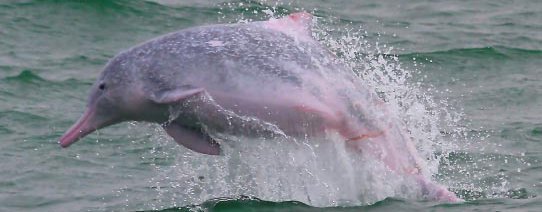
Taiwan, whose fishery is infamous for its indiscriminant use of gillnets, some miles long, on the high seas, wreaking havoc on all species of marine animals, has established a marine wildlife sanctuary off the west coast of the island to protect a dwindling population of Indo-Pacific humpback dolphins.

Indo-Pacific humpback dolphin. (Sousa chinensis)

Indo-Pacific humpback dolphin. (Sousa chinensis)

    Identified as a distinct species only a few years ago, there are estimated to be fewer than 75 dolphins in the population, and more than 30% show signs of having been caught in or injured by fishing gear. Some can be seen swimming with lines still attached to their fins and around their bodies, while others bear deep, lasting scars from previous entanglement.

    Indo-Pacific humpback dolphins are coastal animals, venturing into estuaries and mangroves. Due to their preference for nearshore waters they are especially at risk from human activities.

    The most immediate danger are the thousands of gillnets strung along the west coast of the island which are designed to catch fish by their gills but also kill dolphins and other cetaceans.

    Trawling, another kind of fishing that can cause Sousa bycatch, has been banned in much of the dolphins’ near-shore habitat, but continues illegally, often in plain sight.

    Normal fishing in the area will be unaffected, as the government said a total ban was not feasible as the success of the sanctuary depends on the cooperation of local fishermen, but guidelines have been tightened for operators in the region and there will be tough punishments for illegal fishing of the endangered species. Dredge fishing has also been banned.


    Shout out: Wildlife Extra.

Nightmares

Posted on April 24, 2014

He didn’t sign his name but I think this lament was written by Jerry Finch, whose posts never fail to impress.

Jerry Finch, President and Founder of Habitat for Horses. (Photo: Michael Paulsen/Houston Chronicle)

Jerry Finch, President and Founder of Habitat for Horses. (Photo: Michael Paulsen/Houston Chronicle)

There are times when I have to restrain myself, when it takes everything I have to stay within the limits of the law.

Pulling up to a pasture this morning, we saw four horribly skinny horses. A walk through the mud led us to a three year-old in the final stages of starvation, unable to lift his head. A few hours later the warrant was signed, the seizure completed and our part was finished. I shook hands with the officers, our friends at the SPCA, and drove off through the fog and drizzle.

It was those few hours between the first walk and the loading of the horses that got to me. Kneeling in the rain, trying to wash thick mud off the face of a dying horse, praying for his life, I tried to ignore the owners. Listening to them talk about how much they care for the horses was upsetting enough. Seeing the results of their lies, which they refused to see, is what angers me.

These horses had no grass in the pasture. None. There was a round bale of moldy cow hay, not a bit of feed anywhere. When I asked them about feeding, he said he was scared to feed them because, “They always run toward me so fast.”

He had put a dog collar on the horse that was down, tied a rope to it, tied the other end to his new pickup and pulled the horse a good 10 yards, “To see if I could get him up.”

The horse was packed in mud. Unlike them, who slept in a warm bed and had a good breakfast, they left the horse out there for days.

The excuses went on and on. I looked at their new pickup, their cell phone, their nice clothes and looked back at the dying horse that weighed half of what it should. Two bags of feed a week and a round bale of hay would have kept this horse alive and the other four halfway healthy. Less than $80 a month. His truck payments must have been five times that.

“How can people do that?” is a question I am often asked. “Why do they even bother to get a horse if they don’t care?” The questions are rhetorical, of course. There are a million answers but there are no real answers, none that would ever make sense to those of us who love these horses.
The man who taught me about the legal aspects of seizures once told me, “Don’t ever show emotion on the scene. You have a job to do, just get in there and do it. If you need to bang on the dashboard when you drive off, fine, but the crime scene is not the place to explode.”

This evening, as I’m writing this, I can’t remember what the faces of the owners looked like but I’ll never forget the face of that horse, the mud packed eyes, the skin stretched tight over the bones. That’s what nightmares are made of.

I see people at the vet’s office with their sick horse, willing to spend thousands and to do whatever it takes to bring their loved one back to health. I’ve seen a tough old cowboy break down in tears when his horse hurt her leg. We have volunteers who think nothing of walking a horse with colic at three AM, in the cold and rain, sloshing through mud. They all treat a horse like they would their own child.

Then there are the others.

A wise man once said that you have to know your enemy before you can change him. Tomorrow I might feel differently, but tonight I have no desire to know the enemy. I could not fathom that type of mind, nor do I even want to try. And I’m not going to bang on the dashboard.

Instead I’m going to go out to the barn, find the closest horse and give him a hug. I won’t tell him anything about seeing one of his kind die today or anything about one of my kind causing the death. Such things happen many times over in our world. The horse doesn’t understand why, and I certainly don’t. I will tell him that I love him, and then I’ll look into his eyes.

In that moment there is no anger. There is only deep, forgiving love. It’s there for anyone, for each of us, at any time. It comes not only from horses, but from dogs, cats, little children, big adults, all sorts of living things. But you have to care to feel it.

You have to care enough not to starve your horse to death.
Habitat for Horses

Flower World bears

Posted on April 23, 2014

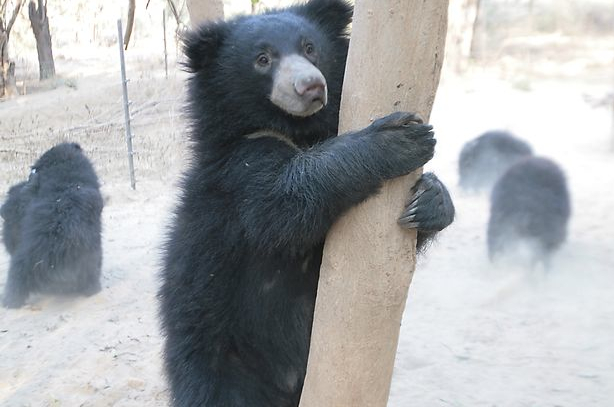
A state-owned horticulture and landscaping company in southern China, Flower World farm, has agreed to give the 130 bears used in its bear bile operation into the custody of the Animals Asia Foundation.

130 bears at Flower World Farm freed by Animals Asia.

Bears at Flower World Farm. (Photo: Animals Asia)

    The bears have been kept in tiny cages—some for up to 30 years—and milked for their bile, which is used in traditional Chinese medicines.

    Bile is obtained by cutting a hole in a bear’s stomach so fluid can drip from the gall bladder. The holes are left open, leading to infection and disease.

    Their health issues include blindness, dental problems and untreated wounds. In early May, 28 of the sickest bears will be transported to Animals Asia’s facility in the city of Chengdu for urgent medical treatment.

    Under the terms of the deal, Animals Asia will rehab the farm facility where the bears have been kept and turn it into a sanctuary.

    There are around 10,000 bears in farms in China.

Gorilla fund

Posted on April 11, 2014

A tribute to Dian Fossey.

Up close and personal with Critically Endangered mountain gorillas and the people who protect them.

Eagle cam

Posted on April 10, 2014

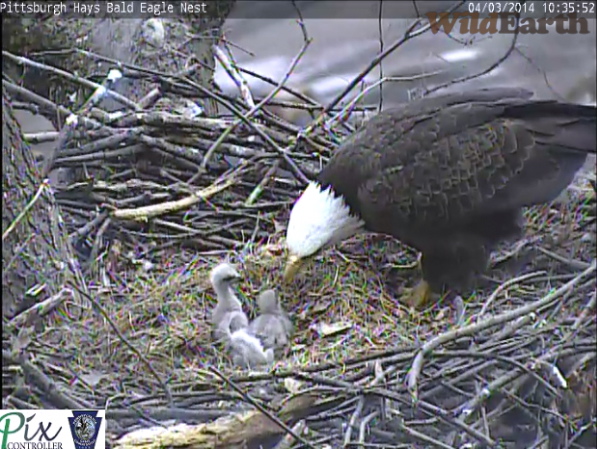
Live 24/7 from the neighborhood of Hays, about five miles outside of downtown Pittsburgh along the Monongahela River.

The parents feed the eaglets bits of fish and squirrel torn into tiny pieces.

The female laid her eggs on Feb. 19, Feb. 22 and Feb. 25. The sex of the newly hatched eaglets is unclear. It takes about 35 days for a bald eagle egg to hatch. The last egg hatched yesterday afternoon.

During the first few weeks one parent, usually the female, stays always at the nest.