First Light Productions

investigative journalism

Posts from the “SCIENCE” Category

Bad Science squared

Posted on September 25, 2016

Scientific research has been badly infected by commercialization and celebrity. An increasing amount of what is studied in the nation’s laboratories can best be described as junk science. A downward trend that has also affected the editorial content of scientific journals which have significantly lessened standards for peer review in a competition to publish studies that for all practical purposes seem to have no other value than as clickbait.

watermelon-1

Here’s a typical example: a study recently released in the journal of the American Society for Microbiology. Two years in the making, the investigation was undertaken to test the hypothesis that food dropped on the floor for less than five seconds is “safe.”

Note: beware of watermelon.


a.k.a. Burma

Posted on April 5, 2014

The first ever live-action footage of the critically endangered Myanmar snub-nosed monkey has been captured on video in Kachin state, Myanmar.

    Previously unknown to scientists, the monkey was first identified on camera trap footage in 2010. The species is listed as Critically Endangered on the IUCN Red List. An estimated 260 to 330 individuals survive in the wild.

    It’s hard to tell from the footage the number of individuals in the troupe, but judging from the bodies seen hurling themselves between trees it looks to be at least twenty, which means the video shows perhaps 10% of the world’s population of the species in one spot.

    The footage was taken by a team from Fauna & Flora International while checking on camera traps.


    Source: Wildlife Extra.com

Symptoms consistent with

Posted on January 20, 2014

A recent study has shown nearly half the bottlenose dolphins living in Barataria Bay in the Gulf of Mexico, the area oiled by the explosion of the Deepwater Horizon oil rig four years ago, were/are in guarded or worse condition.

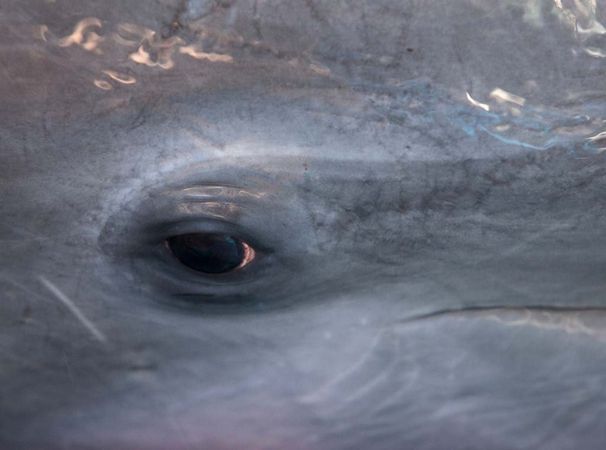
While a dolphin is examined, one researcher is told to watch its eye to make sure the mammal stays alert and interested in what’s going on as a way to monitor its vitals during the study. (Photo: Ted Jackson/The Times Picayune)

Twenty-five percent were significantly underweight. Seventeen-percent were classified as being in poor or grave condition and not expected to survive.

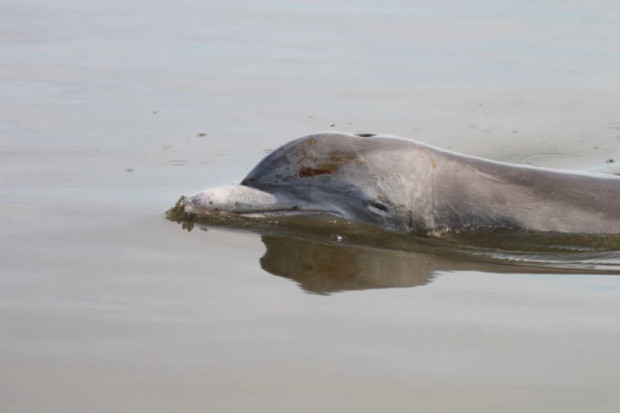
Oiled dolphin, summer 2010, in Barataria Bay, La. (Photo: Louisiana Department of Wildlife and Fisheries/Mandy Tumlin)

The findings showed unusual lung damage and very low levels of adrenal hormones, which are critical for responding to stress.

The abnormalities were not found in bottlenose dolphins tested in Sarasota Bay, Fla., chosen as a comparison site because it was not contaminated with oil.

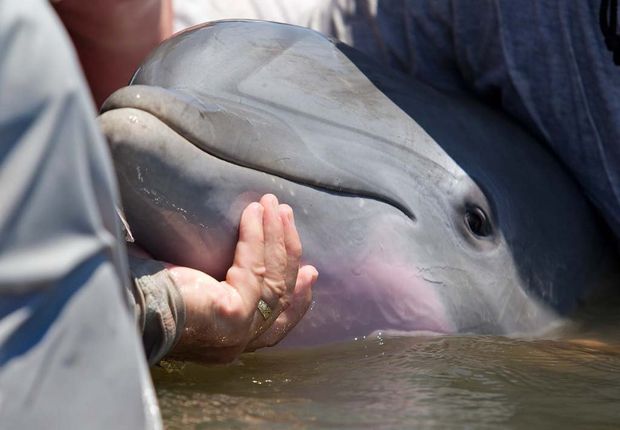
Research study, Barataria Bay, August 15, 2011. (Photo: Ted Jackson/The Times Picayune)

The explosion 40 miles off the Louisiana coast spewed over 4 million barrels of oil into the sea, spreading an oil slick across open water that covered more than 1,000 miles of coastline

The research team, composed of government, academic and non-governmental researchers, concluded that the symptoms were consistent with petro-carbon or fuel-oil contamination, and that the evidence supports exposure to the BP oil, and not to other chemicals or natural illnesses.

British Petroleum, who owned the rig, funded the study and had personnel present while the animals were examined, disputed the findings.

Condor cam

Posted on January 12, 2014

SEE it here. Best when the sun’s right.

    Lead poisoning continues to be a scourge for the big birds. Last month, Condors #340 and #444 were trapped and found to have high lead blood levels. They were both immediately transferred to the Los Angeles Zoo for chelation treatment

      Many species of wildlife feed on animals killed with lead bullets. The lead leaches into the bloodstream and they slowly die of starvation as the lead paralyzes their digestive system.

Condor 318. (Photo: Ventana Wildlife Society)

A 10 year-old male condor (#318) died after ingesting a bullet, presumably while feeding on a carcass. He was found barely alive and unable to feed or use his legs to stand. Veterinarians could not save him. A necropsy determined the cause of death was lead toxicosis. A radiograph showed multiple metal fragments and a 22 caliber lead bullet in his digestive tract.


Source: Ventana Wildlife Society.

Chimps choose their friends like us

Posted on October 30, 2013

Chimps make friends like nonhuman primates.

(Photo: Tushic-Jorg-Massen)

(Photo: Tushic-Jorg-Massen)

    Are we surprised? Read about it here.

    Animal friendships, like human friendships, are durable and pay huge dividends. Having friends with the same sensibilities is comforting.

    It also really screws with politics.


    Thanks: Nonhuman Rights Project.

Saving chimps at Gombe

Posted on October 21, 2013

At the turn of the century there were nearly 2 million chimpanzees
in the wild.

    Today
Jane Goodall, Gombe 1960. (Photo: JGI)

Jane Goodall, Gombe 1960. (Photo: JGI)

A new video

    from the Jane Goodall Institute demonstrates how technology can enable people to save habitat to save animals and help themselves in the bargain.

LOL

Posted on October 19, 2013

To all the “scientists” around the world who experiment on animals and claim their work is “ethics free” and that animals don’t have feelings….

(Photo: BBC)

(Photo: BBC)


Shout out: Andrew Sullivan.

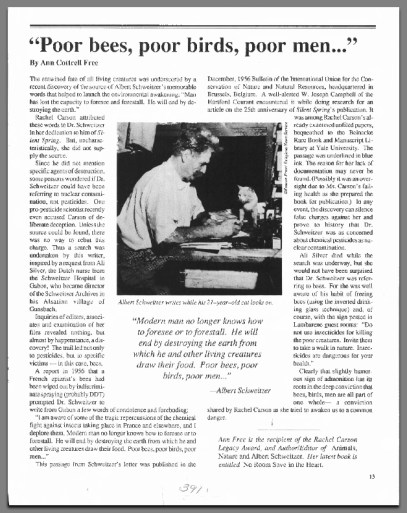
“Poor bees, poor birds…”

Posted on September 16, 2013

Upon learning of the destruction of a French apiarist’s honeybees due to indiscriminate spraying of new post World War ll chemical insecticides, Dr. Albert Schweitzer wrote to a bee keeper:

Animal Welfare Institute Quarterly, 1989.

“I am aware of some of the tragic repercussions of the chemical fight against insects taking place in France and elsewhere, and I deplore them. Modern man no longer knows how to foresee and to forestall. He will end by destroying the earth from which he and other living creatures draw their food. Poor bees, poor birds, poor men.”


Source: Animal Welfare Institute Quarterly 1989.

Acoustic wolves

Posted on July 23, 2013

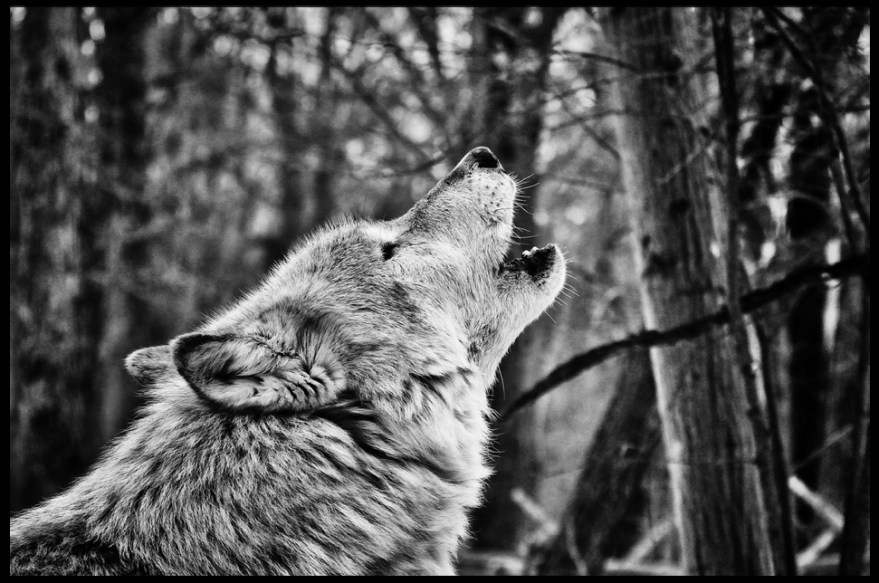
Researchers in the U.K. have designed a computer program that can read the howls of individual wolves with amazing accuracy.

(Photo: CC By-NC-ND)

    With the new program, the researchers catalogued 67 archived calls made by 10 wolves, and were able to identify the solo howls with 100 percent accuracy. In recordings where wolves howled together in groups, the program identified the source of each howl with a success rate of 97 percent.

    The method of identification measures both the pitch of a wolf’s howl and the volume. This gives conservationists a way of tracking the animals as they move with less hassle than using GPS. The system is said to be particularly useful for counting individual pack members.

    In the course of their research the team also deduced that wolves from specific areas may have regional accents.


    Get more detail here.

    Read the full study.

Winking Out

Posted on July 22, 2013

Decimated by overpopulation, pollution, boat traffic, massive dam-building, illegal electro-fishing, and habitat loss, the Yangtze River ecosystem has lost its ability to support marine life.
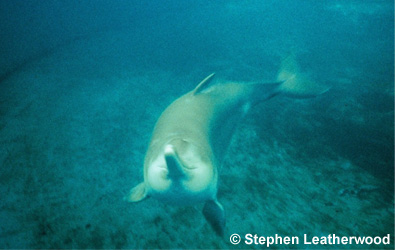
Baiji. (Photo: Stephen LEatherwood)

Six years ago, China’s most revered river animal, the baiji dolphin, a beautiful slender creature long celebrated in stories and legend as the reincarnation of a drowned princess, was declared “functionally extinct.”

The baiji

was usually found in pairs, but also in social groups of 10 to 16. They fed on small, freshwater fish, using their long, slightly upturned beak to probe the muddy river bottom.

It was long known the animal was in trouble. In the 1950’s the Yangtze supported an estimated 5,000 baiji. The population shrank to 300 in the 1980’s. Surveys in the late 1990’s found only 13 individuals. Urgent appeals for effective international action to help save the dolphin were made time and again. But what could be done…

Winked out

Meanwhile, a single male named Qi Qi survived at the Institute of Hydrobiology for more than 22 years. When Qi Qi died in 2002 he was the last of his species.
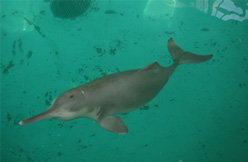
Baiji, Qi Qi. (Photo: Xiaoqiang Wang. IUCN)

Now the river is about to snuff out the Yangtze finless porpoise (Neophocaena asiaeorientalis asiaeorientalis).
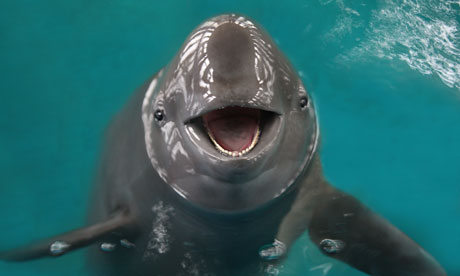
Finless porpoise in the aquarium of a conservation centre in Wuhan, Hubei province, China. (Photo: Yangtze Finless Porpoise Conservation Society)

Known as jiangzhu or “river pig”

and not least for its mischievous smile, the porpoise is reported to have a level of intelligence comparable to that of a gorilla.

Where the baiji was difficult to get close to, conservationists say the porpoise likes to interact, to chat and play.

Thirty years ago the population was estimated at 2,000. A survey last year counted only 1,000. A spike in deaths this year is causing experts renewed anxiety. At least two of the deaths were attributable to electrofishing.
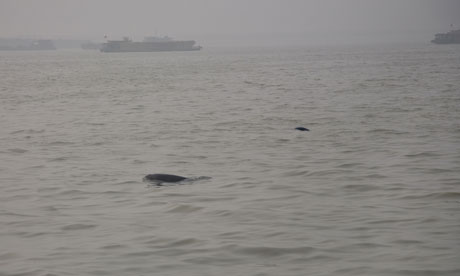
inless porpoise are seen on the busy Dongting Lake in Hunan province, China

Undated photograph. Two finless porpoise are seen on busy Dongting Lake in Hunan province, China. (Photo: Yangtze Finless Porpoise Conservation Society)

The jiangzhu

is decreasing at a rate that makes it rarer than the giant panda, China’s national treasure. The IUCN Red List has downgraded its status from Endangered to Critically Endangered. Conservationists give the dolphins only 10 to 15 years.


Annals of Game Management

Posted on July 19, 2013

Three years ago, wildlife biologists from the Texas Parks and Wildlife Department drove into the paddock of James Anderton’s Whitetail Ranch hunting reserve. Using rifles mounted on tripods they killed more than 70 of Anderton’s animals, shooting for hours, working the panicked herd back and forth across the paddock, picking them off one by one.….

A sharpshooter with the Texas Parks and Wildlife Department guns down deer at the Anderton Whitetail Ranch in 2010.

      A white helicopter with what appeared to be a forward-looking infrared camera mounted to its nose flew lazy loops over the ranch, scanning for survivors.

      Texas wildlife officials were concerned that animals in the herd might be carrying a highly transmissible killer of deer known as chronic wasting disease (CWD).

      Anderton said the deer had been bought in Arkansas, a state with no documented cases of the disease so far. But he couldn’t provide evidence of the state of origin for every animal because he was locked in prison for wildlife trafficking. The FBI and Texas Department of Public Safety had evidence that he was trucking deer in from out of state as well as capturing wild deer.

      Because CWD can be diagnosed only through autopsy, the agency concluded there was only one way to insure the animals didn’t present a disease threat: kill the entire herd.

      Max Dream, the Madera Bonita Ranch’s prized buck, is a semen-producing cash deer. (Photo: Mike Wood)

      Raising game for captive shoots

      is big business in Texas. Breeding deer with giant antlers pays off in the sale of semen and fees hunters pay to walk into a compound surrounded by high wire fence and shoot them. The fee for a prize buck ranges from $7,000 to $25,000. Proponents of the industry say it’s a business that’s keeping failing cattle ranches alive.

      The industry is growing. TPW officials say the number of game ranches is increasing along with the number of animals they’ve had to kill for wasting disease testing. In 2011 Texas wildlife agents killed almost 600 deer.

      Chronic wasting disease

      has been detected in wild populations in 22 states and in 50 different breeding farms. Little understood by researchers, the only means of controlling it is quarantine and the preemptive slaughter of deer like Anderton’s

      Test results showed Anderton’s deer were free of the disease.

      Anderton is suing, claiming the agency violated his constitutional rights by depriving him of property without due process. The complaint poses the legal question of whether the deer are considered wildlife, and thus the property of Texas? Or are they livestock belonging to Anderton?

      If TPW is ordered to compensate the him for the deer they shot, it would signal a fundamental shift in the concept of wildlife as an irrevocable public trust.

    Saving the Desert Porpoise

    Posted on July 12, 2013

    The Mexican government recently adopted important modifications to their fishing rules in an effort to save the vaquita.

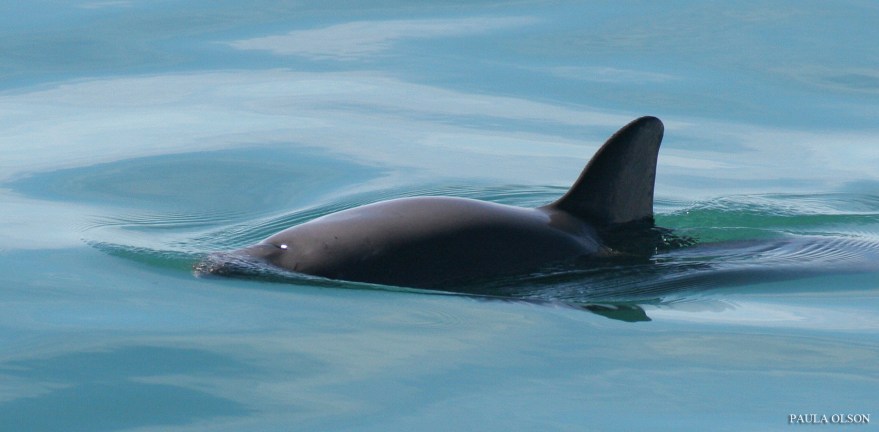
    Vaquita. Pictures in the wild are rare. (Photo: Paula Olsen)

    The vaquita is the world’s smallest (seldom exceeding four feet in length and 100 pounds) and rarest cetacean with less than 200 left alive. It lives solely in the Sea of Cortex in the upper Gulf of Mexico an area surrounded by desert on three sides.

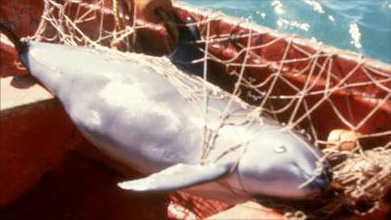
    The main threat to the vaquita is as incidental bycatch in fishing gear, especially gillnets set for shrimp by fishers in the towns of El Golfo de Santa Clara, San Felipe and Puerto Penasco. The majority of shrimp caught in the Sea of Cortez is destined for the U.S. market where it is the nation’s most popular seafood.

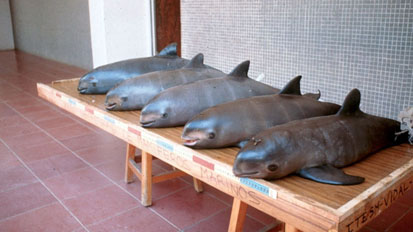
    Vaquita bycatch.

    The estimated mortality from gillnet fishing is at least 39 (and maybe as many as 84) vaquitas per year, which is shockingly unsustainable, considering that the total population is only estimated to be 200 or so individuals. The estimated minimum number of vaquita needed to maintain a reproductively fit population is fifty.

    Vaquita bycatch.

      The new rules will require a three-year progressive substitution of porpoise safe nets to replace drift gillnets, one of the main fishing gears in which vaquitas die as incidental bycatch.

    The new net is a small driftnet adapted so it can be deployed from small, artisanal fishing vessels (“pangas”). It has a number of features that exclude capturing smaller and non-target species, and engineering modifications that include a turtle excluder device and rollers and light weight materials that minimize seabed damage.

    Vaquitas, A truly tragic catch. (Photo: Omar Vidal)

      A key to making this conservation measure work is for the Mexican government and other organizations to get buy-in from from local fishermen by providing training in the use of the new light trawls and temporary compensation programs as the fishermen live on their daily sales.

        Bycatch is a problem for cetaceans everywhere. An estimated 300,000 are drowned every year in fishing gear set or drifting lost across the oceans, seas and rivers of the globe. This equates to one cetacean death every two minutes somewhere in the world.
        Go

      here

        to learn more about helping the vaquita.

      Shout Out: Wildlife Extra.

    Released

    Posted on July 10, 2013

    After weeks of rehabilitation many of the sea lions rescued from Southern California beaches earlier this year have regained their health and are being released back in the ocean.

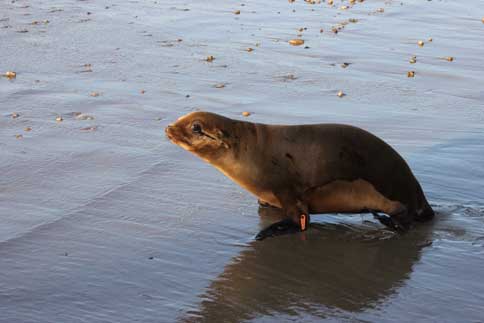
    Young sea lion pups return to the sea at Point Reyes, California, April 19, 2013. (Photo: The Marine Mammal Center)

      Between January 1 and March 24, the National Oceanic and Atmospheric Administration declared an “unusual morbidity event” during which more than 900 malnourished and weak sea lions were rescued on the region’s beaches. By early April the Marine Mammal Center was providing medical care and nourishment for 165 seals and sea lions, more rescues than in any previous year in the Center’s history.

      Sharp Scissors, one of the sea lion pups rescued from Southern California beaches, returns to the ocean at Point Reyes, CA.. May 24, 2013. (Photo: The Marine Mammal Center)

      So far there is no evidence that the large number of strandings were due to underlying primary infectious disease or toxic insult.

      Young California sea lions at The Marine Mammal Center in Sausalito, CA. (Photo: © Ingrid Overgard/The Marine Mammal Center)

      A preliminary determination of the causes of the strandings points to a simple lack of food. In particular, extremely lows numbers of sardine and anchovies last year which resulted in female adult sea lions having a difficult time providing their pups enough nourishment.

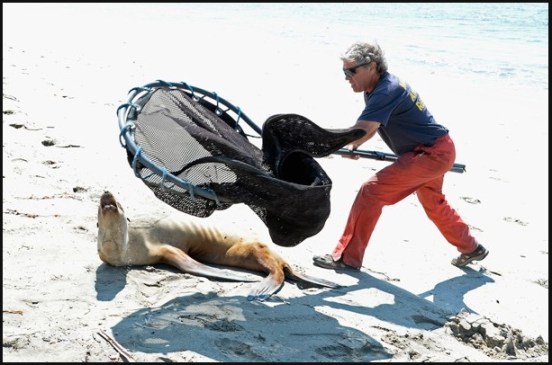
      A stranded and malnourished juvenile sea lion is rescued by Peter Wallerstein, the Marine Animal Rescue director for Friends for Animals. (Photo: Kevork Djansezian / Getty Images)

      The result was a large number of pups either underweight or weaned a month or two early. Those that survived were starving and ended up on the beaches extremely emaciated.

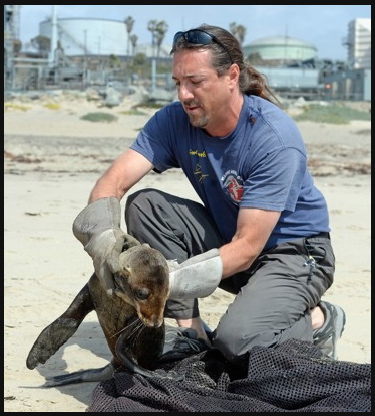
      Mike Remski of Marine Animal Rescue checks for sign of injury after rescuing a malnourished sea lion pup on Dockweiler State Beach in Los Angeles. The pup, was transported to Marine Mammal Care Center at Fort MacArthur for rehabilitation. (Photo: Kevork Djansezian / Getty Images)

      Sea lions are one of the top predators in the ocean. Their suffering is a clear sign something is very wrong with the world’s seas.


      Source: Marine Mammal Center.

    Mortality Signal

    Posted on June 24, 2013

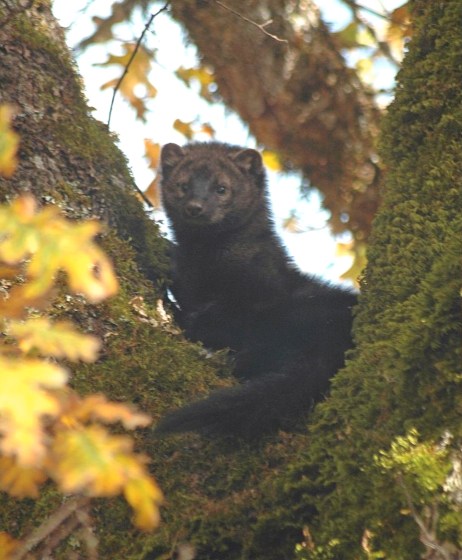
    In the spring of 2012, a mortality signal on the radio collar of a Pacific fisher sent Hoopa tribal biologists scrambling to recover the animal quickly so a necropsy could be performed to determine cause of death. The field crew found the animal wasn’t dead but lethargic and lacking coordination, lurching on the ground attempting to seek cover from the approaching biologists. Beyond help the animal was humanely euthanized.

    It was the sixth monitored fisher in California to die from rodent poison since 2009.

    Fisher in northern California forest. (Photo: J. Mark Higley)

    Necropsies and toxicological screenings of 58 fishers recovered on community and public lands in northern California revealed that nearly 80 percent of the animals had been exposed to rodenticide poisons.

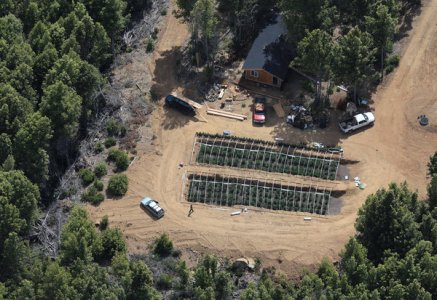
    Researchers suspected the poisonings were linked to marijuana grow sites hidden in the forest as the necropsied animals were not found near agricultural and urban areas where these types of pesticides are legally used to control pests. Their suspicions were confirmed when law enforcement officers who raided grow sites on public and tribal lands reported that marijuana cultivators routinely place pourable pesticides in open tuna or sardine cans to kill wildlife that damages their plants or raids their food caches.

    This indiscriminate use of poisons in the wilderness has led to mass wildlife killings. Officers approaching one grow site discovered a black bear and her cubs seizing and convulsing as they slowly succumbed to the neurological effects of pesticides they’d just ingested.

    More troubling, researchers’ data also showed that the fisher mortalities occurred from late April through early June, the prime-time for marijuana seedling planting and likely the period of heaviest toxicant use which is also a key time for female fishers to rear their kits. Several poisoned females left behind kits who died due to den abandonment and starvation.

      A sobering

    video

      of a poisoned fisher found by biologists.
      Some of the fishers tested positive for multiple toxic compounds, many of which have been banned for use in the U.S., Canada, and the European Union.

    Marijuana crops on private land in Humboldt County, California. (Photo: Jim Wilson/The New York Times)

    The environmental effects of the thousands of grow sites scattered across northern Califoria—tearing up of hillsides, grading the mountaintops, diverting whole watersheds and drying out creeks—is catastrophic, further imperiling salmon runs already devastated by water problems caused by logging.

    A Google Earth virtual flyover of marijuana plots and the damage they cause can be seen here.


    Source: Wildlife Society News.

    Hat tip: New York Times.

    EXTENDED FAMILY

    Posted on June 14, 2013

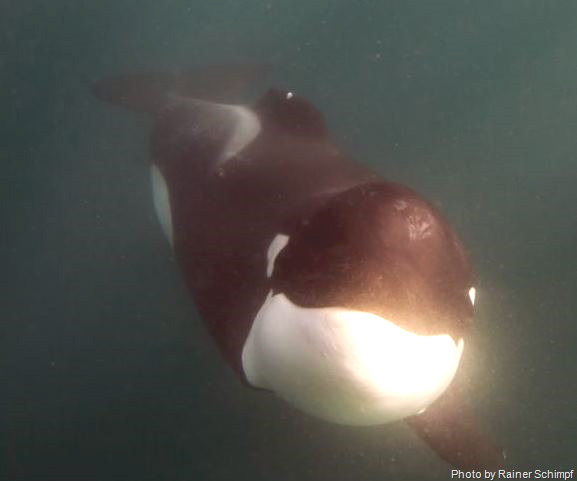
    The story of a disabled young orca.

    Face to face off the coast of South Africa.


    Source: Nonhuman Rights Project.

    CONDORS AND LEAD

    Posted on May 2, 2013

    Seven of the 80 wild condors that soar over the Grand Canyon and surrounding areas have died since December. Three of the deaths have been conclusively linked to lead poisoning from ingesting spent lead ammunition fragments in carrion. Lead poisoning is also suspected in the other four deaths.

    California condor. (Photo: Daniel George)

    California Condors are the largest birds in North America, and one of the most endangered, protected animals in the U.S. Barely more than 400 are known to exist both in the wild and in captivity. Nearly half the birds reintroduced into Utah and Arizona since 1996 have died or disappeared. The leading cause of death is lead poisoning caused by eating carrion killed by hunters using lead bullets and shotgun pellets.

    Lead poisoning is said to affect several other species, including the golden eagle and the turkey vulture, but affects the condor in particular, as they eat more and have powerful digestive systems that quickly dissolves lead which leaches into their bloodstream. The animals feel the effects within days. Lead poisoning paralyzes the digestive system often killing the animal slowly through starvation. Ingested lead is dangerous even at extremely low levels.

    The research

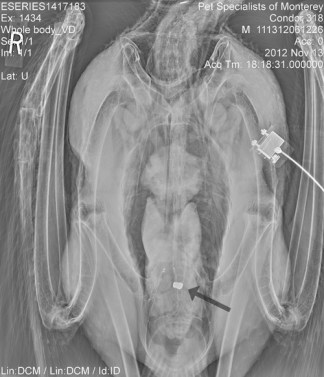
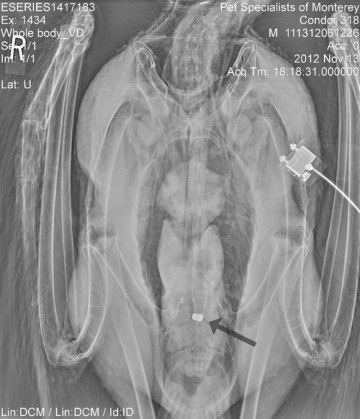
    linking lead poisoning in condors to lead from spent ammunition is conclusive. Case in point: a 10 year-old male condor (#318), found inland from Big Sur in west/central California on a ranch near Pinnacles National Park, last November. The bird was barely alive and unable to feed or use its legs to stand. Veterinarians could not save it. A necropsy determined the cause of death was lead toxicosis. A radiograph showed multiple metal fragments and a bullet-shaped object in the digestive tract. The object was removed and found to be a .22 caliber lead bullet.

    Radiograph of condor #318 with lead bullet. (Photo: Ventana Wildlife Society)

      The death of condor #318 was a huge loss for the central California population. The bird was a breeding male, the first at Pinnacles National Park in more than 100 years. With only a few breeding pairs established in the region, his loss leaves a void which might not be quickly filled. His surviving mate has left the breeding territory and it is not clear if and when she will pair with another condor and breed again. The loss of even a small number of breeding pairs, and the offspring they produce, puts the entire population at risk.

      Volunteer efforts to reduce lead ammunition around the Grand Canyon aren’t getting the job done. Most of the remaining wild Grand Canyon condors need regular, emergency blood treatment for lead poisoning to save their lives.

      About two dozen states have partial bans on hunting with lead bullets and/or shot, mostly in sensitive wildlife refuges. In California, hunting with lead bullets is prohibited in eight counties. In 2007 California passed AB 711 which banned the use of lead ammo for hunting in the roosting and scavenging territories of the condor, but the birds are still dying from ingested lead. The continuing mortality of the birds has California activists and legislators once again considering banning the use of lead ammo for hunting. A bill has been introduced to make the ban statewide. The new bill, which is expected to pass, would expand AB 711 to the entire state. A similar bill to ban the use of lead ammo for hunting was shot down in 2010. The EPA similarly rejected a nation-wide lead ammo ban in 2010.

      California condor: (Photo: The Peregrine Fund)

      The U.S. Geological Survey estimates that nationwide there are 400,000 pieces of lead shot per acre in wild game territory that can be eaten or washed into waterways, and that the 60,000 metric tons of lead fired off in 2012 is second largest use of lead behind storage batteries.

      Lead is by far the leading cause of death for the remaining 234 California condors left in the wild.


      Source: Center for Biological Diversity and Ventana Wildlife Society.