First Light Productions

investigative journalism

Posts from the “WONDERS” Category

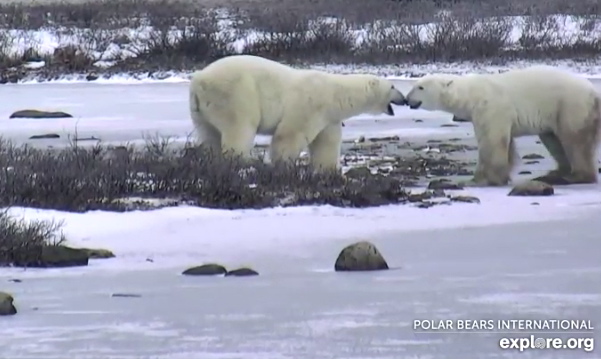
Friendly encounters

Posted on November 13, 2016

Despite appearances. Unlike our current political state.

Live scenes from the annual polar bear migration to Churchill, Manitoba.

polar-bear-cam-6

Polar Bear cam

Hosted by nonprofit Polar Bears International, which is dedicated to conserving polar bears and the sea ice they depend on, and Frontiers North Adventures.

Gorilla fund

Posted on April 11, 2014

A tribute to Dian Fossey.

Up close and personal with Critically Endangered mountain gorillas and the people who protect them.

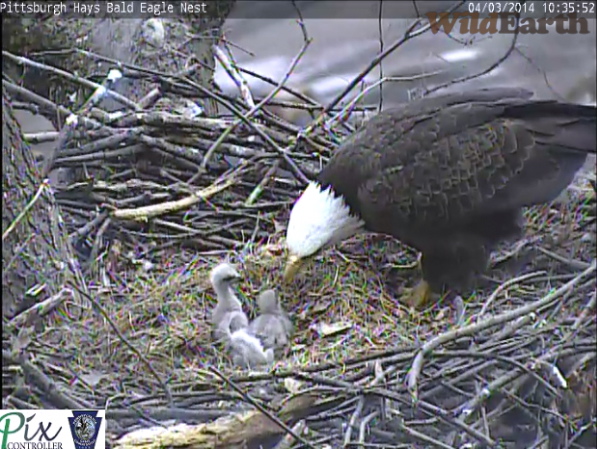
Eagle cam

Posted on April 10, 2014

Live 24/7 from the neighborhood of Hays, about five miles outside of downtown Pittsburgh along the Monongahela River.

The parents feed the eaglets bits of fish and squirrel torn into tiny pieces.

The female laid her eggs on Feb. 19, Feb. 22 and Feb. 25. The sex of the newly hatched eaglets is unclear. It takes about 35 days for a bald eagle egg to hatch. The last egg hatched yesterday afternoon.

During the first few weeks one parent, usually the female, stays always at the nest.

Small miracle

Posted on April 3, 2014

Amidst the greatest mass extinction of species since the dinosaurs disappeared 65 million years ago, there is one smallish success

Channel island fox. (Photo: George HH Huey)

Channel island fox. (Photo: George HH Huey)

    The Island Fox which had vanished from all but six of the California Channel Islands off the coast of southern California, USA on which it lives, has staged a remarkable comeback. By the mid-1990s four of the fox subspecies were listed as Endangered under the U.S Endangered Species Act. Aggressive recovery actions such as captive breeding and reintroduction, vaccination against canine diseases, and relocating Golden eagles which prey on the fox, have brought all four subspecies back to pre-decline population levels with annual survival rates above 85%.


    The latest update to the IUCN red list added more than 1,000 species, to bring total assessments to 71,500 species, including all mammals, birds and amphibians. More than a third of the species are considered under threat. About half of known reptiles have been assessed and a third of fish, but only a fraction of invertebrates, plants and fungi.

    source: Damian Carrington.


No escape

Posted on January 9, 2014

Theo has rescued–or stolen–a portrait of “a yellow finch…chained to a perch by its twig of an ankle…”

Carel Fabritius- The Goldfinch, 1654.

Carel Fabritius- The Goldfinch, 1654.

Later, wondering how much the work reflects its creator, Theo thinks, “There’s only a tiny heartbeat and solitude, bright sunny wall and a sense of no escape. Time that doesn’t move, time that couldn’t be called time.”

The Goldfinch, by Donna Tartt.


From: Francine Prose, “After Great Expectations,” The New York Review of Books, January 9, 2014.

Africam

Posted on July 11, 2013

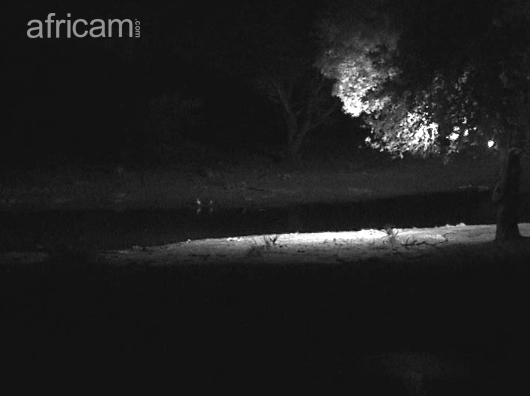
Courtesy of Elephants Without Borders.

    The date and time is in South Africa which is GMT +2. (Rough estimates on time – USA is 6 hours behind us, Australia is 8 hours ahead. UK / Europe is 2 hours behind.

Most active time for elephants at the water hole is 11:00 am to 3:00 pm but you will be able to see many other animals at different times of the day. A night light has been installed so there is 24 hour viewing.

    Sponsored by the National Elephant Park, KwaZulu-Natal, South Africa–www.tembe.co.za–and Africam in recognition of Elephants Without Borders outstanding contribution to Elephant research.

    And THERE IS SOUND!

EXTENDED FAMILY

Posted on June 14, 2013

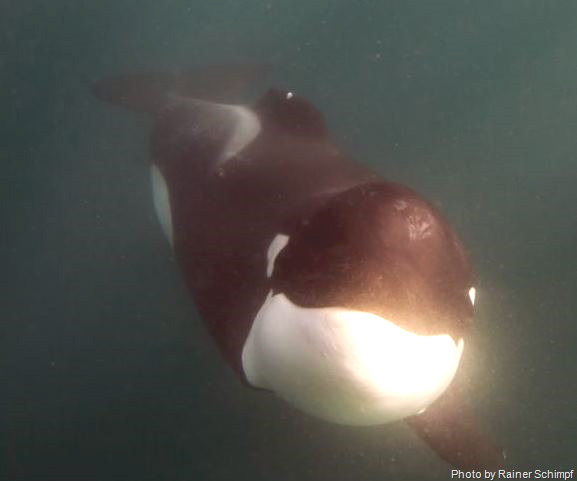
The story of a disabled young orca.

Face to face off the coast of South Africa.


Source: Nonhuman Rights Project.

WELCOME HOME

Posted on June 8, 2013

Just in, Kabang was welcomed home.

Kabang welcomed home in the Philippines, June 8, 2013.

    The family received donations from 45 countries, covering the full cost of the dog’s treatment by a team of veterinarian specialists at the University of California, Davis, in the U.S..

    Veterinary surgeon Anton Lim, who accompanied the dog to the US, said that, despite losing half her face, Kabang can still chew her food using her two remaining molars, and smell well enough to recognise her owner and handlers.

    A parade is planned in her honour in Zamboanga City on Sunday.

AGAINST THE ODDS

Posted on June 8, 2013

Kabang, the hero dog from the Philippines, was released from the veterinary medical teaching hospital at the University of California, Davis, U.S., last week and cleared to return to her family.

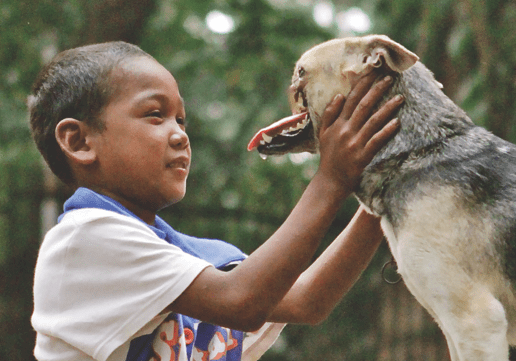
A Bunggal family member plays with Kabang in the Philippines. (Photo: provided by UC Davis)

The diminutive dog saved two young girls from an oncoming motorcycle in December 2011. The crash with the motorcycle literally ripped her face off, leaving her with a horrendous gaping wound.

Her heroism and miraculous survival captured the attention of the news media in the Philippines and hundreds of people around the world, who provided funds through the private organization Care for Kabang for her nearly eight months of treatments.

Veterinarian Anton Lim of the Philippines plays with Kabang.

The dog was brought to University of California-Davis in October last year, but university veterinarians discovered she also had heartworm disease and an infectious cancer.

A team of specialized UC Davis veterinarians was formed to coordinate Kabang’s care. Treatment for the cancer and heartworm each had to be successfully completed before dental and surgical procedures could be performed to deal with her facial wound.

Kabang healed at UC Davis.

It was not possible to reconstruct Kabang’s snout and give her a functional upper jaw so she will never look like she did before her accident. But because the facial wound has been closed, she is better protected against infection and prepared for an active life when she returns to her family in the Philippines.


Find out more about  Kabang’s care.

HOW ANIMALS GRIEVE

Posted on April 28, 2013

    In an adaptation from her new book, “How Animals Grieve” (University of Chicago Press), Barbara J. King, a professor of anthropology at the College of William and Mary, explains why grief may be an emotion many animals share.


    Source: New York Post.

FOLIAGE FOX

Posted on April 25, 2013

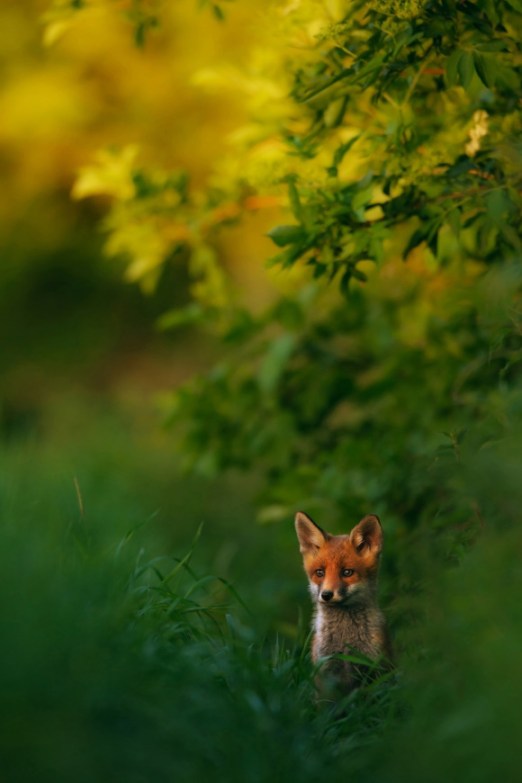
(Photo: Herman Hirsch)

Winning entry in the Society of German Nature Photographers‘ annual contest, taken by Herman Hirsch.


Source: Daily Dish.

SIBERIAN YETI

Posted on April 9, 2013

A recently released video shot in Siberia, shows a fleeting glimpse of a shadowy object moving behind snow-covered trees, that is purported to be a yeti, the Siberian equivalent of Bigfoot. (The actual video was not made available to the media.)

Purported yeti in vicinity of Kemerovo, Russia.

    Igor Burtsev, Director of the International Centre of Hominology in Moscow, who released the video, explained that it was made by three boys, some 30km from the coal mining city of Leninsk-Kuznetskiy.

    “They were walking about and noticed a chain of huge tracks in the snow. They got very inquisitive about the tracks and followed the trail, filming them on the mobile phone camera. They walked for a bit and got closer to the bushes – where suddenly they saw a Yeti, some 50 metres away from them. It noticed them as well and ran. The boys, scared, ran in the opposite direction.” Burtsev added that one of the boys, Yevgeny Anisimov, 11, who was filming the ‘creature’ – can be heard on the video shouting: ‘I am the nearest, I’m going to be eaten.’

    According to Burtsev, the incident occurred in late January. He did not elaborate on how he received the footage.

    Several sightings of the elusive creature have been reported in the Kemerovo region in the last few years.

    Last summer The Siberian Times reported that fishermen in a boat on a river near Myski village, initially mistook distant figures first for bears and then people.

    “We shouted to them – do you need help?,’ said fisherman Vitaly Vershinin. “They just rushed away, all in fur, walking on two legs, making their way through the bushes and with two other limbs, straight up the hill.”

    He said: “What did we think? It could not be bears, as the bear walks on all-fours, and they ran on two…. so then they were gone.”

    Last November hunters claimed they had discovered a yeti nest in the same area.

    Regarding the video, Burtsev insisted: “It is a first time in Russian modern history that someone manages to film the yeti so clearly. I don’t doubt it was a yeti. It stood in a typical pose with its back slightly bent, and its long arms down. It is a real, not falsified, video.
    He calls the footage, the “clearest evidence” so far of the creature’s existence.

    Burtsev and other researchers believe the region is home to around 30 of the creatures.