First Light Productions

investigative journalism

Posts from the “NEWS” Category

Curtains for monkey acts

Posted on December 15, 2013

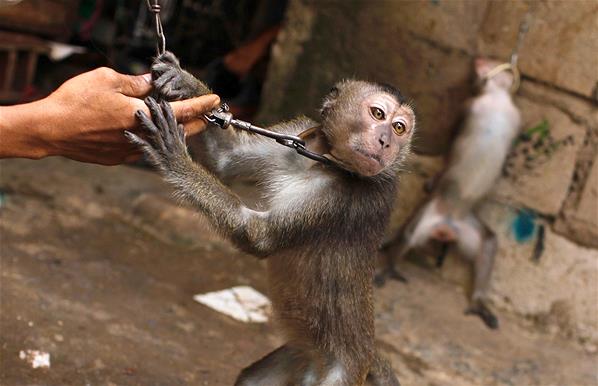
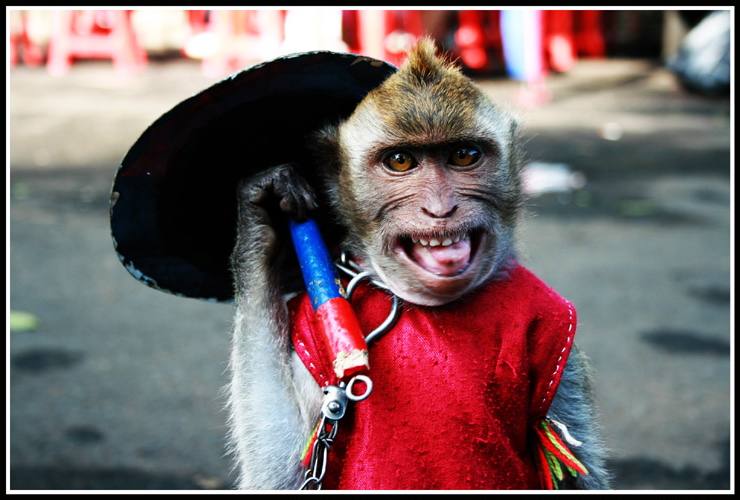
The government in Jakarta, Indonesia is cracking down on the inhuman use of monkeys as street performers, a practice that has proliferated wildly in the last decade.

Jakarta street performer. (Photo: Andy Yoes Nugroro)

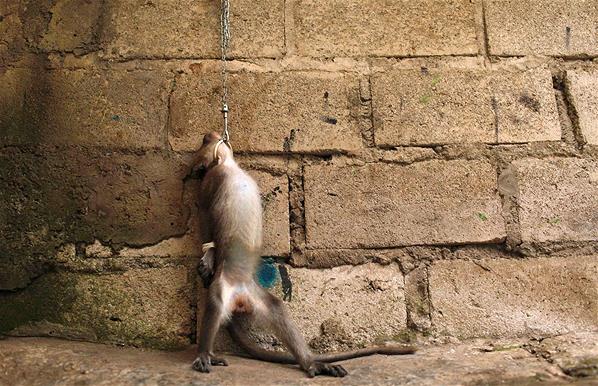
Jakarta street performer. (Photo: Andy Yoes Nugroro)

Locally called topang monyet, meaning “masked monkeys,” the animals are forced to wear doll masks and beg for money. Their training is based on pain and hunger and they are kept in horrible conditions, chained on short leashes in tiny cages or small dark boxes. Many are infected with tuberculosis and hepatitis which are passed back and forth between monkeys and handlers.

Jakarta governor Joko Widodo has announced plans to get the animals off the streets by 2014.

Jakarta, Indonesia.

Jakarta, Indonesia.

An estimated 200 to 350 topany monyet handlers were thought to be operating in Jakarta. Since the crackdown, which involves confiscation of the animals, many have been moved to other cities.

The growing proliferation of dancing monkeys is blamed on three big ‘monkey bosses’ who rent out the monkeys to street children who turn over their profits and often become indentured.

Jakarta.

Jakarta.

As inducement to surrender their animals to wildlife officials, handlers are being given compensation and pledges of job training.


Source: ANIMAL PEOPLE.

Okapia johnstoni

Posted on December 3, 2013

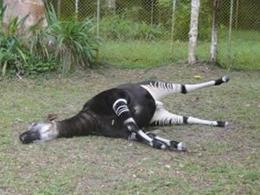
The IUCN has just listed the okapi as Endangered, only one step away from the highest risk of extinction, Critically Endangered.
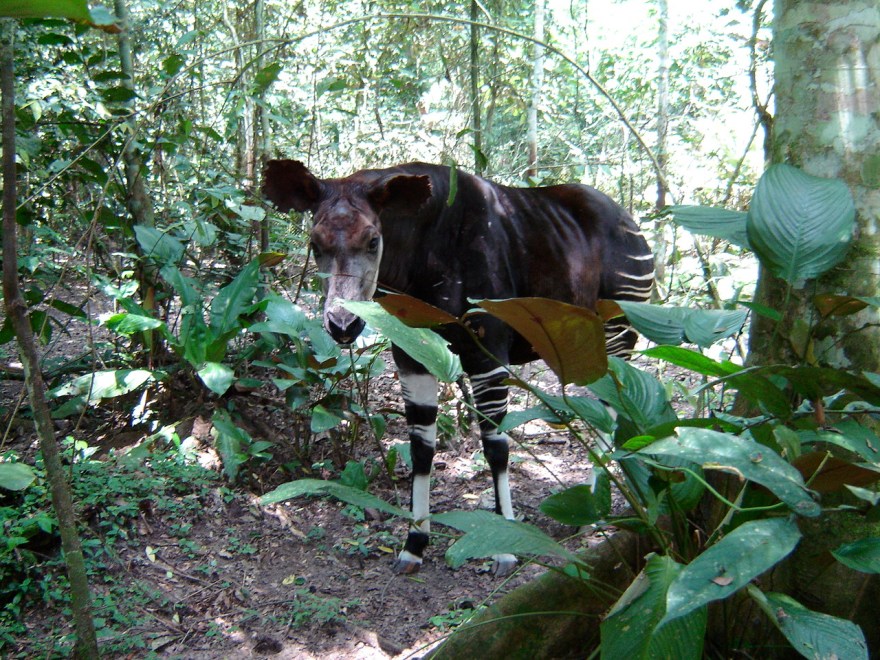
Okapi in the forest in DR Congo.

The animal wasn’t recognized by the western scientific establishment until brought to their attention by Sir Harry Johnston in 1901. I wrote about how the okapi got its (Western) name in Anatomy of a Beast:

Sir Harry Johnston…made a career in Africa during the reign of Queen Victoria. In his Book of Great Jungles, biologist and nature writer Ivan Sanderson devoted several pages to Sir Harry whom he viewed as the forerunner of a new guard of explorer: the naturalist. “Johnston went to ‘the dark continent’ on a shooting trip in 1882,” Sanderson wrote, “and stayed simply because he wanted to paint pictures and see the country, not explore for new routes or opportunities for trade.”
Against a legion of naysayers, Johnston became the first Westerner to “discover” the Okapi, an odd horse-sized mammal that resembled somewhat a zebra but shaped more like a giraffe. The reigning scientists in London finally had to admit his success when he presented them a skull and hide from the animal, which they hurriedly named Okapia johnstoni. Sir Harry collected animals for the London zoo and had his own zoological garden at home. Several of his pets accompanied him on his expeditions and, no matter the equatorial weather, he always dressed for dinner.

The elusive giraffe-like forest creature is one of the oldest mammals left on earth and nearly impossible to observe in the dense tropic forests because its sense of hearing and smell are extremely acute.

Armed conflict, human settlement, deforestation and poaching have reduced the okapi’s numbers to approximately 10,000 to 15,000 animals in the wild, down from an estimated 40,000 a decade ago.

Their last redoubt is the Okapi Wildlife Reserve in a 13,700-sq-km tract of the Ituri Forest in northeastern Democratic Republic of the Congo (DRC). Over 40% of the okapi left on earth live in and around the Reserve where the Okapi Conservation Project (OCP) works with ICCN rangers (the Institute in Congo for the Conservation of Nature) and local communities to protect the biodiversity of the Ituri Forest.

The reserve, home to significant populations of leopard, forest elephants, bonobos, chimpanzees, monkeys, peacocks, and crocodiles, became a World Heritage Site in 1996.
15 okapi among the victims killed in raid on the Epulu Breeding and Research Station, Democratic Republic of Congo.

Last September (ANIMAL POST “Men with guns” September 8, 2012), MaiMai Simba rebels, led by an elephant poacher known as Morgan, armed with AK-47 rifles, invaded the reserve’s Epulu station killed seven park staff and their family members and took others hostage. They destroyed the reserve’s infrastructure and, in a final brutal act, killed the station’s 15 okapi, who were serving as a reservoir for the infusion of new genetic stock into okapi populations in global conservation programs.

Over a year later, security and peace has begun to return to Epulu with the armed militias being run out of the Okapi Wildlife Reserve. However, the militia that conducted the raid, including its leader Morgan, remain at large.


For an update on the reserve and the okapi go here.

For more information or to donate, visit the Okapi Conservation Project.
WalmartCruelty.com

Posted on November 4, 2013

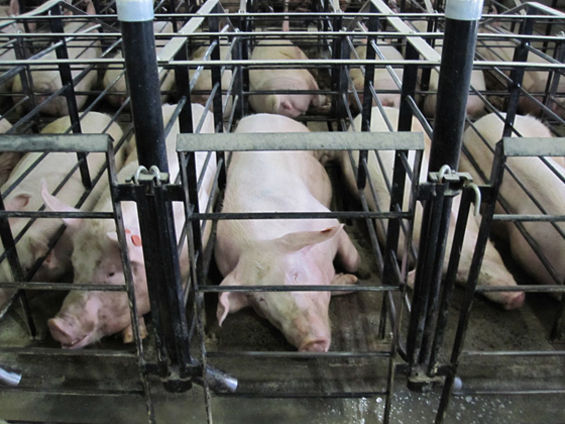
Nearly every major food provider in the United States has committed to eliminating gestation crates.

Torture plain and simple.

Not Walmart.

Tell the company how you feel here.


Shout out: The Dish.

Profiteering ivory

Posted on November 1, 2013

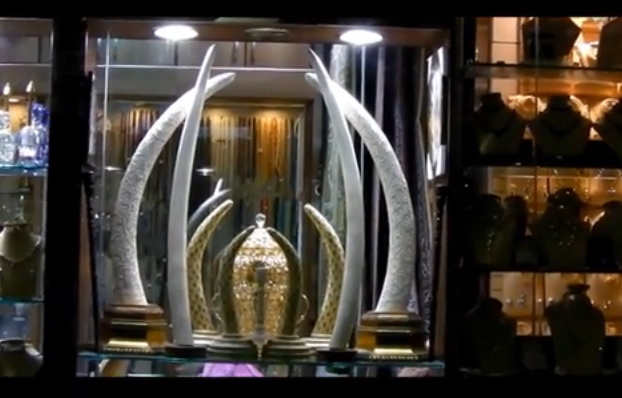
As the slaughter of elephants continues unabated, Möevenpick Hotels & Resorts in the Middle East are helping create the demand for ivory by renting shops inside their hotels to ivory traders.

Movenpick hotel ivory shop, Saudi Arabia.

      Booklets in each hotel room promote the shops.

      Meanwhile, tens of thousands of elephants are being killed every year for their tusks, and almost daily reports show the slaughter seems to be worsening.

      Contact Möevenpick Hotels and let them know how you feel about their policy.


      Source: Wildlife Extra.

Chimps choose their friends like us

Posted on October 30, 2013

Chimps make friends like nonhuman primates.

(Photo: Tushic-Jorg-Massen)

(Photo: Tushic-Jorg-Massen)

    Are we surprised? Read about it here.

    Animal friendships, like human friendships, are durable and pay huge dividends. Having friends with the same sensibilities is comforting.

    It also really screws with politics.


    Thanks: Nonhuman Rights Project.

Amur Falcon success!

Posted on October 25, 2013

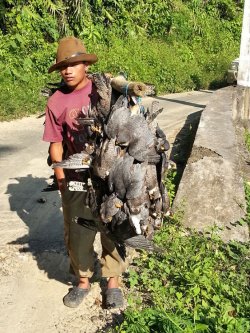
The Amur falcon migration from Siberia has arrived again in the northeastern Indian state of Nagaland.

Amur falcon. (Photo: Conservation India)

      Last year tens of thousands of the birds were trapped in nets and killed in their gathering place on the Doyang reservoir.

Last year – trapped.

This year, the Councils of three villages came together and passed a resolution making the hunting and killing of falcons a punishable offense.

Meetings were held with villagers in the district to advise them of the need to protect the birds and a number of awareness campaigns were conducted including an Animal Action Education programme for school children.

Last year. (Photo: Conservation India)

Last year. (Photo: Conservation India)

Patrols by local villagers have policed the birds’ roosting sites and brought the entrapment and killing to an abrupt stop.

Wildlife Trust of India’s Regional Head Sunil Kyarong talks to villagers about wildlife and the importance of protecting nature. (Photo: Yuri Pator)

Natural Nagas and Wildlife Trust of India (WTI) assisted the state Forest Department in mounting the campaigns.

Amazingly, many of the people helping to protect the birds are former hunters.

According to reports not a single bird this year has been killed.


Source: Wildlife Trust of India.

Killing dolphins for shark bait

Posted on October 24, 2013

Yes. Apparently, in Peru.

    As sharks don’t have enough problems–fifteen thousand a year according to this report.  Accompanying video is gruesome.

    Apparently it doesn’t matter that killing dolphins is a crime in Peru.


Saving chimps at Gombe

Posted on October 21, 2013

At the turn of the century there were nearly 2 million chimpanzees
in the wild.

    Today
Jane Goodall, Gombe 1960. (Photo: JGI)

Jane Goodall, Gombe 1960. (Photo: JGI)

A new video

    from the Jane Goodall Institute demonstrates how technology can enable people to save habitat to save animals and help themselves in the bargain.

LOL

Posted on October 19, 2013

To all the “scientists” around the world who experiment on animals and claim their work is “ethics free” and that animals don’t have feelings….

(Photo: BBC)

(Photo: BBC)


Shout out: Andrew Sullivan.

Saving animals behind bars, an oxymoron

Posted on October 14, 2013

A recent report from the British and Irish Association of Zoos and Aquariums (BIAZA) entitled “Top Ten Mammal Species Reliant on Zoos,” highlights a festering issue with critics of the zoo industry.

Critically endangered San Martin titi monkey.

Specifically, BIAZA’s claim that were it not for the work of their member zoos, the listed animals “may be lost to extinction forever.”

Putting to the side the fact we will all be lost to extinction forever, conservationists from the NGO Neotropical Primate Conservation (NPC), which operates in the Peruvian Amazon, and works extensively with one of the species on the list, the critically endangered San Martin Titi Monkey, takes the position that zoos claiming to be the last bastion of hope for any species undermines local conservation efforts.

NPC’s Project Director, Dr. Noga Shanee, PhD, said “The San Martin titi monkey is protected in seven different conservation areas under different schemes. Most of these schemes have been initiated and run by local communities. The Regional Government of San Martin and the local grassroots movement, the Ronda Campesina, are both running successful projects to control hunting and deforestation.”

Liz Tyson, the Director of the Captive Animals’ Protection Society, called the report by the zoo industry body “disingenuous” and said that it had the potential to damage in situ conservation efforts. “Zoos,” she said, “have been trying to move away from the perception that they hold animals captive for entertainment for some years by attempting to establish their work as based in conservation. But the funding that is provided by zoos to true in situ conservation projects is a pittance in comparison to the industry’s income. A report published in 2010 showed that two individual NGOs give more financial support independently of one another than all of the 300 plus members of the World Association of Zoos and Aquaria combined.”

Chris Draper, Programmes Manager from the Born Free Foundation added: “It is high time that zoos were judged on their merits, rather than on their publicity and spin. I strongly suspect that when all the facts are in, it will become clear that zoos’ role in conservation is limited at best. This should point us to the inevitable conclusion that the battle against extinction will not be won in zoos.”


Source: Captive Animals’ Protection Society.

Lifeflight India

Posted on October 11, 2013

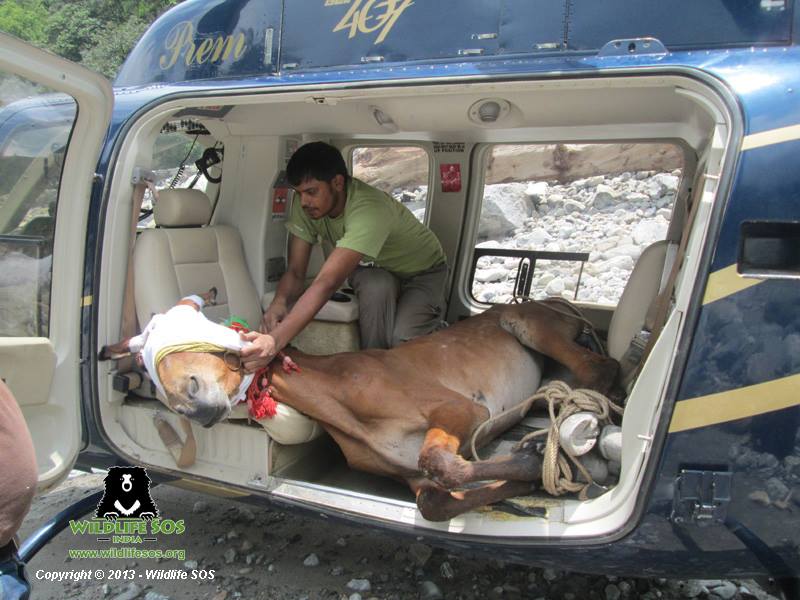
Heavy flooding near Sonprayag in Uttarakhand last July left hundreds of animals, stranded and dying.

Exhausted.

Exhausted.

    This mule, isolated on a rocky outcrop for three weeks, was rescued by Delhi based NGO’s Wildlife SOS and Friendicoes SECA.

    The animal was tranquilized and secured so it would not move and, with the help of the pilot and copilot, loaded into a helicopter.

    The groups deployed two relief teams consisting of veterinary doctors, para-vets with equine experience, farriers, and emergency drivers.


    Source: Wildlife SOS India.

Winking out in the Niger Delta

Posted on October 10, 2013

Found only in a small section of wetland marsh and swamp forests in Nigeria, the Niger Delta red colobus was wholly unknown to scientists until 1993.

Niger Delta red colobus. (Illustration by: Stephen Nash)

    Procolobus epieni is one of the most endangered primates in the world. Biologists in Nigeria estimate there are less than 500 individuals left—and they are not protected under Nigerian law.

    They hang out in large groups often with other species such as the Nigerian putty-nosed monkey and the Nigerian white-throated monkey. Few images of the red colobus exist.

    Challenges to protecting the species are huge. The Niger Delta has suffered decades of environmental ruin from poorly-managed oil exploitation. Massive oil spills are widespread. Canals and pipelines built by the oil industry have disrupted the landscape with disastrous results for wildlife. Efforts to set aside parts of the delta as protected areas have been hampered by battles over oil rights.

    The invasion of oil companies has also increased trade in bushmeat to feed workers and the colobus are easy prey.

    According to the IUCN Red List, 48 percent of the world’s primates are threatened with extinction.


    Source: Mongabay.

Bison and bees

Posted on October 9, 2013

A recent report trumpeting a broad recovery of iconic bird and mammal species across the European continent masks a deep problem.

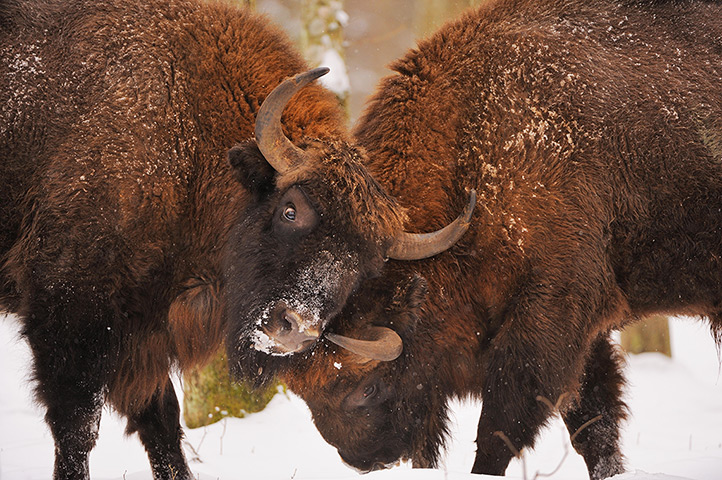
Rebound. European bison (Bison bonasus), Bialowieza forest, Poland. (Photo: Stefano Unterthiner/Wild Wonders of Europe)

Rebound. European bison (Bison bonasus), Bialowieza forest, Poland. (Photo: Stefano Unterthiner/Wild Wonders of Europe)

Good news:large, rare animals locked away in protected areas benefit enormously from conservation measures taken by organizations that can buy land and create nature reserves.

Bad news: the “return” of an impressive number of birds and mammals does not signal a turnaround. None of the featured species have become sustainable populations. Global biodiversity continues to decline dramatically.

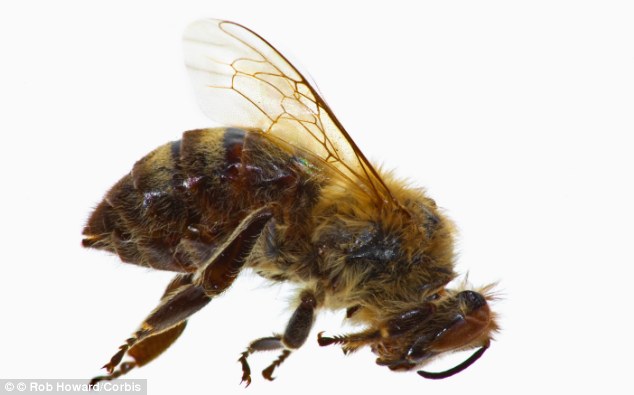
Falling behind. A dying honeybee who may have been inflicted with foulbrood disease which is killing bees in the US in Europe. 10 million bee hives have disappeared from the world in the last 6 years. EU member states have imposed a ban on classes of pesticides which are linked to massive bee die-offs.

Falling behind. A dying honeybee who may have been inflicted with foulbrood disease which is killing bees in the US and Europe. 10 million bee hives have disappeared from the world in the last 6 years. EU member states have imposed a ban on classes of pesticides linked to massive bee die-offs. (Photo: Rob Howard/Corbis)

Worse news: the more ubiquitous species, the great bulk of life on earth—common plants, common birds, common insects, killed by resource extraction, agriculture, development and artificially altering the chemical makeup of the natural world—that require large diverse habitats and vastly different measures and systems to sustain life continue to show massive declines.

Saving a select few keystone animals isn’t enough. The key factor in all the recoveries listed is the withdrawal of human influence on landscapes.

The species falling behind can only be saved through changes in public policies directed at agriculture, extraction, hunting, and solid, unequivocal protection of air and water.


Shout out: Richard Conniff.

Not Born to Perform

Posted on October 7, 2013

Animal welfare is in many ways an oxymoron when applied to China. But, as the saying goes, “it’s a process.”

Animals Asia China poster entry.

    Animals Asia recently held a competition in China for the best images to use as posters to protest against animal performances. The theme for the posters was “Not Born to Perform.” More than 2,000 people responded.

    Animals Asia sees this as indicative of changes in how people in China view animals.

    As an example, the group attributed cancellation of the 3 week long Jinan Animal Carnival Festival in Jinan, a city of 6 million in Shandong Province, to pressure from China’s growing animal welfare movement. Sponsored by the Jinan Bureau of Parks and Woods at the Quancheng Ecological Park, the festival has traditionally featured animals performing multiple times a day.

    They also noted that since the Nanjing Zoo halted its staged performances of cycling moon bears, diving pigs and tiger taming, and put an emphasis on environmental awareness and education, visitor numbers at the zoo have increased sharply.

    Animals Asia called it a “widespread awakening.” Fingers crossed….

Pelangsi

Posted on September 27, 2013

A short film follows the rescue of an orangutan caught in a snare, his rehabilitation and release back into the wild.

Pelangsi. (Photo: International Animal Rescue)

Efforts expended by groups such as International Animal Rescue to save these creatures are extraordinary. Footage of the ape moving through the trees near the end says it all.

Boycotting products containing palm oil is one thing we can all do to help the animals in Indonesia.


Shout out: Wildlife Extra