First Light Productions

investigative journalism

Posts from the “NEWS” Category

ANIMAL TESTING

Posted on April 11, 2013

Did you know?

In the United States:

(Photo: Novartis AG)

  • Most animals in laboratories are not legally protected.
  • There aren’t nearly enough inspectors to properly inspect research facilities.
  • Most inspectors aren’t empowered to do anything consequential about violations.
  • Many labs pass inspection even where appalling legal violations occur.
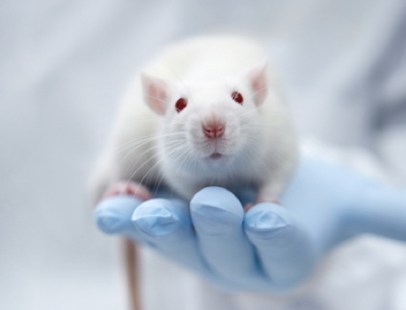
  • Alternatives to animal testing are more effective, more reliable, and more humane.

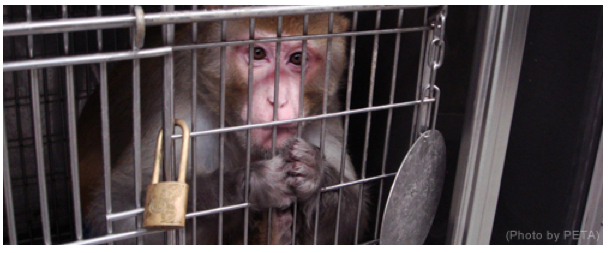
(Photo: PETA)

  • Instances of animal cruelty in laboratory testing are prolific and commonplace. Animals in labs are routinely mutilated and subjected to physical and psychological torment every day of their lives. Animals are frequently restrained and cut open without painkillers. Much of this torture is legal.
  • Legal tests include burning, poisoning, starving, forced smoking, mutilating, blinding, electrocuting, drowning, and dissecting without painkillers. For decades, cats, dogs, primates, birds, rodents, horses, goats, pigs, and other animals have been experimented on with these measures.

For anyone interested in the reality of animal testing in the U.S., this article from the Animal Legal Defense Fund is a must read.

OPEN THE SLAUGHTERHOUSES

Posted on April 10, 2013

“Ag-gag” laws, passed in three states and being considered in eleven more, aim to block or severely limit animal activists’ ability to create public relations nightmares for factory farming operations by video-taping inside agricultural facilities, such as slaughterhouses and egg, cattle, and dairy farms.

Videos released by groups like the Humane Society of the U.S., People for the Ethical Treatment of Animals and Mercy for Animals, have helped sway public opinion to approve a mounting number of state ballot initiatives that prohibit confining cages for pigs, calves, and chickens, and mistreating animals on the way to slaughter. They have also been effective in pushing big businesses like McDonalds and Chipotle to distance themselves from such practices.

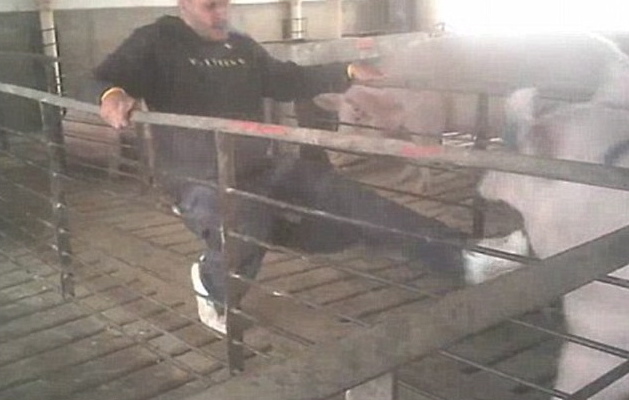
Nine Wyoming farm workers at Wyoming Premium Farms, were spotted by an undercover investigator beating pigs and tossing piglets in the air and charged with animal abuse.

An op-ed in the New York Times (firewalled) offers a challenge to proponents of “ag-gag” laws. For those who don’t have an opportunity to access the article, the points made by the author, Jedediah Purdy, a law professor at Duke, are as follows:

The agriculture industry claims that showing images to the public of how animals are raised and slaughtered is unfair, as such pictures seem to show cruelty and brutality. But the eye can be deceiving. The most humane way of slaughtering an animal, or dealing with a sick one, may look pretty horrible. But the problem with making moral arguments by appealing to revulsion is that some beneficial and indispensable acts (such as producing the food that feeds millions) can also be revolting.

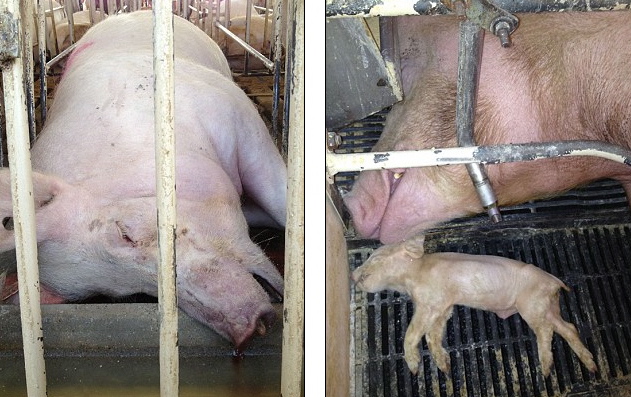
Animals at Wheatland pig farm were confined to tiny cages that did not allow them to move, left, and the HSUS investigator also spotted mummified piglets and sick sows, right.

Showing images to the public of how animals are raised and slaughtered is unfair, as “the eye can be deceiving.” The most humane way of slaughtering an animal, or dealing with a sick one, may look pretty horrible. But it’s wrong to make a moral argument against such practices by appealing to revulsion because the slaughter of anmals is a beneficial and indispensable act that serves the greater good.

Moreover, the industry says, activists are trespassers, or, when they’re employees working undercover for an animal-rights group or news organization, they’re going beyond the terms of their employment.

Undercover film posted by the Humane Society of the U.S. shows workers at Wheatland pig farm punching and kicking the pigs.

    Purdy’s answer to all this is that in order to face up to the real issues involving the raising and slaughter of livestock, confined-feeding operations and slaughterhouses should be required to install

webcams

    so consumer can judge for themselves what is going on, and that the URL’s to the video be put on the packaging in which the end product is sold. “There would be no need for human intrusion into dangerous sites,” he writes. “ No tricky angles or scary edits by activists. Just the visual facts. If the operators felt their work misrepresented, they could add cameras to give an even fuller picture.”

He adds that the images produced by the cameras might seem unfair to slaughterhouse operators because they might still appeal to emotion and prompt visceral revulsion. But “cold reason alone” is not going to reform the operations of these places—certainly not if what is going on inside these plants is invisible.


A study by researchers from Kansas State and Purdue Universities showed that meat demand went down in direct correlation to animal welfare issues being reported on in the media.

MORTALITY EVENT

Posted on April 10, 2013

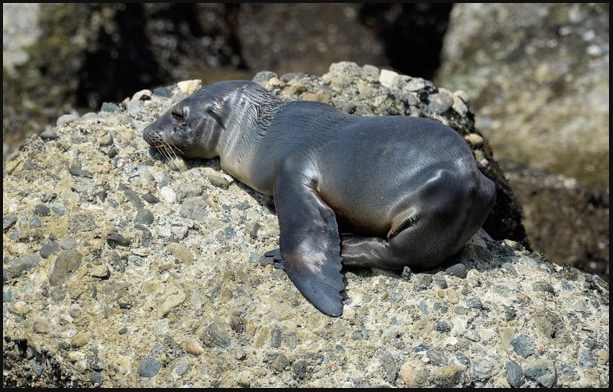
Starving sea lion pups are washing up on Southern California beaches from San Diego to Santa Barbara, in what the National Oceanic and Atmospheric Administration (NOAA) calls an “unusual mortality event.”

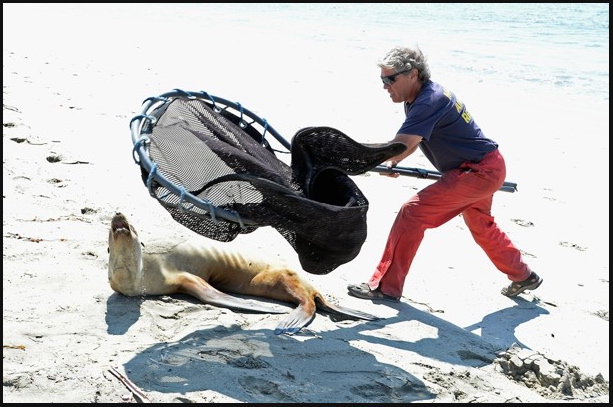
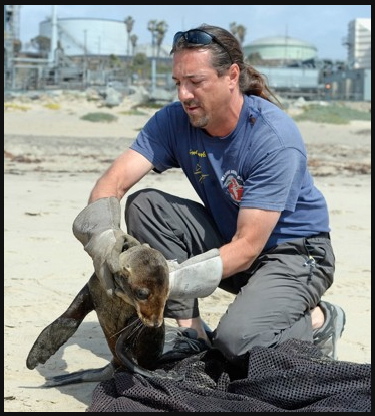
Starving sea lion is rescued by Peter Wallerstein, the Marine Animal Rescue director for Friends for Animals. (Photo: Kevork Djansezian/Getty Images).

Peter Wallerstein said he has picked up 300 sick and dying sea lion pups, after fielding calls from  residents who spot them on the beach.

Stranded and malnourished sea lion pup sits on the rocks of White Point Park before being rescued. The pup was transported to Marine Mammal Care Center at Fort MacArthur for rehabilitation. (Photo: Kevork Djansezian / Getty Images)

NOAA estimates that in the first three months of 2013, more than 900 malnourished sea lions have been rescued, compared with 100 during the same time period last year.

Mike Remski of Marine Animal Rescue checks for sign of injury after rescuing a malnourished sea lion pup on Dockweiler State Beach in Los Angeles. The pup was transported to Marine Mammal Care Center at Fort MacArthur for rehabilitation. (Photo: Kevork Djansezian / Getty Images)

The National Marine Fisheries Service says the likely cause is the loss of the smaller fish that make up the sea lions’ main diet. Why this food source has disappeared remains a mystery.

While some of the pups are taken to centers, overcrowding has forced rescuers to return some to the water.


Source: Washington Post.

SIBERIAN YETI

Posted on April 9, 2013

A recently released video shot in Siberia, shows a fleeting glimpse of a shadowy object moving behind snow-covered trees, that is purported to be a yeti, the Siberian equivalent of Bigfoot. (The actual video was not made available to the media.)

Purported yeti in vicinity of Kemerovo, Russia.

    Igor Burtsev, Director of the International Centre of Hominology in Moscow, who released the video, explained that it was made by three boys, some 30km from the coal mining city of Leninsk-Kuznetskiy.

    “They were walking about and noticed a chain of huge tracks in the snow. They got very inquisitive about the tracks and followed the trail, filming them on the mobile phone camera. They walked for a bit and got closer to the bushes – where suddenly they saw a Yeti, some 50 metres away from them. It noticed them as well and ran. The boys, scared, ran in the opposite direction.” Burtsev added that one of the boys, Yevgeny Anisimov, 11, who was filming the ‘creature’ – can be heard on the video shouting: ‘I am the nearest, I’m going to be eaten.’

    According to Burtsev, the incident occurred in late January. He did not elaborate on how he received the footage.

    Several sightings of the elusive creature have been reported in the Kemerovo region in the last few years.

    Last summer The Siberian Times reported that fishermen in a boat on a river near Myski village, initially mistook distant figures first for bears and then people.

    “We shouted to them – do you need help?,’ said fisherman Vitaly Vershinin. “They just rushed away, all in fur, walking on two legs, making their way through the bushes and with two other limbs, straight up the hill.”

    He said: “What did we think? It could not be bears, as the bear walks on all-fours, and they ran on two…. so then they were gone.”

    Last November hunters claimed they had discovered a yeti nest in the same area.

    Regarding the video, Burtsev insisted: “It is a first time in Russian modern history that someone manages to film the yeti so clearly. I don’t doubt it was a yeti. It stood in a typical pose with its back slightly bent, and its long arms down. It is a real, not falsified, video.
    He calls the footage, the “clearest evidence” so far of the creature’s existence.

    Burtsev and other researchers believe the region is home to around 30 of the creatures.


THERE’S POACHING AND THEN…

Posted on April 7, 2013

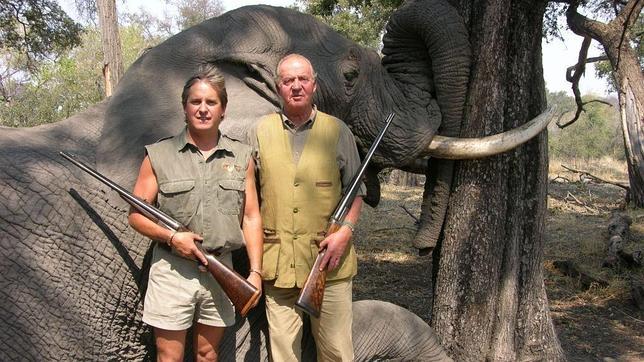
Spaniards were infuriated in April last year when it was revealed that their King, Juan Carlos, had hunted elephants in Botswana. The Spanish press played the incident as a controversy over the fact that the king took such an expensive hunting trip at a time when the country was in dire economic straits.

Juan Carlos and hunter Jeff Rann. (Photo: Target Press/Barcroft Media)

    Juan Carlos quickly issued a public apology. “I am very sorry,” he told TV cameras. “I made a mistake and it won’t happen again.”
    File this under “The 5 percent who never seem to get the news.”

      Why anyone would shoot an elephant for fun amidst Africa’s devastating epidemic of elephant poaching is disconcerting. But the story became even more disturbing when it was reported that the monarch was the honorary president of Spain’s branch of the World Wildlife Fund–WWF Espana.

      Along with South Africa, Namibia and Zimbabwe, Botswana is one of the African nations that has not prohibited elephant hunting. Regulated with quotas and licenses, the activity is a vital source of income for Africa’s national parks. Hunters pay between 7,000 and 20,000 euros for each trophy.

      In addition to the government fees, shoots with Rann Safaris, the business that outfitted the king, cost upwards of $8,700 a week, with an elephant costing a further $15,000 to kill. The aid of professional hunter Jeff Rann costs an extra $2,000 a day.

      When asked to comment on the king’s hunt, Rann said, “You have to manage the world’s animal populations to their betterment. We are trying to improve their habitat.”

      If the king has ever offered his justification for killing an elephant for fun in this day and age, it has not made its way into print.

    As the story gained momentum, reporting turned to the king’s lifelong obsession with hunting.

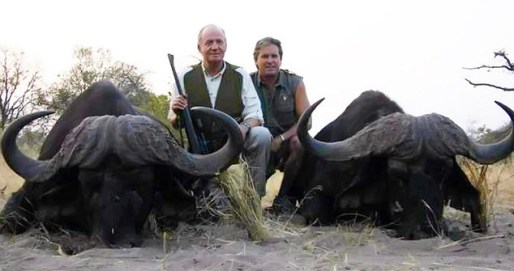
The king and Jeff Rann with buffalos. (Photo: Target Press/Barcroft Media)

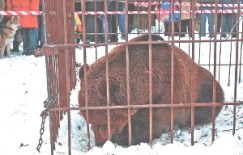
Trophy bear Mitrofan.

      It was reported in the Kommersant newspaper in Russia in 2006 that the king took part in a bear “hunt” involving a “kind and cheerful” 4 year-old bear named Mitrofan, who had been living in captivity since it was a cub, and was part of a tourist attraction in the town of Noviens. The bear was put in a cage and given “vodka mixed with honey.” The king is said to have “taken him down with one shot.”
    Several months after the king’s elephant hunt story broke, WWF in Spain removed Juan Carlos as its honorary president. In a statement the group said “the safari did not sit well with WWF goals.”

GREEN TIE

Posted on April 5, 2013

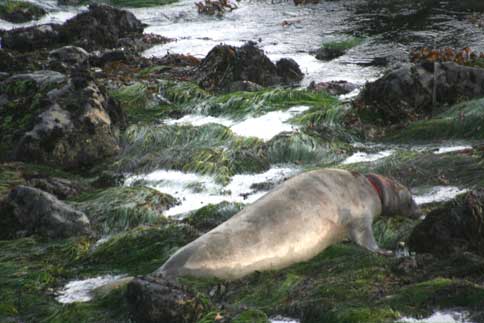
An elephant seal was spotted at Piedras Blancas near San Simeon, on the American West Coast south of San Francisco, with a green packing strap wrapped around his neck.

October 2012. Elephant seal in trouble. (Photo: Christine Heinrichs)

Perilous entanglement. (Photo: The Marine Mammal Center)

Entanglement in ocean trash is a not uncommon and deadly predicament for many marine mammals as such entanglements eventually restrict their ability to swallow or hunt effectively.

State Park rangers notified the Marine Mammal Center in Sausalito of the situation. Staff from the Center, including a veterinarian, approached the animal at low tide to give them the best chance of getting him before he made a break for the water.

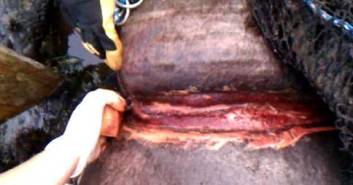
The team reported it took quite a struggle to get a rescue net over the animal. Once that was done he was sedated and the entanglement was cut away. The vet cleaned the wound, took a blood sample, and put a flipper tag on him for identification in the future if needed. They named him “Green Tie” after the green packaging strap they removed.

Cleaning the wounds. (Photo: The Marine Mammal Center)

Dr. Michelle Barbieri holds the plastic strap she removed from Green Tie. (Photo: The Marine Mammal Center)

About 20 minutes or so after he was sedated, Green Tie woke up and went back into the water.

The seal was spotted and rechecked a year later and found to be healed and healthy.

With the packing strap removed and wound cleaned, Green Tie makes his way back to sea. The salty ocean water will help accelerate the healing process. (Photo: Joan Crowder)

Organizations like the Marine Mammal Center are saving the lives of animal around the globe 24/7. They are seldom recognized for their efforts. They do it for the animals.


Source: The Marine Mammal Center (http://www.marinemammalcenter.org/)

SHOW BIZ ANIMAL CARE

Posted on March 26, 2013

The director of production in the American Humane Association’s film and television unit (AHA), filed a lawsuit December 31 last year, against her former employer and HBO, producer of the television series “Luck.”

HBO series “Luck”.

Barbara Casey, who worked for AHA for 13 years, is suing the organization for allegedly wrongfully terminating her in January 2012. She’s also suing HBO and Luck producer Stewart Productions for aiding and abetting an alleged abuse cover-up months before the series was put to sleep in March 2012.

According to the lawsuit filed in Los Angeles Superior Court, Casey says the AHA observed drugged horses, underweight and/or sick horses were routinely used for work on the show, horses were misidentified by producers so that animal safety reps couldn’t track their medical histories, and more.

According to the complaint:

“A horse named Outlaw Yodeler was killed during production on April 30, 2010.“

“A horse named Marc’s Shaddow was killed during the filming of a racing scene on March 29, 2011; the necropsy report revealed degenerative arthrosis and other pathologies inthis retired racehorse that made him unsuited for use in filming racing scenes.”

“A horse named Hometrader was killed during the summer of 2011; AHA told its representatives not to document this horse’s death because he was killed during a summer hiatus from filming and therefore “did not count.”

“A fourth horse was killed in March, 2012 leading to cancellation of the series.”

“The plaintiff complained to AHA to report the Production Defendants’ criminal acts but AHA bowed to political and financial pressure and refused to report the (illegal) conduct to the authorities. AHA instructed Plaintiff not to report such conduct. AHA engaged in efforts to conceal and cover-up the Production Defendants’ criminal activities.”

“The Production Defendants aided and abetted in Plaintiff’s termination so that the Luck production would not be made more costly, time consuming and/or otherwise disrupted.”

Casey says HBO and Stewart Productions wanted to save time and money and that rather than cooperate with AHA, the production companies pressured the organization to allow them to violate the AHA’s animal safety standards.

Filed in Los Angeles Superior Court.

In a statement to The Hollywood Reporter, HBO says: “We took every precaution to ensure that our horses were treated humanely and with the utmost care, exceeding every safeguard of all protocols and guidelines required of the production. Barbara Casey was not an employee of HBO, and any questions regarding her employment should be directed to the AHA.”

Read the Complaint Here.

As background – two months after HBO canceled the series, watchdog group PETA released documents obtained from a whistleblower that claimed trainer Matthew Chew — hired by the production company — allegedly allowed for the following to take place with the knowledge of veterinarian Heidi Agnic:

• Horses were underfed in a bid to save money, with one 300 pounds underweight, and Chew proposed covering the protruding ribs of another horse with a blanket during filming.
• Sick horses were regularly used in filming, with some ill horses disappearing from the set without explanation, and the trainer warned he could be charged with neglect.
• Improperly trained, unprepared horses were used during racing scenes, putting jockeys and the animals at risk.
• Horses were regularly tranquilized in order to keep them docile.


Source: Hollywood Reporter via Habitat for Horses.
CHAD

Posted on March 22, 2013

CHAD/March 2013.

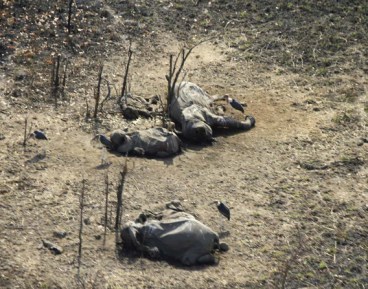
Over a two-day period a week ago, heavily armed poachers on horseback slaughtered 89 elephants near Tikem on the southwest border of Chad and Cameroon. At least 30 of the animals were pregnant. Among the victims were 12 calves.

Believed to number as many as 50, the poachers are now believed to be heading to an area closer to the border of Cameroon where upwards of 800 elephants remain unprotected.

CHAD/March 2013.

There are no reports of arrests. The massacre comes on the heels of a recent slaughter of elephants in Cameroon, which left 28 elephants dead.

The killings may have been seen as offering some sort of relief to local farmers who are unable to protect their crops and livelihoods randomly being damaged by elephant herds simply looking for food.

CHAD/March 2013.

The ivory will most likely be illegally exported to Thailand or China, where it is used to make jewelry, figurines, and souvenir trinkets.

Against this background of wanton slaughter, the Convention for International Trade in Endangered Species (CITES), which recently ended its global summit in Bangkok, pulled its punches in dealing wtih the illegal ivory trade. China, Thailand, Vietnam, Philippines, Malaysia, Kenya, Tanzania, and Uganda were ordered to submit detailed plans to stop the ivory trade in two months and to “make progress” towards these goals by the summer of 2014. Most egregious was CITES’ failure to put sanctions on the nations in central Africa where the heaviest poaching is occurring, including Gabon, Cameroon, Republic of the Congo, and the Democratic Republic of Congo (DRC).

Last year poachers killed an estimated 650 elephants in Cameroon’s Bouba Ndjida National Park. (Photo: International Fund for Animal Welfare/IFAW)

Rosalind Reeve with the David Shepherd Wildlife Foundation spoke for the majority of conservation organizations in saying that CITES’ “failure to combat the fundamental driver of the killing amounts to gross international negligence.”

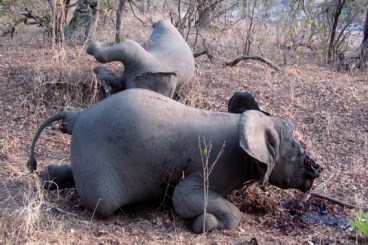
Slaughtered elephant family. (Photo: International Fund for Animal Welfare/IFAW)

The booming illegal ivory trade is decimating the world’s elephant population. A single park in Gabon, Minkebe National Park, has seen 11,100 forest elephants killed in the last eight years; Okapi Faunal Reserve in the Democratic Republic of the Congo has lost 75 percent of its elephants in fifteen years; and a new study in PLoS ONE estimates that in total 60 percent of the world’s forest elephants have been killed in the last decade alone.

CITES has sent contradictory messages on elephants by allowing one-off sales of ivory in the past that fueled demand and spread confusion about the legality of ivory in general.

One of the few bright spots for elephants came during the first day of the meeting when Prime Minister Yingluck Shinawatra pledged to end the legal ivory trade in Thailand. Currently ivory is sold domestically in the country where, experts say, it is most often bought by foreign tourists. Her declaration came after the delivery of petition signed by nearly 1.5 million people.

A monk at Wat That Thong temple in Bangkok prays for the tens of thousands of elephants poached annually. (Photo: World Wildlife Fund/WWF Thailand)

During the CITES conference, Buddhist leaders in Bangkok prayed for slaughtered African elephants.

China, where much of the illegal ivory ends up and therefore bears the main responsibility for the poaching crisis, continues to hide behind a facade of denial and has done nothing to stop the slaughter.


Source: Mongabay

BIG CAT CONFLICTS

Posted on March 18, 2013

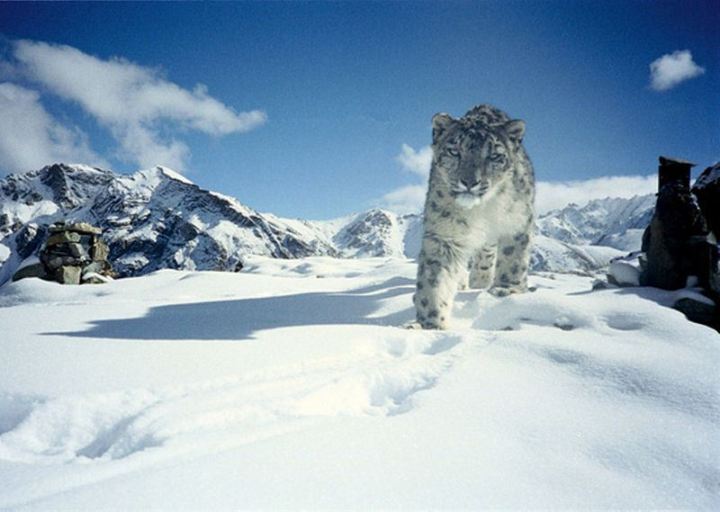
While tiger poaching is one of the world’s most highly visible conservation issues, the Environmental Investigation Agency (EIA) estimates that for every tiger poached, approximately six leopards are taken, including snow leopards.

Snow leopard.

An estimate several years ago placed the number of snow leopards in the wild at between 4,000 and 6,000 across the 12 Himalayan countries where it is found. Their numbers today are believed to be significantly lower.

The EIA believes the majority of snow leopard pelts are being harvested in China, Mongolia, India, Nepal, and Pakistan.

International Customs agents approximate that a fifth of the estimated wild population of snow leopards on the planet—over 1,000 animals—have fallen victim to illegal trade in the past dozen years.

Unusual for most endangered species, habitat degradation is not the main issue for the leopard’s declining populations. Their two gravest threats, which go hand in hand, are increased grazing which has squeezed out wild sheep and goats, their main prey species, which has led to ranchers and herders killing the cats to protect their livestock. (In Bhutan, predators, particularly leopards, protected by law, are becoming bolder, sometimes even killing cattle in their own pens. The country’s agriculture ministry has attributed wildlife predation as one of the main reasons farmers are abandoning farms and leaving their lands fallow.)

While many snow leopard killings are not motivated for sale in the illegal wildlife trade, inevitably, that is where they end up. A herder who kills a leopard and eliminates a threat to his flock and may also earn a substantial payout for his kill. A vicious cycle that bodes ill for leopards.

EXXON VALDEZ REDUX

Posted on March 18, 2013

Shell Oil’s ongoing problems in the Arctic raise serious questions as to whether the company can safely operate in the frozen north, where an oil spill could irreparably damage fragile ecosystems.

The latest slipup occurred during the final days of 2012, when the drilling rig Kulluk broke free from towropes and, after a days-long struggle, on New Year’s Eve ran aground on the uninhabited Sitkalidak Island—an Important Bird Area where more than 100,000 birds overwinter and 180,000 nest in the summer. The rig remained intact and doesn’t appear to have spilled any of its around 140,000 gallons of diesel fuel or 12,000 gallons of drilling fluids. It was subsequently towed to a bay in Kodiak Island.

The Kulluk on New Year’s Day after it ran aground on an uninhabited Alaskan island. (Photo: Coast Guard Petty Officer 1st Class Sara Francis)

In July, Shell’s other drilling rig, the Noble Discoverer, became unmoored in Dutch Harbor in the Aleutian Islands and threatened to run aground. In September, in the Chukchi Sea, an advancing ice floe forced the rig to retreat to safer waters.

The company’s numerous Arctic blunders—including other instances of mismanagement—have spurred the government to launch an urgent review that could hinder—or halt—the company’s efforts to open up waters off of Alaska’s coast to oil exploration.

The Chuckchi and Beaufort seas and their shorelines support a wide array of wildlife, including walruses, seals, bowhead whales, polar bears, and enormous numbers of birds.

The company confirmed that it was moving the Kulluk during the last days of the year to avoid paying taxes in Alaska for the vessel in 2013.


Source: Audubon

WHERE’S THE U.S.?

Posted on March 17, 2013

Nowhere to be found, as usual.

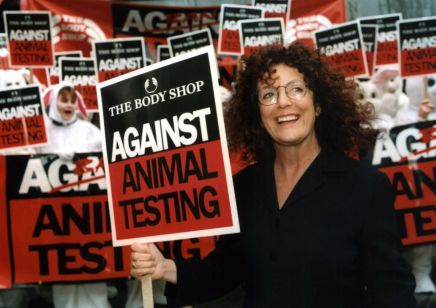
EU bans animal testing for cosmetics forever.

On March 11, the import and sale of animal tested cosmetic products and ingredients was banned in the European Union. Anyone who wishes to sell new cosmetic products and ingredients in the EU must not test them on animals anywhere in the world. The ban affects all cosmetics including toiletries and beauty products from soap to toothpaste.

ROSIE

Posted on March 16, 2013

was shot and killed by Des Moines, Washington police. Over the course of about an hour, they Tasered her twice, chased her through the neighborhood, trapped her in a stranger’s backyard and shot her four times with an assault rifle

Rosie.

The officers had responded to a report of a loose dog phoned in by a neighbor who was concerned that Rosie might get hurt. Her owners, Charles and Dierdre Wright, were out of town, and Rosie somehow got out of their yard.

After the dog was shot once, one of the officers is heard shouting “Nice!” The officer with the rifle fired three more times. Audio from a dashboard camera indicates the officers were talking about shooting Rosie within 10 minutes of arriving at the scene.

The Wrights returned home later that day unaware of what had happened to Rosie. They called friends and the police, looking for her.

Des Moines police only acknowledged they killed the dog after Charles Wright found a Taser dart on his lawn the next day and took it to the police station, seeking an explanation.

Rosie, a Newfoundland, was killed in November 2010. The Wrights sued claiming the three officers were intent on shooting the 115-pound dog soon after encountering the animal.


They were awarded $51,000, the largest settlement reached in Washington state for an animal-related litigation case. The couple are also seeking at least $90,000 in investigative and attorney fees from the city.

As with so many things these days involving firearms, there is an epidemic of police officers shooting dogs, often times for no clear reason. This appears to be one of those cases.


Source: Seattle Times

WTF IS WITH ASIA?

Posted on March 14, 2013

Every horror story

about the tragedies unfolding in the wildlife trade always comes back to Asia, particularly China.

Stolen Apes launch at CITES in Bangkok, March 3, 2013.

Out of the summit of the Convention on Trade in Endangered Species recently held in Bangkok, comes an estimate that 3,000 great apes are illegally captured each year in forests, often to be sold as pets or tourist attractions.

The illegal trade

is controlled by organized crime syndicates–the profits are as high as smuggling drugs and guns, the chances of getting convicted are far lower and, if busted, the penalties are often trivial.

A minimum of 22,218 great apes have been lost from the wild since 2005–either sold, killed during the hunt, or dying in captivity. In the same time, only 27 arrests were made in Africa and Asia in connection with the great apes trade. A quarter were never even prosecuted.

An orphaned chimpanzee in the Democratic Republic of the Congo: This male went to a sanctuary, others are less lucky. (Photo: Laura Darby/African Primates/IUCN)

Chimps and orangutans,

the most common live-traded apes, sell for hundreds or thousands of dollars. Gorillas can fetch hundreds of thousands of dollars. All this despite the fact that CITES has identified the great apes as endangered and mandated a ban on international trade in the species.
The international community needs to wake up and put some teeth in the enforcement of wildlife laws, particularly sanctions on China, Thailand and Vietnam, where, in addition to orders for primates from zoos and private owners, a vast trade in ivory, rhino horn, crocodile leather and even exotic plants is literally exhausting flora and fauna around the world.

Hopefully the scope of the lawless poaching and destruction of wildlife by organized crime and rebel militias presented at CITES, which ends today, will spur governments around the world to wake up to what is unfolding and take real action.


Source: Damian Carrington for the Guardian.

HERE FISHY FISHY…

Posted on March 14, 2013

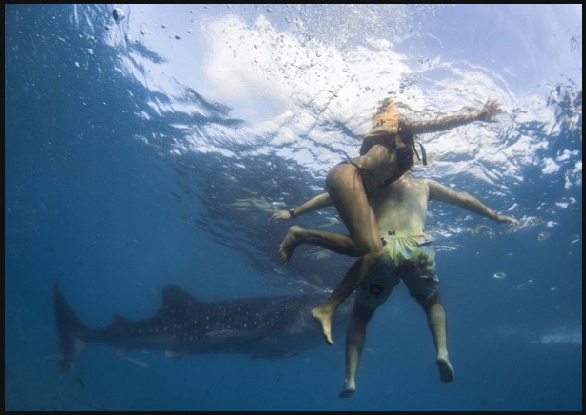
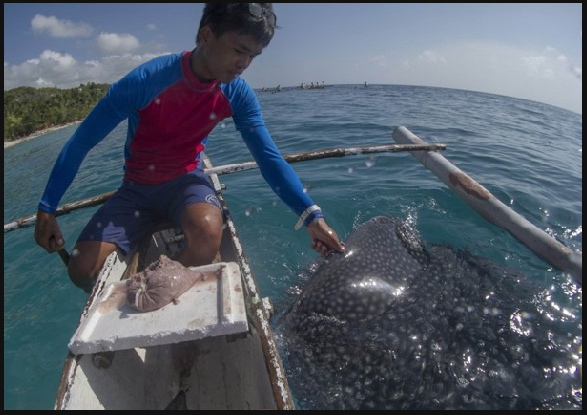
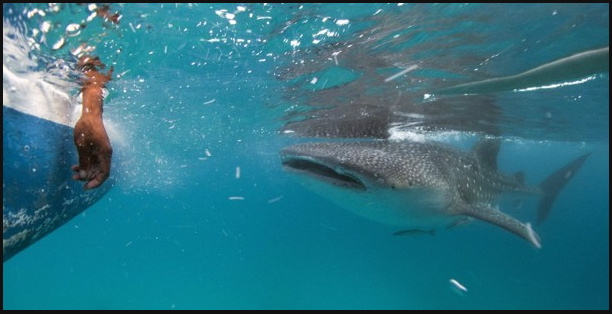
Tourists are flocking to the coastal waters of Tan-awan, on the southern Philippines island of Cebu to swim with whale sharks, the world’s largest fish.

Snorkelers watch a whale shark approach a feeder boat. (Photo: David Loh/Reuters)

Tan-awan never used to see tourists. But the sharks have brought a measure of prosperity to what used to be a sleepy village. Fishermen lure them to the Tan-awan coastline by hand-feeding them shrimp. The locals profit by acting as guides or boat pilots for eco-tourists. Most days, several hundred tourists come to see or swim with the big fish, paying about $12 to be taken out to see them and about three times that much to swim with them.

Roy Lagahid, 16, pushes away a juvenile whale shark looking for food. (Photo; David Loh/Reuters)

Some biologists decry the human-fish interaction, saying it could lead to abnormal whale shark behavior, such as aggression between them, and the spread of disease and parasites among animals brought closer together than they would typically be naturally.

Whale shark approaches a feeder boat near Tan-awan. (Photo; David Loh/Reuters)

“Some people are asking that we stop feeding, but if we stop feeding, what is our livelihood?” asks Ramonito Lagahid, an official with the local fishermen’s association.

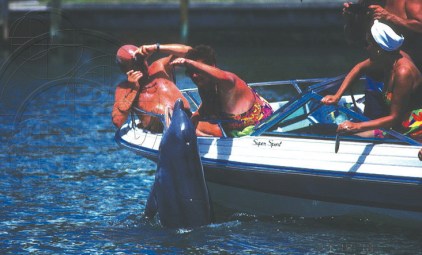
Beggar at work. (Photo: Sarasota Dolphin Research Program)

Habituation of wild animals leads to situations like what happened to a dolphin named Beggar (ANIMAL POST “Beggar” Feb. 10, 2013) who became habituated to humans in the Intracoastal Waterway in Florida in the U.S.. Beggar died prematurely. An autopsy revealed he was underweight and dehydrated—possibly because he was not eating a normal dolphin diet.

The International Union for Conservation of Nature classifies the whale shark as “vulnerable,” but the total population is unknown.


Source: WashingtonPost

SHARK PATROL II

Posted on March 11, 2013

John C. Sigler

is a former president of the National Rifle Association and current Board of Directors member. He is also a pigeon shooter.

John C. Sigler shooting pigeons. (Photo: SHARK)

The NRA

pours an extraordinary amount of time, money, and effort into supporting pigeon shooting in Pennsylvania and defeating any legislation to ban it. Now we know why: Their top leadership such as Sigler, Ted Nugent, and former NRA Board member and former president of the Philadelphia Gun Club, Leo Holt, are pigeon shooters. These men are using and abusing the name of NRA members, not to support the Second Amendment, but so that they can enjoy their private slaughter of innocent animals.


For a complete rundown on what’s happening in Pennsylvania, watch this:


Source: Showing Animals Respects and Kindness

D-CON XXX

Posted on March 9, 2013

New super-toxic rat poisons are indiscriminately killing hawks, owls, eagles, foxes, bobcats, mountain lions and other non-targeted wildlife.

This gray fox tested positive for three types of rat poison. It died within 24 hours of arriving at the Wildcare animal rehabilitation center. (Photo: Melanie Piazza/Wildcare)

Developed with a longer half-life to overcome the resistance mice and rats have built up to older poisons, the new compounds being pushed by pesticide manufacturers have been wreaking havoc on the rodents’ natural predators.

The California Department of Fish and Game (CFG) has confirmed 240 cases of non-targeted wildlife being exposed to the anticoagulants that work by causing animals to bleed to death.

Wildcare animal hospital in San Rafael, California has found that 74% of the predators that come through its doors test positive for rat poison.

This includes the San Joaquin kit fox, the coyote, red fox, gray fox, black bear, badger, fox squirrel, mountain lion, bobcat, golden eagle, great horned owl, barn owl and turkey vulture.

CFG recently urged the California Department of Pesticide Regulation to restrict the sale of the rodenticides mostly to professional pest-control operators, rather than making them available to urban and suburban homeowners.

The U.S. Environmental Protection Agency has been pushing to ban the sale of the super-rodenticides to consumers and to restrict how they’re stored and used.

In the American tradition, manufacturers are pushing back with lawyers and lobbyists.

In a connected development.

Dateline, Los Angeles — A necropsy performed on a young female mountain lion by the California Animal Health and Food Safety Laboratory and UC Davis, detected exposure to two anticoagulant compounds commonly found in rodent poison.

Puma-25, about 1 year old, appeared in a photo taken by a remote camera in 2012 in the Santa Monica Mountains. (Photo: National Park Service)

Anticoagulants can cause uncontrolled bleeding and have been confirmed as the cause of death of two other mountain lions in the Santa Monica Mountains during the last decade. Mountain lions may ingest poisons when they eat animals that have consumed them.


Source: LA Times

HUNTING ALLOWED

Posted on March 8, 2013

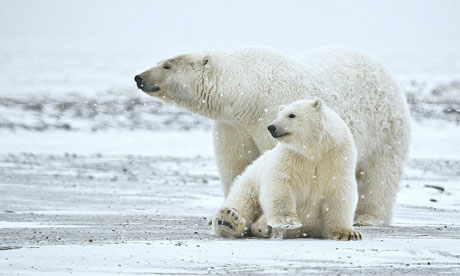
Bangkok, March 7, 2013 — After bitter debate, a proposal by the U.S. at the 178-nation meeting of the Convention on Trade in Endangered Species (CITES) to stop hunting and commercial exploitation of polar bears was rebuffed by Canada.

(Photo: Ho/Reuters)

Delegates were essentially asked the question: is the future threat to polar bears from the rapid melting of sea ice by global warming so great that the additional pressure of hunting the bears be outlawed?

The US, allied with Russia, argued yes. They said the science showed two-thirds of the 20,000-25,000 polar bears will disappear by 2050. In fact, since that work was done, it has got even worse as 2012 saw record low Arctic ice.

Canada – home to two-thirds of the world’s polar bears and the only nation allowing exports – argued there is not enough scientific evidence to show they are in danger of population collapse. Canadian representatives said the country already has strict rules to ensure hunting is sustainable. The Canadian delegation leader dismissed the U.S. proposal as “based more on emotion than science.”

Final count: 38 countries voted for the bears, 42 against, 46 abstained.

About 600 polar bears are killed each year in Canada, some in traditional hunts by Inuit people and some as trophies for foreign hunters. Half the bears are then exported as skins or other body parts.

The debate split conservation groups. The World Wildlife Federation (WWF) supported Canada, saying that making political decisions without enough scientific evidence would severely undermined the CITES system, which controls all wildlife trade. Others including International Fund for Animal Welfare (IFAW) and the National Resources Defense Council (NRDC) said the science was clear that two-thirds of the existing bears would be extinct by 2050.