
Wild horse gather.
A perspective by Nevada columnist George Knapp, describing the BLM’s wild horse program, goes to the rotten heart of the federal government’s approach to, well, a lot of things.
Wild horse gather.
A perspective by Nevada columnist George Knapp, describing the BLM’s wild horse program, goes to the rotten heart of the federal government’s approach to, well, a lot of things.
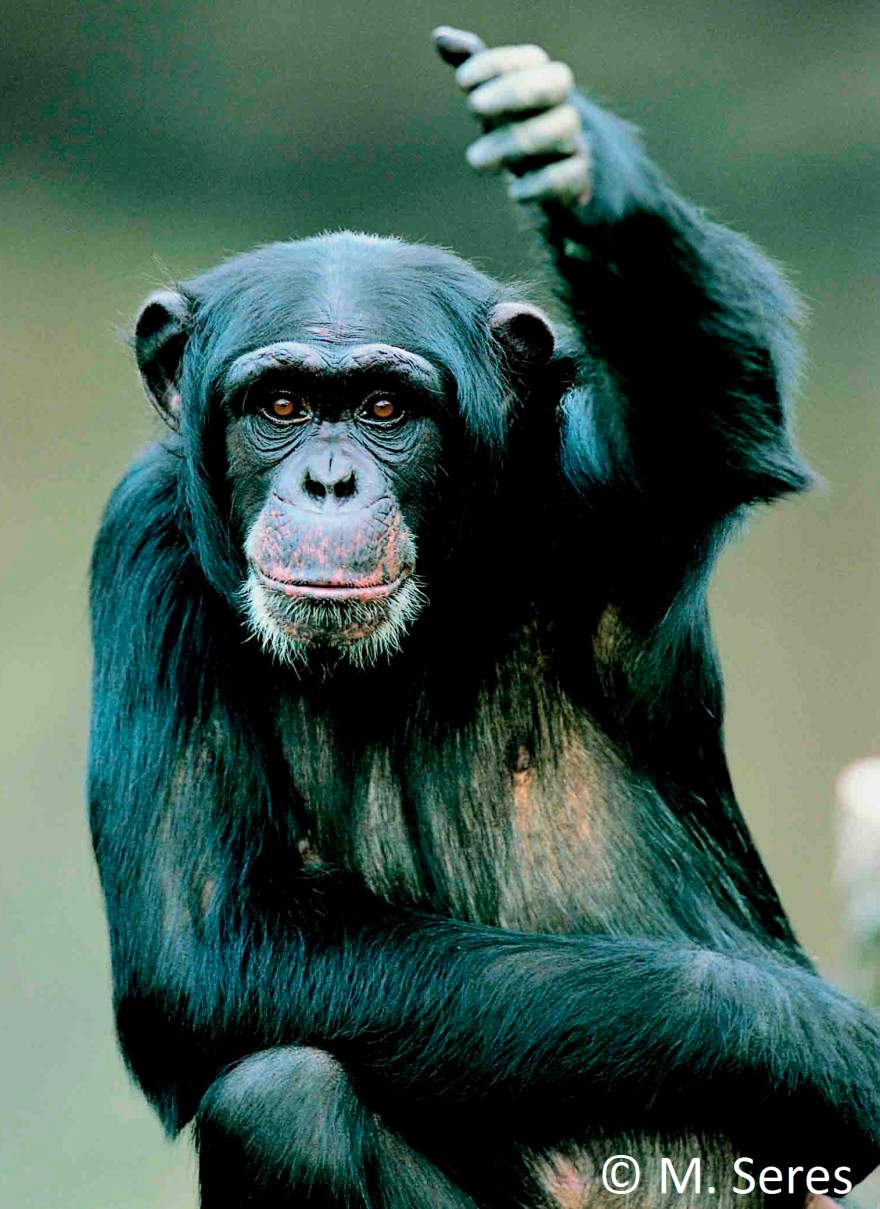
Jahaga. (Photo: Michael Seres)
NIH has made a decision to retire nearly 90% of its chimpanzees, but keeping a “reserve” population of up to 50 for “future potential research.”
Despite the fact that the Institute of Medicine has declared chimpanzees are not necessary in current medical research, the people in the white coats just can’t let go entirely.
Source: New England Anti-Vivesection Society.
BACKGROUND | SOURCE ALDF
All chimpanzees deserve protection — the ones in the wild, yes, but also the ones captive in labs, zoos, and private homes. That’s why we are rallying our supporters to comment on a proposed rule that would protect all chimpanzees under the Endangered Species Act (ESA).
Will you comment in support of the proposed rule today?
The U.S. Fish and Wildlife Service (FWS) announced its proposal to classify captive chimpanzees as endangered under the ESA — the proposed rule would end the “split-listing” of chimpanzees, which incongruously gives endangered species protections to wild members of the species residing in Africa but not to their captive counterparts living in the United States.
Among other things, the split-listing has led to cruel and unnecessary biomedical research on captive chimpanzees, as well as the routine exploitation and abuse of the species for entertainment purposes and as pets. It’s time…
View original post 130 more words

BRUSSELS (Reuters) – The European Union agreed on Thursday to tighten an existing ban on “shark finning”, or slicing fins off sharks often while they are still alive, which environmental campaigners say is cruel and threatens the survival of some species.
Once the change comes into effect, the ban will forbid shark finning by all vessels in EU waters and by all EU-registered vessels anywhere in the world, a move its supporters believe will put pressure on countries where the practice is common.
Workers lay out pieces of shark fin to dry on a rooftop of a factory building in Hong Kong January 2, 2013. REUTERS/Bobby Yip
Workers lay out pieces of shark fin to dry on a rooftop of a factory building in Hong Kong January 2, 2013. REUTERS/Bobby Yip
“Shark finning is one of the main threats to the shark population,” said Sandrine Polti, policy adviser to the…
View original post 282 more words
Published: July 2013
Last Song for Migrating Birds
From glue-covered sticks in Egypt hang two lives, and a question: How can we stop the slaughter of songbirds migrating across the Mediterranean?
By Jonathan Franzen
Photograph by David Guttenfelder
In a bird market in the Mediterranean tourist town of Marsa Matruh, Egypt, I was inspecting cages crowded with wild turtledoves and quail when one of the birdsellers saw the disapproval in my face and called out sarcastically, in Arabic: “You Americans feel bad about the birds, but you don’t feel bad about dropping bombs on someone’s homeland.”
I could have answered that it’s possible to feel bad about both birds and bombs, that two wrongs don’t make a right. But it seemed to me that the birdseller was saying something true about the problem of nature conservation in a world of human conflict, something not so easily refuted. He kissed his…
View original post 5,455 more words
Since the beginning of mankind, animals have had to make way for people. We come in, build, take over, and run them off their land. But for the first time in known history, people are moving for animals.
 In Assam India, an entire village is relocating to make room for the Asian Elephants. The Ran Terang village is situated in the direct corridor connecting the Nambor-Doigrung Wildlife sanctuary to the Kaziranga National Park. This “highway” is the lifeline for approximately 2,000 threatened pachyderms. By moving the village, there will be no human interference allowing the elephants to move freely, as well as making way for other threatened species such as the tigers.
Convincing the village to move has not been easy, but the people will also benefit. In addition to not worrying about the elephants destroying their paddy crops now, the 19 families are being set up with water and…
View original post 188 more words
Mumbai -Bijlee the elephant has been working continuously for 51 years. She’s never stopped until now. She collapsed; with maggot infested wounds on her legs, in pain and fatigued, and lies where she fell.
The owner of Bijlee, and other elephants, has subjected them to abuse and neglect, forcing them to beg, entertain, and walk for his paycheck. She has been overworked and uncared for all her life.


The group Animals Matter to Me, has taken steps to help this injured elephant. They’ve used a crane to lift her when she falls, have brought food for her, and started treating her wounds. The first couple days, they had help from neighboring people; however the majority have left her now.
Bijlee needs help. AMTM has requested the following:
1. A vet with knowledge of treating injured elephants. From any part of the country. A contact number, a lead or any…
View original post 303 more words
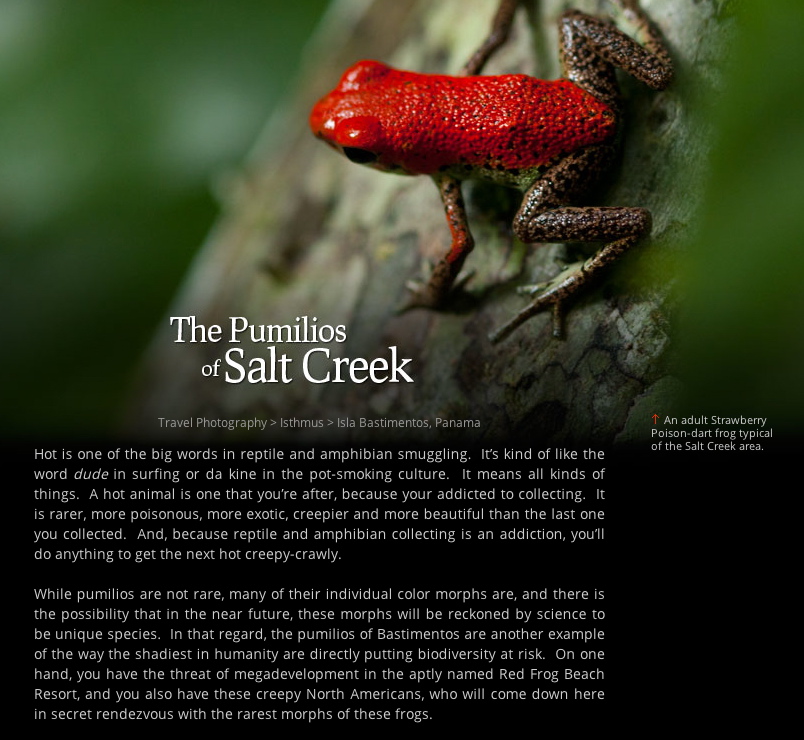
The keeping of exotic frogs as pets is apparently fashionable. The most popular are poison dart frogs, which come in kaleidoscopic colors. Frog-fanciers are said to collect them like stamps.
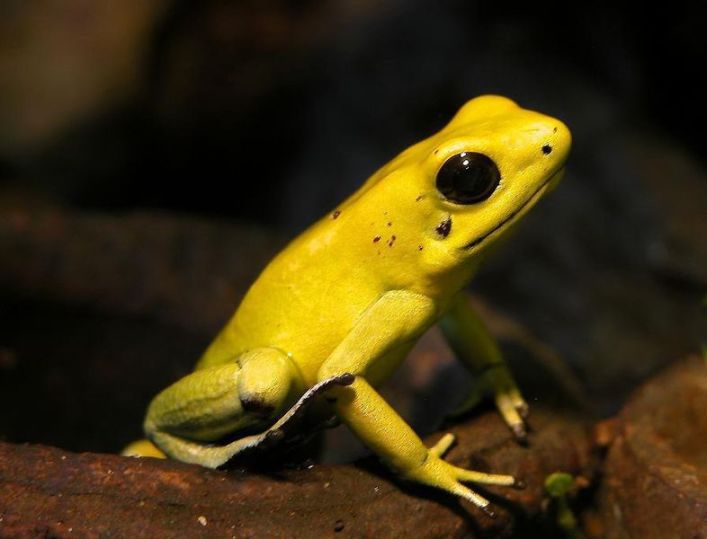
The golden poison frog, endemic to the Pacific coast of Colombia. (Photo: Wikipedia)
Poison dart frogs from the Dendrobatidae family are native to the rainforests of South America, particularly the country of Colombia, one of their last refuges.
A poison frog is not a pet you would want to touch. The amphibian’s skin is drenched in alkaloid poison. One frog contains enough to kill between 10 and 20 humans or a couple African elephants. People who have touched wild specimens directly have died.
There are no official figures on how many frogs are poached for pets each year, but it can’t be too many as there aren’t many of these bedazzled jewels left.
One species of Colombian dart frog has inadvertently evolved a perfect red circle in the middle of its back. This makes it the target of Japanese collectors keen to possess a creature that sports their national flag.
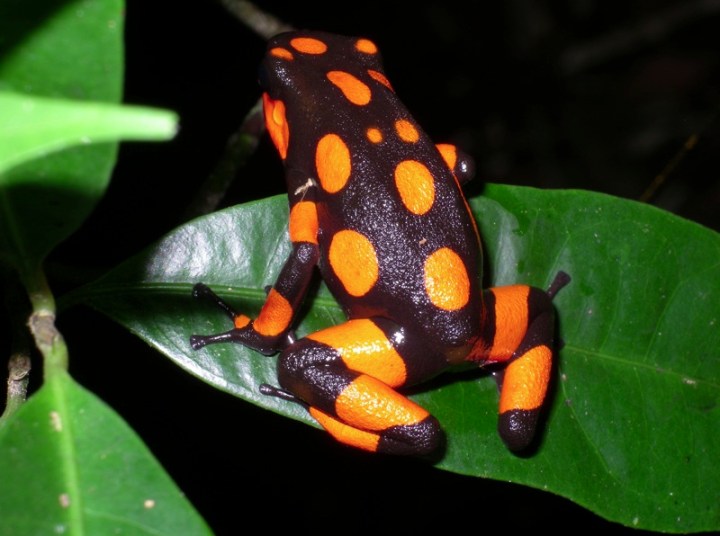
Harlequin poison dart frog (aka Halloween frog). (Photo: wikipedia)
Colombia’s frogs are prized not only for their good looks. Their skin harbors a pharmacopoeia of chemicals that scientists have been studying as potential cures for everything from cancer to HIV. A Harlequin poison dart frog secretes a toxin that blocks neurotransmission and could play a role in treating Alzheimer’s. A new morph (one of various distinct forms of a species) could contain the chemical blueprints for dozens of other medicines. Unsurprisingly, there is evidence an organized ring of frog-nappers is supplying the pharmaceutical industry which is interested in converting their poison into pharmaceutical drugs.
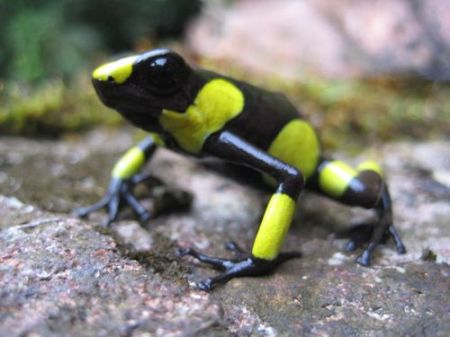
The harlequin poison dart frog has a variety of beautiful color morphs, which differ from one valley to the next in its native range. A never-before-seen morph can fetch thousands of dollars on the black market.
The World Conservation Union (IUCN) lists seventy-nine species—thirty-eight percent of all of the species in the Dendrobatidae family—as being at some risk. Nineteen of the seventy-nine are considered Critically Endangered and facing an extremely high risk of extinction in the wild. Ninety-three others are listed as Data Deficient, which means that too little information is available to make a judgment about the threat of extinction.
The IUCN currently lists the poison frog as Endangered, noting its popularity in the pet trade and the loss of its habitat as likely causes for low numbers.
Shout out: Lucy Cooke.
Elephants are extremely social creatures. They form groups, and sometimes join up with other herds. The females stay together, raising each others young and communicate constantly with one another. Female asian elephants are never alone in the wild.
Manilla Zoo, Philippines Mali is the only Asian Elephant in the zoo. In fact she is the only elephant in captivity in the Philippines. The 38-year-old gentle giant has been an occupant of the zoo since she was taken from her mother at the age of 3, spending all of her life in a concrete enclosure.
After capturing the attention of concerned citizens, an animal rights group was contacted and Dr. Mel Richardson, a veterinarian and expert on elephants, was sent to evaluate Mali. His findings expressed concerns both for her physical and mental health.
Mali’s feet (which have only known the feel of concrete) are showing ailments including cracked nails, overgrown cuticles…
View original post 262 more words
Vacation time! Animal lovers the world over choose their travel destinations to include up-close and personal wildlife experiences. There are plenty of options. Today it is important more than ever to be educated and vigilant about what our tourism money is funding.
Thailand- Tourists come to Thailand for the opportunity of close encounters with the elephants. Cute baby elephants on the beach, riding  elephants through the trees, getting photos taken with them for vacation memories to display on the mantel at home. Yet this image of the gentle giants is cruelly deceptive. Some places even hide behind the guise of being sanctuaries or conservancies leaving people with the impression they are in fact helping the animals.
The Thai tourism industry is actually fueling the illegal trade in baby elephants and is responsible for the death and diminishing numbers of their species. Taken from the wild in Burma, they are beaten…
View original post 352 more words
Vidaar, the male Asiatic black bear rescued from the bear baiting trade reported here in April (“Vidaar and Lucia”), has passed away at the Balkasar sanctuary in Pakistan as a result of long term chronic illness.

Vidaar had been used in baiting for nearly four years and suffered a significant number of injuries. He had been identified by the Pakistan Bioresource Research Centre (PBRC) in 2012 as a priority bear in need of rescue.

When when he arrived at the sanctuary he was severely malnourished and fighting chronic disease. His wounds were treated and the rope used to tether him to a post in baiting arenas was removed.
A post mortem showed he had an enlarged gall bladder and other organs showed signs of infection. Despite the expert care of the BRC staff he was too weak to hold on.
He arrived at the center only a few months ago with a female Himalayan brown bear named Lucia, who passed away soon after her rescue.
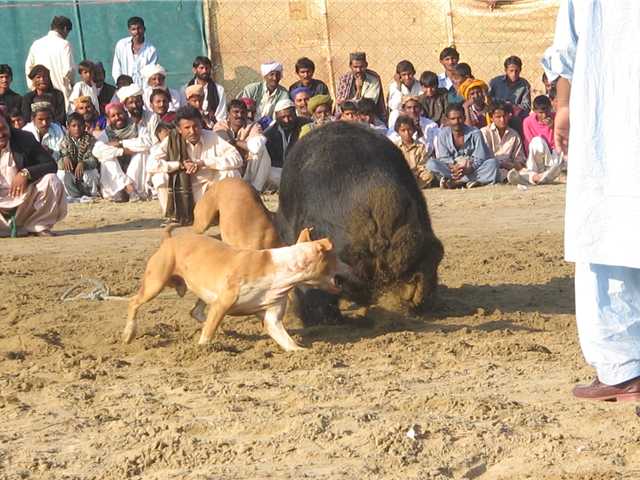
Bear baiting, Pakistan.
Animals used in bear-baiting are subjected to years of chronic stress and malnutrition with no veterinary treatment. They commonly arrive at the sanctuary with weak immune systems, parasites, blindness or impaired vision, and wounds to the muzzle, ears and eyes.
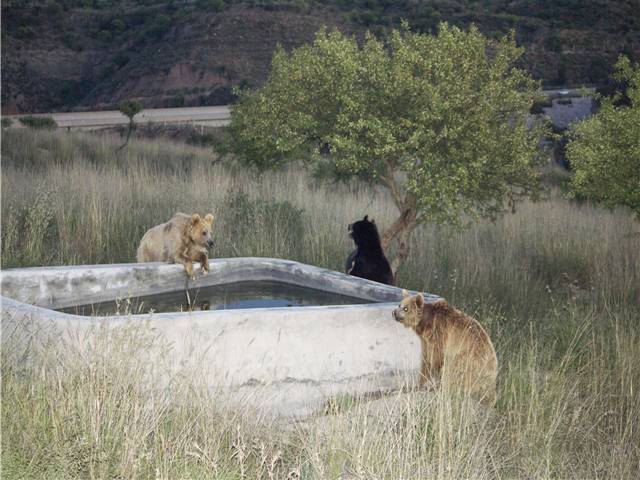
Balkasar Sanctuary for bears rescued from bear baiting.
The Balkasar sanctuary is funded by The World Society for the Protection of Animals and operated in partnership with the PBRC. There are currently 20 rescued bears enjoying the safety of the sanctuary.
Vidaar means “Forest Warrior.”
“Ever since man first began to wonder about wolves…he has made regular business of killing them. At first glance the reasons are simple enough and justifiable…. But the wolf is fundamentally different because the history of killing wolves showed far less restraint and far more perversity. Killing wolves has to do with fear based on superstitions. It has to do with duty. It has to do with proving manhood. The most visible motive, and the one that best explains the excess of killing, is a type of fear: theriophobia. Fear of the beast. Fear of the beast as an irrational, violent, insatiable creature.

“The wolf was not the cattlemen’s only problem—there was weather, disease, rustling, fluctuating beef prices, hazards of trail drives…. [But] the wolf…became an ‘object of pathological hatred.’ Men in a speculative business like cattle ranching singled out the wolf as a kind of scapegoat for their financial losses. It was against a back drop of…taming wilderness, the law of vengeance, protection of property, an inalienable right to decide the fate of all animals, and the…conception of man as protector of defenseless creatures—that the wolf became the enemy.
“The motive for wiping out wolves proceeded from misunderstanding, from illusions of what constituted sport, from strident attachment to private property, from ignorance and irrational hatred. But the scope, the casual irresponsibility, and the cruelty of wolf killing is something else. I do not think it comes from some base, atavistic urge, though that may be a part of it. I think it is that we simply do not understand our place in the universe and have not the courage to admit it.”
Source: Notesfromtheroad.
The CR Fashion Book has just published an issue that features a chimpanzee posed with ballet dancers.

CR Fashion Book.
Carine Roitfeld, the global fashion director of Harper’s Bazaar, the person behind the campaign, is noted for having new “obsessions.
Roitfeld told a fashion writer for New York magazine that her debut issue, a sixteen-page spread titled “The Animal Nursery,” was “a dream come true because I had never held a baby monkey and baby tigers before.” “Hey, if it worked before, it’ll work again!” trumpeted the writer. “Monkeys are Carine’s thing these days.”
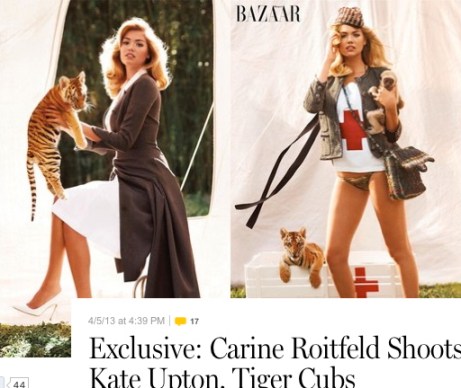
You can dress this kind of stuff up with super models and fancy photo shoots but it all boils down to a zero sum game for the animals. There is really no difference between how Ms. Roitfeld used Bently the chimp, and Tony the Truckstop Tiger in his concrete cage in Louisiana,
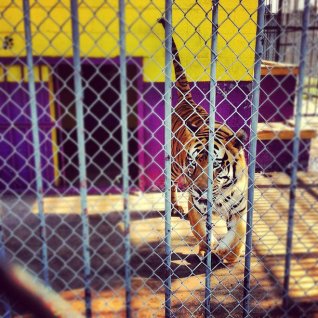
Tony the Truck Stop TIger. (Photo: S. Zaunbrecher)
or Lolita imprisoned in a pen at the Miami Seaquarium,
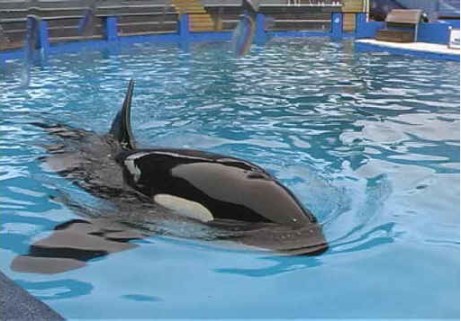
When not performing, Lolita is confined to a tank barely larger than she is. (Photo: Slaveforentertainment.com)
or the bears they set dogs on in India,
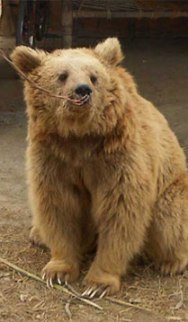
Lucia before her rescue to sanctuary. (Photo: BRC, Pakistan)
or moon bears in China,
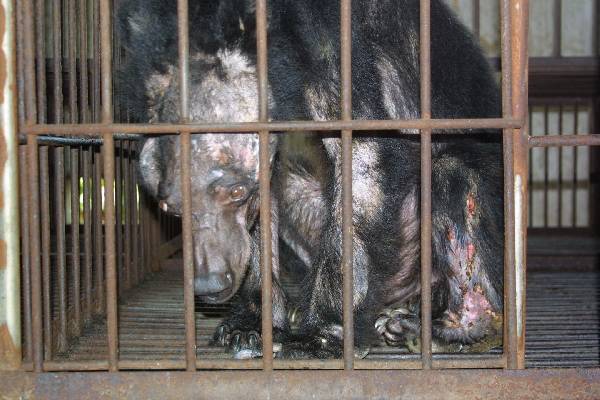
Moon bear in bile farm. (Photo: thebeartruth.org)
or Larry, the harbour seal at Marineland,
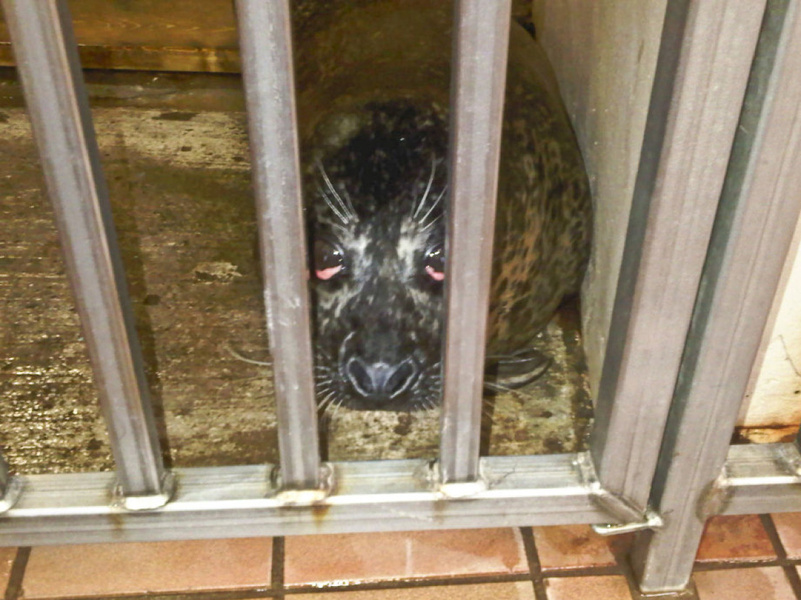
Larry, the harbour seal with “an amazing little personality” who arrived at Marineland about eight years ago is now a shadow of his former self. After repeated exposure to unhealthy water, he has gone blind.
or his compatriots, Baker and Sandy, the sea lions at Marineland who had to be pulled repeatedly from the water and confined in dry cages, in one case for more than two months, to limit further harm to their already damaged eyes because of unhealthy water in their tanks,

February 2012 photo shows sea lions Sandy and Baker (left). The pair had to be pulled repeatedly from the water and confined in dry cages, in one case for more than two months, to limit further harm to their already damaged eyes. Videos shot in 2011 and 2012 shows them writhing in pain or plunging their heads into a single bucket of clean water.
or the terrified howler monkey in the Peruvian village of Dos de Mayo, Sauce, offered to tourists as a photo prop to have their picture taken.
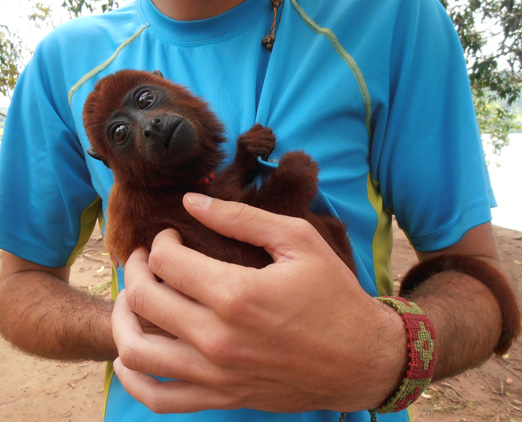
Infant howler monkey in Peru. (Photo: Neotropical Primate Conservation)
In spite of the public’s increased sensitivity and awareness of animal protection issues, There is a long way to go.

From a ballet-themed issue of the CR Fashion Book, featured in New York Magazine.
As consumers, we make our decisions in dollars by avoiding brands that exploit animals in marketing, such as Harper’s Bazaar/CR Fashion Book, and CareerBuilder.
Shout out: The Jane Goodall Institute of Canada.


 First Light Productions