First Light Productions

investigative journalism

Posts from the “SCIENCE” Category

Climate Change and the Oryx

Posted on August 27, 2012

In the New York Times today, reporter Leslie Kaufman writes about zoos grappling with how aggressive to be in educating visitors on the perils of climate change, fearful that too much bad news about damaged coral reefs, melting ice caps or vanishing species, might dent ticket sales.
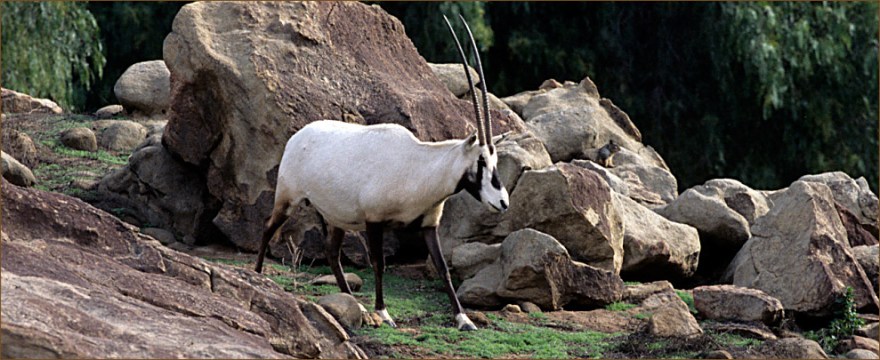
The long, slender horns of the oryx, carried by both males and females, give the oryx the nickname “spear antelope.” This is the most highly specialized oryx species for living in true desert extremes. Their light color reflects the desert heat and sunlight, and they can erect their hair on cold winter mornings to capture warmth to hold in their thick undercoats. Their legs also darken in the winter to absorb more of the sun’s heat.


This antelope of the Arabian Peninsula and Sinai Desert became extinct in the wild by the late 1960s, mostly due to hunters with high-powered rifles. To save the species, nine Arabian oryx from private collections in Oman, Kuwait, and Saudi Arabia, as well as from the London Zoo, were moved to the Phoenix Zoo in Arizona. A second breeding group of three oryx, from a zoo in Saudi Arabia, was started at the Los Angeles Zoo, and in the 1970s animals from both of these herds were sent to the San Diego Safari Park. As of 2010, 342 Arabian oryx have been born at the Safari Park, with many returned to Oman and Jordan for reintroduction in their native range. (Photo: San Diego Zoo Safari Park)

Some zoos and aquariums have held back, relegating information about climate change to nothing more than signs—about Arctic melting, for example, posted in the polar bear exhibit. On the other hand, many zoos and acquariums have put climate change “front and center.”

This month, the National Science Foundation awarded a coalition of aquariums $5.5 million for a five-year education effort to train staffs to develop ways of conveying information about climate change that will intrigue rather than daunt or depress the average visitor.

Most of the 224 members of the Association of Zoos and Aquariums now have some sort of climate message.

Unsurprisingly, talking about climate change in some locales is a tough sell. At the Georgia Aquarium in Atlanta, Brian Davis, the vice president for education and training, says to this day his institution ensures its guests will not hear the term global warming. Visitors are “Very conservative,” he said. “When they hear certain terms, our guests shut down. We’ve seen it happen.”

Denial is not just a river in Africa.
Animal Husbandry

Posted on August 23, 2012

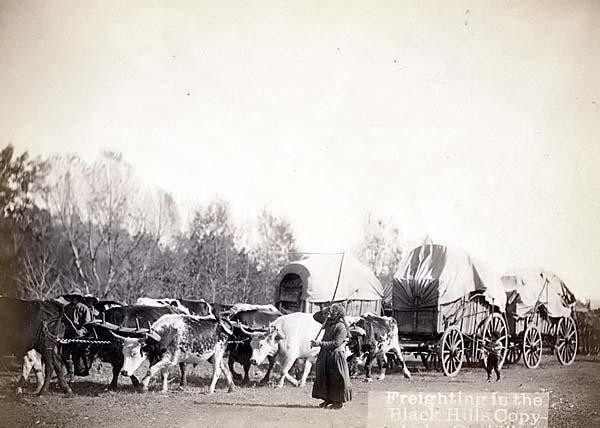
The story of westward expansion in the United States is often told from the perspective of the men and women who crossed the Great Plains in search of a better life in the west. But a historian at Missouri University of Science and Technology is bringing to light the role settlers’ animals played in the westward migration of the mid-1800s.

Thank you BP

Posted on August 21, 2012

A recently released study explains how lax environmental standards can have disastrous consequences.

Most troubling to scientists was the exceptionally high number of young dolphins that made up close to half of the 186 dolphins that washed ashore from Louisiana to western Florida from January to April 2011. (Credit: University of Central Florida)

According to a two-year study by scientists at the University of Central Florida released last month, the Deepwater Horizon oil spill in conjunction with other environmental factors led to a historically high number of dolphin deaths in the Gulf of Mexico. Most troubling was the exceptionally high number of young dolphins that washed ashore.

Graham Worthy, a UCF scientist and co-author of the study, called it a ‘perfect storm’ of factors. “The oil spill and cold winter of 2010 had already put significant stress on (the dolphins’) food resources, resulting in poor body condition and depressed immune response. It appears the high volumes of cold freshwater coming from snowmelt water that pushed through Mobile Bay and Mississippi Sound in 2011 was the final blow.”

The BP Deepwater Horizon disaster in April 2010 dumped millions of gallons of oil into the Gulf, disrupting the food chain. This was in the middle of the dolphins’ breeding season. A sudden entry of high volumes of cold freshwater from Mobile Bay in 2011 imposed additional stress on the ecosystem and specifically on dolphins that were already in poor body condition.

–Story Source: reprinted from materials provided by University of Central Florida.

Sumatran Rhinos — winking out

Posted on August 15, 2012

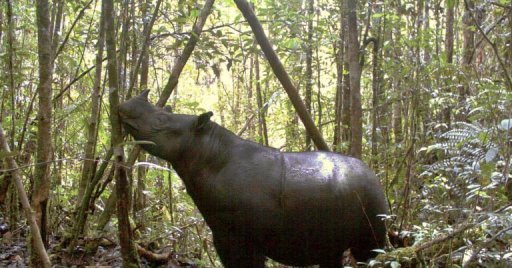
INDONESIA. There are believed to be fewer than 200 Sumatran rhinos left in the entire world. To the delight of conservationists, seven were recently spotted on hidden camera in Indonesia’s Mount Leuser National Park. The Sumatran rhino population has dropped 50 percent over the past 20 years and conservationists feared the critically endangered species had completely disappeared from the region.

The Sumatran rhinoceros had not been seen in the park on the northern tip of Sumatra in 26 years. This photograph taken in 2011 and released by the Leuser International Foundation shows a Sumatran rhino on Indonesia’s Sumatran island.

The leader of the Leuser International Foundation, a conservation group working at the park said, “This discovery can allay doubts over the rhino’s presence in the park,” adding he hoped the discovery would encourage more efforts to conserve the species.

Images of the rhinos were captured by 28 infrared cameras set up between June 2011 and April this year and confirmed six female and one male rhino appearing in 1,000 photo frames.

The rhinos are commonly targeted by poachers, and rampant illegal logging has destroyed much of their habitat.