First Light Productions

investigative journalism

Posts by Michael Elton McLeod

Tiger new year

Posted on December 27, 2012

A combination of strict government-led anti-poaching patrols, voluntary relocation of villages away from tiger habitats, and the vigilant local presence of Wildlife Conservation Society (WCS) partners watching over tigers, has led to the rebound of big-cat populations in three widely diverse areas in Asia.

India

Nagarhole National Park

Nagarhole National Park

In the Western Ghats region of Karnataka State, over 600 individuals have been identified from camera trap photos during the last decade. In Nagarahole and Bandipur National Parks, tigers have reached saturation levels, with surplus young tigers spilling out into forest-reserves and dispersing using secured forest corridors through a landscape that holds over a million human beings.

Indeed, the tigers’ return has led to situations such as recently reported in ANIMAL POST (“Tigress” 12/13/12) when villagers in Nidugumba saved an injured tiger that became caught in a barbed wire fence after straying onto a coffee plantation.

Thailand
Camera trap captures a tigress moving her cubs in Huai Kha Khaeng. (Photo: Wildlife Conservation Society)

Camera trap captures a tigress moving her cubs in Huai Kha Khaeng. (Photo: Wildlife Conservation Society)

Beefed up enforcement and anti-poaching patrols in Thailand have resulted in a steady rise in the number of tigers in Huai Kha Khaeng Wildlife Sanctuary which stretches for hundreds of miles along the Myanmar border. The situation there was markedly improved last year with the capture of a notorious poaching ring. Since the imprisonment of the gang leaders, there have been no known tiger or elephant poaching incidents in the park. A record 50-plus tigers were counted in the region last year.

Russia

Siberian Tiger Project staff at work during a capture (Photo: John Goodrich, Wildlife Conservation Society)

Siberian Tiger Project staff at work during a capture (Photo: John Goodrich, Wildlife Conservation Society)

In Russia a new wildlife corridor was recently created linking the Sikhote-Alin tiger population in Russia, which contains the main population of Amur tigers, and some of the best tiger habitat in China’s Heilongjiang Province in the Wandashan Mountains. The new refuge area ensures that tigers have the capacity to move across the international border between the two countries.
Lucky

Posted on December 27, 2012

Neil Shea’s dispatch from Kunar Province in Afghanistan:

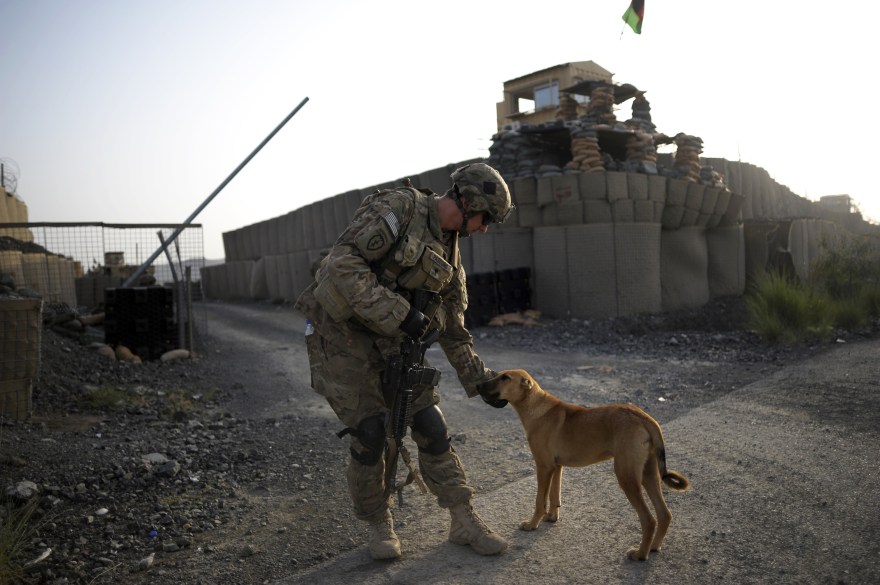
A member of the 1st Platoon Comanche Company of the US Army pets a dog at a checkpoint in the Combat Outpost Lakon in Buwri Tana District, Khost Province on August 9, 2012. (Photo: Jose CABEZAS/AFP/GettyImages)

A member of the 1st Platoon Comanche Company of the US Army pets a dog at a checkpoint in the Combat Outpost Lakon in Buwri Tana District, Khost Province on August 9, 2012. (Photo: Jose CABEZAS/AFP/GettyImages)

“Here comes Lucky,” a soldier says. “Means we won’t get shot at today. Yesterday she didn’t show, and we got fucked up.” Lucky is sweet and hopeful, she curls between the camouflaged legs of the soldiers and they speak to her but are not allowed to touch. Regulations. I’m not bound by them so I kneel and whistle and she bounds over and folds herself softly into me. Someone has fashioned a collar for her. From the collar hangs a single silver dog tag. It reads DO NOT KILL.

“First Sergeant shot the last dog,” someone explains. The army does not allow mascots.


Lifted from: Andrew Sullivan

Big cats

Posted on December 24, 2012

Looking back–favorite camera trap photos.

A young male leopard (Panthera pardus) in China's Shuishui River Reserve is this year's contest winner. (Photo: Zhou Zhefeng/BBC Wildlife Magazine)

A young male leopard (Panthera pardus) in China’s Shuishui River Reserve. (Photo: Zhou Zhefeng/BBC Wildlife Magazine)

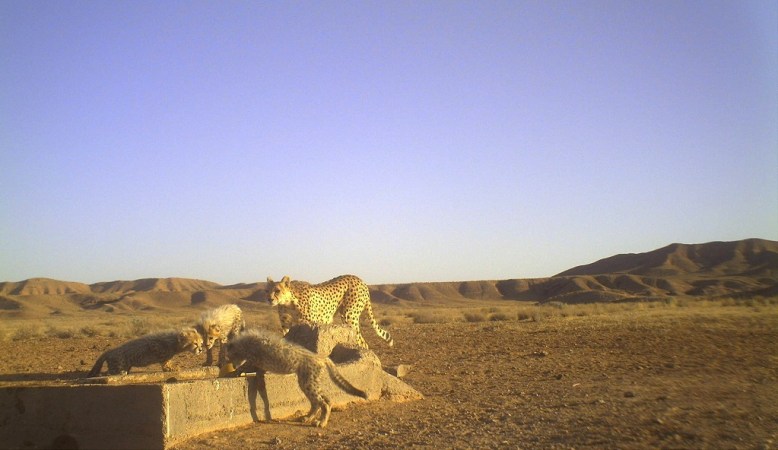
Asiatic Cheetahs in Iran (Photo: Iranian Cheetah Society)

Asiatic Cheetahs in Iran (Photo: Iranian Cheetah Society)

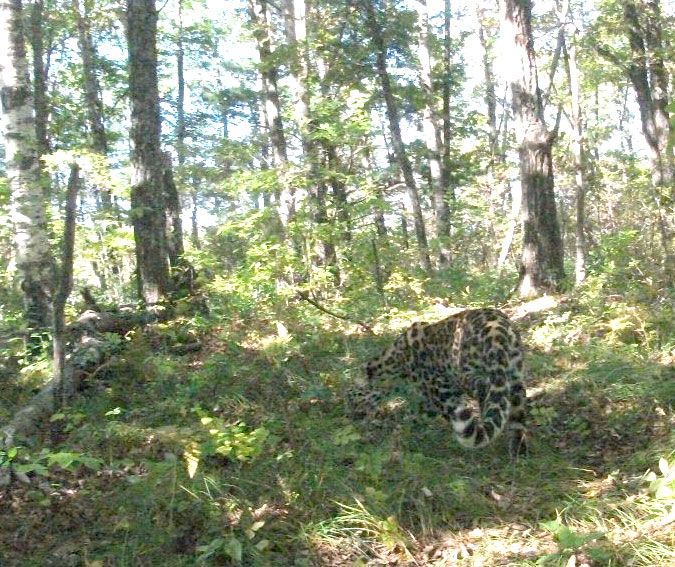
First camera trap photo of an Amur leopard in China. (Photo: WWF-China and the Jilin Forestry Department)

First camera trap photo of an Amur leopard in China. (Photo: WWF-China and the Jilin Forestry Department)

Biologists have discovered a surprisingly healthy population of rare snow leopards living in the mountainous reaches of northeastern Afghanistan’s Wakhan Corridor. (Photo: Wildlife Conservation Society)

Biologists have discovered a surprisingly healthy population of rare snow leopards living in the mountainous reaches of northeastern Afghanistan’s Wakhan Corridor. (Photo: Wildlife Conservation Society)

Bolivian oncilla

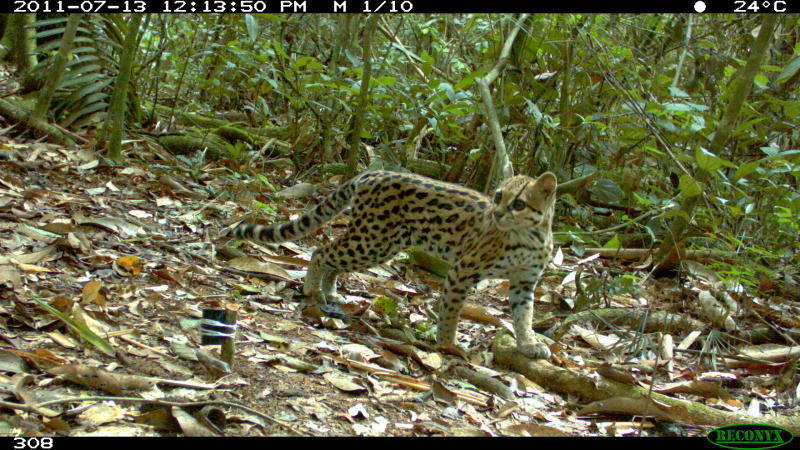
Bolivian cat species called an oncilla (Leopardus tigrinus). (Photo: Guido Ayala, Maria Viscarra, and Robert Wallace/ Wildlife Conservation Society)

Jaguar in Sonora State in Mexico. (Photo: Earth Island Institute)

Jaguar in Sonora State in Mexico. (Photo: Earth Island Institute)

Photo: Wildlife Conservation Society Bolivia Program

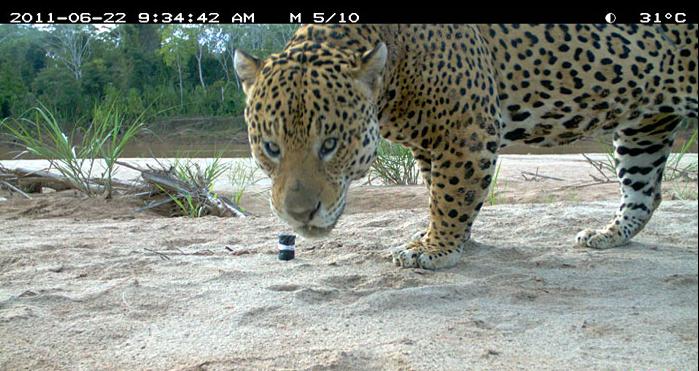
During a recent camera trap survey in Bolivia, researchers from the Wildlife Conservation Society identified 19 individual jaguars, more than any previous camera trap survey in that country. (Photo: Wildlife Conservation Society Bolivia Program)

Nagaland update

Posted on December 24, 2012

Amur Falcons

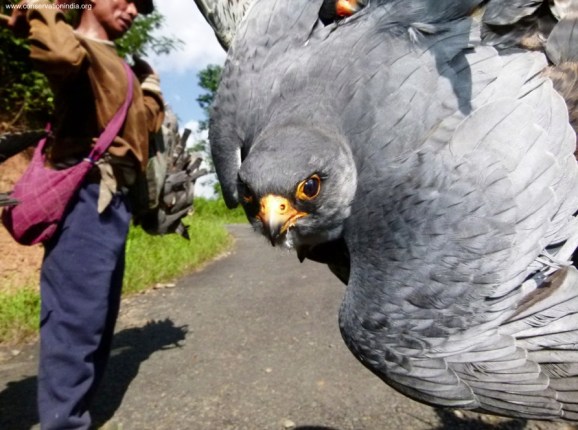
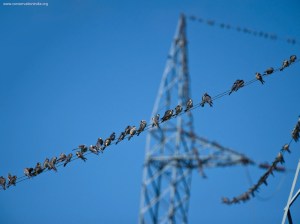
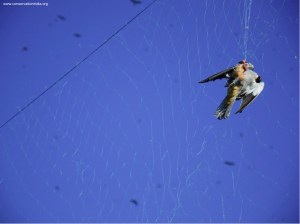
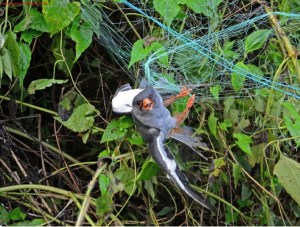
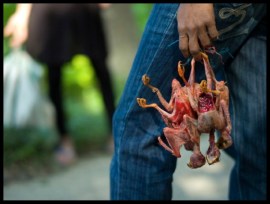
The recent mass killing of over 100,000 Amur falcons in India is drawing worldwide attention. The falcons breed in Siberia and fly thousands of miles across continents to reach their winter grounds in Africa.

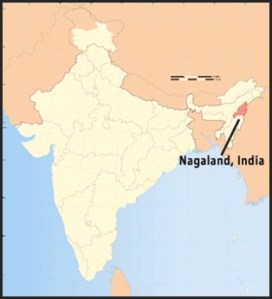
Nagaland, India

During their October migration the birds stop at the Doyand reservoir in Wohka, Nagaland, in the far north-eastern part of the country, to rest, feed and gather strength for their journey.

Amur Falcons 5jpg
Capture nets

Capture nets

capture nets

Amur Falcons
Amur Falcons

Amur Falcons Amur falcons

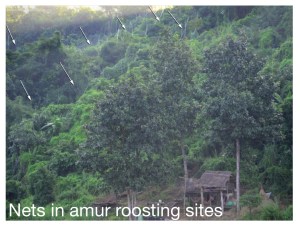
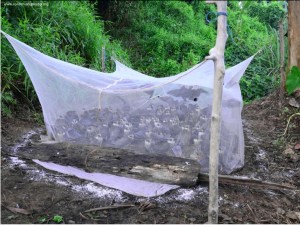
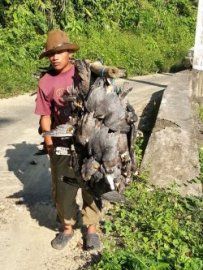
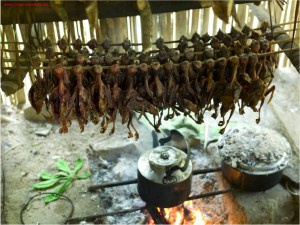
Hunters there are hanging fishing nets around the roosting sites and catching 15,000 birds per day. They are kept alive but by the time they reach the meat market they’re either dead or dying. Plucked of their feather they’re smoked and then sold.

Bushmeat

Bushmeat has become a serious business. The slaughter of the birds in such numbers is evidence that hunting which used to be only for domestic use within the village or family, is finding a national and international market. More birds are caught than can be consumed by the local villages. Vast numbers are trucked away to a distant market that has not yet been identified.

Halting the slaughter

Steps are being taken to halt the wanton killing. In October, the administrative head of the Wokha district issued a fresh order against hunting of the falcons (an earlier order existed though not thoroughly enforced). This order was carried in local newspapers. He also ordered the police to crack down and alerted all local community leaders to cooperate in stopping the slaughter.

Amur falcons6

Forest Officers of the district addressed the heads of local villages, council members and student bodies of Pangti, Sungro and Akhotso villages in Pangti (since most hunters are from Pangti, the village closest to the Doyang reservoir).

Amur falconsThe officials categorically stated that any ongoing trapping and killing of birds as per the DC order was a violation of the law and would not be accepted.
Amur Falcons Amur falcons Amur Falcons

Source: conservation india

Photographs taken Oct 21 & 22, 2012, by:Shashank Dalvi, Bano Haralu, Rokohebi Kuotsu, Ramki Sreenivasan.

Savings sharks

Posted on December 22, 2012

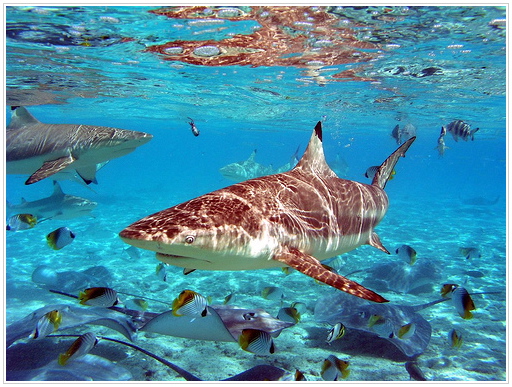
French Polynesia and the Cook Islands this month created adjacent shark sanctuaries spanning 2.5 million square miles of ocean, a move that reflects a growing trend to protect sharks worldwide and more than doubles the area now off-limits to any shark fishing.

Blacktip Shark, Bora Bora, French Polynesia.

Blacktip Shark, Bora Bora, French Polynesia.

As many as a third of all shark species face some threat of extinction, according to the International Union for Conservation of Nature, in part because their fins are coveted for the Asian delicacy shark fin soup. In the last few months, American Samoa and the Micronesian state of Kosrae have barred shark fishing off their shores, and the European Union and Venezuela have both prohibited the practice of cutting off a shark’s fins while discarding the body at sea.

CISS-ICON-working

French Polynesia—a group of five major archipelagoes with more than 100 islands, including Tahiti—created the world’s largest shark sanctuary, banning fishing for all shark species in more than 1.5 million square miles of ocean on Dec. 6. The Cook Islands designated its own, which is equal to the size of Mexico at 756,000 square miles, on Dec. 12.

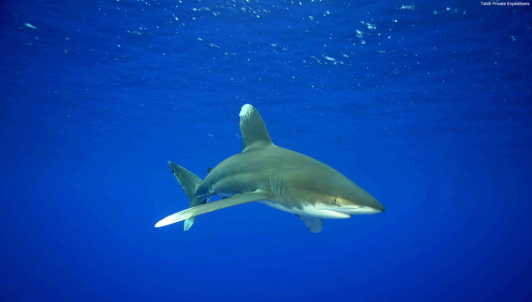
Oceanic whitetip (Photo: Tahiti Private Expeditions)

Oceanic whitetip (Photo: Tahiti Private Expeditions)

French Polynesia had established a moratorium on shark fishing and finning in 2006, but exempted mako sharks to win over local fishing interests. More than 20 shark species, including hammerhead and thresher sharks, swim off its shores.

Before French Polynesia’s declaration, six countries—Palau, Maldives, Honduras, Bahamas, Marshall Islands and Tokelau—had created shark sanctuaries.


Shout out: wildlifeextra.com

Helping primates

Posted on December 22, 2012

Monkeys and apes face daily threats from poachers. From illegal loggers. From people who want to use them as pets, or for traditional medicine, or in research.

IPPL4

PLEASE DONATE

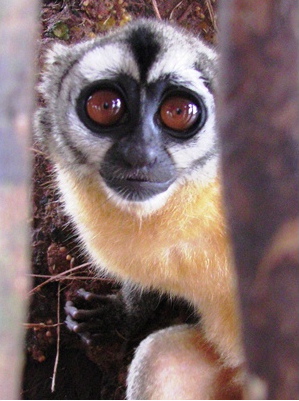
An IPPL-supported campaign by Fundacion Entropika resulted in a ban on the Colombian night monkey trade this summer. (see ANIMAL POST “Night Monkeys” August 28)

An IPPL-supported campaign by Fundacion Entropika resulted in a ban on the Colombian night monkey trade this summer. (see ANIMAL POST “Night Monkeys” August 28)

Thailand’s Highland Farm sanctuary now has a new pickup—thanks to IPPL’s supporters.

Thailand’s Highland Farm sanctuary now has a new pickup—thanks to IPPL’s supporters.

This fall, IPPL sent out an appeal for the C.A.R.E. baboon sanctuary in South Africa to help them rebuild in the wake of a tragic fire.

The staff (and baboons) at C.A.R.E. thank everyone who contributed to IPPL’s campaign for emergency assistance.

The staff (and baboons) at C.A.R.E. thank everyone who contributed to IPPL’s campaign for emergency assistance.

Thanks to IPPL’s supporters—primates around the world have a better chance of surviving into the future.

Big gulp

Posted on December 21, 2012

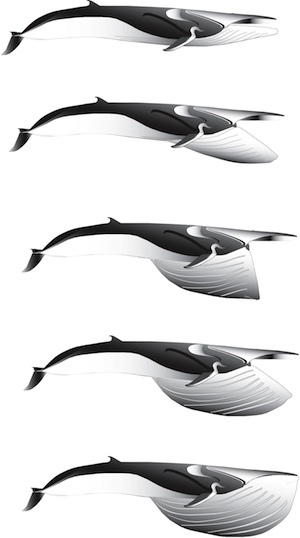
Whales all feed in much the same way. They swallow up water and filter it through fronds in their mouths called baleen. Most of the food they eat is tiny stuff, like krill and other small invertebrates. So some scientists have wondered how big whales manage to put enough tiny bits of food in their bodies to get to such huge sizes.

Fin whale lunge diagram, Nick Pyenson.

Fin whale lunge diagram, Nick Pyenson.

The very act of getting that food–diving deep, lunging open-mouthed, and then pushing a school-bus-sized volume of water forwards–requires a lot of energy.

Whales lunge into a cloud of krill and drop open their jaws. Pleats under the lower jaw open up, engulfing huge amounts of water. The whale slows down because of the drag. It behaves, in other words, a lot like a parachute. scientists have found: in one lunge, a fin whale can momentarily double its weight. As the water rushes in, the whales contract muscles in their lower jaw. The water slows down and then reverses direction, so that it’s moving with the whale. Once the water is moving forward inside the whale it can then close its mouth and give an extra squeeze to filter the water through its baleen.

A fin whale can get 20 pounds of krill in a single gulp, but it can gulp every 30 seconds. Because krill live in gigantic swarms, they can keep gulping and get enough food in four hours to fuel their bodies for an entire day


Source: discovermagazine.com

Monkey Town

Posted on December 20, 2012

Ed Wray, a photographer for the Associated Press based in Southeast Asia, has released a series of photos of performing monkeys in Jakarta, Indonesia, that he calls Monkey Town.

depravedJakarta5

depravedJakarta2 depravedJakarta3 depravedJakarta4

depraved Jakart

Wray said he “looked at this not so much as a story about cruelty to animals, though it certainly is, but as a look at the sometimes terrible things people are forced to do in extreme poverty. It’s a very sad situation.”


Source: Ed Wray.

Chimps to sanctuary update

Posted on December 20, 2012

The number has risen from 109 to 113 chimps who are being retired to sanctuary at Chimp Haven!

(Photo: Tim Flatch)

(Photo: Tim Flatch)

The decision is a major revision to the NIH’s original plan to send only 10 to Chimp Haven and retire the rest to another lab.


Source: NEAVS

Why I love vultures

Posted on December 18, 2012

Nature’s garbage collectors

vultures

As natural garbage collectors, vultures are vital to our ecosystem — so why all the bad press? Why are so many in danger of extinction? Raptor biologist Munir Virani says we need to pay more attention to these unique and misunderstood creatures, to change our perception and save the vultures.

Video: Munir Virani talks vultures

Munir Virani is a raptor biologist and wildlife photographer, and Director of The Peregrine Fund  Africa Program, devoted to conserving birds of prey.

Chimps to sanctuary

Posted on December 18, 2012

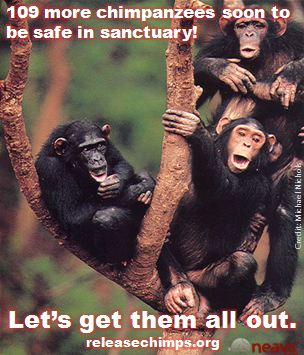
109 More Chimpanzees Will Soon Be Safe in Sanctuary.

Release&Restitution

FOR IMMEDIATE RELEASE:

The world will soon be much brighter for 109 chimpanzees now held in Lafayette, Louisiana’s New Iberia Research Center (NIRC) as the National Institutes of Health (NIH) announced at 10 a.m. today its two-part plan to retire them all to the comfort and safety of Chimp Haven, our federal sanctuary. The decision is a major revision to the NIH’s original plan to send only 10 to Chimp Haven and retire the rest to another lab.

NEAVS/Project R&R applauds the NIH’s commitment to these chimpanzees, who have had so much taken from them, suffered enough, and now deserve to live the rest of their lives in the comfort of a caring and safe sanctuary. In an invited teleconference call, NIH Deputy Director for Science, Outreach, and Policy, Dr. Kathy Hudson, clearly reiterated NIH’s “moral and legal responsibility” to the chimpanzees.

109 rescued

NEAVS/Project R&R has been closely involved in the fate of the NIRC chimps, advocating for sanctuary for all of them, and is the first to step up with a matching grant of $100,000 to Chimp Haven to help cover costs for needed construction to welcome the chimps.

NIH’s two-phase plan to get them to sanctuary starts in January when half of the chimpanzees will be moved in small groups to Chimp Haven into available housing and existing social groups as appropriate. This first phase will take about six months. For the second phase, expected to take 12-15 months to complete, approximately $2.3 million in construction funds is needed. NIH has said it will work with Chimp Haven and animal protection organizations to secure all funding.

Sadly, four other chimpanzees were evaluated by both Chimp Haven and New Iberia veterinarians who determined they were too sick for transfer. In failing health, they are permanently protected from use in research. Eight of the chimpanzees are mothers with young offspring who will remain together during the move.

Once again, even another success leaves us with more work to do! The soon-to-be new Chimp Haven residents will almost double the sanctuary’s population – but there are still those waiting. Knowing that 109 of the approximate remaining 488 federally owned chimpanzees currently held in U.S. biomedical labs can soon rest does not allow us to. It is our duty and our labor of love to keep working until all chimpanzees live surrounded by fresh air, sunlight, trees, and all the other comforts an enriched sanctuary life provides. The NIH’s decision marks the beginning, not the end, of our goal: to get them all out of labs and safe in sanctuary. NEAVS/Project R&R will continue to vigilantly and effectively work on behalf of all the rest who are counting on us.

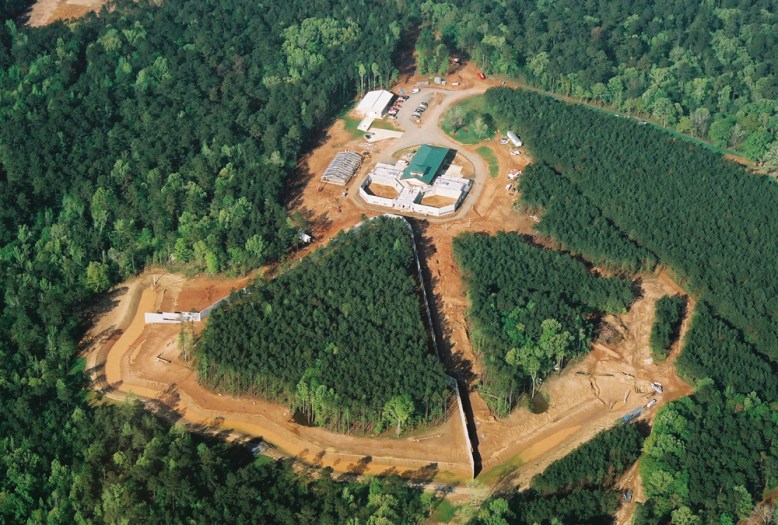
Chimp Haven (Photo: Chimp Haven)

Chimp Haven (Photo: Chimp Haven)

Thank you for supporting our work to help chimpanzees – and all animals – in labs. It is through your help that we have uplifting success such as this. Please donate now. For more information on all our programs, visit NEAVS.org and ReleaseChimps.org.

Trophy animal(s)

Posted on December 17, 2012

Is there a “culture” within the USDA Wildlife Services–in particular its lethal predator control program.

These images found on Facebook–evidence of clearly sick behavior–began to circulate on the Internet on October 30, 2012, after being spotted by an environmentalist.

(Photo: Jamie Olson)

(Photo: Jamie Olson)

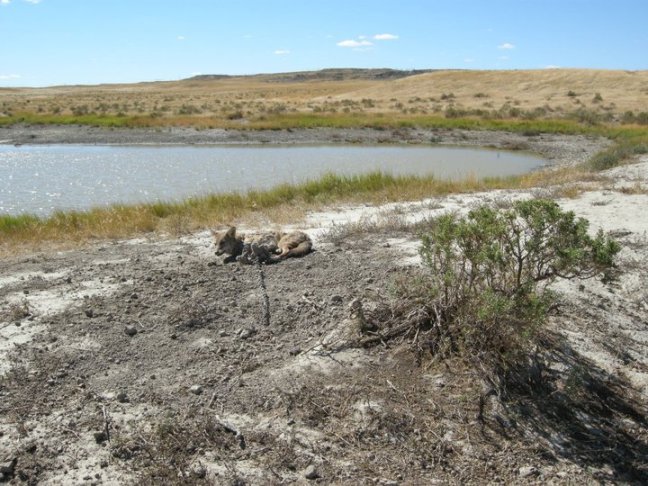
The photos were posted by Jamie P. Olson, who works as a trapper for an agency called Wyoming Wildlife Services, a branch of the U.S. Department of Agriculture’s Animal and Plant Health Inspection Service whose job includes controlling nuisance predators. They clearly show that Olson loosed his dogs on  a coyote while it was in the trap and took photos as they tore the animal apart. It is unclear if the photos show a single coyote or if two coyotes are pictured. Nevertheless, the result is the same.
sheyote_Sept5-2010

(Photo: Jamie Olson)

(Photo: Jamie Olson)

(Photo: Jamie Olson)

(Photo: Jamie Olson)

The photos led Rep. John Campbell of California to call the actions “flat-out animal cruelty,” and accuse the agency of “stonewalling” attempts to investigate allegations of animal abuse. Campbell said the photos are indicative of widespread problems within the little-known agency–ranging from possible misuse of taxpayer money to alleged animal abuse of predatory and non-predatory wildlife.

(Photo: Jame Olson)

(Photo: Jame Olson)

Jamie Olson trophy photo

Jamie Olson trophy photo

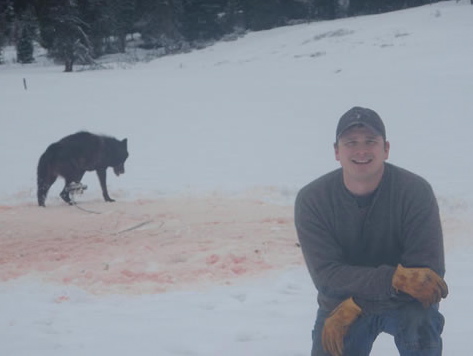
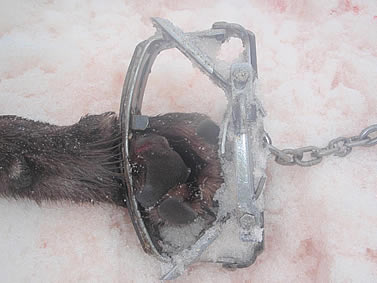
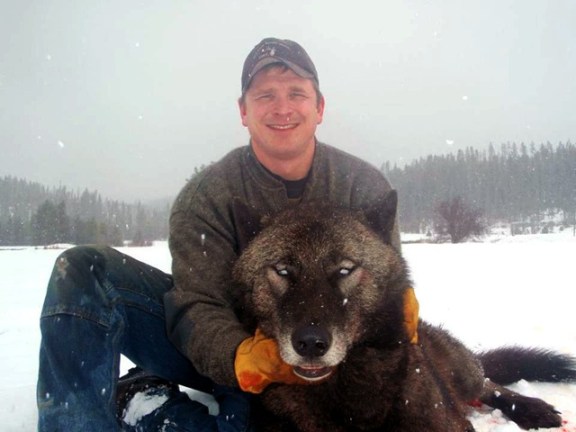
A similar act of appalling insensitivity happened only last month (see ANIMAL POST November 14—“Trophy Animal”) when U.S. Forest Service Employee Josh Bransford in Idaho snapped before and after trophy photos of a wolf caught in a leg snare.

Josh Bransford with trapped wolf. (Photo: Josh Bransford)

Josh Bransford with trapped wolf. (Photo: Josh Bransford)

Wolf’s paw in Bransford’s trap. (Photo: Josh Bransford)

Wolf’s paw in Bransford’s trap. (Photo: Josh Bransford)

“We believe there’s kind of a pattern here that this has become almost sport to put out these traps,” Campbell said . “We think there are a lot of non-lethal ways to protect livestock. But instead, they use these leg holds, which are extremely cruel. The animal takes a long time to die.”

Campbell also said he has “increasing evidence” of taxpayer money being used for “private purposes,” including protecting the livestock of private ranchers. “I have cattle myself,” he said. “I don’t think it’s the taxpayer’s responsibility to protect my cattle. That’s my responsibility.”

Bransford trophy photo. (Photo: Josh Bransford)

Bransford trophy photo. (Photo: Josh Bransford)


Source: Wild Earth Guardians.

Stop the eviction

Posted on December 14, 2012

Animals Asia’s Vietnam sanctuary, home to 103 rescued bears, is threatened with eviction. Click here to find out more and help us STOP THE EVICTION.


Source: London Animals Asia Support Group

Asiatic cat under azure sky

Posted on December 14, 2012

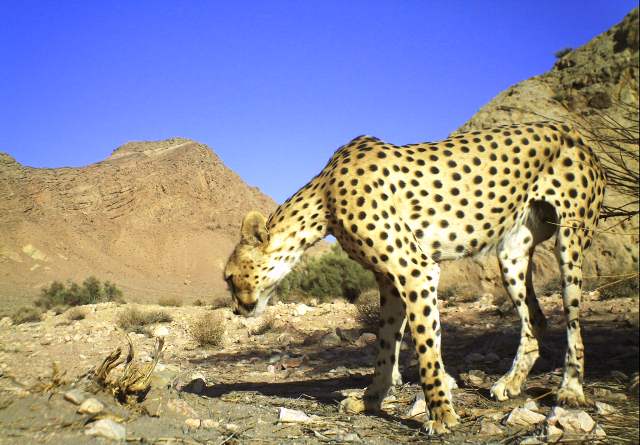
Asiatic cheetahs are the second rarest cat in the world just after the Amur leopard. Their numbers are so low that no more than 70 individuals inhabit the entire country, meaning the entire Asian continent.

Asiatic cheetah in Ariz No Hunting Area, central Iran, summer 2012 (Photo: Iranian Cheetah Society/YazdDoE/CACP/Panthera)

Asiatic cheetah in Ariz No Hunting Area, central Iran, summer 2012 (Photo: Iranian Cheetah Society/YazdDoE/CACP/Panthera)


Source: Iranian Cheetah Society

50,000 hens

Posted on December 13, 2012

Background

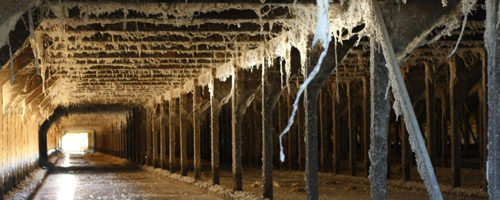
In February 2012, authorities in Turlock, California walked into the abandoned egg-laying facility of A & L Poultry and discovered 50,000 hens that had been abandoned without food and left to die. Some 20,000 of the hens had already starved to death. Others had drowned in giant manure pits beneath their cages. 25,000 more had to be euthanized to end their suffering.

Manure pit beneath the sheds where many hens drowned. (Photo: Marji Beach/Animal Place)

Manure pit beneath the sheds where many hens drowned. (Photo: Marji Beach/Animal Place)

Bedraggled and near death, this hen waits for special medical care. (Photo by Marji Beach/Animal Place)

Bedraggled and near death, this hen waits for special medical care. (Photo by Marji Beach/Animal Place)

Hen stretches and flaps her wings for the very first time. (Photo: Marji Beach/Animal Place)

Hen stretches and flaps her wings for the very first time. (Photo: Marji Beach/Animal Place)

Rescue

Animal Place, Farm Sanctuary, and Harvest Home Animal Sanctuary stepped in to rescue the remaining 5,000 birds. The next morning, volunteers from the three sanctuaries arrived at the scene.

Jamie London and Jacie Volek help care for sickest hens. (Photo: Marji Beach/Animal Place)

Jamie London and Jacie Volek help care for sickest hens. (Photo: Marji Beach/Animal Place)

Kelle Kacmarcik cares for a rescued hen. (PHOTO: Christine Morrissey/Harvest Home Animal Sanctuary)

Kelle Kacmarcik cares for a rescued hen. (PHOTO: Christine Morrissey/Harvest Home Animal Sanctuary)

They focused on getting birds out from sheds the size of football fields that each held 25,000 hens. Cage after cage of birds crammed together.

The whole day hens were gassed (euthanized) at the other end of the building. As a volunteer explained, “you just have to put it out of your mind. We’ll help as many as we can. That’s the hardest thing, knowing you can’t save them all…but it matters to the one that you can. In terms of rescue, that is the principle I live my life by.”

(Photo: Animal Place)

(Photo: Animal Place)

At six that evening, the state veterinarian said: “no more.” There weren’t any more savable hens. And yet, in the first barn, volunteers suddenly saw a bird walking towards them. The hen stumbled outside, then wandered, dazed, back into the barn toward the manure pit. They were able to net this last bird and bring it to safety.

In all the rescuers saved about 4,650 pale, dehydrated, and starving birds.

Egg-laying hens receive no federal protections, although California voted to ban cruel battery cages like those at A&L Poultry. That law goes into effect in 2015.

(Photo: Animal Place)

(Photo: Animal Place)

The Legal Case

Representing the sanctuaries, Animal Legal Defense Fund (ALDF) and Schiff Hardin sued the owners of the egg farm to hold them responsible for their cruelty.

The hens stuffed in battery cages at A & L Poultry had been denied their ability to engage in natural behavior. Their cages were so small they couldn’t even open their wings. Their beaks had been cut off (without anesthetic) to prevent pecking. Finally, A & L Poultry had abandoned these hens like disposable garbage.

Although factory farms are rarely held accountable for the immense suffering they inflict on animals, ALDF’s lawsuit aims to place responsibility on the people who caused the pain and distress to tens of thousands of helpless animals—and compensate the sanctuaries who took them in.

Justice Proceeds

The farmers sought to have the case dismissed, but on December 5th, the Stanislaus County Superior Court rejected the farmers’ arguments, and sided with the Animal Legal Defense Fund, ruling in favor of the three sanctuaries, and allowed the historic lawsuit to proceed, based on the largest rescue of farmed animals in California history.

TIgress

Posted on December 13, 2012

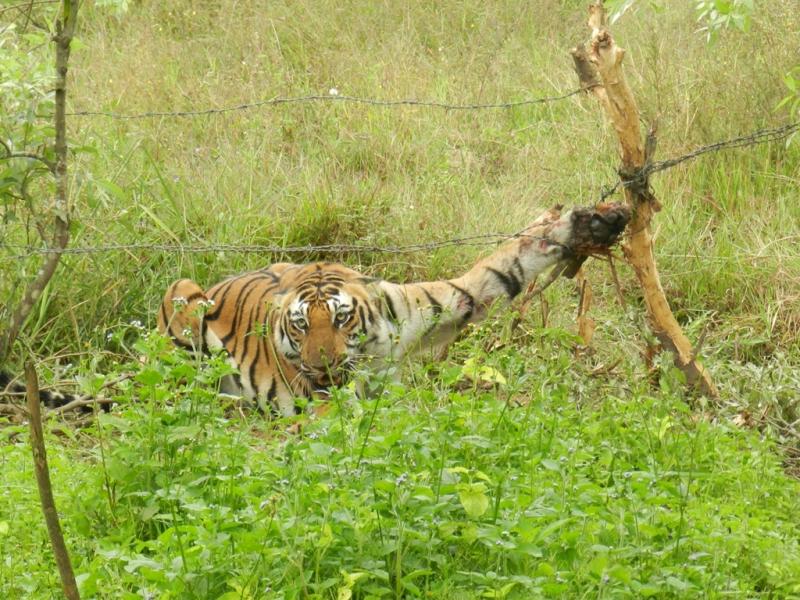
Dec. 12, 2012 — Last week, villagers in Nidugumba in southwest India, saved an injured tiger that had become caught in a barbed wire fence.

Tigress caught in barbed wire fence. (Photo: Karnataka Forest Department)

Tigress caught in barbed wire fence. (Photo: Karnataka Forest Department)

The adult female was discovered on a coffee plantation on Dec. 4 with its paw entangled. The coffee planter and other community members quickly called authorities while preventing the tiger from being harassed. Big cats, when caught in snares or fences, struggle fiercely and often further injure themselves.

A team of forest rangers and veterinarians arrived and tranquilized the cat and untangled it from the fence. The tigress is now undergoing examination at the Mysore Zoo to assess her injuries, age, and health status so that an informed decision can be made about her future.

Such situations often end tragically. Just two days before on Dec. 2, a cornered tiger near Wayanad Wildlife Sanctuary in Kerala State, was shot dead by officials amid chaos created by a mob. The incident happened less than a mile outside the boundaries of Nagarahole National Park that has a high density of tigers.


Source: Wildlife Conservation Society

Wild horses

Posted on December 12, 2012

wildhorse graphic

Protect America’s wild horses and burros by stopping the federal government’s systematic elimination of these national icons from our public lands.


Source: American Wild Horse Preservation