First Light Productions

investigative journalism

Posts tagged “Asian leopard

Panthera pardus saxicolor

Posted on February 7, 2014

In the past 40 days alone, seven rare Persian leopards have been killed or injured in Iran by poachers, food poisoning and cars, according to Iranian media reports.
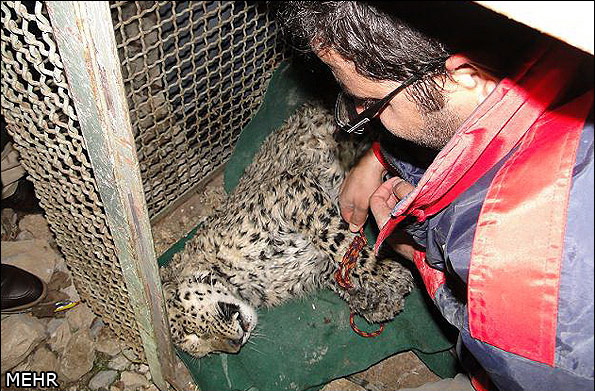
Leopard cub saved (Dec. 2013) after being trapped in well in sw Iranian city of Khorramabad. (Photo: MEHR News Agency)

Leopard cub saved (Dec. 2013) after being trapped in well in sw Iranian city of Khorramabad. (Photo: MEHR News Agency)

The leopard most recently harmed was found in a forested area in the north of Iran with one front leg cut off by a foot-snare trap. After transporting the large male to a veterinary center, radiography showed he was suffering from more than 50 small pellets and bullets scattered throughout its body and could not move due to spiral cord damage. His prognosis is dire.

The Persian leopard, one of the mascots of the Sochi Olympics and the largest member of the cat family in Iran, is considered an endangered subspecies on the IUCN Red List.

An unreliable estimate of the leopard population in Iran is 550-850 individuals. Little scientific data about them has been collected. It is known that their population has drastically declined across their range, largely due to the decimation of ungulates, their main food source. Food scarcity increases the potential for conflict between humans and leopards as they travel more widely for food.
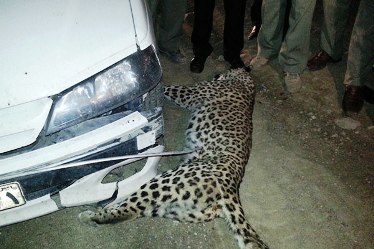
Leopard killed in an automobile accident in Sefidkooh protected area near Khorramabad. (Photo: Mehr News Agency)

Between 2007 and 2011, 71 Persian leopards were killed by illegal hunting or poisoned. Twelve of the cats have been killed in the last 11 months alone, according to Iranian media. It is believed the actual number killed is much higher than reported.
Plateau animals

Posted on August 27, 2013

Wildlife across North Central Asia

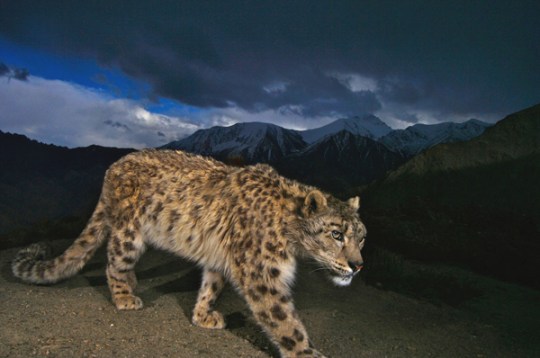
Snow leopard. (Photo: Panthera)

is being driven to the margins of survival by huge increases in the numbers of cashmere goats being set loose on wild grazing lands.

Cashmere goats in Mongolia. (Photo: Juho Korhonen / CC BY-NC-ND 2.0)

The goat herds  — a dramatic three-fold increase over the last two decades – are eating up the grass that previously supported antelopes, wild asses, yaks, camels, and other native wildlife. Loss of these prey species in turn affects the survival of predators, such as snow leopards, Asiatic leopards, bears and wolves living on the brink of extinction.

A study

published in the journal Conservation Biology, shows that 95% of all the forage across the Tibetan plateau, Mongolia and northern India was consumed by goats, sheep and other livestock, leaving just 5% for wild animals. The study concludes that expansion of the goat herds is most likely causing the decline of eight core species.

Zero sum game

Pressed for food the big cats and wolves attack livestock and are killed in retaliation by herders or their dogs. With the increase in domestic animals also comes disease to which the wild species are extremely vulnerable.

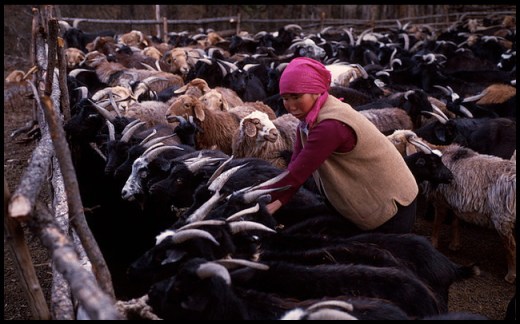
Mixed herd of Pashmina, other goats and sheep in predator-proof corral, implemented through Snow Leopard Conservancy program in Ladakh, India. (Photo: Chinch Gryniewicz)

A solution

may lie in creating a sustainable market for cashmere. Giving rewards to goat herders who protect wildlife. Livestock farmers might be compensated for vaccinating their animals to limit the spread of disease, and for housing goats in protective enclosures. Cashmere sourced from these farmers could then be marketed as eco-friendly; a tactic that worked for the “dolphin safe” tuna fishery.

In Mongolia alone, numbers of domestic goats have grown from 5 million in 1990 to almost 14 million in 2010. Ninety percent of the world’s cashmere comes from China and Mongolia.