First Light Productions

investigative journalism

The Many Faces of Poaching

Posted on March 16, 2014

Tisha Wardlow's avatarFight for Rhinos

poacher arrested with bush meat Poacher arrested with bush meat.

The Poacher:

The poor man living in a hut with a pregnant wife and 3 skeletal children. One perhaps with a tear running down a sunken cheek, the wife begging the husband to find them enough for a meal. Finally, in exasperation the man reluctantly sets off on a dangerous, one-time mission to take part in killing an elephant or rhino. The few dollars will feed his hungry family for a week (if he makes it back alive).

Is this what you imagine when you think of a poacher?

Think again. Although  poverty is one aspect of poaching and can be a reason, it does not account for all of it. In fact, wealth is the driving force behind the most  destructive killings: mainly  our elephants and rhinos.

There are two types of poachers:

1) Subsistence Poachers – they target small game, have low technology…

View original post 479 more words

Japan To Half Its Tuna Catches In Northern Pacific

Posted on March 12, 2014

narhvalur's avatarAnn Novek( Luure)--With the Sky as the Ceiling and the Heart Outdoors

The Fisheries Agency has decided to increase protection for bluefin tuna amid international concerns about declining stocks, according to major media, including the Yomiuri Shimbun and the Mainichi Shimbun.

Studies have found stocks of bluefin tuna, prized by sushi lovers, have fallen dramatically, with juveniles forming the majority of specimens now being caught, pushing the species closer to extinction.

Last year, an international conference involving Japan agreed to cut each nation’s quota for juvenile bluefin tuna in 2014 by more than 15 percent from the 2002-2004 average, according to Kyodo News.

But Japan, the world’s biggest tuna consumer, has concluded bluefin tuna stocks will not sufficiently increase unless the quota is significantly reduced, the Yomiuri said.

The Japanese plan is aimed at encouraging other nations to adopt bigger cuts in their tuna catch quota, Kyodo said.

Explore further:     Pacific nations agree to cut bluefin tuna catches

Read more at:

View original post 1 more word

Animal Traitors Amongst Us: Sea Shepherd And Paul Watson Supports Bindi Irwin’s Engagement With SeaWorld :(((

Posted on March 9, 2014

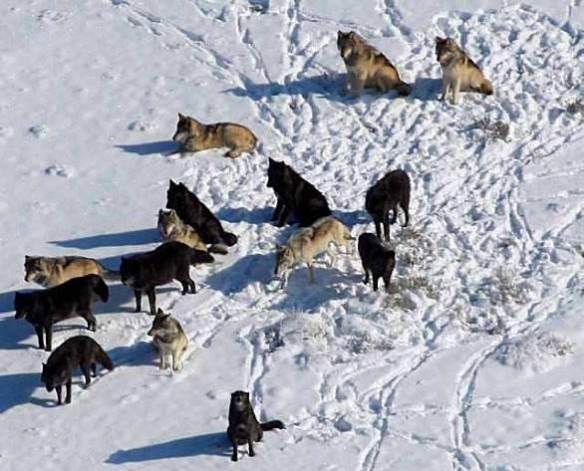
Killing of entire Alaska wolf pack upsets National Park Service…And Me!

Posted on March 9, 2014

Exposing the Big Game's avatarExposing the Big Game

Before admiring the “subsistence” lifestyle, think of wolves that the state of Alaska shoots from planes to provide “game” for their hunters…

1920111_431261803643276_674028611_n

by Nick Provenza

FAIRBANKS, Alaska (AP) — Alaska Fish and Game officials killed an Eastern Interior wolf pack last week, and the National Park Service — which had been studying the animals — is none too pleased.

The Fairbanks Daily News-Miner reports that all 11 wolves in the Lost Creek pack near Yukon-Charley Rivers National Preserve were shot. That included the pack’s alpha pair, which had been fitted with tracking collars as part of an ongoing research project.

Doug Vincent-Lang, acting director for the Alaska Division of Wildlife Conservation, says the wolves were in an area adjacent to the preserve that has been targeted by the state for aerial predator control, which is part of an effort to boost moose and caribou numbers.

But Yukon-Charley Superintendent Greg Dudgeon…

View original post 230 more words

Palm Oil Plantations Allegedly Poison Seven Critically Endangered Sumatran Elephants

Posted on March 8, 2014

narhvalur's avatarAnn Novek( Luure)--With the Sky as the Ceiling and the Heart Outdoors

Wildlife officials suspect foul play in the deaths of seven Sumatran elephants on the outskirts of Tesso Nilo National Park. Officials stumbled on the corpses of one female elephant, five young males, and one male calf in mid-February. Although the males had their tusks hacked off, the officials suspect the elephant were poisoned in revenge for disturbing illegal palm oil plantations inside the park.
“There is an indication that they were poisoned,” Muhammad Zanir, head of the local wildlife agency, told the AFP. “Some people may consider the elephants a threat to their palm oil plantations and poison them.”
Sumatran elephants (Elephas maximus sumatranus) are listed as Critically Endangered by the IUCN Red List, with populations decimated by the massive deforestation that has transformed the Indonesian island over the last couple decades. In recent years, Sumatran elephants are also falling victim to mass-poisonings, allegedly undertaken by some palm…

View original post 262 more words

China Gov’t Ban On Shark-Fin Soup Is Not About Protecting Endangered Species

Posted on March 6, 2014

narhvalur's avatarAnn Novek( Luure)--With the Sky as the Ceiling and the Heart Outdoors

China bans shark-fin soup at state banquets

                            The ban is ostensibly about promoting frugality, not protecting endangered sharks, but environmentalists say it may still help erode the controversial dish’s popularity.
    Tue, Dec 10, 2013 at 12:24 PM

Photo: U.S. National Ocean Service

China has banned shark-fin soup from official government banquets and receptions, according to a report from the state-run Xinhua news agency, part of a crackdown on political extravagance that also covers bird’s-nest soup and other wild-animal products.
The Communist Party of China’s announcement doesn’t focus on the practice of shark finning, which kills an estimated 100 million sharks worldwide every year, and is framed more as an effort to limit the cost of publicly funded state banquets. Still, it fulfills a vow the government made in 2012 to phase out the controversial soup, brewed from fins sawed off…

View original post 468 more words

More Deaths At Surabaya Zoo

Posted on March 1, 2014

narhvalur's avatarAnn Novek( Luure)--With the Sky as the Ceiling and the Heart Outdoors

Surabaya. Within the span of just 11 hours on Wednesday, Surabaya Zoo lost two more animals, bringing to 11 the number of animal deaths this year at the facility dubbed by the international media the “zoo of death.”

Agus Supangkat, a spokesman for the zoo, confirmed on Wednesday that a female anoa — basically a miniature water buffalo — and a male dromedary camel were the latest animals to have died there. He said there was nothing unusual in the deaths, citing old age in the case of the anoa and a skin disease in the case of the camel.

“There are no physical bruises on the anoa’s body,” Agus said.

“We tried our best to save its life, especially considering how the anoa has been under the medical team’s watch.”

He said the anoa, named Happy, was on a list of 84 animals categorized in January as being ill…

View original post 352 more words

China Puts The ” Con” In Tiger Conservation And Terrible Animal Abuse In Chinese Tiger Farms

Posted on February 27, 2014

narhvalur's avatarAnn Novek( Luure)--With the Sky as the Ceiling and the Heart Outdoors

February 26, 2013

New report exposes the double standard which stimulates demand

LONDON: Despite signing up to global initiatives seeking to protect wild tigers and double their number by 2022, Government departments in China have quietly set about stimulating domestic markets for tiger skins and body parts.

As few as 3,500 tigers survive in the wild, yet more than 5,000 captive-bred tigers are held in Chinese ‘farms’ and ‘zoos’.

Investigations by the London-based Environmental Investigation Agency (EIA) have uncovered a legalised domestic trade in the skins of captive-bred tigers, sold as luxury home décor and stimulating the poaching of wild tigers and other Asian big cats as cheaper alternatives.

In addition, new evidence suggests a ‘secret’ Government notification on the use of the bones of captive-bred tigers is being used to justify the manufacture of ‘tonic’ wines.

Released today, the new EIA report Hidden in Plain Sight: China’s Clandestine Tiger…

View original post 529 more words

The Face of Elephant Poaching

Posted on February 23, 2014

Tisha Wardlow's avatarFight for Rhinos

Torn Ear R.I.P. Torn Ear

A beloved, venerable African elephant named Torn Ear was killed in Kenya on February 7 by poachers who shot him with poisoned arrows. Richard Bonham discovered Torn Ear’s fatal injury while observing him at a watering hole.

Bonham is the co-founder and the African operations director of the wildlife conservation organization, Big Life Foundation. He noticed that the elephant was walking with an irregular gait, and then he saw two wounds behind Torn Ear’s rib cage.

A veterinarian was summoned, and Torn Ear was darted with a tranquilizing drug. It was clear upon examination, Bonham said, that “the arrows had penetrated into the abdominal cavity, and peritonitis had set in, which meant that there was no hope for survival.” So Torn Ear was euthanized.

In a blog post the next day Bonham wrote:

“Yesterday we lost an iconic elephant, one of the few left on the continent…

View original post 62 more words

Chinese Construction Camps Eyed As Ivory Trade Bases In The Republic Of Congo

Posted on February 20, 2014

narhvalur's avatarAnn Novek( Luure)--With the Sky as the Ceiling and the Heart Outdoors

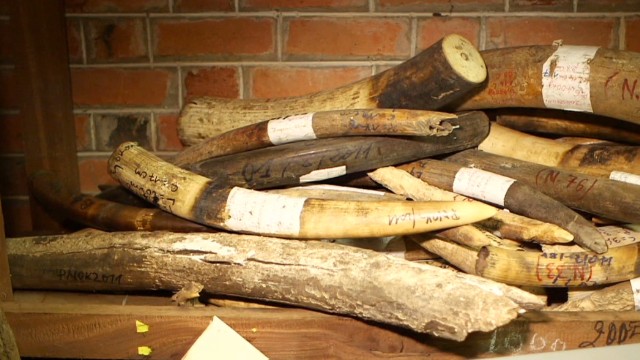
Chinese construction camps eyed as ivory trade conduits in Republic of Congo

By Arwa Damon and Brent Swails, CNN
January 8, 2014 — Updated 1230 GMT (2030 HKT)

Watch this video

Rangers search for illegal ivory

STORY HIGHLIGHTS
  • Anti-poaching leader is convinced Chinese construction camps are conduits for the ivory trade
  • The Congolese government vows to punish anyone found to be connected to poaching
  • A wildlife protection group works with Congolese authorities to find and shut down poachers

Odzala-Kokoua National Park, Republic of Congo (CNN) — The Republic of Congo’s main north-south road runs right on the edge of Odzala-Kokoua National Park. For now, it remains nothing more than a narrow dirt track and Odzala, the country’s largest park, very much remains one of the world’s last isolated natural Edens.

But Mathieu Eckel, head of the park’s anti-poaching unit, knows that is quickly changing. For the past year, Eckel has been gathering evidence…

View original post 1,869 more words

It’s not just the Orangutans that are in trouble!

Posted on February 20, 2014

USFWS Grants Landowner Permit to Kill Critically Endangered Red Wolf

Posted on February 20, 2014

Gabon: In the past decade as many as 15,000 of its 22,000 forest elephants have been slaughtered; destroyed by China’s lust for ivory

Posted on February 18, 2014

narhvalur's avatarAnn Novek( Luure)--With the Sky as the Ceiling and the Heart Outdoors

One man’s war on the ivory poachers of Gabon

As a frenzy of ivory poaching in central Africa brings forest elephants to the   brink of extinction, in Gabon a British-born zoologist has joined forces   with the president to declare war on the hunters. Photographs by James Morgan

In July 2012 President Ali Bongo Ondimba of Gabon ordered the destruction of seized ivory worth about $10 million Photo: James Morgan/WWF-canon
 

By Martin Fletcher

7:00AM GMT 03 Feb 2014


From the air the Minkébé National Park in the central African state of   Gabon   would inspire wonder in even the most jaded traveller. Its steamy   equatorial rainforest stretches from horizon to horizon, unbroken by a   single track or human habitation, punctuated only by occasional swamps and   granite outcrops. It is a dense green jungle the size of Belgium, with   towering trees – some hundreds of years old and 150ft high…

View original post 3,173 more words

Fatally flawed

Posted on February 16, 2014

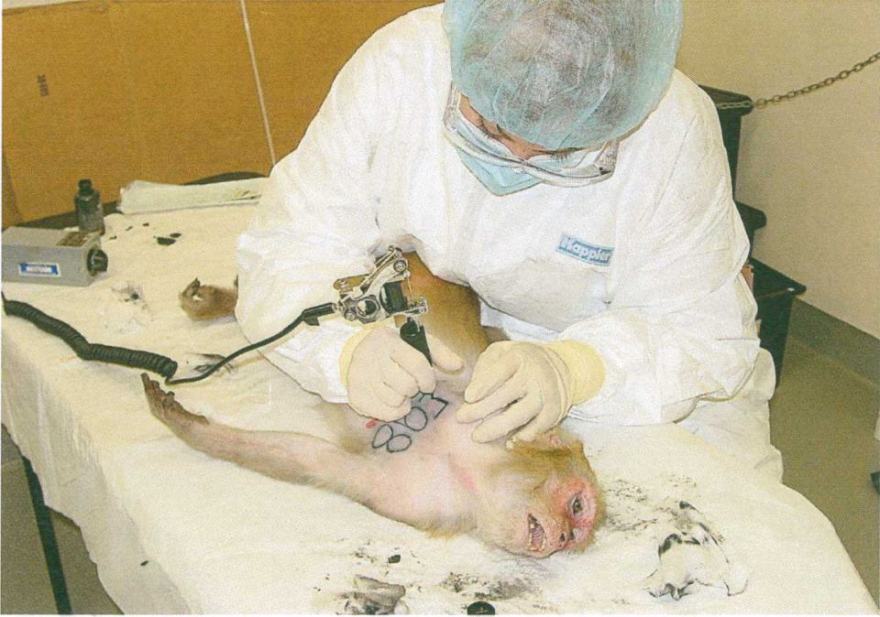
The animal rights group Eleventh Hour for Animals has filed a federal complaint against the University of Florida alleging a “culture of negligence” in regards to its treatment of lab research animals.

Stereotactic halo used on 6 macaques inside University of Floria.

Stereotactic halo used on 6 macaques inside University of Floria.

    Eleventh Hour waged a two-year legal battle and obtained hundreds of pages of research records that document the treatment of animals at the U.F. lab through 2010. The records contain descriptions of procedures not otherwise available. After reviewing the records the group alleges U.F. violated the Animal Welfare Act in its treatment of Louis, a macaque monkey who was euthanized in 2010.

    Karen Kline, senior laboratory investigator for Eleventh Hour said the records show that Louis and other animals were treated in a way that violated the Animal Welfare Act.

    There is no happy ending when going through the records of care given to these animals,” she said. “There just is not.”

    U.F lab tattoo.

    U.F lab tattoo.

    Eleventh Hour asked for swift, disciplinary action if the allegations are substantiated. That it were otherwise, but in all likelihood nothing will change and the lawsuit will come to naught.

    The lab inspection office of the USDA, the Animal and Plant Health Inspection Service (APHIS), claims its inspectors try to visit each lab in the country a minimum of once a year to ensure compliance.

    It doesn’t happen. APHIS has been chronically understaffed and underfunded since its inception. APHIS inspections are few and far between and generally superficial. Most “compliance” involves self-reporting by the labs themselves.

    Laws protecting research animals are minimal, at best. Things that a private person does to a pet that would be considered animal cruelty and punishable by law, are allowed under the Animal Welfare Act. Once an institution’s Animal Care and Use Committee approves an experiment, it’s a done deal.

    The Animal Welfare Act is fatally flawed in that it has no control at all over what happens to an animal in the operating theater.

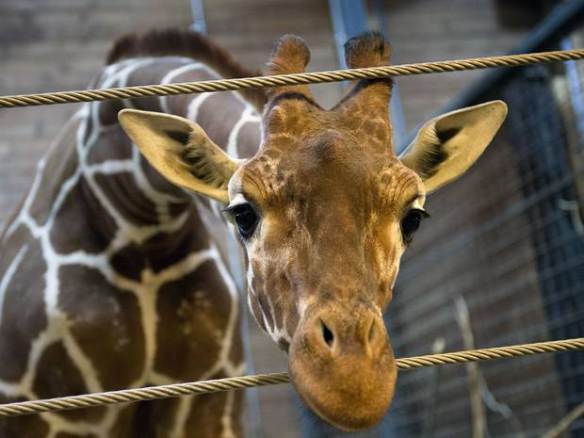
If you’re really saddened by the death of Marius the giraffe, stop visiting zoos

Posted on February 15, 2014

Exposing the Big Game's avatarExposing the Big Game

AN37096504FILES+-+Picture+t

http://www.independent.co.uk/voices/comment/if-youre-really-saddened-by-the-death-of-marius-the-giraffe-stop-visiting-zoos-9119868.html

We wouldn’t go to a prison to learn about typical human society, so it makes no sense to observe imprisoned animals in order to learn about them

by Mimi Bekhechi
Monday 10 February 2014

If there had ever been any doubt that zoos serve no purpose beyond incarcerating intelligent animals for profit, the slaughter of Marius, an 18-month-old giraffe, on Sunday has surely settled the issue. Copenhagen Zoo delivered Marius into a life of captivity, allowing his mother to give birth to the calf while knowing that the baby would be “surplus” to its requirements and “useless” for breeding because his genes were too common.

The zoo used the baby calf to attract visitors and then slaughtered him. He was shot rather than given a painless lethal injection, just so that his flesh wouldn’t be contaminated when it was cut up in front of horrified schoolchildren and, quite literally…

View original post 582 more words

Contraptions will follow

Posted on February 15, 2014

“Wilderness is about humility, the acceptance that we humans don’t know it all and never will. More than any other landscape, wilderness takes us beyond “self”; in it, we are part of something greater” – Howie Wolke.

Down East Fork Mink Creek. Bannock Mountains. May. (Photo: Ralph Maughan)

Down East Fork Mink Creek. Bannock Mountains. May. (Photo: Ralph Maughan)

“When mechanized mountain bikers demand access to proposed and designated wilderness, they fail to understand that if they succeed, owners of unimagined future contraptions will certainly demand equal treatment. So will modern-day snow machine and all-terrain vehicle owners. To loosen wildland restrictions now starts us down that slippery slope.”

Wolke makes a good point.

All Eyes Will Turn Towards China When The Wildlife Summit Starts Tomorrow

Posted on February 13, 2014

narhvalur's avatarAnn Novek( Luure)--With the Sky as the Ceiling and the Heart Outdoors

Even as the world’s leaders gather in London for the global wildlife trade summit, we all know what part of the world they have their eyes on.

China, where everyone knows demand for wildlife products is the highest.

I welcome the attention. Because in the last few months, we have made huge strides in my home country to fight wildlife trade, promoting awareness, changing attitudes, and ultimately reducing-perhaps in some cases, eliminating-this demand.

In just two days after the International Fund for Animal Welfare (IFAW) launched its Chinese New Year campaign “Give Peace to Elephants, Say No to Ivory Gifting,” the Weibo message was retweeted over 27,000 times.

While I was delighted to see more than 6,000 Chinese netizens sent in supporting comments @IFAW on Weibo, what particularly encouraged me were two other social media campaigns against wildlife consumption organized by none other but the Chinese government media…

View original post 889 more words