First Light Productions

investigative journalism

Posts by Michael Elton McLeod

Unprecedented assault

Posted on September 11, 2012

A global ban placed on the ivory trade in 1989 was widely credited with stemming a relentless slaughter of African elephants in countries such as Kenya. But elephant poaching in Africa has surged again, driven by Asian demand for tusks for use in jewelry and ornaments.

According to TRAFFIC, a conservation group which tracks trends in wildlife trading, most of the illegal African ivory winds up in China or Thailand. In 2011 there were at least 13 large-scale seizures of over 2,000 pounds of ivory, more than double the amount recorded in 2010. That figure probably represents the slaughter of some 2,500 elephants, possibly more.
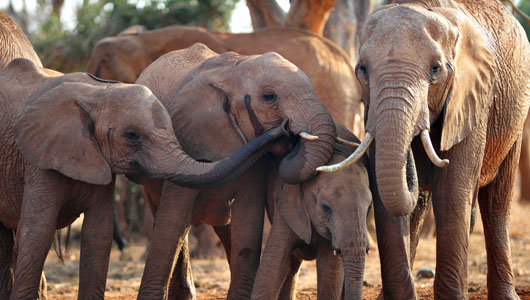
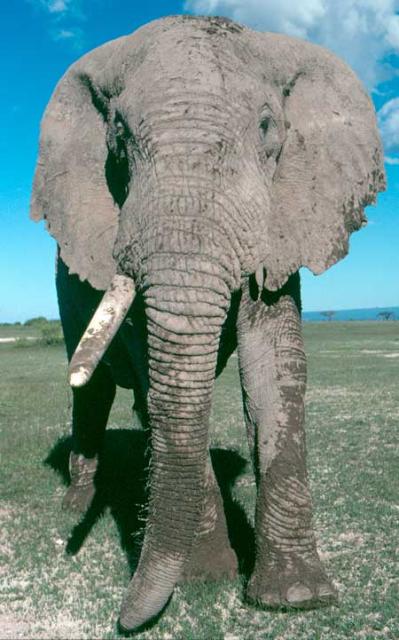
Elephants in Tsavo national park, Kenya. (Photo: ZUMA Press)

Tom Milliken, who manages TRAFFIC’s Elephant Trade Information System, said the poaching and illegal trade were consequences of China’s investment drive into Africa to secure the mineral and energy resources it needs to fuel its economic growth.

“We’ve reached a point in Africa’s history where there are more Asian nationals on the continent than ever before. They have contacts with the end use market and now they are at the source in Africa,” he told Reuters. It “all (adds) up to an unprecedented assault on elephants and other wildlife.”

Elephant poaching is particularly rampant in Democratic Republic of Congo, but killing for ivory has spread across much of Central Africa, including Zimbabwe, Zambia, northern Mozambique, Tanzania and Kenya.

Estimates of Africa’s elephant population vary widely from around 400,000 to 700,000.

Ironically, in some southern African states such as Botswana, there are large and growing populations of elephants, and in South Africa there are concerns that pachyderm numbers have swelled to the point that they are damaging the environment in enclosed reserves.


Source: Reuters Environmental Online Report
Animal Rahat

Posted on September 10, 2012

Animal Rahat is a unique program that aims to help some of the most neglected animals in the world—the bullocks, donkeys, and other working animals in India.

Animal Rahat volunteer

In addition to working animals, Animal Rahat also offers services to the many local “street dogs” who face an array of dangers, including disease, starvation, and being hit by vehicles.

Animal Rahat staffers sterilize as many dogs as they can, provide them with vaccinations whenever possible, and treat them for mange to relieve their incessant itching and hair loss caused by a weak immune system.

In August, an Animal Rahat volunteer trainee took the team to his village, where they treated 36 dogs for everything that ailed them!

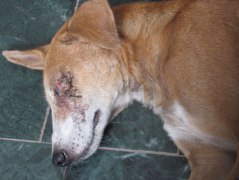
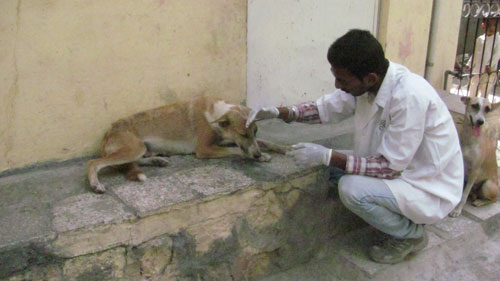
The Animal Rahat team discovered this dog languishing with an eye injury. According to local villagers, the injury happened during a scrap with another “street dog.”

Animal Rahat vets were able to find a compassionate villager, Mr. Zadbuke, who agreed to provide the dog with care and shelter for two weeks, and one of the vets returned regularly to treat the animal with antibiotics. Other than having a slight sensitivity to light in the injured eye, the dog has been recovering well, and the vets are following up on the case.


Source: http://www.animalrahat.com, via PETA.

Bears, bears…

Posted on September 9, 2012

This summer’s record breaking drought in the United States has killed off much of the food bears depend on, and the bruins have begun widening their range looking for something to eat. Drought-starved bears in Colorado have taken to burglarizing candy stores, kitchens, campsites and hotel bars. A bear wandered through a farmer’s market in downtown Aspen.

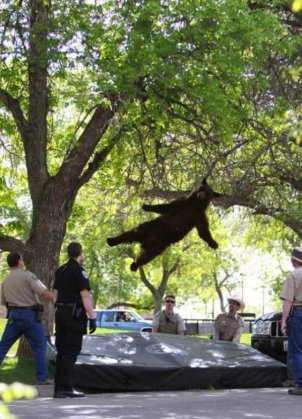
photo: Andy Duann/CU Independent

In April, a 280-pound black bear wandered on to the University of Colorado campus, climbed a tree and had to be tranquilized. Made locally famous as it was caught on film falling to the ground, it was relocated to a wilderness area about 50 miles west of Boulder. A week later, the same bear wandered onto a highway and was hit by two cars and killed.

A spokesperson for Colorado Parks and Wildlife said  that the state lacks a sufficient wilderness area to accommodate all the bears that wander into heavily populated areas. And a relocated bear often views the area where it was captured as its home range and does its best to return.

Once  a bear  hits town and they start getting to food sources, they become a “town bear.”

“A lot of them just don’t seem to care, anymore,” said a local sheriff. “They’re just wandering around.”

The increase in bear mischief is being reported across the country. From New York’s Catskills to Kentucky’s Appalachians, bears are moving into habited areas looking for food before winter falls.

Bears are not the only animals affected. The devastating drought that has effected much of the country has killed off grasses and other feed that a wide variety of wild species depend on. Wildlife officials across the country are worried about mass starvation among elk and deer populations. The problem is especially dire in the central and southern Great Plains. Sixty-three percent of the continental U.S. remains in a state of moderate to extreme drought.


Source: dailycamera.com

Sanctuary mentality

Posted on September 9, 2012

The past few weeks have brought many changes to our little corner of the world.

Spring has completely sprung, the expansion plans are moving forward, our newest residents are learning the ropes and we are preparing for the arrival of more beautiful souls. The days here at the Sanctuary tend to have a certain routine of feeding and cleaning with a sprinkling of the unexpected to keep everyone on their toes. Here, unexpected can mean any manner of mischief, medical issue or just the inclination that “something just isn’t right” with a particular resident. Luckily, almost any issue can be solved with a visit from our wonderful vet or a bit of creativity. For the rest I find myself researching the subject and becoming increasingly more frustrated by what I have started calling “farm mentality versus sanctuary mentality.”

I grew up on a small family farm, I know what the life is like, how the animals are treated and where they end up. Every year, for eleven years I spent every spring and summer feeding, grooming and documenting every aspect of my “project animals.” Rabbits, sheep, steers and pigs were not viewed as sentient beings but as projects to raise and send for slaughter. Hours were spent preparing for the show ring to demonstrate which “project” would make the best flesh for someone’s table, and the efforts were rewarded by a check after the fair week. The animals however, paid the ultimate price as many county fairs are “terminal shows” meaning that every “market” animal will end the week in a slaughter house.

The rest of the year was spent in the fields and keeping an eye on the small herd of “beef” cattle in the pasture. By farming standards those cows lived a good life. They received hay daily to supplement the pasture grass, grain in the winter and never faced the confinement common in many dairy operations and factory farms. The calves were left by their mothers’ side for six months or so and it wasn’t rare to have a cow or two around twenty years old. Yet for all of that, the cows are still separated from their calves, and the calves still face a terrifying death at a slaughterhouse. Does it really matter if the meat was happy in life when they all face the same death for humanity’s selfish purposes?

The “farm mentality” is a variant of the means being justified by the end result. The animals are raised for meat and other products so everything that is done to and for the animals must take that into account. Medications all list a “withdraw time” that a particular animal must go without the medication prior to being killed for “processing.” Many medications that are commonly used in other species are not reached for in “farmed animals” out of concern for how it will affect the desired product. This seems no different than withholding potentially helpful drugs to you or I out of a desire to use our organs after death.

Perhaps the most disconcerting is the lack of thought given to the mental state of the species being worked with. There will certainly always be times that something unpleasant must be done. Some vaccines must be done, wounds need to be treated and occasionally someone may need transported. The critical difference is in the approach. Farm mentality is results driven, the ends justify the means and patience is typically in short supply.

As a sanctuary, the duty is not only to provide the needed care but to do it in such a way that life suffers only a minimal interruption and as little stress as possible. Everything moves a little slower and many tasks take longer but here it is understood that human schedules don’t matter when compared to the peace and security of our residents.


–Cheryl Wylie, May 29th, 2012, writing in Vine Sanctuary News.

Happy cows

Posted on September 9, 2012

Life on the Bansen farm. Nicholas D. Kristof for the New York Times.

Susan Seubert for The New York Times

If you find the article firewalled, the takeaway is: “Like many farmers, Bob (a dairy farmer) frets about regulations and reporting requirements, but he also sympathizes with recent animal rights laws meant to improve the treatment of livestock and poultry. “You hate to have it go to legislation, but we need to protect the animals,” he said. “They’re living things, and you have to treat them right.”

Men with guns

Posted on September 8, 2012

September 2012–U.N. Radio reports that Congo’s army has captured a militia leader and 16 of his combatants who, in June, raided the headquarters of the Okapi Wildlife Reserve and Epulu Breeding and Research Station, situated in the northeast of the Democratic Republic of Congo.

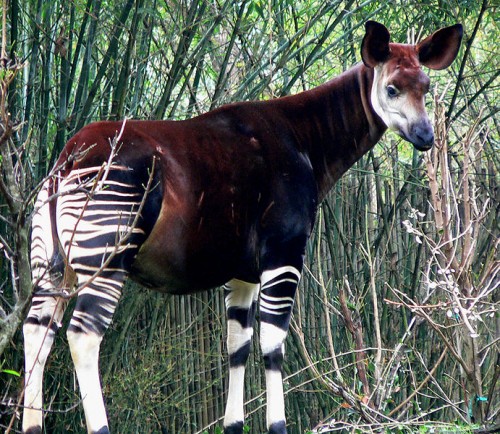
okapi (Wikimedia Commons)

The attackers, led by Paul Sadala, who goes by the alias Morgan, armed with AK-47 rifles, killed seven park staff and their family members. Others were taken hostage or are unaccounted for.

The Reserve infrastructure was completely destroyed and the 15 okapi of the station were all shot and killed, including some who had been “wildlife ambassadors” for 23 years. The Epulu station plays a central role in protecting the future of the okapi by serving as a reservoir for the infusion of new genetic stock into okapi populations in global conservation programs.

15 okapi and several rangers killed in raid on the Epulu Breeding and Research Station, Democratic Republic of Congo, June 2012.

The group, made up of ivory traffickers and illegal miners, was apparently seeking revenge on the Institute in the Congo for Conservation of Nature (ICCN) in retaliation for ICCN rangers who had disrupted elephant poaching and illegal mining activities in the Southern part of the Reserve.

The reserve is home to about 5,000 okapi–a rare giraffe-like forest creature that is only found in Democratic Republic of Congo and is a threatened species–and significant populations of leopard, elephant, chimpanzee and crocodile. Its bird life makes it one of the most important sites for bird conservation in mainland Africa. The reserve is also the home of the nomadic Mbuti pygmies.


Source: wildlifeextra.com

Insatiable demand

Posted on September 8, 2012

JAKARTA, July 31st, 2012— Acting on a tip, Indonesian police intercepted 85 endangered pangolins from smugglers in what is reported to be the first major pangolin seizure in Indonesia this year. Despite being stuffed into sacks, eighty percent of the animals were alive. The scaly anteaters were likely destined for Hong Kong or mainland China.

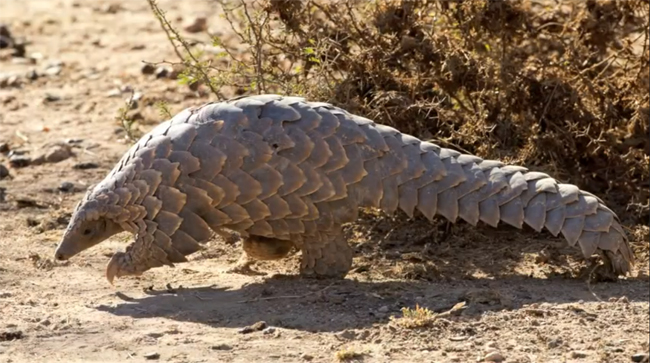
pangolin

Pangolins are approaching extinction as a result of insatiable demand (particularly from China and Vietnam) for all four pangolin species from East and Southeast Asia. The flesh of adults and babies is considered a delicacy, while the animals’ scales are used as an ingredient in traditional Chinese medicine. Such pangolin concoctions serve as a “cure-all remedy” for things like reducing swelling, improving liver function, promoting weight loss, stimulating blood circulation, enhancing lactation in breast-feeding women, and have even fallaciously been claimed to cure cancer. None of the medicinal claims made about the critters and their body parts have been backed by science.

Pangolins are disappearing at an alarming rate. In 2011 alone, an estimated 41,000-60,000 are believed to have been removed from the wild. An estimated 40,000 were killed.

Officials are working with a natural resources conservation agency to return the survivors to the wild. It is unclear how many of them may survive the reintroduction as they are known to commonly experience life-threatening complications after being removed from the wild.

Last month, Indonesia burned nearly thirteen tons of pangolin carcasses and scales seized from smugglers, thereby sending a message to consumers and profiteers that black market trade in these creatures will not be tolerated.


Source: Associated Foreign Press

Orangutan forest

Posted on September 8, 2012

An Indonesian court has instructed the governor of Aceh province to revoke a controversial license owned by a palm oil company accused of destroying orangutan habitat and carbon-rich peatlands on the island of Sumatra.

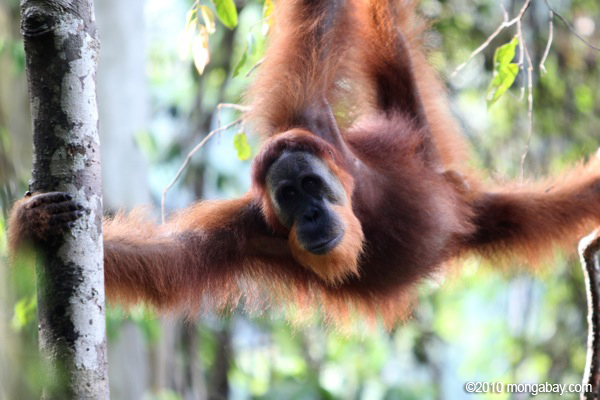
Sumatran Orangutan in the Leuser ecosystem (photo by Rhett A. Butler)

The permit allowing PT Kallista Alam to establish a 1,605-hectare plantation in the Tripa peat swamp is controversial because it violated a country-wide moratorium on new concessions in peatlands and primary forests issued in 2011 by Indonesian president Susilo Bambang Yudhoyono. It was granted by the former Aceh governor Irwandi Yusuf more than three months after the moratorium went into effect.

Over the past 20 years Indonesia has had one of the highest rates of forest loss in the world, but in 2009 president Yudhoyono pledged to reduce deforestation as part of a commitment to slow greenhouse gas emissions.

A local environmental group — the Aceh chapter Walhi — filed suit against PT Kallista Alam and the Aceh government to test the central government’s commitment to the moratorium. The case garnered international interest for both its egregious nature — multiple regulations should have protected the land from conversion — and the presence of critically endangered orangutans.


Source: Mongabay.com and The Jakarta Post.

Global Federation of Animal Sanctuaries

Posted on September 7, 2012

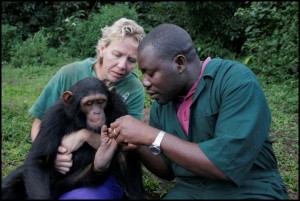
GFAS News — Stany Nyandwi, who risked his life and left his family to move 10 orphaned chimpanzees from Burundi to Kenya at the height of the civil war in 1995, then helped found both the Sweetwaters Chimpanzee Sanctuary (Kenya) and the Ngamba Island Chimpanzee Sanctuary (Uganda), received the 2011 Pan African Sanctuary Alliance Siddle-Marsden Award at the PASA Public Forum in Kent, U.K.

Stany Nyandwi (photo: PASA)

The award honors the African staff member who displays a commitment to primates, a commitment to conservation, and a commitment to excellence. Nyandwi also won the Disney Conservation Hero Award in 2008.

Vanishing feathered faces

Posted on September 7, 2012

According to the Red List of Threatened Species prepared by the International Union for Conservation of Nature, more bird species than ever are threatened with extinction. Research conducted by BirdLife International for the IUCN, found 1,227 species (12 percent) are classified as globally threatened with extinction. The Red List now lists 192 species of bird as Critically Endangered, the highest threat category, a total of two more than in the 2008 update.

Some examples.

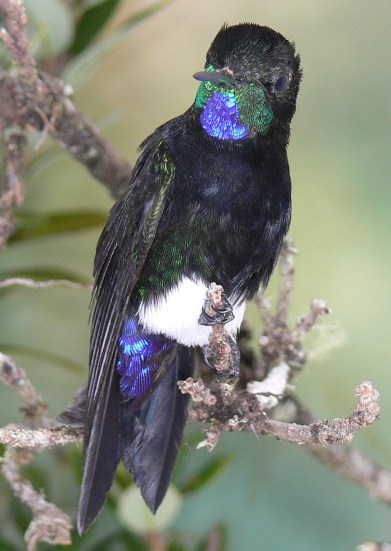
The Gorgeted Puffleg (Eriocnemis isabellae), a recently discovered iridescent hummingbird that clings to a tiny piece of cloud forest in the Pinche mountain range in south-west Colombia.

Gorgeted Puffleg (photo: Alex Cortes)

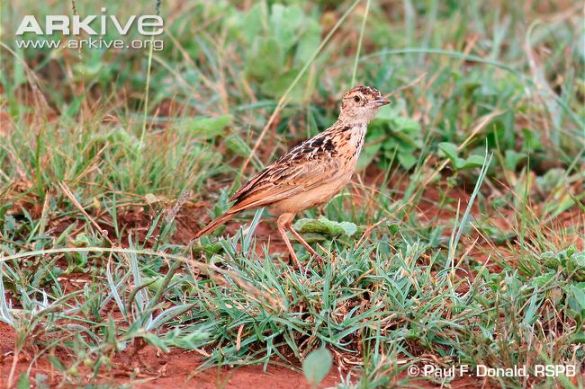
The Sidamo (Liben) Lark (Heteromirafra sidamoensis), from the Liben Plain of Ethiopia, has been recently moved from Endangered to Critically Endangered with the distinct possibility the species will become extinct in the next two to three years, becoming mainland Africa’s first bird extinction. The bird’s plight is due to the disappearance of the savannah of native grasses that traditionally covered large parts of east Africa, leaving it marooned on a tiny island of rangeland. The lark’s total population is now believed to number fewer than 250 mature individuals.

Sidamo Lark (photo: Paul F. Donald)

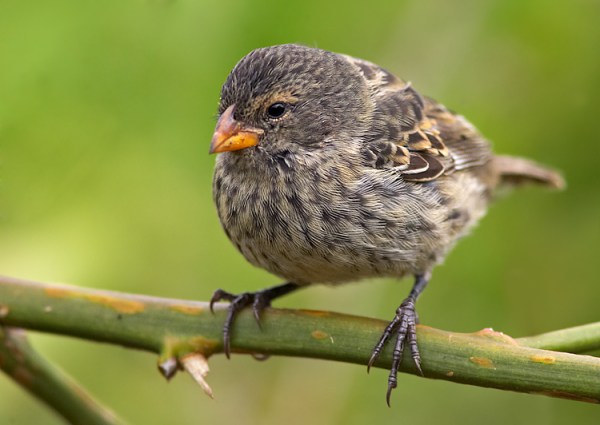
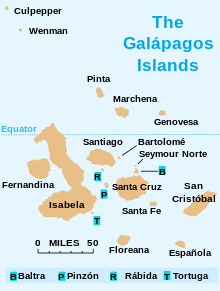
The Medium Tree-finch (Camarhynchus pauper), one of Charles Darwin’s famed finches from the Galapagos Islands. Dispiritingly, the bird’s critically endangered designation coincides with the 200th anniversary of Darwin’s birth.

Medium Tree Finch (photo: Laura L. Fellows)

The species is only found on Floreana Island at elevations above 250m in moist highland forest habitat.

The decline in the bird’s population is believed the result of an introduced parasitic fly.


A few bright spots exist.

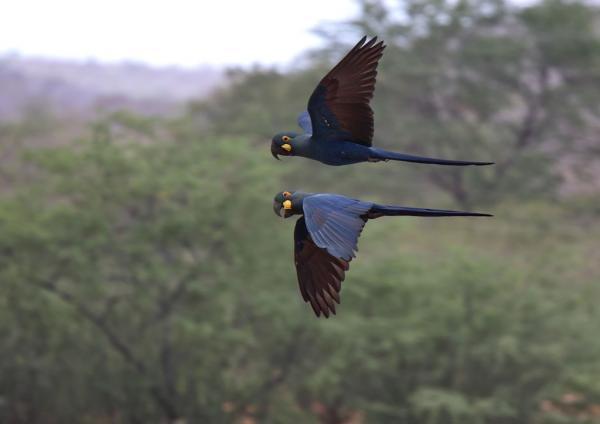
Lear’s Macaw (photo: Andy and Gill Swash WorldWildlifeImages.com)

Lear’s Macaw (Anodorhynchus leari) has been moved from Critically Endangered to Endangered. Named after the English poet, this spectacular blue parrot has increased four-fold in numbers as a result of a joint effort of many national and international non-governmental organizations, the Brazilian government and local landowners.

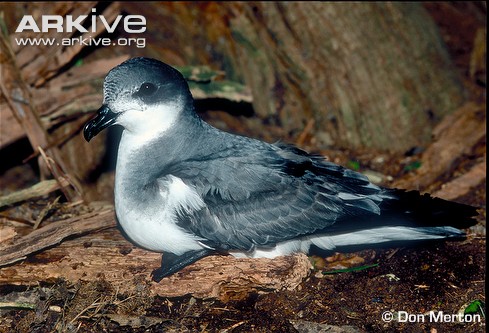
Chatham Petrel (photo: Don Merton)

In New Zealand, the Chatham Petrel (Pterodroma axillaris) has benefited from work by the New Zealand Department of Conservation and has consequently been moved from Critically Endangered to Endangered.

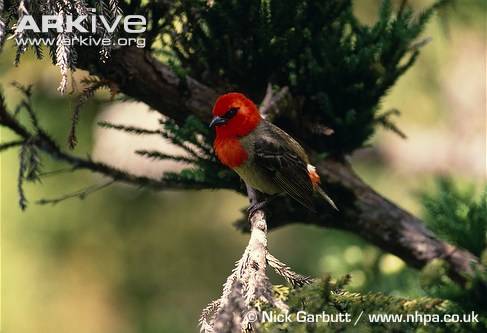
Mauritius Fody (photo: Nick Garbutt)

In Mauritius, the stunning Mauritius Fody (Foudia rubra) has been rescued from the brink of extinction after the translocation and establishment of a new population on a predator-free offshore island. It is now classified as Endangered, rather than Critically Endangered.


Source: IUCN.org

Free at last

Posted on September 6, 2012

A judge just signed a permanent injunction that allows Ben the Bear—who for six years had been confined to a barren concrete cage at Fayetteville, North Carolina-based roadside zoo Jambbas Ranch Tours—to reside permanently at the Performing Animal Welfare Society (PAWS) sanctuary in California.

At PAWS, Ben is thriving in a large natural habitat—one that is measured in acres, not feet and inches—where he bathes in his own pool, rubs his back on trees, and sleeps in a large straw nest under oak trees.

War zone animal

Posted on September 6, 2012

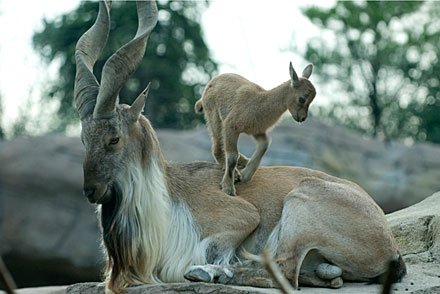
The markhor -- a majestic wild

The markhor is making a remarkable comeback in Pakistan. (photo: Grahm Jones/Columbus Zoo)

Community surveys led by the Wildlife Conservation Society have revealed that markhor populations in northern Pakistan’s Kargah region in Gilgit-Baltistan have increased from a low of approximately 40-50 individuals in 1991 to roughly 300 this year. The total markhor population in Gilgit-Baltistan may now be as high as 1,500 animals, a dramatic increase since the last government estimate of less than 1,000 in 1999.

Known for their spectacular corkscrew horns that can reach nearly five feet in length, markhors are an important prey species for large carnivores such as wolves and snow leopards. They have been listed as Endangered by IUCN since 1994, with a 2008 global population estimate of less than 2,500 animals across five countries: Pakistan, Afghanistan, Tajikistan, Uzbekistan, and India. They are threatened by illegal hunting, habitat destruction, and competition from domestic goats and sheep.

They are also susceptible to disease such as a pneumonia outbreak which occurred in September and October of 2010, believed to have killed at least 65 markhors—as much as 20 percent of the population remaining in the country. Researchers believe the wild goats may have contracted the disease from domestic goats.  The outbreak emphasizes the need for continuous disease surveillance in domestic animals that have contact with valuable wildlife resources.

Much of the rebound is credited to the efforts of conservation committees and wildlife rangers throughout Gilgit-Baltistan over the last 15 years that have been monitoring and managing the region’s wildlife and forests and clamping down on Illegal hunting and logging. Their protection extends to safeguarding markhor as they travel across steep-sided mountains into different areas.


Sourced from materials provided by Wildlife Conservation Society.

Kipunji

Posted on September 6, 2012

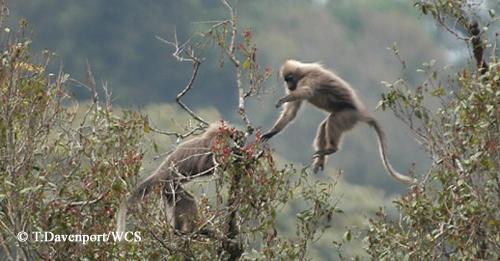
The kipunji, a monkey recently discovered in the Southern Highlands and Udzungwa Mountains of Tanzania is hanging on by a thread. The population of the large, forest-dwelling primate hovers at just 1,117 individuals. The monkey’s range is restricted to 6.82 square miles of forest in two isolated regions.

Kipunji at play in the highlands of Tanzania (photo: Tim Davenport/WCS)

The Wildlife Conservation Society is investing in the protection and restoration of the kipunji’s remaining habitat and local conservation education of local people to help safeguard the species remaining populations.

Much of the monkey’s remaining habitat is severely degraded by illegal logging and land conversion. The monkey is, no surprise, the target of poachers.

DNA analysis in 2006 revealed that the kipunji represents an entire new genus of primate–the first identified since 1923.


Sourced from materials provided by Wildlife Conservation Society, via EurekAlert!

Why Bears

Posted on September 5, 2012

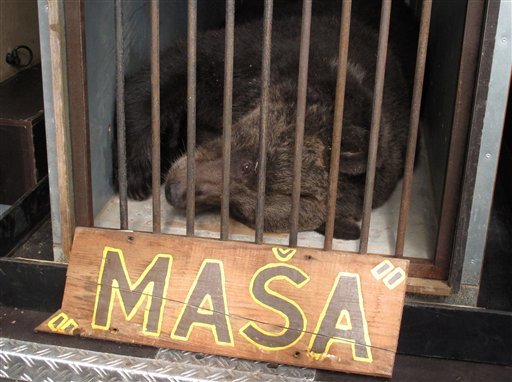
Kelme, Lithuania, Wednesday, Aug. 29, 2012 (AP) — Masa, a 20-year-old brown bear who had been living in a 160 square foot cage, was granted a measure of freedom and moved to a bear park in Germany after a campaign by animal activists to free the animal.

(PHOTO: Ricardas Vitkus / AP)

The bear was purchased as a cub by a Lithuanian businesswoman and kept outside a bar for 18 years as an attraction for customers .


(video here)