First Light Productions

investigative journalism

Posts by Michael Elton McLeod

Palau To Ban Commercial Fishing And Creates Sanctuary Roughly The Size Of France

Posted on February 11, 2014

narhvalur's avatarAnn Novek( Luure)--With the Sky as the Ceiling and the Heart Outdoors

History buffs will be familiar with Palau, an island country in the Pacific ocean with a population of about 20,000 people  spread across 250 islands, because of the battle of Peleliu, one of the major engagements on the Pacific front between the imperial troops of Japan and the U.S. Marines. But that’s the past. These days, Palau is making headlines for much more peaceful reasons: President Tommy Remengesau Jr. has declared the Pacific nation will ban commercial fishing. At a UN oceans conference, he declared that Palau’s 200 nautical mile Exclusive Economic Zone will be a “100 per cent marine sanctuary” (see the map above). This is very impressive and would create a protected zone about the size of France!

Flickr/CC BY-SA 2.0

Why is he doing this?

“We have no choice – the ocean is our way of life,” president Remengesau said. “It’s our livelihood…

View original post 178 more words

Chimp kingdom

Posted on February 10, 2014

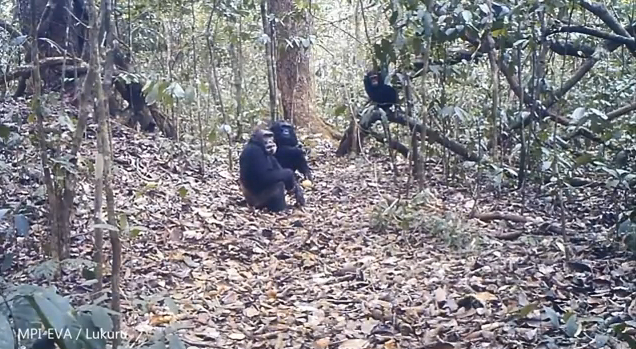
Researchers report the existence of one of the last thriving large colonies of chimpanzees on the planet in the remote Bili-Uele forest in the Democratic Republic of Congo (DRC).

Bili-Uele forest, Democratic Republic of Congo. (Lukuru Foundation)

    A vast, uncharted area of 50,000 sq km, the forest enclave is one of the last untouched wildernesses in Africa.

    Researchers first identified the chimp kingdom in 2007. Estimates place the number of chimps there in the multiple thousands. Elsewhere in Africa, chimp populations have shrunk from millions to just a few hundred thousand in the last century.

    The unusually large chimps in the Bili-Uele have been seen feasting on leopard. They build ground nests far more often than other chimps, and they have a unique taste for giant African snails.

    Motion-activated video cameras have recorded gangs of males patrolling their territory.

    The area is at great risk of being opened up. There is illegal gold mining in nearby areas. Members of the Lord’s Resistance Army move through the area, along with refugees and armed brigands from the war in the Central African Republic. Researcher fear these incursions will draw hunters seeking to feed the enormous bushmeat trade in the Congo basin.

    The chimps are protected in DRC law, but the law means little to poachers and corrupt officials who look the other way when paid to do so.


Shout out: Damian Carrington.

Friends in Unlikely Places

Posted on February 9, 2014

Tisha Wardlow's avatarFight for Rhinos

Rhinos are wild, large, sometimes unruly animals, but possess a peaceful, gentle side and form strong bonds just as much as any other creature.  Sometimes it’s with people,  often other rhinos, but occasionally it’s a bond of a more unusual nature. Such is the case with the following amazing individuals.

Fabian and Madame Gigi

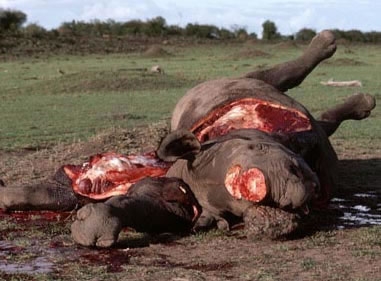
Recently there was a rhino poached in the Nyaru Game Lodge in Cape Town. This was particularly painful to the Lodge as Fabian the White Rhino was a favorite among guests and employees. Fabian was the only rhino at the reserve, as the rest were already sold because of poaching concerns. But the decision to keep him was due in part to his relationship with his friend Madame Gigi, resident pug puppy.

Nyaru owner Ruan Fouché described the day they met. “Madam Gigi, still a puppy, saw Fabian and ran towards him, and there, right in…

View original post 449 more words

Stop Hunting Giraffes for Sport

Posted on February 9, 2014

Exposing the Big Game's avatarExposing the Big Game

by Christopher Baranowski

Target: Governments of South Africa, Namibia, and Zimbabwe

Goal: End the brutal and inhumane hunting of giraffes for sport.

In many African countries, it is legal to hunt giraffes for sport. Hunters from around the world pay up to 15,000 dollars just for the chance to kill one of these animals. Despite declining giraffe populations, these African countries claim that hunting can be profitable for the government and citizens and that giraffe populations can be sustainably managed. But the continuation of this brutal practice only perpetuates the idea that these animals are a commodity and encourages illegal poaching. End the hunting of giraffes for sport today.

Hunters from countries like Russia, the United States and Germany pay thousands of dollars for plane tickets to countries like South Africa, Namibia and Zimbabwe where hunting of giraffes is still allowed. Game parks charge trophy fees for killing the animals…

View original post 379 more words

Panthera pardus saxicolor

Posted on February 7, 2014

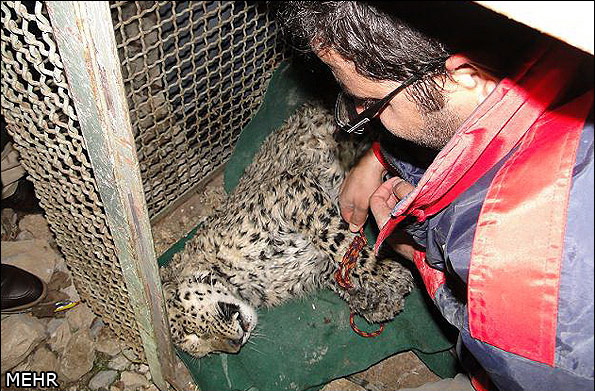
In the past 40 days alone, seven rare Persian leopards have been killed or injured in Iran by poachers, food poisoning and cars, according to Iranian media reports.

Leopard cub saved (Dec. 2013) after being trapped in well in sw Iranian city of Khorramabad. (Photo: MEHR News Agency)

Leopard cub saved (Dec. 2013) after being trapped in well in sw Iranian city of Khorramabad. (Photo: MEHR News Agency)

The leopard most recently harmed was found in a forested area in the north of Iran with one front leg cut off by a foot-snare trap. After transporting the large male to a veterinary center, radiography showed he was suffering from more than 50 small pellets and bullets scattered throughout its body and could not move due to spiral cord damage. His prognosis is dire.

The Persian leopard, one of the mascots of the Sochi Olympics and the largest member of the cat family in Iran, is considered an endangered subspecies on the IUCN Red List.

An unreliable estimate of the leopard population in Iran is 550-850 individuals. Little scientific data about them has been collected. It is known that their population has drastically declined across their range, largely due to the decimation of ungulates, their main food source. Food scarcity increases the potential for conflict between humans and leopards as they travel more widely for food.

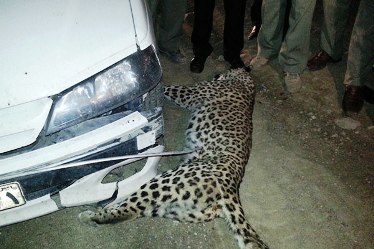
Leopard killed in an automobile accident in Sefidkooh protected area near Khorramabad. (Photo: Mehr News Agency)

Between 2007 and 2011, 71 Persian leopards were killed by illegal hunting or poisoned. Twelve of the cats have been killed in the last 11 months alone, according to Iranian media. It is believed the actual number killed is much higher than reported.

Danger zones

Posted on February 6, 2014

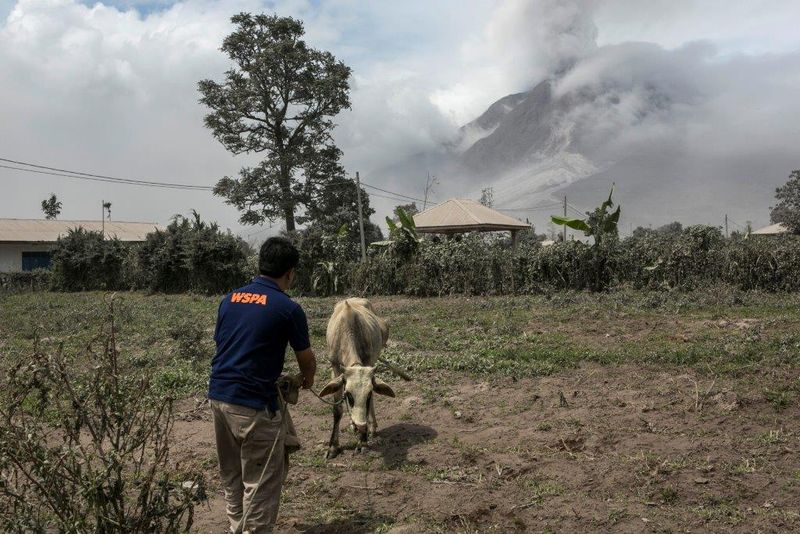
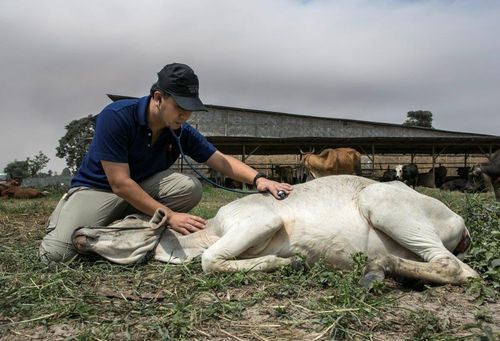
A team from the World Society for the Protection of Animals is on the slopes of Mount Sinabung in Northern Sumatra attending to hundreds of animals in the ash-covered wasteland surrounding the volcano which recently came back to life after 400 years of inactivity.

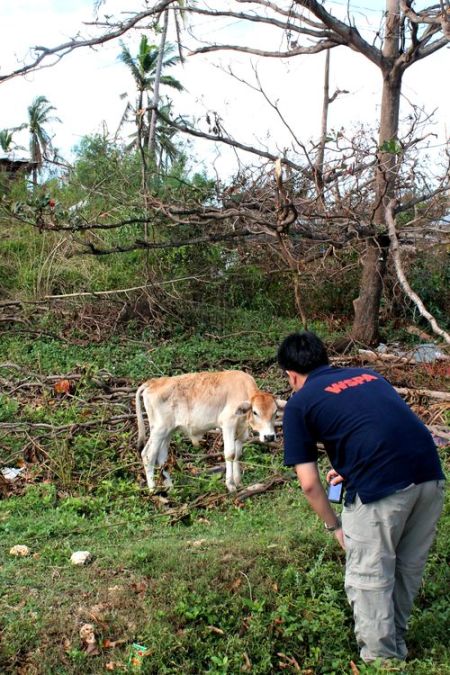
Approachding a cow in the danger zone around Mt. Sinabung.

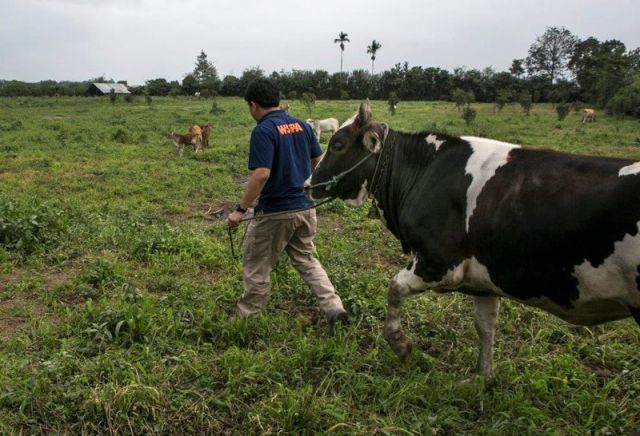
The team is focusing its efforts on the most affected areas within a 7 kilometer radius of the volcano, helping evacuate hundreds of animals to safety. Local food sources are coated with volcanic ash and unfit for animals to eat so WSPA has provided them with emergency feed for up to 8 weeks.

Walking a cow to safety after evacuation from the 7 kilometer danger zone.

A few months ago WSPA Disaster Relief Teams provided veterinary care, food and shelter for livestock and pets in the Philippines in some of the areas hit hardest by Typhoon Haiyan.

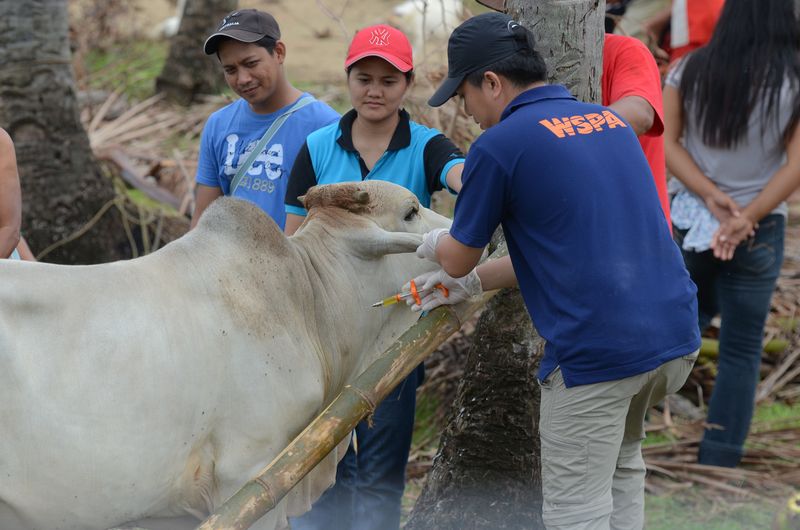
WSPA's Dr. Nartisorn Pholperm treats a cow in Northern Cebu Island.

WSPA’s Dr. Nartisorn Pholperm treats a cow in Northern Cebu Island.

With the help of 23 local volunteer vets, the WSPA team assessed over 13,000 animals and treated over 2000! Diarrhea and tick infestations were the most common conditions. Diarrhea which is usually caused by intestinal parasites can lead to malnutrition, and ticks can transmit deadly diseases. Both can prove fatal if left untreated. Thousands of animals were also vaccinated against a disease called hemorrhagic septicemia.

A volunteer vet with WSPA’s response team treats one of the Narucay family’s five cows.

Prospera Bernal brought her 15-year-old buffalo for treatment. He was injured during the typhoon and had a gash on his back that had not healed and become infected. Although the injury would not normally be serious, the stress of the typhoon, lack of proper food and medicines and the hot, humid temperatures can turn relatively minor injuries into life-threatening conditions. The animal’s wound was disinfected and he was given vitamin injections to boost his immunity to disease.

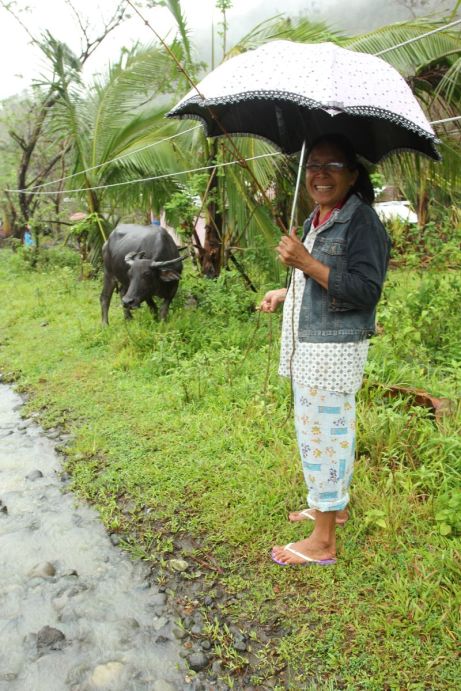
Ms. Bernal and her buffalo.

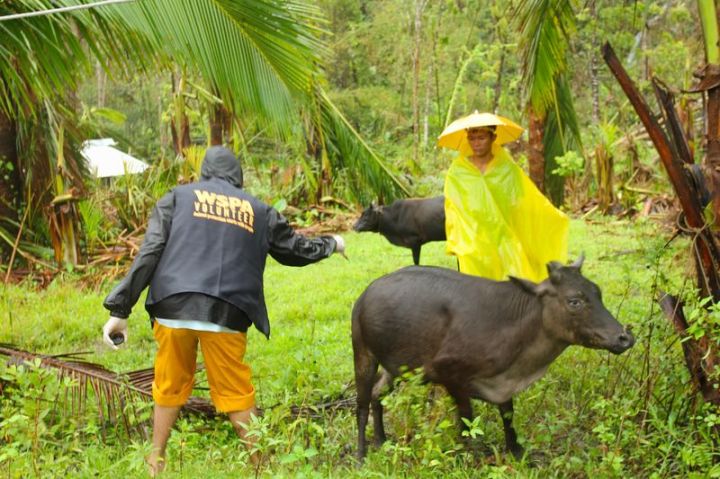
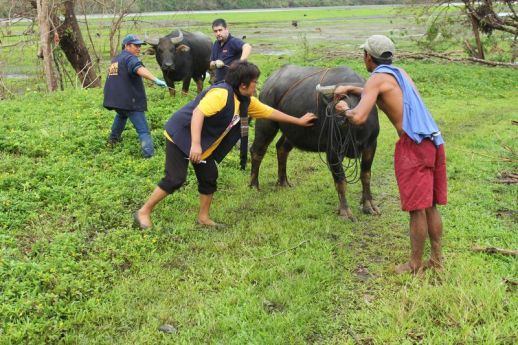
WSPA vet and volunteers demonstrate how to humanely restrain large animals while delivering medical care.

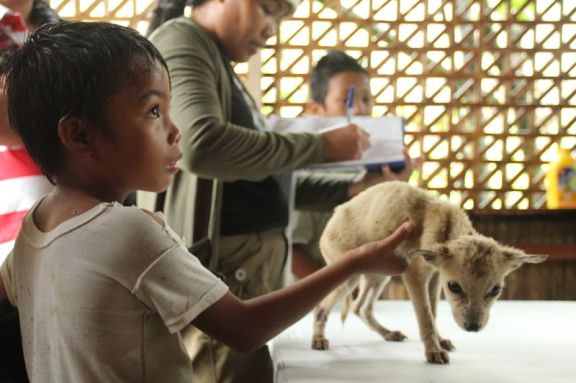
The team set up mobile veterinary clinics through the province. At each stop they made, children arrived with their puppies and farmers with their livestock.

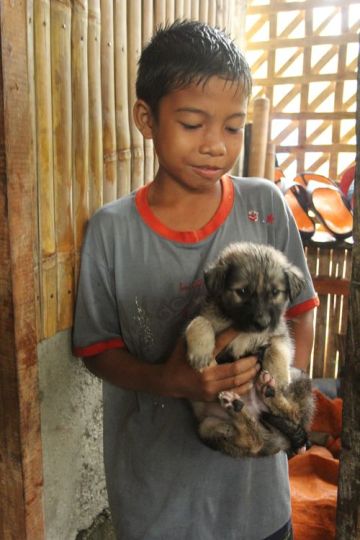
Two young boys from the same village Jomar Nalagan 10, and MarJo Nalagan Jr. 8, brought their puppies for treatment,

Jomar Nalagan and Lance.

Marjo listens to the vets explain how they are treating his puppy Brownie.

Villagers rely heavily on their animals for eggs and meat. They also help farmers work their fields and harvest their crops so they are integral to the villages long term recovery.

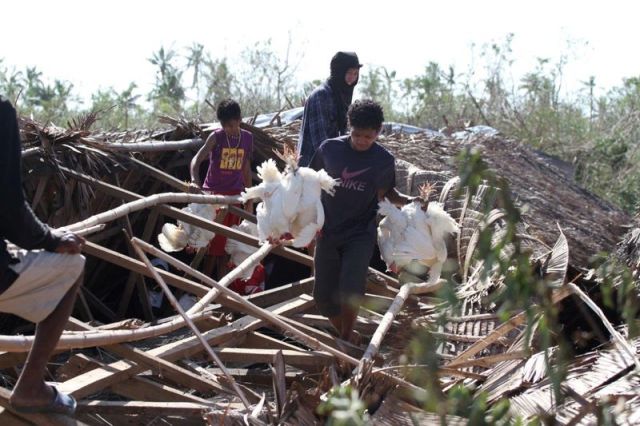
Poultry farmers have sifted through the debris to find live chickens they can relocate after their crops were destroyed in northern Cebu, Philippines. (Photo: WSPA/C. Baldicantos)

Approaching a young bull to assess its health.

Lunacy in shark territory

Posted on January 31, 2014

The Western Australian (WA) government has begun a program to kill sharks that appear near popular beaches along the Indian Ocean coast at the southwest tip of the country.
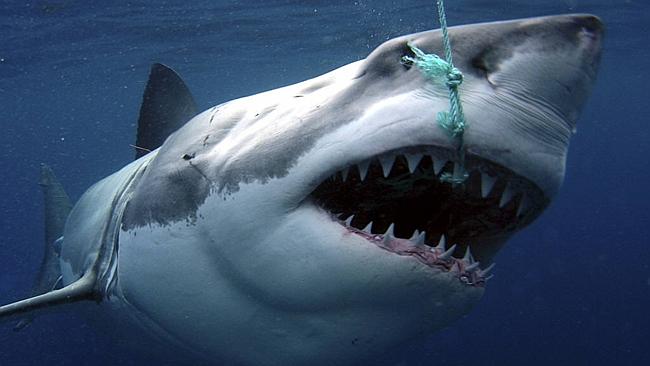
Great White, Australia.

Great White, Australia.

The first kill was confirmed on the 14th: a tiger shark shot one kilometer off Old Dunsborough in the South West region. Its carcass was dumped at sea.

Floating drums with baited hooks designed to attract the animals are affixed to the ocean floor 1km from beaches and surf breaks. The lines are monitored by commercial fishermen. Sharks over three meters sighted in these “kill zones” are shot.

Authorities say the program is a matter of public safety. WA is Australia’s largest state and there are ever more people in the water. Seven people have been killed by shark attacks there over the past three years. The death of a popular local surfer apparently spurred the federal environment minister to grant an exemption to kill sharks under the Environment Protection and Biodiversity Conservation Act. The exemption allows the killing of white, bull and tiger sharks over 10 feet long.

A majority of Australians don’t see the sense in such a policy when so many shark species have become endangered due to overfishing and mutilation for their fins.

COMMENTS:

Jupp – The idea of baiting sharks less than 1 mile away from the beaches is ludicrous and shows great lack of knowledge. It will attract more sharks to the area where people swim and could potentially create more problems. I am always amazed by how little those in charge know about sharks. First of all, sharks belong in the ocean and people do not. The oceans need sharks to stay healthy and we need the oceans to survive. Take the reef sharks away from the coral reefs, and the reefs will die within one year. Every shark has a job to do in the ocean. This is only for politicians to pretend that they are doing something for the public; when in reality they  accomplish nothing.

Lindsey – Baiting is sheer lunacy! Why attract sharks in! Isn’t that what we don’t want. It should be about finding ways to live in harmony, how about swim zones with sonar for detection for those that want to swim safely. STOP tagging sea creatures and interfering with their minds by implanting permanent noise into their bellies. Govt departments should be banned from interfering with Sharks which is just as bad as killing them. Don’t play with that which you do not understand.

Cahli – This cull is foolish and short sighted. There are not “more sharks” in the ocean, there are more misinformed humans in the ocean, making poor decisions, such as swimming through the schools of bait fish that sharks feed on. We need to better educate the community about safe swimming tactics and grow up and accept the risks involved in entering the habitat of a large predator.

Cam – If you’re in the water, you’re in their territory. It’s as simple as that. Leave the sharks alone

Murray – As someone who was attacked by a shark, I’m totally against this policy. I was surfing, I was bitten 4 times by an 8 ft bronze whaler which ripped my leg apart, had to have 250 stitches, lost about 1/3 of my blood and had to be revived twice as I was seconds away from dying. If you surf, there are sharks, and they might bite you. I still surf and accept that fact every time I go in the ocean. Leave them alone, they are rare and beautiful, if you don’t want to run the risk, stay out of the ocean. Simple.

Molly – Ludicrous! More people drown in rip currents than from sharks. Entering the water, you take a known risk, sharks are a risk, we’re not always top of the food chain, have some respect. Australia, leave the sharks alone.

Janet – When will people learn that we cannot mess with nature. Look at the state of world today. It is a really bad decision. Everything we do has a downside and surfers are well aware of the risks. Considering the number of people who go into the sea every year, the number of fatal shark attacks is less than minimal.

Miss – I hope all these politicians have something to answer to in the next life for all the innocent animals they just disregard for the sake of human luxury! Disgraceful. Have some respect for these creatures who have to fend for themselves day in day out, who show way more determination and magnificence than any human can ever relate to.

Dave – Great whites can travel 100kms in one day so baiting them is comparable to dipping into a barrel of names for someone to take a murder rap!  Absolutely ridiculous & callous because dolphins, & sharks under 3m will also fall victims!

Merck To End Chimpanzee Research, Joining 2 Dozens Of Companies! Good!

Posted on January 31, 2014

narhvalur's avatarAnn Novek( Luure)--With the Sky as the Ceiling and the Heart Outdoors

TRENTON, N.J. (AP) — Drugmaker Merck & Co. is joining two dozen other pharmaceutical companies and contract laboratories in committing to not use chimpanzees for research.

The growing trend could mean roughly 1,000 chimps in the U.S. used for research or warehoused for many years in laboratory cages could be “retired” to sanctuaries by around 2020.

That’s according to Kathleen Conlee of the Humane Society of the United States, which seven years ago began urging companies to phase out all chimp research.

The trend is driven by improved technology, animal alternatives and pressure from animal rights groups, the National Institutes of Health and Congress.

Last June, reacting to an Institute of Medicine study Congress had requested that concluded nearly all chimp research is unnecessary, the NIH announced it would retire and send about 90 percent of government-owned research chimps to the Chimp Haven sanctuary in Keithville, La. It’s now home…

View original post 470 more words

Zimbabwe Gov’t Bans Major Conservation NGO Access To Their National Parks

Posted on January 29, 2014

narhvalur's avatarAnn Novek( Luure)--With the Sky as the Ceiling and the Heart Outdoors

via ‘Bigwigs involved in cyanide poisoning’ – DailyNews Live by Bridget Mananavire 29 OCTOBER 2013

A wildlife conservation organisation kicked out of Hwange National Park has alleged that government bigwigs were involved in the cyanide poisoning of wildlife.

More than 100 elephants have died of cyanide poisoning at Hwange National Park in one of the worst poaching atrocities in Zimbabwe.

John Rodrigues, the Zimbabwe Conservation Task Force (ZCTF) chairperson, said it was shocking that his organisation that had invested more than $1,5 million dollars on conservation of wildlife was now an enemy and denied access to Hwange and other national parks.

“They are afraid we will tell people the truth about the poaching situation and how the elephants were killed,” Rodrigues said, without mentioning names.

“There is a cover-up going on there at Hwange, and bigwigs are involved.

“We have helped in the conservation of wildlife and used more than…

View original post 251 more words

The World’s Biggest Marine Park Built In China With Orcas Taken From The Wild

Posted on January 27, 2014

China’s long dark nightmare has a produced a spiritual deficit.

narhvalur's avatarAnn Novek( Luure)--With the Sky as the Ceiling and the Heart Outdoors

4cfd68a06cc7a1ebad2461bb5cb15f3f.jpgPhoto: Far East Russia Project

It cost a reported US$5 billion to build. It features the world’s biggest aquarium. It showcases what it claims is the world’s longest roller coaster. And it boasts a massive collection of whales, sharks and animals rarely, if ever, seen in captivity in China.

There’s no question about it: Ocean Kingdom, the giant theme park on Hengqin island, at the southern tip of Zhuhai, which was scheduled to open this weekend, in time for the Lunar New Year holiday, is destined to make something of a splash.

Owned by the Chime-Long Group, which runs China’s biggest theme park – Chime-Long Paradise, in Guangzhou – Ocean Kingdom is about twice the size of Hong Kong’s Ocean Park and three times the size of the city’s Disneyland.

A turreted, fairy-tale palace-like 1,888-room resort hotel has already opened next to the massive main attraction, which – although it…

View original post 2,784 more words

Sumatrans: The Forgotten Rhino

Posted on January 26, 2014

Tisha Wardlow's avatarFight for Rhinos

Sumatran rhinos are the smallest of the living rhinos, and probably the most unique in appearance. They are covered in hair and most closely resemble their extinct ancestors woolly rhinos.

They are the most vocal, and quite agile. Living in jungle conditions, they climb mountains and riverbanks surprisingly easily.

There are less than 150 Sumatrans left in the wild. In captivity there are only 9; and of them,  just two captive females have reproduced in the last 15 years. Doesn’t make for a bright outlook does it?

Sumatrans live in fragmented areas due to deforestation and an ever shrinking habitat. They also face the same peril as their African cousins-poaching.

The plight to save the remaining endangered Sumatran rhinos has grown more urgent following the death of Gelugob. She resided in Lok Kawi Wildlife Park in Sabah, Northern Malaysia, and passed away of old age on January 11th.

For 19…

View original post 97 more words

New Species Of River Dolphins Found In Brazil

Posted on January 23, 2014

narhvalur's avatarAnn Novek( Luure)--With the Sky as the Ceiling and the Heart Outdoors

It seems Mother Nature still has a few secrets up her sleeve.

In a study published in PLOS ONE this week, researchers announced the discovery of a new species of river dolphin in Brazil. The marine mammal is the first river dolphin to be described since 1918, the authors noted in the research.

Discovered in the Araguaia River basin, Inia araguaiaensis is believed to have diverged from river dolphins in the Amazon more than 2 million years ago due to a shift in the landscape. Unlike other river dolphins in Brazil, the newly discovered species has only 24 teeth per jaw, instead of the typical 25 to 29.

It was something that was very unexpected, it is an area where people see them all the time, they are a large mammal, the thing is nobody really looked. It is very exciting,” lead author Dr. Tomas Hrbek of…

View original post 173 more words

Poverty And Unemployment —The Root Cause Of Rhino Horn Poaching

Posted on January 22, 2014

narhvalur's avatarAnn Novek( Luure)--With the Sky as the Ceiling and the Heart Outdoors

Poverty – and unemployment – is the root cause of poaching and crime. The most important long term solution to poaching in South Africa is to eliminate poverty in all those communities that harbour poachers.  This will be easier to do in the case of Kruger National Park, however, than it will be on isolated game ranches in commercial farming areas.

The tremendous African population explosion – doubling every 20 to 30 years – will lead to more poaching for survival which will become a “far more important problem than the poaching of rhinos for their horns.

“Aghast though we might be, therefore, at the present level of rhino poaching for their horns, we have to understand that this is just the tip of the iceberg.”

http://www.pacificbreeze353.com/newsletters/index.cfm?y=article&company=17&article=5349&nl=783&click=web&subsection=50&langu=1

View original post

Symptoms consistent with

Posted on January 20, 2014

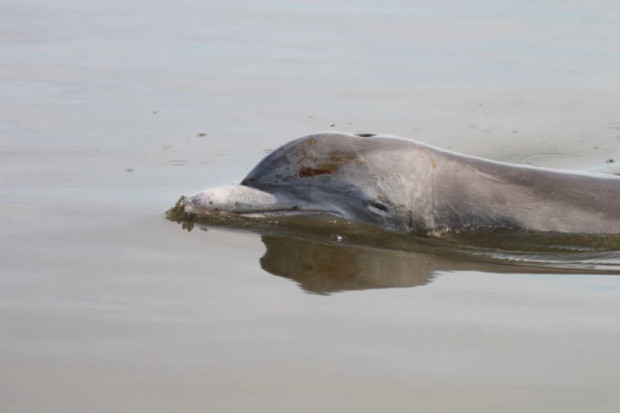
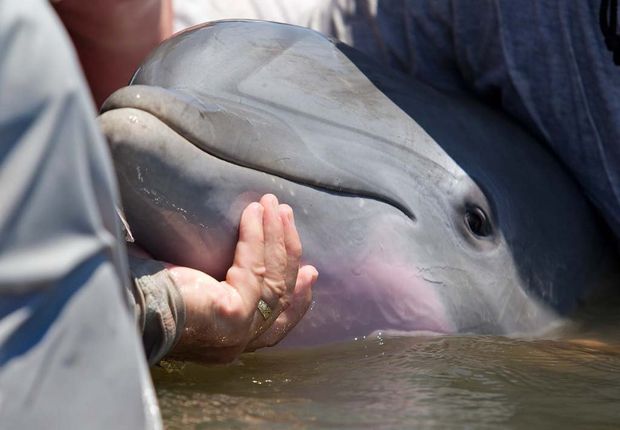
A recent study has shown nearly half the bottlenose dolphins living in Barataria Bay in the Gulf of Mexico, the area oiled by the explosion of the Deepwater Horizon oil rig four years ago, were/are in guarded or worse condition.

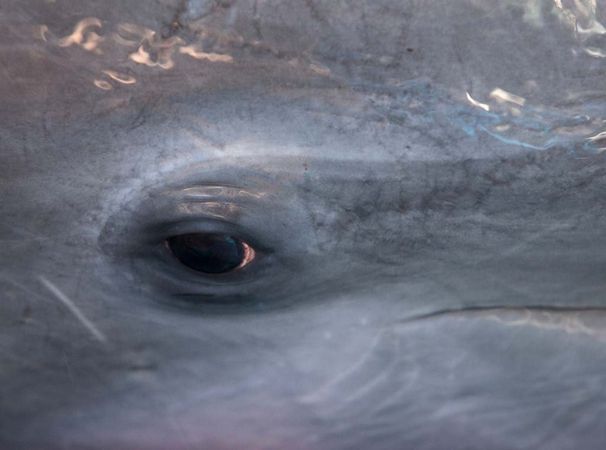
While a dolphin is examined, one researcher is told to watch its eye to make sure the mammal stays alert and interested in what’s going on as a way to monitor its vitals during the study. (Photo: Ted Jackson/The Times Picayune)

Twenty-five percent were significantly underweight. Seventeen-percent were classified as being in poor or grave condition and not expected to survive.

Oiled dolphin, summer 2010, in Barataria Bay, La. (Photo: Louisiana Department of Wildlife and Fisheries/Mandy Tumlin)

The findings showed unusual lung damage and very low levels of adrenal hormones, which are critical for responding to stress.

The abnormalities were not found in bottlenose dolphins tested in Sarasota Bay, Fla., chosen as a comparison site because it was not contaminated with oil.

Research study, Barataria Bay, August 15, 2011. (Photo: Ted Jackson/The Times Picayune)

The explosion 40 miles off the Louisiana coast spewed over 4 million barrels of oil into the sea, spreading an oil slick across open water that covered more than 1,000 miles of coastline

The research team, composed of government, academic and non-governmental researchers, concluded that the symptoms were consistent with petro-carbon or fuel-oil contamination, and that the evidence supports exposure to the BP oil, and not to other chemicals or natural illnesses.

British Petroleum, who owned the rig, funded the study and had personnel present while the animals were examined, disputed the findings.

To Save Threatened Owl, Another Species Is Shot

Posted on January 18, 2014

Exposing the Big Game's avatarExposing the Big Game

[Typical FWS reaction to any species situation (always the result of human actions)–KILL, kill, kill!]

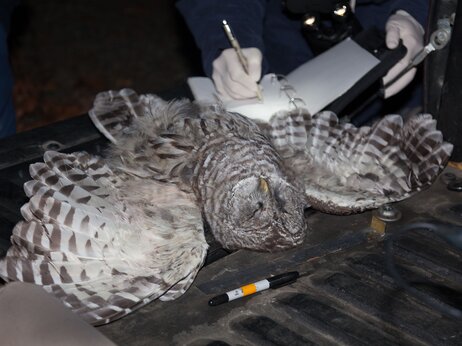
In desperation to save the rare northern spotted owl, biologists are doing something that goes against their core — shooting another owl that’s rapidly taking over spotted owl territory across the northwest.

“If we don’t do it, what we’re essentially doing, in my view, is dooming the spotted owl to extinction,” says Lowell Diller, senior biologist for Green Diamond, a timber company.

The decision to shoot the more aggressive barred owls has been wrenching for biologists and the federal government. But one of the biologists says the consequence of not stepping in would be so dire that it justifies what he calls this Sophie’s Choice.

hide captionThis barred owl was removed in October from California’s Hoopa Valley reservation. The barred owl is a species that threatens spotted owl…

View original post 1,168 more words

Plan B

Posted on January 18, 2014

Tisha Wardlow's avatarFight for Rhinos

Imagine being one of only four people left on the planet, the future of humanity in your hands. It’s up to you to make babies, re-populate, save your species. Pressure? You bet.

Sadly, this is the case for the only four Northern white rhinos on the planet. Sudan and Suni (the boys), and Najin and Fatu (the ladies) are the last of their species. Residing in Ol’ Pejeta Conservancy, it has been a hope they could produce a miracle. (see previous post: …And Then There Were Four)

Under 24 hour armed guard to protect them from poaching, they have been cared for and maintained to keep them healthy and happy. Despite all efforts at a suitable environment, there has been no success. Although Suni and Najin were seen mating in 2012, the 16 month gestation period came and went, and hopes were dashed.

four northerns 2The quartet is not…

View original post 147 more words