First Light Productions

investigative journalism

Posts from the “SANCTUARY” Category

Chimps to sanctuary

Posted on December 18, 2012

109 More Chimpanzees Will Soon Be Safe in Sanctuary.

Release&Restitution

FOR IMMEDIATE RELEASE:

The world will soon be much brighter for 109 chimpanzees now held in Lafayette, Louisiana’s New Iberia Research Center (NIRC) as the National Institutes of Health (NIH) announced at 10 a.m. today its two-part plan to retire them all to the comfort and safety of Chimp Haven, our federal sanctuary. The decision is a major revision to the NIH’s original plan to send only 10 to Chimp Haven and retire the rest to another lab.

NEAVS/Project R&R applauds the NIH’s commitment to these chimpanzees, who have had so much taken from them, suffered enough, and now deserve to live the rest of their lives in the comfort of a caring and safe sanctuary. In an invited teleconference call, NIH Deputy Director for Science, Outreach, and Policy, Dr. Kathy Hudson, clearly reiterated NIH’s “moral and legal responsibility” to the chimpanzees.
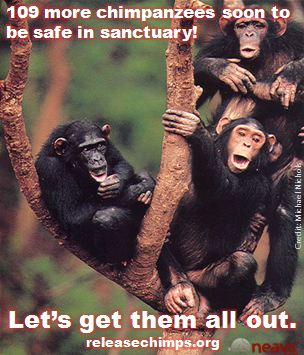
109 rescued

NEAVS/Project R&R has been closely involved in the fate of the NIRC chimps, advocating for sanctuary for all of them, and is the first to step up with a matching grant of $100,000 to Chimp Haven to help cover costs for needed construction to welcome the chimps.

NIH’s two-phase plan to get them to sanctuary starts in January when half of the chimpanzees will be moved in small groups to Chimp Haven into available housing and existing social groups as appropriate. This first phase will take about six months. For the second phase, expected to take 12-15 months to complete, approximately $2.3 million in construction funds is needed. NIH has said it will work with Chimp Haven and animal protection organizations to secure all funding.

Sadly, four other chimpanzees were evaluated by both Chimp Haven and New Iberia veterinarians who determined they were too sick for transfer. In failing health, they are permanently protected from use in research. Eight of the chimpanzees are mothers with young offspring who will remain together during the move.

Once again, even another success leaves us with more work to do! The soon-to-be new Chimp Haven residents will almost double the sanctuary’s population – but there are still those waiting. Knowing that 109 of the approximate remaining 488 federally owned chimpanzees currently held in U.S. biomedical labs can soon rest does not allow us to. It is our duty and our labor of love to keep working until all chimpanzees live surrounded by fresh air, sunlight, trees, and all the other comforts an enriched sanctuary life provides. The NIH’s decision marks the beginning, not the end, of our goal: to get them all out of labs and safe in sanctuary. NEAVS/Project R&R will continue to vigilantly and effectively work on behalf of all the rest who are counting on us.
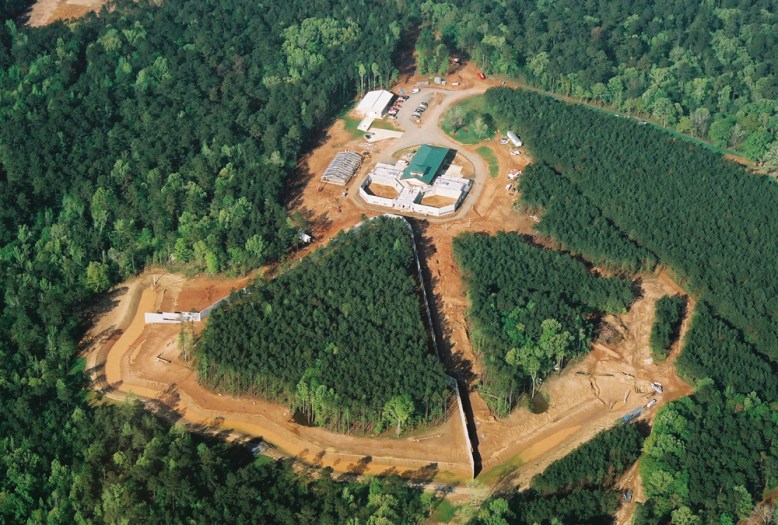
Chimp Haven (Photo: Chimp Haven)

Chimp Haven (Photo: Chimp Haven)

Thank you for supporting our work to help chimpanzees – and all animals – in labs. It is through your help that we have uplifting success such as this. Please donate now. For more information on all our programs, visit NEAVS.org and ReleaseChimps.org.
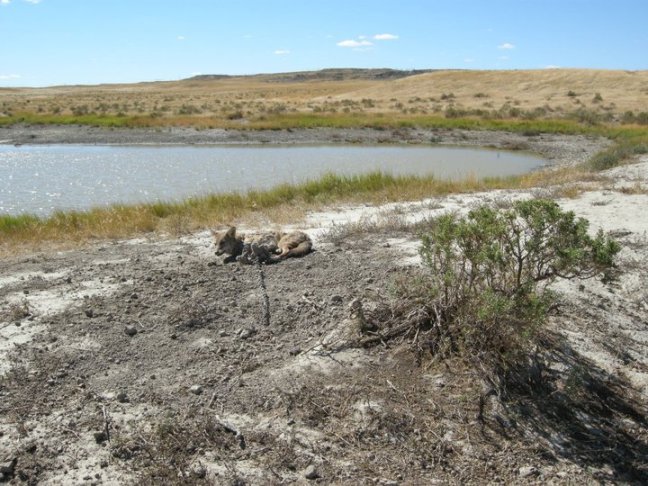
Trophy animal(s)

Posted on December 17, 2012

Is there a “culture” within the USDA Wildlife Services–in particular its lethal predator control program.

These images found on Facebook–evidence of clearly sick behavior–began to circulate on the Internet on October 30, 2012, after being spotted by an environmentalist.

(Photo: Jamie Olson)

(Photo: Jamie Olson)

The photos were posted by Jamie P. Olson, who works as a trapper for an agency called Wyoming Wildlife Services, a branch of the U.S. Department of Agriculture’s Animal and Plant Health Inspection Service whose job includes controlling nuisance predators. They clearly show that Olson loosed his dogs on  a coyote while it was in the trap and took photos as they tore the animal apart. It is unclear if the photos show a single coyote or if two coyotes are pictured. Nevertheless, the result is the same.

sheyote_Sept5-2010

(Photo: Jamie Olson)

(Photo: Jamie Olson)

(Photo: Jamie Olson)

(Photo: Jamie Olson)

The photos led Rep. John Campbell of California to call the actions “flat-out animal cruelty,” and accuse the agency of “stonewalling” attempts to investigate allegations of animal abuse. Campbell said the photos are indicative of widespread problems within the little-known agency–ranging from possible misuse of taxpayer money to alleged animal abuse of predatory and non-predatory wildlife.

(Photo: Jame Olson)

(Photo: Jame Olson)

Jamie Olson trophy photo

Jamie Olson trophy photo

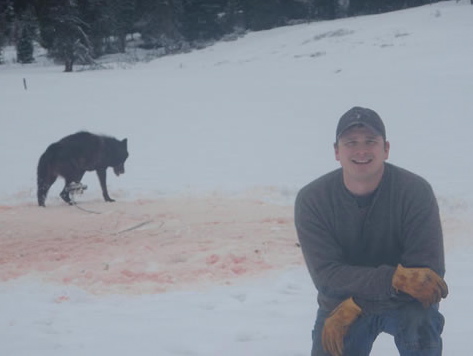
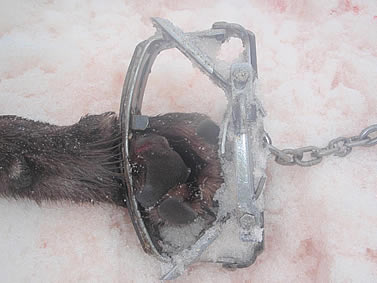
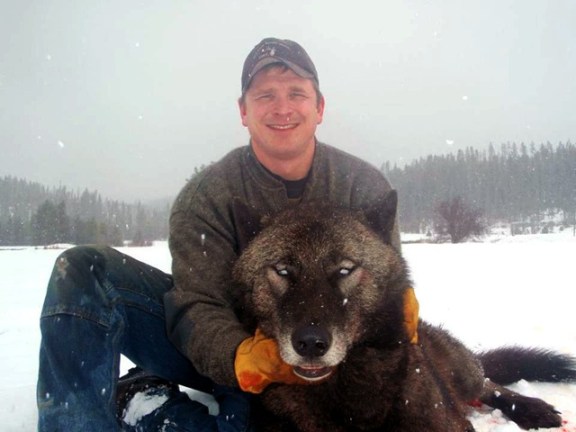
A similar act of appalling insensitivity happened only last month (see ANIMAL POST November 14—“Trophy Animal”) when U.S. Forest Service Employee Josh Bransford in Idaho snapped before and after trophy photos of a wolf caught in a leg snare.

Josh Bransford with trapped wolf. (Photo: Josh Bransford)

Josh Bransford with trapped wolf. (Photo: Josh Bransford)

Wolf’s paw in Bransford’s trap. (Photo: Josh Bransford)

Wolf’s paw in Bransford’s trap. (Photo: Josh Bransford)

“We believe there’s kind of a pattern here that this has become almost sport to put out these traps,” Campbell said . “We think there are a lot of non-lethal ways to protect livestock. But instead, they use these leg holds, which are extremely cruel. The animal takes a long time to die.”

Campbell also said he has “increasing evidence” of taxpayer money being used for “private purposes,” including protecting the livestock of private ranchers. “I have cattle myself,” he said. “I don’t think it’s the taxpayer’s responsibility to protect my cattle. That’s my responsibility.”

Bransford trophy photo. (Photo: Josh Bransford)

Bransford trophy photo. (Photo: Josh Bransford)


Source: Wild Earth Guardians.

Stop the eviction

Posted on December 14, 2012

Animals Asia’s Vietnam sanctuary, home to 103 rescued bears, is threatened with eviction. Click here to find out more and help us STOP THE EVICTION.


Source: London Animals Asia Support Group

Asiatic cat under azure sky

Posted on December 14, 2012

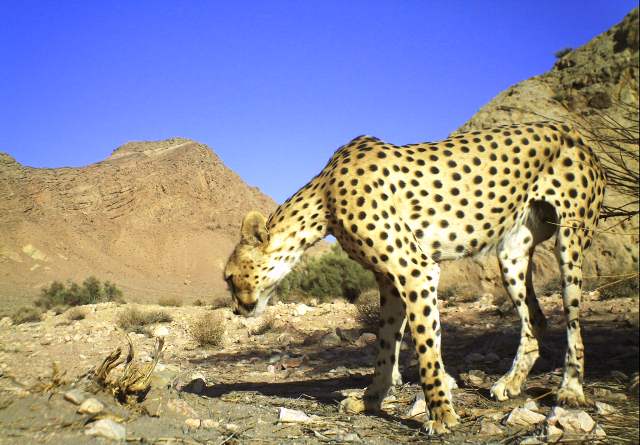
Asiatic cheetahs are the second rarest cat in the world just after the Amur leopard. Their numbers are so low that no more than 70 individuals inhabit the entire country, meaning the entire Asian continent.

Asiatic cheetah in Ariz No Hunting Area, central Iran, summer 2012 (Photo: Iranian Cheetah Society/YazdDoE/CACP/Panthera)

Asiatic cheetah in Ariz No Hunting Area, central Iran, summer 2012 (Photo: Iranian Cheetah Society/YazdDoE/CACP/Panthera)


Source: Iranian Cheetah Society

50,000 hens

Posted on December 13, 2012

Background

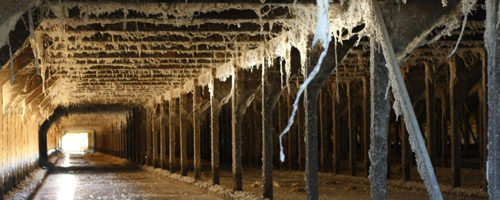
In February 2012, authorities in Turlock, California walked into the abandoned egg-laying facility of A & L Poultry and discovered 50,000 hens that had been abandoned without food and left to die. Some 20,000 of the hens had already starved to death. Others had drowned in giant manure pits beneath their cages. 25,000 more had to be euthanized to end their suffering.

Manure pit beneath the sheds where many hens drowned. (Photo: Marji Beach/Animal Place)
Manure pit beneath the sheds where many hens drowned. (Photo: Marji Beach/Animal Place)

Bedraggled and near death, this hen waits for special medical care. (Photo by Marji Beach/Animal Place)

Bedraggled and near death, this hen waits for special medical care. (Photo by Marji Beach/Animal Place)

Hen stretches and flaps her wings for the very first time. (Photo: Marji Beach/Animal Place)

Hen stretches and flaps her wings for the very first time. (Photo: Marji Beach/Animal Place)

Rescue

Animal Place, Farm Sanctuary, and Harvest Home Animal Sanctuary stepped in to rescue the remaining 5,000 birds. The next morning, volunteers from the three sanctuaries arrived at the scene.

Jamie London and Jacie Volek help care for sickest hens. (Photo: Marji Beach/Animal Place)

Jamie London and Jacie Volek help care for sickest hens. (Photo: Marji Beach/Animal Place)

Kelle Kacmarcik cares for a rescued hen. (PHOTO: Christine Morrissey/Harvest Home Animal Sanctuary)

Kelle Kacmarcik cares for a rescued hen. (PHOTO: Christine Morrissey/Harvest Home Animal Sanctuary)

They focused on getting birds out from sheds the size of football fields that each held 25,000 hens. Cage after cage of birds crammed together.

The whole day hens were gassed (euthanized) at the other end of the building. As a volunteer explained, “you just have to put it out of your mind. We’ll help as many as we can. That’s the hardest thing, knowing you can’t save them all…but it matters to the one that you can. In terms of rescue, that is the principle I live my life by.”

(Photo: Animal Place)

(Photo: Animal Place)

At six that evening, the state veterinarian said: “no more.” There weren’t any more savable hens. And yet, in the first barn, volunteers suddenly saw a bird walking towards them. The hen stumbled outside, then wandered, dazed, back into the barn toward the manure pit. They were able to net this last bird and bring it to safety.

In all the rescuers saved about 4,650 pale, dehydrated, and starving birds.

Egg-laying hens receive no federal protections, although California voted to ban cruel battery cages like those at A&L Poultry. That law goes into effect in 2015.

(Photo: Animal Place)

(Photo: Animal Place)

The Legal Case

Representing the sanctuaries, Animal Legal Defense Fund (ALDF) and Schiff Hardin sued the owners of the egg farm to hold them responsible for their cruelty.

The hens stuffed in battery cages at A & L Poultry had been denied their ability to engage in natural behavior. Their cages were so small they couldn’t even open their wings. Their beaks had been cut off (without anesthetic) to prevent pecking. Finally, A & L Poultry had abandoned these hens like disposable garbage.

Although factory farms are rarely held accountable for the immense suffering they inflict on animals, ALDF’s lawsuit aims to place responsibility on the people who caused the pain and distress to tens of thousands of helpless animals—and compensate the sanctuaries who took them in.

Justice Proceeds

The farmers sought to have the case dismissed, but on December 5th, the Stanislaus County Superior Court rejected the farmers’ arguments, and sided with the Animal Legal Defense Fund, ruling in favor of the three sanctuaries, and allowed the historic lawsuit to proceed, based on the largest rescue of farmed animals in California history.

TIgress

Posted on December 13, 2012

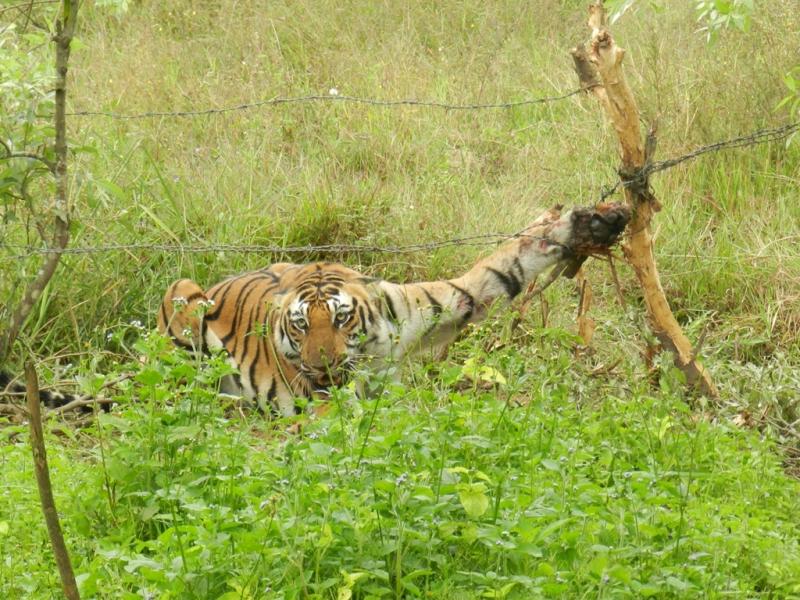
Dec. 12, 2012 — Last week, villagers in Nidugumba in southwest India, saved an injured tiger that had become caught in a barbed wire fence.

Tigress caught in barbed wire fence. (Photo: Karnataka Forest Department)

Tigress caught in barbed wire fence. (Photo: Karnataka Forest Department)

The adult female was discovered on a coffee plantation on Dec. 4 with its paw entangled. The coffee planter and other community members quickly called authorities while preventing the tiger from being harassed. Big cats, when caught in snares or fences, struggle fiercely and often further injure themselves.

A team of forest rangers and veterinarians arrived and tranquilized the cat and untangled it from the fence. The tigress is now undergoing examination at the Mysore Zoo to assess her injuries, age, and health status so that an informed decision can be made about her future.

Such situations often end tragically. Just two days before on Dec. 2, a cornered tiger near Wayanad Wildlife Sanctuary in Kerala State, was shot dead by officials amid chaos created by a mob. The incident happened less than a mile outside the boundaries of Nagarahole National Park that has a high density of tigers.


Source: Wildlife Conservation Society

Wild horses

Posted on December 12, 2012

wildhorse graphic

Protect America’s wild horses and burros by stopping the federal government’s systematic elimination of these national icons from our public lands.


Source: American Wild Horse Preservation

Japanese / Yahoo! whaling

Posted on December 12, 2012

Alert update: Tell Yahoo! to stop selling whale & dolphin.

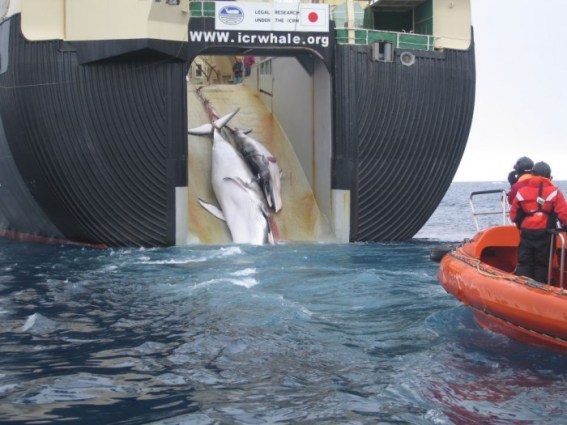
A whale and calf being loaded aboard a factory ship, the Nisshin Maru. (Photo: Customs and Border Protection Service, Commonwealth of Australia)

A whale and calf being loaded aboard a factory ship, the Nisshin Maru. (Photo: Customs and Border Protection Service, Commonwealth of Australia)

The Environmental Investigation Agency has launched a campaign to persuade Internet giant Yahoo! to stop profiting from the sale of whale and dolphin meat via its subsidiary Yahoo! Japan.

EIA

Marissa Mayer was appointed new CEO of the company this summer, some weeks after EIA launched its report and campaign for Yahoo! to follow in the footsteps of Amazon and unequivocally ban all whale and dolphin products from its marketplaces.

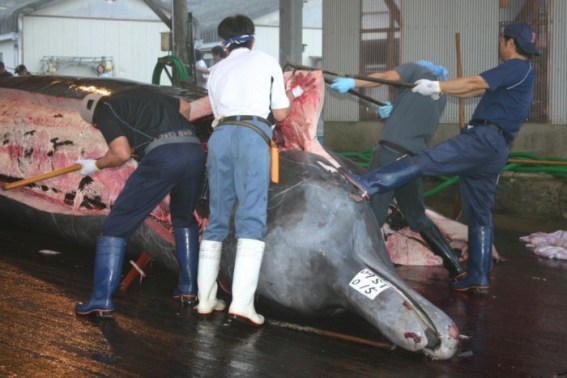
Baird’s Beaked Whale being processed in Japan (Photo: EIA)

Baird’s Beaked Whale being processed in Japan (Photo: EIA)

Here are four easy but important ways in which you can play a vital role in telling Yahoo! and its new CEO that profiting from the slaughter of whales is unacceptable:

1. Send a Tweet – If you’re a Twitter user, send Tweets to Yahoo! CEO Marissa Mayer and to Yahoo!, via its general and corporate accounts, calling on it to ban all sales of whale and dolphin products from all sites and subsidiaries. You can compose your own, per the sample Tweet below:
@marissamayer Please stop selling harmful whale products through Yahoo! Japan, immediately and forever http://ow.ly/boJmW
You can also follow EIA’s Twitter account @EIAinvestigator and reTweet their messages about this issue to your friends and contacts.

2. Send an email – Let Yahoo! know it is unacceptable to profit from the slaughter of whales by sending an email to the company and its CEO Marissa Mayer.
You can compose your own message, or use/adapt the sample email below, sent for the attention of Yahoo! CEO Marissa Mayer at media-inquiries@yahoo-inc.com and advertise.me@yahoo-inc.com.
You can also send a protest to Softbank, the major Japanese financial investor in Yahoo! Japan, at pr@softbank.co.jp.

3. Post a comment of protest on Yahoo!’s Facebook page at http://www.facebook.com/yahoo

4. Sign the petition – EIA encourages all supporters to add their names to this one and so help it achieve greater prominence and impact. Sign the petition here. (http://www.change.org/petitions/yahoo-stop-selling-dolphin-and-whale-meat)

War on animals

Posted on December 11, 2012

Rangers and soldiers in the Democratic Republic of Congo use an array of weapons and aircraft to patrol Garamba National Park’s 1,900 square miles. Park officials, scientists and the Congolese authorities believe that the Ugandan military — one of the Pentagon’s closest partners in Africa — killed 22 elephants from a helicopter in March and spirited away more than a million dollars’ worth of ivory.

Garamba National Park, DRC. (Photo: Tyler Hicks/NYT)

Garamba National Park, DRC. (Photo: Tyler Hicks/NYT)

The Congolese military and South Sudan’s army have also been implicated in poaching. Militant groups such as the Shabab, Kony’s Lord’s Resistance Army, and Darfur’s Al Qaeda-linked janjaweed appear to be getting in on the action, using illegal wildlife products to fund their other activities and killing park rangers in the process.

Garamba ranger.

Garamba’s wildlife rangers frequently battle South Sudanese forces. (Tyler Hicks/The New York Times)

In 2011, poaching levels were at their highest in every region of Africa since international monitors began keeping detailed records in 2002. And last year broke the record for the amount of illegal ivory seized worldwide, at 38.8 tons (equaling the tusks from more than 4,000 dead elephants).

Garamba ranger. (Photo: Tyler Hicks/NYT)

A ranger in Garamba with a few of the tusks from the park’s collection. The tusks of a single adult elephant can be worth more than 10 times the average annual income in many African countries. (Tyler Hicks/The New York Times)

Garamba National Park, DRC.

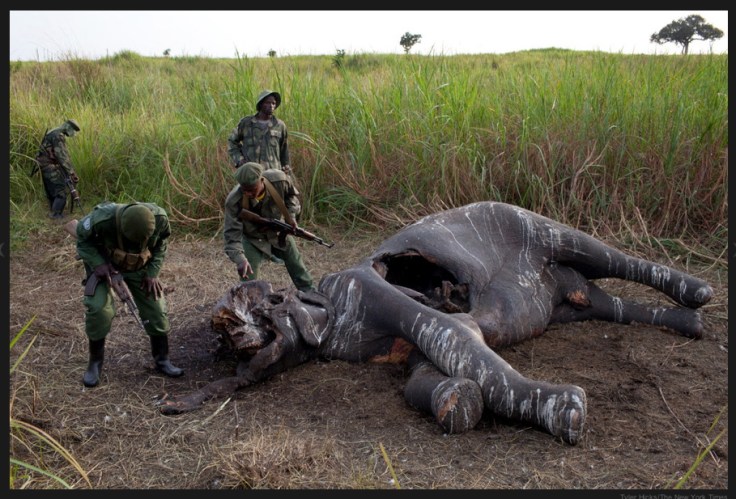
Park rangers discover a poached elephant, stripped of ivory, deep in the park. (Tyler Hicks/The New York Times

The nonprofit organization that runs the park is considering buying night-vision goggles, flak jackets and pickup trucks with mounted machine guns. Some of the Garamba rangers are poachers themselves, killing the animals they are entrusted to protect, saying their salaries are too low to live on.

In Tanzania, poor villagers are poisoning pumpkins for elephants to eat. In Gabon, subsistence hunters in the rain forest are being enlisted to poach elephants, sometimes for as little as a sack of salt.

Wildlife traffickers target not only large endangered mammals like rhinoceroses, elephants. Reptiles and birds get caught up in the exotic pet trade, including endangered parrots.

China is the largest market for illegally trafficked wildlife. The United States is second. This past July, two Midtown Manhattan jewelers pled guilty to selling $2 million worth of ivory.


Source: Audubon

OR-7

Posted on December 10, 2012

Crossed fingers he doesn’t get shot. The fate that befell his brother.

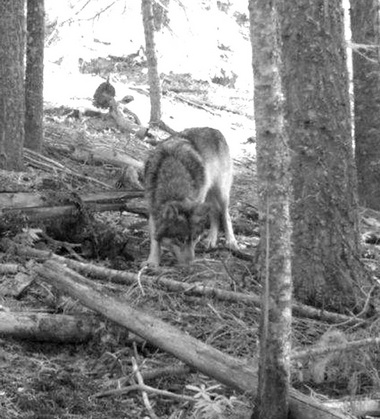
Nov. 14, 2011, photo from a trail camera shows OR-7 on public land east of Butte Falls in Oregon's Jackson County.

Nov. 14, 2011, photo from a trail camera shows OR-7 on public land east of Butte Falls in Oregon’s Jackson County.

Wandering

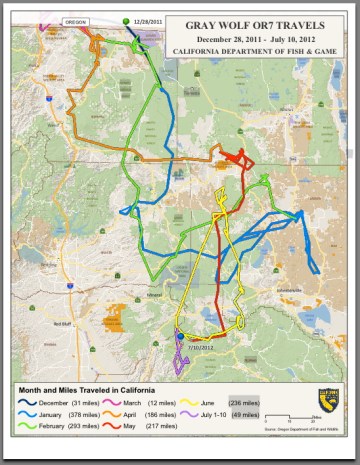
OR-7 has now migrated into an oak-chaparral woodland near Lake Almanor east of Red Bluff, according to the California Department of Fish and Game.

He spent the summer hunting deer at 6,000 feet elevation in the Plumas National Forest south of Lassen Peak, where the Cascade Range and Sierra Nevada mountains meet.Winter storms lashing the high country are now forcing deer to migrate down into the foothills at about 1,000 feet and OR-7 has followed.

OR-7 wanderings in northern California.

OR-7 wanderings in northern California.

History

He was born into the Imnaha pack in northeastern Oregon’s Wallowa County 3 1/2 years ago, and captured and fitted with a GPS/radio-telemetry collar in February 2011. Seven months later, he set off on an historic 1,000-mile trek that’s taken him across Oregon to Crater Lake and south into California.

Biologists believe he’s searching for a mate and a place to start a new pack.

Karen Kovacs, wildlife program manager for the California Department of Fish and Game, says “He is feeding well, he is able to travel well.” She calculates his weight at 100 to 110 pounds, with paws measuring 5-by-5 inches. He’s so elusive that only about five people have glimpsed him since he entered California, she said.

When OR-7 crossed into California last December, Oregon had 29 known wolves. Today, a rough census of 25 new pups brings Oregon’s known wolf population to more than 50, in six separate packs.

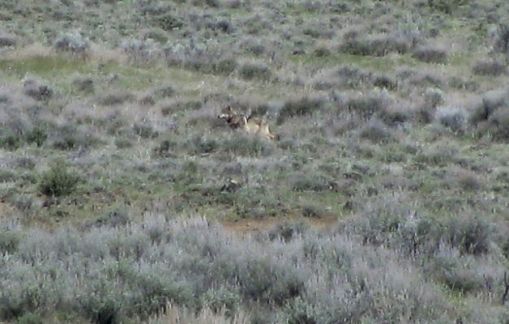
California state biologist Richard Shinn snapped a photograph of OR-7 on May 8, after spotting him on a sagebrush hillside 100 yards away in southwestern Modoc County. Shinn was among a group of biologists, game wardens and a federal trapper who were there to talk to local ranchers about the prospect of having a wolf in their midst.

California state biologist Richard Shinn snapped a photograph of OR-7 on May 8, after spotting him on a sagebrush hillside 100 yards away in southwestern Modoc County. Shinn was among a group of biologists, game wardens and a federal trapper who were there to talk to local ranchers about the prospect of having a wolf in their midst.

So far, OR-7 has survived his California adventure by switching from his preferred diet of elk to deer, which are more available in California. He won’t cross major roadways and has turned back several times when he came near Interstate 5.

“Rivers don’t seem to be a barrier,” Kovacs noted. “He swam across the Klamath River several times.”

But his biological clock is ticking. He’s past the midpoint of a life span seldom exceeding five to seven years for wolves in the wild. OR-7 must find a mate or become a “biological dead end.”

OR-7’s behavior, called dispersal, is not atypical of a wolf his age.

Bullseye

Posted on December 10, 2012

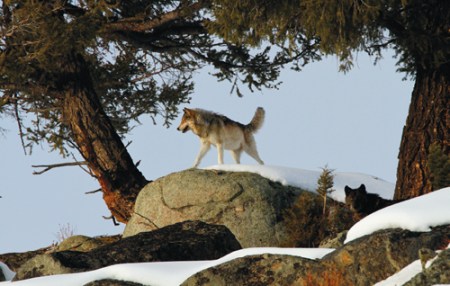
Yellowstone National Park’s best-known wolf, was shot and killed last Thursday outside the park’s boundaries.

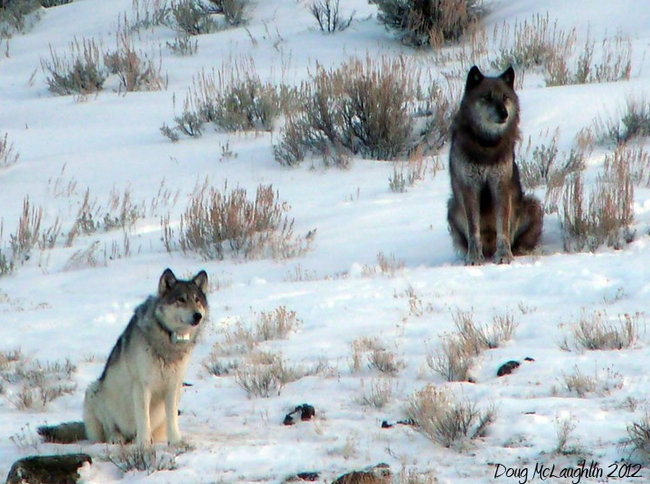
The wolf researchers called 832F, left, with her companion  known as 754. (Photo: Doug McLaughlin)

The wolf that researchers called 832F, left, with her companion known as 754. (Photo: Doug McLaughlin)

The wolf was the alpha female of the park’s highly visible Lamar Canyon pack. She had become so well known to tourists that some wildlife watchers referred to her as a “rock star.”

She was the eighth wolf collared by researchers shot this year after leaving the park’s boundary. Based on tracking data, researchers knew that her pack rarely ventured outside the park, and then only for brief periods.

The person who shot the wolf is reportedly returning the wolf’s GPS tracking-collar. (What kind of person pulls the trigger on a wolf wearing a radio collar?)

Alpha female 06, leader of the Lamar Canyon pack. (Photo: Jimmy Jones)

Female 06, member of the Lamar Canyon pack. (Photo: Jimmy Jones)

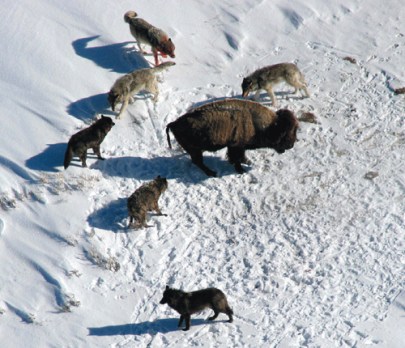
The 100 or so wolves in Yellowstone have limited the growth of bison herds, mostly by preying on young, but they are no match for adult bison. (Photo: Doug Smith, courtesy of the National Park Service)

The 100 or so wolves in Yellowstone have limited the growth of bison herds, mostly by preying on young, but they are no match for adult bison. (Photo: Doug Smith, courtesy of the National Park Service)

High numbers of wolves, including wolves fitted with research collars, have been killed just outside Yellowstone in Idaho, Montana and Wyoming this year as those states have issued large numbers of permits to kill wolves in the northern Rockies.

Wildlife advocates say that the wolf populations are not large enough to withstand state-sanctioned harvests and that the animals attract tourist money. Yellowstone’s scenic Lamar Valley has been one of the most reliable places to view wolves in the northern Rockies, and it attracts scores of visitors every year.

For more on Yellowstone wolves: American Scientist

Wings II

Posted on December 8, 2012

Wings of Rescue.

Chloe, stepping into a new life in Oregon. (Photo: Michal Thompson/The Hillsboro Argus)

Correction: It wasn’t 100 animals flown to freedom in Portland, Oregon, by Wings of Rescue as reported here yesterday–it was 250!

Wings of Rescue.
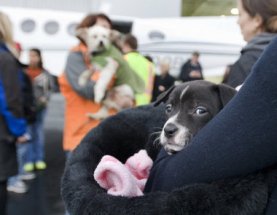
Six week old puppy, one of 250 animals saved from California kill-shelters. (Photo: Michal Thompson/The Hillsboro Argus)
Wings of Rescue.

(Photo: Michal Thompson/The Hillsboro Argus)

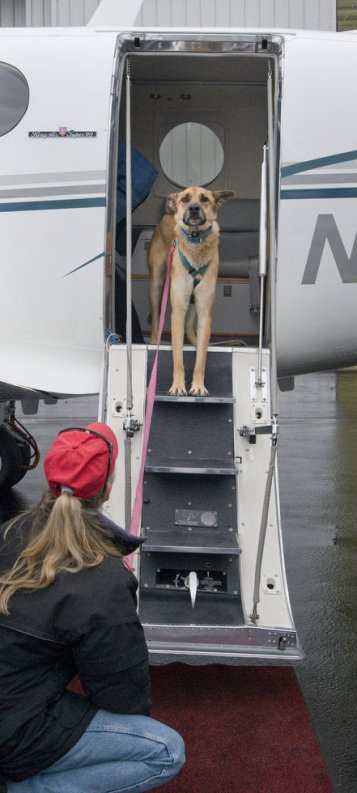
The cats and dogs from over-crowded animal shelters in California were flown in three private plans to Hillsboro Airport, outside Portland, Oregon, Friday afternoon where they were distributed to nearly a half-dozen agencies for pet adoption.

WIngs of Rescue

(Photo: Michal Thompson/The Hillsboro Argus)

Wings

Posted on December 7, 2012

Wings of Rescue is a Los Angeles based, all-volunteer organization that rescues animals from high-kill animal shelters and flies them to animal rescue organizations throughout the western United State —often across great distances—to areas where adoptable pets are in demand.

WingsofRescue

California municipal shelters, which by law cannot refuse to take in an animal, are struggling with an overpopulation of strays, unwanted litters and abandoned pets caused by too many animals not spayed or neutered.

Wings of Rescue pilots donate their aviation skills and aircraft. No plane is too small or too large to save a life!

shapeimage_1
Sue Zucker, rescue group coordinator for Riverside County Animal Services, hugs Noel, a 2-year-old female terrier. Noel was among the California dogs airlifted to new homes in Oregon. (Photo: Riverside County Animal Services)

Sue Zucker, rescue group coordinator for Riverside County Animal Services, hugs Noel, a 2-year-old female terrier. Noel was among the California dogs airlifted to new homes in Oregon. (Photo: Riverside County Animal Services)

Each airlift involves marshaling planes and pilots, picking out pets, gathering health certificates, collecting the animals and—the last stage—transporting them.

To date, Wings of Rescue has flown 2,000 pets from California shelters to future homes across the West to places such as Phoenix, Olympia, Bellingham, Billings and British Columbia.

On a recent mission that took three months to arrange, four small planes transported 300 animals—including cats and kittens, newly born puppies and senior dogs, from Chihuahuas to shepherd mixes—from animal shelters in and around Riverside, California to locations throughout the Pacific Northwest. At a touchdown in Hillsboro, Oregon, just outside Portland, Wings of Rescue left 100 animals, all of them spoken for, either by foster parents or rescue groups committed to finding them homes.

Contact: Wings of Rescue

New Iberia

Posted on December 7, 2012

Undercover video – inside the  New Iberia Research Center.

Released as part of an investigation by the Humane Society of the United States.

NIRC cages about 6,000 monkeys and 325 chimpanzees on 100 acres. In the span of nine months, the HSUS investigator saw only about 20 of the chimpanzees used in active studies. The majority of chimps at the facility appeared to be warehoused or used for breeding – two activities that cost American taxpayers millions of dollars, even at a time of fiscal crisis and when no other developed nation uses chimpanzees in experiments.

Source: HSUS

Another death by cop

Posted on December 6, 2012

Lily the border collie was shot and killed May 26 by a Fort Worth, Texas police officer. It happened during an investigation for copper theft. The officer involved went to the wrong house. Instead of suing, Lily’s owners, Mark and Cindy Boling, asked that Fort Worth police get training for how to handle dog encounters.

Lily

Lily

Dog encounters are a regular part of any cop’s job. But few police departments offer training on how to interact with them–read their body language, appease them and handle them using tools other than bullets.

Nationwide, police shoot about 250,000 dogs a year… often needlessly. In Fort Worth, officers responded to 849 calls of citizens hurt by dogs during a three-year period from 2009 through 2011. Of those calls, 86 involved children who were hospitalized, including one death. Also during the three-year period, 49 officers were bitten so badly that they had to file workman’s compensation claims. Apparently, the only message the department took from all this was that all dogs are dangerous. An absurd supposition. But there is no other explanation for why the officer shot Lily whose owner was standing nearby and telling the cop that the small dog was no danger to him.

Part of the reason for cops’ irrationality in such situations goes back to the us versus them mentality that has taken root in much of the police profession. A mindset that goes well beyond shooting the family pet. The solutions to that problem are quite a bit more complicated than the solution to the dog-shooting problem. Some cops kill dogs simply because they can.

Instances of dog shootings are making news with increasing frequency. And with just a few exceptions, the cop involved had no training before the shooting, and faced no real consequences after. The message that sends from the police department to the community is that a cop shooting a pet is simply part of policing.

Even aggressive dogs can be calmed down by officers—if they have training. Being a cop is a dangerous business. And training is necessary for all manner of things. Dealing with people with mental health problems is an increasing focus for many departments around the country. Officers are being taught there are ways to calm and subdue people exhibiting irrational behavior other than firing a lethal weapon. There’s no reason the same type of training shouldn’t be required in dealing with dogs. There are many alternatives to shooting: using tasers, flashlights and batons; distractions such as tennis balls and doggie treats; or devices like control poles and chemical agents. The U.S. Postal Service gives all of its workers dog training, and reports very few incidents.

Without training, cops who fears dogs will continue to fear them, to interpret benign gestures as a threat and continue to shoot dogs and be excused for it. With training, an officer gets over his fear, or at least learns how to deal with.

Without training, sadistic or power-tripping cops can continue to kill dogs for whatever reason, continue to falsely claim they feared for their safety and continue to get away with it. With training, there’s some accountability.

Training and accountability can make a difference.

The officer who killed Lilly has been reprimanded, but kept his job.


Sources: Radley Balko and star-telegram.com

Chimpanzee trafficking–again the Chinese

Posted on December 5, 2012

Problem in Guinea

In recent years demand for live chimpanzees in zoos has increased the number of chimps exported overseas.  As many countries in West and Central Africa do not have effective policies for preventing wildlife trafficking, chimpanzees, bonobos, and gorillas have become the target of animal traffickers in countries like Democratic Republic of Congo, Guinea and Senegal.  A live chimpanzee infant is worth $5,000-20,000 from zoos in North America, Europe and Asia.

Over the past 3 years it is estimated that over 130 chimpanzees have been smuggled from Guinea by Chinese miners to Chinese zoos. The Chinese are bringing their own labourers into remote areas and wildlife trafficking has become a lucrative illegal trade. Law enforcement for wildlife is non-existent in Guinea. It’s likely that permits have been falsified or stolen for shipments to pass through.

As China’s industrial presence throughout Africa expands, these trafficking incidents may grow, as has the slaughter of elephants and rhinos for their ivory and horns, also fueled by demand from newly prosperous Chinese consumers. At the moment, chimpanzees are being caught in crates and shipped overseas while corrupt and/or incompetent officials turn a blind eye. If the status quo is maintained chimpanzee trafficking to zoos throughout the developed and developing world will continue to rise.

For every infant chimp captured, several group members–it is estimated 5 or more–likely died attempting to protect it from capture. This has irreversibly negative affects on chimpanzee populations. Chimpanzees have very slow reproduction rates and require a high degree of parental investment to survive.

How to help

Zoos are willing to spend $20,000 for a live chimpanzee because they know hundreds of thousands of people will pay to see them in captivity. When you visit zoos that have great apes, whether in North America, Europe or Asia, make sure you know where the great apes came from. Were they born in captivity? Or were they smuggled into the country illegally? If we, as consumers, refused to give zoos that participate in great ape trafficking our money, there would be no sense for them to continue engaging in the destructive trade. Raise awareness about this issue by sharing and discussing information related to great ape trafficking, and contact your local zoo to make sure you know about the origin of their chimpanzees. If we allow this to continue, zoos may be the only remaining refuge for our closest relatives.


Source: Cadell Last.