First Light Productions

investigative journalism

Posts tagged “wolves

Red wolfies

Posted on May 29, 2014

Zoos are an iffy proposition in many ways but there are also upsides.

One of a litter of 8 red wolves born at the Point Defiance zoo in Tacoma, Washington in 2012.

One of a litter of 8 red wolves born at the Point Defiance zoo in Tacoma, Washington.

Once common from Texas to Pennsylvania to Florida, red wolves have been hunted trapped and poisoned almost to extinction. The wild population today numbers about 100, making them one of North America’s rarest mammals.

One of four red wolf pups were recently born at the Green Bay, Wisconsin NEW Zoo.

One of six red wolf pups recently born at the NEW Zoo in Green Bay, Wisconsin.

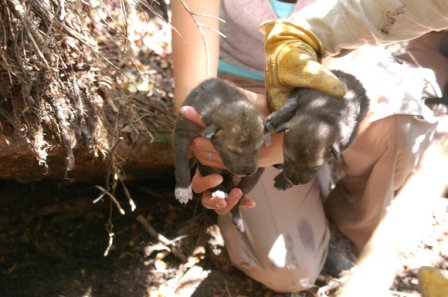
To pump fresh blood into the wild population, several zoos across North American, such as the Point Defiance zoo in Tacoma, Washington and the Chicago zoo, operate red wolf breeding programs. After the zoo born pups pass a health check, U.S. Forest Service biologists slip them into the litters of wild females who raise them as their own.

Red wolf pups born at the Chicago zoo are introduced into the wild. (Photo: US Forest Service)

Red wolf pups born at the Chicago zoo are introduced into the wild. (Photo: US Forest Service)

Smaller than gray wolves, red wolves are known for patches of reddish fur behind their ears and on their necks. It is illegal to shoot a red wolf but they are regularly shot by hunters who generally claim to have mistaken them for coyotes.


Source: Red Wolf Coalition.

Plateau animals

Posted on August 27, 2013

Wildlife across North Central Asia

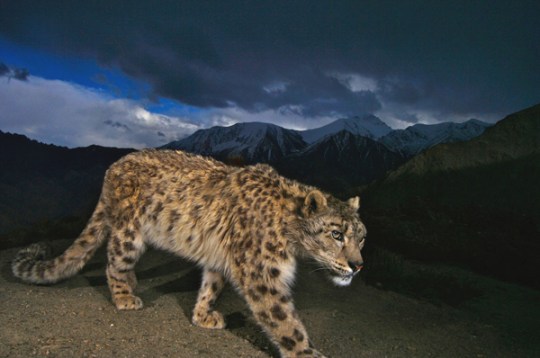
Snow leopard. (Photo: Panthera)

is being driven to the margins of survival by huge increases in the numbers of cashmere goats being set loose on wild grazing lands.

Cashmere goats in Mongolia. (Photo: Juho Korhonen / CC BY-NC-ND 2.0)

The goat herds  — a dramatic three-fold increase over the last two decades – are eating up the grass that previously supported antelopes, wild asses, yaks, camels, and other native wildlife. Loss of these prey species in turn affects the survival of predators, such as snow leopards, Asiatic leopards, bears and wolves living on the brink of extinction.

A study

published in the journal Conservation Biology, shows that 95% of all the forage across the Tibetan plateau, Mongolia and northern India was consumed by goats, sheep and other livestock, leaving just 5% for wild animals. The study concludes that expansion of the goat herds is most likely causing the decline of eight core species.

Zero sum game

Pressed for food the big cats and wolves attack livestock and are killed in retaliation by herders or their dogs. With the increase in domestic animals also comes disease to which the wild species are extremely vulnerable.

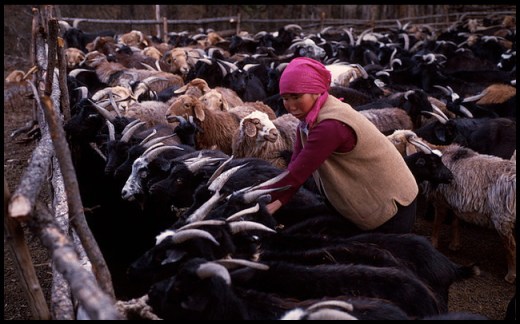
Mixed herd of Pashmina, other goats and sheep in predator-proof corral, implemented through Snow Leopard Conservancy program in Ladakh, India. (Photo: Chinch Gryniewicz)

A solution

may lie in creating a sustainable market for cashmere. Giving rewards to goat herders who protect wildlife. Livestock farmers might be compensated for vaccinating their animals to limit the spread of disease, and for housing goats in protective enclosures. Cashmere sourced from these farmers could then be marketed as eco-friendly; a tactic that worked for the “dolphin safe” tuna fishery.

In Mongolia alone, numbers of domestic goats have grown from 5 million in 1990 to almost 14 million in 2010. Ninety percent of the world’s cashmere comes from China and Mongolia.

Acoustic wolves

Posted on July 23, 2013

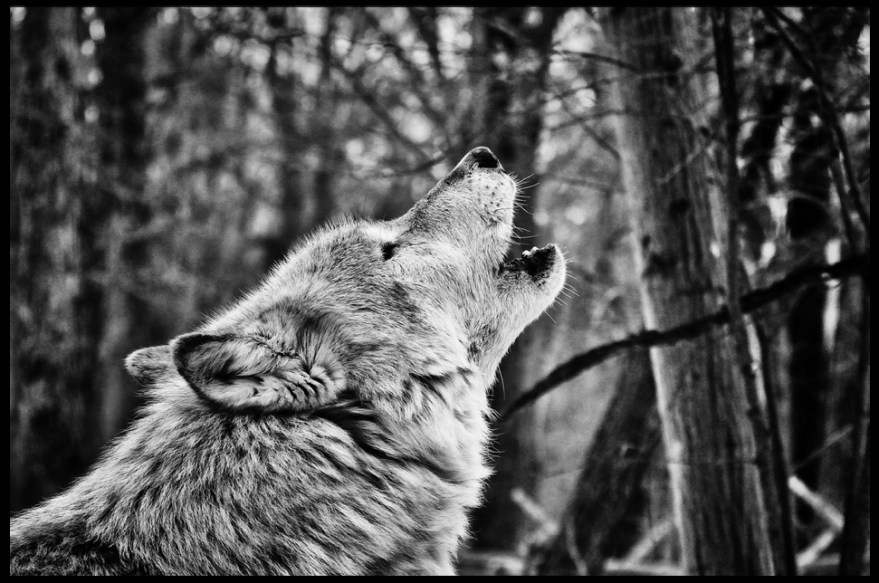
Researchers in the U.K. have designed a computer program that can read the howls of individual wolves with amazing accuracy.

(Photo: CC By-NC-ND)

    With the new program, the researchers catalogued 67 archived calls made by 10 wolves, and were able to identify the solo howls with 100 percent accuracy. In recordings where wolves howled together in groups, the program identified the source of each howl with a success rate of 97 percent.

    The method of identification measures both the pitch of a wolf’s howl and the volume. This gives conservationists a way of tracking the animals as they move with less hassle than using GPS. The system is said to be particularly useful for counting individual pack members.

    In the course of their research the team also deduced that wolves from specific areas may have regional accents.


    Get more detail here.

    Read the full study.

LAMENT

Posted on June 9, 2013

“In those days we had never heard of passing up a chance to kill a wolf…. I was young then…. I thought because fewer wolves meant more deer, that no wolves would mean hunter’s paradise…. Since then I have lived to see state after state extirpate its wolves…. I have seen every edible bush and seedling browsed, first to anemic desuetude, and then to death…. I now suspect that just as a deer herd lives I mortal fear of its wolves, so does a mountain live in mortal fear of its deer…. Perhaps this is the hidden meaning in the howl of the wolf, long known among mountains, but seldom perceived among men.”

    –Aldo Leopold, Sand County Almanac.

THERIOPHOBIA

Posted on June 3, 2013

“Ever since man first began to wonder about wolves…he has made regular business of killing them. At first glance the reasons are simple enough and justifiable…. But the wolf is fundamentally different because the history of killing wolves showed far less restraint and far more perversity. Killing wolves has to do with fear based on superstitions. It has to do with duty. It has to do with proving manhood. The most visible motive, and the one that best explains the excess of killing, is a type of fear: theriophobia. Fear of the beast. Fear of the beast as an irrational, violent, insatiable creature.

“The wolf was not the cattlemen’s only problem—there was weather, disease, rustling, fluctuating beef prices, hazards of trail drives…. [But] the wolf…became an ‘object of pathological hatred.’ Men in a speculative business like cattle ranching singled out the wolf as a kind of scapegoat for their financial losses. It was against a back drop of…taming wilderness, the law of vengeance, protection of property, an inalienable right to decide the fate of all animals, and the…conception of man as protector of defenseless creatures—that the wolf became the enemy.

“The motive for wiping out wolves proceeded from misunderstanding, from illusions of what constituted sport, from strident attachment to private property, from ignorance and irrational hatred. But the scope, the casual irresponsibility, and the cruelty of wolf killing is something else. I do not think it comes from some base, atavistic urge, though that may be a part of it. I think it is that we simply do not understand our place in the universe and have not the courage to admit it.”

    -Barry Lopez Of Wolves and Men.

MORE WOLVES IN CROSSHAIRS

Posted on April 17, 2013

Just as the wolf population in Oregon was beginning to recover, ranchers in the remote eastern part of the state are supporting new legislation that would allow them to shoot wolves on sight.

Gray wolf pup from northeast Oregon’s Wenaha pack sniffs snow in western Wallowa County. (Photo: Oregon Department of FIsh and Wildlife)

    Under the proposed legislation–House Bill 3452–ranchers would be allowed to kill gray wolves without a permit if they “are reasonably believed by the person to have attacked or harassed livestock or working dogs.” Current law says the wolves have to be caught in the act and that a permit is needed.

    According to a representative from the wolf committee of the Oregon Cattlemen’s Association, ranchers have been “powerless” to stop the wolves predation as it’s impossible to catch them “in the act” of killing livestock.

    Rob Klavins, speaking for the environmental group Oregon Wild said, “This goes far beyond what the wolf plan called for.” He said the language in the bill “could allow poaching to go unpunished.”

    When the Chairman of the House Agriculture and Natural Resources Committee asked a panel of ranching advocates if any of them thought the “bill could allow or encourage poaching?” they said it wouldn’t.

    Two years ago, Oregon Wild won a temporary injunction on most wolf killing in the state after filing a lawsuit challenging how a wolf plan plan enacted in 2005 which set recovery numbers lower than environmental groups wanted, but a higher bar than ranchers wanted when they could legally kill a wolf, was being carried out.

    Ranchers and conservationists have been fighting over wolves in Oregon for decades. Sponsored by two Umatilla County Republican legislators, the bill is expected to get a lot of attention.

    As reported in the Oregonian, “the proposal to ease restrictions appears to have momentum.”


    Source: Oregonian

Bullseye

Posted on December 10, 2012

Yellowstone National Park’s best-known wolf, was shot and killed last Thursday outside the park’s boundaries.

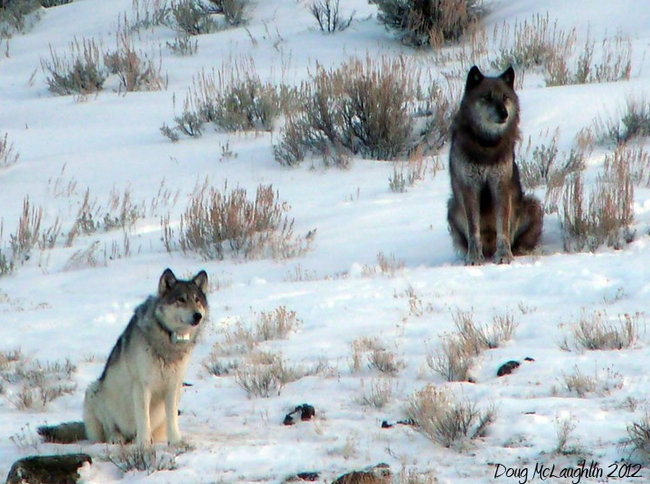
The wolf researchers called 832F, left, with her companion  known as 754. (Photo: Doug McLaughlin)

The wolf that researchers called 832F, left, with her companion known as 754. (Photo: Doug McLaughlin)

The wolf was the alpha female of the park’s highly visible Lamar Canyon pack. She had become so well known to tourists that some wildlife watchers referred to her as a “rock star.”

She was the eighth wolf collared by researchers shot this year after leaving the park’s boundary. Based on tracking data, researchers knew that her pack rarely ventured outside the park, and then only for brief periods.

The person who shot the wolf is reportedly returning the wolf’s GPS tracking-collar. (What kind of person pulls the trigger on a wolf wearing a radio collar?)

Alpha female 06, leader of the Lamar Canyon pack. (Photo: Jimmy Jones)

Female 06, member of the Lamar Canyon pack. (Photo: Jimmy Jones)

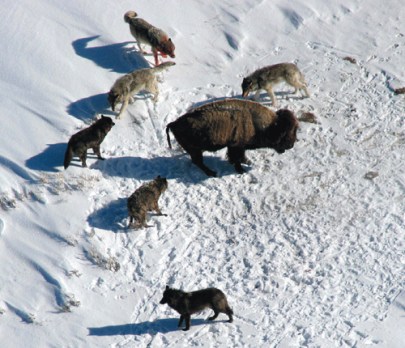
The 100 or so wolves in Yellowstone have limited the growth of bison herds, mostly by preying on young, but they are no match for adult bison. (Photo: Doug Smith, courtesy of the National Park Service)

The 100 or so wolves in Yellowstone have limited the growth of bison herds, mostly by preying on young, but they are no match for adult bison. (Photo: Doug Smith, courtesy of the National Park Service)

High numbers of wolves, including wolves fitted with research collars, have been killed just outside Yellowstone in Idaho, Montana and Wyoming this year as those states have issued large numbers of permits to kill wolves in the northern Rockies.

Wildlife advocates say that the wolf populations are not large enough to withstand state-sanctioned harvests and that the animals attract tourist money. Yellowstone’s scenic Lamar Valley has been one of the most reliable places to view wolves in the northern Rockies, and it attracts scores of visitors every year.

For more on Yellowstone wolves: American Scientist

Trophy animal

Posted on November 14, 2012

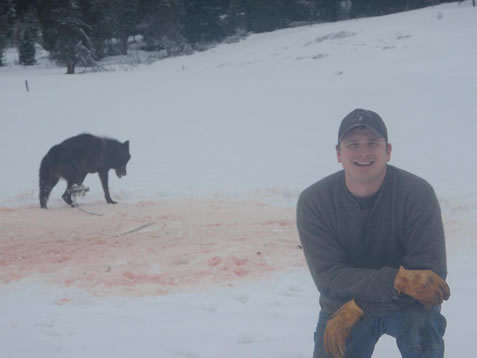
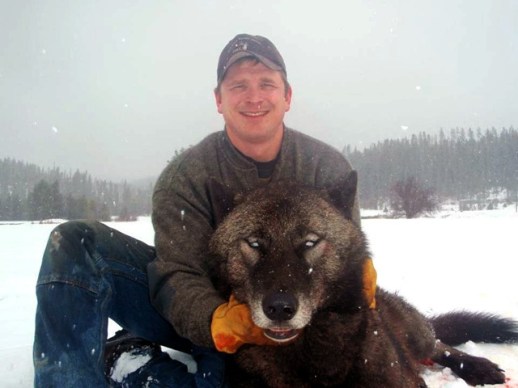
Nez Perce National Forest employee Josh Bransford whose web handle is Pinching.

Trapperman.comJosh Bransford with the black wolf he trapped.

For more on Josh’s exploits.

Good job Bransford.

Wolves have become the get for hunters in the west. In the last month alone, 177 wolves have been killed in the three Rocky Mountain states where wolves have been recently delisted from the Endangered Species Act–Idaho, Montana and Wyoming. Many of these wolves are part of highly social groups simply looking for a safe place to raise their families.

To add your two cents to stop this, click here.

Wolves redux

Posted on October 16, 2012

Dogs attack sheep, kill 44
Oct 11, 2012 – From staff reports

The Fremont County Sheriff’s Office is investigating the death of 44 sheep that reportedly were killed by dogs running at large north of Riverton. Deputies were notified of the issue at about 10:30 a.m. Wednesday, when the owner of the sheep reported finding 50 to 75 of the animals dead or injured in their corral at 39 Jennings Road.

“It appears the dogs entered into a feed lot and ran the sheep against the outer railings,” Lee said. “Some sheep appeared to have died due to being trampled while others were directly attacked by the dogs.”

He said more may die as the result of injuries. The sheep owners are estimated to have lost more than $6,000 of livestock.

Two dogs have been identified as “responsible” for the killings, Lee said, but he guessed that more were involved.

“We have had this problem in the past in this same area,” Lee said. He warned dog owners to keep their animals at home.

“If you own a dog and fail to keep the dog from running at large, you have committed a criminal offense,” Lee said. “Dog owners are held criminally liable for damages to persons or livestock.”

Fines may be assessed to dog owners, Lee said, and their pets may be put down if the animals are determined to be vicious.


A blogger comments:

Dogs kill 44 sheep in Wyoming. Ho hum, but what if it had been wolves?
Oct 13, 2012
Story is of little interest to Wyoming media-

Dogs running loose have killed 44 sheep north of Riverton, Wyoming. Perhaps a score or more were injured. The incident has received minor attention from the Wyoming media. The story got more attention than a story about a bar fight, but not much, but what if wolves had killed 44 sheep? This is close to the average number of sheep killed in the state as a whole by wolves in the average year. For that, there is no end of complaining about wolf attacks here and there by ranchers who say they can tolerate no more, psychologically or economically.

Not to worry though, the sheriff sternly chided local dog owners.

Rubber dodo award

Posted on October 16, 2012

Established by the Center for Biological Diversity in 2007 as a way to spotlight those who do their very worst to destroy wild places and drive species to extinction.

Montana Senator Jon Tester.

    A person you might want to consider is Montana Senator Jon Tester who stuck a rider on a must-pass budget bill that eliminated federal protections from wolves in Montana, Wyoming, Idaho and parts of three other states.

    The bill marks the first time that politicians, rather than scientists, decided when a species should lose its protections. Since Tester’s bill, more than 600 wolves in the West have been killed by hunters, trappers and government agents. And Tester just added another provision to another bill, aiming to ban the government from saving thousands of eagles, condors, swans and other birds from being lethally poisoned by lead hunting ammunition left in the wild.


      Vote by midnight, October 25!

      Cast your vote here.

Western wolf update

Posted on September 16, 2012

Two coalitions of environmental groups in the U.S. filed notice September 10 in federal court in Washington that they intend to sue the U.S. Fish and Wildlife Service over the agency’s decision to end federal protections for wolves in Wyoming.
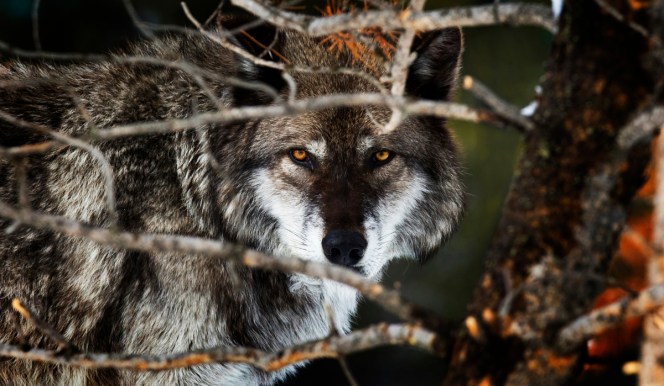
yellowstone wolf.

The groups oppose the state’s classification of the estimated 350 wolves within its borders as “predatory animals” that can be shot on sight in more than 80 percent of state when federal protections end Oct. 1.

Wyoming has also scheduled a regulated trophy wolf hunt in the remainder of the state, an area around the eastern and southern borders of Yellowstone National Park, starting next month.

Wyoming’s action is one of the latest salvos against wolves, which have slowly lost their protected status in the Rockies and Great Lakes regions over the past four and a half years after the U.S. Fish and Wildlife Service declared them “recovered”—a contention disputed by most conservation groups.

Since that time environmental, conservation and wildlife groups have filed a series of lawsuits to protect the wolf. As a result the wolves in these regions have regained and re-lost their protected status at least a half dozen times since March 2008. In the interim several hundred wolves have lost their lives while political forces worked to remove their protected status once and for all, which is pretty much where they stand today.

The groups involved include: Earthjustice, Defenders of Wildlife, Center for Biological Diversity, Natural Resources Defense Council, the Sierra Club, WildEarth Guardians, Alliance for the Wild Rockies, Biodiversity Conservation Alliance, Conservation Congress, Friends of Animals, Friends of the Clearwater, National Wolfwatcher Coalition, and Western Watersheds Project.

Wyoming’s current wolf management plan is similar to an earlier version that the federal agency repudiated after initially accepting it a few years ago. The groups claim the federal government is stopping wolf management for political reasons, not because the current plan is any better than the last one.

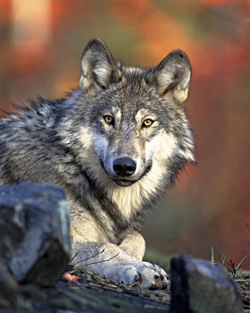
gray wolf

Wyoming Gov. Matt Mead and Interior Secretary Ken Salazar, both strongly tied to the ranching industry in which they grew up, have worked closely together since Mead took office last year on an agreement to end federal wolf protections. The federal government already has turned over wolf management in Idaho and Montana to those states and both have held wolf hunts.

The chance to legally shoot a wolf is apparently irresistible to hard core hunters, and states; eager to collect fees for hunting licenses. In Minnesota, more than 23,000 hunters from 33 states have applied for the 6,000 permits to shoot gray wolves that the state will issue for its fall hunting season, set to start November 3.

A spokesman for the state’s Department of Nature Resources told the Associated Press that only a few hundred of the 23,477 requests were filed by Minnesotans. The licenses, to be issued by lottery on October 14, will cost $30 for Minnesota residents and $250 for out-of-state hunters.

Minnesota has set a limit of 400 wolves that can be killed this season. The state has an estimated wolf population of 3,000 animals, the highest number in the U.S. outside of Alaska, where the species has never been protected.

To keep up on this constantly changing situation, the Defenders of Wildlife blog runs a weekly wolf news wrap-up for all things related to this species.


Source: Missoulian, Scientific American

Manifest Destiny

Posted on September 1, 2012

September 1, 2012 — Interior Secretary Ken Salazar announced yesterday that gray wolves in Wyoming will be taken off the endangered species list and managed under a state plan that delineates more than 80 percent of Wyoming as a “predator zone” where wolves can be shot on sight. In the remainder of the state, excluding Yellowstone and Grand Teton national parks, wolves will be designated a “trophy game animal” and hunted in large numbers. The goal of the plan is to reduce the state’s wolf population from about 270 to 100.

gray wolf (photo; Gary Kramer, USFWS)

A coalition of environmental and animal rights groups, including the Center for Biological Diversity, which has worked to protect western wolves for nearly a quarter-century, filed immediate notice of their intent to sue the federal government for stripping away the wolves’ protections under the Endangered Species Act.

The wolf-management plan, pushed by range and ranching interests, will drastically reduce wolf numbers in the northern Rockies and cut off further spread of the wolves to habitat in Colorado and Utah.

Protections for wolves in the rest of the northern Rockies, including Montana, Idaho, eastern Oregon and Washington and northern Utah, were removed by Congress via a rider on a budget bill and have been a disaster for wolf recovery. Idaho and Montana now allow hunting and trapping designed to drastically cut wolf populations, with a total of 545 wolves killed last year and more targeted for killing in the coming year.

In the short time wolves have been allowed to return — in limited numbers — to their former ranges in the West and reclaim their natural ecological role, they’ve quickly demonstrated they’re an irreplaceable keystone species. By limiting the amount of time elk spend along rivers, their presence has led to major improvements in streamside vegetation and water quality, benefiting fish, insects, birds, beavers and a broad range of other species.


Salazar has demonstrated a serious lack of concern for conservation issues. His appointment to head Interior was a clear signal to wild life advocates that trouble was in store. Salazar’s decision on the wolves is a piece with the way Interior has handled wild mustangs which, for the last two years, the feds have been rounding up and sending to long-term holding in record numbers, killing many of them in the process. Their ultimate destination is the slaughterhouse where they end up as horsemeat, a popular repast in France and other countries.

A product of five generations of ranching, Salazar represents a ranching community that remains wedded to the notion of manifest destiny: the right to claim the west for human endeavors. Their view that the west belongs to ranchers and by extension cattle, is deep and pervasive and continues to be backed by the government through subsidies and ridiculously low grazing fees. For all the talk from that group about freedom and independence they’re not about to give up their corporate welfare. By and large, wild animals interfere with their world view.


Sourced from Common Dreams with a shout out to Dreamcatcher blog.