Pangolins, leopard cats, slow lorises — orangutans, two hundred bucks, take your pick.
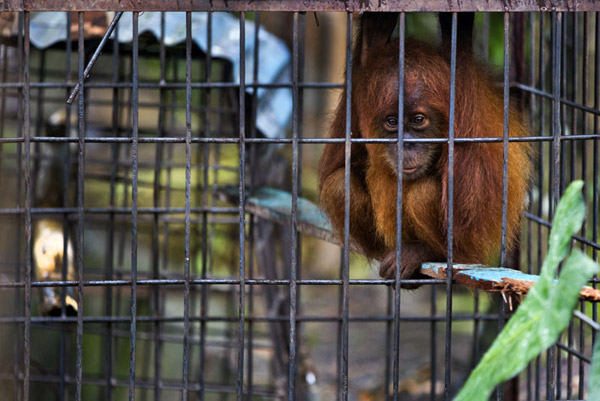
Orangutan at Limbat’s ‘zoo’ in Kadang, Aceh on the island of Sumatra. (Photo: Paul Hilton)
Source: Mongabay.
Orangutan at Limbat’s ‘zoo’ in Kadang, Aceh on the island of Sumatra. (Photo: Paul Hilton)
Source: Mongabay.
The story of a disabled young orca.
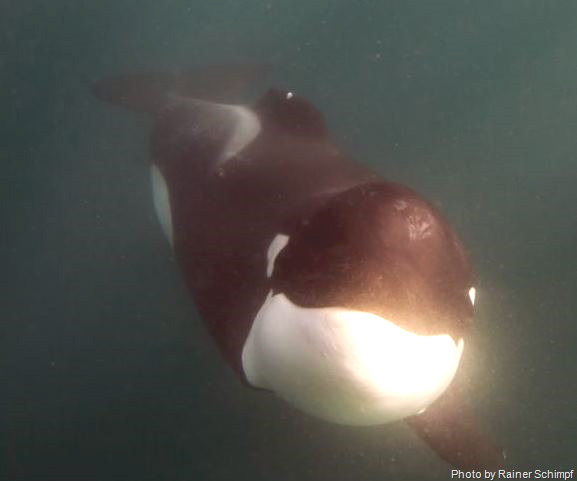
Face to face off the coast of South Africa.
Source: Nonhuman Rights Project.
A pair of northern bald ibis were released from a breeding site in Palmyra, Syria last spring for their annual migration to the Ethiopian highlands.

Syrian bald ibis. (painting, Waldrapp)

Fitting a satellite tag to a northern bald ibis in Syria in spring 2006. (Photo: G. Serra)
Odeinat, an adult male and father of two just fledged juveniles, was fitted with a tracking tag. The female, Zenobia, was not. Two juveniles from a semi-wild population in Turkey were released concurrently.

Ibis migration.
Researchers tracked the birds via satellite. Odeinat’s tag stopped transmitting in southern Saudi Arabia last July. It has not been possible to search for him, as the last signals did not give an accurate location.

Ibis in Ethiopia. (Photo: G. Serra)
Subsequently, a total of four birds were seen briefly this January at the usual Ethiopian highland wintering site. Researchers have just reported that Zenobia has returned to Syria without Odeinat. There are no signs of any more birds so far returning from their migration to Ethiopia. Zenobia may be the last of her kind.
The population was believed to have been obliterated starting from 1989 until three breeding pairs were rediscovered in Syria in 2002. Despite all efforts the colony dwindled to a single pair in the past two years and now there appears to be just the one bird.

Ibis range.
According to the International Union for Conservation of Nature (IUCN). Syrian ibises aren’t a distinct species or subspecies, but they are genetically different from their northern African cousins (found chiefly in Morocco) and are the only members of the species to undertake long-range migrations.
Among the hopes for maintaining the eastern population are further releases from the former colony site at Birecik in SE Turkey where a semi-wild population of around 100 individuals are being raised. But the birds are not free-ranging and they don’t migrate. If released they will not know the location of their wintering grounds since this information is believed to be transmitted from bird-to-bird. The only other wild population which is also the subject of dedicated conservation efforts comprises just over 100 breeding pairs at two colonies in Morocco. The Moroccan ibis are also residents birds, they do not migrate.

Last Syrian ibis among bedouin khaimas. (Photo M.S. Abdallah)
The bad news about the birds comes at a time when coordinated conservation efforts are strengthening. A new International Working Group for the Northern bald ibis was held in Jazan, Saudi Arabia last November, sponsored by the Saudi Wildlife Authority and Jazan University.
It is believed there are about 500 wild northern bald ibis remaining in southern Morocco. The bird is listed as Critically Endangered by the IUCN Red List.
Elephants are extremely social creatures. They form groups, and sometimes join up with other herds. The females stay together, raising each others young and communicate constantly with one another. Female asian elephants are never alone in the wild.
Manilla Zoo, Philippines Mali is the only Asian Elephant in the zoo. In fact she is the only elephant in captivity in the Philippines. The 38-year-old gentle giant has been an occupant of the zoo since she was taken from her mother at the age of 3, spending all of her life in a concrete enclosure.
After capturing the attention of concerned citizens, an animal rights group was contacted and Dr. Mel Richardson, a veterinarian and expert on elephants, was sent to evaluate Mali. His findings expressed concerns both for her physical and mental health.
Mali’s feet (which have only known the feel of concrete) are showing ailments including cracked nails, overgrown cuticles…
View original post 262 more words
Just in from the New England Anti-Vivisection Society — The U.S. Fish and Wildlife Service announced today a proposal to protect all chimpanzees under the Endangered Species Act – whether free living in Africa or held in a U.S. lab or other captive situations.
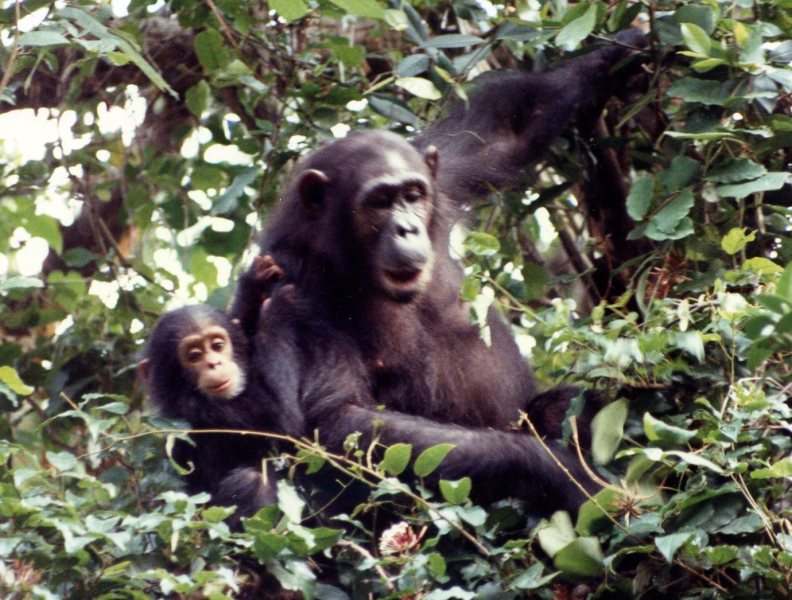
Chimps at Gombe Stream National Park, Tanzania, Africa. (Photo: NEAVS)
Once they are officially listed as endangered, chimpanzees in U.S. labs will be infinitely closer to being prohibited from indiscriminate use in biomedical research.
Vacation time! Animal lovers the world over choose their travel destinations to include up-close and personal wildlife experiences. There are plenty of options. Today it is important more than ever to be educated and vigilant about what our tourism money is funding.
Thailand- Tourists come to Thailand for the opportunity of close encounters with the elephants. Cute baby elephants on the beach, riding  elephants through the trees, getting photos taken with them for vacation memories to display on the mantel at home. Yet this image of the gentle giants is cruelly deceptive. Some places even hide behind the guise of being sanctuaries or conservancies leaving people with the impression they are in fact helping the animals.
The Thai tourism industry is actually fueling the illegal trade in baby elephants and is responsible for the death and diminishing numbers of their species. Taken from the wild in Burma, they are beaten…
View original post 352 more words
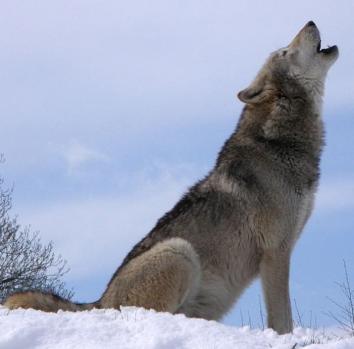
“In those days we had never heard of passing up a chance to kill a wolf…. I was young then…. I thought because fewer wolves meant more deer, that no wolves would mean hunter’s paradise…. Since then I have lived to see state after state extirpate its wolves…. I have seen every edible bush and seedling browsed, first to anemic desuetude, and then to death…. I now suspect that just as a deer herd lives I mortal fear of its wolves, so does a mountain live in mortal fear of its deer…. Perhaps this is the hidden meaning in the howl of the wolf, long known among mountains, but seldom perceived among men.”
Just in, Kabang was welcomed home.

Kabang welcomed home in the Philippines, June 8, 2013.
Veterinary surgeon Anton Lim, who accompanied the dog to the US, said that, despite losing half her face, Kabang can still chew her food using her two remaining molars, and smell well enough to recognise her owner and handlers.
A parade is planned in her honour in Zamboanga City on Sunday.
Kabang, the hero dog from the Philippines, was released from the veterinary medical teaching hospital at the University of California, Davis, U.S., last week and cleared to return to her family.
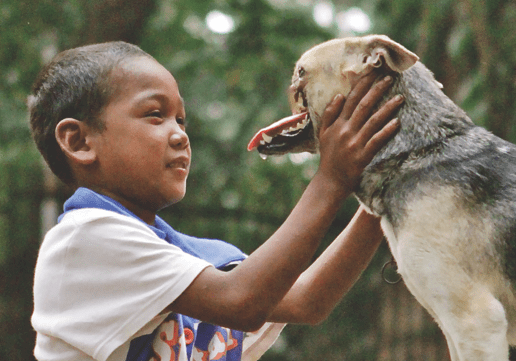
A Bunggal family member plays with Kabang in the Philippines. (Photo: provided by UC Davis)
The diminutive dog saved two young girls from an oncoming motorcycle in December 2011. The crash with the motorcycle literally ripped her face off, leaving her with a horrendous gaping wound.
Her heroism and miraculous survival captured the attention of the news media in the Philippines and hundreds of people around the world, who provided funds through the private organization Care for Kabang for her nearly eight months of treatments.
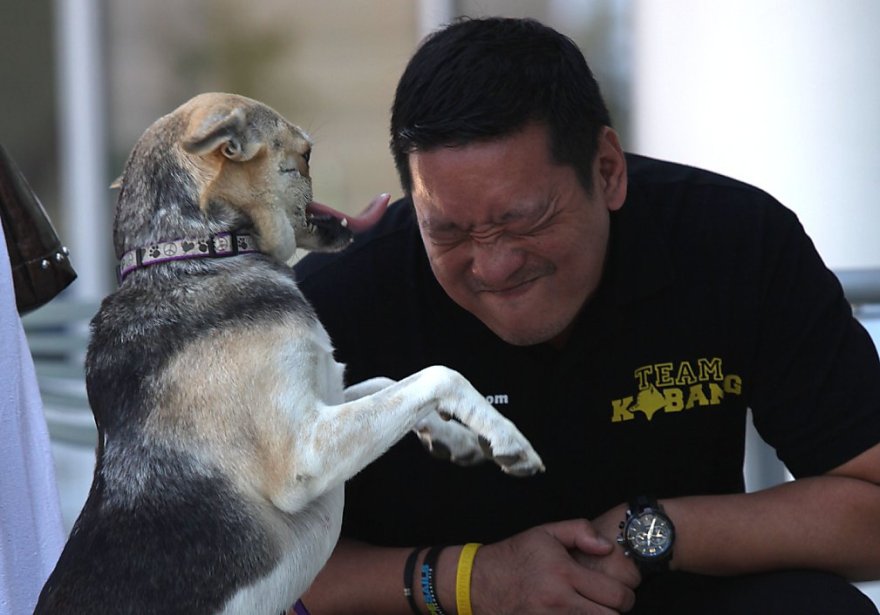
Veterinarian Anton Lim of the Philippines plays with Kabang.
The dog was brought to University of California-Davis in October last year, but university veterinarians discovered she also had heartworm disease and an infectious cancer.
A team of specialized UC Davis veterinarians was formed to coordinate Kabang’s care. Treatment for the cancer and heartworm each had to be successfully completed before dental and surgical procedures could be performed to deal with her facial wound.

Kabang healed at UC Davis.
It was not possible to reconstruct Kabang’s snout and give her a functional upper jaw so she will never look like she did before her accident. But because the facial wound has been closed, she is better protected against infection and prepared for an active life when she returns to her family in the Philippines.
Find out more about Kabang’s care.
Vidaar, the male Asiatic black bear rescued from the bear baiting trade reported here in April (“Vidaar and Lucia”), has passed away at the Balkasar sanctuary in Pakistan as a result of long term chronic illness.

Vidaar had been used in baiting for nearly four years and suffered a significant number of injuries. He had been identified by the Pakistan Bioresource Research Centre (PBRC) in 2012 as a priority bear in need of rescue.

When when he arrived at the sanctuary he was severely malnourished and fighting chronic disease. His wounds were treated and the rope used to tether him to a post in baiting arenas was removed.
A post mortem showed he had an enlarged gall bladder and other organs showed signs of infection. Despite the expert care of the BRC staff he was too weak to hold on.
He arrived at the center only a few months ago with a female Himalayan brown bear named Lucia, who passed away soon after her rescue.
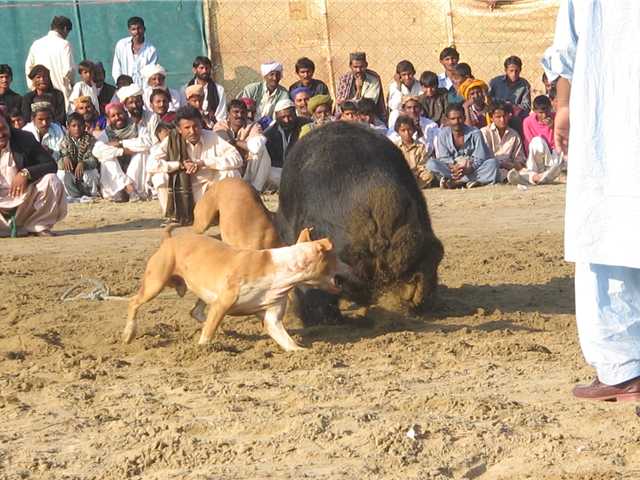
Bear baiting, Pakistan.
Animals used in bear-baiting are subjected to years of chronic stress and malnutrition with no veterinary treatment. They commonly arrive at the sanctuary with weak immune systems, parasites, blindness or impaired vision, and wounds to the muzzle, ears and eyes.
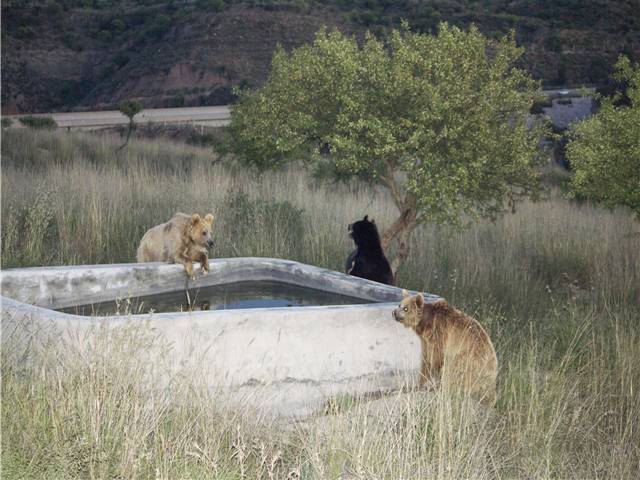
Balkasar Sanctuary for bears rescued from bear baiting.
The Balkasar sanctuary is funded by The World Society for the Protection of Animals and operated in partnership with the PBRC. There are currently 20 rescued bears enjoying the safety of the sanctuary.
Vidaar means “Forest Warrior.”
New Yorker reporter at large Raffi Khatchadourian recently interviewed Sea Shepherd Captain Steve Irwin via Skype aboard the Sea Shepherd vessel, the Steve Irwin, off the Antarctic ice shelf.
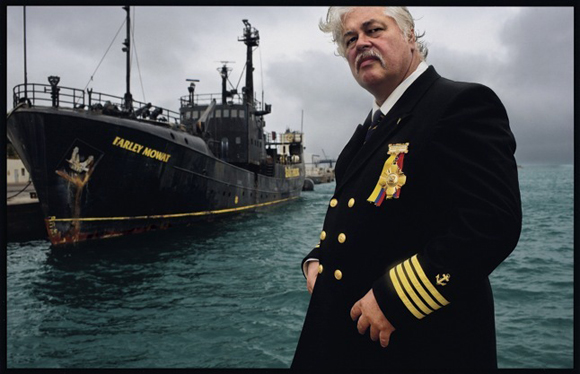
Paul Watson 2007 (Photo: James Nachtwey/VII)
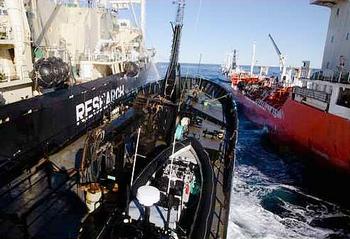
Nisshin Maru, left, rams the Bob Barker into the refueling tanker Sun Laurel, February 25, 2013. (Photo: Glenn Lockitch/Sea Shepherd Australia)
During these encounters, Japanese harpoon ships crossed the bows of the Sea Shepherd ships and shot water cannon down the exhaust vents of the Steve Irwin, Bob Barker, and Sam Simon, attempting to flood their engines.
The same month, Sea Shepherd Australia successfully blocked a third attempt to refuel the Japanese whaling fleet, which must refuel at sea because Australia, which prohibits whaling in Australian territorial waters, no longer allows the whalers to refuel in Australian ports.
Watson is a fugitive stemming from an incident in which he was charged with threatening to sink a Costa Rican long-liner in 2002. He was arrested in Frankfurt and put under house arrest last year on a Costa Rican warrant. Learning that Japan had applied for permission to extradite him, he escaped Europe by boat and made his way to the South Pacific and rejoined his ship on the high seas.

Environmental pirates.
Germany has withdrawn its arrest warrant, but Japan and Costa Rica resubmitted their paperwork to Interpol, which finally accepted them, so Watson remains a fugitive. When asked where he would go after the campaign ended and Sea Shepherd’s ships had returned to port, he said, “Well, I can stay at sea.”
Source: New Yorker blogs.
Zolushka (Cinderella in English) is an Amur tiger. She was orphaned in the winter of 2012, and we were helping to raise her at the rehabilitation facility in Alekseyevka village, near Vladivostok in Far East Russia. When she was found, she was exhausted and frostbitten. Very often tiger cubs like her suffer frostbite on their tails. Cinderella’s tail was affected too, so the very tip, about 5 to 7 centimeters, had to be amputated. This is the tip that tigers so characteristically curve up.
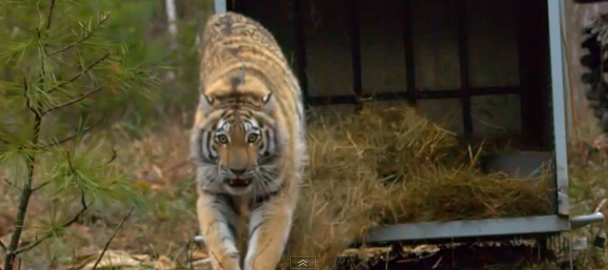
Zolushka (Cinderella) released.
Whether Cinderella was ready for release, was decided by many of the world’s Amur tiger experts. After long discussions, the date for the release was set on May 9th.
Cinderella was immobilized and fitted with a satellite collar.
The team then moved her into a transportation cage. Our party was riding in four vehicles; one of them towed a trailer with Cinderella.
The weather was rather cool near Vladivostok, but as we started driving it grew warmer. We put two five-liter blocks of ice in there to keep her cool.
It was a very long and exhausting car drive. We were going to Bastak Nature Reserve, about 1000 kilometers from Vladivostok, near Birobidzhan.
Tigers used to live in the area, but eventually people killed them all, and there were no tiger sightings there for many years. However, starting with 2006, one male tiger’s presence is recorded there on a regular basis, and he is still sighted today. So we have far-reaching plans for Cinderella.
Finally we reached the place of release in the very center of the reserve, where no one ever goes, and even rangers only visit on rare occasions.
The cage was placed in a way that gave Cinderella a good clearing to jump out and run for cover. A block and tackle system was arranged to lift the cage door from the distance.
The rope was pulled, the door slid open! Then everything was over in a split second. We heard a roar, and for an instant I saw Cinderella leaping out of the cage right away and, contrary to our expectations, disappearing immediately from our sight, making a sharp right turn.
I was totally enraptured by that moment, so fluid and graceful she was. Cinderella leaped over one of the cameras, ran a bit to the side, stopped and looked back at us. I thought that for the first time in my life I see a tiger in the wild. And that this was perhaps the last time I would ever see a tiger in our taiga. She made a couple more leaps and sort of dissolved among the trees. Cinderella – disappeared.
It was a strange feeling, on one side a great joy because our Cinderella was free and back home, and on the other hand a realization that you do not want to cross her path again in the future.
That was it.
Today, we already received satellite data showing that Cinderella is moving across the reserve territory, so we know for certain that she is alive.
Let me say again that all of this became possible only thanks to the joint efforts of many people from a number of organizations: Severtsov Institute of Ecology and Evolution at the Russian Academy of Sciences, Inspection Tiger, WCS, Phoenix Fund, and International Fund for Animal Welfare. But more importantly, this was possible thanks to your contribution. A million thank-you’s to IFAW’s generous supporters for saving Cinderella and giving Amur tigers a new hope for their survival.
—Anna Fillipova, posted Mon, 06/03/2013. Fillipova is an International Fund for Animal Welfare campaigner working in the IFAW Russia office.
“Ever since man first began to wonder about wolves…he has made regular business of killing them. At first glance the reasons are simple enough and justifiable…. But the wolf is fundamentally different because the history of killing wolves showed far less restraint and far more perversity. Killing wolves has to do with fear based on superstitions. It has to do with duty. It has to do with proving manhood. The most visible motive, and the one that best explains the excess of killing, is a type of fear: theriophobia. Fear of the beast. Fear of the beast as an irrational, violent, insatiable creature.

“The wolf was not the cattlemen’s only problem—there was weather, disease, rustling, fluctuating beef prices, hazards of trail drives…. [But] the wolf…became an ‘object of pathological hatred.’ Men in a speculative business like cattle ranching singled out the wolf as a kind of scapegoat for their financial losses. It was against a back drop of…taming wilderness, the law of vengeance, protection of property, an inalienable right to decide the fate of all animals, and the…conception of man as protector of defenseless creatures—that the wolf became the enemy.
“The motive for wiping out wolves proceeded from misunderstanding, from illusions of what constituted sport, from strident attachment to private property, from ignorance and irrational hatred. But the scope, the casual irresponsibility, and the cruelty of wolf killing is something else. I do not think it comes from some base, atavistic urge, though that may be a part of it. I think it is that we simply do not understand our place in the universe and have not the courage to admit it.”
Sea turtles migrate from their nesting grounds in Japan across the Pacific Ocean to the coast of the Baja California Peninsula in Mexico.
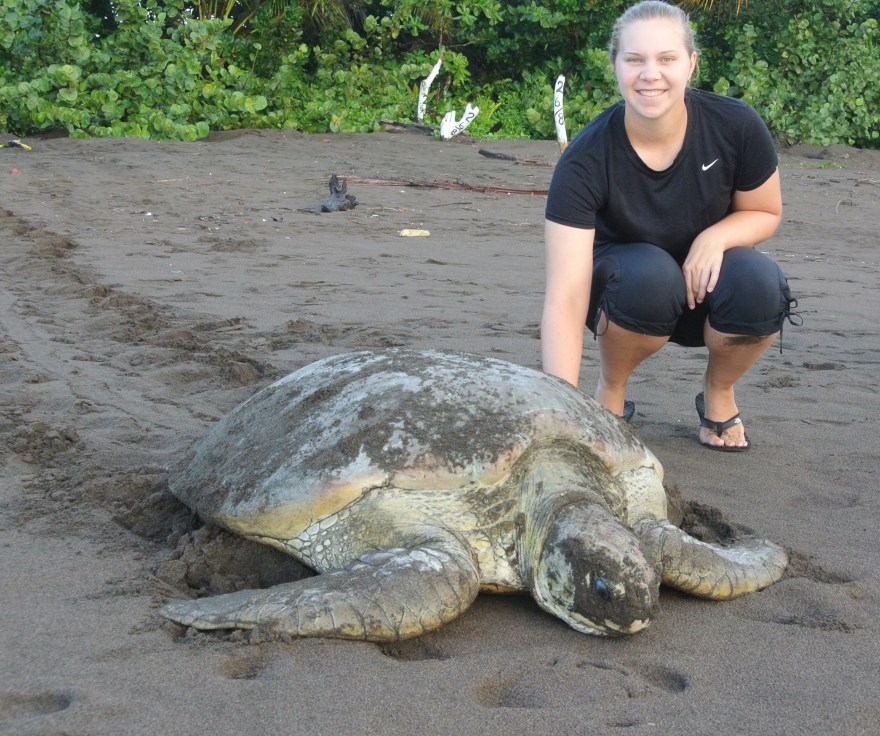
Student Kari Gehrke with Green female nesting turtle, Tortuguero beach, Costa Rica. (Photo: Sea Turtle Restoration Project)
They stay in Baja for decades as they grow and mature, feeding primarily on red crabs. But the environment there is turning increasingly hostile. The growth of the crab fishery has resulted in thousands of gillnets stretched across Baja’s Pacific coastal waters.

Dead sea turtles bycatch on-board a Baja gillnet vessel.
Further south on Central American beaches, poaching of sea turtle eggs is having a similar effect. Studies of poaching at different Costa Rican and Honduran beaches, indicates literally every beach experiences a high degree of egg poaching.
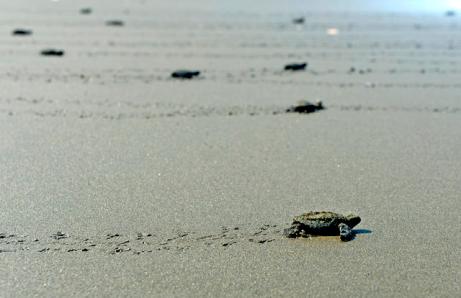
Baby sea turtles, Costa Rica. (Photo: Lindsay Fendt)
“It was him they wanted, because he was the one who was always looking after the nests,” the owner of the turtle sanctuary, Vanessa Lizano, told BBC News.

Sea turtle eggs are considered a delicacy,
Sources: Sea Turtle Restoration Project/Tico TImes.
A recent interview with Jonathan Slaght, a conservationist with the Wildlife Conservation Society’s (WCS) Russia Program, details the perilous state of animal protection in Russia’s wildest territory.
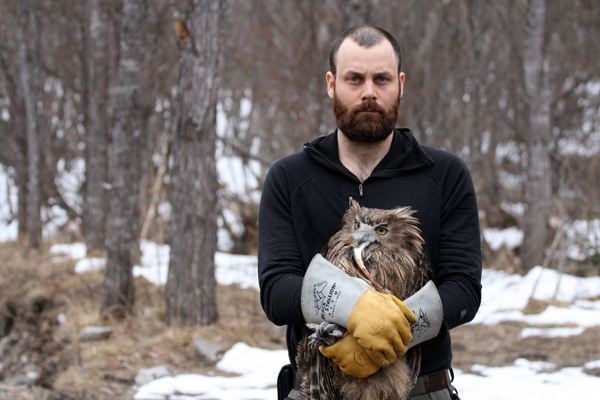
Jonathan Slaght with a Blakiston’s fish owl. (Photo: Sergei Avdeyuk, Amur-Ussuri Center for Avian Bioiversity)
Read the interview with Slaght here.
Source: Mongabay.com.

 First Light Productions