First Light Productions

investigative journalism

Posts by Michael Elton McLeod

EXXON VALDEZ REDUX

Posted on March 18, 2013

Shell Oil’s ongoing problems in the Arctic raise serious questions as to whether the company can safely operate in the frozen north, where an oil spill could irreparably damage fragile ecosystems.

The latest slipup occurred during the final days of 2012, when the drilling rig Kulluk broke free from towropes and, after a days-long struggle, on New Year’s Eve ran aground on the uninhabited Sitkalidak Island—an Important Bird Area where more than 100,000 birds overwinter and 180,000 nest in the summer. The rig remained intact and doesn’t appear to have spilled any of its around 140,000 gallons of diesel fuel or 12,000 gallons of drilling fluids. It was subsequently towed to a bay in Kodiak Island.

The Kulluk on New Year’s Day after it ran aground on an uninhabited Alaskan island. (Photo: Coast Guard Petty Officer 1st Class Sara Francis)

In July, Shell’s other drilling rig, the Noble Discoverer, became unmoored in Dutch Harbor in the Aleutian Islands and threatened to run aground. In September, in the Chukchi Sea, an advancing ice floe forced the rig to retreat to safer waters.

The company’s numerous Arctic blunders—including other instances of mismanagement—have spurred the government to launch an urgent review that could hinder—or halt—the company’s efforts to open up waters off of Alaska’s coast to oil exploration.

The Chuckchi and Beaufort seas and their shorelines support a wide array of wildlife, including walruses, seals, bowhead whales, polar bears, and enormous numbers of birds.

The company confirmed that it was moving the Kulluk during the last days of the year to avoid paying taxes in Alaska for the vessel in 2013.


Source: Audubon

WHERE’S THE U.S.?

Posted on March 17, 2013

Nowhere to be found, as usual.

EU bans animal testing for cosmetics forever.

On March 11, the import and sale of animal tested cosmetic products and ingredients was banned in the European Union. Anyone who wishes to sell new cosmetic products and ingredients in the EU must not test them on animals anywhere in the world. The ban affects all cosmetics including toiletries and beauty products from soap to toothpaste.

ROSIE

Posted on March 16, 2013

was shot and killed by Des Moines, Washington police. Over the course of about an hour, they Tasered her twice, chased her through the neighborhood, trapped her in a stranger’s backyard and shot her four times with an assault rifle

Rosie.

The officers had responded to a report of a loose dog phoned in by a neighbor who was concerned that Rosie might get hurt. Her owners, Charles and Dierdre Wright, were out of town, and Rosie somehow got out of their yard.

After the dog was shot once, one of the officers is heard shouting “Nice!” The officer with the rifle fired three more times. Audio from a dashboard camera indicates the officers were talking about shooting Rosie within 10 minutes of arriving at the scene.

The Wrights returned home later that day unaware of what had happened to Rosie. They called friends and the police, looking for her.

Des Moines police only acknowledged they killed the dog after Charles Wright found a Taser dart on his lawn the next day and took it to the police station, seeking an explanation.

Rosie, a Newfoundland, was killed in November 2010. The Wrights sued claiming the three officers were intent on shooting the 115-pound dog soon after encountering the animal.


They were awarded $51,000, the largest settlement reached in Washington state for an animal-related litigation case. The couple are also seeking at least $90,000 in investigative and attorney fees from the city.

As with so many things these days involving firearms, there is an epidemic of police officers shooting dogs, often times for no clear reason. This appears to be one of those cases.


Source: Seattle Times

THROWING STONES

Posted on March 15, 2013

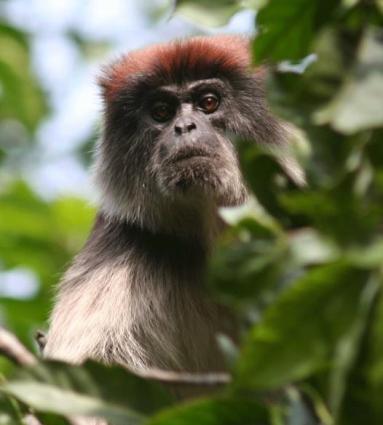
Red colobus monkey (Photo: Tim Holland)

In the Hindu religion, primates are sacred. So in predominantly Hindu areas, namely India and Nepal, killing or otherwise harming a primate is blasphemous, not to mention punishable by law. In other countries, such as China and Japan, primates are whimsical creatures, possessing mystical properties that imbue them with shrewd intelligence and cunning. In most places, however, they’re just crop pests.

This thought provoking piece by Ria Ghai via the Jane Goodall Institute of Canada, talks about supporting alternative farming techniques and sustainable livelihoods for farmers to reduce conflict between humans and wildlife.

OLD TOWN EAGLES

Posted on March 15, 2013

This man, photographed in Lijang, a city in The Three Parallel Rivers Region of Yunnan, China, said his eagle caught all of its own food – although, he admitted, it was often rabbits he purchased and released for the bird to catch.

Tibetan cowboy.

The fake cowboy and 4 other men, all dressed in identical outfits, each with a golden eagle, stroll the streets looking for tourists willing to pay10 Yuan, about $1.50, to have their photo taken with an eagle perched on their arm. And business is good.

The eagles are allowed to hunt on their own – but the owners recapture the birds before they can eat their prey. “If it is hungry, it will come back,” one cowboy explained. “But if it eats until it is full, it will fly away forever.”


Source: Audubon

WTF IS WITH ASIA?

Posted on March 14, 2013

Every horror story

about the tragedies unfolding in the wildlife trade always comes back to Asia, particularly China.

Stolen Apes launch at CITES in Bangkok, March 3, 2013.

Out of the summit of the Convention on Trade in Endangered Species recently held in Bangkok, comes an estimate that 3,000 great apes are illegally captured each year in forests, often to be sold as pets or tourist attractions.

The illegal trade

is controlled by organized crime syndicates–the profits are as high as smuggling drugs and guns, the chances of getting convicted are far lower and, if busted, the penalties are often trivial.

A minimum of 22,218 great apes have been lost from the wild since 2005–either sold, killed during the hunt, or dying in captivity. In the same time, only 27 arrests were made in Africa and Asia in connection with the great apes trade. A quarter were never even prosecuted.

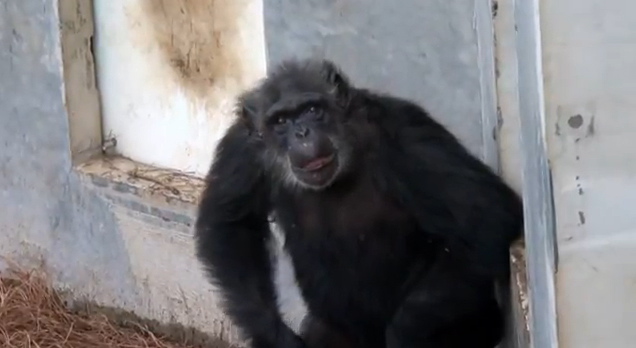
An orphaned chimpanzee in the Democratic Republic of the Congo: This male went to a sanctuary, others are less lucky. (Photo: Laura Darby/African Primates/IUCN)

Chimps and orangutans,

the most common live-traded apes, sell for hundreds or thousands of dollars. Gorillas can fetch hundreds of thousands of dollars. All this despite the fact that CITES has identified the great apes as endangered and mandated a ban on international trade in the species.

The international community needs to wake up and put some teeth in the enforcement of wildlife laws, particularly sanctions on China, Thailand and Vietnam, where, in addition to orders for primates from zoos and private owners, a vast trade in ivory, rhino horn, crocodile leather and even exotic plants is literally exhausting flora and fauna around the world.

Hopefully the scope of the lawless poaching and destruction of wildlife by organized crime and rebel militias presented at CITES, which ends today, will spur governments around the world to wake up to what is unfolding and take real action.


Source: Damian Carrington for the Guardian.

HERE FISHY FISHY…

Posted on March 14, 2013

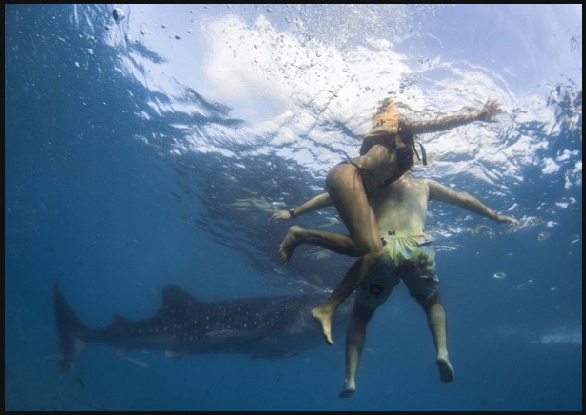
Tourists are flocking to the coastal waters of Tan-awan, on the southern Philippines island of Cebu to swim with whale sharks, the world’s largest fish.

Snorkelers watch a whale shark approach a feeder boat. (Photo: David Loh/Reuters)

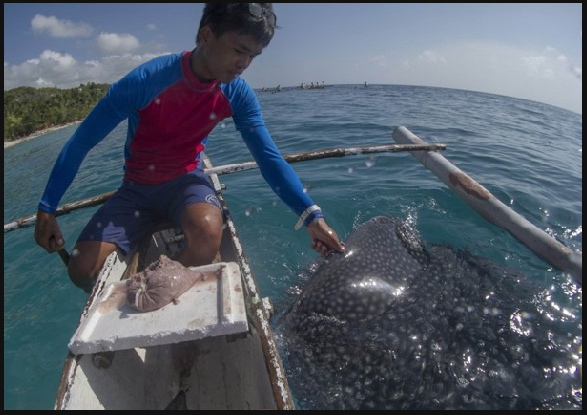
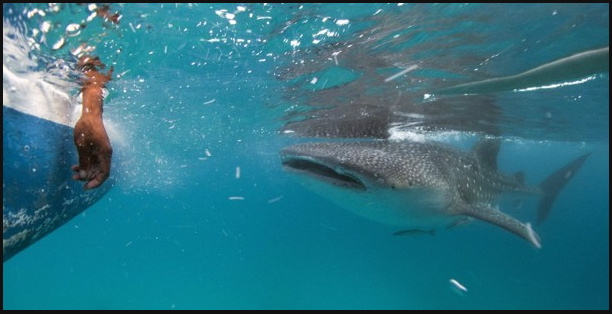
Tan-awan never used to see tourists. But the sharks have brought a measure of prosperity to what used to be a sleepy village. Fishermen lure them to the Tan-awan coastline by hand-feeding them shrimp. The locals profit by acting as guides or boat pilots for eco-tourists. Most days, several hundred tourists come to see or swim with the big fish, paying about $12 to be taken out to see them and about three times that much to swim with them.

Roy Lagahid, 16, pushes away a juvenile whale shark looking for food. (Photo; David Loh/Reuters)

Some biologists decry the human-fish interaction, saying it could lead to abnormal whale shark behavior, such as aggression between them, and the spread of disease and parasites among animals brought closer together than they would typically be naturally.

Whale shark approaches a feeder boat near Tan-awan. (Photo; David Loh/Reuters)

“Some people are asking that we stop feeding, but if we stop feeding, what is our livelihood?” asks Ramonito Lagahid, an official with the local fishermen’s association.

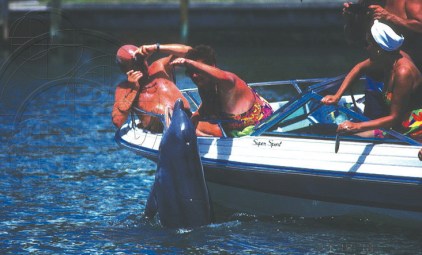
Beggar at work. (Photo: Sarasota Dolphin Research Program)

Habituation of wild animals leads to situations like what happened to a dolphin named Beggar (ANIMAL POST “Beggar” Feb. 10, 2013) who became habituated to humans in the Intracoastal Waterway in Florida in the U.S.. Beggar died prematurely. An autopsy revealed he was underweight and dehydrated—possibly because he was not eating a normal dolphin diet.

The International Union for Conservation of Nature classifies the whale shark as “vulnerable,” but the total population is unknown.


Source: WashingtonPost

ALONE IN THE ZONE

Posted on March 12, 2013

Naoto Matsumura,

a 53-year-old fifth-generation rice farmer went back into the dead zone around Japan’s Fukushima nuclear power plant to take care of his cows (and pigs, cats, dogs, and ostriches), and then stayed.

“Animals and people are equal.”

SHARK PATROL II

Posted on March 11, 2013

John C. Sigler

is a former president of the National Rifle Association and current Board of Directors member. He is also a pigeon shooter.

John C. Sigler shooting pigeons. (Photo: SHARK)

The NRA

pours an extraordinary amount of time, money, and effort into supporting pigeon shooting in Pennsylvania and defeating any legislation to ban it. Now we know why: Their top leadership such as Sigler, Ted Nugent, and former NRA Board member and former president of the Philadelphia Gun Club, Leo Holt, are pigeon shooters. These men are using and abusing the name of NRA members, not to support the Second Amendment, but so that they can enjoy their private slaughter of innocent animals.


For a complete rundown on what’s happening in Pennsylvania, watch this:


Source: Showing Animals Respects and Kindness

D-CON XXX

Posted on March 9, 2013

New super-toxic rat poisons are indiscriminately killing hawks, owls, eagles, foxes, bobcats, mountain lions and other non-targeted wildlife.

This gray fox tested positive for three types of rat poison. It died within 24 hours of arriving at the Wildcare animal rehabilitation center. (Photo: Melanie Piazza/Wildcare)

Developed with a longer half-life to overcome the resistance mice and rats have built up to older poisons, the new compounds being pushed by pesticide manufacturers have been wreaking havoc on the rodents’ natural predators.

The California Department of Fish and Game (CFG) has confirmed 240 cases of non-targeted wildlife being exposed to the anticoagulants that work by causing animals to bleed to death.

Wildcare animal hospital in San Rafael, California has found that 74% of the predators that come through its doors test positive for rat poison.

This includes the San Joaquin kit fox, the coyote, red fox, gray fox, black bear, badger, fox squirrel, mountain lion, bobcat, golden eagle, great horned owl, barn owl and turkey vulture.

CFG recently urged the California Department of Pesticide Regulation to restrict the sale of the rodenticides mostly to professional pest-control operators, rather than making them available to urban and suburban homeowners.

The U.S. Environmental Protection Agency has been pushing to ban the sale of the super-rodenticides to consumers and to restrict how they’re stored and used.

In the American tradition, manufacturers are pushing back with lawyers and lobbyists.

In a connected development.

Dateline, Los Angeles — A necropsy performed on a young female mountain lion by the California Animal Health and Food Safety Laboratory and UC Davis, detected exposure to two anticoagulant compounds commonly found in rodent poison.

Puma-25, about 1 year old, appeared in a photo taken by a remote camera in 2012 in the Santa Monica Mountains. (Photo: National Park Service)

Anticoagulants can cause uncontrolled bleeding and have been confirmed as the cause of death of two other mountain lions in the Santa Monica Mountains during the last decade. Mountain lions may ingest poisons when they eat animals that have consumed them.


Source: LA Times

HUNTING ALLOWED

Posted on March 8, 2013

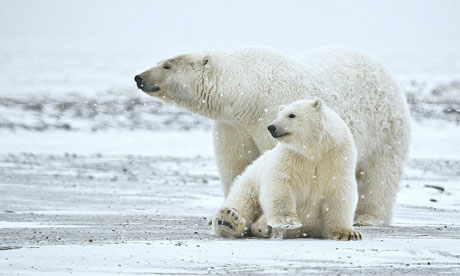
Bangkok, March 7, 2013 — After bitter debate, a proposal by the U.S. at the 178-nation meeting of the Convention on Trade in Endangered Species (CITES) to stop hunting and commercial exploitation of polar bears was rebuffed by Canada.

(Photo: Ho/Reuters)

Delegates were essentially asked the question: is the future threat to polar bears from the rapid melting of sea ice by global warming so great that the additional pressure of hunting the bears be outlawed?

The US, allied with Russia, argued yes. They said the science showed two-thirds of the 20,000-25,000 polar bears will disappear by 2050. In fact, since that work was done, it has got even worse as 2012 saw record low Arctic ice.

Canada – home to two-thirds of the world’s polar bears and the only nation allowing exports – argued there is not enough scientific evidence to show they are in danger of population collapse. Canadian representatives said the country already has strict rules to ensure hunting is sustainable. The Canadian delegation leader dismissed the U.S. proposal as “based more on emotion than science.”

Final count: 38 countries voted for the bears, 42 against, 46 abstained.

About 600 polar bears are killed each year in Canada, some in traditional hunts by Inuit people and some as trophies for foreign hunters. Half the bears are then exported as skins or other body parts.

The debate split conservation groups. The World Wildlife Federation (WWF) supported Canada, saying that making political decisions without enough scientific evidence would severely undermined the CITES system, which controls all wildlife trade. Others including International Fund for Animal Welfare (IFAW) and the National Resources Defense Council (NRDC) said the science was clear that two-thirds of the existing bears would be extinct by 2050.

SHARK PATROL

Posted on March 7, 2013

The slaughter was horrific.

Wounded birds literally fell from the sky, slamming on the rocky shoreline, choking on their own blood as they died.

Victim of the Philadelphia Gun Club. (Photo: SHARK)

This past Saturday, March 2, 2013, a day-long pigeon shoot was held at the Philadelphia Gun Club (PGC) in Bensalem, PA. on the banks of the Delaware River. SHARK was there the entire time.

SHARK posted two boats on the river to document the slaughter

and to rescue the wounded who came within their reach. As in the past, SHARK volunteers were hit with shotgun pellets with alarming regularity. Also, as in the past, the police refused to do anything.

One pigeon fell into the river and drowned.

Others fell onto the trees and brush under the PGC wall, where they were paralyzed with no movement visible, save for a slowly blinking eye.

When the competition ended,

the shooters desperately tried to hide from SHARK cameras as they left the club. Some tried to leave through a side exit, yet when they saw one of SHARK’s investigators, they reversed as fast as they could so that no one would see who they were.

SHARK rescued seven wounded pigeons.

Due to their wounds, and because of their emaciated condition even before the slaughter, two passed away that day. Two more died that night. Three, however, Faith, Pegasus and Shadow, are still alive. (See them on SHARK’S website)

Pigeon shoots are competitions wherein thousands of live birds are shot to win prizes. A typical 3-day shoot contest can kill and injure up to 15,000 birds.

A new bill to specifically ban pigeon shoots has been introduced into the Pennsylvania State Senate. Already, a lobbyist for the National Rifle Association is at work to stop it.

For everyone who thinks you can’t make a difference, groups like SHARK prove it’s not so.

If you are as horrified as SHARK is about this cruel and senseless “sport,”

get everyone you know in to write and call state legislators in Pennsylvania, and ask them to support Senate Bill SB 510, which will ban pigeon shoots.

DOUBLE TROUBLE

Posted on March 3, 2013

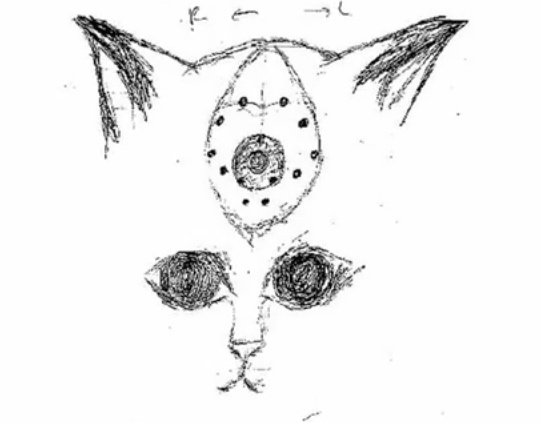
Accompanying the recent news that “researchers” at the University of Wisconsin are continuing to conduct obscene animal experiments in the tradition of the demented Harry Harlow, evidence unearthered in a PETA lawsuit reveals that the school has still more secrets in its closet.

UWisc2

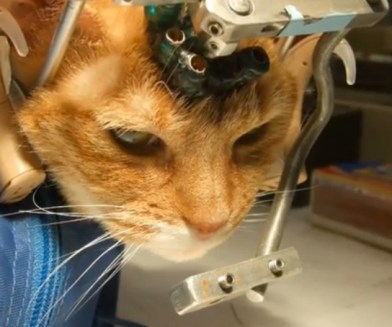
Their subject was a cat named Double Trouble.

Experimenters began

by screwing a steel post into her skull and implanting electrical devices deep inside both her ears. After being deprived of food for several days to coerce her into cooperating in exchange for a morsel of food, they bolted her head into place, restrained her in a nylon bag and forced her to listen to sounds coming from different directions.

Double Trouble. (Photo: University of Wisconsin)

Her health rapidly deteriorated.

Records say that she was observed twitching, which the clinical notes indicate was a “neurological sign.” Her face became partially paralyzed and the head wound that experimenters created during surgery never healed.

She endure almost two months of this misery.

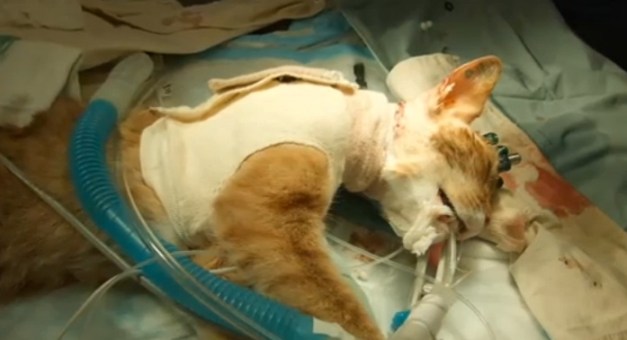
One of the last entries in her records states that she “appear[ed] … depressed.” In the end, experimenters noted she was too ill to continue and that the device they had implanted did not work, so she was killed and decapitated so her brain could be dissected. A former UW-Madison veterinarian who oversaw the treatment of this cat and others recently issued a letter confirming this abuse, stating that many of the cats “suffered unnecessarily.”

(Photo: University of Wisconsin)

For a more detailed—and gruesome—look at what happened, see this video.

No peer-reviewed papers have been published in any scientific journals as a result of the suffering the cat endured.

Correspondence between UW experimenters and their collaborators conclude that the experiment was a failure because there was a problem with the cat’s surgery.

This experiment is part of a larger project that has received more than $3 million from the National Institutes of Health (NIH) with the stated purpose of understanding how the brain determines the location of a sound.

Experimenters justified the use of 30 cats per year not by saying that the experiments would lead to improvements in human health but rather by stating that they needed to “keep up a productive publication record that ensures our constant funding.”


Source: PETA