First Light Productions

investigative journalism

Posts by Michael Elton McLeod

Japanese / Yahoo! whaling

Posted on December 12, 2012

Alert update: Tell Yahoo! to stop selling whale & dolphin.

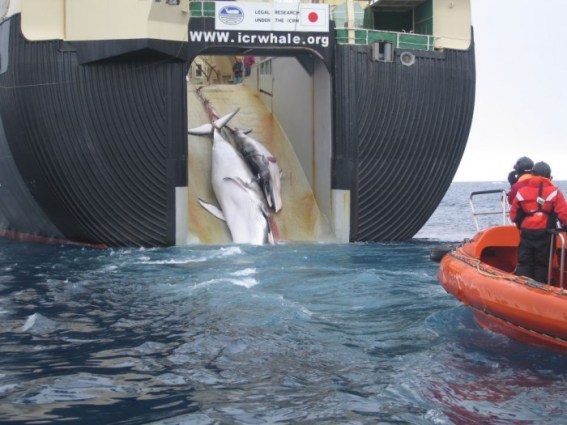
A whale and calf being loaded aboard a factory ship, the Nisshin Maru. (Photo: Customs and Border Protection Service, Commonwealth of Australia)

A whale and calf being loaded aboard a factory ship, the Nisshin Maru. (Photo: Customs and Border Protection Service, Commonwealth of Australia)

The Environmental Investigation Agency has launched a campaign to persuade Internet giant Yahoo! to stop profiting from the sale of whale and dolphin meat via its subsidiary Yahoo! Japan.

EIA

Marissa Mayer was appointed new CEO of the company this summer, some weeks after EIA launched its report and campaign for Yahoo! to follow in the footsteps of Amazon and unequivocally ban all whale and dolphin products from its marketplaces.

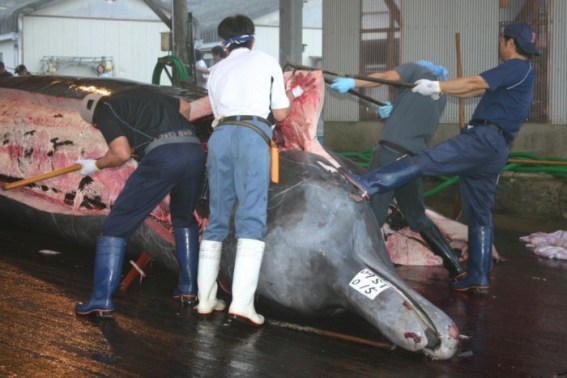
Baird’s Beaked Whale being processed in Japan (Photo: EIA)

Baird’s Beaked Whale being processed in Japan (Photo: EIA)

Here are four easy but important ways in which you can play a vital role in telling Yahoo! and its new CEO that profiting from the slaughter of whales is unacceptable:

1. Send a Tweet – If you’re a Twitter user, send Tweets to Yahoo! CEO Marissa Mayer and to Yahoo!, via its general and corporate accounts, calling on it to ban all sales of whale and dolphin products from all sites and subsidiaries. You can compose your own, per the sample Tweet below:
@marissamayer Please stop selling harmful whale products through Yahoo! Japan, immediately and forever http://ow.ly/boJmW
You can also follow EIA’s Twitter account @EIAinvestigator and reTweet their messages about this issue to your friends and contacts.

2. Send an email – Let Yahoo! know it is unacceptable to profit from the slaughter of whales by sending an email to the company and its CEO Marissa Mayer.
You can compose your own message, or use/adapt the sample email below, sent for the attention of Yahoo! CEO Marissa Mayer at media-inquiries@yahoo-inc.com and advertise.me@yahoo-inc.com.
You can also send a protest to Softbank, the major Japanese financial investor in Yahoo! Japan, at pr@softbank.co.jp.

3. Post a comment of protest on Yahoo!’s Facebook page at http://www.facebook.com/yahoo

4. Sign the petition – EIA encourages all supporters to add their names to this one and so help it achieve greater prominence and impact. Sign the petition here. (http://www.change.org/petitions/yahoo-stop-selling-dolphin-and-whale-meat)

War on animals

Posted on December 11, 2012

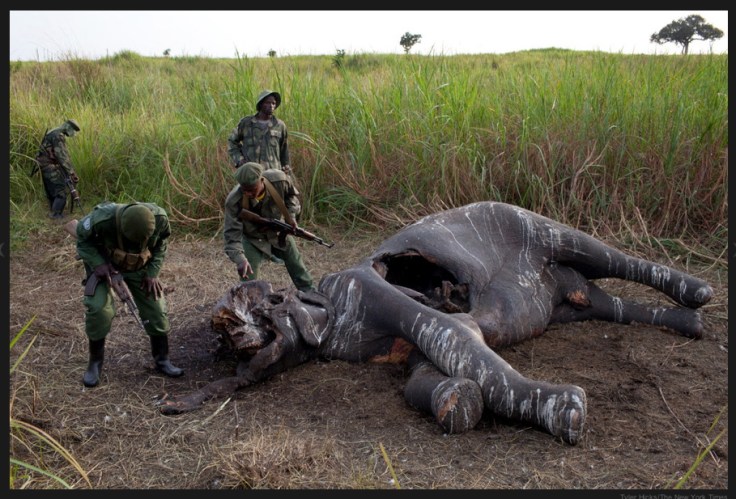
Rangers and soldiers in the Democratic Republic of Congo use an array of weapons and aircraft to patrol Garamba National Park’s 1,900 square miles. Park officials, scientists and the Congolese authorities believe that the Ugandan military — one of the Pentagon’s closest partners in Africa — killed 22 elephants from a helicopter in March and spirited away more than a million dollars’ worth of ivory.

Garamba National Park, DRC. (Photo: Tyler Hicks/NYT)

Garamba National Park, DRC. (Photo: Tyler Hicks/NYT)

The Congolese military and South Sudan’s army have also been implicated in poaching. Militant groups such as the Shabab, Kony’s Lord’s Resistance Army, and Darfur’s Al Qaeda-linked janjaweed appear to be getting in on the action, using illegal wildlife products to fund their other activities and killing park rangers in the process.

Garamba ranger.

Garamba’s wildlife rangers frequently battle South Sudanese forces. (Tyler Hicks/The New York Times)

In 2011, poaching levels were at their highest in every region of Africa since international monitors began keeping detailed records in 2002. And last year broke the record for the amount of illegal ivory seized worldwide, at 38.8 tons (equaling the tusks from more than 4,000 dead elephants).

Garamba ranger. (Photo: Tyler Hicks/NYT)

A ranger in Garamba with a few of the tusks from the park’s collection. The tusks of a single adult elephant can be worth more than 10 times the average annual income in many African countries. (Tyler Hicks/The New York Times)

Garamba National Park, DRC.

Park rangers discover a poached elephant, stripped of ivory, deep in the park. (Tyler Hicks/The New York Times

The nonprofit organization that runs the park is considering buying night-vision goggles, flak jackets and pickup trucks with mounted machine guns. Some of the Garamba rangers are poachers themselves, killing the animals they are entrusted to protect, saying their salaries are too low to live on.

In Tanzania, poor villagers are poisoning pumpkins for elephants to eat. In Gabon, subsistence hunters in the rain forest are being enlisted to poach elephants, sometimes for as little as a sack of salt.

Wildlife traffickers target not only large endangered mammals like rhinoceroses, elephants. Reptiles and birds get caught up in the exotic pet trade, including endangered parrots.

China is the largest market for illegally trafficked wildlife. The United States is second. This past July, two Midtown Manhattan jewelers pled guilty to selling $2 million worth of ivory.


Source: Audubon

OR-7

Posted on December 10, 2012

Crossed fingers he doesn’t get shot. The fate that befell his brother.

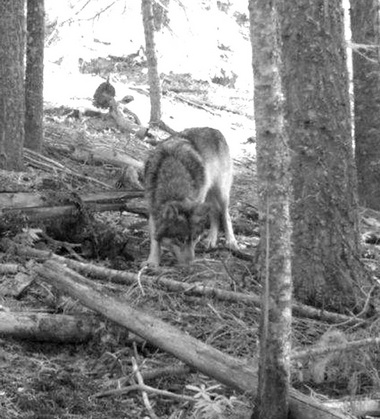
Nov. 14, 2011, photo from a trail camera shows OR-7 on public land east of Butte Falls in Oregon's Jackson County.

Nov. 14, 2011, photo from a trail camera shows OR-7 on public land east of Butte Falls in Oregon’s Jackson County.

Wandering

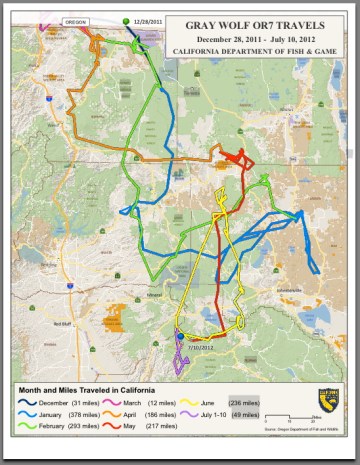
OR-7 has now migrated into an oak-chaparral woodland near Lake Almanor east of Red Bluff, according to the California Department of Fish and Game.

He spent the summer hunting deer at 6,000 feet elevation in the Plumas National Forest south of Lassen Peak, where the Cascade Range and Sierra Nevada mountains meet.Winter storms lashing the high country are now forcing deer to migrate down into the foothills at about 1,000 feet and OR-7 has followed.

OR-7 wanderings in northern California.

OR-7 wanderings in northern California.

History

He was born into the Imnaha pack in northeastern Oregon’s Wallowa County 3 1/2 years ago, and captured and fitted with a GPS/radio-telemetry collar in February 2011. Seven months later, he set off on an historic 1,000-mile trek that’s taken him across Oregon to Crater Lake and south into California.

Biologists believe he’s searching for a mate and a place to start a new pack.

Karen Kovacs, wildlife program manager for the California Department of Fish and Game, says “He is feeding well, he is able to travel well.” She calculates his weight at 100 to 110 pounds, with paws measuring 5-by-5 inches. He’s so elusive that only about five people have glimpsed him since he entered California, she said.

When OR-7 crossed into California last December, Oregon had 29 known wolves. Today, a rough census of 25 new pups brings Oregon’s known wolf population to more than 50, in six separate packs.

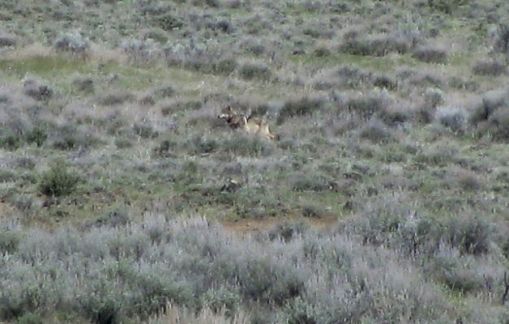
California state biologist Richard Shinn snapped a photograph of OR-7 on May 8, after spotting him on a sagebrush hillside 100 yards away in southwestern Modoc County. Shinn was among a group of biologists, game wardens and a federal trapper who were there to talk to local ranchers about the prospect of having a wolf in their midst.

California state biologist Richard Shinn snapped a photograph of OR-7 on May 8, after spotting him on a sagebrush hillside 100 yards away in southwestern Modoc County. Shinn was among a group of biologists, game wardens and a federal trapper who were there to talk to local ranchers about the prospect of having a wolf in their midst.

So far, OR-7 has survived his California adventure by switching from his preferred diet of elk to deer, which are more available in California. He won’t cross major roadways and has turned back several times when he came near Interstate 5.

“Rivers don’t seem to be a barrier,” Kovacs noted. “He swam across the Klamath River several times.”

But his biological clock is ticking. He’s past the midpoint of a life span seldom exceeding five to seven years for wolves in the wild. OR-7 must find a mate or become a “biological dead end.”

OR-7’s behavior, called dispersal, is not atypical of a wolf his age.

Bullseye

Posted on December 10, 2012

Yellowstone National Park’s best-known wolf, was shot and killed last Thursday outside the park’s boundaries.

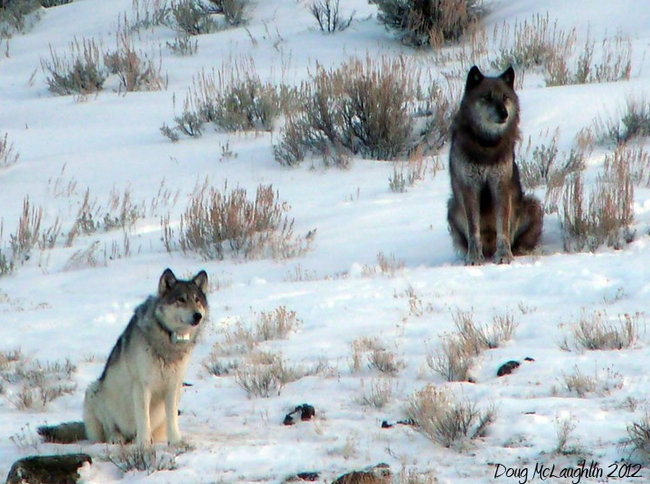
The wolf researchers called 832F, left, with her companion  known as 754. (Photo: Doug McLaughlin)

The wolf that researchers called 832F, left, with her companion known as 754. (Photo: Doug McLaughlin)

The wolf was the alpha female of the park’s highly visible Lamar Canyon pack. She had become so well known to tourists that some wildlife watchers referred to her as a “rock star.”

She was the eighth wolf collared by researchers shot this year after leaving the park’s boundary. Based on tracking data, researchers knew that her pack rarely ventured outside the park, and then only for brief periods.

The person who shot the wolf is reportedly returning the wolf’s GPS tracking-collar. (What kind of person pulls the trigger on a wolf wearing a radio collar?)

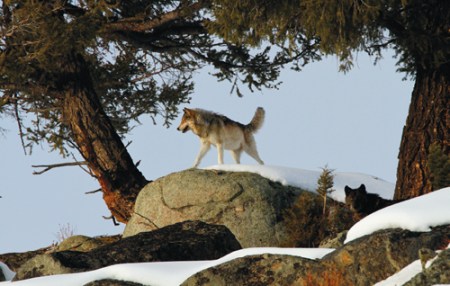
Alpha female 06, leader of the Lamar Canyon pack. (Photo: Jimmy Jones)

Female 06, member of the Lamar Canyon pack. (Photo: Jimmy Jones)

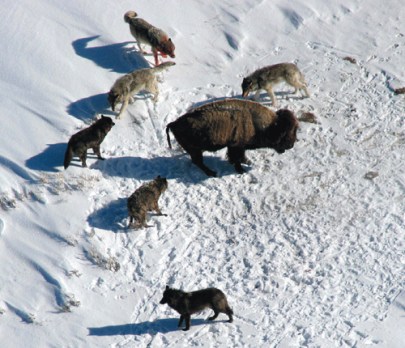
The 100 or so wolves in Yellowstone have limited the growth of bison herds, mostly by preying on young, but they are no match for adult bison. (Photo: Doug Smith, courtesy of the National Park Service)

The 100 or so wolves in Yellowstone have limited the growth of bison herds, mostly by preying on young, but they are no match for adult bison. (Photo: Doug Smith, courtesy of the National Park Service)

High numbers of wolves, including wolves fitted with research collars, have been killed just outside Yellowstone in Idaho, Montana and Wyoming this year as those states have issued large numbers of permits to kill wolves in the northern Rockies.

Wildlife advocates say that the wolf populations are not large enough to withstand state-sanctioned harvests and that the animals attract tourist money. Yellowstone’s scenic Lamar Valley has been one of the most reliable places to view wolves in the northern Rockies, and it attracts scores of visitors every year.

For more on Yellowstone wolves: American Scientist

Wings II

Posted on December 8, 2012

Wings of Rescue.

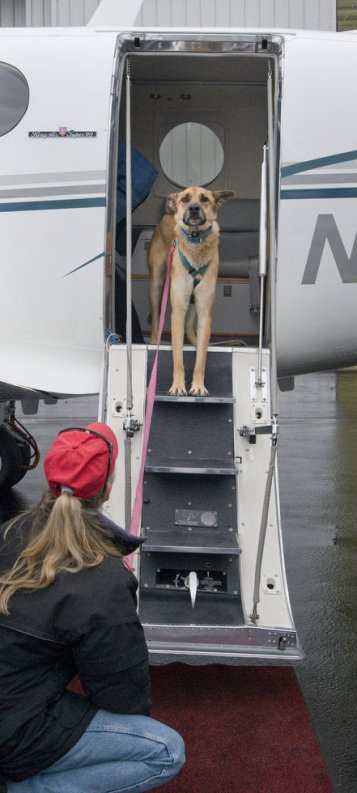
Chloe, stepping into a new life in Oregon. (Photo: Michal Thompson/The Hillsboro Argus)

Correction: It wasn’t 100 animals flown to freedom in Portland, Oregon, by Wings of Rescue as reported here yesterday–it was 250!

Wings of Rescue.
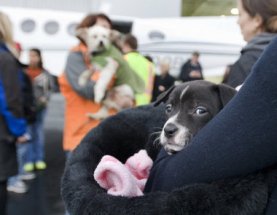
Six week old puppy, one of 250 animals saved from California kill-shelters. (Photo: Michal Thompson/The Hillsboro Argus)
Wings of Rescue.

(Photo: Michal Thompson/The Hillsboro Argus)

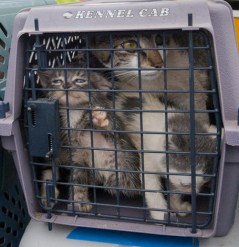
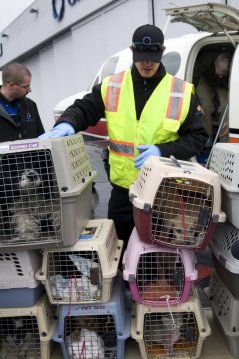
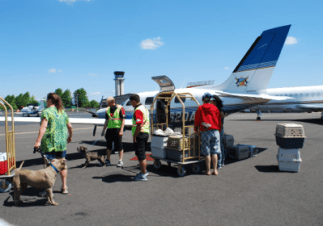
The cats and dogs from over-crowded animal shelters in California were flown in three private plans to Hillsboro Airport, outside Portland, Oregon, Friday afternoon where they were distributed to nearly a half-dozen agencies for pet adoption.

WIngs of Rescue

(Photo: Michal Thompson/The Hillsboro Argus)

Wings

Posted on December 7, 2012

Wings of Rescue is a Los Angeles based, all-volunteer organization that rescues animals from high-kill animal shelters and flies them to animal rescue organizations throughout the western United State —often across great distances—to areas where adoptable pets are in demand.

WingsofRescue

California municipal shelters, which by law cannot refuse to take in an animal, are struggling with an overpopulation of strays, unwanted litters and abandoned pets caused by too many animals not spayed or neutered.

Wings of Rescue pilots donate their aviation skills and aircraft. No plane is too small or too large to save a life!

shapeimage_1
Sue Zucker, rescue group coordinator for Riverside County Animal Services, hugs Noel, a 2-year-old female terrier. Noel was among the California dogs airlifted to new homes in Oregon. (Photo: Riverside County Animal Services)

Sue Zucker, rescue group coordinator for Riverside County Animal Services, hugs Noel, a 2-year-old female terrier. Noel was among the California dogs airlifted to new homes in Oregon. (Photo: Riverside County Animal Services)

Each airlift involves marshaling planes and pilots, picking out pets, gathering health certificates, collecting the animals and—the last stage—transporting them.

To date, Wings of Rescue has flown 2,000 pets from California shelters to future homes across the West to places such as Phoenix, Olympia, Bellingham, Billings and British Columbia.

On a recent mission that took three months to arrange, four small planes transported 300 animals—including cats and kittens, newly born puppies and senior dogs, from Chihuahuas to shepherd mixes—from animal shelters in and around Riverside, California to locations throughout the Pacific Northwest. At a touchdown in Hillsboro, Oregon, just outside Portland, Wings of Rescue left 100 animals, all of them spoken for, either by foster parents or rescue groups committed to finding them homes.

Contact: Wings of Rescue

New Iberia

Posted on December 7, 2012

Undercover video – inside the  New Iberia Research Center.

Released as part of an investigation by the Humane Society of the United States.

NIRC cages about 6,000 monkeys and 325 chimpanzees on 100 acres. In the span of nine months, the HSUS investigator saw only about 20 of the chimpanzees used in active studies. The majority of chimps at the facility appeared to be warehoused or used for breeding – two activities that cost American taxpayers millions of dollars, even at a time of fiscal crisis and when no other developed nation uses chimpanzees in experiments.

Source: HSUS

Another death by cop

Posted on December 6, 2012

Lily the border collie was shot and killed May 26 by a Fort Worth, Texas police officer. It happened during an investigation for copper theft. The officer involved went to the wrong house. Instead of suing, Lily’s owners, Mark and Cindy Boling, asked that Fort Worth police get training for how to handle dog encounters.

Lily

Lily

Dog encounters are a regular part of any cop’s job. But few police departments offer training on how to interact with them–read their body language, appease them and handle them using tools other than bullets.

Nationwide, police shoot about 250,000 dogs a year… often needlessly. In Fort Worth, officers responded to 849 calls of citizens hurt by dogs during a three-year period from 2009 through 2011. Of those calls, 86 involved children who were hospitalized, including one death. Also during the three-year period, 49 officers were bitten so badly that they had to file workman’s compensation claims. Apparently, the only message the department took from all this was that all dogs are dangerous. An absurd supposition. But there is no other explanation for why the officer shot Lily whose owner was standing nearby and telling the cop that the small dog was no danger to him.

Part of the reason for cops’ irrationality in such situations goes back to the us versus them mentality that has taken root in much of the police profession. A mindset that goes well beyond shooting the family pet. The solutions to that problem are quite a bit more complicated than the solution to the dog-shooting problem. Some cops kill dogs simply because they can.

Instances of dog shootings are making news with increasing frequency. And with just a few exceptions, the cop involved had no training before the shooting, and faced no real consequences after. The message that sends from the police department to the community is that a cop shooting a pet is simply part of policing.

Even aggressive dogs can be calmed down by officers—if they have training. Being a cop is a dangerous business. And training is necessary for all manner of things. Dealing with people with mental health problems is an increasing focus for many departments around the country. Officers are being taught there are ways to calm and subdue people exhibiting irrational behavior other than firing a lethal weapon. There’s no reason the same type of training shouldn’t be required in dealing with dogs. There are many alternatives to shooting: using tasers, flashlights and batons; distractions such as tennis balls and doggie treats; or devices like control poles and chemical agents. The U.S. Postal Service gives all of its workers dog training, and reports very few incidents.

Without training, cops who fears dogs will continue to fear them, to interpret benign gestures as a threat and continue to shoot dogs and be excused for it. With training, an officer gets over his fear, or at least learns how to deal with.

Without training, sadistic or power-tripping cops can continue to kill dogs for whatever reason, continue to falsely claim they feared for their safety and continue to get away with it. With training, there’s some accountability.

Training and accountability can make a difference.

The officer who killed Lilly has been reprimanded, but kept his job.


Sources: Radley Balko and star-telegram.com

Chimpanzee trafficking–again the Chinese

Posted on December 5, 2012

Problem in Guinea

In recent years demand for live chimpanzees in zoos has increased the number of chimps exported overseas.  As many countries in West and Central Africa do not have effective policies for preventing wildlife trafficking, chimpanzees, bonobos, and gorillas have become the target of animal traffickers in countries like Democratic Republic of Congo, Guinea and Senegal.  A live chimpanzee infant is worth $5,000-20,000 from zoos in North America, Europe and Asia.

Over the past 3 years it is estimated that over 130 chimpanzees have been smuggled from Guinea by Chinese miners to Chinese zoos. The Chinese are bringing their own labourers into remote areas and wildlife trafficking has become a lucrative illegal trade. Law enforcement for wildlife is non-existent in Guinea. It’s likely that permits have been falsified or stolen for shipments to pass through.

As China’s industrial presence throughout Africa expands, these trafficking incidents may grow, as has the slaughter of elephants and rhinos for their ivory and horns, also fueled by demand from newly prosperous Chinese consumers. At the moment, chimpanzees are being caught in crates and shipped overseas while corrupt and/or incompetent officials turn a blind eye. If the status quo is maintained chimpanzee trafficking to zoos throughout the developed and developing world will continue to rise.

For every infant chimp captured, several group members–it is estimated 5 or more–likely died attempting to protect it from capture. This has irreversibly negative affects on chimpanzee populations. Chimpanzees have very slow reproduction rates and require a high degree of parental investment to survive.

How to help

Zoos are willing to spend $20,000 for a live chimpanzee because they know hundreds of thousands of people will pay to see them in captivity. When you visit zoos that have great apes, whether in North America, Europe or Asia, make sure you know where the great apes came from. Were they born in captivity? Or were they smuggled into the country illegally? If we, as consumers, refused to give zoos that participate in great ape trafficking our money, there would be no sense for them to continue engaging in the destructive trade. Raise awareness about this issue by sharing and discussing information related to great ape trafficking, and contact your local zoo to make sure you know about the origin of their chimpanzees. If we allow this to continue, zoos may be the only remaining refuge for our closest relatives.


Source: Cadell Last.

Killing contests USA

Posted on December 5, 2012

Pigeon shoots are competitions where hundreds to thousands of live birds are killed to win prizes. A typical 3-day “contest” can kill and injure up to 15,000 birds.

For the past year a group called SHARK has been fighting against live pigeon shoots in Pennsylvania. Recently, the group went to the Wing Pointe commercial hunting grounds in Hamburg, PA., to record the aftermath of a recent pigeon shoot. What they found was a pile of hundreds of dead birds, dumped like garbage. Three wounded but still living birds were found amongst the corpses.


The birds are captured and collected for these shoots weeks ahead of time, then released from trap boxes only yards away from the “sportsmen.”  The birds are generally dazed and suffering from dehydration or starvation as they are sprung out of the boxes. Rather than mercifully being given a quick death, 70% of the birds are injured when shot and either left to suffer slow deaths or collected and killed by pigeon shoot “trapper boys” or “wringers”, traditionally children, who break their necks, step on them, tear off wings, suffocate them, or cut off their heads with garden shears, among other abuses.

Pigeon shoots are illegal in all but a couple of American states.

True wolf?

Posted on December 4, 2012

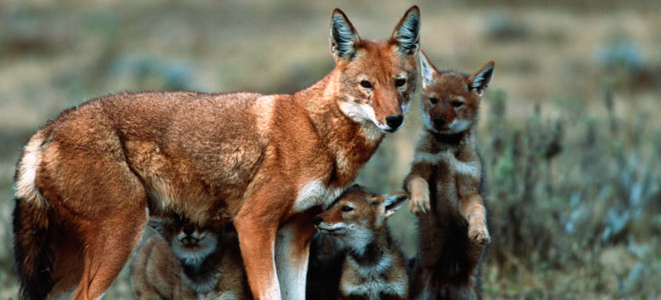
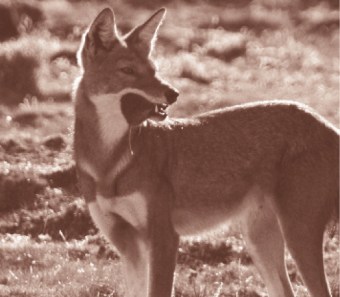
Ethiopian wolves. (Photo: International Wolf Center, M.Harvey)

Ethiopian wolves. (Photo: International Wolf Center, M.Harvey)

The Ethiopian Wolf (Canis simensis) is tied with the red wolf (see ANIMAL POST Canus Rufus 11/23/12) as the rarest member of the family Canidae, which includes the dogs, foxes, jackals and wolves.

Also known as the Simien fox or jackal, Ethiopian jackal, red jackal or fox, and Abyssinian Wolf, some 500 survive today in small populations, threatened by loss of highland habitats, disease and persecution.

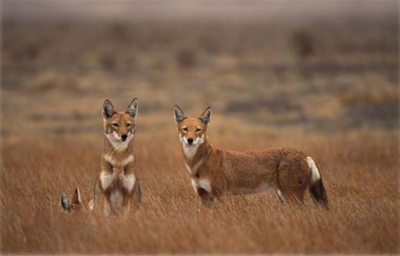
Ethiopian wolves. (Photo: ©A.L. Harrington)

Ethiopian wolves. (Photo: ©A.L. Harrington)

Range detail.

Range detail.

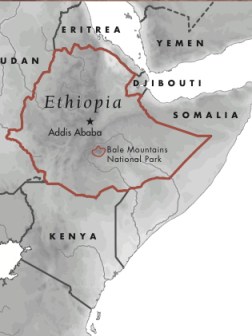
Unlike most canids, the Ethiopian wolf lives in open country, confined to seven isolated mountain ranges of the Ethiopian highlands above the tree line at about 3000 m (10,000′) where rodents are found in abundance.

The Bale Mountains in southeastern Ethiopia–often called “the roof of Africa”–where the largest population of the Ethiopian wolves live, contain the largest contiguous area above 3000 m on the African continent.

Digging for rodents.

Digging for rodents.

Ethiopian wolf with mole.

Ethiopian wolf with mole.

A large part of this wolf’s diet is made up of giant mole rats. Wolves look for underground homes conspicuously advertised with an opening on top. They pounce on the opening, press their ear to the ground, and dig and dig until they are rewarded with a 1.5-pound rodent.

These elegant, long-legged wolves resemble the North American coyote in both shape and size. They have a long muzzle, a distinctive reddish coat with a white throat, chest, and underparts, broad pointed ears, and a thick bushy black tail with a white base. They range in size from 43 to 55 inches (tip of nose to end of tail) and weigh from 24 to 42 pounds.

The only predators that pose a danger to them other than humans are spotted hyenas and tawny eagles that occasionally prey on unattended pups. Life span in the wild is about 8 to 10 years.

Conservation Status: IUCN Red List: Endangered–officially protected in Ethiopia.

Kill buyers

Posted on December 2, 2012

Excerpt from August 2012 Desert Exposure article, “Led to Slaughter” by Laurie Ford.

The moment Zippy, number 25 at Harkers Horse Auction, settled his silky white nose on my mother’s shoulder and nickered softly, we knew that he was coming home with us. What we didn’t know was that as a two-year-old quarter horse with no skills, Zippy fit the perfect profile of a slaughter horse and our quick decision most likely saved his life. It was 1995, and although the slaughtering of horses for human consumption was legal in the US, the concept was still surreal to me. This perception was to change over the next two decades as Zippy and two other horses at risk for slaughter, Carl and Mommy, became a part of my life.

“Mommy,” with the brand of a Native American tribe on her rump. Her wild past, skittish behavior, and the financial woes of her owner made Mommy the perfect candidate for slaughter. (Photo: Laurie Ford)

“Mommy,” with the brand of a Native American tribe on her rump. Her wild past, skittish behavior, and the financial woes of her owner made Mommy the perfect candidate for slaughter. (Photo: Laurie Ford)

On that brisk fall day the auction, referred to by humane slaughter expert Temple Grandin as “a used car lot,” was full of horses of every breed, size and age that owners were trying to unload before winter arrived. Good riding horses were still in demand and horses like Zippy were not. In the far corner of the sale barn were corrals full of other undesirable horses: geriatrics that had outlived their usefulness, injured horses that didn’t warrant repair and the emaciated who stood motionless in a corner, their heads sunk low to the ground as if the weight was too much to bear. These were the souls given a sympathetic glance, accompanied by a mumbled “poor thing” as onlookers quickly moved on to escape the pathetic sight. These horses’ chances of being bought by anyone other than the “kill buyers” — people who frequented auctions all over the country to fulfill contractual obligations with the slaughter plants — were slim to none.

Despite the cessation of federally funded horsemeat inspections in 2006, and the subsequent closure of the country’s last three equine slaughterhouses, US horses continue to be transported across the borders for slaughter. Numerous bills have been introduced to Congress in an attempt to ban the sale, transportation and slaughter of horses for human consumption; all have been unsuccessful. The most recent, The American Horse Slaughter Prevention Act of 2011, was trapped in the House Committee on Agriculture on the day that the door to horse slaughter in the US was quietly reopened last year.

On Nov. 18, 2011, President Obama signed into law a bill that reinstated the federal funding of plant inspections and restored the American horse slaughter industry.

This spring, plans to slaughter horses in Roswell, NM, by Valley Meat Co. were uncovered in an investigation by Front Range Equine Rescue, a Colorado-based organization. The company has applied with the US Department of Agriculture Food Safety and Inspection Service for inspection of the slaughter of horses for human consumption.

Reopening the door to slaughter will revive the salvage market for unwanted horses in the US and bring back the lucrative business of selling and buying horses for human consumption. It will restore the demand for lower-priced horses and accommodate the needs of indiscriminate and irresponsible horse breeders. While this may eliminate pain and suffering for some animals, a large percentage, close to 90%, are basically healthy and still have years of service and loyal companionship to offer.

While the majority of horses currently being slaughtered supply a foreign demand, this market will face uncertainty in the near future when the European Commission imposes more stringent regulations on horsemeat. At present, sworn statements are the primary source of verification that slaughter horses are drug-free—dubious proof considering that most horses in the US have consumed many of the prohibited drugs, including wormers and antibiotics, at some point in their lifetimes. Phenylbutazone (“bute”), an equine aspirin, is routinely given to racehorses and other performance horses, as part of their daily regime to combat pain and sore muscles.

While the horse-slaughter industry will continue to fluctuate, some factors in the horse world will never change. Horses will continue to become debilitated with old age and crippling injuries. Economic woes will persist and result in horses being abandoned, neglected and plagued with pain and suffering. (While at one time these were the horses that made up the “unwanted” populous that fed the slaughter pipeline, a new subset that has evolved over time — young and healthy horses — is also at risk.) And, regardless whether slaughter takes place in the US or in bordering countries, horse auctions will continue to be the primary clearinghouse for many of these horses and the principle source supplying slaughter plants with horsemeat.

Even as far back as 1995, overbreeding was cited as one of the major contributing factors to the growing numbers of unwanted horses that went to slaughter. While backyard breeders bore the brunt of the blame, the horse industry itself was guilty of indiscriminate breeding in a continual quest to create the ideal performance or race horse.

As a two-year-old quarter horse with no skills, Zippy fit the perfect profile of a slaughter horse.

As a two-year-old quarter horse with no skills, Zippy fit the perfect profile of a slaughter horse.

Zippy was registered with the American Quarter Horse Association (AQHA), the largest breed registry in the country. But due to flaws in his conformation he was not up to industry standards and was labeled as unwanted excess stock. He was the offspring of the AQHA sire Impressive, whose bloodlines pass on a genetic defect called HYYP, a disease of the muscle that can result in paralysis. Despite the risk of this inherited disease, descendants of this horse continue to be bred due to his exceptional performance. While the industry claimed to “actively protect the welfare of the horse,” quarter horses were contributing the highest percentage of horses to slaughter.

Excessive overbreeding was a common practice in the horseracing industry as well. An estimated 50,000 thoroughbred and standardbred foals are born each year in hopes that one will become the next Triple Crown or Hamiltonian winner. Of these foals, fewer than 30% will ever hear the start bell of a race, and fewer than 50 will ever win anything close to these noteworthy races. The cheering fans in grandstands at racetracks all over the country remain oblivious to the fact that the result of a race not only determined the payout on their bets, but the status of the horse’s life as well. Two-thirds of the horses whose racing careers have ended are rewarded for their efforts with slaughter, abandonment or euthanizing, and the plight of the foals that never even made it to the track is just as dismal.

Images of wild-spirited mustangs were galloping across the TV screen and through the pages of National Geographic during the 1990s, but in reality, efforts were being made to rein in the growing numbers of these historical symbols of the west. No longer always viewed with awe and respect, these free-roaming horses were considered a growing problem decimating rangeland and competing with livestock for precious resources. In an attempt to manage herd sizes, the Bureau of Land Management (BLM) would annually gather excess horses and burros to place in holding facilities or offer for public adoption. A maximum of four animals could be adopted at a time with the simple pledge that they would never be sold for slaughter. Although the purpose of the 1971 Wild and Free Roaming Horses and Burro Act was to protect the animals, it was still not considered a crime if the adopter later reneged on this vow and sold the horse for slaughter.

In 1995 it was even discovered that the BLM had been channeling hundreds of horses into the slaughter pipeline through employee adoptions. Although such activity ceased after a thorough investigation, these western icons continued to fall through the cracks to be slaughtered for human consumption.

Zippy, Carl and Mommy, all different breeds of horses with dissimilar backgrounds, had shared one common factor: They all fit the profile of the slaughter horse. In the time it took you to read this article, hundreds of horses were stunned and slaughtered, or set en route to meet the same fate. So far this year we know that 46,989 horses have been exported to Mexico alone for this purpose — almost a 50% increase from last year. Over 6,000 horses also crossed the border under other pretenses. What we don’t know and will never be able to quantify is the extent of pain and suffering these horses were subjected to in the process, and if it will improve, or worsen, in the future.

Read the full article here.

A day at the zoo

Posted on December 1, 2012

By Katy Muldoon, The Oregonian
November 30, 2012

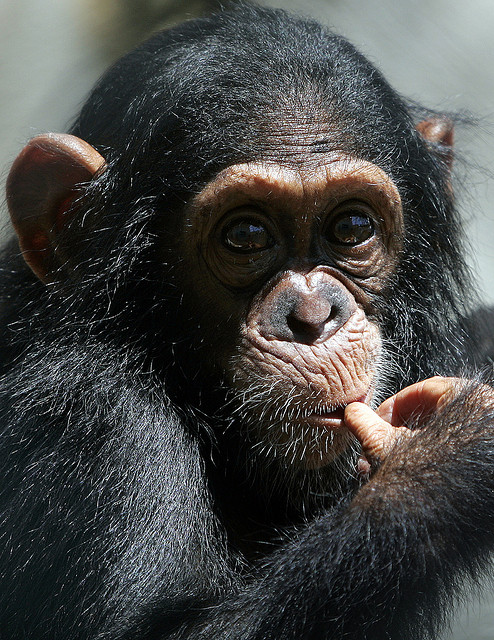
Portland, Oregon, USA — The Oregon Zoo’s oldest animal and the chimpanzee estimated to be the nation’s second oldest was euthanized Friday, the same day the zoo welcomed a newborn elephant.

Coco, photographed early this year. (Photo: MICHAEL DURHAM/Oregon Zoo)

Coco, photographed early this year. (Photo: MICHAEL DURHAM/Oregon Zoo)

Coco, who apparently suffered a stroke, was born in the wild around 1952. She was approximately 60 and the years showed.

Soft gray whiskers wrapped her chin. Silver streaked her coal-black fur. Wrinkles rimmed deep-set eyes that, over the decades, watched millions of zoo visitors gaze back as she as climbed, played, dined, groomed, and nurtured her 17 offspring.

“She was a very feisty, spirited individual, which is what people loved about her,” said Jennifer Davis, curator of primates.

Perhaps it shouldn’t surprise that a zoo holding more than 2,000 animals experiences such a notable birth and death so close together.

Newborn November 30, 2012. (Photo: Portland zoo)

Newborn November 30, 2012. (Photo: Portland zoo)

Coco was imported to the United States through the pet trade, which was legal in the ’50s. Her owner donated her to the zoo in 1961.

Early this year, Eugene-based artist Jan Eliot featured Coco in her nationally syndicated comic strip, “Stone Soup.”

Coco had other brushes with fame — or, rather, with famous visitors. In 1976, President Jimmy Carter and his wife, Rosalynn, ambled through her exhibit and chatted with her keepers.

Three years later, so did renowned primatologist Jane Goodall, who was instrumental in helping the zoo garner support to build outdoor exhibit space big enough for all its chimps.

During that same era, Portland’s zoo held about half the breeding population of zoo-born chimps in the United States and Coco was part of a study that changed the way they’re raised.

Over 15 years, Portland-based research showed that chimps cared for longer by their mothers were significantly more likely, once they reached adolescence and adulthood, to exhibit natural breeding behaviors.

Nancy King-Hunt and Dave Thomas, the zoo’s former senior primate keeper, wrote a chapter on chimp rearing for the Association of Zoos and Aquariums’ chimpanzee Species Survival Plan. AZA-accredited zoos across North America adopted the new standards, keeping chimps with their mothers at least three to five years.

In Coco’s last years, keepers made many accommodations to keep her healthy and comfortable, adding ropes and metal shower bars to make it easier for her to climb to high perches. They warmed her nest area with a heater to ease discomfort in her arthritic joints. And they carefully watched, Thomas said, for signs that arthritis medicine had ceased to be enough to ease her pain.

About three years ago, Coco’s left arm grew severely weak, and in 2011, Thomas, his fellow keepers and the veterinarian discussed whether they should euthanize or give her more time. They decided she still appeared to enjoy life.

She’d grow excited and grunt softly when favorite keepers greeted her or delivered food. Her exhibit mates, two of whom were her daughters, treated her respectfully; one routinely groomed her.

This week, however, Coco’s condition deteriorated. She grew lethargic, had trouble grasping objects and seemed disoriented. She may have gone blind, too.

Veterinarian Mitch Finnegan said that for no apparent reason, she was alarm calling, which sounds something like a bark. He surmised that if she was blind, she might have been vocalizing out of fear, or it might have been a sign of dementia.

Again, he met with keepers. This time, they all agreed: Coco’s time had come.

The veterinary crew euthanized her shortly after 10:30 a.m.

Keepers gave the three remaining chimps an opportunity to see her lifeless body. “We felt it was an important part of their grieving process,” Davis said. “No one vocalized. No one displayed. It was very peaceful and quiet.”

It was a rough morning for the staff, Davis said. “There have been tears. But there’s the comfort in knowing you’ve done the right thing for her.”

Little Mama, Lion Country Safari.

Little Mama, Lion Country Safari.

With Coco gone, Little Mama remains by far the oldest chimp in the U.S. She lives at Lion Country Safari African Adventure in Loxahatchee, Fla. She’s believed to be in her mid 70s, based on an estimate Goodall made in the early 1970s after examining the chimp’s body and teeth.

An Ice Capades performer in her youth, Little Mama is arthritic. She’s lost some hearing and eyesight and she’s going bald, though she still has most of her teeth. All in all, says Terry Wolf, wildlife director, “she’s doing fine.”
Blood sport

Posted on November 30, 2012

Hare coursing. (Photo: Jon Super/AP)

Hare coursing. (Photo: Jon Super/AP)

Hare coursing, in which dogs (usually Greyhounds) compete with one another to hunt down a wild hare that has been released into an enclosure, has been banned in Scotland since 2002, in England and Wales since 2005, and in Northern Ireland since 2010, but continues in the Republic of Ireland under an exemption from anti-cruelty laws introduced in 1911. The exemption was retained in an updated draft animal health and welfare bill published in March of this year.

Every professional opinion poll conducted since 1978 on attitudes toward hare coursing in Ireland has shown that a substantial majority of Irish people favour its abolition. But the current Fine Gael and Labour ruling coalition, representing the two largest Irish political parties, appears unconcerned about the polls.

Two greyhounds with a hare (Photo: League Against Cruel Sports)

Two greyhounds with a hare (Photo: League Against Cruel Sports)

Wanted

Posted on November 30, 2012

Interpol is stepping up their drive against wildlife crime.

Interpol’s most wanted wildlife criminals.

Interpol’s most wanted wildlife criminals.

The seven men at the top of Interpol’s list include 4 from China and one each from USA, New Zealand and Nepal.

Amongst those wanted are Jason Shaw, a New Zealander who was at the center of the biggest animal-cruelty case in the U.S. US officials issued an arrest warrant for Shaw, 37, owner of the pet and wildlife wholesaler U.S. Global Exotics, where agents seized more than 26,000 animals – many dead or dying.

Hillary Clinton, U.S. Secretary of State, recently issued a stern warning against illicit trafficking of wildlife products. She announced that the U.S government is keen to pursue a policy on non-trafficking and wildlife security.

Clinton said that the global value of illegal wildlife trafficking is as much as $10 billion per year, ranking it as one of the largest criminal transnational activities worldwide along with arms, drugs and human trafficking.


Source: Interpol and wildlifeextra.com

Camera trap prizes

Posted on November 30, 2012

Several camera trap photos recently received awards.

Top winner of the third annual BBC Wildlife Magazine Camera Trap Photo of the Year contest was this shot of a young leopard in China.

Young male leopard (Panthera pardus) in China’s Shuishui River Reserve. (Photo: Zhou Zhefeng)

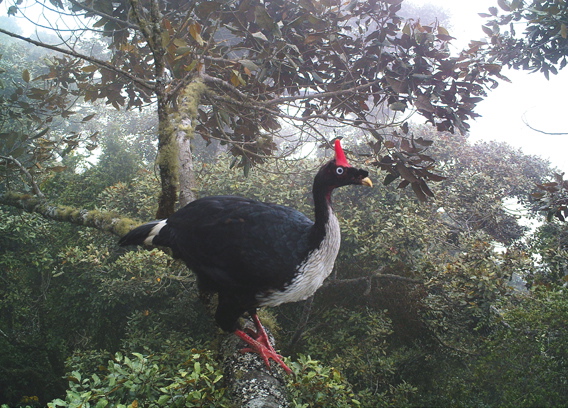
Second place went to this photo of a horned guan, the object of a birder expedition I filmed in Chiapas, Mexico in the mid 1970s for NBC. The only one we found was in the zoo in Tuxla Guitterez. Would have loved to see one in the wild.

A horned guan (Oreophasis derbianus) in Guatemala. Not a guan at all, this bird is the last survivor of a family of birds. It’s listed as Endangered by the IUCN Red List. (Photo: Javier Rivas)

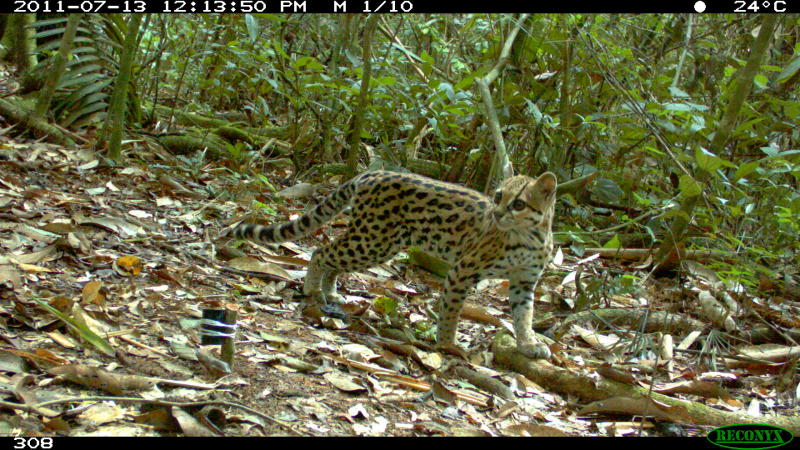
This shot of a little known Bolivian cat species called an oncilla is another winner.

Photograph taken by Wildlife Conservation Society scientists of a Bolivian cat species called an oncilla. (Photo: Guido Ayala, Maria Viscarra, and Robert Wallace/WCS)

Photograph taken by Wildlife Conservation Society scientists of a Bolivian oncilla. (Photo: Guido Ayala, Maria Viscarra, and Robert Wallace/WCS)

The Oncilla (Leopardus tigrinus) occurs across the Amazon and along the tropical Andes. About the size of a house cat, they are the smallest cat species of South America’s lowlands. Very little is known about their life history.

The photo was taken last July during camera trap surveys of jaguars and other wildlife living in Madidi–considered to be among the most biodiverse protected areas on the planet.


Sources: ScienceDaily and Mongabay.com.