First Light Productions

investigative journalism

Posts by Michael Elton McLeod

Ask a Question Day

Posted on September 28, 2012

Q: Do gibbons play with toys?

Whoop-Whoop is one of the few of IPPL’s gibbons who really likes toys.

A: Some of them do (Whoop-Whoop likes to groom blankies and simple hand-puppets, Maynard sometimes swats around plastic balls), but most of them are more interested in wrestling, chasing, or playing with things like swinging ropes and tires. In addition, gibbons have rather specialized hands. Even though these little apes weigh about a tenth of what we do, their hands are as long as a human’s, but only half as wide, and their fingers have a slight but perpetual curve to them, like a hook. Their hands are wonderful for brachiating, but not so good for twiddling Rubik’s cubes—their fingers are just not as dexterous as ours. So when we give them puzzle feeders (tubes of plastic or bamboo, drilled with holes and filled with peanuts and raisins), we have to keep in mind what their fingers can and can’t do.
 
Questions kids ask when they tour the gibbon sanctuary at the International Primate Protection League.


Source: International Primate Protection League

Sidestepping the Chimp Act

Posted on September 28, 2012

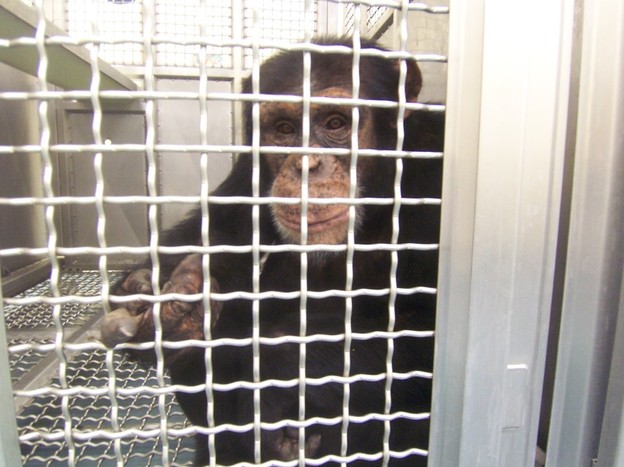
Sanctuary. (Photo: NEAVS)

FOR IMMEDIATE RELEASE

NEAVS and co-petitioners call on NIH to retire chimpanzees to sanctuary.

Rulemaking Petition holds government accountable.

Sept. 27, 2012 – Boston, Mass. – Following today’s National Institutes of Health decision to retire 110 chimpanzees in laboratories and designate them no longer available for research, the New England Anti-Vivisection Society (NEAVS) and co-petitioners of a recently submitted Rulemaking Petition charge the decision falls short of the spirit and intent of the 2000 CHIMP Act mandating chimpanzees not needed for research be retired to sanctuary. Today’s NIH decision sends only 10 chimpanzees to the federal sanctuary Chimp Haven, while it transfers 100 others to yet another lab, the Texas Biomedical Research Institute.

According to the Rulemaking Petition filed in July by the NEAVS, the North American Primate Sanctuary Alliance, and other co-petitioners*, the U.S. Department of Health and Human Services (HHS) must fulfill the intention of the Chimpanzee Health Improvement, Maintenance, and Protection Act (CHIMP Act) and define when federally owned chimpanzees are “not needed.” Today’s decision is an example of how NIH interprets the law in favor of the laboratories – not the chimpanzees. Labs, which receive federal funds to maintain chimpanzees, are allowed to decide when chimpanzees should be retired and have financial interest in holding them. The NIH plan is, according to NEAVS President Dr. Theodora Capaldo, “Close but no cigar.”

“While we applaud the fact that 110 chimpanzees will now be safe from research, the fact that NIH continues to make decisions that grant laboratories significant funding to keep chimpanzees and deprive chimpanzees the comfort of sanctuary is tantamount to a kind of cronyism that has to end,” says Capaldo. “NIH has absolute control over the lives of chimpanzees, and their decision to move them from one lab to another is not a responsible or even reasonable one. The chimpanzees should have all been retired to Chimp Haven, the federal sanctuary that provides outstanding care and housing for its residents.”

A “surplus” of chimpanzees in labs resulted from a 1986 National Institutes of Health initiative to breed chimpanzees for HIV/AIDS research. Chimpanzees turned out to be poor models for that and a host of other human diseases, but have remained in U.S. labs for decades. Despite the CHIMP Act, relatively few chimpanzees have been retired to our federal sanctuary even though 80-90% now in labs are not in research; the Institute of Medicine has determined chimpanzees to be “unnecessary” in nearly all areas of research; large numbers of chimpanzees now in labs are elderly and/or unfit for research; and retiring chimpanzees to sanctuary is economically beneficial to taxpayers and life-changing for chimpanzees.

“By allowing labs to determine eligibility, too few chimpanzees have been retired,” says Capaldo. “With enforceable criteria for determining when chimpanzees are ‘not needed’ for research, chimpanzees deserving of and clearly eligible for retirement will no longer languish in labs and no longer be vulnerable to NIH’s lab-favoring policies. This is what our Rulemaking Petition seeks to achieve.”

The Rulemaking Petition suggests criteria to define when chimpanzees are not needed. If implemented, hundreds of chimpanzees would be retired who: (1) are held for research in which they have been determined to be unnecessary; (2) have not been assigned to research in 10 years; and (3) are unfit research models including the elderly, those with multi-use histories or incomplete medical records, and those with chronic, severe, or multiple physical or psychological illness.

For more information and to read the full Rulemaking Petition, visit http://www.releasechimps.org/laws/chimp-act-rulemaking-petition.

*Co-petitioners under the counsel of Katherine Meyer of Glitzenstein & Crystal in Washington, D.C., a premier law firm with extensive experience and success in animal protection and Rulemaking Petitions: the New England Anti-Vivisection Society, the North American Primate Sanctuary Alliance, Save the Chimps, Fauna Foundation, Animal Protection of New Mexico, the Kerulos Center, and Sen. Bob Smith – a lead sponsor of the CHIMP Act.

Proverbial canary

Posted on September 27, 2012

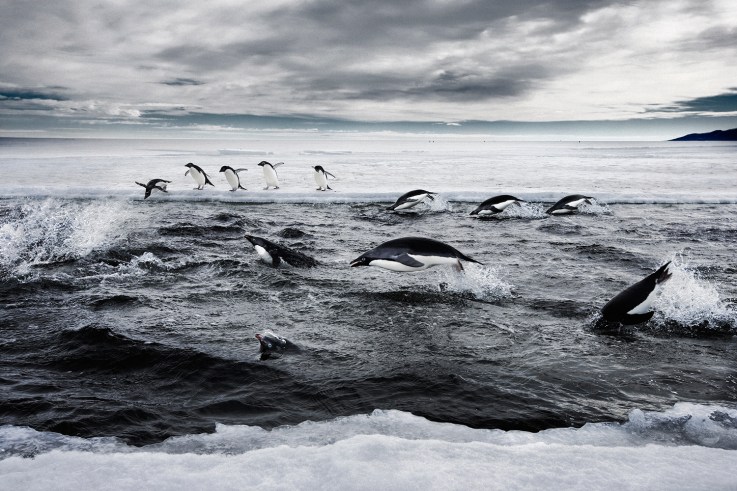
Dependent on delicately balanced marine food sources, penguins are in trouble.

Adelie penguins hunting for food. (Photo: J. Weller)

Overfishing is decimating their prey species. Climate change is shifting their resources and imperiling their habitat. Pollution is putting even healthy colonies at risk.

More than half of all the 18 penguin species are listed as Vulnerable or Endangered.

In a recent interview, Pablo Garcia Borboroglu, President of the Global Penguin Society, talks about penguin science and conservation.


Source: Mongabay.com

Keiko

Posted on September 26, 2012

For background on a continuing series of posts about whales, the story of Keiko is illuminating.
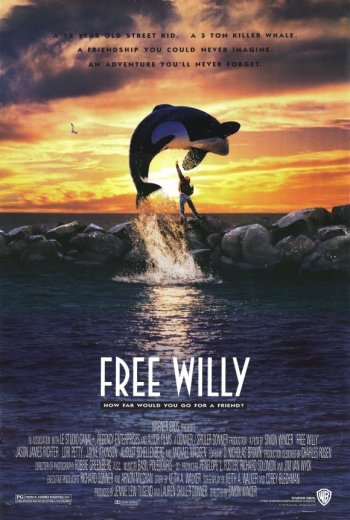

Keiko–which means “Lucky One” in Japanese–was a male orca who was captured off the coast of Iceland in 1979 at the age of one or two and sold into the marine park industry. After spending three years at an aquarium in Iceland, he was bought by Marineland in Ontario, Canada where he performed before the public. In Canada Keiko began to develop skin lesions indicative of poor health. He was then sold to Reino Aventura, an amusement park in Mexico City where he performed again, spending a decade alone in a tiny tank designed for bottlenose dolphins filled with heavily chlorinated tap water. He was so long and the pool was so shallow, that when he was simply floating his tail nearly touched the bottom.
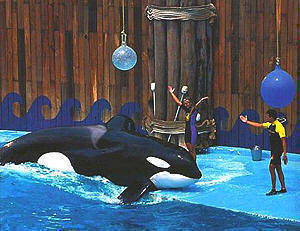
Reino Aventura

In 1992 Hollywood filmed him in Mexico as the star of the movie “Free Willy” about a boy who rescues a killer whale from a rundown marine park sideshow.

Media reports surfaced after the film’s release revealing the state of Keiko’s living conditions at the Mexican park and the fact that he had chronic health problems. Public outrage was extreme. Stung by the bad publicity, the film’s producer, Warner Brothers, approached Earth Island Institute looking for a way out of the dilemma. With a $4 million contribution from Warner Brothers, and agreement from Reino Aventura to release the animal into their care, Earth Island founded the Free Willy-Keiko Foundation to rehabilitate Keiko with the hope of possibly releasing him back into the wild.

School kids around the world held fundraising events for the Keiko Foundation. The fund got more promotion as the film Free Willy 2 was released in 1995. Free Willy 3 was released in 1997.

An aquarium in Newport, Oregon agreed to take him in on the condition that he would not have to perform, and built a pool for him at a cost of more than $7 million.

Keiko pool under construction
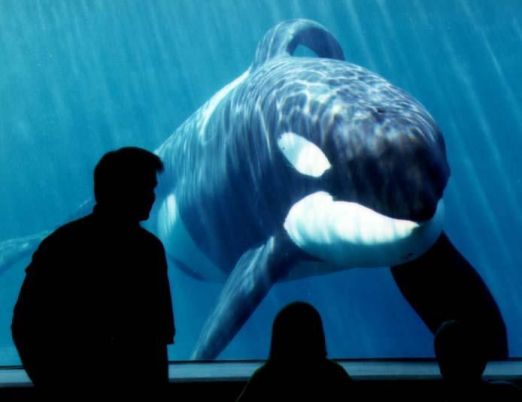
At the Oregon Coast Aquarium (Photo: Sam Lobo)
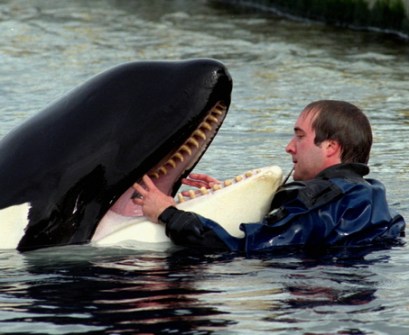
Keiko’s teeth are checked at the Oregon Coast Aquarium in Newport in 1998. (Photo: Don Ryan/AP)

Keiko took up residence at the Oregon Coast Aquarium in 1996. By the end of his first year there he gained more than 1,000 pounds. By 1997 he was lesion free, weighed upward of six-tons and measured 35 feet long.

He was also starting to eat live fish in preparation for release into the wild.


In September 1998 he was flown to the site of his capture 19 years before: Klettsvik Bay in Vestmannaeyjar, Iceland where an ocean pen had been built for him.

His rehabilitation was put in the hands of an international team of experts. Returning a captive whale to the ocean had never been done before, so his keepers just did what Keiko seemed to want to do.

Photo: Sam Lobo.

He was fed herring, taken for supervised swims in the open ocean and looked after 24/7. The annual bill for his upkeep was in excess of half a million dollars.
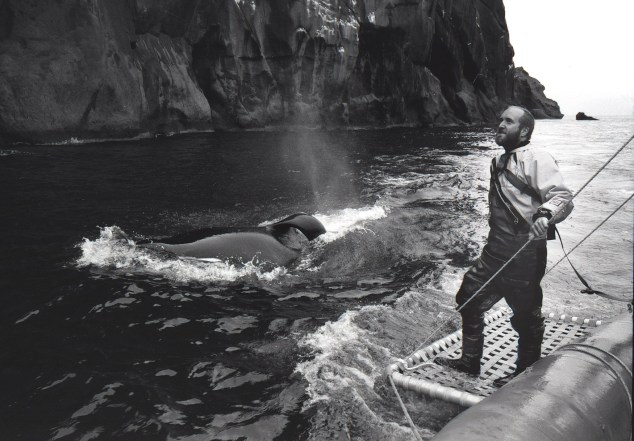
Keiko and his longtime keeper Stephen Claussen in Iceland (Photo:stephenclaussenmemorial.com)

In the summer of 2000 he was gradually reintroduced into the wild northern ocean. For a while it looked as if the relocation effort was succeeding. Fish were provided for him but he appeared to be catching a few wild fish on his own.

Keiko was released from his pen in July 2002. Two months later he followed a boat into the harbor of the village of Halsa on the shores of western Norway, 870 miles away. He was quickly identified and became a huge celebrity. He allowed fans to pet and play with him, even crawl on his back. He became such an attraction that the authorities imposed a ban on approaching him.

He soon stopped feeding himself, and it became obvious he would again need human care.

Keiko in Iceland (Photo: Orcalover555)

Desperate to wean him from people and begging for handouts, with help from the Norwegian government he was shifted to Taknes Bay, a more obscure fjord; a clear, calm pocket of coastal water deep enough that it doesn’t freeze in winter. Keepers fed him, but he was free to roam and did, often at night. He was equipped with a tracking device that let his four handlers pinpoint his location provided he stayed within a range of about five miles. His keepers reported that the whale seemed to be adapting to living in the wild, evidencing behaviors common to wild orcas.

They took him on “walks,” leading him around the fjords from a small boat at least three times a week.

In 1993 he showed signs of lethargy and was given antibiotics. He died quickly, beaching himself up against a pier, seeking human consolation. He was somewhere between 25 and 27 years old, an age not unusual for male orcas, whose average longevity is thought to be around 30 years. Pneumonia was later determined as his probable cause of death.

Thorbjorg (Tobba) Valdis Kristjansdottir, a keeper who spent two years working with Keiko in Iceland, calls him “an unbelievable animal. He absolutely had a definite personality. I spent a lot of time alone with him, and I talked and talked and talked to him. He would just kind of dance in the water.”

NIH chimps

Posted on September 26, 2012

Received today:

Chimpanzee Sanctuary Northwest Calls for Retirement of Chimpanzees to Sanctuaries, not Biomedical Labs

On Friday, September 21, 2012, Dr. Francis Collins, the Director of the National Institutes of Health (NIH) announced that 110 of the 563 research chimpanzees owned by the United States federal government will be “retiring” from biomedical research. This was first reported by the Washington Post and included this quote from Collins: “This is a significant step in winding down NIH’s investment in chimpanzee research based on the way science has evolved and our great sensitivity to the special nature of these remarkable animals, our closest relatives.”

While removing 110 chimpanzees from the controversial New Iberia Research Center sounds like a victory, there is a disturbing element to this story. Only 10 of the 110 chimpanzees in question will be going to a sanctuary. The other 100 will be transferred to Texas Biomedical Research Institute in San Antonio but will “not be used for research.”

Moving chimpanzees from one research laboratory to another does not constitute retirement, and we, along with our fellow members of the North American Primate Sanctuary Alliance (NAPSA) and Project Release and Restitution, are calling for the NIH to send all 110 chimpanzees to a sanctuary whose mission is to provide permanent care in an enriched environment. It is not acceptable for the federal government to claim to be retiring chimpanzees, when in fact the chimpanzees will still be living at a biomedical research facility.

This move circumvents the system already set in place by the government to retire chimpanzees as mandated by the CHIMP Act, signed by President Clinton in 2000. Please read Chimp Haven’s statement and Project R&R’s Rulemaking Petition, co-signed by NAPSA, for more information on that system and the concerns about Collin’s announcement.

Please continue to support the Great Ape Protection and Cost Savings Act (GAPCSA), which would outlaw the use of chimpanzees for biomedical experimentation in the US and would retire federally owned chimpanzees. Learn more about how to support GAPCSA from this recent alert by the Physicians Committee for Responsible Medicine.

Yeti connection

Posted on September 25, 2012

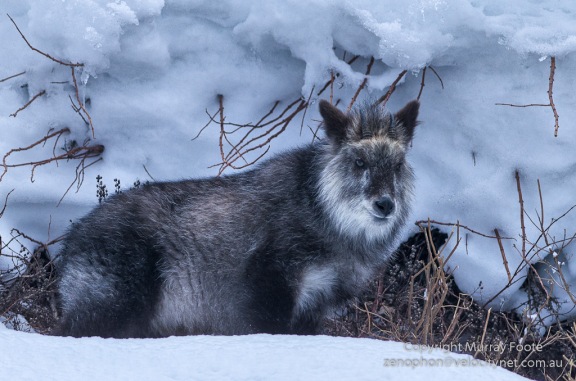
A skull cap, kept in a Buddhist monastery in Pangboche, Nepal, was long believed to be from a Yeti. When examined by scientists it turned out to be the skull of a serow, a goat-like mammal found in central and eastern Asia.

Serow (Photo: Murray Foote, MurrayFoote.com)

Usually solitary, serow can be found from 6,000 feet to 10,000 feet in the mountains.

The serow, Capricornis milneedwardsii, is listed as a threatened species on the International Union for Conservation of Nature red list due to hunting for food and medicine.

They always pay

Posted on September 24, 2012

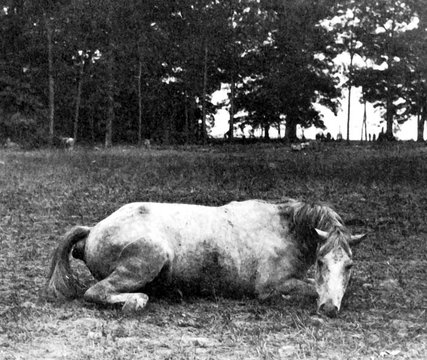
On Sept. 19, 1862, just two days after the Civil War battle of Antietam, photographer Alexander Gardner began documenting the battle’s grim aftermath. One of his photographs depicted a milky-white steed lying on the field in an eerily peaceful repose.

“Dead Horse of Confederate Colonel; both killed at Battle of Antietam,” by Alexander Gardner (Library of Congress)

Gardner’s photographs both horrified and fascinated people. It was the first time in history that the general public was able to see the true carnage of war.

The horse is thought to have been the mount of the Sixth Louisiana’s Col. Henry Strong, an Irish immigrant, who was reported riding a white horse along the edge of a cornfield when he was killed by a Yankee volley.

The body of the horse became something of a landmark among the Union soldiers left on the field because of its strangely peaceful appearance.

Gen. Alpheus Williams wrote, “The number of dead horses was high. They lay, like the men, in all attitudes. One beautiful milk-white animal had died in so graceful a position that I wished for its photograph. Its legs were doubled under and its arched neck gracefully turned to one side, as if looking back to the ball-hole in its side. Until you got to it, it was hard to believe the horse was dead.”


Source: New York Times

Cowboy up

Posted on September 24, 2012

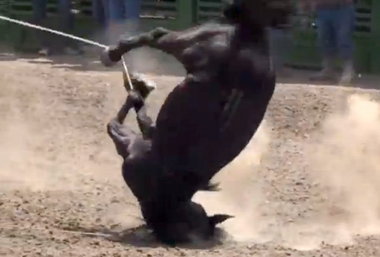
I was a rodeo fan when I was a kid. But then I shot birds, too. Luckily, I grew out of both. People who work with large animals–rough stock in cowboy parlance–can be indelicate at times in their interaction. But it ain’t the animal’s fault it’s large and dangerous. Especially if it’s forced into a situation it would rather not be. A good example is the practice in some rodeos of lassoing horses around their necks and forelegs, often leading to spectacular falls (on the horse’s part).

horse tripping

A video of the event made by animal rights activists at the Jordan Valley Big Loop Rodeo in May in southeastern Oregon, shows how it works. According to an observer at the event, “The harder (the horses) fell, the louder people cheered.”

The event causes extreme fear in horses. It also causes rope burns and, as one extremely gruesome scene in the video shows, leg injuries. In most such cases the animal has to be put down. In this instance, absolutely.

Ranchers counter that horse tripping is a humane technique for capturing and restraining untamed horses to treat injuries, brand or castrate them when corrals and chutes aren’t available.

“It’s a way of showing our heritage, our culture and how it was done and how it’s still done,” said one rancher.

The practice is likeliest to be found at remote ranch rodeos, where contestants are working ranchers, cowhands and buckaroos who don’t follow the professional rodeo circuit.

Rodeo backers say the video is deliberately misleading and unfairly depicts contestants and the audience as heartless. They also claim part of the video was taken somewhere else.

Wherever it was taken, watch the video and judge for yourself.

Critics of the practice argue that culture and tradition have long been the primary means throughout human history of justifying the very worst forms of human behavior.

Arthur and Phoenix update

Posted on September 24, 2012

Readers have asked how Arthur and Phoenix, the two young chimps I reported on on the 18th, are doing today.

Arthur and Phoenix

Nate Leskovic with the New England Anti-Vivisection Society reports:

Arthur and Phoenix are happily living at Save the Chimps, one of the finest and largest chimpanzee sanctuaries in the world, and have the good fortune of living in an extended chimpanzee family! They are tended to by Dr. Jocelyn Bezner, one of the best chimpanzee vets in the country, and are under the care of Sanctuary Director Jen Feuerstein, a former Yerkes National Primate Research Center caregiver who has dedicated her life to helping chimpanzees rescued from research.

NEAVS President Dr. Theodora Capaldo visits the sanctuary regularly and always returns inspired and grateful for the good work of sanctuaries like Save the Chimps. To see how much Arthur and Phoenix have grown, check out their photo albums!

http://www.savethechimps.org/index.cfm?fuseaction=photo.album&id=152&

http://www.savethechimps.org/index.cfm?fuseaction=photo.album&id=123&

Good deed

Posted on September 23, 2012

Last month a California sea lion named Bazingo was reunited with the ocean after a month-long stay at the Marine Mammal Center veterinary hospital  in Sausalito, California.

Photo: Jimmi Johnson – Creativity Center


Bazingo was found near San Luis Obispo the previous month with a badly injured flipper. He was transported to the center’s veterinary facility just across the Golden Gate bridge from San Francisco where the vets found his right rear flipper infected and swollen with seeping wounds.

As sea lions can apparently adapt to life without a rear flipper, the vets decided amputation was the best option. The injured flipper was removed August 7 .

He recuperated quickly, swimming in the hospital’s pool. After a couple of weeks he was eating and doing all of the normal things wild sea lions do.

Released at Point Reyes National Seashore, he dove into the breakers, surfaced a few times and was gone. The vets are confident that Bazingo will have a productive life foraging and mating in the wild.


Learn about the work of the Marine Mammal Center.

Thousand or so to go

Posted on September 22, 2012

The National Institutes of Health announced yesterday it is retiring 110 of its 563 research chimpanzees.

Humane Society of the United States

The decision is the result of a confluence of forces. Last December a report from the Institute of Medicine said that there was almost no scientific need for doing biomedical research on chimpanzees. The NIH responded by suspending all new federally supported chimp research. This July, a bill to ban all ape research in the United States, the Great Ape Protection and Cost Savings Act, cleared a key hurdle in Congress when a Senate committee moved the legislation forward.

After years of marching in lockstep with the biomedical industry, the NIH is, apparently, trying to stay ahead of the curve on this issue. Unfortunately there are still 453 government chimps and somewhere in the neighborhood of 500 privately owned research chimps that don’t belong in laboratories. Many of them are long past their research date and are simply being warehoused. Some have been behind bars 30 and 40 years. There is simply no moral justification for this.

The NIH is no friend of primates. Keep the pressure on your representative in Congress to pass the Great Ape Protection and Cost Savings Act.


Source: Washington Post.

TV animals

Posted on September 20, 2012

To shed light on the cruelty inherent in forcing wild animals to perform for TV shows and movies, the ad firm Y&R New York created a series of ads poking fun at those in “the industry” who think it’s funny to force animals to “make pretty” for the public.

Shout out  to PETA.

Human pathogens

Posted on September 19, 2012

Young, motherless chimps need close contact. (Photo: Emory University)

ABSTRACT: Reintroduction of sanctuary apes to natural habitat is considered an important tool for conservation; however, reintroduction has the potential to endanger resident wild apes through the introduction of human pathogens. We found a high prevalence of drug-resistant, human-associated lineages of Staphylococcus aureus in sanctuary chimpanzees (Pan troglodytes) from Zambia and Uganda. This pathogen is associated with skin and soft tissue diseases and severe invasive infections (i.e. pneumonia and septicemia). Colonization by this bacterium is difficult to clear due to frequent recolonization. In addition to its pathogenic potential, human-related S. aureus can serve as an indicator organism for the transmission of other potential pathogens like pneumococci or mycobacteria. Plans to reintroduce sanctuary apes should be reevaluated in light of the high risk of introducing human-adapted S. aureus into wild ape populations where treatment is impossible. Am. J. Primatol. 00:1-5, 2012.


Source: Science Daily.

Soundscape

Posted on September 19, 2012

An emeritus professor and an acoustic ecologist from the University of Wisconsin-Madison, have recreated a “soundscape” from observational notes made by Aldo Leopold 70 years ago.

Aldo Leopold at his Sauk County shack in about 1940. (Photo: University of Wisconsin Digital Archives)

Leopold, a professor at the University of Wisconsin, who died in 1948, was a key figure in the development of the modern environmental movement. His book, Sand Country Almanac, a collection of essays describing the land around his Sauk County, Wisconsin home, is a signature achievement in American literature.

Rising before daylight at his shack in Depression-era Wisconsin, Leopold routinely took notes on the dawn chorus of birds. But that chorus no longer exists.

Changes in the landscape and the bird community around the shack, including a nearby interstate highway, airplanes, chainsaws and the other constant and varied noises of the modern world have completely change the aural ambience of the area.

The soundscape is a compressed version of the chorus described by Leopold, taking 30 minutes of notes and compressing them into five minutes of recording. Bird songs and calls were obtained from the audio collection housed at the Cornell Lab of Ornithology’s Macaulay Library.

The background sound on which the bird songs is superimposed is all Wisconsin, but the archivists struggled to find a place where human noise was as it would have been in Leopold’s time.

In the lower 48 states, there is no place more than 35 kilometers from the nearest road, making it nearly impossible to tune out the hum of human activity, even in places designated as wilderness.

Leopold wrote several well known essays about the importance of how people associate sound with a particular landscape.


Listen: Leopold soundscape


Source: University of Wisconsin-Madison

Vanishing…

Posted on September 19, 2012

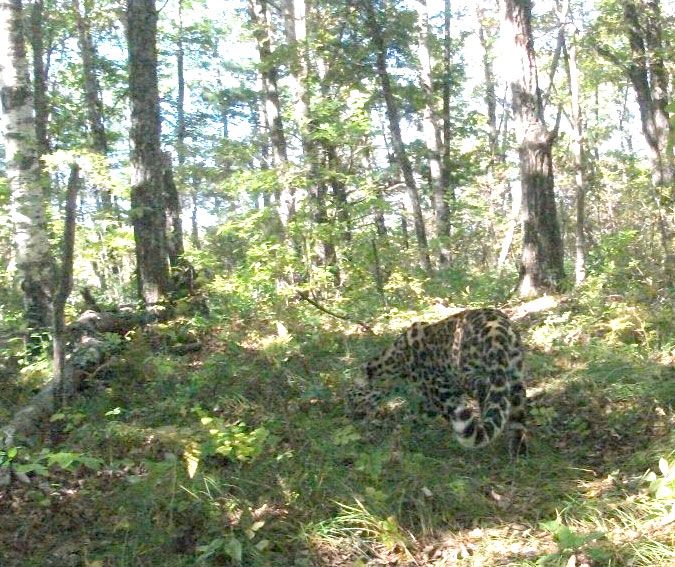
September 19, 2011–First camera trap photo of an Amur leopard in China.

(Photo: WWF-China and the Jilin Forestry Department )

The wild Amur leopard is even more endangered than its more eminent cousin, the Amur tiger. There are an estimated 7-12 Amur leopards in China. Another 20-25 are believed to live in southern Russia.


Source: World Wildlife Fund.