First Light Productions

investigative journalism

Posts by Michael Elton McLeod

IUCN Red Book

Posted on September 5, 2012

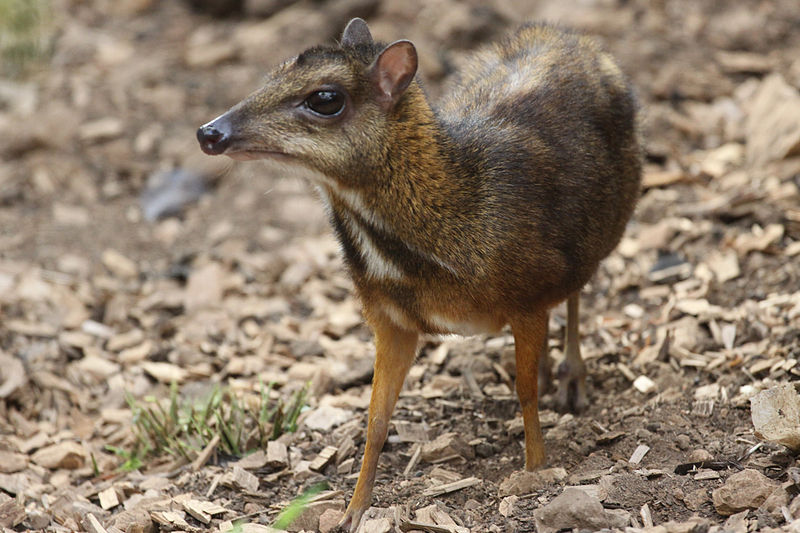
The Java mouse-deer, aka lesser Malay mouse-deer (Tragulus javanicus).

(photo: Lev G)

A species of even-toed ungulate in the Tragulidae family. At maturity it is about the size of a rabbit. It is found in forests in Java and perhaps Bali. IUCN Red List of Threatened Species.

Acoustic Smog

Posted on September 2, 2012

High levels of background noise, mainly due to ships, have critically reduced the ability of endangered North Atlantic right whales to communicate with each other.

North Atlantic right whale (photo: NOAA)

Large whales, such as right whales, rely on their ability to hear far more than their ability to see. Chronic noise is likely reducing their opportunities to gather and share vital information that helps them find food and mates, navigate, avoid predators and take care of their young.

Leila Hatch, a marine ecologist  for the National Oceanic and Atmospheric Administration, likened the whales’ situation to “A visually impaired person, who relies on hearing to move safely within their community, which is located near a noisy airport.”

North Atlantic right whales, which live along North America’s east coast from Nova Scotia to Florida, are one of the world’s rarest large animals and are on the brink of extinction. Recent estimates put their population at approximately 350 to 550 animals.

Noise from an individual ship can make it nearly impossible for a right whale to be heard by other whales.

Bioacoustic researchers studying the whales, liken the environment they inhabit off the coast of Boston as like living in a world full of acoustic smog.

Scientists worldwide are starting to quantify the implication of chronic, human-created ocean noise for marine animals. Watch for more on this here.


Source: materials provided by National Oceanic and Atmospheric Administration.

61 miles an hour

Posted on September 2, 2012

Sarah the cheetah shattered the world record for the standing 100-meter dash, clocking a time of 5.95 seconds. (Photo: Ken Geiger, National Geographic)

Manifest Destiny

Posted on September 1, 2012

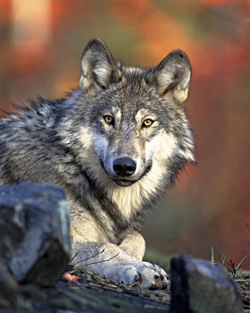
September 1, 2012 — Interior Secretary Ken Salazar announced yesterday that gray wolves in Wyoming will be taken off the endangered species list and managed under a state plan that delineates more than 80 percent of Wyoming as a “predator zone” where wolves can be shot on sight. In the remainder of the state, excluding Yellowstone and Grand Teton national parks, wolves will be designated a “trophy game animal” and hunted in large numbers. The goal of the plan is to reduce the state’s wolf population from about 270 to 100.

gray wolf (photo; Gary Kramer, USFWS)

A coalition of environmental and animal rights groups, including the Center for Biological Diversity, which has worked to protect western wolves for nearly a quarter-century, filed immediate notice of their intent to sue the federal government for stripping away the wolves’ protections under the Endangered Species Act.

The wolf-management plan, pushed by range and ranching interests, will drastically reduce wolf numbers in the northern Rockies and cut off further spread of the wolves to habitat in Colorado and Utah.

Protections for wolves in the rest of the northern Rockies, including Montana, Idaho, eastern Oregon and Washington and northern Utah, were removed by Congress via a rider on a budget bill and have been a disaster for wolf recovery. Idaho and Montana now allow hunting and trapping designed to drastically cut wolf populations, with a total of 545 wolves killed last year and more targeted for killing in the coming year.

In the short time wolves have been allowed to return — in limited numbers — to their former ranges in the West and reclaim their natural ecological role, they’ve quickly demonstrated they’re an irreplaceable keystone species. By limiting the amount of time elk spend along rivers, their presence has led to major improvements in streamside vegetation and water quality, benefiting fish, insects, birds, beavers and a broad range of other species.


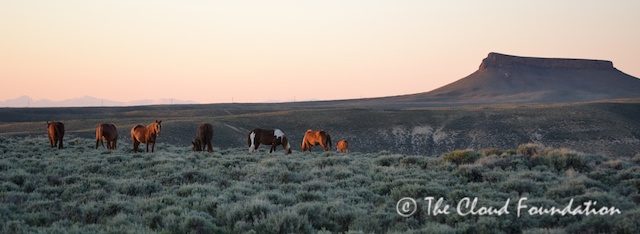
Salazar has demonstrated a serious lack of concern for conservation issues. His appointment to head Interior was a clear signal to wild life advocates that trouble was in store. Salazar’s decision on the wolves is a piece with the way Interior has handled wild mustangs which, for the last two years, the feds have been rounding up and sending to long-term holding in record numbers, killing many of them in the process. Their ultimate destination is the slaughterhouse where they end up as horsemeat, a popular repast in France and other countries.

A product of five generations of ranching, Salazar represents a ranching community that remains wedded to the notion of manifest destiny: the right to claim the west for human endeavors. Their view that the west belongs to ranchers and by extension cattle, is deep and pervasive and continues to be backed by the government through subsidies and ridiculously low grazing fees. For all the talk from that group about freedom and independence they’re not about to give up their corporate welfare. By and large, wild animals interfere with their world view.


Sourced from Common Dreams with a shout out to Dreamcatcher blog.

What Does It Take

Posted on September 1, 2012

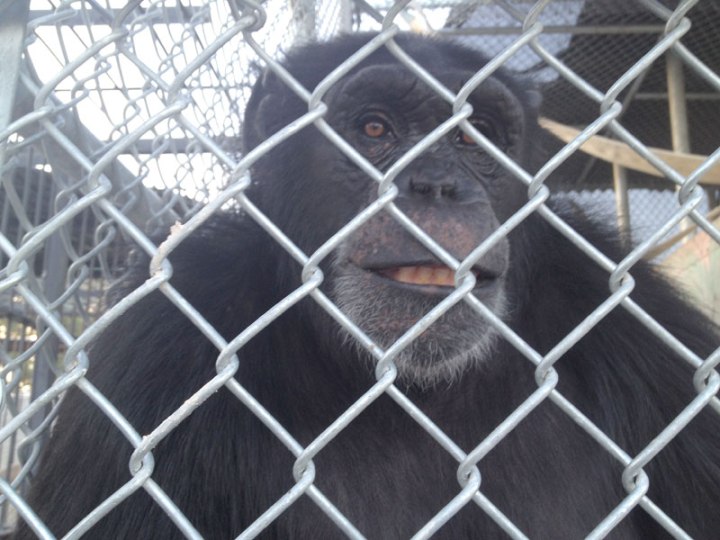
LAS VEGAS, August 2, 2012 — Two chimps — CJ and Buddy — got out of their enclosure last month, shutting down a neighborhood. Buddy was killed by police, and CJ’s owners have agonized about what to do with her ever since.

CJ

The incident focused attention on the plight of backyard chimps and other exotic animals.

The owners had agreed at one time or another that the chimps would be better off in an approved sanctuary, but they could never agree on when or where. Buddy’s death changed that.

It took this tragedy for them to finally put aside their differences and reach an agreement to send CJ to live out her life at Chimps Inc., located near Bend, Ore. It is home to seven other rescued chimps in a near idyllic setting with green grass and play features to keep the chimps mentally and physically stimulated.

The owners are giving up all rights to CJ, who will live as a chimp rather than as a half human.

The Real Deal

Posted on August 31, 2012

FYI, a brief bio of pioneer Bigfoot hunter and longtime conservationist, Peter Byrne.

Peter Byrne

International Wildlife Conservation Society Website:

Peter is a naturalized American citizen whose great interest in wildlife began in the countryside of Ireland, where he was born and grew up. When he was eighteen he joined the British Air Force and served for four years in combat service in World War II. When the war ended, he joined a British tea company in north Bengal and spent five years living and working in the great forests of north India, terrain that teemed with wildlife in those years.

In 1953 he left his tea industry work and walked from Darjeeling to Katmandu, 350 miles, to start a safari company. He ran this as a professional hunter in south west Nepal for eighteen years, before returning his hunting concession back to the Nepalese government and offering to turn it into protected area. To this end, in 1968, and to generate funding to create the new reserve, he founded, with four others – two doctors and two attorneys – the International Wildlife Conservation Society Inc., and had it registered in Washington D.C. as a not-for-profit foundation with 501 © 3 tax status.

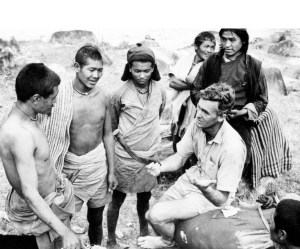
Peter Byrne, Nepal, 1957 (credit: Peter Byrne)

Returning to Nepal he spent a year encamped in the area that is today the Sukila Phanta (The White Grass Plains, or WGP) Wildlife Reserve and, working with local labor, demarcated and mapped the whole area, built roads and bridges, trained guards in wildlife protection work and provided equipment. Since that time he has spent part of every winter in the reserve, either working on conservation projects or running eco tours with clients as a means of raising money for these projects.

He is a Member of the Academy of Applied Science of Boston, MA, a Member Emeritus of the Explorers Club of New York and, since 1968, Executive Director of the International Wildlife Conservation Society.

The society was originally created for the purpose of creating a protected park out of part of a big game hunting concession operated by Peter Byrne from 1953 to 1968. The result of the society’s work is the Sukila Phanta Wildlife Reserve. Originally designed to encompass 60,000 acres, the park in recent years has been increased in size to 200,000 acres and, mainly because of its remoteness, has remained pristine and unspoiled, as well as only minimally explored.

Sukila Phanta Wildlife Reserve (photo: Peter Byrne)

The park now provides habitat for more than sixty species of mammals, three hundred and fifty species of birds, approximately twenty-seven species of fish in its jungle rivers and a large number of reptiles, including two species of saurian, and giant monitor lizards.

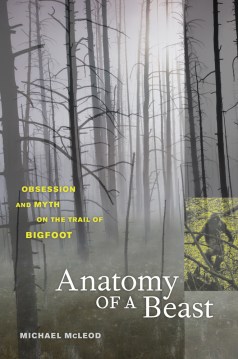
Peter is a principal character in my nonfiction book “Anatomy of a Beast: Obsession and Myth on the Trail of Bigfoot.” He hunted the yeti in Nepal beginning in the late 1940s. While on a yeti expedition in 1957 he received word that a large humanoid similar to the yeti had been reported in California. He hiked to Katmandu and caught a plane to America. So began the saga of Bigfoot.

Sanctuary War

Posted on August 31, 2012

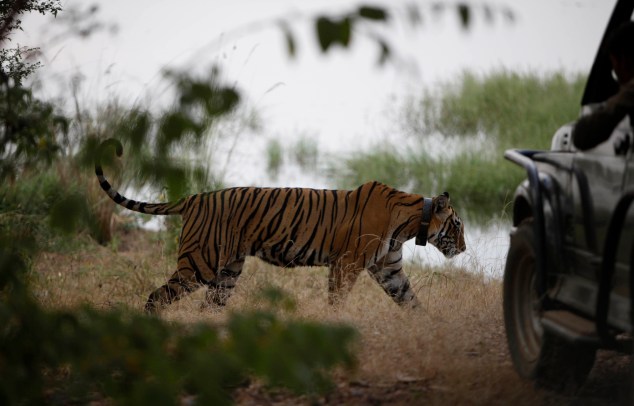
India’s supreme court has issued has issued a temporary order banning tourism in all core tiger habitats in the country until it meets again to assess whether tigers and tourists can co-exist. The decision will have ramifications for the tens, if not hundreds of thousands of Indians whose livelihoods depend on the big cats, not to mention the country’s approximately 1,700 tigers.

India tiger park

Environmentalists and conservationists claim the ban would be a total disaster putting the tigers at greater risk as it’s the presence and the revenue from tourists that protects the reserves from loggers and poachers. The problems, they say, are outside the park gates, not inside them.

The Supreme Court ruling came after an environmentalist petitioned the court to enforce the 1972 Wildlife Protection Act that says tiger reserves should have a core area that only forestry officials enter, surrounded by buffer land that can be visited by tourist vehicles. The claim is that tiger conservation is being adversely affected by mindless tourism. Several Indian states have permitted the construction of hotels and shops inside the tiger reserves and large numbers of vehicles loaded with people are traumatising the endangered species in its critical habitat.

The problem is that both the buffers and the core zones are crammed with people who desperately need work. Before tiger tourism came to the area, they made their living chopping down trees in the tiger reserve and, in some cases, poaching tigers to serve the lucrative Chinese medicine market.

If tourists are not allowed in the core tiger zones, say opponents of the ban, those economies will collapse. Guides will be affected. Mechanics who service the jeeps, the hawkers who sell T-shirts, the hoteliers, the women who make handicrafts.

The court ordered the ban after the majority of states with tiger parks failed to file zoning plans to create the buffers that define the tigers’ territories. Angered by the states’ poor response, the court banned tourism from the core zones until the states complied.

India is home to half the world’s tiger population. According to the latest census released in March 2011 by the National Tiger Conservation Authority, the current population is estimated at 1,706 – up from 1,411 in 2008, but a long way from the 45,000 tigers which reportedly roamed India 100 years ago.

Tigers are found in 18 Indian states, from the Himalayas in the north to Tamil Nadu in the south and across the north-east into Burma.

An undercover investigation by the Wildlife Protection Society of India and the Environmental Investigation Agency in 2005 revealed that the trade in tiger and leopard body parts in China continues to thrive.

The interim order has hit hard. Many tourist bookings for next season have been cancelled.

The ban will only begin to affect holidaymakers when the peak season for tiger tourism begins in October, and the country’s reserves open their doors.

Source: India Daily News.

Lead

Posted on August 31, 2012

The condor once teetered on the brink of extinction. In 1982 the total population of the species totaled just 22 birds. A captive breeding program reintroduced condors into the wild at sites in California, Arizona, and Baja California, and the population grew to nearly 400 birds by the end of 2010. A new study, which focuses on condors in California, describes a population still on the verge of collapse, sustained only by ongoing human intervention.

The California condor is the largest land bird in North America, with a wingspan of up to 9-1/2 feet. (Photo: Gavin Emmons)

Condors are opportunistic scavengers, feeding primarily on the carcasses of large mammals such as deer. They can ingest fragments of lead bullets from feeding on carcasses or gut piles of animals shot by hunters. Lead poisoning from ammunition was probably one of several factors that led to the near extinction of the species.

The new study shows that lead poisoning continues to prevent the species’ recovery.

California condors are tagged and monitored, trapped twice a year for blood tests, and when necessary treated for lead poisoning, and they still die from lead poisoning on a regular basis.

The researchers identify the source of the lead in a condor blood sample using a “fingerprinting” technique based on the isotope ratios found in different sources of lead. Condors raised in captivity that have not yet been released into the wild have low blood lead levels, with lead isotope ratios that fall within the range of background environmental lead in California. Most free-flying condors, however, have lead isotope ratios consistent with those found in ammunition.

The study shows that without a solution to the problem of lead poisoning, the condor population can only be sustained through intensive and costly management efforts. Since 1997, about half of all free-flying condors in California have required treatment to remove lead from their blood and supportive care until they are healthy enough to return to the wild. Each year about one in five of the birds need treatment. This usually involves capturing the birds and transporting them to a zoo where they can receive chelation therapy.

Condors are slow to reproduce–females lay one egg every other year. (Photo: Gavin Emmons)

The study found that the free-flying condor population appears to be roughly stable under current levels of intensive management. But without continued releases of captive-reared birds and interventions to treat lead-poisoning, researchers believe the condor population would again decline toward extinction, reducing the wild population in California within the next few decades, once again to just 22 birds.

The current cost of the condor program is estimated to be about $5 million per year, including the contributions of all the agencies and organizations involved in the effort. This level of management would have to continue in perpetuity to keep the population viable.

Efforts in California to address the problem of lead exposure have led to state regulations banning the use of lead ammunition in condor habitat. A partial ban went into effect in July 2008 and was later expanded. So far, however, researchers have found no evidence that the ban has resulted in a reduction in condors’ blood lead levels. The problem is that very small amounts lead have devastating consequences.

The researchers estimate that if just one half of one percent of carcasses have lead in them, the probability that each free-flying condor will be exposed is 85 to 98 percent, and one exposure event could kill a condor.

The findings suggest that greater regulation of lead-based ammunition may be necessary to protect the birds. Although alternatives to lead ammunition are available, regulations limiting the use of lead-based ammunition face stiff opposition from hunting organizations and gun-rights groups.

This research was supported by the National Park Service, Western National Park Association, and the U.S. Fish and Wildlife Service.

Source: University of California, Santa Cruz
Wild Animals

Posted on August 30, 2012

An adult male chimp is five times as strong as a human (credit: International Primate Protection Society)

In July, a human being was seriously attacked by chimpanzees at Chimp Eden, a sanctuary near Nelspruit, South Africa, founded by Jane Goodall. Although chimps are not native to that country, the facility houses orphaned apes who have been rescued from the widespread illegal trade in bushmeat and pets that occurs in many parts of Africa. The animals roam semi-wild in large fenced enclosures.

A young American graduate student studying for his masters degree in anthropology and primatology at the University of Texas, was showing a group of tourists around and they stopped at an enclosure that holds adult males. The chimps had thrown a stone at passers-by and he wanted to remove it. He stepped over a small barrier fence and went right up to the electric safety fence and retrieved the stone. As he went to climb back over the fence, two chimps grabbed his foot, pulled him down and dragged him away. They tore off some of his fingers, a testicle and mauled his head.

The sanctuary, which is home to 33 chimpanzee, was closed temporarily while the incident was investigated. The chimps were not put down. The two chimps were part of a group that had been rescued from Angola and brought to South Africa more than a decade ago. After the attack they were placed in their night enclosure and held there while sanctuary officials investigated what led to the attack and confirmed the fencing is safe.

Chimp Eden is a member of the Pan African Sanctuary Alliance, a group of 21 sanctuaries across Africa that rescues and cares for primates from illegal hunting and trade.

The lesson in all of this, one that we humans seem to have a hard time learning, is that chimpanzees and other primates are wild animals who organize their lives by rules we don’t fully understand. They are defensive of their territories in the wild and in captivity. In our interactions with them, we need to respect their essential wild natures. Caution is always a necessity.

Marbles

Posted on August 30, 2012

The Animals and Society Institute pointed me today toward a story in the Toledo Blade where several defendants recently charged in Municipal Court with animal abuse had prior domestic violence convictions. A pattern, experts say, that is not unusual.

Jason Burrell of Toledo, convicted of a domestic violence charge in 2000, was sentenced for crushing a puppy to death and leaving the body in his yard.

Marbles

Millbury resident, Aaron Nova, is facing a charge of abusively handling a dog named Marbles at the Lucas County Dog Warden’s Office, where he is a kennel worker. Nova was convicted this year of punching the mother of his child and trying to drag her from a car.

Domestic violence and animal abuse are connected because of what sociologists call generalized deviance. They are correlated, but it can vary which occurs first. Anti-social behaviors of different types can occur in the same individual.

Bee Friedlander, managing director at the Animals and Society Institute said, “It is important that all professionals who investigate violence in the home be trained on the cycle of violence, so that they are aware of the connection and better able to respond.” Some states, including Ohio, have gone a step further, with cross-reporting laws. In Ohio, animal control officers/agents are mandated to report child abuse (along with teachers, doctors, lawyers, and child-care workers.

Society doesn’t consider animal cruelty as severe as violence against humans. But animal abuse can be a tip-off to other violence or an abuse. If someone abuses animals early in life, it’s a sign that similar aggression may occur later to a spouse or a child. A bill that has been passed by the Ohio House would require a child under 18 years of age who commits cruelty to a companion animal to undergo psychological evaluation to determine if the child needs individual or family counseling.

Director of the Battered Women’s Shelter in the YWCA in downtown Toledo, said that threats against pets are often part of a partner’s tactics to keep the targeted partner under control and prevent plans for leaving. Problems of this type caused the YWCA to start a pet shelter program in partnership with the humane society, the dog warden, and local clinics, kennels, stables, and veterinarians. They have sheltered dogs, cats, bunny rabbits, gerbils, birds, and a ferret. The program is being expanded to provide help to areas outside the city.

Night Monkeys

Posted on August 28, 2012

On July 5, an Administrative Court in Colombia revoked the permits of noted malaria researcher Dr. Manuel Elkin Patarroyo. These permits, originally valid until 2015, would have allowed him to acquire as many as 4,000 night monkeys for his jungle laboratory, the Institute of Immunology Foundation of Colombia (FIDIC).

Night monkeys have been used as models for malaria research in Colombia (photo: International Primate Protection League)

Angela Maldonado

who has been studying New World monkeys in the wild for nearly 15 years, discovered that lab officials at FIDIC had persuaded the poor native people of Peru and Brazil—just across the Amazon River from Patarroyo’s facility—to capture night monkeys and transport them across the unguarded border.

Angela Maldonado just won a major legal victory for Colombia’s night monkeys (IPPL)

The local people probably didn’t know that they could be violating an international treaty (the Convention on International Trade in Endangered Species, CITES) by engaging in cross-border trade in a night monkey species, Aotus nancymaae, that is not native to Colombia.

Unscrupulous Science

According to evidence uncovered by Maldonado’s grassroots organization Fundación Entropika, the FIDIC had, for several decades, been rounding up at least 1,600 wild night monkeys a year for Dr. Patarroyo’s studies, then tossing them—often sick and weak from their lab experiences—right back into the Colombian jungle with no rehabilitation plan or environmental controls.

Night monkeys from Dr. Patarroyo’s lab, after they’ve been experimented on, are allegedly just thrown back into the forest. (Photo: © Fundación Entropika)

The judge ruled that the Colombian Ministry of Environment and the Corporation for the Sustainable Development of Southern Amazonia (CORPOAMAZONIA), which were responsible for monitoring FIDIC, had instead colluded with the lab in this inhumane and ecologically destructive travesty since 1984.


Source: “A legal Victory for night monkeys,” IPPL newsletter July 18, 2012.

Traffic in Rhinos

Posted on August 27, 2012

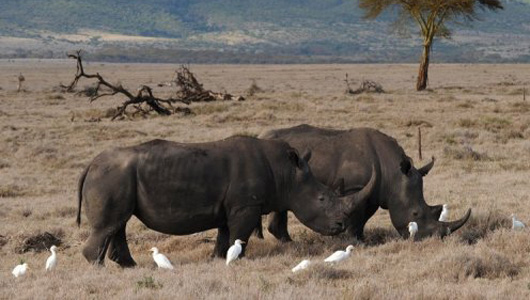
In a report issued this month, Global wildlife monitoring network, TRAFFIC, warned that if current poaching rates continue, 515 rhinos could perish by the end of the year in South Africa if no action is taken to stem the illicit trade in rhino horns.

South African rhino (Photo: Roberto Schmidt/AFP)

South Africa is home to about three quarters of Africa’s 20,000 or so white rhinos and 4,800 critically endangered black rhinos. In recent years the country has witnessed an unprecedented spike in sophisticated, violent and organized rhino-related criminal activities. Last year 448 rhinos were killed compared to 13 animals in 2007.

South Africa has lately scaled up its fight against illegal poaching and trade in rhinos horns, arresting 176 suspects so far this year, more than the 165 arrested in the 12 months of 2010. But even with the successful stories of high-value arrests and with anti-poaching security levels stepped up, the criminal syndicates and poaching gangs have become increasingly sophisticated and more aggressive.

The report named Vietnam as the worst offender fuelling the trade in the black market for rhino horns. The ground horn, which is believed by some to cure cancers, has taken on a new use and is now being pushed as a recreational drug mixed with drinks in the belief that it cures hangover.

Rhino crimes are receiving heavier sentences and South Africa now has a dedicated prosecutor to handle such crimes. In a promising development, South Africa and Vietnam are reportedly set to sign a landmark deal to help stem rhino poaching and the illicit trade in horns.

TRAFFIC’s report also described a worrying development where game ranch operators and custodians of rhinos have linked up with the crime syndicates and become major dealers in rhino horn.

Source: Susan Njanji for Mother Nature Network: http://www.mnn.com/earth-matters/animals/stories/more-than-500-rhinos-could-perish-this-year

Climate Change and the Oryx

Posted on August 27, 2012

In the New York Times today, reporter Leslie Kaufman writes about zoos grappling with how aggressive to be in educating visitors on the perils of climate change, fearful that too much bad news about damaged coral reefs, melting ice caps or vanishing species, might dent ticket sales.

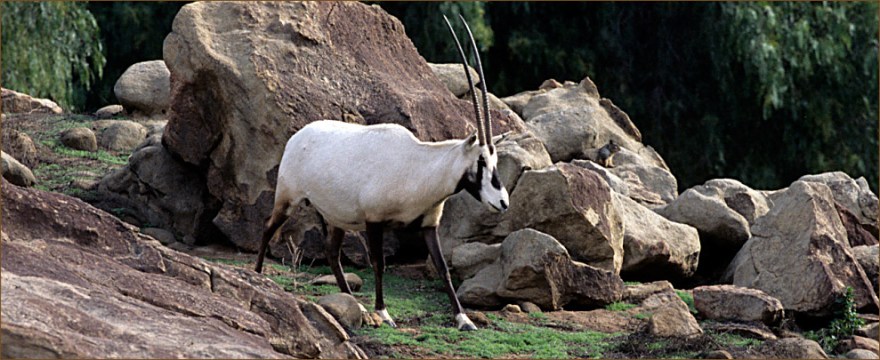
The long, slender horns of the oryx, carried by both males and females, give the oryx the nickname “spear antelope.” This is the most highly specialized oryx species for living in true desert extremes. Their light color reflects the desert heat and sunlight, and they can erect their hair on cold winter mornings to capture warmth to hold in their thick undercoats. Their legs also darken in the winter to absorb more of the sun’s heat.


This antelope of the Arabian Peninsula and Sinai Desert became extinct in the wild by the late 1960s, mostly due to hunters with high-powered rifles. To save the species, nine Arabian oryx from private collections in Oman, Kuwait, and Saudi Arabia, as well as from the London Zoo, were moved to the Phoenix Zoo in Arizona. A second breeding group of three oryx, from a zoo in Saudi Arabia, was started at the Los Angeles Zoo, and in the 1970s animals from both of these herds were sent to the San Diego Safari Park. As of 2010, 342 Arabian oryx have been born at the Safari Park, with many returned to Oman and Jordan for reintroduction in their native range. (Photo: San Diego Zoo Safari Park)

Some zoos and aquariums have held back, relegating information about climate change to nothing more than signs—about Arctic melting, for example, posted in the polar bear exhibit. On the other hand, many zoos and acquariums have put climate change “front and center.”

This month, the National Science Foundation awarded a coalition of aquariums $5.5 million for a five-year education effort to train staffs to develop ways of conveying information about climate change that will intrigue rather than daunt or depress the average visitor.

Most of the 224 members of the Association of Zoos and Aquariums now have some sort of climate message.

Unsurprisingly, talking about climate change in some locales is a tough sell. At the Georgia Aquarium in Atlanta, Brian Davis, the vice president for education and training, says to this day his institution ensures its guests will not hear the term global warming. Visitors are “Very conservative,” he said. “When they hear certain terms, our guests shut down. We’ve seen it happen.”

Denial is not just a river in Africa.

American Consumption

Posted on August 26, 2012

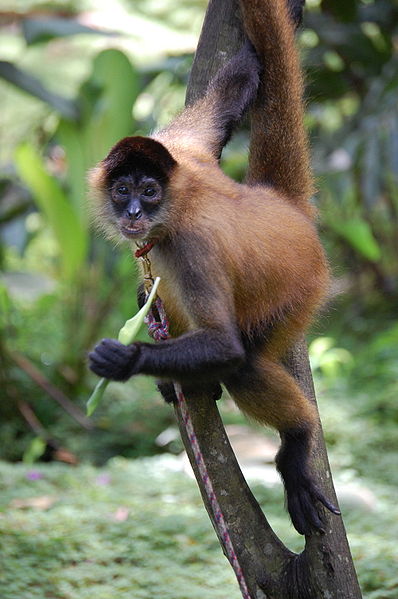
Female Panama spider monkey at the Caña Blanca wildlife sanctuary on the Golfo Dulce, Costa Rica. This individual had been illegally kept as a pet before being confiscated and sent to the sanctuary, and had spent her whole life on a short leash; because of this, she would panic whenever she was let off the leash and had to be kept on a 40-foot tether. (photo: Steven G. Johnson)

In Scientific American David Biello claims his morning coffee is killing the black-handed spider monkey.

The article (click thru) is a little hard to digest. Partly the writing. And a lot of the information covers old ground. But the fact that mindless consumption has consequences bears repeating. To wit, some of the comments from the very people of which Biello speaks who resent someone inferring they should take responsibility for their cravings.


From: Gatnos
“C’mon David, admit it – your making most of this up. Not a single scientific study was cited. Using emotionally charged words like “holocaust” and throwing around factoids as if they were real facts without supporting evidence. What is your point? Do you want Americans to stop using coffee? Do you have beef with Starbucks? I also saw cocoa mentioned as an evil crop. Just try to take chocolate away from the roughly 159,000,000 American females. Yes, you are right; humanity is selfishly using the world resources at the expense of other species, but you have a hard case to sell if you want us to get upset over fungi and microbes. The United States has taken great strides to be responsible conservationists (not environmentalists), the fact that the rest of the world has not; is not the fault of us the consumer. The blame lies squarely on the shoulders of those who are willing to destroy their property and natural resources for these cash crops. Stop with the guilt trips already and write something scientific.”

From: N a g n o s t i c
“So much verbiage over one stupid animal. Big deal if it goes extinct. Coffee helps people live longer, and staves off Alzheimer’s. Screw the monkeys.”

From: geojellyroll
“This article is a hodgepodge that meanders so many disciplines it’s akin to religion….sounds like it has some ‘meaning’ but is based on ‘nothing’. As a high school paper it might get a B-…as a paper on a science site it earnsd a big ‘F’. ‘Fellow travelers on the planet’…please!!!! This is not a beauty pageant site.”

From: priddseren
“I do enjoy environmentalists who can toss out a ridiculous statistic and then say except not counting this or that. Here is is the claim extinction is happening at 100 times faster than any other time except the 5 great mass extinctions don’t count. Well of course they don’t count because if you did count them the statistic would be extinction is happening at a slower rate than any time in history. But as if I would expect anything else. This author also drinks the warmist koolaid and the warmists leave out things like ice ages and the PETM and pretty much any other data that throws off their computer models. At least Mr. Biello is consistent in the way he uses invented statistical data to exaggerate his concerns.”

Companion Animal

Posted on August 25, 2012

“Pocho is my best friend,” says Costa Rican fisherman, Gilberto “Chito” Shedden, of the 17-foot, 1,000-pound crocodile named “Pocho,” that he calls his pet. “This is a very dangerous routine but we have a good relationship. He will look me in the eye and not attack me. It is too dangerous for anyone else to come in the water. It is only ever the two of us.”

Oh, really.

Chito made friends with the croc after finding him with a gunshot wound on the banks of the Parismina river 20 years ago. He had been shot in the eye by a cattle farmer and was close to death.

Chito brought the croc into his house. He was small at the time, weighing only around 150 lb. He gave him chicken and fish and medicine for six months to help him recover. He stayed by Pocho’s side while he was ill, slept next to him at night. “I just wanted him to feel that somebody loved him,” Chito says. “That not all humans are bad. It meant a lot of sacrifice. I had to be there every day. I love all animals – especially ones that have suffered.”

At one point during his recovery, Chito left the croc in a lake near his house. But as he turned to walk away, to his amazement Pocho got out of the water and began to follow him home.

Chito recalls: “That convinced me the crocodile could be tame.” But when he first fearlessly waded into the water with the giant reptile his family was so horrified they couldn’t bear to watch. So instead, he took to splashing around with Pocho when they were asleep.

Now he swims and plays with Pocho as well as feeding him at the lake near his home in the lowland tropical town of Sarapiqui.
The odd couple have now become a major tourist attraction, with several tour operators, taking visitors on touring cruises to see the pair.

American crocodiles, which inhabit North, Central and South America, can live to around 70 years old. It is estimated that Pocho is around 50 – almost the same age as his owner. They are also said to be less aggressive than their Nile or Australian counterparts.

Chito, whose real name is Gilberto Shedden, was given his nickname by friends, who also call him “Tarzan Tico” – Tico being a familiar word for a Costa Rican. And he certainly plays up to the name, wearing a tattered pair of leopard-print shorts for his half-hour performances with Pocho.
A keen conservationist, he also offers boat tours, where he eagerly points out a variety of wildlife. But he only charges a few dollars to watch the breathtaking crocodile show, claiming he does not want to cash in on Pocho.

Watch them live
http://ticotimes.com/costa-rica/crocodile-man-sarapiqui-tarzan

From a story in the Costa Rica Tico Times.com 10/07/2009