First Light Productions

investigative journalism

Posts from the “SANCTUARY” Category

Carnivores in the city

Posted on November 8, 2012

P-22, a mountain lion from the Santa Monica Mountains walked eastward across the 405 and 101 freeways and settled in Griffith Park, smack in the middle of downtown Los Angeles. During the journey, an odyssey of perhaps 20 miles, the cat had to cross concrete and backyards, dodge commuter traffic and thread an obstacle course of culverts, bridges and roads.
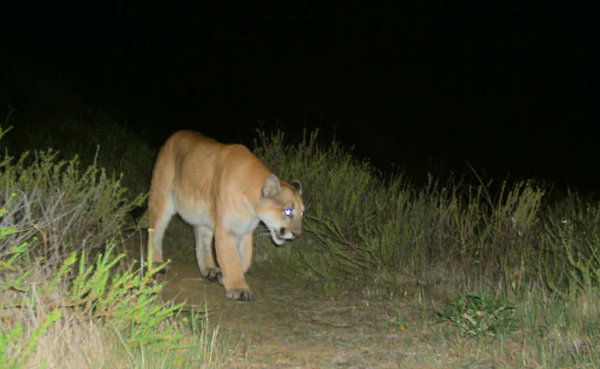
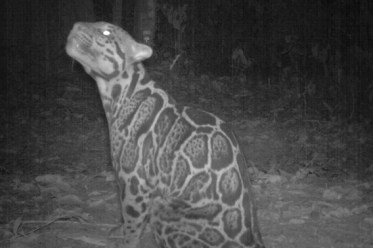
P-22, snapped by a remote camera Feb. 12, 2012, at 9:15 p.m. in the Griffith Park area of Los Angeles. (Photo: Griffith Park Wildlife Connectivity Study)

Mountain lions have recently been shot near the Wrigleyville neighborhood of Chicago and in Des Moines, Iowa.

No surprise, the most common mammalian carnivores to establish thriving communities in urban settings are coyotes. For at least the last six years, a coyote community has occupied a third of a square mile area about five miles from Chicago O’Hare International Airport.

Coyote in a downtown Chicago Quizno’s sandwich shop in 2007.

Researchers at Ohio State University, conducting a long running study of coyotes in greater Chicago, estimate the 9 million people in the metro area share their space with about 2,000 coyotes.
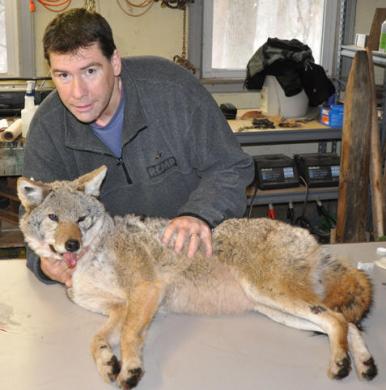
Stan Gehrt, a wildlife ecologist at Ohio State University, inspects a coyote captured in the greater Chicago area. (Photo: Stan Gehrt)

The researchers found that the urban coyote pup survival rate is five times higher than the rate for rural pups. In both environments, humans are the coyotes’ primary predator; cars being the No. 1 cause of death.

This coyote hopped a Max train leaving the Portland, Oregon airport in 2002. (Photo: Port of Portland)

Opportunity for food abounds in urban areas for coyote communities. Once they settle, resident coyotes don’t move much. Transient animals, typically youngsters that have recently left their parents’ pack, will try to find a vacancy in an existing territory or find a new area to start their own pack.

An opinion

Posted on November 8, 2012

Killing them softly.

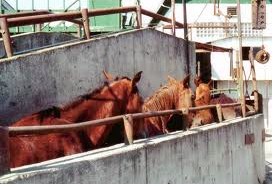
Unloading horses at the border

Fifteen years ago, on one of my notorious rants, I claimed that the goal of the BLM was to send all the wild horses to slaughter. Any number of people considered me as having gone off the deep end back then. During the years between then and now, the combined forces of the pro-horse groups managed to shut down the American slaughterhouses, only to see Mexico and Canada increase the number of American horses slaughtered (up 38% since last year).

While the propaganda machine continues to spout lies about starving horses and make false accusations of thousands of horses wandering the backstreets and parks, the forces of evil are plotting to do exactly what I had forecasted.

Consider: The failure of the Federal Government to deny inspectors to equine slaughterhouses, the gathering storm of  anti-horse forces trying (and so far failing) to open a slaughterhouse in the States and the wildly insane gathering of wild horses off the protected Federal lands to the point where 45,000 now reside in holding pens.

Consider that the BLM is now complaining about the cost of maintaining horses in the holding pens and the discussion now going on is that in order to reduce the cost, they want to change the status of the horses so the BLM can sell them to whomever wants them. Translated: off to slaughter they go.

The long term plan to eradicate wild horses enters its final chapter. The Wild Horse Advisory Board, those wonderful folks who are allegedly members of the general public that advises the BLM, are pro-slaughter advocates. Ex-BLM employees are now players in the organizations promoting slaughter. Everything is set. Expect the word to come dribbling out of DC – all wild horses in the holding pens, all 45,000 of them, will be “euthanized.”

And the BLM continues to decimate the last remaining herds beyond the point of viability. Gelded males, mares filled with PZP, yearlings being rounded up “because the land cannot handle the pressure horses place on it,” yet hours after the last BLM trailer leaves the welfare ranchers unload truckloads of cattle on the same land and remove the fences around the water holes.

Are you angry yet? Do you need to be reminded that these are YOUR horses? Congress controls the Department of the Interior, the BLM is part of that Department. Congress can put a stop to it.

S.1176 and HR 2966, known as the American Horse Slaughter Prevention Act, closes the border and makes it against the law to kill horses for human consumption. Eighty percent of the public is against the slaughter of horses. If you read this article, chances are you are a part of the majority.

The killing of American horses has increased by 38% in 2011 to 133,241. That’s 2,562 per week, 366 per day, 46 per hour – trucked to Canada and Mexico and slaughtered in the most inhumane way possible. All of them fat, mostly healthy (they don’t buy skinny horses!) and all of them wondering what the hell happened to the loving, caring humans, the 80%, who were suppose to stand by them.

Yes, you guessed it, I’m pissed. I’m sick of do-gooder organizations spouting meaningless words, of suits in Congress sitting on the bills “because it’s an election year.” At Habitat for Horses, we work damn hard to save the lives of horses. Investigations, courts, medical bills, slings to help them stand up, thousands of dollars in hay and feed, and they kill the same number in a couple of weeks that we save in a year.

It’s gotta’ stop, guys, but it won’t until a very angry voice is heard from the 80%. Are you ready to scream?

22 May 2012 — Jerry Finch, President and Head Stall Cleaner of Habitat for Horses, a non-profit equine sanctuary.

Busted

Posted on November 5, 2012

After three years on the prowl, a tranquilizer dart from a veterinarian ended life on the lam for the mystery monkey of St. Petersburg.

Mystery monkey Facebook page

The pink-faced, toddler-sized rhesus macaque , which has has its own Facebook page, has managed to survive by its wiles in highly urbanized South Florida.

The monkey, nicknamed Cornelius, is believed to hail from a feral clan living near Florida’s Silver River, 100 miles away.

He’s been living on borrowed time since he jumped on resident Betsy Fowler and bit her in the back, forcing her to undergo treatment for rabies.

Fears the monkey would be euthanized were laid to rest when wildlife officials reported it will be kept at an animal rescue shelter.

Virunga rescue

Posted on November 3, 2012

In September, Senkwekwe quarantine facility at Virunga National Park in the Democratic Republic of Congo received two rescues in one week.

Isangi.

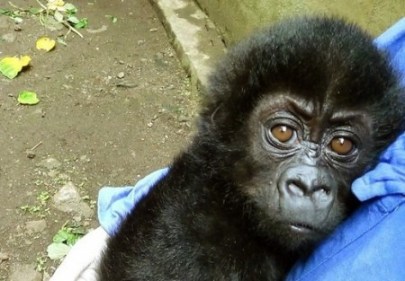
First to arrive was a 9-month-old infant that had been poached from Kahuzi-Biega National Park, south of Lake Kivu. The Gorilla Doctors (MGVP) escorted the baby to park headquarters where she was examined and quarantined and cared for at an enclosure adjacent to the orphan mountain gorilla center. The baby was given the name Isangi. The circumstances surrounding the poaching are not entirely clear. It appears the FDLR rebel group may have first poached the gorilla from Kahuzi-Biega National Park. Members of the Raiya Mutomboki rebel group say they took it from the FDLR and later gave it to the director of a Congolese environmental organization who brought it to Kahuzi-Biega headquarters.

Baraka.

Baraka arrived a week later, dehydrated, hungry and weak. It was the end of a 2-week trauma of captivity from her home in the forest to the city of Goma where she was rescued by Virunga and ICCN authorities. Virunga park’s Gorilla Sector warden had received a tip-off from local community members saying there might be a baby gorilla or chimp at a house in Goma. A sting operation went into effect. Posing as a buyer, a park contact went to the house to see what information he could gather. A man produced a small backpack with a baby gorilla inside that he was hoping to sell. His father-in-law, from a mining region west of the park, had captured the baby and brought it to Goma on a motorbike. The infant was then confiscated.

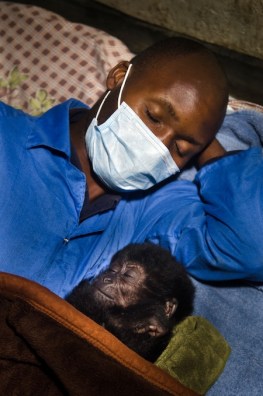
Caretaker Kakule with the new baby Baraka.

Baraka was found to be anemic from iron deficiency and was put on an iron daily supplement. She’s rapidly improved and started eating various food items that she was refusing before. She’s playing quite often, sometimes with Isangi, and trying to climb small trees in the yard. She’s jealous of Isangi, and won’t accept having Isangi held together with her by the same caretaker. During feeding she’s ready to bite and to vocalize to stop Isangi from coming close to her. She’s starting to show her personality.

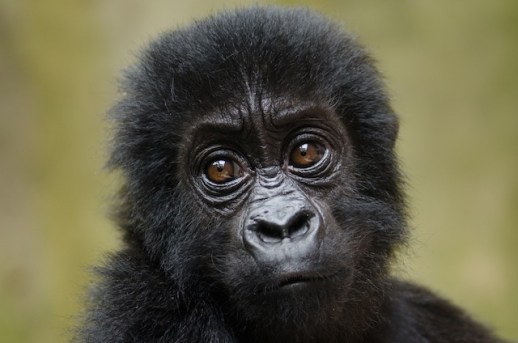
9 month old Isang, brought to Virunga National Park Senkwekwe Orphan Gorilla Center.

Isangi’s health status is good. No health problem has been reported so far since in captivity. She is enjoying the good forest around her. She is very active and bright, although she gets quite aggressive if she feels hungry and starts to bite and push the caretaker in the direction of the food storage. She’s trying to dominate Baraka and can steal Baraka’s food right out of her hands. She loves to play, creating games and pushing the caretaker and Baraka to play with her.

The two gorillas are staying together to complete a 3-month quarantine with 24-hour care from 3 caretakers who are trained and experienced at taking care of orphan gorillas in both Congo and Rwanda. They will eventually be moved to the GRACE facility east of Butembo where orphaned gorillas are cared for.

Both gorillas are Grauer’s, also known as eastern lowland gorillas. They live exclusively in eastern Congo, and their numbers have seen an incredible drop since 1995, placing them on the endangered list.

The security at the park headquarters and surrounding area has been assessed as stable by the park’s security officers. Virunga is only one of two places in eastern Congo with a facility to house gorillas.

Although no one knows for sure, estimates say the population of Grauer’s gorillas have dropped from 17,000 to as few as 4000. Walikale, where the infants were captured, is an insecure region where numerous armed groups compete for control over mines.

Dorothy

Posted on November 1, 2012

I’ve seen this photo many times and it still knocks me out!

Dorothy died of heart failure at the Sanaga-Yong Chimpanzee Rescue Center in Cameroon. (Photo: Monica Szczupider)


The photographer, Monica Szczupider, said the chimp was a “prominent figure” within a group of about 25 chimps. “Chimps are not silent. They are gregarious, loud, vocal creatures, usually with relatively short attention spans”, she said. “But they could not take their eyes off Dorothy, and their silence, more than anything, spoke volumes.”

NAROK

Posted on October 30, 2012

RESCUED 8/7/12

Name: NAROK
Gender: Female
Date of Birth: Tuesday, April 05, 2011
Location Found: near Narok town, Masaai Mara
Age on Arrival: About 18 months old
Comments on Place Found: She was seen by the pilot on a KWS aerial patrol over the Narok/Masaai Mara area all alone, frantically trying to follow a bull who was passing nearby.
Reason for being Orphaned: Poaching


For complete story go to: sheldrickwildlifetrust.org

Candid camera

Posted on October 29, 2012

In Malaysian Borneo, camera traps have revealed  the importance of corridors linking isolated and imperiled populations of animal and birds.

Long-tailed macaque. (Photo: Sabah Wildlife Department and the Danau Girang Field Centre)

    Over 18 months, researchers with the Sabah Wildlife Departmen and the Danau Girang Field Centre in Borneo have photographed wildlife utilizing the corridor connecting two forest fragments located in the Lower Kinabatangan Wildlife Sanctuary.

Sunda clouded leopard. (Photo: Sabah Wildlife Department and the Danau Girang Field Centre

Forests along the Kinabatangan River are heavily fragmented by oil palm plantations, many of which are planted all the way to the river’s edge, making it difficult for animals to move between surviving forests.

Nearly three years ago, the palm oil industry and the Sabah government pledged to partner to build wildlife corridors and require all land with 100 meters of the river be left for wildlife conservation, but little progress has been made to date. Last year the government was ready to go, but the oil palm industry on the whole has been very slow to replant riparian areas. Lack of forest means that some animals are changing their behaviors to survive.

Bornean orangutan. (Photo: Sabah Wildlife Department and the Danau Girang Field Centre)

    The camera traps, provided by U.S. zoos (Houston, Columbus, Cincinnatti and Phoenix), prove the importance of forest corridors in the fractured landscape.

Without these corridors, most populations would decline and go extinct.


Source: mongabay.com

Anti-poaching fund

Posted on October 29, 2012

African Parks, a non-profit organization that rehabilitates and manages national parks in Africa has launched a dedicated fund to finance its law enforcement work over the next three years.

The African Parks Anti-Poaching Fund aims to raise at least $12 million to fund law enforcement activities at our seven parks until 2015. The Fund provides a vehicle for donors to designate specific funds for our anti-poaching efforts, with 100% of all funding deployed on the ground, as is our standard practice.


The organization currently manages seven parks in six African countries: Chad, Democratic Republic of Congo, Malawi, Republic of Congo, Rwanda and Zambia.


To donate go to: Poaching Fund.

No fly fins

Posted on October 29, 2012

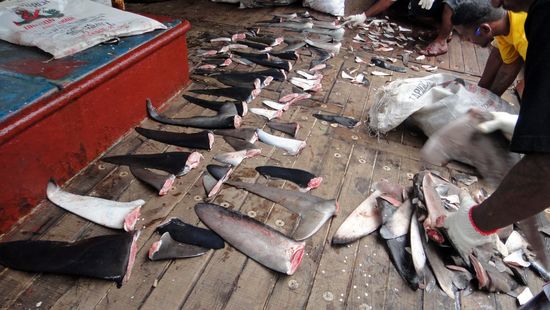
Hong Kong airline Cathay -Pacific announced last month that it would no longer carry unsustainably sourced shark products on its cargo flights.

    In a statement, the airline said that it had studied the issue extensively and found compelling scientific evidence that the vulnerable nature of sharks, their rapidly declining population, and the impacts of overfishing for their parts and products posed a severe threat to the species.

    About 73 million sharks are killed every year, with Hong Kong importing about 10,000 tons annually for the past decade, according to the World Wildlife Fund. Most of that is re-exported to mainland China.

    The number of threatened shark species has soared from 15 in 1996 to more than 180 in 2010, mainly due to the growth of the Chinese middle class who consider shark fin soup a rare delicacy.

    The airline’s change in policy continues the momentum of companies like Air India (reported in ANIMAL POST September 14, for its decision to stop ferrying animals like rabbits, cats and dogs for laboratory tests, where they are experimented upon and finally killed) who are taking actions to stop practices that are unethical and environmentally unsustainable.

    The ban sends an important message that the shark fin business is ecologically unsustainable. The trick is to change centuries old attitudes in mainland China.

    Marshall Islands law enforcement personnel with hundreds of kilograms of confiscated shark fins in the Marshall Islands territory’s waters. (Photo: Giff Johnson/AFP/Getty Images)

    Importers and restaurants that serve the product cite the cultural aspect of shark fin soup to justify the trade, but some surveys suggest consumers are willing to forgo their traditional delicacy.

    A survey by marine conservation group Bloom last year showed that some 78 percent of Hong Kong respondents considered it socially acceptable to leave shark fin soup off the menu at a wedding banquet.

    Major Hong Kong-based hotel chains Peninsula and Shangri-La have recently stopped serving shark fin at their up-market restaurants, amid signs that demand for the soup in Hong Kong is falling.

    For more information on imperiled sharks see ANIMAL POST “Apex Predators,” August 18, 2012.


    Source: Scotsman.com

Sanctuary denied

Posted on October 28, 2012

A proposal to establish a ‘whale sanctuary’ in the South Atlantic Ocean was denied in July at the International Whaling Commission (IWC) annual meeting.

(Photo: Common Dreams)

    The IWC is an international body set up to monitor the whaling industry. Proposals in the body require a three-quarters majority to pass, but this years sanctuary vote fell short at just over half of the votes.

    The proposed sanctuary would have covered nearly the entire Atlantic Ocean south of the Equator, from the west coast of Africa to the east coast of South America.

    Latin American leaders lead the proposal. Marcos Pinta Gama, Brazil’s commissioner to the IWC, said the sanctuary could have enabled better conservation of migratory species that are under threat around the world.

    Jose Truda Palazzo, Brazil’s non-governmental Cetacean Conservation Center, blamed nations that receive Japanese aid for killing the bid. “Japan doesn’t want to give an inch on anything that may compromise their ability to roam the world doing whaling as they see fit,” he stated.


    Source: Common Dreams

The winner is…

Posted on October 26, 2012

Senator James Mountain “Jim” Inhofe, the senior United States Senator from Oklahoma–one of Congress’ staunchest deniers of climate change.

    Other official nominees were Sen. Jon Tester (who I recommended for the award a short while ago), whose legislation was instrumental in stripping federal protections from wolves in the Rockies, and Shell Oil, which is dead-set on drilling in the Arctic Ocean, no matter the cost to polar bears, walruses, the climate or our health.

Inhofe and his cronies claim climate change is an elaborate hoax, and stubbornly block meaningful action to combat the crisis.

Monkey mascot

Posted on October 25, 2012

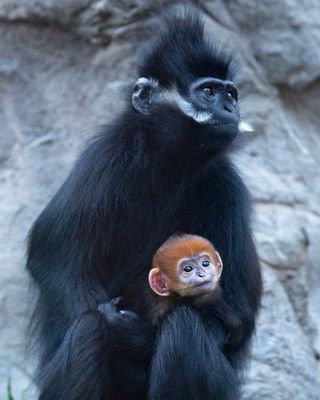
Can’t believe I just wrote about this “rarest of the rare” endangered monkey…

White-headed langur and baby

    and a baby (they’re born with orange heads) turns up as a good luck charm for the San Francisco Giants. Full story in the

LA Times

    .

No to gill nets

Posted on October 25, 2012

    Dramatic rescue off the southern California coast in March. A young California gray whale embarking on his first migration from Baja, Mexico to Alaska became tangled in a fishing net which dragged behind him collecting debris for a week. He was spotted at night then tagged with a buoy after obtaining permission from the National Marine Fisheries Service.

    The next day, rescuers spent seven arduous hours alternatively chasing the whale for miles and cutting through the net’s nylon filaments with knives, until he suddenly dove underwater. When he broke the surface, he was free.

    Rescuers say the whale came up to the boat afterward, seemingly to say “thank you.” What was left of the net contained a sea lion, a leopard shark, two angel sharks, various crabs, fish, and rays.

    The whale was lucky. The problem of bycatch is huge and solutions are desperately needed for the 300,000 marine mammals killed every year by fishing nets.

Ugh

Posted on October 24, 2012

Meghan Mogensen, director of a zoo in Reston, Maryland was recently convicted of animal cruelty and sentenced to 30 days in jail for drowning an injured wallaby named Parmesan in a plastic bucket.

Meghan Mogensen. (photo: Fairfax County Police)

    The zoo is owned by Mogensen’s father who owns several other zoos, which, according to media reports have also come under scrutiny.


    Source: Washington Post

News to me

Posted on October 24, 2012

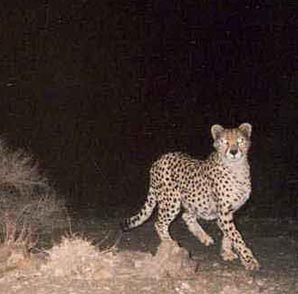
Cheetahs in Iran!

Asiatic Cheetah in the Bafgh Protected Area of Yazd Province in Iran.
(Photo: Wildlife Conservation Society)

    Once distributed from the Indian subcontinent across Afghanistan, Turkmenistan and Iran to the Arabian Peninsula and Syria, the Asiatic cheetah is now on the verge of extinction and one of the most endangered members of the cat family in the world.

    The population of cheetahs in Iran is thought to be about 50-60, restricted to the main desert areas around Dasht-e-Kavir.

    Before World War II, the cheetah numbered around 400, ranging in almost all of the steppes and desert areas of the east of the country and a few habitats near the Iraqi border. The war marked the widespread slaughter of their essential prey species, the gazelle, resulting in a devastating decline in the cheetah population.

    The last cheetahs in India were shot in 1947. Since then, the Asiatic cheetah has disappeared from most of its former range. In the last 20 years Iran has been the final stronghold for the Asiatic cheetah, known in Iran as yuz, although there have been occasional reports of cheetahs in Pakistan.

    In 1956, the gazelle was protected by law and the cheetah followed in 1959. The gazelle and cheetah population recovered in many areas. Cheetah sightings increased in different localities and by the late 1970s cheetah numbers were estimated to be 200-300.

    The 1979 revolution interrupted wildlife conservation for a few years, and many areas were occupied by armed 4WD vehicles and motorbikes that chased desert species, such as gazelles, onager and the cheetah. As gazelle populations declined, the cheetahs moved toward the foothills and mountainous habitats to find new food sources such as wild sheep and goats, and to avoid human predation.

    With their retreat they disappeared from much of their former range and were limited to a few remote areas with a reliable prey population and relative safety from humans

    Iranian Cheetah (Photo: Kavi)

    The Iranian Cheetah Society (ICS), an Iranian, non-profit NGO established in Aug 2001, works to save the last Iranian cheetahs. The society was founded by three young enthusiastic students of natural resources. With their five years experience in studying the cheetah before its official establishment, ICS has made remarkable progress in its activities to save the cheetah in Iran in the past two years. ICS is based in Tehran and has 300 members from all over the country.


    Source: wildlifeextra.com

Raincoats

Posted on October 24, 2012

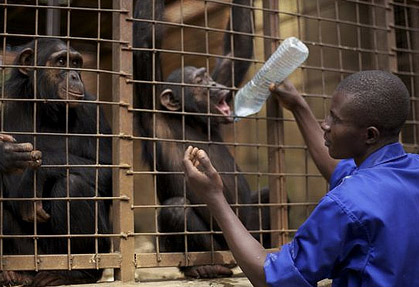
received, thanks to a generous donation. The staff at Centre de Rehabilitation des Primates de Lwiro (CRPL) in the Democratic Republic of Congo says “thank you.”

Centre de Rehabilitation des Primates de Lwiro

    Founded in 2003 with the arrival of its first orphan chimpanzee, CRPL has taken in over 50 chimpanzees and 60 monkeys representing over 10 different species. CRPL plays a vital role in caring for confiscated wildlife and in putting a stop to the illegal animal trade in DRC.


As the only chimpanzee and monkey sanctuary in the kivu region, the CRPL acts as a crucial resource for all conservation organizations working in the area.

    CRPL has experienced tremendous growth over the past several years. With this growth, the Centre has embarked on large scale infrastructure development and creative ways to accommodate the vast influx of animals.


    They could use your help. To donate go to their website.

Autopsies

Posted on October 22, 2012

A Review of Autopsy Reports on Chimpanzees in or from U.S. Laboratories, compiles data from 110 autopsies performed in the last 10 years on chimpanzees who died in or were from laboratories.

    The data show a full 64% of those chimpanzees suffered significant chronic illnesses and 69% had multi-organ diseases that should have rendered them too sick for research use. Yet, despite this knowledge on the part of the laboratories, many of these chimpanzees were held in labs for research despite their poor health and unsuitability for use.

    For more info go to ReleaseChimps.org