First Light Productions

investigative journalism

Posts from the “SANCTUARY” Category

Apex Predators

Posted on August 18, 2012

As Discovery’s Shark Week continues its 25th season, sharks worldwide are under threat of extinction. According to a report released this month by the Pew Environment Group, nearly one-third of shark species are endangered.
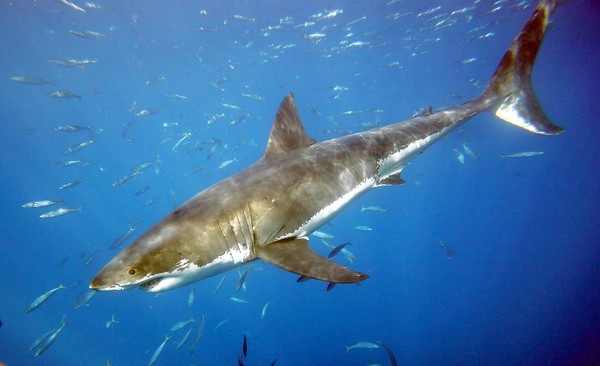
Great White shark (Oceana)

    Environmental groups in the U.S. recently petitioned the federal government to list the great white as endangered. Oceana, an international group focused on protecting the world’s oceans, estimates there are only about 340 mature great whites remaining in the northeast Pacific and perhaps less than 100 breeding females. Great white sharks can live about 30 years and reach a size of 6,600 pounds and a length of 20 feet.
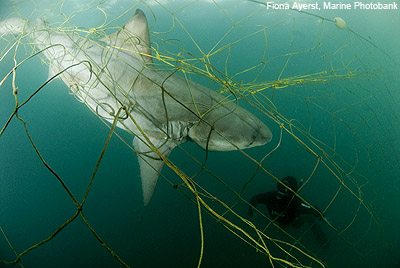
    Dead Zam and Freediver

    One of the main threats to the specie’s survival is bycatch of white shark pups off Southern California and across the border into Mexico, primarily in entangling gill net fisheries targeting halibut, yellowtail, swordfish, thresher sharks and white sea bass.

    Chemical pollution is another factor. Young great whites off that same coast have the second-highest mercury level on record for any sharks worldwide, six times higher than levels shown to cause physiological harm to other ocean fish. Studies in that area showed that the sharks liver tissue contained high levels of the contaminants PCB and DDT.

    There is also vast poaching going on globally to satisfy the lucrative market in shark fins considered a delicacy in Asian communities in soup. It is estimated that up to 73 million sharks are killed each year for their fins, many of those the most endangered shark species. Much of the finning happens at sea. Rather than filling up a boat with whole sharks, they are simply brought aboard, their fins cut off and, often still alive, dumped overboard.

    Photo: Marshall Islands law enforcement personnel on a longline fishing vessel sort through hundreds of kilograms of confiscated shark fins in the Marshall Islands territory’s waters. The Marshall Islands has begun fining vessels caught fishing for sharks since the introduction of a ban on trading shark fins across its vast waters late last year. (By Giff Johnson/AFP/Getty Images)

    Sharks play a crucial role in shaping the ecosystems they inhabit by affecting the numbers and behaviors of their prey species. As prey resources become more or less abundant, sharks switch between different types of prey, regulating these species’ populations, preventing middle-level specialists from becoming too prevalent and wiping out their often more specific prey/foraging material.

    Organisms that used to be held in check by sharks are threatening some of the base levels of the food chain in their environment, which also means they are badly hurting some of the few remaining and relatively sustainably regulated seafood industries left. On the East Coast, for instance, the diminishing number of sharks has led to a surge in skate populations to the point they are threatening the viability of some shellfish populations.
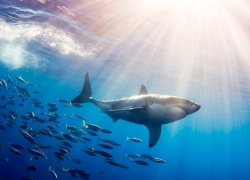
    Discovery Channel

As shark populations decrease the fish they eat grow in numbers, eating more, possibly too much, the result being a complete collapse of the food chain.

California Sea Otters control Urchin populations which, if left unchecked, can ravage kelp forests. Wolves are now understood to be so important in regulating herbivores like deer that they have been reintroduced into places like Yellowstone National Park (with a subsequent increase in community diversity). When wolves were exterminated from Yellowstone in the early 1900s, the numbers of deer and elk increased substantially. They, in turn, denuded the forest of younger trees and saplings, which led to a lack of habitat for songbirds, leading to a boom-and-bust cycle of starvation for the overpopulation of deer and elk. This led to a lack of raw materials (young trees) for beavers, which adversely affected the fish that were dependent on beaver dams to create ponds. The lack of fish went on to hurt other predators that were dependent on fish as a food source. When wolves were reintroduced, this cycle reversed.

Sharks, like chimpanzees, are known as a “keystone species,” which helps regulate the health and function of the entire ecosystem.

Proposals are being presented through the United Nations to encourage the establishment of shark sanctuaries around the world.

Spotted Beast

Posted on August 18, 2012

The U.S. Fish and Wildlife Service has formally proposed to protect 838,232 acres as “critical habitat” for endangered jaguars in southern Arizona and New Mexico — an area larger than the state of Rhode Island.
 
When finalized in the next year, and joined with a developing federal recovery plan, the decision will ensure jaguars return to the wild mountains and deserts of the American Southwest.


The agency listed the jaguar as an endangered species in 1997 following a lawsuit by the Center for Biological Diversity that ended protection delays stretching back to 1978, but refused to protect the jaguar’s habitat or develop a recovery plan! Instead it declared that jaguars should not be recovered in the United States — despite the fact that the beautiful cats historically ranged all the way from Monterey Bay, Calif., to Louisiana and north to the Grand Canyon and Colorado.
 
Refusing to allow federal bureaucrats — for the first time in U.S. history — to consign an endangered species to extinction in the United States, the Center went back to court. In 2009 they won their case: The Fish and Wildlife Service was ordered to protect the jaguar’s habitat and create a plan to fully restore the species.


Like wolves and grizzly bears, jaguars were killed en masse by federal trappers and sharpshooters paid to make the West safe for public-land ranching. By the 1950s jaguars were virtually extinct, but in recent years began to show the first signs of recolonizing Arizona and New Mexico. Individual animals from a Mexican population have been exploring the borderlands of the two states recently. Macho B, the last jaguar to be seen, was killed in a botched capture in 2009 — the very year the Center won a court order requiring the species’ protection and recovery.

From a Center for Biological Diversity news release August 17, 2012.

Jaguar (FlickrCommons-EricKilby)

Tony

Posted on August 15, 2012

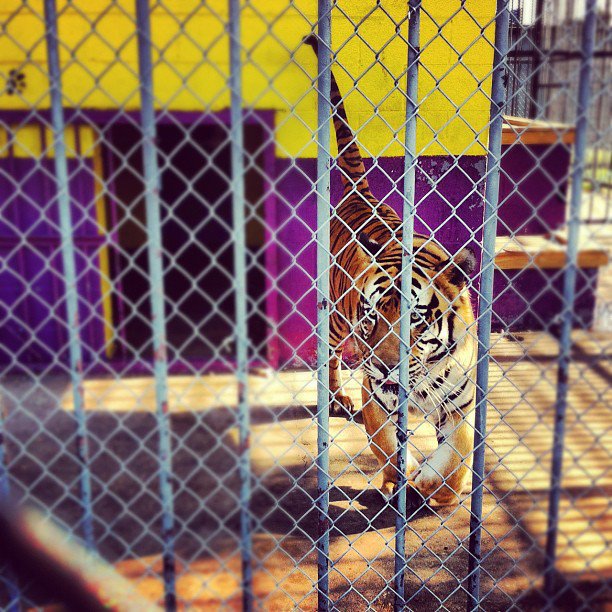
Fayetteville, N.C.: Despite the fact that the permit issued to Michael Sandlin, owner of Grosse Tete’s Tiger Truck Stop, to exhibit Tony the “truck stop tiger” expired last December, he has continued to keep Tony on public display, in open violation of state law.

Tony the Truck Stop TIger (photo: S. Zaunbrecher)

The Animal Legal Defense Fund and other interveners seeking to defend the state’s law banning private ownership of big cats were buoyed recently when a District Judge agreed that the ALDF and two Louisiana residents can be parties to the lawsuit filed by Sandlin, against the Louisiana Department of Wildlife and Fisheries. ALDF can now participate in all steps of the litigation as it moves forward to force the Department of Wildlife and Fisheries to do its job of enforcing Louisiana’s big cat ban. “The Sad Tale of Tony the “Truck Stop Tiger” By Jeffrey Flocken, 5/14/2012: Laws that govern the private ownership of big cats vary widely from one state to another but they do have one thing in common—they’re not enough to protect big cats in private hands. Some 10,000 to 20,000 big cats are kept captive by private owners in the U.S., and they aren’t in zoos but in backyards, basements, garages, sheds and even truck stops. Tony, a 10 year old tiger, has been kept every single day of his life at the Tiger Truck Stop in Grosse Tete, Louisiana. Living at a truck stop is no life for a tiger; Tony is subjected to noise and diesel fumes from trucks and kept in a concrete cage with no adequate enrichment or escape from the elements, resulting in constant stress. Ten years of living at Tiger Truck Stop have taken a toll on Tony’s health, according to experts. The good news is that Tony’s permit expired in December of 2011 and hasn’t been renewed. The bad news is Tony is still being kept at the truck stop in violation of Louisiana law because the judge ruled that the Department has discretion whether or not to enforce Louisiana’s law on big cats. Tony’s owner sued the State of Louisiana claiming that the law against private ownership of big cats was unconstitutional. There is no reason that Tony or big cats like him should be left to suffer in such conditions due to squabbles over state laws and poor enforcement. Tony should be roaming the Savannah not cooped up in an iron cage with a concrete floor enveloped in diesel fumes. A nationwide solution like the Federal Big Cats and Public Safety Protection Act, H.R. 4122, is needed. Please urge your U.S. Representative to support the passage of H.R. 4122 and protect tigers like Tony!

Sumatran Rhinos — winking out

Posted on August 15, 2012

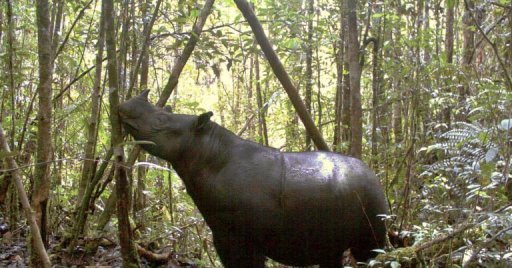
INDONESIA. There are believed to be fewer than 200 Sumatran rhinos left in the entire world. To the delight of conservationists, seven were recently spotted on hidden camera in Indonesia’s Mount Leuser National Park. The Sumatran rhino population has dropped 50 percent over the past 20 years and conservationists feared the critically endangered species had completely disappeared from the region.

The Sumatran rhinoceros had not been seen in the park on the northern tip of Sumatra in 26 years. This photograph taken in 2011 and released by the Leuser International Foundation shows a Sumatran rhino on Indonesia’s Sumatran island.

The leader of the Leuser International Foundation, a conservation group working at the park said, “This discovery can allay doubts over the rhino’s presence in the park,” adding he hoped the discovery would encourage more efforts to conserve the species.

Images of the rhinos were captured by 28 infrared cameras set up between June 2011 and April this year and confirmed six female and one male rhino appearing in 1,000 photo frames.

The rhinos are commonly targeted by poachers, and rampant illegal logging has destroyed much of their habitat.

OR-7

Posted on August 15, 2012

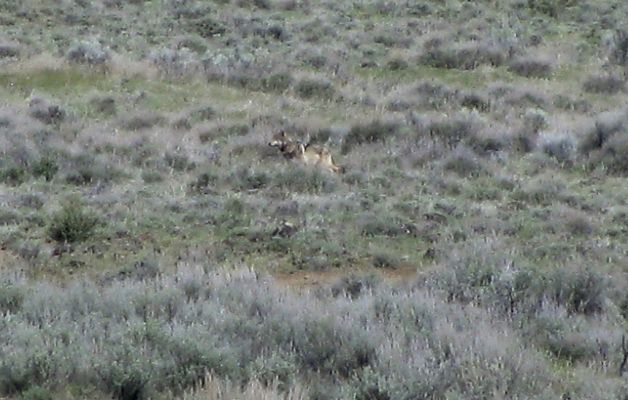
OR-7, a young male wolf from Oregon that has won worldwide fame while trekking across mountains, deserts and highways, was recently photographed for the first time. A federal trapper, a state game warden and a state wildlife biologist were visiting ranchers on private land in Modoc County, the sparsely settled northeastern corner of Northern California to notify them that GPS signals showed the gray wolf was in the area, when they stopped to look over a sagebrush hillside with binoculars and spotted him hanging out with three coyotes. California wildlife biologist Richard Shinn snapped a photo, the first shot of the animal in color.

OR-7 left the Imnaha pack in northeastern Oregon in September, shortly before the state put a death warrant on his father and a sibling for killing cattle. He is a descendant of wolves introduced into the Northern Rockies in the 1990s, and represents the westernmost expansion of a regional population that now tops 1,650.
His travels took him down the Cascade Range into California in December, making him the first wolf in California in more than 80 years. He has since gone back to Oregon and returned to California.

(California Dept. of Fish and Game)

OR-7’s brother was illegally shot in Idaho.

Biologists know he has fed on the carcasses of deer, dug up the burrows of ground squirrels, and fed from livestock carcasses left out by a rancher. As of yet, there are no reports he has killed any livestock.

State biologists have been keeping close tabs on him with the help of his GPS collar and keeping ranchers up to date on his general whereabouts as the wolf, is a federally endangered species and they want to prevent him being mistaken for a coyote and killed.

OR-7 is at high risk of suffering the same fate as his brother. Many ranchers and hunters would like nothing better than to shoot a wolf. Late word out of Montana illustrates how the reintroduction of wolves, of which OR-7 is a highly publicized part, might play out in the Pacific Northwest.

BEN NEARY (AP), August 14, 2012. CHEYENNE, Wyo. — The federal government plans to announce an end to protections for wolves in Wyoming later this month. Rather than ending years of wrangling between state and federal officials, however, the move promises to spark legal challenges from environmental groups outraged that the state plans to classify wolves as predators that can be shot on sight in most areas.

Ranchers and hunters started complaining that wolves were taking an unacceptable toll on cattle and wildlife soon after the federal government reintroduced the species to Yellowstone National Park in the mid-1990s.
The federal government’s final delisting plan calls for Wyoming to maintain at least 10 breeding pairs of wolves and at least 100 individual animals outside of Yellowstone and the Wind River Indian Reservation in central Wyoming. The state intends to classify wolves in the remaining 90 percent of Wyoming as predators, subject to being killed anytime by anyone.

The state would take over wolf management responsibility 30 days after the scheduled Aug. 31 publication of the federal government’s final delisting rule. The state is prepared to issue unlimited hunting licenses but will call a halt after hunters kill 52 wolves.

The federal delisting of wolves in Idaho and Montana in recent years included action by Congress specifying that the move wasn’t subject to legal challenges. Although Wyoming’s congressional delegation has said it wants similar immunity for delisting in Wyoming, it hasn’t happened.

Beagle Liberation

Posted on August 15, 2012

At least 30 beagle puppies were recently rescued by animal rights activists from a notoriously inhumane breeding facility in Italy.

Green Hill 2001 farms the animals out to vivisection labs, where the dogs are subjected to live experimental research and then death. Members of the Animal Liberation Front of Italy climbed over barbed wire fences on the grounds of Green Hill, then managed to squirrel the animals out through a breach in the fencing. Twelve activists were arrested in the liberation.

Beagles are the most popular dog used in biomedical research. According to the book, The Beagle as an Experimental Dog, “The most desirable qualities of the Beagle…are its medium size, moderate length of hair coat…even temperament, adaptability to living in groups, (and) conformation.” In short, beagles are docile individuals and they are convenient because they are small, allowing for more animals to be housed and cared for using less space and money. And because they have been utilized for so long, beagles are considered to be the best characterized ‘canine models’ in scientific literature, thus perpetuating their use.

Ironically, discoveries of what was happening to beagles in laboratories in the late 1950s and early 1960s led to enactment of the first laws designed to protect animals in labs.

In 1959 a nationally syndicated newspaper report revealed that beagles in a laboratory in downtown Washington D.C. within eyesight of the Capitol, were being harshly abused in a study to test food dyes. The exposé landed like a bombshell on legislators’ desks: “Hundreds of dogs flung themselves against the bars of their cages, piled tier on tier. They were barking, screaming, whining, mute—and drooped their heads in the dark corners. Others circled ceaselessly in their cages.” Shamed, Congress quickly appropriated $100,000 for new animal quarters at the lab.

The incident prompted introduction of the first major bill in the U.S. Senate aimed at protecting laboratory animals. Predictably, it was shot down as the biomedical lobby pounded home the message that such “paralyzing legislation” would hinder the search for medical advances that could save untold lives.

About this same time, the Veterans Administration together with the American Cancer Society used over a hundred beagles to study the effects of cigarette smoking by cutting “breathing holes” in the dogs’ windpipes and inserting tubes into the holes with cigarettes at the other end. Some dogs were made to “smoke” for as long as a year and a half. The dogs were then killed and autopsied to determine the effects of the smoke.

When knowledge of the tests became public, a VA spokesman defended the study on the grounds that “it would take 20 years with a human being to determine if a filter cigarette is safe and only 18 months with a dog.” (A statement imbued with some irony considering tobacco companies would fight like Spartans for another twenty years to hinder release of information about the deadly effects of cigarette smoke on humans.) Advertising and letter-writing campaigns by animal welfare groups protested the experiment as “cruel and immoral,” but the study continued.