First Light Productions
investigative journalism
Posts by Michael Elton McLeod


…Two of the top environmental groups have sent out action alerts challenging anti-wildlife policies today. First, from the NRDC…
A little-known government agency called Wildlife Services is killing thousands of wild animals every year — and you and I are picking up the tab.
We need your help to end the taxpayer-funded slaughter of wildlife!
This out-of-control agency is part of the Department of Agriculture. It kills at the behest of big ranchers and agribusiness. It spends tens of millions of our tax dollars to “resolve conflicts” with wildlife — by using poisons, traps, aerial gunning and other brutal methods.
The result? More than 100,000 native carnivores — such as wolves, bobcats, foxes and black bears — are being wiped out every year.
The tragic toll since 2000 is two million dead, and that number grows larger every day.
More than 50,000 of those animals were killed accidentally. The victims…
View original post 361 more words
I posted this unforgettable photo “Dorothy” last November with a comment about the chimps’ reactions from the photographer Monica Szczupider.

Small world, I recently attended a reading by author Sheri Speede who has just published the book Kindred Beings, an account of how she started the Sanaga-Yong Chimpanzee Rescue Center in Cameroon for IDA Africa. Speede, it turns out, is the woman in the photo with Dorothy.
She begins the book with her account of the events surrounding that photograph:
On September 24, 2008, beloved elder chimpanzee Dorothy lay down on the grass at the edge of the forest in a somewhat obscure African sanctuary and died. About five decades earlier, when Dorothy was an infant, poachers supplying the illegal ape meat trade killed her mother and took her captive. She spent most of her sad life chained by her neck as a hotel tourist attraction, but she died among friends who loved her at Sanaga-Yong Chimpanzee Rescue Center in Cameroon’s Mbargue Forest.
The morning after Dorothy’s death we conducted a small funeral service for volunteers, our African staff, and people from the village community who came to pay their respects. Afterward, Dorothy’s longtime caregiver, Assou Francois, pushed her body in a creaky wheelbarrow toward her gravesite, which had been prepared beside the twenty-acre forested enclosure where she had lived. With a small procession of staff and volunteers, I followed behind. As we neared the enclosure, the twenty-five chimpanzees who had lived with Dorothy heard the wheelbarrow and came out of the forest. As they lined up at the fence line, straining to see her body, I instructed Assou to pull the wheelbarrow close to the fence and stop. As I caressed Dorothy’s head, and the chimpanzees she loved best gazed at her a final time in silent grief, volunteer Monica Szczupider snapped a photo.
After we buried Dorothy, I saw Monica’s picture and hardly gave it a second thought, but this snapshot of emotion soon would be seen around the world. After Monica won a National Geographic photo contest and the magazine published the funeral photo in a glossy double-page spread, numerous other magazines and newspapers also published it. Several journalists interviewed me about it. Invariably, they asked me if I had been surprised by the chimpanzees’ reactions to Dorothy’s death.
No, I wasn’t surprised in the slightest,” I always answered honestly.
After working closely with chimpanzees for years, I took for granted their capacity for a broad range of deep emotions. I had always been deeply sympathetic to the suffering of animals; their particular vulnerability and innocence awakened the compassionate defender in me, enough so that I had dedicated my career to it even before coming to Africa. But my direct experience with captive adult chimpanzees was something different. They were so much more similar to me than either of us was to any other animal. In these chimpanzees I recognized another kind of people, like me in many way, unlike me in others.
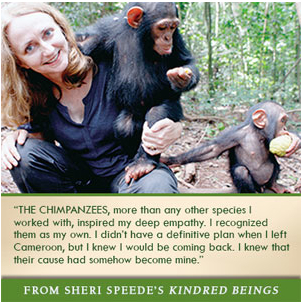
Because I knew Dorothy and for years had observed her role in her chimpanzee society, I wasn’t surprised by the chimpanzees’ grief over her death. The human reaction to Monica’s photo was a different matter; it did surprise me. Although we share more than 98 percent of our DNA with chimpanzees, and this genetic similarity had become common knowledge, often cited by popular media. I knew that few human people could really comprehend the intelligence and emotional complexity of chimpanzees any more than I had understood it before I worked with them. That this photo showing a simple expression of grief drew such intense interest around world told me that many of my kind might have opened their hearts to a real understanding that among us animals there is an evolutionary continuum.
The book is a compelling read. Pick it up. And support IDA.
Mirroring the reports of turtle deaths on Mexico’s Baja California Peninsula we reported yesterday, further down the Pacific Coast in Guatemala, the Wildlife Rescue and Conservation Association (ARCAS) recently reported the stranding of eighty dead sea turtles on the black volcanic sand beaches of La Barrona, Las Lisas, Chapeton and Hawaii.

Doctors Alfaro and Perez of Protortugas initiating a necropsy. (Photo: Wildlife Rescue and Conservation Association)
-
Among the stranded turtles were leatherbacks (Dermochelys coriacea) which are listed as Critically Endangered by the IUCN Red List, and the olive ridley (Lepidochelys olivacea) which is listed as Vulnerable. The entire Guatemalan coast has historically been a significant nesting area for both species.
The turtles forage in the estuaries and mangrove waterways along the 250 kilometers of the country’s Pacific coast which is divided by 14 river mouths and peppered with mangrove wetlands and lagoons.
As in Mexico, one of the main threats to sea turtles here is fisheries by-catch. Researchers report that the appearance of shrimp trawlers always coincides with the appearance of dead turtles on the beaches.
Guatemala is currently working on instituting a ban on bottom trawling, such as has been done in Belize, Costa Rica, Ecuador and El Salvador, where trawlers must stay at least 3 miles from shore.
Guatemalan trawlers are required to use turtle excluder devices but enforcement is difficult and fines are very light
Source: Mongabay
Mexico appears to be doing little or nothing to enforce changes in its Gulf of Ulloa fishery to protect the loggerhead sea turtles that migrate from their nesting grounds in Japan across the Pacific Ocean to the Baja California Peninsula.

LoggerheadSeaTurtle. (Photo: DamienDuToit/WikiCommons)
-
The loggerheads stay in Baja for decades as they grow and mature, feeding primarily on red crabs. In the last few years the crabs have become a huge fishery and thousands of gillnets are now stretched across Baja’s Pacific coastal waters; “walls of death” that are snaring and drowning vast numbers of turtles.
Mexican government officials last week reported that so far this year 705 loggerheads have stranded dead along a 30-mile shoreline in Baja California’s Gulf of Ulloa. Last year, scientists estimate over 2,000 loggerheads were killed there in gillnets. Last summer in the Gulf saw a 600% increase in turtle deaths. Needless to say, the enormous bycatch is jeopardizing the turtles’ survival.
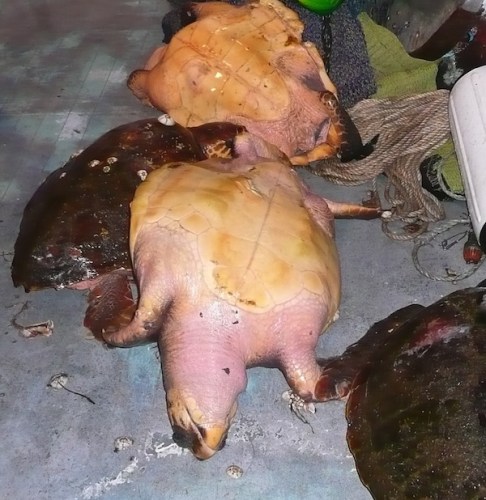
Dead sea turtles bycatch on-board a Baja gillnet vessel.
- Nets have been developed that can solve the bycatch problem but Mexico has shown an unwillingness to act to insure that the fishery utilizes these measures.
-
Rather than embrace a solution, the Mexican government has chosen to appease the fishing industry by ignoring and misrepresenting the findings of its own scientists who have pointed to bycatch as the leading cause of the deaths.
Conservation groups are proposing that the United States consider a ban on the import of fish and other wildlife products from Mexico under trade agreements that authorize sanctions against countries that allow excessive bycatch of U.S.-protected species, like loggerhead sea turtles.
Shout out: Center for Biological Diversity.
July 31st was World Ranger Day in honor of the men and women around the world who risk their lives to protect the planet’s endangered plants and animals.
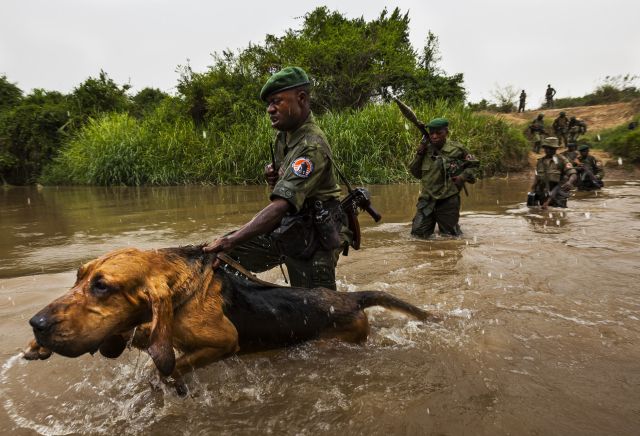
Rangers from Virunga National Park’s canine unit in search of elephant poachers. (Photo: Virunga Nat Park)
Source: Virunga National Park, DR Congo.
Wildlife across North Central Asia
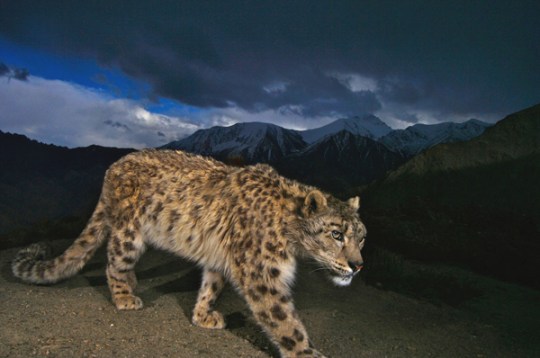
Snow leopard. (Photo: Panthera)
is being driven to the margins of survival by huge increases in the numbers of cashmere goats being set loose on wild grazing lands.
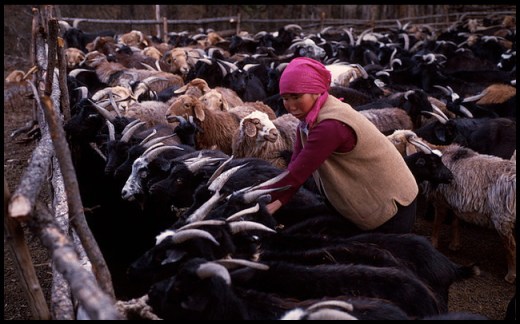
Cashmere goats in Mongolia. (Photo: Juho Korhonen / CC BY-NC-ND 2.0)
The goat herds — a dramatic three-fold increase over the last two decades – are eating up the grass that previously supported antelopes, wild asses, yaks, camels, and other native wildlife. Loss of these prey species in turn affects the survival of predators, such as snow leopards, Asiatic leopards, bears and wolves living on the brink of extinction.
A study
published in the journal Conservation Biology, shows that 95% of all the forage across the Tibetan plateau, Mongolia and northern India was consumed by goats, sheep and other livestock, leaving just 5% for wild animals. The study concludes that expansion of the goat herds is most likely causing the decline of eight core species.
Zero sum game
Pressed for food the big cats and wolves attack livestock and are killed in retaliation by herders or their dogs. With the increase in domestic animals also comes disease to which the wild species are extremely vulnerable.

Mixed herd of Pashmina, other goats and sheep in predator-proof corral, implemented through Snow Leopard Conservancy program in Ladakh, India. (Photo: Chinch Gryniewicz)
A solution
may lie in creating a sustainable market for cashmere. Giving rewards to goat herders who protect wildlife. Livestock farmers might be compensated for vaccinating their animals to limit the spread of disease, and for housing goats in protective enclosures. Cashmere sourced from these farmers could then be marketed as eco-friendly; a tactic that worked for the “dolphin safe” tuna fishery.
In Mongolia alone, numbers of domestic goats have grown from 5 million in 1990 to almost 14 million in 2010. Ninety percent of the world’s cashmere comes from China and Mongolia.
Emily the cow was on her way to a slaughterhouse in the winter of 1995, when she decided she would rather be free. In a daring escape she leaped over a five-foot fence and disappeared into the woods.

Emily.
- The three-year-old, 1,600-pound Holstein heifer evaded capture for 40 days and 40 nights, foraging for food in the woods around the town and hobnobbing with a herd of deer. As she cleverly evaded capture, townspeople took up her cause, leaving her hay and shielding her from a return to the slaughterhouse.
Inspired by Emily’s spirit, animal lovers Meg and Lewis Randa coaxed her into a trailer with a bucket of feed, bought her from the slaughterhouse and retired her to a life as a charismatic spokescow, espousing a meat-free diet for humans at The Life Experience School at The Peace Abbey in Sherborn, Massachusetts.
Her huge eyes and friendly disposition inspired all who met her. People traveled to Sherborn and pledged in her presence to stop eating meat. She was the bovine-of-honor at several human weddings in the Abbey barn.
Emily’s story was featured on national television and in countless newspaper and magazine articles—People magazine called her a “bovine pimpernel…sought everywhere but never captured.” She inspired a children’s book. 
Emily was buried in 2005. A statue inscribed as the “Sacred Cow Animal Rights Memorial,” was dedicated in her honor on Earth Day.
The Peace Abbey is closed, but her statue can be seen from the public road.
-
Peace Abbey
Address:
2 N. Main St., Sherborn, MA
Directions:
In town, just north of the only stop sign on Hwy 27. Watch for the Gandhi statue and Peace Abbey driveway.
If you are in the area, it’s worth a detour.
In an eleven hour operation carried out in the dark of the night, a team of about 20 officers from the Forest Department, Police and Wildlife SOS/India, rescued an 18 year old ailing elephant named Lakshmi, from a property where she had been concealed by her owners in an attempt to evade law enforcement agencies.

Safe.
-
The operation involved walking the elephant to a safe location 5 kms distant from where she had been held, to a point where she could be easily loaded onto a truck. Lakshmi was unable to get on the truck herself due to her health problems, so Wildlife SOS rented a hydraulic crane to lift her onto the truck bed.
She was given a light sedative to keep her calm during the rescue.
Her owners had used Lakshmi for street begging in violation of the law. They paid no attention to her health and she has become extremely obese and is suffering severe joint pains making her prone to acute arthritis and other ailments. Her companion, Bijlee, owned by the same people could not be rescued in time and died a month ago in pain, due to severe neglect.
Lakshmi has been relocated to the Wildlife SOS Elephant Rescue Center in Mathura.
Source: Wildlife SOS/India. Wildlife SOS is a registered Non Profit Charity in India, USA and UK.
from a lack of sea ice on which to hunt seals.

Polar Bear starved to death due to climate change, Svalbard, Norway. (Photo: Ashley Cooper/Global Warming Images)
The assessment of Dr Ian Stirling, with the Canadian Wildlife Service who has studied polar bears for almost 40 years.
Source: Damian Carrington.


Saving the rhino in Africa, from China and Vietnam is a familiar scenario. But another disturbing piece of the equation lies within the US. American hunters have long been drawn to the thrill of “big game”, hunting down rhino, elephant and lion in Africa.
Recently the US Fish and Wildlife Services set a new precedent, giving permission to a hunter to bring back his rhino kill from Africa. This has not been allowed for 30 years. Opening the door to wealthy Americans to slaughter endangered species in the wild for trophies is a dangerous trend to start.
Of course it takes two to tango. Shame on the Namibian government for allowing the hunt, and shame on US Fish and Wildlife for encouraging the hunter with incentive to keep the trophy.
According to Fish and Wildlife, “The Service cannot and will not allow the importation of sport-hunted trophies of species protected…
View original post 321 more words
The 4th China Companion Animal Symposium held in Changsha, in Hunan Province earlier this month, where animal welfare organizations came together to find ways to curtain the dog and cat meat industry, coincided with the annual Yulin summer solstice dog-eating festival in Guangxi, Yulin province.
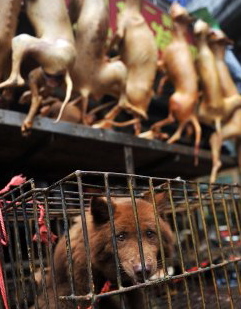
Dogs, Yulin City, China (Photo: Imaginechina)
Every year in Asia an estimated 5 million dogs are slaughtered for human consumption. The number of cats consumed yearly in China is estimated at 4 million.
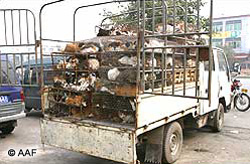
Truckload of cats, China. (Photo: Animals Asia)
The practice of cat eating in China has historically been largely confined to Guangdong Province where cat meat is part of a famous traditional dish called “Tiger.”
Dog meat production has evolved from small-scale household businesses to a multi-million dollar industry of illicit dog traders. The World Health Organization recently cited the dog meat trade as a contributing factor in recent outbreaks of trichinellosis, rabies in Indonesia and cholera in Vietnam.
The problem is illustrated by recent news out of the Qijiang District of Chongqing in China, where activists stopped a truck carrying 900 dogs to slaughter. The dogs were a wide array of pedigree and mixed breeds, many still had tags or collars, meaning they were likely stolen from their homes. They are believed to have been on route to Zhanjiang in Guangdong province to be slaughtered.

Truck load of dogs stopped by activists in China. (Photo: Animals Asia)
In Vietnam dogs are an essential part of cuisine marking the end of the lunar month for traditionalists, and a heavy trade in canines has developed there supplying dogs from Thailand, Cambodia and Laos.
Whereas dogs used to be eaten for reasons of poverty, increasingly dog meat has become a delicacy, and often consumed for its perceived medicinal properties.
Source: Animals Asia.
With release of the new documentary Blackfish it seems like a good time to revisit a piece posted here last fall depicting the inhuman practice of imprisoning orcas for exhibition.
Life as Lolita knew it ended 40 years ago.

Penn Cove capture 1970
- In the waters off Washington State in the summer of 1970, hunters using speedboats and explosives herded more than 60 orcas from Puget Sound’s J, K and L pods into a three-acre net pen in Penn Cove off Whidbey Island. They lassoed adolescents ranging in age from 2 to 7 and separated them from their mothers. Local residents reported the air was thick with the sound of screaming whales thrashing in the tangled nets and fluke slaps which could be heard across the inlet. One mother orca drowned desperately trying to reach her infant through the twisted nets. Her body was later discovered by reporters.

Four youngsters also died in the assault. Their deaths were kept from the public. At night their bodies were weighted and hauled out to sea and sunk.
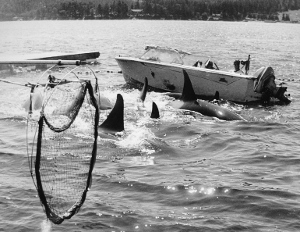
Seven of the surviving youngsters were hoisted onto boats, towed to a dock and put on flatbed trucks. The call went out to aquariums around the world proclaiming there were whales for sale in Puget Sound. It was the largest whale capture in history.
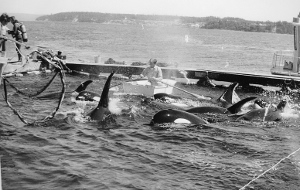

- Two of the orcas went to Japan, one each to Texas, Australia, The UK, and France, and one 6-year-old female from L pod, wound up at Miami Seaquarium in Florida, where she became Lolita, the Killer whale.
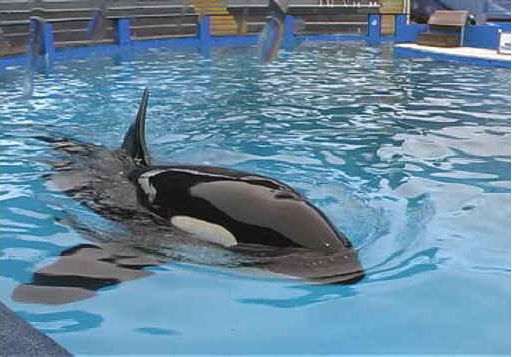
When not performing, Lolita is confined to a tank barely larger than she is. (Photo: Slaveforentertainment.com)
When Lolita is not performing she is left to swim in her tank by herself. The tank is not a reasonable habitat for a whale. She is 22 feet long and weighs about 8,000 pounds. From the front wall of her pool to the concrete barrier that spans the middle of the pool is only 35 feet. At its deepest the pool is just 20 feet. Orcas in the wild swim an average of 80 miles a day.
Killer whales are highly intelligent and social beings that have close bonds with pod members. Years ago another whale was briefly housed with her but died in the tank. Lolita has been without a companion since 1980.
Cetacean lovers for decades campaigned for her release, and often protested outside the Miami Seaquarium. In the 1990s, Washington Gov. Mike Lowry demanded that the marine park return the whale to Puget Sound.
In 2005, Puget Sound orcas were listed under the Endangered Species Act (ESA), but the National Marine Fisheries Service exempted orcas currently in captivity from the listing.
A lawsuit was filed in December, 2011, in U.S. District Court in Seattle seeking to force Lolita’s release under the Act.
Whale activists contend that keeping a highly social animal like an orca in a tank should be viewed as harassment, and the ESA makes it illegal to “harass, harm, pursue, shoot, wound, kill, trap, capture, or collect” an animal under its protection.
Lolita has been in her tank for 40 years. Surely it is time for her–and Tilikum and the 44 other orcas in captivity–to be retired.
An op ed today in the New York Times talks about America’s “inconsistent, hypocritical” attitude toward animal rights.
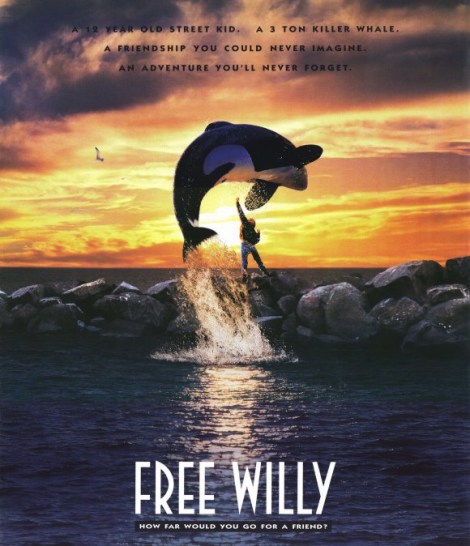
“We disagree about where to draw the line to protect animal rights, but almost everyone now agrees that there is a line to be drawn.”
— Nicholas Kristof
-
“In many cases, we simply cannot know what consciousness is like for, say, an orca or a pig. We can hazard guesses from comparing their brains with ours – but, in my view, the captivity and use of any intelligent animal for entertainment will one day be seen as barbaric. It is a violation of the animals’ dignity. While that may not ascend quite to the level of human dignity, it demands that we cease treating our fellow inhabitants of earth as captive slaves. With the dominion humans have over the natural world comes great responsibility. And right now, we humans are behaving with criminal recklessness toward the planet that gave us life.
–Andrew Sullivan

SourceNIH Record
From New Vantage
Ex-Director Zerhouni Surveys Value of NIH Research
By Rich McManus
 | ||
On the front page…
Nearly 5 years removed from his NIH directorship, Dr. Elias Zerhouni returned to campus June 4 to offer his views about how to value NIH research economically in an era of flat federal research budgets. His remarks at the end of a day-long meeting on that topic, conducted by the scientific review management board (SMRB), included vintage observations from the veteran of academia (Johns Hopkins), government (he was NIH director from 2002 to 2008) and industry (he is president of global research and development at French pharmaceutical firm Sanofi). For example, his comment that “it’s not very smart to go to the grocery store in an F-16 [fighter jet] when you can go on… |

View original post 1,137 more words
Pepper was in her forties when she passed away last year at Fauna Sanctuary in Canada. She is one of the many research chimps I’m writing about in my upcoming book SANCTUARY.
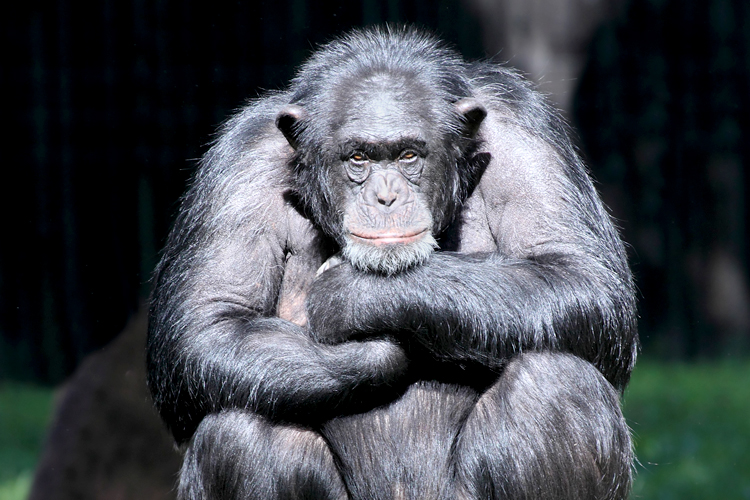
(Photo: Kletr via Shutterstock)
-
Pepper spent 27 years in various laboratories. The last was the Laboratory for Experimental Medicine and Surgery in Primates in New York. Until it was disbanded in 1997, LEMSIP supplied scientists with primates and primate parts for transplantation and virus research. In its heyday the lab held over 300 chimps and hundreds of monkeys. For fourteen years at LEMSIP Pepper lived in a 5 x 7 x 5-foot cage suspended above the ground with a number tattooed on her chest.
She was used in hepatitis studies and underwent 36 procedures to cut out pieces of her liver for examination. She was repeatedly infected with HIV as were hundreds of other chimps around the country until scientists finally admitted that chimpanzees are extremely poor models for AIDS research (they test positive for AIDS once infected but virtually never evidence symptoms).
Pepper’s last years at Fauna were a final respite for all the years of confinement and torture. Hundreds of apes like her remain in laboratories around the country suffering the same brutal treatment. Simply for being born a chimpanzee.
Colin Mcadam writes about Pepper here.
Taiwan’s National Museum of Marine Biology and Aquarium ‘released’ a whale shark into the wild that it had held in captivity for 8 years.

Whale shark stranded twice shortly after it was abandoned into the sea. (Photo: Environment and Animal Society of Taiwan)
- The animal had been kept in a tank so small it was forced to spend those years swimming slowly in one direction. The long and brutal confinement in such close quarters had resulted in severe and permanent damage to the animal’s tail .
- It was released into the sea close to the shore where it continued to swim in a similar pattern. Obviously confused it stranded twice on the shore.
- The coast guard, local fishermen and conservation workers managed to re-float it but it became badly injured in the process.
The giant fish was last seen being towed out to sea by a boat. It was not tagged to enable scientists to track the animal in an effort to help it survive.
- Video of the rescue effort here
- .
Source: Wildlife Extra.
 First Light Productions