First Light Productions

investigative journalism

Posts by Michael Elton McLeod

MORE WOLVES IN CROSSHAIRS

Posted on April 17, 2013

Just as the wolf population in Oregon was beginning to recover, ranchers in the remote eastern part of the state are supporting new legislation that would allow them to shoot wolves on sight.

Gray wolf pup from northeast Oregon’s Wenaha pack sniffs snow in western Wallowa County. (Photo: Oregon Department of FIsh and Wildlife)

    Under the proposed legislation–House Bill 3452–ranchers would be allowed to kill gray wolves without a permit if they “are reasonably believed by the person to have attacked or harassed livestock or working dogs.” Current law says the wolves have to be caught in the act and that a permit is needed.

    According to a representative from the wolf committee of the Oregon Cattlemen’s Association, ranchers have been “powerless” to stop the wolves predation as it’s impossible to catch them “in the act” of killing livestock.

    Rob Klavins, speaking for the environmental group Oregon Wild said, “This goes far beyond what the wolf plan called for.” He said the language in the bill “could allow poaching to go unpunished.”

    When the Chairman of the House Agriculture and Natural Resources Committee asked a panel of ranching advocates if any of them thought the “bill could allow or encourage poaching?” they said it wouldn’t.

    Two years ago, Oregon Wild won a temporary injunction on most wolf killing in the state after filing a lawsuit challenging how a wolf plan plan enacted in 2005 which set recovery numbers lower than environmental groups wanted, but a higher bar than ranchers wanted when they could legally kill a wolf, was being carried out.

    Ranchers and conservationists have been fighting over wolves in Oregon for decades. Sponsored by two Umatilla County Republican legislators, the bill is expected to get a lot of attention.

    As reported in the Oregonian, “the proposal to ease restrictions appears to have momentum.”


    Source: Oregonian

SUSTAINABLE..?

Posted on April 15, 2013

The Marine Stewardship Council (MSC), which administers a well known eco-labeling process to inform consumers which fisheries are sustainable, is becoming increasingly industry-friendly.

Swordfish (Xiphias gladius) on deck during long-lining operations. (Photo: Derke Snodgrass, NOAA/NMFS/SEFSC/SFD)

A study just published by a group of researchers in the journal Biological Conservation found that several of the fisheries that received the MSC’s “sustainable” label — accounting for 35 percent of labeled seafood worldwide—do not meet the council’s standards.

Case in point: the sustainable label awarded to Canada’s longline swordfishery which has an extraordinarily high bycatch of other species. As the researchers noted, “for the 20,000 swordfish “sustainably” hooked in Canadian waters yearly, longliners also catch 100,000 sharks, 1,200 endangered loggerhead turtles, and 170 leatherback turtles.”

As the report’s lead author, Claire Christian, director of the Secretariat of the Antarctic and Southern Ocean Coalition, observed “When the MSC labels a swordfish fishery that catches more sharks than swordfish ‘sustainable,’ it’s time to re-evaluate its standards.”


The UK based Marine Stewardship Council was founded by the World Wildlife Fund, one of the world’s biggest environmental groups, and Unilever, one of the world’s biggest seafood processors.


Source: Blue Marble.

SAVE THE TRIPA FOREST

Posted on April 15, 2013

Banda Aceh, Sumatra.

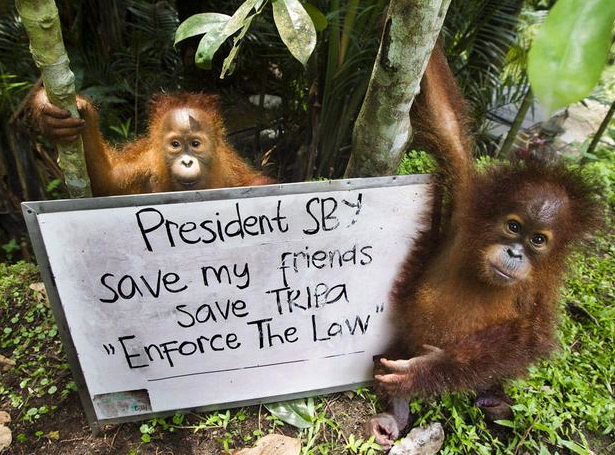
Confiscated illegal pet orangutans being cared for by the Sumatran Orangutan Conservation Programme, join with people around the world calling on “President Susilo Bambang Yudhoyono to save their friends, save Tripa and to Enforce the Law.”

Unless the destruction of the rainforest by commercial interests in Banda Ache is halted quickly, the local population of  Sumatran Orangutans will soon vanish forever.


To help go to The Sumatran Orangutan Conservation Programme.

TRIPA FOREST

Posted on April 14, 2013

Banda Aceh, Sumatra, Indonesia – A lone adult male orangutan was rescued from an isolated forest fragment in the Tripa Peat Swamp forest in the province of Aceh last year after local informants alerted conservation groups that palm oil companies planned to poison him.

Banda Aceh male orang rescue 2012. (Photo: Sumatran Orangutan Conservation Programme/BKSDA Aceh)

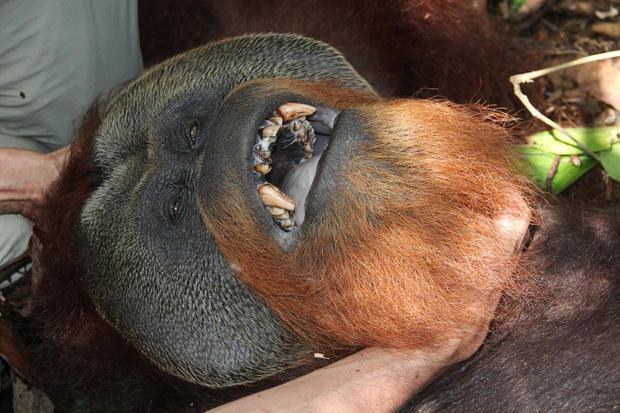
His crime? Eking out an existence eating the leafy tips of oil palm seedlings because palm oil companies had destroyed the forest around him, leaving him nowhere to go.

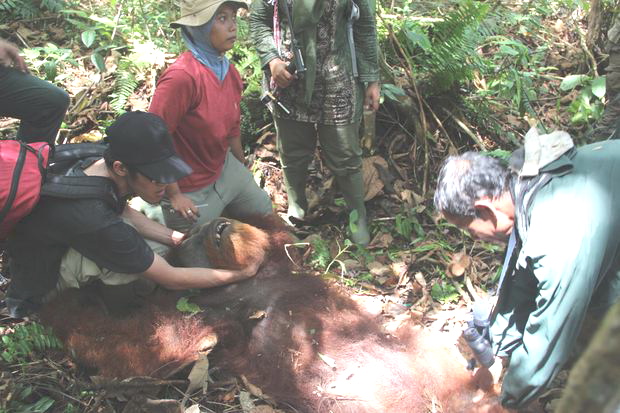
Veterinarian’s check Seuneam’s condition. (Photo: Sumatran Orangutan Conservation Programme/BKSDA Aceh)

The ape (named Seuneam after the village near where he was located), was rescued by a team comprised of veterinarians with the NGO Sumatran Orangutan Conservation Programme (SOCP), government conservation workers and members of the local community.

Seuneam showed signs of dental damage from a poor and inadequate diet. (Photo: Sumatran Orangutan Conservation Programme/BKSDA Aceh)

After a health checkup, the orang was released at the SOCP’s specialist Orangutan Reintroduction Centre in the Jantho Pine Nature Reserve in northern Aceh.

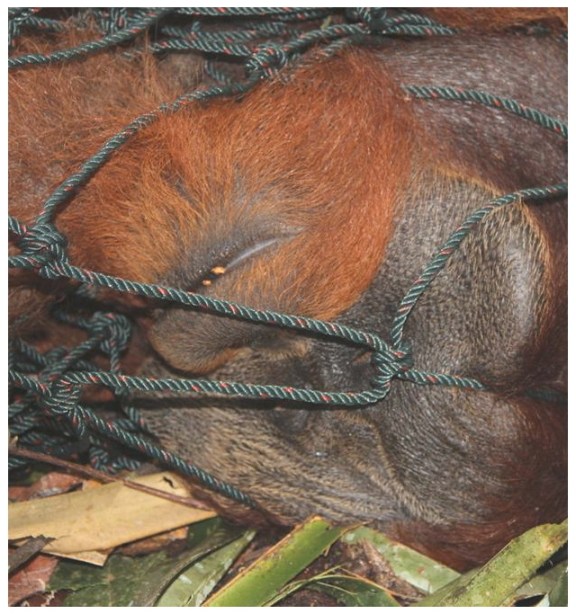
Rescues are expensive, logistically challenging and dangerous, for both staff and the orangutans. There is always a serious risks of injury and even death to an animal as orangutans climb higher in the trees when afraid, and then fall after being anaesthetized. Though the procedure is to get a capture net beneath them beforehand, invariably some apes fall and suffer broken bones.

Seuneam’s rescue. (Photo: Sumatran Orangutan Conservation Programme/BKSDA Aceh)

The rescues are particularly frustrating in that they are occurring in an area protected under Banda Aceh’s National Spatial Planning laws. With the government looking the other way, palm oil companies have continued to clear land illegally. Two years ago, a local governor went so far as to issue a permit to a palm oil company in direct violation of Indonesia’s forest moratorium.

The permit was brought into the spotlight by local people in Aceh in late 2011 and subsequently revoked by the Aceh Governor, but a new government has just put forth a new spatial plan that would make substantial blocks of surviving lowland habitats available for logging and oil palm plantations and open up nearly a million hectares for mining exploration—driving Sumatran orangutans, elephants, tigers and rhinos further toward extinction.

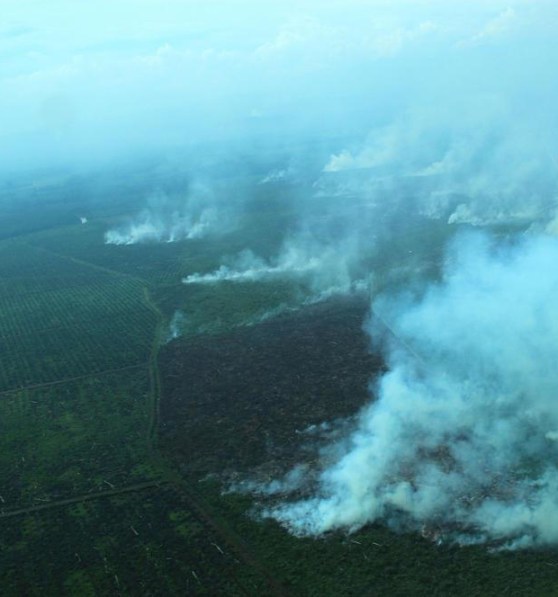
Illegal fires lit by palm oil companies rage in the Tripa forest.

Recent satellite imagery reveals that burning and illegal clearing of Tripa’s peat swamp forests continues unabated and new canals are still being dug to drain the swamps in violation of environmental protection and management laws.

Indonesia’s Tripa peat forest 2012. (Photo: International Primate Protection League)

In 1990, the orangutan population in the Tripa peat swamps was almost 2,000. In June of 2011 it was estimated at 200.

Confiscated illegal pet orangutans being cared for by the SOCP team, join with people around the world calling on “President Susilo Bambang Yudhoyono to save their friends, save Tripa and to Enforce the Law.”

Unless the destruction is halted quickly, the local population of the Sumatran Orangutans will disappear in the very near future.


The Sumatran Orangutan Conservation Programme (SOCP) is a collaborative programme involving the Swiss based PanEco Foundation, Indonesia’s Yayasan Ecosystem Lestari, and the Indonesian Ministry of Forestry’s Directorate General of Forest Protection and Nature Conservation.

The Blind Man and The Hunter

Posted on April 14, 2013

Tisha Wardlow's avatarFight for Rhinos

A WEST AFRICAN TALE
illustrations by Nina Frankel & Noah Woods

Once there was a blind man who lived with his sister in a hut near the forest.

Now this blind man was very clever. Even though his eyes saw nothing, he seemed to know more about the world than people whose eyes were sharp. He would sit outside his hut and talk to passersby. If there were things they wanted to know, he would tell them, and his answers were always the right ones.

People would shake their heads with amazement: “Blind man, how is it that you are so wise?” And the man would smile and say ,”Because I see with my ears.”blind man

Well, the blind man’s sister fell in love with a hunter, and they were married. When the wedding feast was finished, the hunter came to live with his new wife. But the hunter had no…

View original post 525 more words

ANIMAL TESTING

Posted on April 11, 2013

Did you know?

In the United States:

(Photo: Novartis AG)

  • Most animals in laboratories are not legally protected.
  • There aren’t nearly enough inspectors to properly inspect research facilities.
  • Most inspectors aren’t empowered to do anything consequential about violations.
  • Many labs pass inspection even where appalling legal violations occur.
  • Alternatives to animal testing are more effective, more reliable, and more humane.

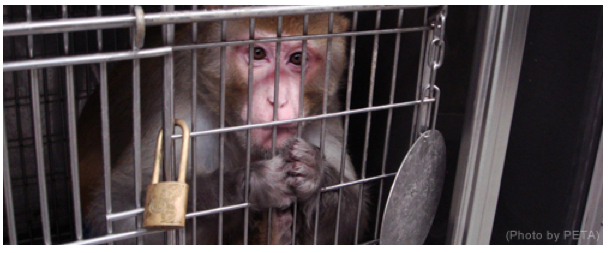
(Photo: PETA)

  • Instances of animal cruelty in laboratory testing are prolific and commonplace. Animals in labs are routinely mutilated and subjected to physical and psychological torment every day of their lives. Animals are frequently restrained and cut open without painkillers. Much of this torture is legal.
  • Legal tests include burning, poisoning, starving, forced smoking, mutilating, blinding, electrocuting, drowning, and dissecting without painkillers. For decades, cats, dogs, primates, birds, rodents, horses, goats, pigs, and other animals have been experimented on with these measures.

For anyone interested in the reality of animal testing in the U.S., this article from the Animal Legal Defense Fund is a must read.

OPEN THE SLAUGHTERHOUSES

Posted on April 10, 2013

“Ag-gag” laws, passed in three states and being considered in eleven more, aim to block or severely limit animal activists’ ability to create public relations nightmares for factory farming operations by video-taping inside agricultural facilities, such as slaughterhouses and egg, cattle, and dairy farms.

Videos released by groups like the Humane Society of the U.S., People for the Ethical Treatment of Animals and Mercy for Animals, have helped sway public opinion to approve a mounting number of state ballot initiatives that prohibit confining cages for pigs, calves, and chickens, and mistreating animals on the way to slaughter. They have also been effective in pushing big businesses like McDonalds and Chipotle to distance themselves from such practices.

Nine Wyoming farm workers at Wyoming Premium Farms, were spotted by an undercover investigator beating pigs and tossing piglets in the air and charged with animal abuse.

An op-ed in the New York Times (firewalled) offers a challenge to proponents of “ag-gag” laws. For those who don’t have an opportunity to access the article, the points made by the author, Jedediah Purdy, a law professor at Duke, are as follows:

The agriculture industry claims that showing images to the public of how animals are raised and slaughtered is unfair, as such pictures seem to show cruelty and brutality. But the eye can be deceiving. The most humane way of slaughtering an animal, or dealing with a sick one, may look pretty horrible. But the problem with making moral arguments by appealing to revulsion is that some beneficial and indispensable acts (such as producing the food that feeds millions) can also be revolting.

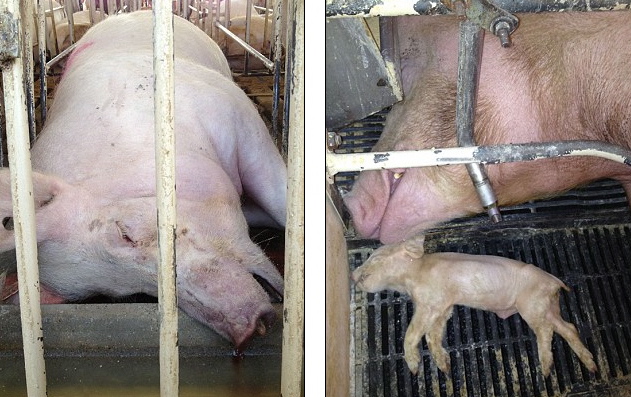
Animals at Wheatland pig farm were confined to tiny cages that did not allow them to move, left, and the HSUS investigator also spotted mummified piglets and sick sows, right.

Showing images to the public of how animals are raised and slaughtered is unfair, as “the eye can be deceiving.” The most humane way of slaughtering an animal, or dealing with a sick one, may look pretty horrible. But it’s wrong to make a moral argument against such practices by appealing to revulsion because the slaughter of anmals is a beneficial and indispensable act that serves the greater good.

Moreover, the industry says, activists are trespassers, or, when they’re employees working undercover for an animal-rights group or news organization, they’re going beyond the terms of their employment.

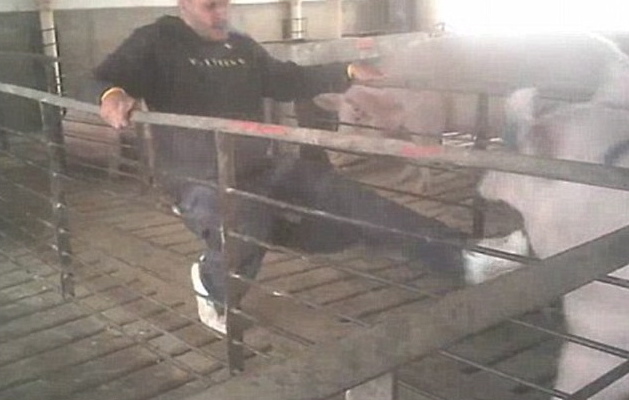
Undercover film posted by the Humane Society of the U.S. shows workers at Wheatland pig farm punching and kicking the pigs.

    Purdy’s answer to all this is that in order to face up to the real issues involving the raising and slaughter of livestock, confined-feeding operations and slaughterhouses should be required to install

webcams

    so consumer can judge for themselves what is going on, and that the URL’s to the video be put on the packaging in which the end product is sold. “There would be no need for human intrusion into dangerous sites,” he writes. “ No tricky angles or scary edits by activists. Just the visual facts. If the operators felt their work misrepresented, they could add cameras to give an even fuller picture.”

He adds that the images produced by the cameras might seem unfair to slaughterhouse operators because they might still appeal to emotion and prompt visceral revulsion. But “cold reason alone” is not going to reform the operations of these places—certainly not if what is going on inside these plants is invisible.


A study by researchers from Kansas State and Purdue Universities showed that meat demand went down in direct correlation to animal welfare issues being reported on in the media.

MORTALITY EVENT

Posted on April 10, 2013

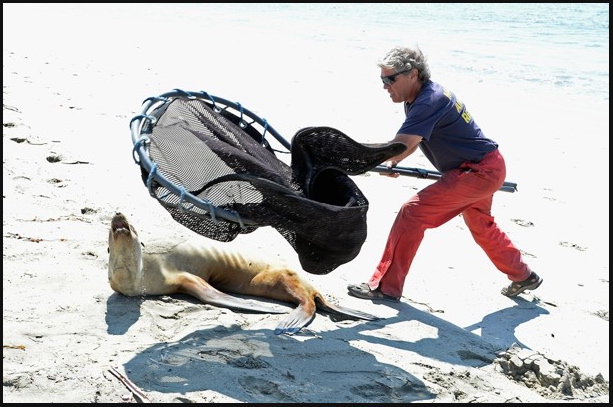
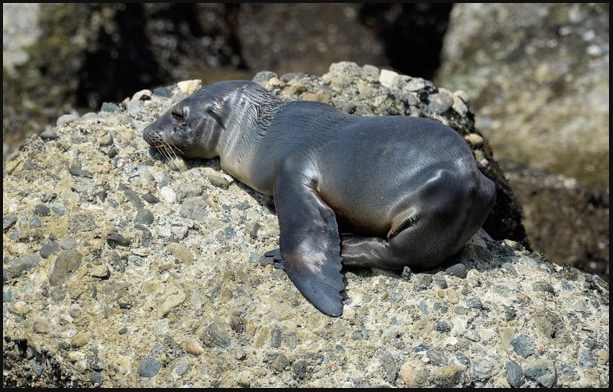
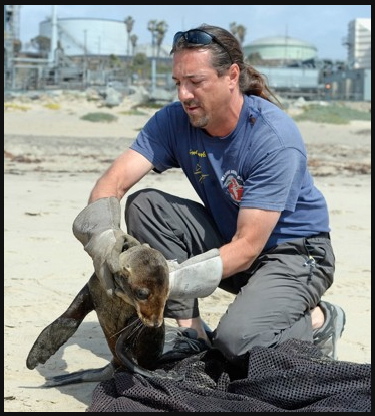
Starving sea lion pups are washing up on Southern California beaches from San Diego to Santa Barbara, in what the National Oceanic and Atmospheric Administration (NOAA) calls an “unusual mortality event.”

Starving sea lion is rescued by Peter Wallerstein, the Marine Animal Rescue director for Friends for Animals. (Photo: Kevork Djansezian/Getty Images).

Peter Wallerstein said he has picked up 300 sick and dying sea lion pups, after fielding calls from  residents who spot them on the beach.

Stranded and malnourished sea lion pup sits on the rocks of White Point Park before being rescued. The pup was transported to Marine Mammal Care Center at Fort MacArthur for rehabilitation. (Photo: Kevork Djansezian / Getty Images)

NOAA estimates that in the first three months of 2013, more than 900 malnourished sea lions have been rescued, compared with 100 during the same time period last year.

Mike Remski of Marine Animal Rescue checks for sign of injury after rescuing a malnourished sea lion pup on Dockweiler State Beach in Los Angeles. The pup was transported to Marine Mammal Care Center at Fort MacArthur for rehabilitation. (Photo: Kevork Djansezian / Getty Images)

The National Marine Fisheries Service says the likely cause is the loss of the smaller fish that make up the sea lions’ main diet. Why this food source has disappeared remains a mystery.

While some of the pups are taken to centers, overcrowding has forced rescuers to return some to the water.


Source: Washington Post.

SIBERIAN YETI

Posted on April 9, 2013

A recently released video shot in Siberia, shows a fleeting glimpse of a shadowy object moving behind snow-covered trees, that is purported to be a yeti, the Siberian equivalent of Bigfoot. (The actual video was not made available to the media.)

Purported yeti in vicinity of Kemerovo, Russia.

    Igor Burtsev, Director of the International Centre of Hominology in Moscow, who released the video, explained that it was made by three boys, some 30km from the coal mining city of Leninsk-Kuznetskiy.

    “They were walking about and noticed a chain of huge tracks in the snow. They got very inquisitive about the tracks and followed the trail, filming them on the mobile phone camera. They walked for a bit and got closer to the bushes – where suddenly they saw a Yeti, some 50 metres away from them. It noticed them as well and ran. The boys, scared, ran in the opposite direction.” Burtsev added that one of the boys, Yevgeny Anisimov, 11, who was filming the ‘creature’ – can be heard on the video shouting: ‘I am the nearest, I’m going to be eaten.’

    According to Burtsev, the incident occurred in late January. He did not elaborate on how he received the footage.

    Several sightings of the elusive creature have been reported in the Kemerovo region in the last few years.

    Last summer The Siberian Times reported that fishermen in a boat on a river near Myski village, initially mistook distant figures first for bears and then people.

    “We shouted to them – do you need help?,’ said fisherman Vitaly Vershinin. “They just rushed away, all in fur, walking on two legs, making their way through the bushes and with two other limbs, straight up the hill.”

    He said: “What did we think? It could not be bears, as the bear walks on all-fours, and they ran on two…. so then they were gone.”

    Last November hunters claimed they had discovered a yeti nest in the same area.

    Regarding the video, Burtsev insisted: “It is a first time in Russian modern history that someone manages to film the yeti so clearly. I don’t doubt it was a yeti. It stood in a typical pose with its back slightly bent, and its long arms down. It is a real, not falsified, video.
    He calls the footage, the “clearest evidence” so far of the creature’s existence.

    Burtsev and other researchers believe the region is home to around 30 of the creatures.


7 x 5

Posted on April 8, 2013

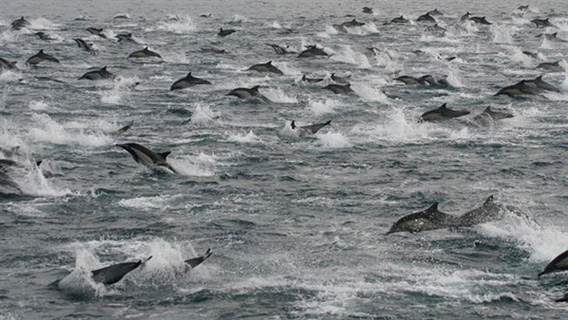
A giant pod of common dolphins (Delphinus delphis) was sighted by a tour boat off the coast of southern California in February.

Photo of the ‘super mega-pod’ by Antonio Ramirez, a passenger aboard the Hornblower Cruise that spotted the dolphins.

    The Captain, Joe Dutra, told NBC San Diego, “They were coming from all directions, you could see them from as far as the eye can see. I’ve seen a lot of stuff out here… but this is the biggest I’ve ever seen, ever.”

    Marine mammal expert Sarah Wilkin with NOAA’s National Marine Fisheries Service told NBC San Diego that the large pod could indicate there is an abundance of food in the area. “They’re attracted to kind of the same thing, they might wind up in the same place,” she said. “They’re definitely social animals, they stick together in small groups. But sometimes, the schools come together.”

    Captain Dutra said that the pod measured seven miles long and five miles wide.

THERE’S POACHING AND THEN…

Posted on April 7, 2013

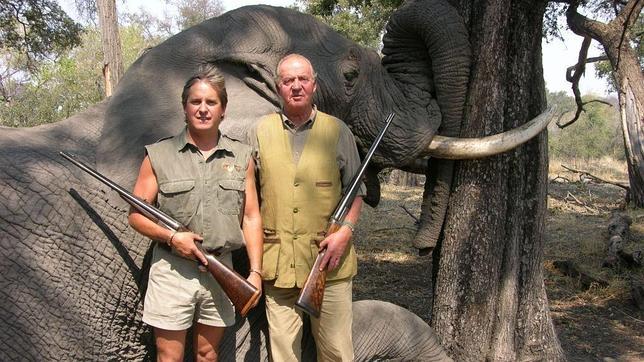
Spaniards were infuriated in April last year when it was revealed that their King, Juan Carlos, had hunted elephants in Botswana. The Spanish press played the incident as a controversy over the fact that the king took such an expensive hunting trip at a time when the country was in dire economic straits.

Juan Carlos and hunter Jeff Rann. (Photo: Target Press/Barcroft Media)

    Juan Carlos quickly issued a public apology. “I am very sorry,” he told TV cameras. “I made a mistake and it won’t happen again.”
    File this under “The 5 percent who never seem to get the news.”

      Why anyone would shoot an elephant for fun amidst Africa’s devastating epidemic of elephant poaching is disconcerting. But the story became even more disturbing when it was reported that the monarch was the honorary president of Spain’s branch of the World Wildlife Fund–WWF Espana.

      Along with South Africa, Namibia and Zimbabwe, Botswana is one of the African nations that has not prohibited elephant hunting. Regulated with quotas and licenses, the activity is a vital source of income for Africa’s national parks. Hunters pay between 7,000 and 20,000 euros for each trophy.

      In addition to the government fees, shoots with Rann Safaris, the business that outfitted the king, cost upwards of $8,700 a week, with an elephant costing a further $15,000 to kill. The aid of professional hunter Jeff Rann costs an extra $2,000 a day.

      When asked to comment on the king’s hunt, Rann said, “You have to manage the world’s animal populations to their betterment. We are trying to improve their habitat.”

      If the king has ever offered his justification for killing an elephant for fun in this day and age, it has not made its way into print.

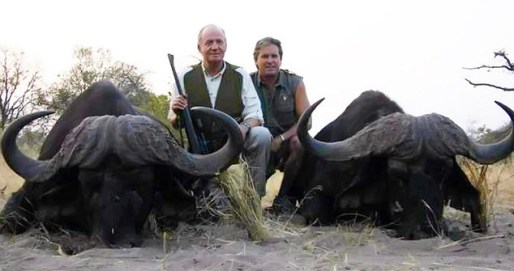
    As the story gained momentum, reporting turned to the king’s lifelong obsession with hunting.

The king and Jeff Rann with buffalos. (Photo: Target Press/Barcroft Media)

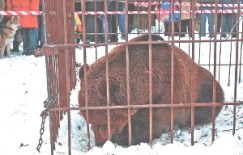
Trophy bear Mitrofan.

      It was reported in the Kommersant newspaper in Russia in 2006 that the king took part in a bear “hunt” involving a “kind and cheerful” 4 year-old bear named Mitrofan, who had been living in captivity since it was a cub, and was part of a tourist attraction in the town of Noviens. The bear was put in a cage and given “vodka mixed with honey.” The king is said to have “taken him down with one shot.”
    Several months after the king’s elephant hunt story broke, WWF in Spain removed Juan Carlos as its honorary president. In a statement the group said “the safari did not sit well with WWF goals.”

THE TOURIST GROUP

Posted on April 6, 2013

Well known to travelers on the  main route through the forests of Parc National d’Ifrane in the Middle Atlas mountains of Morocco, is an infamous group of Barbary macaques known as the “Tourist Group.”

Macaque, Ifrane National Park, Morocco. (Photo: S. Semple)

    Coaches and cars stop in the car parks and the passengers get out and feed them. Truck drivers throw food out their windows as they pass.

Indeed, not only do the monkeys have no fear of humans, they aggressively badger them for food.

Macaques near Azrou.

Scrounging unhealthy, unnatural food has made many of the adults overweight and altered their natural behaviors .

Macaques near Azrou.

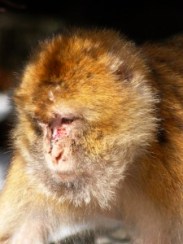
They groom each other less. As grooming in primates is about reinforcing social bonds, the lessening of grooming has led to an increase in aggressive behavior. Grooming also helps maintain a certain level of hygiene, so it’s no surprise they’ve also developed an abnormal parasite burden.
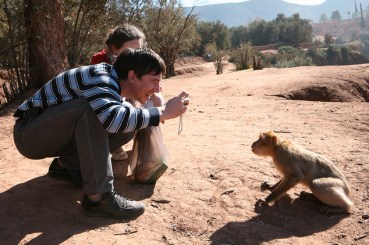
Posing for tourists in Morocco’s Middle Atlas mountains.
Cavities. (Photo: Keri Cairns)
Disease. (Photo: Keri Cairns)


Many of the older monkeys have rotten teeth. A number of the troupe show other signs of poor health, such as runny noses—likely due to viruses picked up from contact with humans. As a consequence of their physiological problems, the monkeys are failing to reproduce. Last year only two out of nine adult females successfully carried a pregnancy to term.
Barbary macaque (MPCFdn)

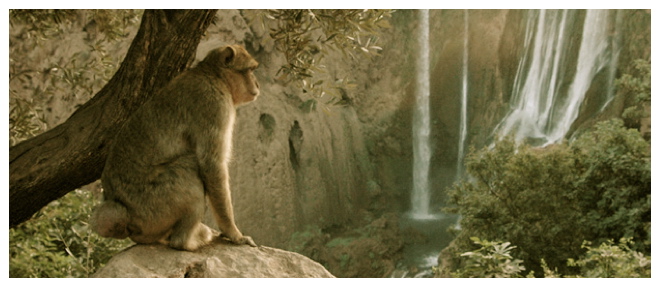
Barbary macaque at Cascades d’Ouzoud, Morocco. (Photo: Barbary Macaque Conservation)

A much larger concern than habituation is the Barbary macaques’ uncertain future as a species.

Formerly widespread throughout North Africa, wild populations today are restricted to small patches of forest and scrub areas in Morocco, Algeria and Gibraltar.

Like the other segmented macaque populations, the Tourist Group is rapidly declining.

The population of wild Barbary macaques in Morocco in 1975 was 17500. Today it is estimated to be only 5000–6000. Since 2008 the Barbary macaque is officially classified as “Endangered” on the IUCN Red List.

To save the monkeys, a dozen years ago a small group of conservationists founded the Moroccan Primate Conservation Foundation (MPC). Recently the MPC has partnered with the Moroccan ministry of Water and Forests and national and international experts to create a national conservation action plan to protect the species.
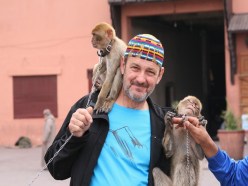
Djemaa El-Fna square, Morocco.

But, in Morocco, where the selling and use of macaques goes back centuries, changing ancient customs is an uphill slog.

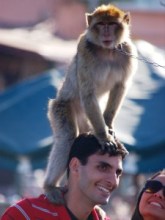
The tradition of having your picture taken with macaques and cobras in Marrakech’s teeming Jemma el Fna square, attracts millions of tourists annually.
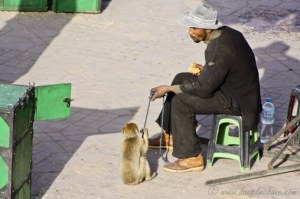
Djemaa El-Fna square, Morocco. (Photo: Daniel McBane)

After exhibition this is home.
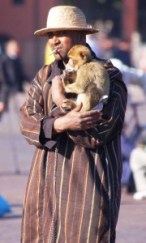
And it is understandable that issues of animal welfare and conservation are not a priority in a country with so many other more pressing issues. But MPC is trying to make people see that the loss of the Barbary macaque and its important habitat would also have disastrous consequences for the local population, such as accelerating desertification and the loss of an essential fresh water supply for Morocco.

Barbary macaques, Atlas Mtns, Morocco (Photo: Ahmed/Barbary Macaque Conservation)

The chief reason for the species’ decline is the demand for the pet trade which has decimated the population in the Atlas Mountains. The problem is Europe-wide but particularly bad in France and Spain.
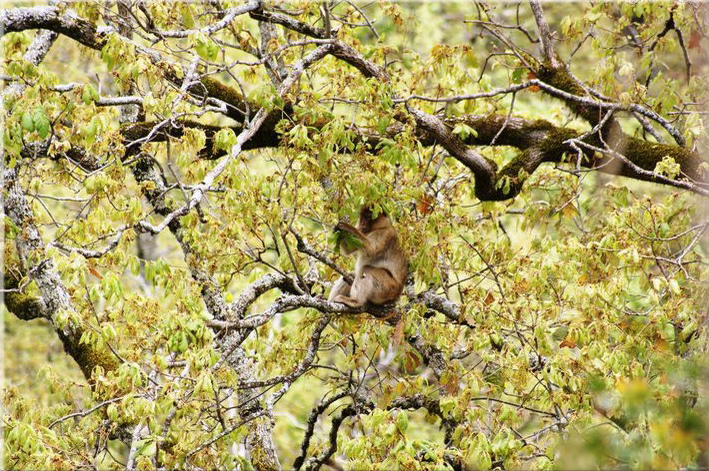
Barbary macaques, Atlas Mtns, Morocco (Photo: Ahmed/Barbary Macaque Conservation)

]

tourist group infant, Azrou, Morocco (Photo: Ben Tutton

Many buyers are Moroccan expatriates who visit their families in Morocco by the thousands every summer. Infant monkeys are on public display in market places in the larger cities of the south and are often an impulse buy for children.

One study puts the number of infants illegally exported from Morocco every year at 300. A recent questionnaire aimed at macaque owners in Catalonia, who wish to re-home their pets, revealed that the majority are Spaniards who bought their monkeys from people traveling from Morocco who smuggled them home in their luggage. There is also an active internet trade in the species
GREEN TIE

Posted on April 5, 2013

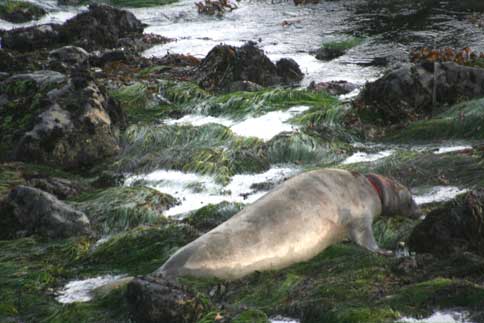
An elephant seal was spotted at Piedras Blancas near San Simeon, on the American West Coast south of San Francisco, with a green packing strap wrapped around his neck.

October 2012. Elephant seal in trouble. (Photo: Christine Heinrichs)

Perilous entanglement. (Photo: The Marine Mammal Center)

Entanglement in ocean trash is a not uncommon and deadly predicament for many marine mammals as such entanglements eventually restrict their ability to swallow or hunt effectively.

State Park rangers notified the Marine Mammal Center in Sausalito of the situation. Staff from the Center, including a veterinarian, approached the animal at low tide to give them the best chance of getting him before he made a break for the water.

The team reported it took quite a struggle to get a rescue net over the animal. Once that was done he was sedated and the entanglement was cut away. The vet cleaned the wound, took a blood sample, and put a flipper tag on him for identification in the future if needed. They named him “Green Tie” after the green packaging strap they removed.

Cleaning the wounds. (Photo: The Marine Mammal Center)

Dr. Michelle Barbieri holds the plastic strap she removed from Green Tie. (Photo: The Marine Mammal Center)

About 20 minutes or so after he was sedated, Green Tie woke up and went back into the water.

The seal was spotted and rechecked a year later and found to be healed and healthy.

With the packing strap removed and wound cleaned, Green Tie makes his way back to sea. The salty ocean water will help accelerate the healing process. (Photo: Joan Crowder)

Organizations like the Marine Mammal Center are saving the lives of animal around the globe 24/7. They are seldom recognized for their efforts. They do it for the animals.


Source: The Marine Mammal Center (http://www.marinemammalcenter.org/)

OLD GROWTH BIRD

Posted on April 4, 2013

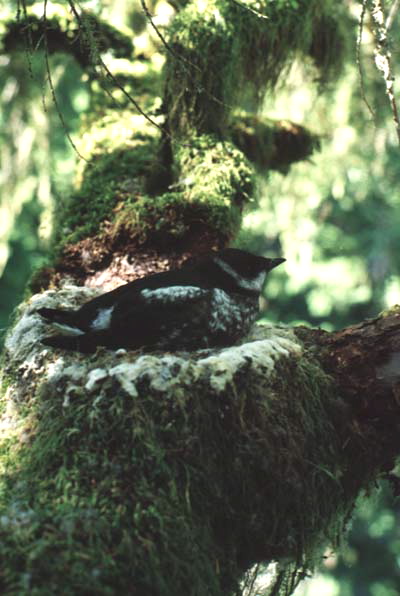
A small chubby seabird called the Marbled murrelet that nests in coastal old-growth forests in the Pacific Northwest, received a break today when a district court in Washington, D.C., ruled not to eliminate the “critical habitat” designation of the forests in which it lives. A critical habitat designation is required for the bird to remain protected under the Endangered Species Act. It was first listed as endangered 17 years ago.

Marbled murrelet. (US Fish & Wildlife Service)

The ruling came from a lawsuit filed by the timber industry which has twice before sued to have murrelet protections eliminated so that it can increase logging of forests more than 100 years old.

Murrelets depend on old-growth forests for habitat and, in particular, use the oldest trees for nests. They seem to prefer larger stands generally within about one mile of the ocean.

Numerous scientific studies have shown that the chief reason murrelets are fast disappearing is loss of habitat from ongoing timber harvesting on the coasts of Washington, Oregon and California.

The U.S. Fish and Wildlife Service, the federal government’s principal wildlife conservation agency, had wanted to withdraw a 16-year old designation of protected habitat for the species in order to resolve an industry lawsuit.
Some of the old-growth forests in the region are managed by the Bureau of Land Management (BLM), which has been under pressure both from Congress and the BLM’s parent agency, the Department of Interior, to increase logging. Years after decades of rapacious clear-cutting—under the guise of “sustained yield,” during which loggers stripped the Pacific Northwest of nearly all its old-growth, thus precipitating the crash of the forest industry—timber companies continue to push for access to the last remaining old trees, no matter the ultimate cost.

Without old-growth forest protection, these beautiful birds will disappear from the Pacific Coast.


Shout out: The Center for Biological Diversity.

CIRCUS DEATHS

Posted on April 3, 2013

An entire troupe of 300 performing fleas have fallen victim to the freezing weather gripping Germany.

AN18567410FILE---In-this-Se


The acrobatic insects, which were due to appear at an open-air fair in the western town of Mechernich-Kommern, were found dead inside their transport box on Wednesday morning.

Flea circus director Robert Birk said it was the first time he had lost all his fleas in one go because of cold weather.

The circus scrambled to find and train a new batch of insects so it could fulfill its engagements at the fair.

Fleas are famous for their phenomenal strength which allows them to pull 160,000 times their own weight and jump to heights 100 times their size.

When contacted Mr Faber told the Independent the story was not an early April Fools joke.

Apparently the circus keeps its fleas outside.


Shout out: Strange Behaviors.