First Light Productions

investigative journalism

Posts by Michael Elton McLeod

MORE PET VIOLENCE

Posted on February 9, 2013

Beta Theta Pi fraternity, University of Kansas.


Members of the Beta Theta Pi fraternity at the University of Kansas

are being investigated by police in Lawrence, Kansas after a turkey was killed during a frat house party in December. The turkey was rented for the winter formal party and someone decided to throw the bird into the middle of the crowd. According to members of a band that was present, several individuals began chasing the bird and the situation turned into a blood lust. It ended when a man broke the bird’s neck. No formal charges have yet been filed against any individuals.


Sparkles.

Matthew Jerome psycho.

Matthew Jerome,

Fort Wayne, Indiana, was sentenced to a year in prison for dropping a kitten into a fire. The kitten “Sparkles” survived. Jerome was also ordered to undergo a psychiatric evaluation and perform community service.

A neighbor rescued the kitten after hearing it crying. According to court records, in 2009 Jerome pleaded guilty to domestic battery and served four months in jail.


Kevin Dean Parrish,

was convicted of animal abuse for putting his grandmother’s dog into a hot oven after the dog allegedly nipped him. Parrish, who told police he had “anger issues, ” was sentenced to 30 days in jail and five years probation. Parrish admitted to deputies that he lost control, grabbed the dog and started punching it in the head with his fist, tried to strangle the dog and then put him in an oven he had pre-heated to 350 degrees. Kudo, suffered cuts and bruises from the beating, as well as singed hair and burns on his paws that were so severe he had trouble standing. Veterinarians say the six-year-old dog is expected to make a full recovery .

Kevin Dean Parrish, dog abuser.

Kudo is expected to make a full recovery.


Jesse Fitzgerald,

in Mount Oliver, Pennsylvania, 31, is charged with shooting a pitbull named Kila in the head with a crossbow. He faces two counts of animal cruelty. Kila, survived.

Kila, victim of a sick mind.

Jesse Fitzgerald, attempted dog murderer.


Fitzgerald’s mother said her son shot the dog because his girlfriend demanded he do it after Kila was playing rough with her puppy. “She was yelling at Jesse to do something to the dog. So Jesse did.”

A VISIT WITH LOLITA

Posted on February 8, 2013

Lolita’s capture in Penn Cove.

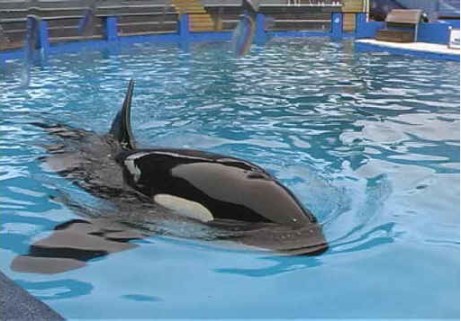
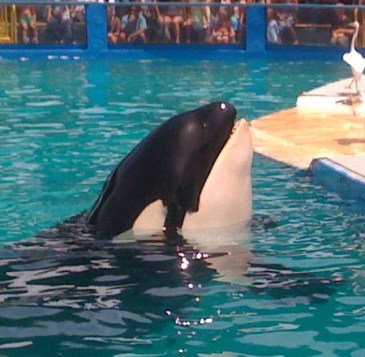
Lolita was taken from the waters off the coast of Washington State on August 8, 1970, and has been living in isolation in a 35 foot wide and 20 foot deep tank at the Miami Seaquarium ever since.

Lolita.

The Miami Seaquarium

has been telling the government for more than 20 years that her tank–which is illegal by government standards—will be rebuilt to meet government specifications. They’ve not done it.

Lolita is housed alone.

She lacks protection from weather and direct sunlight. She is not given toys or non-food items to help alleviate her boredom.

Her owner, Arthur Hertz of Wometco Enterprises, was offered $1 million 10 years ago for Lolita’s release. He refused. At that time it was estimated Lolita had earned Hertz $160 million. He paid $6,000 for her in 1970. The Orca Network knows where Lolita’s pod—including her mother (believed to be in her eighties), siblings, and other family members—live. Experts believe Lolita could gradually be reintroduced to her family, and potentially breed.

VISITING LOLITA

A special Animals & Society Institute Diary written by ASI colleague psychologist Suzanne McAllister.

DECEMBER 2012. Last weekend I traveled to Florida to see Lolita to witness her conditions first hand. This is what I saw. Visitors to the Seaquarium ($40 entrance fee) are kept away from her tank until show time. There are solid metal gates at both entrances to the stadium that are closed until visitors are allowed into the stadium to watch the show. When I arrived, Lolita was being squirted with water by some trainers (below). She appeared to enjoy the massaging quality of the water stream.

Lolita.

Once the visitors were seated in the viewing area (which was approximately half full on a Sunday) the 20-minute show began. Lolita gets fed if she performs. She is in a tank with five dolphins, whom she appears to ignore, and who appear disinterested in her.

Part of the show is watching the dolphins do tricks (for food), and part is watching Lolita (the star!) allow the trainer to sit on her back or be lifted out of the water on her rostrum (nose) and flop in the water to create a spray (crowd pleaser).

Lolita.

When the show is over, visitors are escorted out of the stadium, and the gates are closed until the next show. I watched Lolita while the visitors exited the stadium. She swam to one side of the tank and rested motionlessly at an angle in the water (depending on where she is in the tank, her tail rests on the bottom). Typically, whales swim 75-100 miles a day. I don’t know how many times a day Lolita would need to swim around her tank to match that distance.

ACTIONS

There is a court case pending in the 9th Circuit Court of Appeals to have Lolita covered under the provisions of the U. S. Endangered Species Act. The case was brought by the Animal Legal Defense Fund, PETA, and several individuals, including a former trainer.

You can contact the Miami Seaquarium, Arthur Hertz, the USDA/APHIS, and the Secretary of Agriculture, to let them know it’s time for Lolita to be retired and returned to her home waters.


Source: Animals & Society Institute.

Read David Kirby’s book Death at SeaWorld, published in 2012. An excellent primer on the marine display industry.

UN…BELIEVABLE

Posted on February 7, 2013

What is it about killing animals?

Cash prizes for the heaviest squirrel killed and a category for shooters age 14 and under.

squirrel slam1

The fire chief defends the fundraiser by characterizing it as a “family event,” that the squirrels are “in season,” and that the squirrels don’t go to waste because they are eaten.

Studies also show that children who witness violence toward animals are more likely to commit violent acts themselves.


Source: Animals & Society Institute.

LETHAL PREDATOR CONTROL

Posted on February 6, 2013

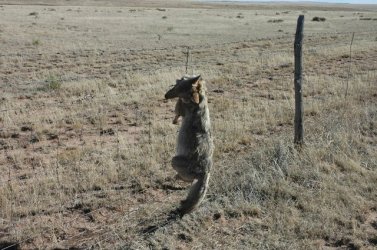
Coyote killed in a government neck snare. (Photo by former Wildlife Services trapper)

Using steel traps, wire snares and poison,

Wildlife Services Department employees of the USDA have accidentally killed more than 50,000 animals since 2000 that were not problems, including federally protected golden and bald eagles; more than 1,100 dogs, including family pets; and several species including migratory shorebirds, beaver, porcupines, river otters and other native wildlife considered rare or imperiled by wildlife biologists.

Since 1987

at least 18 employees and several members of the public have been exposed to cyanide when they triggered spring-loaded cartridges laced with poison meant to kill coyotes.
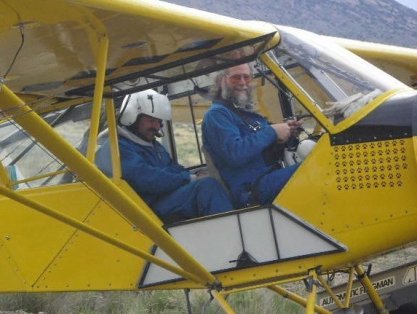
This plane used by federal Wildlife Services for aerial attacks on wolves – with 58 paw-print decals indicating the number killed – stirred outrage when published on a conservation blog last year. To many, the decals showed callousness toward wildlife. An agency spokesperson apologized, saying the decals were removed when a manager realized they could offend some people. Aerial hunting is one of Wildlife Services’ most popular methods for killing coyotes and wolves. Critics want it curtailed or halted, saying it is expensive, dangerous and often used to kill animals that haven’t harmed livestock. (Photo: Wildlife News)

10 people have died and many others have been injured in crashes during agency aerial gunning operations since 1979.

Three coyotes caught in leg hold traps, at top and foreground, await death in this photo taken by a Wildlife Services trapper in Nevada. The coyote in the foreground is being attacked by the trapper’s dogs. Leg-hold traps are used by the agency to capture and kill 10,000 to 12,000 animals a year. Roughly half are coyotes, but more than two dozen other species are also targeted, including black bears, muskrats, mountain lions and wild pigs. Leg-hold traps have been banned in many countries.

Because lethal control stirs strong emotions

Wildlife Services prefers to operate in the shadows, turning down all requests from media to observe its hunters and trappers in action.

In March (2012) , two congressmen – Reps. John Campbell, R-Irvine, and Peter DeFazio, D-Ore.–responding to photos posted online by a Wildlife Services employee (“TROPHY ANIMALS,” ANIMAL POST, Dec. 17, 201), introduced a bill that would ban one of Wildlife Services’ most controversial killing tools: spring-loaded sodium cyanide cartridges that have killed tens of thousands of animals in recent years, along with Compound 1080 (sodium fluoroacetate), a less-commonly used poison.

Records show

more than 150 species have been killed by mistake by Wildlife Services traps, snares and cyanide poison since 2000, including armadillos, badgers, great-horned owls, hog-nosed skunks, javelina, pronghorn antelope, porcupines, great blue herons, ruddy ducks, snapping turtles, turkey vultures, long-tailed weasels, marmots, mourning doves, red-tailed hawks, sandhill cranes and ringtails.
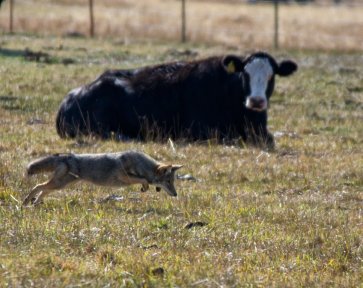
A coyote hunts rodents in the Sierra Valley north of Truckee. The animals generally pose little danger to cattle. (Photo: Tom Knudson/sacbee.com)

Many of these species are off-limits to hunters and trappers. Some species, including swift foxes, kit foxes and river otter, are the focus of conservation and restoration efforts.
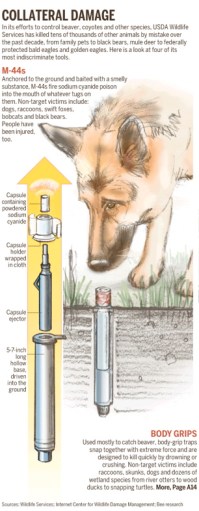
Wildlife Services.

Wildlife Services claims

that traps, snares and cyanide are key tools that nearly always get the right species. Environmentalists don’t trust the data, citing admissions by agency employees of pressure not to report non-targets “because it makes (the agency) look bad.”

Raccoons are most often killed by mistake, followed by river otters, porcupines, snapping turtles, javelina, striped skunks and muskrats. But there are other accidental victims that are often more keenly missed: dogs.

One was Maggie,

Maggie.

a tail-wagging, toy-fetching border collie-Irish setter mix beloved by Denise and Doug McCurtain and their four children. Last August, Maggie’s spine was crushed when she stepped into a vise-like “body-grip” trap set by Wildlife Services near the family’s suburban Oregon home to catch a nonnative rodent called a nutria. The family has filed a claim for damages. “Never once did anyone come to us and apologize,” a family member said. “It was like they pretended it didn’t happen.”

Eight dogs a month have been killed

on average by mistake by Wildlife Services since 2000, records show. Again, many people don’t believe the “records” are accurate.

UPDATE:

This month, in Arizona, Wildlife Services employee Russell Files is accused of setting traps with the specific intent of capturing a neighbor’s dog he found troublesome. Local law enforcement officers were called to Files’ home in El Mirage, on the outskirts of Phoenix, in December by a frantic 911 call from a neighbor.

El Mirage Police Department detective Kim Walden found the dog, a 7-year-old female named Zoey, lying on its side in Files’ yard, with a front and back leg caught in two leg-hold traps, covered in blood from trying to chew her way out. As officials struggled to free the dog, Files showed up himself.

“He assisted us with getting the dog out of the traps,” Walden said. “He said he was tired of the neighbor’s dog coming into his yard. I asked him specifically if he was on duty when he set those traps, and he said: ‘Yes I was.’ ” Files was arrested Jan. 8 and charged with felony animal cruelty. The dog, which lost more than a dozen teeth in the ordeal, is recovering.

Bella, a Husky who got trapped by a government neck snare, was found by her owner near their campground. She had chewed off her own foot. Here, she waits to be transported for medical care. (Photo: Bob Norie)


Source: Tom Knudson, Sacramento Bee.

BLUE CREEK BIGFOOT

Posted on February 5, 2013

Anatomy of a Beast

John Green investigates footprints on Blue Creek Mountain above the Bluff Creek drainage, 1967. (Photo: John Green)

Only weeks

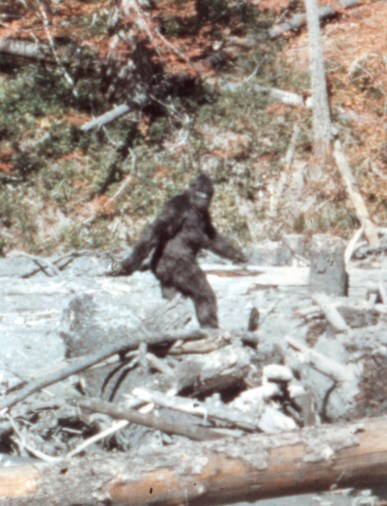
after Canadians John Green and Rene Dahinden investigated mysterious giant footprints on Blue Creek Mountain, Roger Patterson and Bob Gimlin emerged from the woods just a few miles away from that very spot with film footage of what they claimed was a Bigfoot. Speculation emerged it may have been the same animal.

Frame from Patterson/Gimlin film.

PRIMATE STATS

Posted on February 5, 2013

The International Primate Protection League

recently obtained the U.S. primate import statistics for 2012.

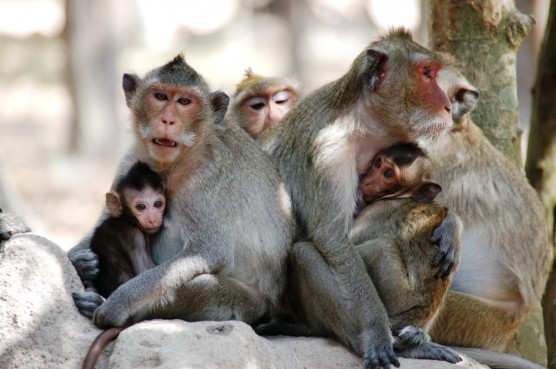
Long-tailed macaques are the most commonly imported primate into the U.S.

Long-tailed macaques like these are the most commonly imported primate into the U.S.

U.S. Primate Imports for 2012

A total of 17,915 nonhuman primates were imported into the U.S. in 2012.

stats1

stats2a

stats3 stats4 IPPLimport5 IPPLimport6

Posted on February 5, 2013

Nabeki's avatarHowling For Justice

CA Dept. of Fish & Wildlife & F&G Commission: Stop Coyote Killing Contest

UPDATE: January 6, 2013 @ 6pm

The California Fish and Game C0mmission refused to take any action to stop the Coyote Killing Contest that starts Saturday in Modec County.  Animal rights activists spoke out against the sadistic “contest” today in front of the game commission.

The commission gave testimony that OR7 is too far away from the “hunt” and implied he is not in any immediate danger.

Is the California Fish and Game Commission or California Department of Fish and Wildlife aware wolves can travel 25 to 50 miles per day, one wolf is on record traveling 100 miles while being pursued by hunters. The “contest” is several days away, making it very easy for OR7 to travel in that direction. OR7 has also been known to travel and play with coyotes.  Having a bunch of yahoo’s with guns and hounds out in an area, not too far away from…

View original post 707 more words

ANIMALS IN SPACE

Posted on February 4, 2013

Catonaut

hello_kitty

As a science project Lauren Rojas, a 13-year-old in Antioch, California, decided to send a Hello Kitty “catonaut” nearly 100,000 feet into space, with a high-altitude balloon, and to record the results


Tip off: James Fallows The Atlantic.


OIL SPILL FALLOUT CONTINUES

Posted on February 4, 2013

Bottlenose dolphins

in Barataria Bay, LA, a site which received significant and prolonged oiling following the Deepwater Horizon oil spill, are showing signs of ill health. The dolphins were evaluated as part of a collaborative study involving NOAA and the Chicago Zoological Society (CZS).

Preliminary results based on comprehensive physicals of 32 dolphins found that Barataria Bay dolphins are underweight, anemic, and many have symptoms of liver and lung disease. Nearly half of the dolphins sampled had abnormally low levels of hormones that help with stress response, metabolism and immune function. Many of the dolphins were in such poor health that they likely will not survive.
Y12,

one of the sampled dolphins, was found dead in January 2012.

NOAA, with CZS and local, state and federal partners, in cooperation with BP, initiated the Barataria Bay dolphin study in 2011 as part of the Natural Resource Damage Assessment (NRDA), the process for studying the effects of the Deepwater Horizon oil spill.


Source: Nick ‘N’ Notches newsletter, January 2013.

CRIMINALS AVOIDING CRIMES

Posted on February 3, 2013

“Ag-Gag”

laws make it illegal for activists and journalists to go undercover to expose animal abuse on factory farms. 

Last year Ag-Gag bills were introduced in 10 states. Just last month, similar bills were introduced in New Hampshire, Nebraska and Wyoming.

The bills are nearly identical in whichever state they appear because they come from a common template created by the American Legislative Exchange Council (ALEC), the conservative right-wing group behind the “Stand Your Ground” legislation enacted in many states.

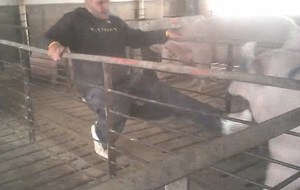
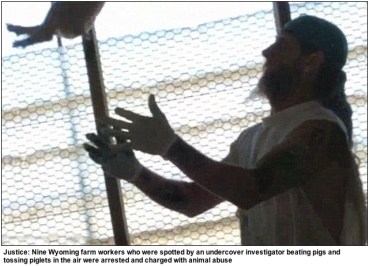
In Wyoming, Ag-Gag bill HB 0126 was introduced shortly after the Humane Society released an undercover video of workers at Wyoming Premium Farms kicking piglets, beating mother pigs, and swinging them by their hind legs.

ANIMAL POST 1/2/13 “Throw Away the Key” shows workers kicking and punching pigs at a Tyson supplier's facility in Wheatland, Wyoming

ANIMAL POST 1/2/13 “Throw Away the Key” shows workers kicking and punching pigs at a Tyson supplier’s facility in Wheatland, Wyoming

Wheatland pig farm abuse.

ALEC

is a master at drafting and introducing “model legislation” in states across the country, all without other lawmakers and the public having any idea of its origins. In the case of Ag-Gag, ALEC developed the Animal & Ecological Terrorisms in America bill (2003) as “model legislation” for lawmakers to use when writing laws to shield illegal and immoral business practices in factory farm operations from public and legal scrutiny.

ALEC’s success in pushing these law to its ever-fearful right-wing constituency in the wake of 9/11 is to promote its cause as a fight against “terrorism.”

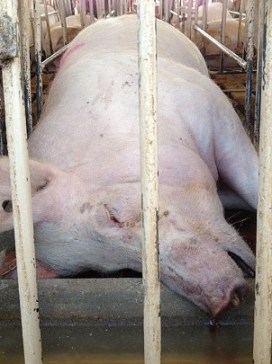
Gestation crate.

Gestation crate.

The purpose of Ag-Gag and other model legislation is not necessarily for it to be introduced verbatim: it is to present a “wish list” of legislative language from which state lawmakers can pick and choose to satisfy their constituents.

A few states where ALEC’s power has been on display:

Minnesota—House File 1369 was introduced to criminalize production of an “image or sound” of animal suffering in a sweeping list of “animal facilities,” including factory farms, animal experimentation labs, and puppy mills. Four of the bills seven sponsors are affiliated with ALEC.

Utah—the second state to approve legislation targeting undercover investigators. HB 187, “Agricultural Operation Interference,” was introduced by the House Law Enforcement and Criminal Justice Committee, and was originally so sweeping that it made videotaping a factory farm the same as assaulting a police officer. When the Utah Senate approved the bill, 13 of the 24 yeas were from ALEC members.

Tennessee—the “Ag Gag” bill In Tennessee was introduced by Sen. Dolores R. Gresham, an ALEC task force member. When it was being considered by the Tennessee Senate, 4 or the 6 votes in favor came from ALEC members.

Iowa—The mobilization power of ALEC was undoubtedly on display in the passage of Iowa’s Ag Gag bill. Of the 60 Iowa lawmakers who voted in support of HF 589, at least 14 of them—23 percent—are members of ALEC.

In Washington,

some of the most important Congressional players in efforts to label animal rights and environmental activists as “terrorists” are ALEC members:

Rep. Don Young, who publicly speculated in the aftermath of 9/11 that the attacks were the work of environmentalists and called for Congressional hearings on “eco-terrorism.”
Rep. Steve King of Iowa who publicly brags about his war on vegetarians.
Sen. James Inhofe, has been involved in multiple versions of “eco-terrorism” bills and hearings over the last 20 years.


Help from: Green is the New Red.com, a website about how fear of “terrorism” and use of the word “terrorist” are being exploited to frighten lawmakers into backing a disproportionate, heavy-handed government crackdown on the animal rights and environmental movements.

OPERATION HIROLA

Posted on February 2, 2013

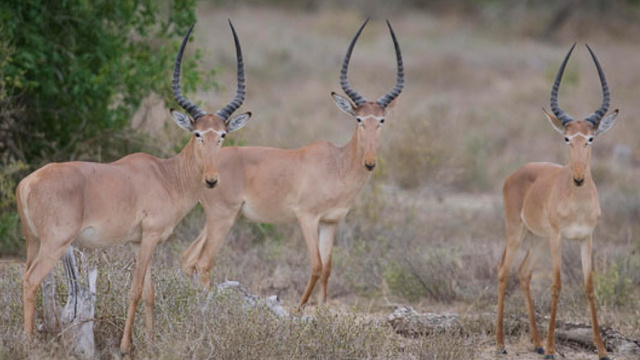
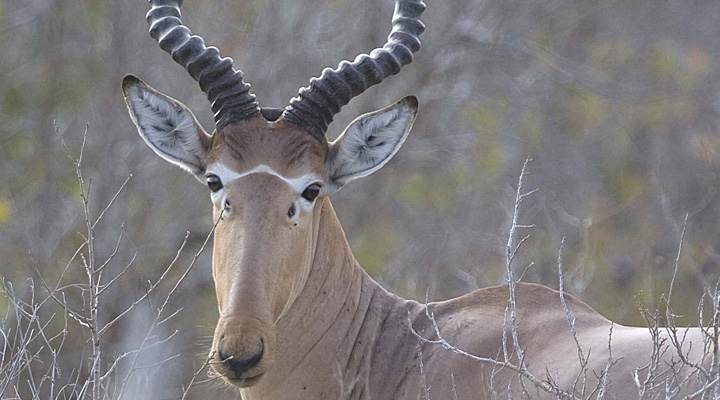
The hirola antelope

of north-eastern Kenya, also known as Hunter’s hartebeest, is one of the most unique and critically endangered animals on the planet.

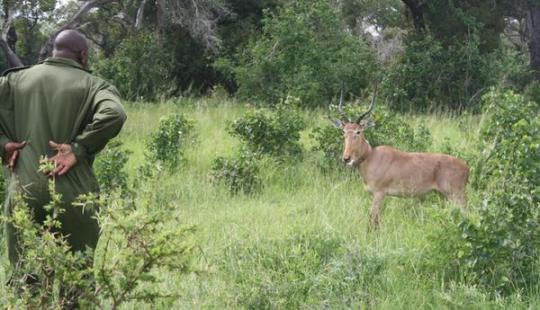
Three of the last known hirola on earth. (Photo: Kenneth K. Coe/The Ishaqbini Hirola Community Conservancy)

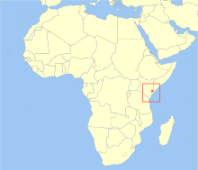
Hirola distribution. (Wiki map)

Before 1970, an estimated 14,000 hirola existed in the wild, but their numbers crashed due to hunting, predation by big cats as alternate prey sources dwindled, and the animals’ range became restricted by habitat loss and an increase in human settlements and farms rearing livestock.

The collapse of the Republic of Somalia in 1991 precipitated a massive influx of refugees into Kenya. The majority resettled in the middle of the hirola’s key habitat. With the refugees came increased poaching and general insecurity of the area. That left just a few animals surviving in a small area along the border.

Edge Animal

Over the past thirty years its numbers have plummeted by almost 90 percent, and they continue to decline. Reports differ on how many remain. Estimates range between 350 to 450 animals in the wild and perhaps one–an aging female at the Gladys Porter Zoo in Brownsville, Texas–in captivity. The loss of this animal will mean that for the first time 75 years, an entire genus of mammal is on the brink of extinction.

As the hirola population continued to dwindle, Kenya Wildlife Service (KWS) carried out two translocations of hirolas from the region in an attempt to secure a separate “insurance” population. During the second translocation attempt in ’96, the people of the District of Garissa sued KWS to block the translocation, claiming that the hirolas were “theirs”. Though ultimately unsuccessful, this lawsuit, perhaps unintentionally, became a rally cry for the region, and the uniqueness and the plight of the hirola became widely known.

To conserve the Hirola

as part of their natural and cultural heritage, four local communities established the Ishaqbini Hirola Conservancy Park. A remarkable story of tribes cooperating and giving up some of their traditional grazing land for an animal they associate with. (Imagine ranchers in America doing that.)

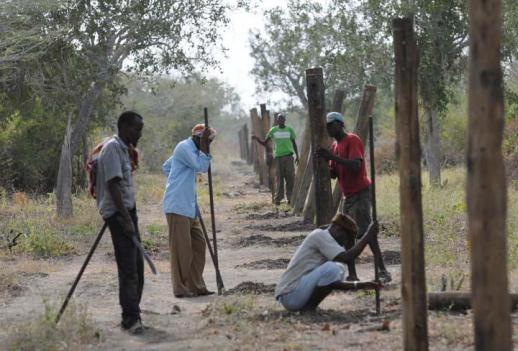
Fencing was completed last year (PHOTO: © Gwili Gibbon/IHCC) (www.nature.org/hirola)

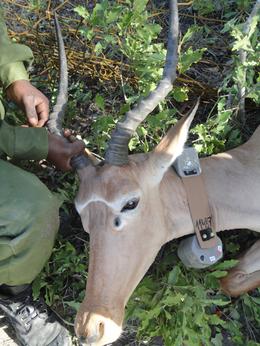
Radio collared.

Last November, as the animals’ numbers continued to dwindle, a 30 kilometer area of the wildlife park was cordoned off as a predator-proof hirola sanctuary and a founder population of Hirola was introduced. Today the sanctuary holds 120 antelope.

Despite this effort the hirola population has failed to recover. Lions, cheetahs, hyenas and leopards continued to erode their numbers. “When you’re down to 350 animals, the loss of one or two is a huge deal,” said one of the team working to save the antelope.

GPS collared hirola.

Last month

Field-workers tracked seven herds of hirola in the Boni Forest and Tana River 
districts of the country and fitted GPS collars to nine adults to begin a monitoring study to develop goals for protecting the animal.

The collars will drop off remotely in June 2014. Results from this study will provide much-needed information on the basic ecology and natural history of the hirola. This will form the basis of developing conservation efforts and monitoring of this rare and beautiful animal.

Hirola and his white “spectacles.” (Photo: Nature Conservancy)

These hirola are not only among the last of their species, they’re among the last of an entire genus — the taxonomic rank above species and below family. (As a point of reference, if the genus Canis were to go extinct, it would mean the disappearance of the planet’s dogs, wolves, coyotes, jackals, and numerous other species.) If this animal with the long muzzle and trademark white-spectacle markings dies, the entire three-million-year-old lineage goes too.


For more on saving the hirola: ishaqbini-hirola-community-conservancy.

Posted on February 1, 2013

Exposing the Big Game's avatarExposing the Big Game

Snaring’s About the Sickest

In Alaska, bears—in addition to wolves—are routinely hunted, trapped and shot from planes under the deathly ill-advised notion that eliminating those animals leaves more moose or caribou for more hunters to slay. What the Alaska state Board of “Game” can’t seem to figure out is, as the number of hunters goes up, the quantity of moose goes down, simple as that. Will we have to see an Alaska devoid of bears and wolves before the game players finally figure out who’s to blame?

But if anything could be sicker than aerial gunning for bears, it’s snaring them. Bear snaring is a recent addition to Alaska’s long history of animal abuse and exploitation; this new act of depravity was allowed “experimentally” for the first time in 2008.

In the following excerpt from an article, posted January 12, 2012 in the Anchorage Press, Bill Sherwonit dared to…

View original post 583 more words

Rattler

Posted on January 31, 2013

The Eastern Diamondback

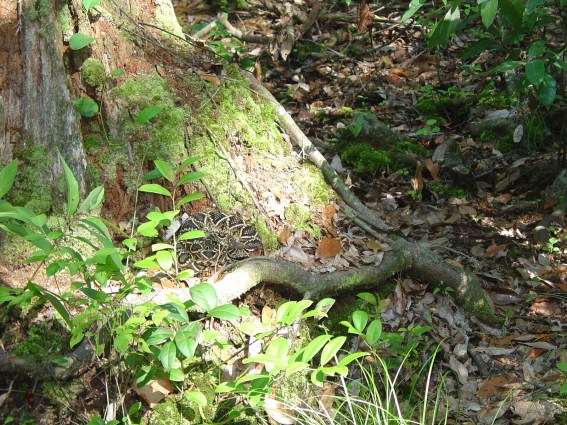
the iconic animal whose image helped inspire resistance to the British during the American Revolution, and in recent years became a favorite at Tea Party rallies, is rapidly disappearing in the southeastern United States.

Gadsden flag.

Eastern diamondback in Georgia. (Photo: D. Stevenson/Living Alongside Wildlife)

Once plentiful in longleaf pine savannas across the southeastern U.S., habitat loss—just 3 percent of its original habitat remain, road mortality, and human predation have left the animal in danger of extinction.

Particularly egregious in an age when people should know better, Florida, Alabama, Louisiana, South Carolina, Georgia and Mississippi continue to allow the slaughter of thousands of diamondbacks for their skins and meat with no harvest limits.

“Rattlesnake roundups,”

festivals that offer prizes to encourage hunters to collect and kill the snakes, are held in Georgia, Texas, Oklahoma and Alabama.

Snakes are gathered throughout the year by individuals who compete for cash prizes in categories such as, “largest snake” and “most snakes caught.” They are then milked for their venom (organizers claim it’s given to medical labs for research). What happens to the snakes afterwards depends on who you ask.

Last year at the rattlesnake roundup in Sweetwater, Texas, people stood in a long line waiting to pay for the experience of skinning one of the headless snake bodies that writhed in a pile at the base of the skinning stands. The rear wall of the pit was covered with white paper, where these people would be invited to leave their bloody handprints and sign their names.

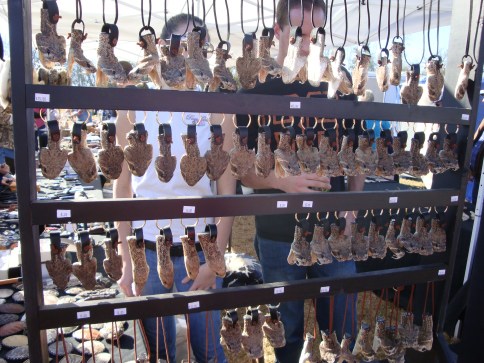
Whigham roundup souvenirs.

Whigham roundup souvenirs.

Event organizers at the annual Whigham, Georgia rattlesnake roundup held last week claim that the snakes this year weren’t killed during the event but sold to an operation that kills and processes them later. The claim seems dubious considering the DEAD SNAKE artifacts on sale–in any case, the net effect is the same: wanton slaughter of an endangered animal once held in high esteem by people who respected the outdoors and the wild creatures in it.

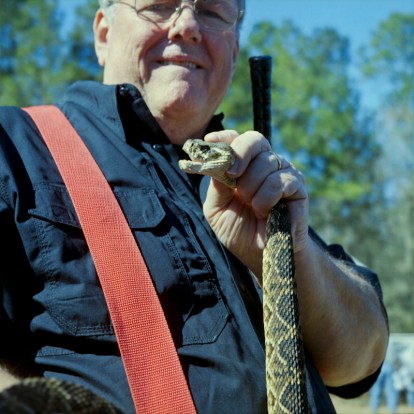
Snake milker Ken Darnel poses with eastern diamond back at the Whigham event. (Photo: Ryan Nabulsi)

Snake milker Ken Darnel poses with eastern diamond back at the Whigham event. (Photo: Ryan Nabulsi)

Featured events include “snake handling”, snake cooking and “snake demonstrations.”
How the “handling” works apparently: the snakes are frozen to slow their reflexes to make them easier to handle. Then their fangs are pulled out with pliers and their mouths sewn shut, and they are passed around for photo opportunities.

Many species are harmed

other than rattlesnakes. To catch snakes, hunters spray gasoline into tortoise burrows, destroying the burrows and often killing the animals inside. More than 350 species depend on tortoise burrows for food and shelter. Roundup organizers claim that hunters no longer use gassing to catch snakes, but in January 2010, wildlife officials in Georgia apprehended four men who had gassed 50 tortoise burrows to collect snakes for the event in Whigham.

Grace note

All of Georgia’s other roundups have abandoned or replaced their events with festivals celebrating local wildlife; Last year Claxton, Ga. held its first Claxton Rattlesnake and Wildlife Festival. No snakes were killed at the festival and it received a boost in attendance and praise from environmental groups, biologists, and the Georgia Department of Natural Resources for ending the practice of killing rattlesnakes.

U.S. Fish and Wildlife Service

launched a full status review of the species last spring to see if it may warrant protection under the Endangered Species Act. Two days ago, the nonprofit Center for Biological Diversity filed a formal notice of intent to sue USFW for failing to protect the eastern diamondback rattlesnake under the Act, an action intended to light a fire under the agency because inaction means fewer snakes.

LEAD

Posted on January 28, 2013

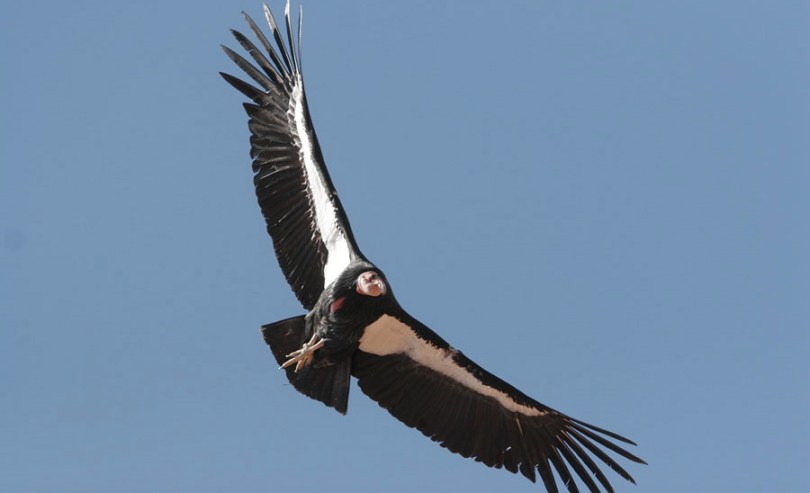
California condor. (Photo © The Peregrine Fund)

California condor. (Photo © The Peregrine Fund)

SALT LAKE CITY (AP) — A California condor found dead at Zion National Park this month is believed to have died from lead poisoning after foraging on a bullet-ridden game carcass. The female had been observed searching nesting cavities together with a mate which means her death takes out Utah’s only breeding pair of the endangered birds. Biologists were alerted to a problem when a motion device signaled the bird hadn’t moved for much of a day.

Photo taken Jan. 16, 2013. (Photo: Eddie Feltes/ AP/The Peregrine Fund)

By 1982 the world population of California condors had dwindled to 22. The last remaining individuals were captured in the 1980s and a captive breeding program was begun. In the last three decades, captive-bred birds have been released in California, Baja California, and northern Arizona. Condors are now breeding successfully in the wild. Pairs mate for life and produce only one egg every other year.

About half of the roughly 130 condors released since 1996 along the Arizona-Utah border have died or vanished. For birds that have been recovered, lead poisoning turned up as the main cause of death. Despite mounting scientific evidence about the dangers of lead to both wildlife and people, the National Rifle Association keeps pushing legislation to ban the federal government from addressing these preventable poisoning.

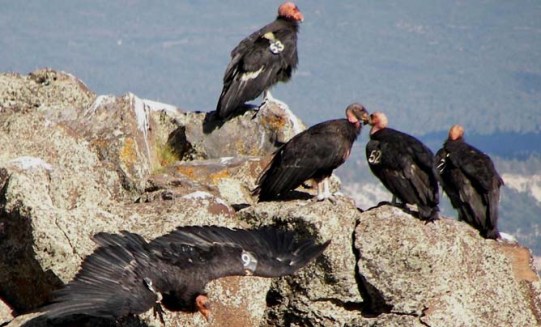
California condors. (Photo: National Park Service)

The California Department of Fish and Game in 2008 banned the use of lead ammunition in the 15 counties considered condor territory, but many ranch owners ignore the directive, and some have said it’s because they believe the ammo ban subjugates their rights.

The birds are known for flying 100 miles or more a day on wings that stretch up to 9 feet from tip to tip, surveying the land for any sign of commotion. Even wildfires alert the birds to a possible dinner, experts say.

The world population of condors inches up and down at around 400, approximately half of which are flying free in the wild.


Source:WildlifeExtra

1, 2, 3

Posted on January 27, 2013

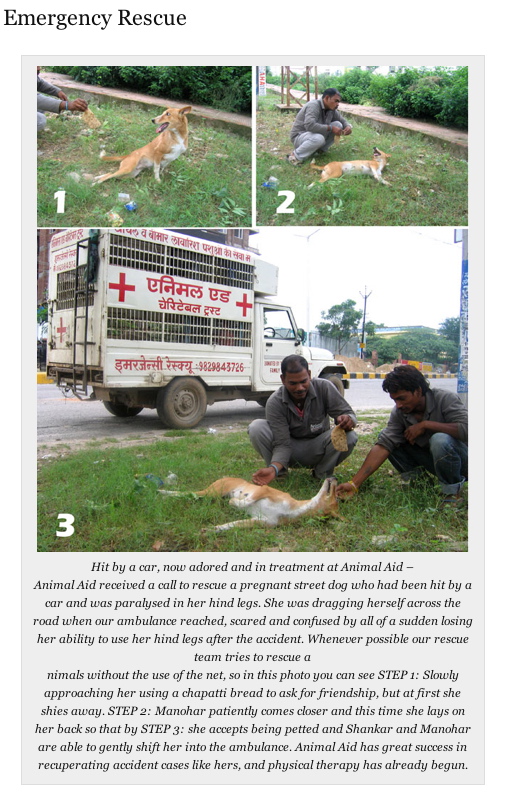
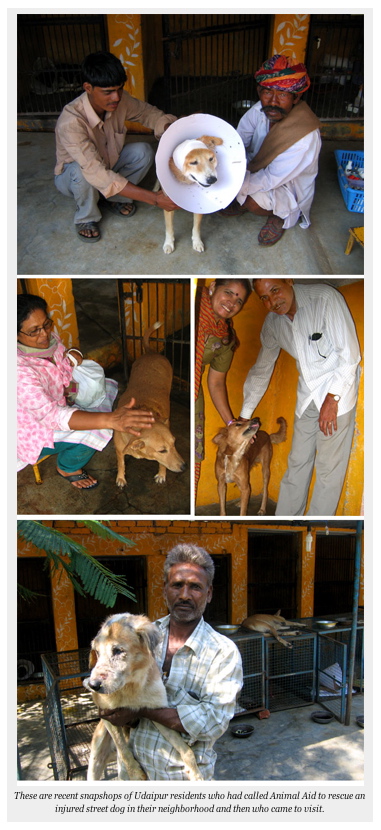
AnimalAidIndia1

Animal Aid Unlimited

is a US-based 501(c)3 charitable organization that runs a busy animal hospital and shelter in Udaipur, Rajasthan India, rescuing injured and ill ownerless 
street animals. Each year they respond to more than 3,500 calls reporting animal suffering, with cases ranging from a cow hit by a car, to a dog with a maggot-infested wound, to a case of abuse.

AnimalAidIndia2

“Broiler Farm Special!”

Posted on January 27, 2013

The Animal Legal Defense Fund

last week filed a complaint with the Federal Trade Commission against Tyson Foods, America’s largest meat company, for violating the Federal Trade Commission Act that calls for fair business practices. The complaint asks the FTC to investigate and put an end to deceptive marketing tactics used by Tyson, which claims to be an industry leader at the forefront of animal welfare while relying upon inhumane farming practices.

broiler house.

broiler house.

Tyson is supplied by more than 12,000 independent livestock and poultry farmers. It’s chicken operations are vertically integrated. The company hatches eggs, supplies contract farmers with chicks and feed and processes the chickens. Their thousands of suppliers run operations like these:

ForSale

Animal cruelty in chicken slaughterhouses connected to Tyson,

which relies on broiler houses for its production and uses methods that cause rapid and debilitating weight gain for the “broiler hens,” has been routinely exposed by animal welfare groups.

One broiler house can hold 25,000 birds.

Tyson contract farm.

Tyson contract farm.

A campaign sponsored by PETA called “Kentucky Fried Cruelty”, has pressured KFC to drop Tyson Foods as its supplier, due to it’s abusive animal practices and resistance to reforms.

SOLD: Tyson contract farm.

SOLD: Tyson contract farm.

Multiple courts have held Tyson responsible for environmental hazards.

As the largest U.S. producer of chicken and second largest producer of beef and pork, Tyson’s presence in the animal product industry extends across the nation.


Source: Animal Legal Defense Fund

140 TIGERS IN THE FREEZER

Posted on January 26, 2013

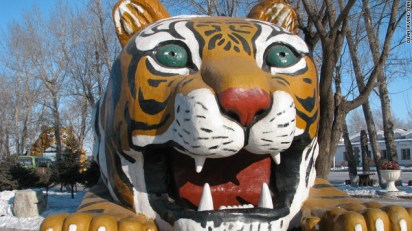
Xiongsen tiger breeding park.

Xiongsen tiger breeding park.

Xiongsen tiger park

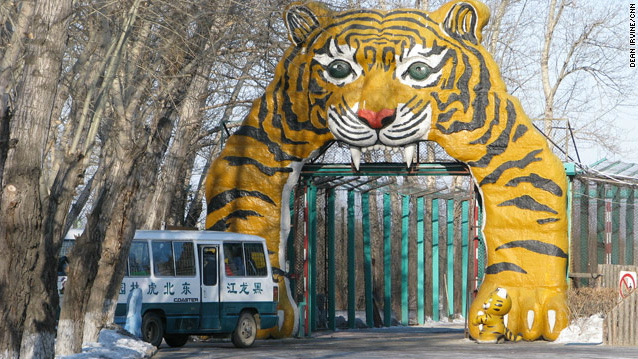
near Guilin in Hunan Province, south-east China, appears to be a depressingly typical Third World zoo, with a theme park restaurant and open areas where tigers roam.

Xiongsen tiger breeding park.

Xiongsen tiger breeding park.

Industrial tiger farming

The menu at the restaurant reveals that it’s more than a zoo: stir-fried tiger with ginger and Chinese vegetables, tiger soup and a spicy red curry made with tenderized strips of, well, you have a choice–lion meat, bear’s paw, crocodile and snake (note: the bear’s paw has to be ordered in advance as it takes a long time to cook). If you’d care for a drink, you can wash your meal down with a glass of wine made from Siberian tiger bones.

A waitress is proud of what they do. “When Government officials come here,” she says, “we kill a tiger for them so they have fresh meat.” Other visitors are given meat from tigers killed in fights. “We now have 140 tigers in the freezer,” she says.

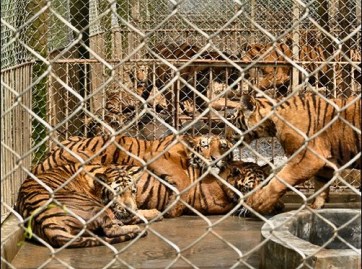
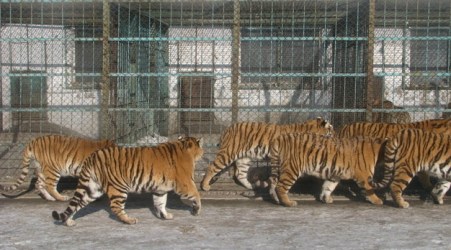
The animals are raised in battery-style cages—large scale imitations of the cages used to house factory raised chickens—between three and five tigers living in a space no larger than a typical family living room.

Dong Bei Hu Siberian Tiger Park outside Harbin, northeastern China, gives visitors the chance to view captivity-bred tigers close up.

The park, one of at least three in China, raises and slaughters more than 1,300 Bengal, South China and White tigers, 300 African lions and 400 Asiatic black bears for food and traditional Chinese medicines.

Dong Bei Hu Siberian Tiger Park.

Selling tigers is against Chinese and international law, and helps fuel the poaching that is driving tigers to extinction. But business at the park is good.

Tiger breeding farms also flourish in Thailand, Laos and Vietnam.

Srirachia TIger Zoo.

Sriracha Tiger Zoo

in Chon Buri Province, an hour outside of Bangkok, Thailand, is home to more than 200 Bengal tigers. Previously implicated in a sale of 100 tigers to China, conservation groups believe Sriracha and the other tigers farms are part of a vast network supplying skins, animal parts, and meat and bones of captive-bred tigers for luxury items and traditional medicine throughout Asia.

Tiger farm.

CITES regulations

restrict operations to breed tigers and other Asian big cats to the purposes of conservation; CITES specifically states ‘tigers should not be bred for trade in their parts and derivatives’.

Parties to CITES will convene in Bangkok, Thailand in March. Compliance with the decision to end tiger farming is on the agenda.