First Light Productions

investigative journalism

Posts by Michael Elton McLeod

Inching upward

Posted on October 11, 2012

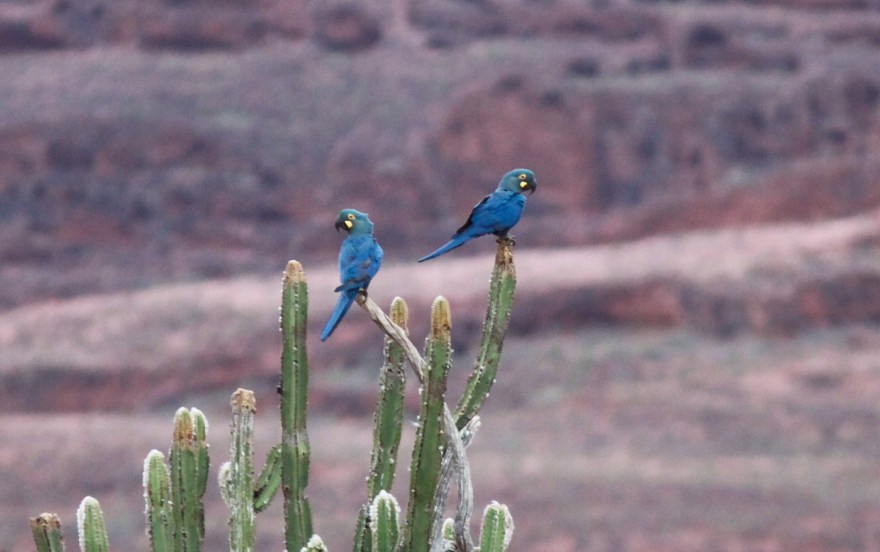
The Lear’s Macaw is a striking blue parrot from Bahia state in Brazil.

(Photo: Elis Simpson)

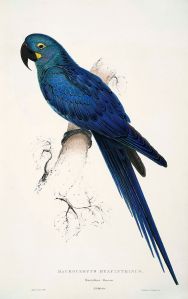
It was named after the poet, author, and artist, Edward Lear, who published many drawings and paintings of live parrots in zoos and collections.

Edward Lear (1812-1888) – original painting.

    In 1994 the population of the Lear’s Macaw was 140 birds. In 2007 a total of 751 individuals were counted as they flew out of the canyons where they roost and nest to their feeding areas in groves of licuri palms.

    Range of Lear’s Macaw.

    In 2009 the conservation status of the species was downgraded to endangered from critically endangered by the International Union for Conservation of Nature, prompted by annual counts at two roosting sites that estimate the population at approximately 1000 individuals.

    It’s future is imperiled by habitat loss, hunting and more recently, trapping for the aviary trade.

Night shift

Posted on October 10, 2012

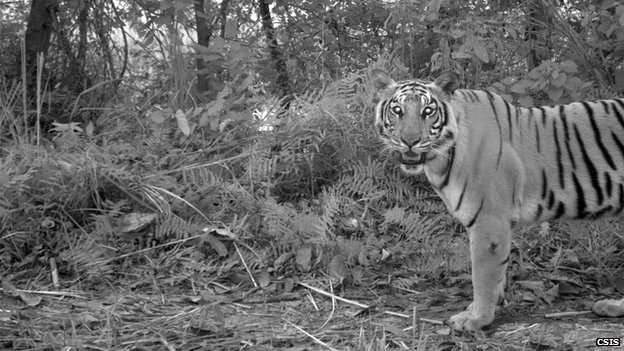
People and tigers in a Himalayan valley are walking the same paths, albeit at different times of the day.

Tiger in Chitwan National Park, Nepal.

    A recent study using motion-detection camera traps provided thousands of photos as evidence that the approximately 121 tigers in Nepal’s Chitwan valley have made a pronounced shift towards nocturnal activity.

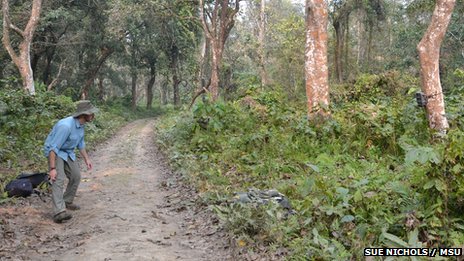
Study co-author Neil Carter spent two seasons setting motion-detecting camera traps for tigers. (Photo: Sue Nicols, Michigan State University)

    Since the start of the 20th Century, the world’s population of wild tigers has dropped by 97% from an estimated 100,000 to approximately 3,000 individuals. The world’s remaining tigers are being pushed into small spaces, and being able to share that space with humans is a critical survival skill.

    The tigers here appear to have found a middle ground that keeps their population viable.


    Source: BBC.

The Japanese are killing whales for research, too

Posted on October 9, 2012

The Georgia Aquarium in Atlanta has applied for a federal permit to import 18 beluga whales on behalf of a group of marine parks, saying the aquariums need the Arctic whales for captive breeding efforts, research and education. The proposal is drawing fierce opposition from animal rights advocates and others who object to their removal from the wild.

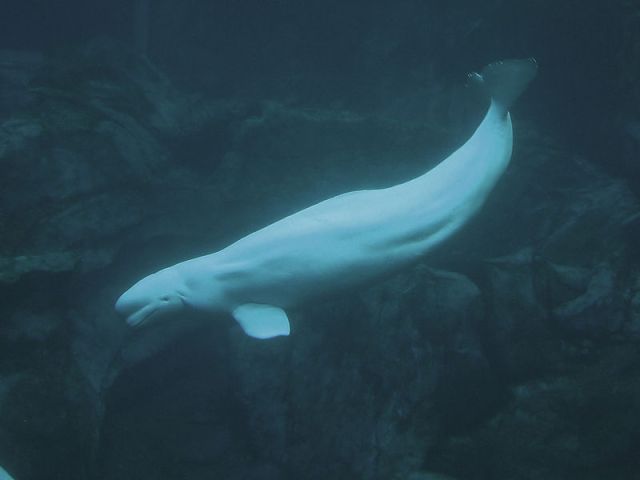
Beluga at Atlanta aquarium. (Photo: Greg Hume)

    Approval would end an import hiatus of nearly two decades that is rooted in misgivings about removing intelligent and social marine mammals from their native waters and their families.

    Complicating matters, the federal government’s decision will be based not on bioethics but on the language of the Marine Mammal Protection Act, which recognizes a benefit in winning the hearts and minds of paying customers who become attached to animals like the beluga, a white hued whale with a distinctive facially expression.

    Thirty-one beluga whales are now on display in the United States. Worldwide, a few hundred are thought to be in captivity.

    At least four of the nation’s largest marine parks, including the Georgia Aquarium, invite visitors to don wet suits and pet or be nuzzled by the animals for $140 to $250. The Shedd Aquarium in Chicago offers couples, for $450, a romantic wading experience that can culminate in a marriage proposal with Champagne, strawberries and the beluga as a chaperon. The other parks include the Shedd in Chicago, the Mystic Aquarium in Connecticut and the Sea World parks in San Antonio, San Diego and Orlando, Florida.

    The National Oceanic and Atmospheric Administration plans to hold a public hearing on the import proposal on Friday in Silver Spring, Md. A decision by its fisheries service is expected early next year.

    On reaching its decision, the agency will rely mainly on provisions of the Marine Mammal Protection Act that authorize such imports for public display unless the animal was pregnant or nursing when captured, was taken inhumanely or was part of a population that was depleted or endangered. The law also requires, among other things, that the display of the animal serve an educational purpose.

    The 18 whales were netted in forays in 2006, 2010 and 2011 in the Sea of Okhotsk off the Siberian coast from a robust population of 4,000 that plies those waters and is not viewed as endangered. (A population in Cook Inlet in Alaska is listed as endangered under federal law, however.) The 18 belugas are being housed at a research institution in the Black Sea town of Anapa, Russia.

    Marine institutions claim they need a strong captive population for research to help safeguard the beluga as its Arctic habitat is transformed by a changing climate.

    Critics say there is no demonstrable scientific purpose. That it is simply about keeping people entertained.

    Belugas are intensely social mammals with complex and lengthy migrations. They use many different habitats in different times of the year, and they are acoustic communicators. There is no way even the best captive situation has even the slightest approximation to that.

    The bottom line with the capture of any wild animal is that it breaks up family groups. A concrete pool will never be the open ocean.


    Source: New York Times

The blues

Posted on October 7, 2012

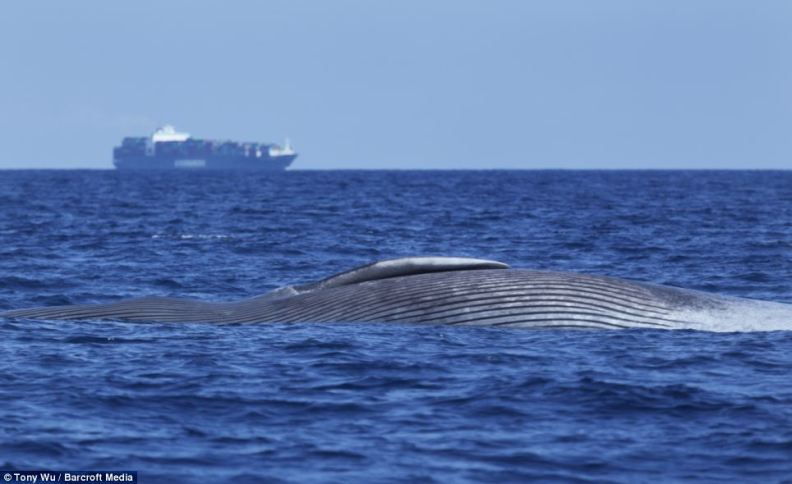
In early April, the lifeless body of a 60-foot-long blue whale was found floating in the water about 12 miles off the coast of Sri Lanka. Its tail had been nearly severed from the body, obviously the result of having been slashed by a ship’s propeller.

Left in the ship’s wake. (Photo: Mazdak Radjainia)

    Ship strikes are a leading cause of death among whales around the globe. The problem is particularly troublesome in Sri Lanka, where a largely unstudied colony of blue whales, the largest known animal to have ever existed, possibly numbering in the thousands, who inhabit an area extremely close to the coast, has come under increasing pressure from commercial shipping and from a boom in unregulated whale-watching boats

Fifteen miles off the southern coast of Sri Lanka is one of the world’s busiest shipping lanes, and whales are known to swim regularly inside them. Adding to the problem, scientists speculate that an substantial increase in whale watching could be forcing whales to seek food farther out, pushing them into the ships’ path.

The whale’s death in April was the sixth of the year. In March, a blue whale was found draped over the bow of a container vessel in the harbor in the capital, Colombo. Last year, some 20 whale carcasses (not all of them blue whales) were seen around the island. It is not known how many of the deaths resulted from ship strikes.

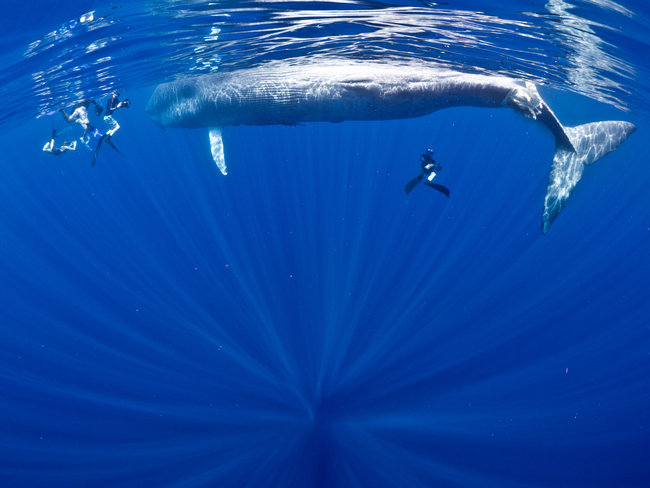
(Photo: Tony Wu/Barcroft Media)

The strikes likely represent only a portion of the true mortality. Because blue whales often sink soon after they are struck. The true number killed could be much higher than what has been observed.

For over a century, blue whales were hunted almost to extinction until protected by international law in 1966. In 2002 it was estimated there were only 5,000 to 12,000 blue whales worldwide.

In 2009, Sri Lanka ended a 25-year civil war that largely kept foreign scientists and researchers away from these waters. Several general surveys in the 1970s revealed the existence of the colony of blues, but it was not until the 1990s that interest in them started to grow. Researchers are now scrambling to find ways to protect them.

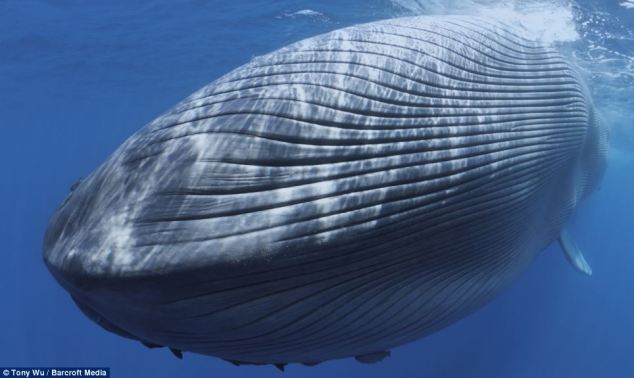
Diver Tony Wu has taken photos of the blues to highlight the whales’ desperate plight in a bid to reduce devastating ship strikes.

Researchers were particularly drawn by the whales’ tendency to stay here year round; other blue whale populations are known to migrate vast distances.

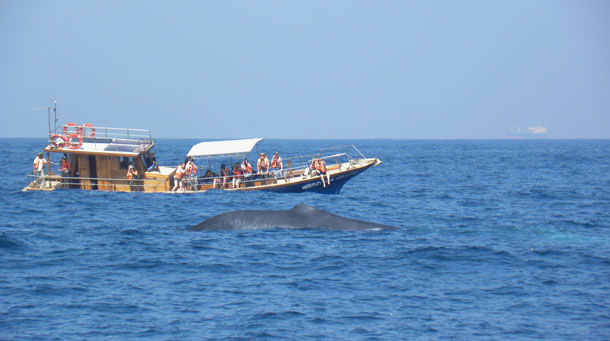
Whale watching has become a critical part of Sri Lanka’s development strategy to boost the economy. But the increasing number of collisions between ships and whales have scientists concerned that the rush to promote whale watching may be happening too fast.

(Photo: Discover Magazine)

    The whale watching industry in Sri Lanka is currently unregulated and growing. Whale-watching boats are driving helter-skelter around the animals. In countries with established whale-watching industries, laws prohibit getting close to the animals; the United States sets the minimum distance at 100 yards.

Source: New York Times.

War on wolves

Posted on October 6, 2012

Six gray wolves known as the Wedge Pack were shot and killed last week after Washington State wildlife (WDFW) officials determined that termination was the only solution to keep the animals from killing cattle.

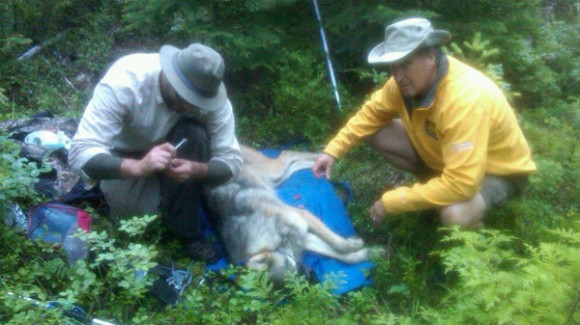
The wolves were discovered in July and are the first to come into the area since wolves were eradicated decades ago. This summer, the state killed a non-breeding female of the pack to see if that would deter them, even though at the time it was unclear whether they were killing or just scavenging carcasses that were already there. On October 2, two were slaughtered by sharpshooters after being shot from a helicopter just south of the Canadian border. A GPS collar had been placed on the alpha male in order to track the pack’s trail.

A tracker is put on the alpha wolf, who later leads his pack to its demise. (Photo: KTVB)

    A WDFW marksman killed the alpha male from a helicopter; it was the last of the six wolves killed.

    The agency said that they undertook the removal of the Wedge Pack in an effort to put a stop to its persistent attacks on livestock from the herd of the Diamond M Ranch in northern Stevens County despite non-lethal measures having been taken to control them. Since July the wolves had killed or injured at least 17 calves and cows from the herd. Some conservationists argue that the rancher who complained, Bill McIrvine, was uncooperative and could have done more to prevent predation. There is a conflicting press report that McIrvine persuaded the WDFW to eliminate the pack despite the fact that few serious efforts had been made to deter the wolves from predating the livestock.

    The chair of the Washington State Senate committee that oversees The Department of Fish and Wildlife, Kevin Ranker, issued a terse letter to the department describing its recent decision to exterminate an entire wolf pack as “a serious failure.” Ranker expressed “deep concerns” over the agencies’s management of the Wedge Pack. He pointed out that state guidelines require “non-lethal methods of wolf management” be used first, something he said did not happen.

    While the number of cattle killed is high, authorities are wondering if more could have been done to stop the wolves before making such a critical decision to end their lives. The department, however, stands by their belief that the pack had become so accustomed to eating cattle, they would not have stopped hunting the calves under practically any circumstance.

    A first wolf was killed in early August in an attempt to break the pack’s natural inclination to eat cattle. But animal activists can’t help but wonder why a more effective strategy wasn’t carried out before the wolves became habituated to such a diet.

    Grey wolf (photo: Retron)

    Several U.S. states, including Idaho, Montana, Wyoming, Minnesota–and now Washington, have declared war on wolves which have slowly lost their protected status in the Rockies and Great Lakes regions over the past four and a half years after the U.S. Fish and Wildlife Service declared them “recovered”–a contention disputed by most conservation groups.

    State wildlife managers, eager for hunting fees to underwrite their operations, understand that the chance to legally shoot a wolf is irresistible to hard core hunters.

    In Minnesota than 23,000 hunters from 33 states have applied for the 6,000 permits to shoot gray wolves that the state will issue for its fall hunting season, set to start November 3. Wyoming has classified the estimated 350 wolves within its borders as “predatory animals” that can be shot on sight in more than 80 percent of state and has implemented a regulated trophy wolf hunt.

    Environmental, conservation and wildlife groups have filed a series of lawsuits to protect the wolf. As a result the wolves in these regions have regained and re-lost their protected status at least a half dozen times since March 2008. In the interim several hundred wolves have lost their lives while political forces worked to remove their protected status once and for all, which is pretty much where they stand today.


      Reintroducing wolves into areas that were once their natural homes then killing them off is both misguided and shortsighted.

      A comment I ran across that makes sense:

      “Relocation is the only just answer. Just because we can kill, does not mean we should. The wolf hunts are causing a decrease in wolf DNA diversity. Killing adult wolves has created new problems with the surviving adolescent wolves……not fully taught, they are not sure what their food source should be. 
Without question wolves, as apex predators, strengthen the herds by weaning out the injured, the sick, the weak, and the old. Wolves are only responsible for LESS than 1% of all livestock losses. Greedy and lazy ranchers allow their cash cows to graze on public lands (for pennies) when this is wolf territory!!! They are creating conflicts. Trophy hunters do not want to share elk or other prey animals with wolves.”

      And, I would add, they would especially like to add a bagged trophy wolf to their photo collection.

Cases We’re Watching

Posted on October 5, 2012

In Texas County, Missouri, a young man was convicted of burning a cat named Tinkerbell.

When Tinkerbell was set on fire she sustained burns on most of her body and her ears were partially burned off. (Photo: The Animal Shelter of Texas County)

    The cat died after she was unable to fight off massive infection resulted from her burn injuries and subsequent extensive skin loss.

      Overwhelming evidence shows that human abusers, murderers or violent criminals began their first abuse on animals.
    A selection of cases being followed by the Animals and Society Institute:
    • A man in St. Louis, Missouri, burned or strangled five dogs.

    • In Flushing, Michigan, a man beat his 10 pound Pomeranian to death.

    • An 11-year-old girl in Saratoga Springs, New York, killed her foster mother’s puppy after the woman refused to take the girl shopping.

    • An elementary school teacher in Chicago beat his dog Queso, whom he adopted from a rescue group, to death in a fit of rage.

    • in Reno, Nevada, a man threw a puppy off a third-floor balcony, killing him.

    • A woman in California stabbed her dog to death following an argument with her husband;

      A study in Boston found 70 percent of all animal abusers have committed at least one other crime, and that 40 percent had committed violent crimes against humans. Studies also found that a history of animal abuse was found in 25 percent of male criminals, 30 percent of convicted child molesters, 36 percent of domestic violence cases and 46 percent of homicide cases. And 30 percent of convicted child molesters and 48 percent of convicted rapists admitted animal cruelty in their childhood. Prosecuting animal cruelty can help take dangerous criminals off the streets. We can help stop the cycle of violence by recognizing that animal abuse is an indicator of serious problems.


      Source: The Animals and Society Institute.

Six ways to help elephants

Posted on October 4, 2012

“Courtship” Elephant Voices.org.

    1. Don’t buy ivory. New ivory is strictly banned. Shunning antique ivory is a clear message to dealers that the material is not welcomed

    2. Buy elephant-friendly coffee and wood. Coffee and timber crops are often grown in plantations that destroy elephant habitats. Make sure to buy Forest Stewardship Council (FSC) certified timber and certified fair trade coffee.

    3. Support conservation efforts and organizations actively committed to elephant preservation. Here are a few:
    International Elephant Foundation
    Elephant Care International
    The David Sheldrick Wildlife Trust
    African Wildlife Foundation
    Amboseli Elephant Research Project
    ElephantVoices

    4. Be aware of the plight of captive elephants. This applies especially to your local zoo. Historically, zoos and circuses have offered elephants a life of indentured servitude. Zoos are starting to wake up but they have a long way to go in providing the right environments for their elephants. Circuses, even further. Boycott circuses that use animals, and zoos that offer insufficient space to allow elephants to live in social groups and have some control of their own lives.

    5. Adopt an elephant. There are many organizations that offer elephant adoptions so that you get cute pictures of “your” elephant, and they get currency to fund their elephant conservation efforts. World Wildlife Foundation, World Animal Foundation, Born Free, Defenders of Wildlife and the David Sheldrick Wildlife Trust are good places to start.

    6. Get involved with Roots & Shoots. Founded by Dr. Jane Goodall, Roots & Shoots youth program is inciting positive change for hundreds of thousands of kids in more than 120 countries, all working to create a better world. It’s a great way to get youth involved in conservation and pursue careers to help elephants and other wildlife.

Bat tracking

Posted on October 4, 2012

Bat facts: One in five mammals is a bat. Bats are the only mammals that can fly.

Little brown bats hibernate in mines and caves and eat mosquitoes and other insects. (Photo: Laura Kruger)

In the fall, bats often migrate hundreds of miles to abandoned mines and caves where they hibernate through the winter. Deep in the caverns, they cuddle up in tight, furry clusters.

In an effort to determine the cause of White Nose Syndrome that has has killed nearly 7 million bats since it first appeared in the US in New York State, researchers are gathering information about bat-to-bat interactions and how far bats travel between seasonal habitats.

In a recent study scientists have used the hydrogen “fingerprints” from bats’ hair samples to locate three geographic areas in Michigan from which the bats migrate–some as far 351 miles from the mine in which they hibernate.

They were able to estimate with 95 percent certainty the summer origins of the tens of thousands of bats that hibernate in the three areas.

Bat-to-bat contact is believed to be the way white-nose syndrome is spread, so understanding the bats’ movements can help determine which hibernation sites are connected and how disease could potentially be transmitted among locations.


Source: from materials provided by Michigan Technological University, via sciencedaily.com.

Recreating the past

Posted on October 3, 2012

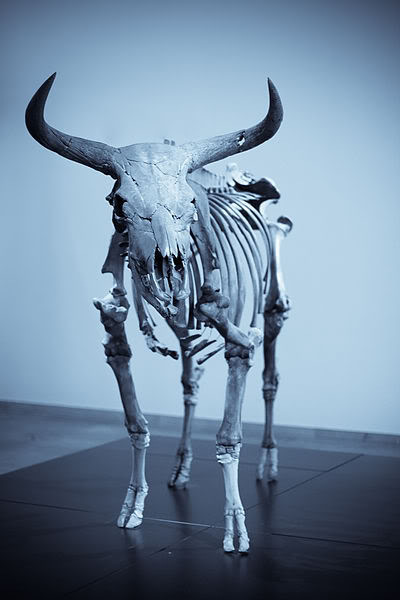
Aurochs were magnificent beasts. Standing well over six feet tall at the shoulder and weighing over a ton with huge sweeping horns, they once roamed the whole of Europe, large parts of Asia, and North Africa.

Auroch – Bos primigenius.

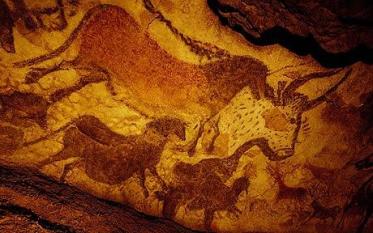
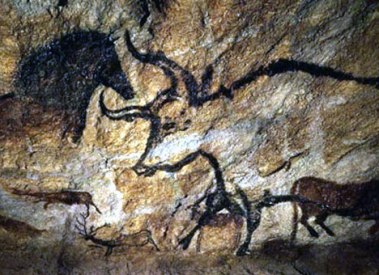
The aurochs date as far back as 2 million years ago. They appeared approximately 700,000 years ago in Spain. Ancient man drew their images on the walls of caves in France and Spain, as historical testament to their once prolific existence throughout Europe and Asia.

Aurochs depicted in ochre and charcoal on the cave walls at Lascaux in France. (Photo: ALAMY)

Lascaux around 17,000 years ago.

Around 30 BC Vergillius mentioned that ‘wild aurochs’ were captured in the north of Italy. They were one of the wild animals ancient Romans made big efforts to catch and transport to Rome and other cities to use in arena fights.

Caesar described them in The Gallic Wars as being “a little below the elephant in size” and a favorite hunting prey for wild Germanic tribesmen. In ancient times, killing an auroch was seen as a great demonstration of courage, with the horns turned into silver-clad drinking cups. Having figured prominently in Teutonic folklore, they remain as a heraldic symbol for several European states and cities.

The species was gone from the majority of its range by the 15th century and persisted only in the Jaktorowka Forest, Masovia, Poland. The last wild individual was reported to have died in 1627.

The Nazis ordered a pair of German zoologists to recreate the auroch as part of the Third Reich’s belief in racial superiority and eugenics.

Heck bull. A modern-day aurochs descendant in France. (Photo: Dominique Faget / AFP)

    The result, known as Heck cattle, may to some extent resemble the ancient aurochs, say experts, but they’re genetically quite different. Heck cattle, for example, are more aggressive than aurochs because they were bred, in part, using Spanish fighting bulls.

    Using genetic expertise and selective breeding of modern-day wild cattle, scientists today are attempting to bring the giant animals back to life in a form that more truly replicates the ancient auroch.

    Whether it’s possible to breed a true auroch is very much an open question. Genetic evidence suggests all “taurine” cattle (the docile cows and raging bulls common to Wild West films) descend from only about 80 females and came from a single region in what is now Iran about 10,500 years ago.

    The fact that all cattle seemingly descend from a single domestication event is unusual. For most other domesticated animals like horses or dogs, there’s good evidence to support multiple domestication events. But it’s known from analysis of ancient Iranian cattle bones that all cows throughout history likely only came from this one tiny auroch population.

    Little genetic variation meant the founding population didn’t have many different versions of the mitochondrial genes to start with, which are necessary to replicate a true descendent.

    The size and nasty disposition of the wild auroch would have made it a formidable beast to tame for the ancient Iranians and possibly the reason why domestication only occurred with a small number of animals. Scientists who have studied the auroch think that capturing and containing them would have been extremely difficult for hunter-gatherer societies, which represented the vast majority of human populations throughout Eurasia 10,000 years ago where goat was the preferred domestic species. The few sedentary, agricultural groups who had settled down into villages were the only ones even capable of domesticating such a beast.

    “The Aurochs” by Heinrich Harder (1858-1935), probably created in 1920.

    And what if scientists were able to come up with the real thing. Even the wild cattle we have today are very hard to handle. Aurochs were significantly larger than any cattle in existence. Brought to life today they would be potentially dangerous. There would be some serious management issues. To look after their teeth and feet, for instance, you might have to sedate them with dart guns. As one researcher put it, “You wouldn’t want to try to milk one.”

Leviathan

Posted on October 3, 2012

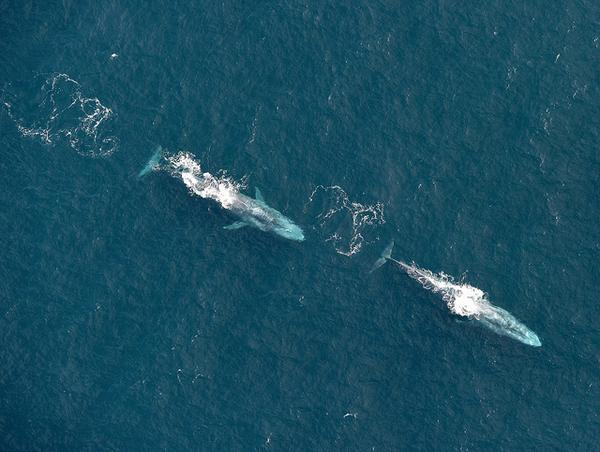
Blue whales off Ireland photographed by the Irish Air Corps some 80-100 nautical miles southwest of Mizen Head, 6, September, 2012.


Source: wildlifeextra.com

Heritage Animal

Posted on October 2, 2012

The Texas Parks & Wildlife Department has temporarily suspended its policy of shooting donkeys/burros in the Big Bend Ranch State Park after the Humane Society of the United States offered to devise a nonlethal plan remove the animals without killing them. State officials estimate that about 300 burros live in the 316,000-acre park on the Texas side of the Rio Grande. Park rangers have killed 130 there since 2007.

A donkey used by protestors last January to deliver a petition with 100,000 signatures asking Gov. Rick Perry to stop Texas Parks and Wildlife from hunting wild burros in Big Bend Ranch State Park. (AP Photo/Eric Gay)

    Advocates for the donkeys rode six of them to the state capitol in Austin last January to protest the killings. The state considers burros to be destructive intruders, hogging forage and lapping up water in the drought-starved mountains. Officials say they threaten the survival of hundreds of other native species, including bighorn sheep which the state wants to re-establish in the park.

    In Big Bend National Park, adjacent to the state-owned land, killing wild burros is prohibited by a 40-year-old federal ban that Congress said protects the “living symbols and pioneer spirit of the West.”

    Wildlife officials say that if nonlethal methods prove unfeasible, they made need to resume killing the animals.


    SIDEBAR OPINION by Zaqch Zniewski, courtesy of the Texas Observer.
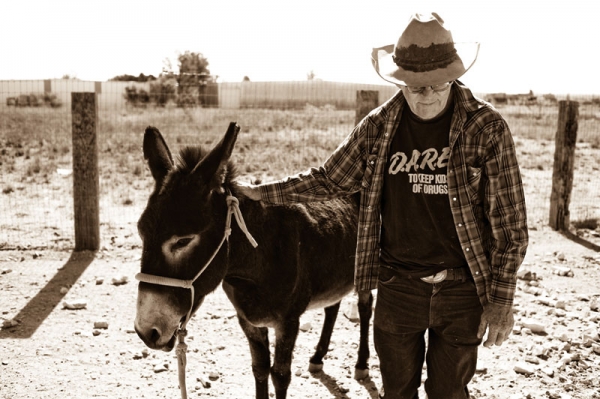
    When Zach Zniewski moved to Texas from Minnesota 12 years ago, he didn’t anticipate caring for five donkeys. Today, Zniewski, 63, is an advocate for the animals as a member of the Wild Burro Protection League. The group is opposed to the Texas Parks & Wildlife Department’s policy of killing the burros in Big Bend Ranch State Park. (Photo by Sandy Carson)

    “The [Texas Parks & Wildlife] policy is to change the focus of the park from a family tourism place to a hunting preserve. It’s not just the burros; they’ve gotten rid of any large mammals on the pretext they compete with the bighorn sheep for water and grazing.

    “From the 1500s up until about the 1970s those burros in Mexico and Texas were an integral part of work here and an integral part of the culture. To me, having a shared cultural heritage is really important to people in communities, and that’s something you can’t place a monetary value on.

    “I live in a little tourist town called Marathon, and when people stop here to buy gas and get coffee on the way to [Big Bend Ranch State Park], they say, ‘Oh, we saw wild donkeys, they came right up to the fence.’ People like to see those. Kids love them, of course.

    “I’ve got a little herd of my own. A lady friend of mine said, ‘You should come over and take a ride on my donkeys.’ I said to myself, dang, after being a motorcyclist for 20 years, that’ll be a change. I went over there and one of those donkeys just wanted to come home with me. So I got one and then I thought, well, they’re herd animals and I should have a couple. So I ended up with five.

    “I’ve got one who may just be the oldest donkey in Texas. He was born in 1957. Now he’s too old to ride. I just keep him—it’s his retirement home here, and of course he likes being around all the Jennys. His name is Viejo Alampo.

    “If you don’t wake up on time, they start making a huge racket. I feed them, and then I look over them, check their hooves and stuff. I have two that are good riding animals and I might go to the bar with those, or to the coffee shop, ride around. I guess the routine is I ended up being their caretaker. They have a good life, they like it. I wouldn’t be without them.

    “The parks administration doesn’t see that the burros have any value for our parks system or for tourism or for people who live along the border here. [Members of the Wild Burro Protection League] have different ideas than them.

    “The idea that tourists in general aren’t a big enough constituency to satisfy the park management and [that park officials] need an expensive hunting preserve irritates me to no end.”
Animal Imagination

Posted on October 1, 2012

From our sayings to fairytales, myth, and lore, animals feature prominently in our imaginative landscapes. But we distance ourselves with words like property, pets, pests, objects of study, test subjects, nuisance, creatures, wildlife—and none of these terms are quite adequate.

    We use animals to market our products, and products with an animal logo sell at a much higher rate than those without. Our sports teams call up wild, powerful animal icons. As children, we sleep with “stuffed” animals. From our goat-like vision of the Devil to our cultural preoccupation with vampires, werewolves, the Loch Ness monster, we secretly long to feel reconnected with our own animal nature, even while we fear it.
      So why do we speak of animal rights? A concern only with animal welfare, like tolerance for diversity, still allows us to dominate and choose what we tolerate. It isn’t the same thing as affording equal protection under the law. Using animals but trying to be nice about it still fundamentally allows us to determine when, how, and where we choose to be kind to animals. We must draw upon our empathic nature and respect the rights of sentient beings, whether human or nonhuman.

Selection from blog post September 24th, 2012, by Jennifer Molidor, Legal Defense Fund staff writer.

Costa Rica wildlife

Posted on September 30, 2012

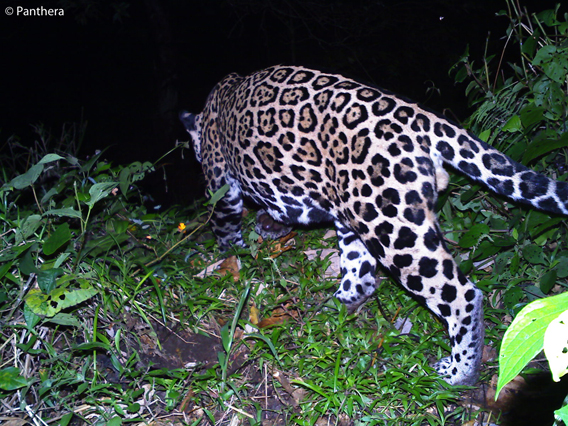
First camera trap photo of a jaguar taken by Panthera in a deforested area of Costa Rica’s Barbilla-Destierro SubCorridor. (Photo: Panthera)

    Panthera’s Jaguar Corridor Initiative aims to link core jaguar populations within the human landscape from northern Argentina to Mexico, preserving their genetic integrity.

Cattle before vultures

Posted on September 30, 2012

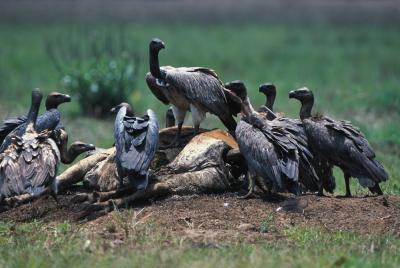
Cambodian vultures (photo: : A. Michaud)

    In the face of what has become a precipitous slide toward extinction across the Asian continent, the vultures of Cambodia have persisted, giving conservationists hope that these important scavengers can come back from the brink.

    Results from vulture censuses from several sites in Cambodia, Lao PDR, and Vietnam over the past several years have been encouraging, with new nests recorded and even population increases.

    While Cambodia’s vulture populations remain healthy, the use of poison by hunters and fishers for capturing other species are leading to unintended vulture mortalities. A study from the Wildlife Conservation Society, the Royal Government of Cambodia and other groups, reported that seventy-four percent of the forty-two recorded mortalities during the study period were attributable to poison.

    An enormous problem is the veterinary drug diclofenac widely used as an anti-inflammatory drug for cattle in South Asia that is toxic to vultures, causing death through renal failure and visceral gout to birds that feed on the cattle carcasses.

    In 2004 the governments of India, Pakistan and Nepal were presented with irrefutable proof that diclofenac was killing vultures at a catastrophic rate. All three countries banned the manufacture of veterinary diclofenac in 2006.

    In spite of a long crusade by researchers to warn of the drug’s danger, veterinary diclofenac continues to be used widely after its ban.

    Continued widespread use of the drug has led to global population declines higher than 99 percent in some vulture species. The slender-billed vulture, white-rumped vulture, and red-headed vulture are all listed as “Critically Endangered” by the International Union for Conservation of Nature.


    Source: Wildlife Conservation Society via Science Daily.

Pets on death row

Posted on September 29, 2012

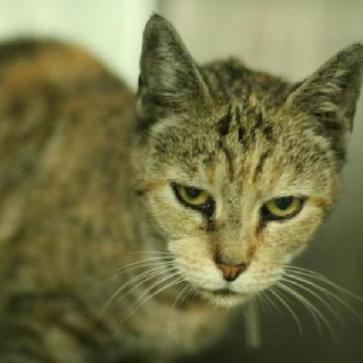
MIMI -ID# A0946568
I am an unaltered female, br tiger Domestic Shorthair mix.

The shelter staff think I am about 10 years old.
…See More

On Facebook. A non-profit—a joint effort with Urgent Part 2/Urgent Death Row Dogs–run by volunteers who rescue and help cats and kittens get adopted in New York City. Their Facebook page puts out a daily list and album of cats and kittens that are to euthanized the next day, so a sense of urgency is pretty big. It’s a lot of work, taking pictures and surveying the euthanasia list daily.
 
How it works:
A new “To Be Destroyed” list comes out every night between 5:30-6:30 pm. If there is a cat or kitten you can adopt or foster call the ACC number if it is BEFORE 7pm- adoptions stop at 6pm or so. You will HAVE to pick up that cat first thing in the morning. They will not hold the cat– they will kill it. The only way they will hold it for 24 hours is if an approved rescue calls that cat in. If you can’t make it to the shelter speak up! We will find a rescue FOR YOU! We can possibly help with transport!
 
MISSION: Giving a voice to those without. Everyday large numbers of adoptable animals are killed for reasons for reasons we believe unjustified. In most cases, these animals are loving, sensitive, and playful pets who simply lack a home. This page is their voice. Save a life. Don’t shop, Adopt.
 
List of Rescues and “how to adopt”
http://www.facebook.com/note.php?note_id=320666967994014