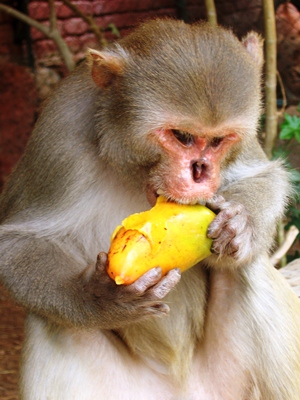
Raju lives in Udaipur, India in a sanctuary called Animal Aid. He is blind. Most likely electrocuted. Electrical burns from the chaotic electrical supply of Indian cities are, apparently, common among monkeys there. The incident left Raju with a badly scarred face.
The sanctuary staff
says Raju is about 10 years old and that he came to their facility when he was maybe six months of age. Initially he was housed with others. But when his last companion was successfully healed and released back to the wild, Raju was left alone.
Shirley McGreal,
founder of the International Primate Protection League, learned about Raju and wanted to improve his living conditions. Shirley lived in India for several years, and abhorred the way monkeys were often treated, tied up and forced to perform by the side of the road on the way to tourist sites like the Taj Mahal.
IPPL
provided funds to the sanctuary to double the size of Raju’s enclosure and put a divider down the middle, so that one side could be cleaned and safely re-stocked with enrichment while Raju inhabited the other half.
Erika Abrams
Animal Aid’s co-founder, wrote to Shirley to say thanks: “I know for an outsider who doesn’t know the situation it would not perhaps be obvious what it means to double someone’s entire world as you are doing for Raju. Raju will know it. And you and your [supporters] are angels who are seeing the world through the eyes of a blind monkey.”
Rhesus monkeys are the world’s second-most-widely-distributed primate species (after humans), says Shirley. “They don’t always get a lot of respect in their native countries. Still, Raju’s tale reminds me of the classic story about returning one stranded starfish among thousands back to the sea.”
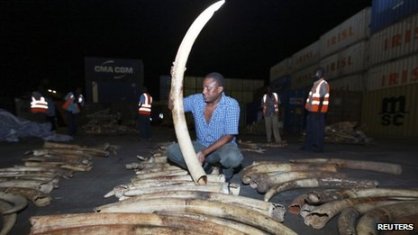
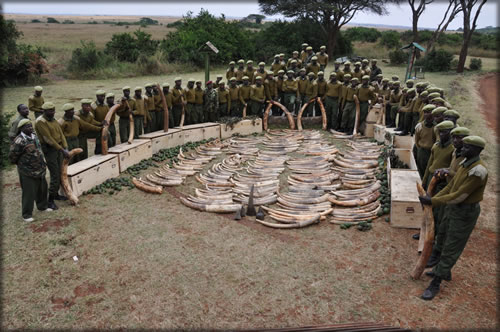
An estimated two tons of ivory was discovered by Kenyan authorities in a shipping container in the port of Mombasa. The more than 600 pieces are worth an estimated US $1.5 m.
As with most ivory in the escalating black market trade, the consignment was destined for Indonesia. It is believed to have come from Rwanda and Tanzania, cementing East Africa’s reputation as a clearing house for the illegal ivory trade.
Mombassa.
The January 16 seizure alone represents the death of roughly 250 elephants.
“Decorating stones.” (Photo: Reuters)
January 4th
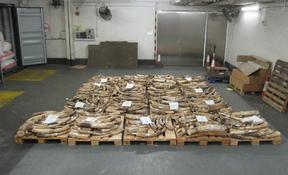
A routine x-ray scan by Hong Kong customs agents of a shipping container said to contain “decorating stones” revealed 779 ivory tusks weighing more than a thousand kilos and valued at more $1.4 million. The seizure comes on the same day that poachers in Kenya, killed a family of 11 elephants in the biggest single mass shooting of the animals on record in the country.
Hong Kong January 4. (Photo: AP)
Smuggled by sea from Kenya via Malaysia, hidden in five wooden crates under valueless rocks, the tusks were the third largest seizure in Hong Kong in just three months.
October 2012
A joint operation involving Hong Kong and Guangdong customs officials in Hong Kong, resulted in the seizure of nearly 4 tons of ivory discovered inside two containers shipped from Tanzania and Kenya.
Hong Kong: 1,209 pieces of ivory tusks and 1.4 kilograms of ivory ornaments.
September 2012
Two suspects were arrested and 317 pieces of raw elephant ivory, weighing 2 tons, and five rhino horns were seized at Nairobi Airport. Investigations are continuing over the source and sender and recipient of the illegal cargo, which had been disguised as avocado fruits.
KWS rangers and officers display ivory seized at the Jommo Kenyatta International Airport. The cargo was destined for Malaysia through Dubai by Emirates airline.
Insatiable Asian demand
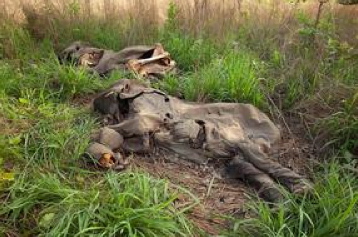
continues to drive brutal elephant poaching. Most fingers are pointed at China. The international trade in elephant ivory, with rare exceptions, has been outlawed since 1989 after elephant populations in Africa dropped from millions in the mid-20th century to some 600,000 by the end of the 1980s.
Victims of Sudanese Jangaweed.
Ivory trade was banned in 1989 under CITES,
Born Free Foundation has launched a website that offers the latest news about the illegal ivory trade.
Last month, Zambia’s Minister of Tourism and Arts, Sylvia T. Masebo, announced that specific hunting licenses would be suspended as they had “been abused to the extent they threatened animal populations.”
(Photo: International Fund for Animal Welfare)
This week the Zambian government banned lion and leopard hunting across the board, citing that populations have abruptly declined in recent years.
Botswana has decreed a country-wide ban on sport hunting to begin on January 1, 2014. Botswanan President Ian Khama noted, “The shooting of wild game for sport and trophies is no longer compatible with our commitment to preserve local fauna.”
Kenya banned trophy hunting and dealing in wildlife in 1977. Trophy hunting was properly cited at the time by the new Kenyan government as “a barbaric relic of colonialism.”
Endangered
Lions have disappeared from over 80% of their historic range, and their population declined by nearly 50% from just 1980 to 2002. The threats facing African lions today are numerous and reinforcing: habitat destruction and fragmentation, loss of traditional prey species, disease, and inevitable conflict with humans—to wit: unsustainable trophy hunting and commercial trade in lion parts.
Lust for trophies
The United States is by far the world’s largest importer of both commercially traded African lion parts and lion trophies. Over half of all the lions killed each year are shot by American trophy hunters.
South Africa. Raised for canned hunting.
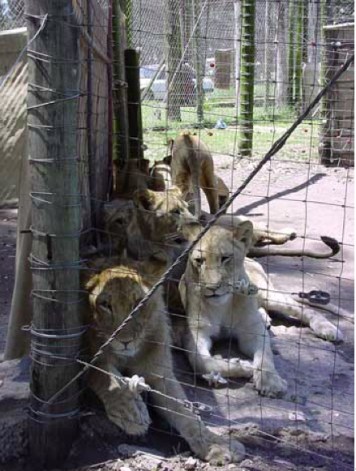
As a grotesque example of the lack of empathy for wildlife of those who kill animals for sport, the majority of hunted lions in South Africa are bred like cattle in electrified wire pens, then released to be shot by rich European and Americans. Currently captive raised animals can be shot legally in some provinces just FOUR DAYS after being released from captivity. When animals are stalked in a confined area it is known as “canned hunting.”
Help protect African lions from hunters
With lion populations endangered throughout a significant portion of their range they meet the criteria of an Endangered listing under the Endangered Species Act. The United States government and Americans should heed the alarms sounded by African countries to protect their wildlife and move away from killing for sport.
Sign this petition to list the African lion as Endangered under the ESA. An endangered listing will prohibit the importation of lion trophies into the US and and remove one of the biggest incentives for participating in this blood sport which is contributing to the continuing decline of the species.
Needless killing of endangered species for trophies is inherently unsustainable, economically short-sighted, ecologically unsound, and morally wrong.
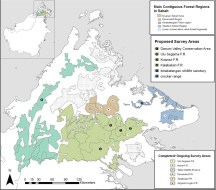
One of the most biodiverse areas on the planet is found in Sabah, the northernmost state of Borneo.
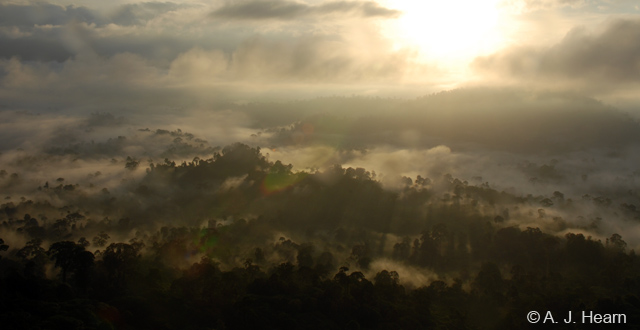
Sunrise over the Danum Valley, on the northern portion of the island of Borneo, one of the last remaining primary rainforests in the county and one of the last remaining places on earth where Sumatran rhino, elephant, clouded leopard and orangutan live side by side. (Photo: A.J. Hearn)
Disappearing forests
In the last three decades much of Sabah’s forests have been destroyed due to the growing demand of the industrialized countries for tropical timber, paper, palm oil and “biofuels.” What is left is a patchwork of fragmented forest remnants in the midst of endless oil palm plantations.
Sabah, Borneo
Threatened Species
This fragmentation poses an imminent threat to the future of the island’s animals: orangutans—which constitute 80% of Malaysia’s wild orangutan population; the Sunda clouded leopard and other species of threatened wild cats; the Borneo pygmy elephant, found only in Sabah, estimated to number only 2,000; and the Bornean subspecies of the Sumatran rhinocerous, the most endangered species of all, with only an estimated 40 animals left.
Bornean orangutan (Photo: Sabah Wildlife Department/Danau Girang Field Centre)
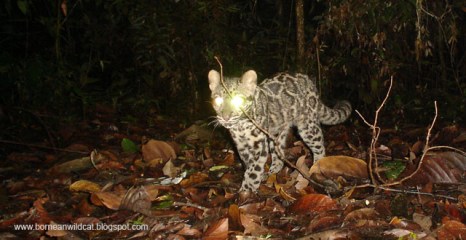
Rarely photographed clouded leopard cub, one of three animals previously recorded in Danum Valley, Malaysian Borneo.
Wildlife Corridors
To stem the loss, the Sabah State Assembly has introduced the “corridor of life” concept to allow wild animals to move from one place to another to search for food and give them the opportunity to propagate. The goal is to ensure that 55 per cent of the state remains covered with jungle.
Palm Oil Threat
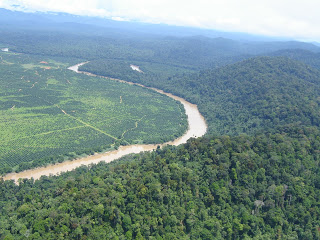
Oil palm planted right up to the river edge along Kinabatangan.
It is common for palm oil estates to plant crops right up to the river bank, blocking the passage of animals. The corridor of life concept involves establishing 500m-wide tracts of forest corridors and riparian reserves, now divided by plantations, along banks of key rivers to serve as wildlife corridors for species to maintain viability.
The government is buying up land little by little while encouraging Non-Governmental Organizations to raise fund themselves to ensure ownership of the corridors is shared by everyone.
Camera traps and wildlife corridors
are proving an essential tool in convincing people who can make a difference that the animals are out there, struggling to survive on a planet that is being systematically stripped of its resources with too little thought to species other than our own. Stay in touch with ANIMAL POST for news of the corridors and up to date photographic evidence that we are not the only living creatures on the planet.
Information about this nefarious but widespread activity is hard to get. Obviously, the people involved prefer to keep a low profile. But here’s an example of the kind of mind set that allows it to proliferate.
Troy Gentry
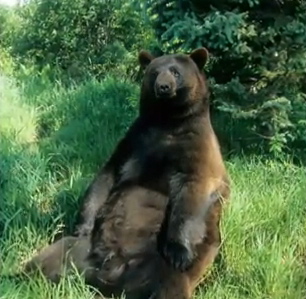
In 2004, Troy Gentry, half of the musical group Montgomery Gentry, paid Lee Marvin Greenly, the owner of Minnesota Wildlife Connections, to kill a “large trophy caliber bear” that Greenly owned by the name of Cubby.
Greenly promotes himself as a wildlife photography business providing captive-held animals for individuals to photograph in a wild setting.
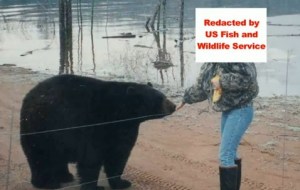
Cubby was a tame bear, hand fed by Greenly with no fear of people. After the bear developed dental problems, Greenly sold him to Gentry, a bow hunter, for $4600, then helped him stage a video that portrayed the “hunt” as a wild encounter.
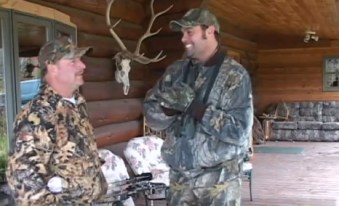
The video contains a scene in which Gentry and Greenly talk on camera about the big hunt they have planned, down in a swamp where they’ve seen bear activity.
Greenly and Gentry discuss upcoming “hunt.”
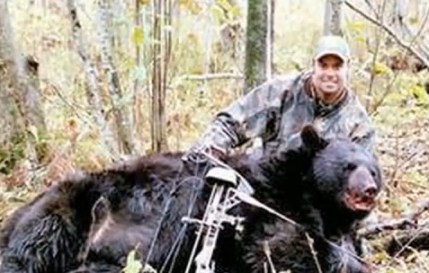
Gentry seconds after shooting the bear.
One Acre Forest
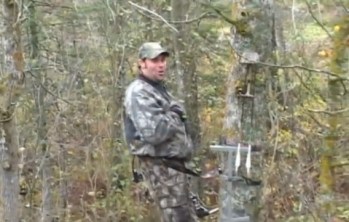
In the video Gentry watches for the bear from high on a tree in the “woods”–in reality, an acre of trees surrounded by an electric fence.
The bear
wanders into the shot drawn to bait beneath Gentry’s post. He draws his bow, shoots an arrow that strikes the bear in the side and shoots a second arrow at the bear as it walks away. The video was edited to show the arrow traveling in slow motion as it strikes the bear. At least some of this video footage was prepared by Gentry for later use on television or in a music video. Gentry also arranged for photographs to be taken that implied he had killed a wild bear.
Trophy photo.
Cubby dies
Greenly takes a trophy shot of Gentry with the bear, then they tag him with a Minnesota hunting license and register him with the Minnesota Department of Natural Resources as though it was lawfully taken from the wild population.
The bear’s hide was shipped to a taxidermist in Kentucky. Gentry gave a copy of the video of the shooting to the taxidermist. A video showing a stuffed Cubby in Gentry’s game room was aired on television (on the Outdoor Channel) three times during the week of July 24, 2006.
Meanwhile, the US Fish & Wildlife Service (FWS) investigating wildlife violations on the Rice Lake National Wildlife Refuge near Greenly’s property, turned up evidence of illegal hunting that led to Greenly who admitted that Cubby was not a wild bear.
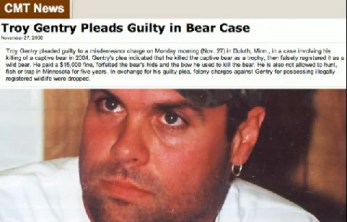
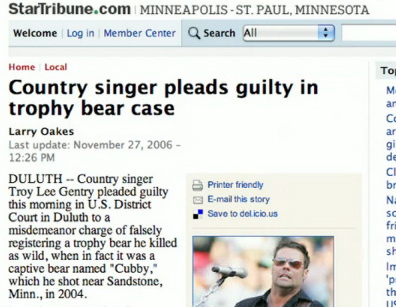
Greenly and Gentry were charged with multiple violations of Minnesota wildlife law. Gentry pleaded guilty to a misdemeanor charge of falsely registering a captive bear as being killed in the wild. Under a plea, the then 39-year-old singer agreed to pay a $15,000 fine, give up hunting, fishing and trapping in Minnesota for five years, and forfeit both the stuffed bear and the bow he used to shoot the animal.
In exchange for Gentry’s plea, federal prosecutors dropped a felony charge of violating the Lacey Act, which authorities said bans possessing or transporting illegally obtained wildlife.
Cubby and Greenly. Released in lawsuit.
Outraged
at what it called a light punishment, the animal protection group Showing Animals Respect and Kindness (SHARK) sued the US Fish and Wildlife Service to turn over the videotape of Gentry’s canned hunt. In 2010 they won a three-year battle, gained possession of redacted photos showing Greenley and Cubby, and the video. SHARK released it on YouTube (October 25, 2010) so Gentry’s killing of an innocent bear can be seen by everyone.
We pulled her from the pasture a few days ago for no reason other than she seemed to not be acting quite herself. She’d been at the ranch about six months, brought in from a seizure involving six other donkeys.
Sometimes, when the stalls are full, we just let them hang around the barn. They receive special attention and we have the time to really watch them. There was no physical indication that anything was wrong. We had no idea…
It was a warm night, the sky clear, silent….
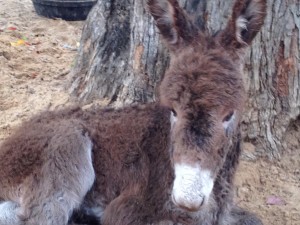
Early this morning she brought her child into the world, born in the barn hallway because there was no room in the stalls.
The horses stood silent as he took his first steps….
NEW DELHI: The sight of poorly fed and badly treated bears being forced to dance on the streets of India is a thing of the past as a campaign to wipe out the practice has finally borne fruit, activists say.
The World Society for the Protection of Animals (WSPA) and India-based Wildlife SOS, which runs sanctuaries for bears, have also declared an end to the practice in the last few months, 40 years after a government ban in 1972.
~~~
HISTORY
Since the 13th century, bears have been forced to dance for the entertainment of humans.
In India, bear cubs were purchased from poachers for about $22.00
~~~
THE PROCESS OF FORCE
The process of force began by hammering a hot iron rod through a cub’s sensitive snout.
The bear cub’s teeth and claws were removed
A threaded rope was inserted through the snout so that the bear can…
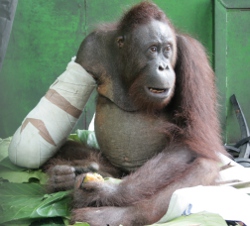
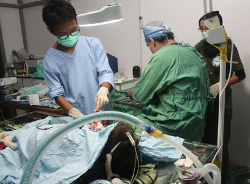
Pelangsi, a young male orangutan, underwent a five-hour operation last May to remove his withered hand and arm. He had spent ten days caught in a snare before a team from International Animal Rescue (IAR) reached him and cut him free.
Pelangsi.
The local man who set the trap has admitted to having 60 snares in the forest which is only about 400 hectares in size. The forest in Pelangsi is home to a large number of orangutans that have fled from the new palm oil plantation that has been created next to it by a palm oil company. The man claimed to have tried to free the trapped orangutan but was scared of the animal which was wild with pain and the trauma of being caught. The man was also afraid to report the situation to the authorities for fear of being prosecuted under Indonesian law should the orangutan die. Consequently he abandoned the animal without food or water, leaving it for days struggling to break free and causing an agonizing wound on its hand and wrist.
Thankfully a local from the same village alerted the team at the IAR centre and they responded immediately.
The young adult was close to death when they found him. His right arm was caught in the snare which had been set to trap deer and wild boar. The orangutan had stepped in a loop of rope hidden under leaves on the ground which tightened and pulled upwards when he trod on it.
Pelangsi was trapped in the snare for ten days without food or water.
Rescue team
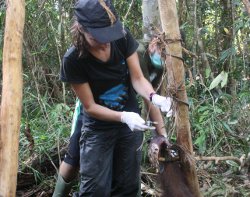
led by veterinary director Karmele Llano Sanchez, sedated the orangutan, freed him from the snare and gave him fluids for severe dehydration before transporting him back to IAR’s clinic in Ketapang.
Veterinary director Karmele Llano Sanchez cutting Pelangsi free.
He was given the name Pelangsi, after the area where he was found. The medical team worked round the clock to save him. During the first 48 hours his condition remained critical and he wasn’t stable enough to undergo surgery. He had contracted septicemia as a result of the injury and infection in his hand. He received fluids intravenously and was also put on antibiotics and painkillers.
The IAR Indonesia veterinary team was led by Dr Adi Irawan, under the guidance of Dr. Paolo Martelli, Chief Veterinarian Ocean Park Hong Kong
Stressed in captivity, Pelangsi tries to hide under the foliage in his cage whenever the vets approach him.
Palm Oil Industry wreaks havoc on orangutans
IAR’s centre in Ketapang is already caring for three baby orangutans that were rescued from the PT KAL palm oil plantation and the team also tried unsuccessfully to rescue three more that were found there during land clearing operations. The company is a member of the RSPO (Round Table on Sustainable Palm Oil), an association set up to promote the sustainable production and use of palm oil. However, in spite of PT KAL’s apparent concern about the social and environmental impact of its industry, they are responsible for large numbers of orangutan deaths in the area.
Alan Knight OBE, IAR’s Chief Executive, said: “Pelangsi’s story is a graphic illustration of the plight of so many orangutans in Borneo. He was driven from the forest when it was destroyed to make way for a palm oil plantation and forced into an area where wildlife and human beings are competing for space and for food.”
There are now 51 orangutans at IAR’s emergency centre in Ketapang, West Kalimantan which have been rescued or confiscated with assistance from the BKSDA – the local forestry department. That number will continue to rise rapidly until drastic measures are taken by the palm oil companies to protect orangutans and other wildlife from the devastating effects of their industry.
Release
After six months of treatment and rehabilitation at IAR’s orangutan centre in Ketapang, Pelangsi was released into the Pematang Gadung forest of West Kalimantan in December, The forest is a safe area free from snares and other man-made threats, and patrolled and monitored by a volunteer group of local villagers from the community of Pematang Gadung. Yet the area is not currently officially protected. IAR is pushing to raise local awareness of the condition of orangutans and their habitat in Ketapang, in the hope that Pematang Gadung will be given status as a protected area.
A team of experts are following and monitoring Pelangsi to see how he is coping.
Alan Knight OBE, IAR’s Chief Executive, added his “thanks to Dr Adi, Dr Wendi, Dr Silje, Dr Richa, Dr Jesus and Dr Raul for all they are doing.”
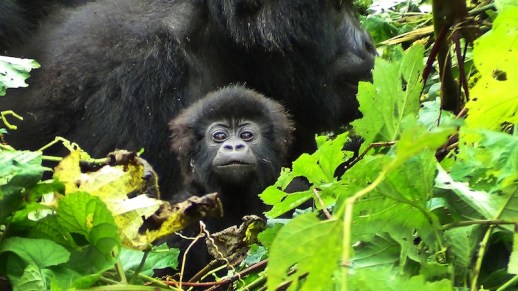
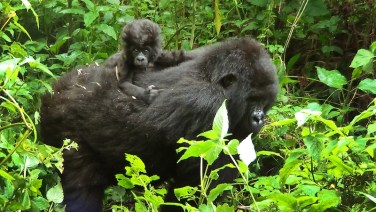
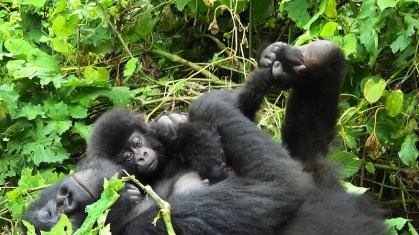
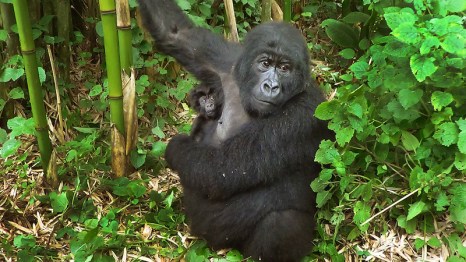
After four months of no access whatsoever to Virunga National Park’s gorilla sector, on 1 December, the rangers there negotiated entrance to Bukima for one small team to check on the mountain gorillas. They found all but one of the habituated families. And a lot of new babies.
A total to 4 newborns were identified in the Kabirizi group alone. This is quite unprecedented and brings the growth rate of this family close to 30% a year.
Kabirizi Family.
The natural growth for a healthy gorilla populations is more like 6%. So we’re shocked and delighted at this unexpected turn of events that brings a positive twist to the end of an otherwise incredibly difficult year.
Poaching
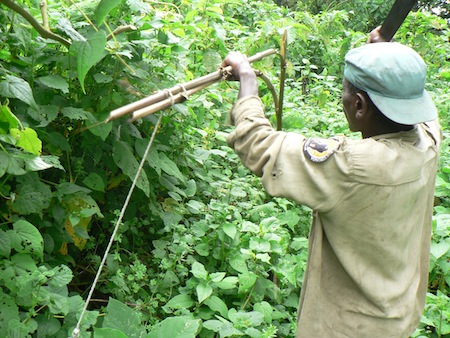
We also found that during the absence of rangers, poaching increased to a very large scale: in just 4 days of monitoring and tracking gorillas, 114 snares were dismantled, which are a danger to gorillas and other animals.
is the Official Website for Virunga National Park in the Democratic Republic of Congo — the cd lets you know they’re in the Congo!
Virunga is the crown jewel of Africa’s national parks. It contains over 50% of sub-Saharan Africa’s biodiversity and is home to about 200 of the earth’s last 720 critically endangered mountain gorillas who are in a desperate fight for their survival. Virunga is the oldest national park in Africa.
Source: posts 6 and 28 December, 2012, by Chief Warden Innocent Mburanumwe and Emmanuel.
A 20-year old woman named Sean Janas recently stood before a judge in Wausau, Wisconsin and waived her right to a preliminary hearing, not challenging the charges against her. She is charged with felony mistreatment of an animal causing death, poisoning an animal and lying to police.
Sean Janas.
Mary.
Specifically, a 4-year old dog named Mary.
According to police, Janas wrote in her diary about how she poured bleach and drain cleaner down the dog’s throat and enjoyed doing it. She also stabbed the dog who died in June after months of torture. She faces five years in prison and $30,000 in fines.
“They weren’t pets!”
In the twin cities, dog breeder Dayna Bell is accused if drowning puppies at her Bell Kennels and Farm by putting them in buckets of water.
Puppymiller Dayna Bell.
Dakota County Sheriff’s officers searched Bell’s kennels last year and found 10 small-breed dogs in a freezer chest. The dogs appeared to be wet, suggesting they’d drown before being frozen. Bell told authorities she didn’t know how the dogs got in the freezer, but admitted drowning them in a bucket.
Former employees at Bell Kennels and Farm said they saw Bell drown puppies by tying a cinder block to their necks then throwing them into a swimming pool.
Her defense? They weren’t pets. Facing 14 felony and two misdemeanor counts of animal cruelty, Bell and her attorney plan to use technicalities to contest the charges, using the statutory distinction between “pets” and “commercial animals” to make a case that since commercial animals are subject to different rules, she shouldn’t face felony charges.
One day after being charged, Bell posted $50,000 bail and was back at work. Bell’s husband said business had dropped about 90 percent since the allegations against his wife were first made public.
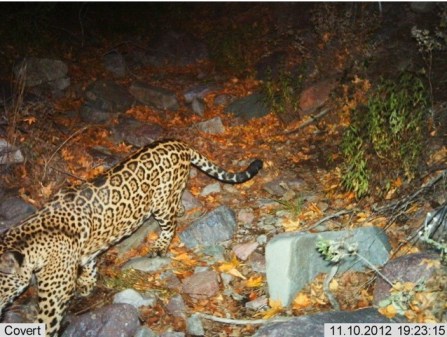
in the Santa Rita Mountains of southern Arizona downloaded from wildlife monitoring cameras late last year, as part of a Jaguar Survey and Monitoring Project led by the University of Arizona.
Male jaguar taken 11:10:12. (Photo: USFWS)
A total of ten jaguars were identified.
Male jaguar taken 11:10:12. (Photo: USFWS)
The unique spot pattern on the cat seen below (left) matched that of a male jaguar in the Whetstone Mountains photographed by a hunter in the fall of 2011, providing clear evidence that the big cats travel between southern Arizona’s “sky island” mountain ranges.
Male jaguar taken 10:25:12. (Photo: USFWS)
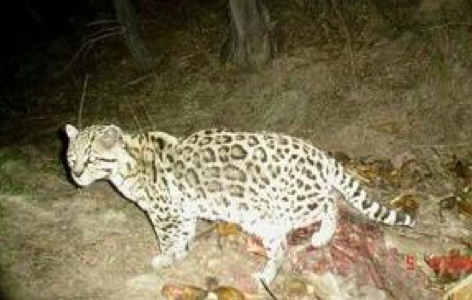
Ocelot
A new ocelot photo (showing only the hindquarters) was taken in the Huachuca Mountains by one of the UA project cameras.
Male ocelot taken 10:8:12. (Photo: USFWS)
Comparisons of the spot patterns revealed this to be the same male ocelot that has been reported by the Arizona Game and Fish Department and photographed in the Huachucas on the Arizona/Mexico border several times in 2011 and 2012. However, the photo was taken about 4 miles away from the previous photos, demonstrating that even the smaller cats move across the rugged landscape.
The ocelot was first spotted in 2011, and has been recorded a few times since. (Photo: USFWS/UA/DHS)
The three-year study will be accomplished under a contract with funds provided by the U.S. Department of Homeland Security to the U.S. Fish and Wildlife Service. The purpose of these funds is to address and mitigate environmental impacts of border-related enforcement activities.
The ocelot has been protected in the U.S. as endangered under the Endangered Species Act since 1982. The jaguar was listed in the U.S. in 1997.
People ask me quite often what they can do to help support the wild horses and the wolves, how they can be involved and stay connected. I have a full time job in the veterinary industry and photography is a side job that I love. Wildlife and equine photographers enjoy being out in the field with the animals they photograph more than being indoors. It isn’t uncommon for us to spend hours in freezing wind or out in the beating sun to photograph an animal. I’ve hiked miles looking for something special and there have been times when I’ve come home empty handed.
To photograph the wild horses I have to drive 5 to 7 hours one way, believe me I”m not complaining because the time I get to spend out in the field with them is the most amazing moments of my life. Watching the interaction between a new…
has put a halt to transporting non-human primates bound for research labs. The decision went into effect December 22, The airline will now require all non-human primate shippers to sign a declaration that the animals are not intended for research or experiments.
Long-tailed macaques in a cargo hold en route to a European lab. (Photo: BUAV)
Each year, thousands of macaques and other monkeys are flown into Europe and North America to supply academic and industrial research labs—more than 18,000 to the United States in 2011 alone.
By far the largest exporter of primates for research purposes is China, which last year shipped more than 70% of the research primates sent to the U.S..
Most airlines have complied
In recent years, an increasing number of airlines have taken the decision to dissociate themselves from the cruelty and suffering that are intrinsic to the trade in primates. These include British Airways, Virgin Atlantic, Northwest Airlines, Qantas Airways, South African Airways, Delta Airlines, and Eva Air.
Holdouts
The few major air carriers that still transport non-human primates are coming under unprecedented pressure to halt the practice. The remaining primate-transporting carriers include Air France, United Airlines and Air China.
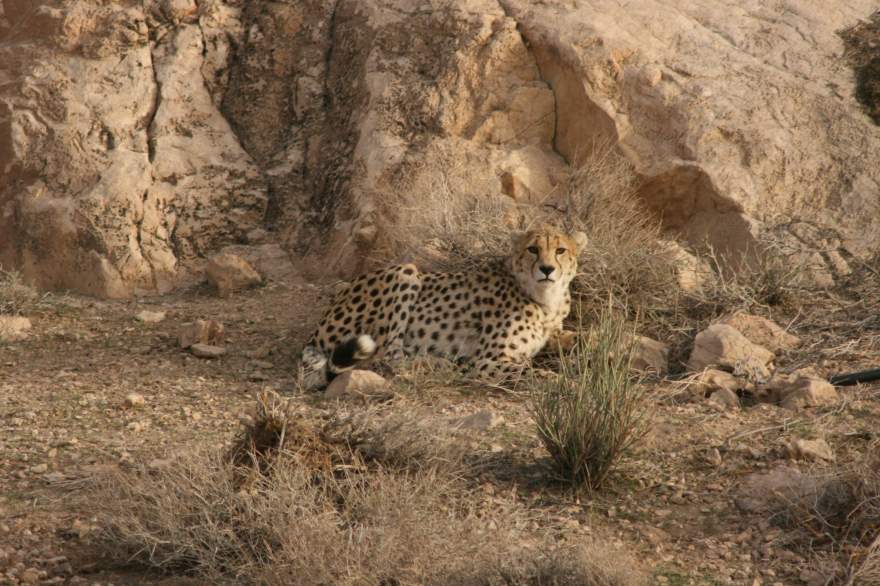
A recently completed camera trapping program in Iran aimed at understanding the population composition and dynamism of the Asiatic cheetah and the Persian leopard across multiple reserves in central country, including the Bafq Protected Area, showed that Iran’s population of Persian leopards and cheetahs is hanging on by a thread.
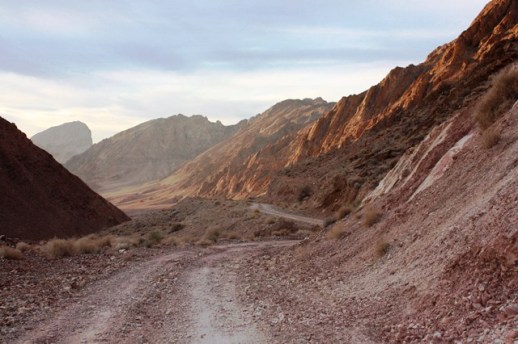
Proposed highway into the heart of the sanctuary.
The Bafq Protected Area
in the eastern part of the country, established in 1996, is one of the main habitats for the big cats. Recently, in an amazingly shortsighted pronouncement, Bafq Governor Office authorities declared that because only two leopards and 6 cheetahs were identified in the Bafq Protected Area, the area “does not have high environmental importance to continue its protection as a reserve.”
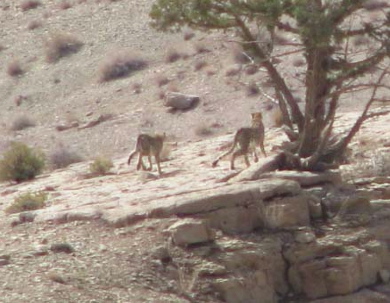
In early November 2008, Ebrahim Gholamrezapoor & Asghar Khajeie, encountered a family of 3 cheetahs in Orsestan valley of Bafq and took a few photographs.
In contrast, investigations have revealed that the Bafq area contains the largest single populations of both the Persian leopard and the Asiatic cheetah. The cats are literally on the brink of extinction, and unless some very radical work is done to form effective biological corridors between the fragments of land where they live, clamping down on poaching and letting the habitat recover, their chances don’t look great. Their fate comes largely down to politics. Driving a new road through the center of their habitat hastens their extinction.
The Iranian Cheetah Society, Yazd Department of Environment (DoE) and Conservation of Asiatic Cheetah Project (CACP) have been negotiating with communities and authorities to reconsider construction of the road for more than a year, along with promoting huge media coverage to spread awareness of the road’s negative impact on threatened wildlife. The proposed Bafq road is nowadays the largest concern for Iranian environmentalists for the survival of the Asiatic cheetahs and Persian leopards.
The camera trapping program in 2012 was implemented by the Iranian Cheetah Society (ICS) and Yazd DoE in partnership with the Conservation of Asiatic Cheetah Project (CACP) and Panthera.

















 has put a halt to transporting non-human primates bound for research labs. The decision went into effect December 22, The airline will now require all non-human primate shippers to sign a declaration that the animals are not intended for research or experiments.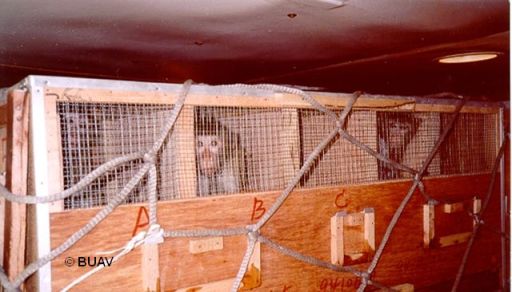


 First Light Productions