First Light Productions

investigative journalism

Posts from the “SANCTUARY” Category

The blues

Posted on October 7, 2012

In early April, the lifeless body of a 60-foot-long blue whale was found floating in the water about 12 miles off the coast of Sri Lanka. Its tail had been nearly severed from the body, obviously the result of having been slashed by a ship’s propeller.
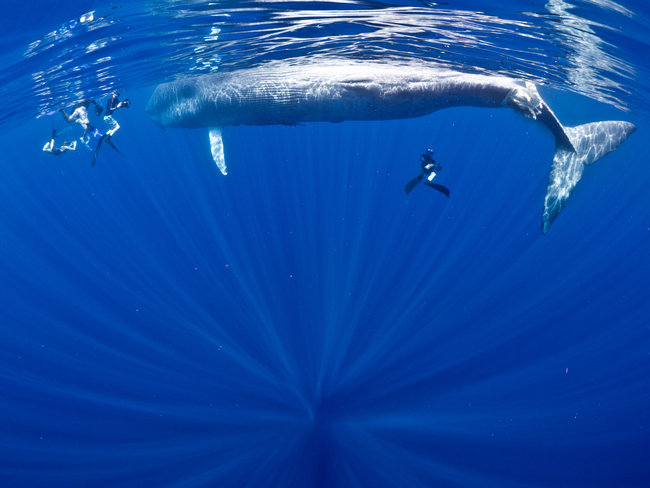
Left in the ship’s wake. (Photo: Mazdak Radjainia)

    Ship strikes are a leading cause of death among whales around the globe. The problem is particularly troublesome in Sri Lanka, where a largely unstudied colony of blue whales, the largest known animal to have ever existed, possibly numbering in the thousands, who inhabit an area extremely close to the coast, has come under increasing pressure from commercial shipping and from a boom in unregulated whale-watching boats

Fifteen miles off the southern coast of Sri Lanka is one of the world’s busiest shipping lanes, and whales are known to swim regularly inside them. Adding to the problem, scientists speculate that an substantial increase in whale watching could be forcing whales to seek food farther out, pushing them into the ships’ path.

The whale’s death in April was the sixth of the year. In March, a blue whale was found draped over the bow of a container vessel in the harbor in the capital, Colombo. Last year, some 20 whale carcasses (not all of them blue whales) were seen around the island. It is not known how many of the deaths resulted from ship strikes.
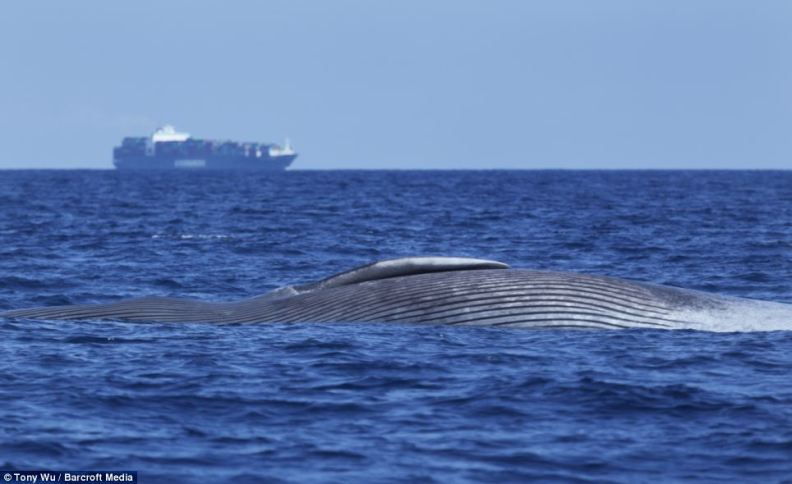
(Photo: Tony Wu/Barcroft Media)

The strikes likely represent only a portion of the true mortality. Because blue whales often sink soon after they are struck. The true number killed could be much higher than what has been observed.

For over a century, blue whales were hunted almost to extinction until protected by international law in 1966. In 2002 it was estimated there were only 5,000 to 12,000 blue whales worldwide.

In 2009, Sri Lanka ended a 25-year civil war that largely kept foreign scientists and researchers away from these waters. Several general surveys in the 1970s revealed the existence of the colony of blues, but it was not until the 1990s that interest in them started to grow. Researchers are now scrambling to find ways to protect them.
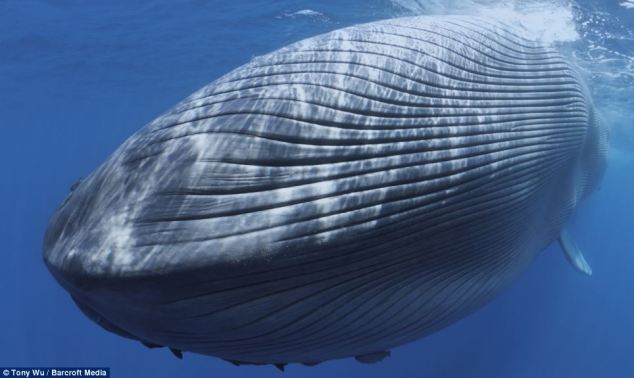
Diver Tony Wu has taken photos of the blues to highlight the whales’ desperate plight in a bid to reduce devastating ship strikes.

Researchers were particularly drawn by the whales’ tendency to stay here year round; other blue whale populations are known to migrate vast distances.

Whale watching has become a critical part of Sri Lanka’s development strategy to boost the economy. But the increasing number of collisions between ships and whales have scientists concerned that the rush to promote whale watching may be happening too fast.
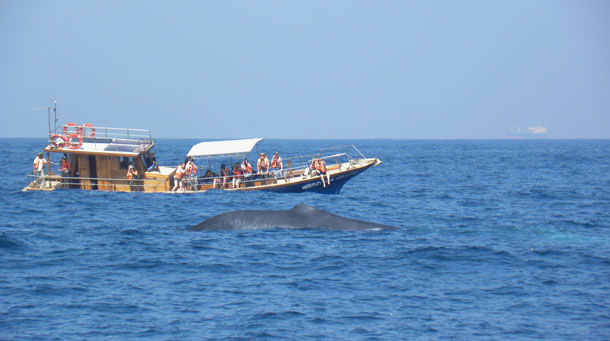
(Photo: Discover Magazine)

    The whale watching industry in Sri Lanka is currently unregulated and growing. Whale-watching boats are driving helter-skelter around the animals. In countries with established whale-watching industries, laws prohibit getting close to the animals; the United States sets the minimum distance at 100 yards.

Source: New York Times.
War on wolves

Posted on October 6, 2012

Six gray wolves known as the Wedge Pack were shot and killed last week after Washington State wildlife (WDFW) officials determined that termination was the only solution to keep the animals from killing cattle.

The wolves were discovered in July and are the first to come into the area since wolves were eradicated decades ago. This summer, the state killed a non-breeding female of the pack to see if that would deter them, even though at the time it was unclear whether they were killing or just scavenging carcasses that were already there. On October 2, two were slaughtered by sharpshooters after being shot from a helicopter just south of the Canadian border. A GPS collar had been placed on the alpha male in order to track the pack’s trail.

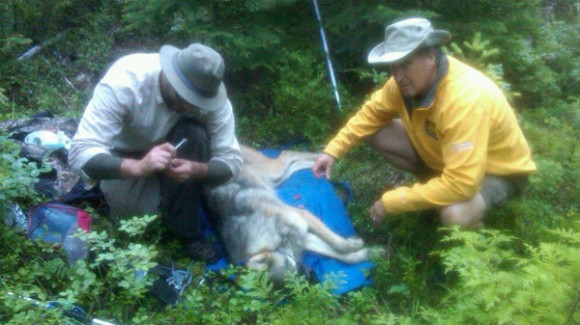
A tracker is put on the alpha wolf, who later leads his pack to its demise. (Photo: KTVB)

    A WDFW marksman killed the alpha male from a helicopter; it was the last of the six wolves killed.

    The agency said that they undertook the removal of the Wedge Pack in an effort to put a stop to its persistent attacks on livestock from the herd of the Diamond M Ranch in northern Stevens County despite non-lethal measures having been taken to control them. Since July the wolves had killed or injured at least 17 calves and cows from the herd. Some conservationists argue that the rancher who complained, Bill McIrvine, was uncooperative and could have done more to prevent predation. There is a conflicting press report that McIrvine persuaded the WDFW to eliminate the pack despite the fact that few serious efforts had been made to deter the wolves from predating the livestock.

    The chair of the Washington State Senate committee that oversees The Department of Fish and Wildlife, Kevin Ranker, issued a terse letter to the department describing its recent decision to exterminate an entire wolf pack as “a serious failure.” Ranker expressed “deep concerns” over the agencies’s management of the Wedge Pack. He pointed out that state guidelines require “non-lethal methods of wolf management” be used first, something he said did not happen.

    While the number of cattle killed is high, authorities are wondering if more could have been done to stop the wolves before making such a critical decision to end their lives. The department, however, stands by their belief that the pack had become so accustomed to eating cattle, they would not have stopped hunting the calves under practically any circumstance.

    A first wolf was killed in early August in an attempt to break the pack’s natural inclination to eat cattle. But animal activists can’t help but wonder why a more effective strategy wasn’t carried out before the wolves became habituated to such a diet.

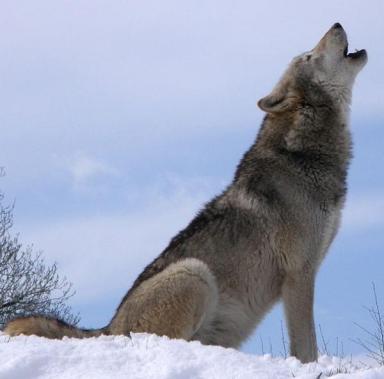
    Grey wolf (photo: Retron)

    Several U.S. states, including Idaho, Montana, Wyoming, Minnesota–and now Washington, have declared war on wolves which have slowly lost their protected status in the Rockies and Great Lakes regions over the past four and a half years after the U.S. Fish and Wildlife Service declared them “recovered”–a contention disputed by most conservation groups.

    State wildlife managers, eager for hunting fees to underwrite their operations, understand that the chance to legally shoot a wolf is irresistible to hard core hunters.

    In Minnesota than 23,000 hunters from 33 states have applied for the 6,000 permits to shoot gray wolves that the state will issue for its fall hunting season, set to start November 3. Wyoming has classified the estimated 350 wolves within its borders as “predatory animals” that can be shot on sight in more than 80 percent of state and has implemented a regulated trophy wolf hunt.

    Environmental, conservation and wildlife groups have filed a series of lawsuits to protect the wolf. As a result the wolves in these regions have regained and re-lost their protected status at least a half dozen times since March 2008. In the interim several hundred wolves have lost their lives while political forces worked to remove their protected status once and for all, which is pretty much where they stand today.


      Reintroducing wolves into areas that were once their natural homes then killing them off is both misguided and shortsighted.

      A comment I ran across that makes sense:

      “Relocation is the only just answer. Just because we can kill, does not mean we should. The wolf hunts are causing a decrease in wolf DNA diversity. Killing adult wolves has created new problems with the surviving adolescent wolves……not fully taught, they are not sure what their food source should be. 
Without question wolves, as apex predators, strengthen the herds by weaning out the injured, the sick, the weak, and the old. Wolves are only responsible for LESS than 1% of all livestock losses. Greedy and lazy ranchers allow their cash cows to graze on public lands (for pennies) when this is wolf territory!!! They are creating conflicts. Trophy hunters do not want to share elk or other prey animals with wolves.”

      And, I would add, they would especially like to add a bagged trophy wolf to their photo collection.

Cases We’re Watching

Posted on October 5, 2012

In Texas County, Missouri, a young man was convicted of burning a cat named Tinkerbell.

When Tinkerbell was set on fire she sustained burns on most of her body and her ears were partially burned off. (Photo: The Animal Shelter of Texas County)

    The cat died after she was unable to fight off massive infection resulted from her burn injuries and subsequent extensive skin loss.

      Overwhelming evidence shows that human abusers, murderers or violent criminals began their first abuse on animals.
    A selection of cases being followed by the Animals and Society Institute:
    • A man in St. Louis, Missouri, burned or strangled five dogs.

    • In Flushing, Michigan, a man beat his 10 pound Pomeranian to death.

    • An 11-year-old girl in Saratoga Springs, New York, killed her foster mother’s puppy after the woman refused to take the girl shopping.

    • An elementary school teacher in Chicago beat his dog Queso, whom he adopted from a rescue group, to death in a fit of rage.

    • in Reno, Nevada, a man threw a puppy off a third-floor balcony, killing him.

    • A woman in California stabbed her dog to death following an argument with her husband;

      A study in Boston found 70 percent of all animal abusers have committed at least one other crime, and that 40 percent had committed violent crimes against humans. Studies also found that a history of animal abuse was found in 25 percent of male criminals, 30 percent of convicted child molesters, 36 percent of domestic violence cases and 46 percent of homicide cases. And 30 percent of convicted child molesters and 48 percent of convicted rapists admitted animal cruelty in their childhood. Prosecuting animal cruelty can help take dangerous criminals off the streets. We can help stop the cycle of violence by recognizing that animal abuse is an indicator of serious problems.


      Source: The Animals and Society Institute.

Six ways to help elephants

Posted on October 4, 2012

“Courtship” Elephant Voices.org.

    1. Don’t buy ivory. New ivory is strictly banned. Shunning antique ivory is a clear message to dealers that the material is not welcomed

    2. Buy elephant-friendly coffee and wood. Coffee and timber crops are often grown in plantations that destroy elephant habitats. Make sure to buy Forest Stewardship Council (FSC) certified timber and certified fair trade coffee.

    3. Support conservation efforts and organizations actively committed to elephant preservation. Here are a few:
    International Elephant Foundation
    Elephant Care International
    The David Sheldrick Wildlife Trust
    African Wildlife Foundation
    Amboseli Elephant Research Project
    ElephantVoices

    4. Be aware of the plight of captive elephants. This applies especially to your local zoo. Historically, zoos and circuses have offered elephants a life of indentured servitude. Zoos are starting to wake up but they have a long way to go in providing the right environments for their elephants. Circuses, even further. Boycott circuses that use animals, and zoos that offer insufficient space to allow elephants to live in social groups and have some control of their own lives.

    5. Adopt an elephant. There are many organizations that offer elephant adoptions so that you get cute pictures of “your” elephant, and they get currency to fund their elephant conservation efforts. World Wildlife Foundation, World Animal Foundation, Born Free, Defenders of Wildlife and the David Sheldrick Wildlife Trust are good places to start.

    6. Get involved with Roots & Shoots. Founded by Dr. Jane Goodall, Roots & Shoots youth program is inciting positive change for hundreds of thousands of kids in more than 120 countries, all working to create a better world. It’s a great way to get youth involved in conservation and pursue careers to help elephants and other wildlife.

Leviathan

Posted on October 3, 2012

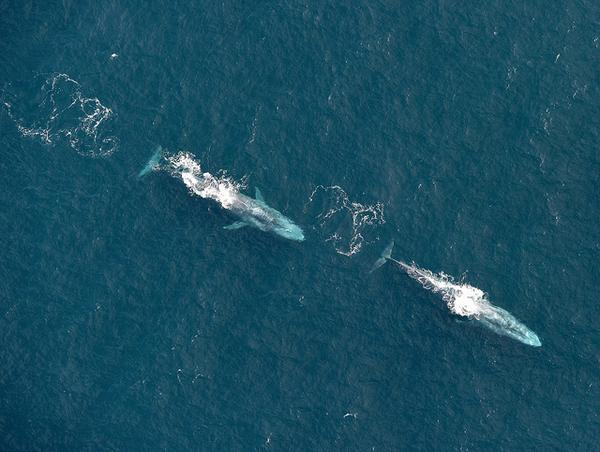
Blue whales off Ireland photographed by the Irish Air Corps some 80-100 nautical miles southwest of Mizen Head, 6, September, 2012.


Source: wildlifeextra.com

Heritage Animal

Posted on October 2, 2012

The Texas Parks & Wildlife Department has temporarily suspended its policy of shooting donkeys/burros in the Big Bend Ranch State Park after the Humane Society of the United States offered to devise a nonlethal plan remove the animals without killing them. State officials estimate that about 300 burros live in the 316,000-acre park on the Texas side of the Rio Grande. Park rangers have killed 130 there since 2007.

A donkey used by protestors last January to deliver a petition with 100,000 signatures asking Gov. Rick Perry to stop Texas Parks and Wildlife from hunting wild burros in Big Bend Ranch State Park. (AP Photo/Eric Gay)

    Advocates for the donkeys rode six of them to the state capitol in Austin last January to protest the killings. The state considers burros to be destructive intruders, hogging forage and lapping up water in the drought-starved mountains. Officials say they threaten the survival of hundreds of other native species, including bighorn sheep which the state wants to re-establish in the park.

    In Big Bend National Park, adjacent to the state-owned land, killing wild burros is prohibited by a 40-year-old federal ban that Congress said protects the “living symbols and pioneer spirit of the West.”

    Wildlife officials say that if nonlethal methods prove unfeasible, they made need to resume killing the animals.


    SIDEBAR OPINION by Zaqch Zniewski, courtesy of the Texas Observer.

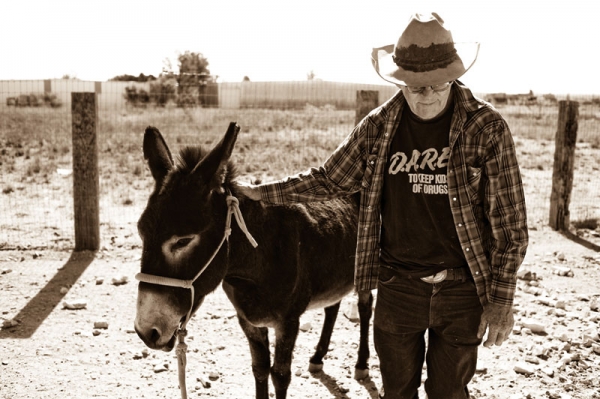
    When Zach Zniewski moved to Texas from Minnesota 12 years ago, he didn’t anticipate caring for five donkeys. Today, Zniewski, 63, is an advocate for the animals as a member of the Wild Burro Protection League. The group is opposed to the Texas Parks & Wildlife Department’s policy of killing the burros in Big Bend Ranch State Park. (Photo by Sandy Carson)

    “The [Texas Parks & Wildlife] policy is to change the focus of the park from a family tourism place to a hunting preserve. It’s not just the burros; they’ve gotten rid of any large mammals on the pretext they compete with the bighorn sheep for water and grazing.

    “From the 1500s up until about the 1970s those burros in Mexico and Texas were an integral part of work here and an integral part of the culture. To me, having a shared cultural heritage is really important to people in communities, and that’s something you can’t place a monetary value on.

    “I live in a little tourist town called Marathon, and when people stop here to buy gas and get coffee on the way to [Big Bend Ranch State Park], they say, ‘Oh, we saw wild donkeys, they came right up to the fence.’ People like to see those. Kids love them, of course.

    “I’ve got a little herd of my own. A lady friend of mine said, ‘You should come over and take a ride on my donkeys.’ I said to myself, dang, after being a motorcyclist for 20 years, that’ll be a change. I went over there and one of those donkeys just wanted to come home with me. So I got one and then I thought, well, they’re herd animals and I should have a couple. So I ended up with five.

    “I’ve got one who may just be the oldest donkey in Texas. He was born in 1957. Now he’s too old to ride. I just keep him—it’s his retirement home here, and of course he likes being around all the Jennys. His name is Viejo Alampo.

    “If you don’t wake up on time, they start making a huge racket. I feed them, and then I look over them, check their hooves and stuff. I have two that are good riding animals and I might go to the bar with those, or to the coffee shop, ride around. I guess the routine is I ended up being their caretaker. They have a good life, they like it. I wouldn’t be without them.

    “The parks administration doesn’t see that the burros have any value for our parks system or for tourism or for people who live along the border here. [Members of the Wild Burro Protection League] have different ideas than them.

    “The idea that tourists in general aren’t a big enough constituency to satisfy the park management and [that park officials] need an expensive hunting preserve irritates me to no end.”

Animal Imagination

Posted on October 1, 2012

From our sayings to fairytales, myth, and lore, animals feature prominently in our imaginative landscapes. But we distance ourselves with words like property, pets, pests, objects of study, test subjects, nuisance, creatures, wildlife—and none of these terms are quite adequate.

    We use animals to market our products, and products with an animal logo sell at a much higher rate than those without. Our sports teams call up wild, powerful animal icons. As children, we sleep with “stuffed” animals. From our goat-like vision of the Devil to our cultural preoccupation with vampires, werewolves, the Loch Ness monster, we secretly long to feel reconnected with our own animal nature, even while we fear it.
      So why do we speak of animal rights? A concern only with animal welfare, like tolerance for diversity, still allows us to dominate and choose what we tolerate. It isn’t the same thing as affording equal protection under the law. Using animals but trying to be nice about it still fundamentally allows us to determine when, how, and where we choose to be kind to animals. We must draw upon our empathic nature and respect the rights of sentient beings, whether human or nonhuman.

Selection from blog post September 24th, 2012, by Jennifer Molidor, Legal Defense Fund staff writer.

Costa Rica wildlife

Posted on September 30, 2012

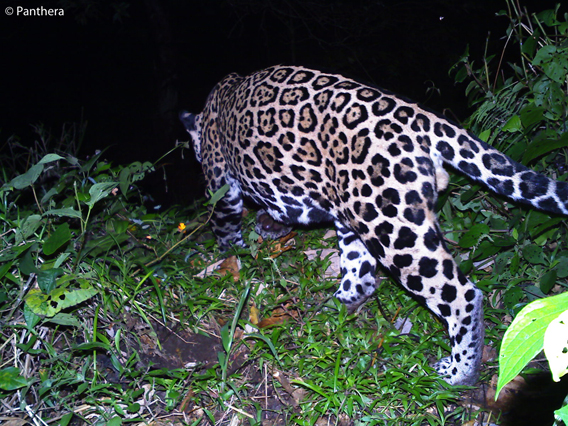
First camera trap photo of a jaguar taken by Panthera in a deforested area of Costa Rica’s Barbilla-Destierro SubCorridor. (Photo: Panthera)

    Panthera’s Jaguar Corridor Initiative aims to link core jaguar populations within the human landscape from northern Argentina to Mexico, preserving their genetic integrity.

Pets on death row

Posted on September 29, 2012

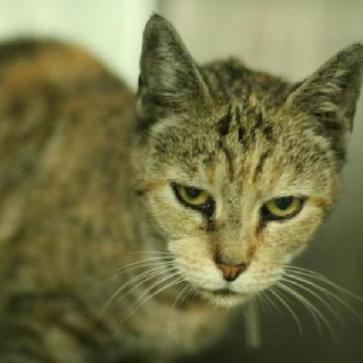
MIMI -ID# A0946568
I am an unaltered female, br tiger Domestic Shorthair mix.

The shelter staff think I am about 10 years old.
…See More

On Facebook. A non-profit—a joint effort with Urgent Part 2/Urgent Death Row Dogs–run by volunteers who rescue and help cats and kittens get adopted in New York City. Their Facebook page puts out a daily list and album of cats and kittens that are to euthanized the next day, so a sense of urgency is pretty big. It’s a lot of work, taking pictures and surveying the euthanasia list daily.
 
How it works:
A new “To Be Destroyed” list comes out every night between 5:30-6:30 pm. If there is a cat or kitten you can adopt or foster call the ACC number if it is BEFORE 7pm- adoptions stop at 6pm or so. You will HAVE to pick up that cat first thing in the morning. They will not hold the cat– they will kill it. The only way they will hold it for 24 hours is if an approved rescue calls that cat in. If you can’t make it to the shelter speak up! We will find a rescue FOR YOU! We can possibly help with transport!
 
MISSION: Giving a voice to those without. Everyday large numbers of adoptable animals are killed for reasons for reasons we believe unjustified. In most cases, these animals are loving, sensitive, and playful pets who simply lack a home. This page is their voice. Save a life. Don’t shop, Adopt.
 
List of Rescues and “how to adopt”
http://www.facebook.com/note.php?note_id=320666967994014

Ask a Question Day

Posted on September 28, 2012

Q: Do gibbons play with toys?

Whoop-Whoop is one of the few of IPPL’s gibbons who really likes toys.

A: Some of them do (Whoop-Whoop likes to groom blankies and simple hand-puppets, Maynard sometimes swats around plastic balls), but most of them are more interested in wrestling, chasing, or playing with things like swinging ropes and tires. In addition, gibbons have rather specialized hands. Even though these little apes weigh about a tenth of what we do, their hands are as long as a human’s, but only half as wide, and their fingers have a slight but perpetual curve to them, like a hook. Their hands are wonderful for brachiating, but not so good for twiddling Rubik’s cubes—their fingers are just not as dexterous as ours. So when we give them puzzle feeders (tubes of plastic or bamboo, drilled with holes and filled with peanuts and raisins), we have to keep in mind what their fingers can and can’t do.
 
Questions kids ask when they tour the gibbon sanctuary at the International Primate Protection League.


Source: International Primate Protection League

Sidestepping the Chimp Act

Posted on September 28, 2012

Sanctuary. (Photo: NEAVS)

FOR IMMEDIATE RELEASE

NEAVS and co-petitioners call on NIH to retire chimpanzees to sanctuary.

Rulemaking Petition holds government accountable.

Sept. 27, 2012 – Boston, Mass. – Following today’s National Institutes of Health decision to retire 110 chimpanzees in laboratories and designate them no longer available for research, the New England Anti-Vivisection Society (NEAVS) and co-petitioners of a recently submitted Rulemaking Petition charge the decision falls short of the spirit and intent of the 2000 CHIMP Act mandating chimpanzees not needed for research be retired to sanctuary. Today’s NIH decision sends only 10 chimpanzees to the federal sanctuary Chimp Haven, while it transfers 100 others to yet another lab, the Texas Biomedical Research Institute.

According to the Rulemaking Petition filed in July by the NEAVS, the North American Primate Sanctuary Alliance, and other co-petitioners*, the U.S. Department of Health and Human Services (HHS) must fulfill the intention of the Chimpanzee Health Improvement, Maintenance, and Protection Act (CHIMP Act) and define when federally owned chimpanzees are “not needed.” Today’s decision is an example of how NIH interprets the law in favor of the laboratories – not the chimpanzees. Labs, which receive federal funds to maintain chimpanzees, are allowed to decide when chimpanzees should be retired and have financial interest in holding them. The NIH plan is, according to NEAVS President Dr. Theodora Capaldo, “Close but no cigar.”

“While we applaud the fact that 110 chimpanzees will now be safe from research, the fact that NIH continues to make decisions that grant laboratories significant funding to keep chimpanzees and deprive chimpanzees the comfort of sanctuary is tantamount to a kind of cronyism that has to end,” says Capaldo. “NIH has absolute control over the lives of chimpanzees, and their decision to move them from one lab to another is not a responsible or even reasonable one. The chimpanzees should have all been retired to Chimp Haven, the federal sanctuary that provides outstanding care and housing for its residents.”

A “surplus” of chimpanzees in labs resulted from a 1986 National Institutes of Health initiative to breed chimpanzees for HIV/AIDS research. Chimpanzees turned out to be poor models for that and a host of other human diseases, but have remained in U.S. labs for decades. Despite the CHIMP Act, relatively few chimpanzees have been retired to our federal sanctuary even though 80-90% now in labs are not in research; the Institute of Medicine has determined chimpanzees to be “unnecessary” in nearly all areas of research; large numbers of chimpanzees now in labs are elderly and/or unfit for research; and retiring chimpanzees to sanctuary is economically beneficial to taxpayers and life-changing for chimpanzees.

“By allowing labs to determine eligibility, too few chimpanzees have been retired,” says Capaldo. “With enforceable criteria for determining when chimpanzees are ‘not needed’ for research, chimpanzees deserving of and clearly eligible for retirement will no longer languish in labs and no longer be vulnerable to NIH’s lab-favoring policies. This is what our Rulemaking Petition seeks to achieve.”

The Rulemaking Petition suggests criteria to define when chimpanzees are not needed. If implemented, hundreds of chimpanzees would be retired who: (1) are held for research in which they have been determined to be unnecessary; (2) have not been assigned to research in 10 years; and (3) are unfit research models including the elderly, those with multi-use histories or incomplete medical records, and those with chronic, severe, or multiple physical or psychological illness.

For more information and to read the full Rulemaking Petition, visit http://www.releasechimps.org/laws/chimp-act-rulemaking-petition.

*Co-petitioners under the counsel of Katherine Meyer of Glitzenstein & Crystal in Washington, D.C., a premier law firm with extensive experience and success in animal protection and Rulemaking Petitions: the New England Anti-Vivisection Society, the North American Primate Sanctuary Alliance, Save the Chimps, Fauna Foundation, Animal Protection of New Mexico, the Kerulos Center, and Sen. Bob Smith – a lead sponsor of the CHIMP Act.

Proverbial canary

Posted on September 27, 2012

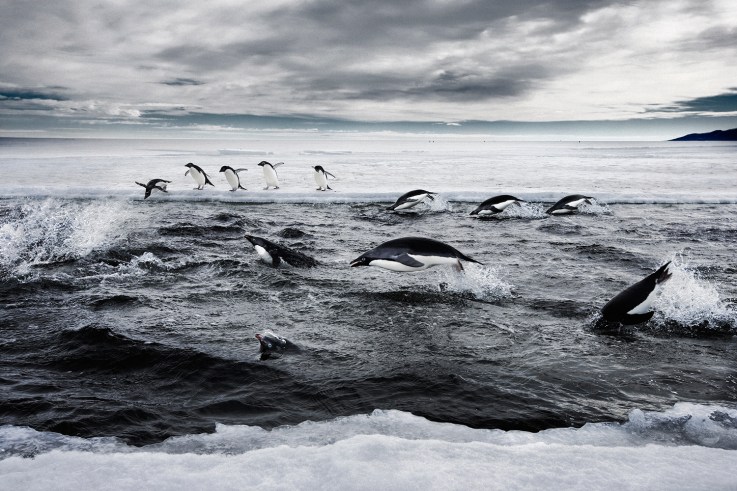
Dependent on delicately balanced marine food sources, penguins are in trouble.

Adelie penguins hunting for food. (Photo: J. Weller)

Overfishing is decimating their prey species. Climate change is shifting their resources and imperiling their habitat. Pollution is putting even healthy colonies at risk.

More than half of all the 18 penguin species are listed as Vulnerable or Endangered.

In a recent interview, Pablo Garcia Borboroglu, President of the Global Penguin Society, talks about penguin science and conservation.


Source: Mongabay.com

Keiko

Posted on September 26, 2012

For background on a continuing series of posts about whales, the story of Keiko is illuminating.


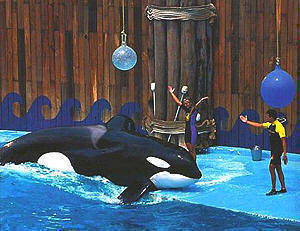
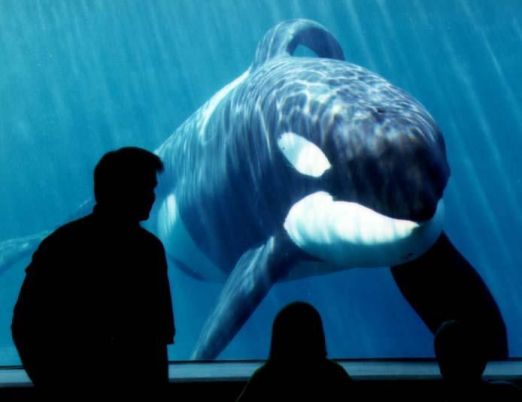
Keiko–which means “Lucky One” in Japanese–was a male orca who was captured off the coast of Iceland in 1979 at the age of one or two and sold into the marine park industry. After spending three years at an aquarium in Iceland, he was bought by Marineland in Ontario, Canada where he performed before the public. In Canada Keiko began to develop skin lesions indicative of poor health. He was then sold to Reino Aventura, an amusement park in Mexico City where he performed again, spending a decade alone in a tiny tank designed for bottlenose dolphins filled with heavily chlorinated tap water. He was so long and the pool was so shallow, that when he was simply floating his tail nearly touched the bottom.

Reino Aventura

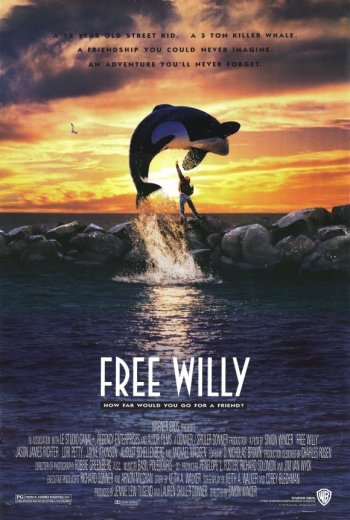
In 1992 Hollywood filmed him in Mexico as the star of the movie “Free Willy” about a boy who rescues a killer whale from a rundown marine park sideshow.

Media reports surfaced after the film’s release revealing the state of Keiko’s living conditions at the Mexican park and the fact that he had chronic health problems. Public outrage was extreme. Stung by the bad publicity, the film’s producer, Warner Brothers, approached Earth Island Institute looking for a way out of the dilemma. With a $4 million contribution from Warner Brothers, and agreement from Reino Aventura to release the animal into their care, Earth Island founded the Free Willy-Keiko Foundation to rehabilitate Keiko with the hope of possibly releasing him back into the wild.

School kids around the world held fundraising events for the Keiko Foundation. The fund got more promotion as the film Free Willy 2 was released in 1995. Free Willy 3 was released in 1997.

An aquarium in Newport, Oregon agreed to take him in on the condition that he would not have to perform, and built a pool for him at a cost of more than $7 million.

Keiko pool under construction

At the Oregon Coast Aquarium (Photo: Sam Lobo)

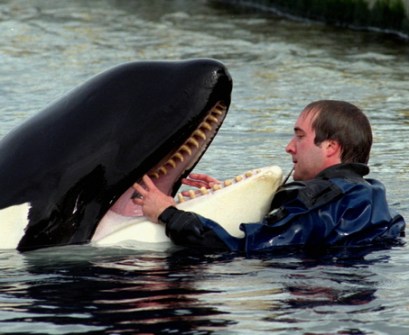
Keiko’s teeth are checked at the Oregon Coast Aquarium in Newport in 1998. (Photo: Don Ryan/AP)

Keiko took up residence at the Oregon Coast Aquarium in 1996. By the end of his first year there he gained more than 1,000 pounds. By 1997 he was lesion free, weighed upward of six-tons and measured 35 feet long.

He was also starting to eat live fish in preparation for release into the wild.


In September 1998 he was flown to the site of his capture 19 years before: Klettsvik Bay in Vestmannaeyjar, Iceland where an ocean pen had been built for him.

His rehabilitation was put in the hands of an international team of experts. Returning a captive whale to the ocean had never been done before, so his keepers just did what Keiko seemed to want to do.

Photo: Sam Lobo.

He was fed herring, taken for supervised swims in the open ocean and looked after 24/7. The annual bill for his upkeep was in excess of half a million dollars.

Keiko and his longtime keeper Stephen Claussen in Iceland (Photo:stephenclaussenmemorial.com)

In the summer of 2000 he was gradually reintroduced into the wild northern ocean. For a while it looked as if the relocation effort was succeeding. Fish were provided for him but he appeared to be catching a few wild fish on his own.

Keiko was released from his pen in July 2002. Two months later he followed a boat into the harbor of the village of Halsa on the shores of western Norway, 870 miles away. He was quickly identified and became a huge celebrity. He allowed fans to pet and play with him, even crawl on his back. He became such an attraction that the authorities imposed a ban on approaching him.

He soon stopped feeding himself, and it became obvious he would again need human care.

Keiko in Iceland (Photo: Orcalover555)

Desperate to wean him from people and begging for handouts, with help from the Norwegian government he was shifted to Taknes Bay, a more obscure fjord; a clear, calm pocket of coastal water deep enough that it doesn’t freeze in winter. Keepers fed him, but he was free to roam and did, often at night. He was equipped with a tracking device that let his four handlers pinpoint his location provided he stayed within a range of about five miles. His keepers reported that the whale seemed to be adapting to living in the wild, evidencing behaviors common to wild orcas.

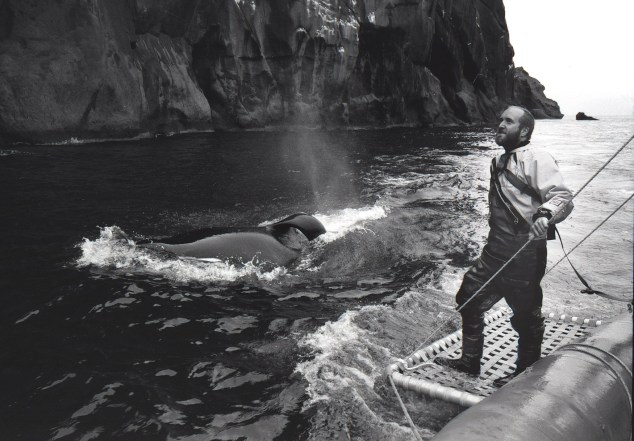
They took him on “walks,” leading him around the fjords from a small boat at least three times a week.

In 1993 he showed signs of lethargy and was given antibiotics. He died quickly, beaching himself up against a pier, seeking human consolation. He was somewhere between 25 and 27 years old, an age not unusual for male orcas, whose average longevity is thought to be around 30 years. Pneumonia was later determined as his probable cause of death.

Thorbjorg (Tobba) Valdis Kristjansdottir, a keeper who spent two years working with Keiko in Iceland, calls him “an unbelievable animal. He absolutely had a definite personality. I spent a lot of time alone with him, and I talked and talked and talked to him. He would just kind of dance in the water.”

NIH chimps

Posted on September 26, 2012

Received today:

Chimpanzee Sanctuary Northwest Calls for Retirement of Chimpanzees to Sanctuaries, not Biomedical Labs

On Friday, September 21, 2012, Dr. Francis Collins, the Director of the National Institutes of Health (NIH) announced that 110 of the 563 research chimpanzees owned by the United States federal government will be “retiring” from biomedical research. This was first reported by the Washington Post and included this quote from Collins: “This is a significant step in winding down NIH’s investment in chimpanzee research based on the way science has evolved and our great sensitivity to the special nature of these remarkable animals, our closest relatives.”

While removing 110 chimpanzees from the controversial New Iberia Research Center sounds like a victory, there is a disturbing element to this story. Only 10 of the 110 chimpanzees in question will be going to a sanctuary. The other 100 will be transferred to Texas Biomedical Research Institute in San Antonio but will “not be used for research.”

Moving chimpanzees from one research laboratory to another does not constitute retirement, and we, along with our fellow members of the North American Primate Sanctuary Alliance (NAPSA) and Project Release and Restitution, are calling for the NIH to send all 110 chimpanzees to a sanctuary whose mission is to provide permanent care in an enriched environment. It is not acceptable for the federal government to claim to be retiring chimpanzees, when in fact the chimpanzees will still be living at a biomedical research facility.

This move circumvents the system already set in place by the government to retire chimpanzees as mandated by the CHIMP Act, signed by President Clinton in 2000. Please read Chimp Haven’s statement and Project R&R’s Rulemaking Petition, co-signed by NAPSA, for more information on that system and the concerns about Collin’s announcement.

Please continue to support the Great Ape Protection and Cost Savings Act (GAPCSA), which would outlaw the use of chimpanzees for biomedical experimentation in the US and would retire federally owned chimpanzees. Learn more about how to support GAPCSA from this recent alert by the Physicians Committee for Responsible Medicine.

Yeti connection

Posted on September 25, 2012

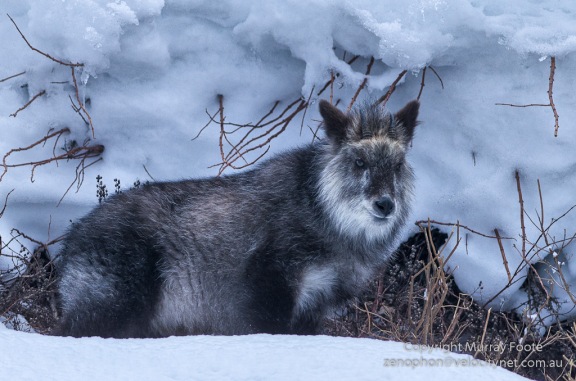
A skull cap, kept in a Buddhist monastery in Pangboche, Nepal, was long believed to be from a Yeti. When examined by scientists it turned out to be the skull of a serow, a goat-like mammal found in central and eastern Asia.

Serow (Photo: Murray Foote, MurrayFoote.com)

Usually solitary, serow can be found from 6,000 feet to 10,000 feet in the mountains.

The serow, Capricornis milneedwardsii, is listed as a threatened species on the International Union for Conservation of Nature red list due to hunting for food and medicine.

They always pay

Posted on September 24, 2012

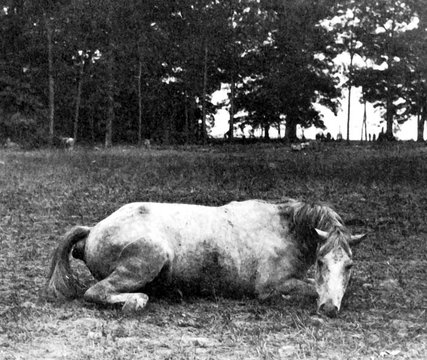
On Sept. 19, 1862, just two days after the Civil War battle of Antietam, photographer Alexander Gardner began documenting the battle’s grim aftermath. One of his photographs depicted a milky-white steed lying on the field in an eerily peaceful repose.

“Dead Horse of Confederate Colonel; both killed at Battle of Antietam,” by Alexander Gardner (Library of Congress)

Gardner’s photographs both horrified and fascinated people. It was the first time in history that the general public was able to see the true carnage of war.

The horse is thought to have been the mount of the Sixth Louisiana’s Col. Henry Strong, an Irish immigrant, who was reported riding a white horse along the edge of a cornfield when he was killed by a Yankee volley.

The body of the horse became something of a landmark among the Union soldiers left on the field because of its strangely peaceful appearance.

Gen. Alpheus Williams wrote, “The number of dead horses was high. They lay, like the men, in all attitudes. One beautiful milk-white animal had died in so graceful a position that I wished for its photograph. Its legs were doubled under and its arched neck gracefully turned to one side, as if looking back to the ball-hole in its side. Until you got to it, it was hard to believe the horse was dead.”


Source: New York Times