First Light Productions

investigative journalism

Posts from the “SANCTUARY” Category

Cowboy up

Posted on September 24, 2012

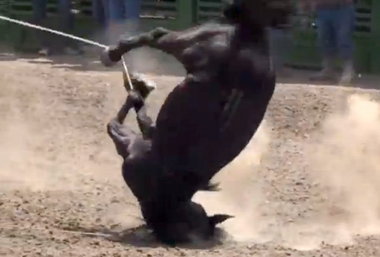
I was a rodeo fan when I was a kid. But then I shot birds, too. Luckily, I grew out of both. People who work with large animals–rough stock in cowboy parlance–can be indelicate at times in their interaction. But it ain’t the animal’s fault it’s large and dangerous. Especially if it’s forced into a situation it would rather not be. A good example is the practice in some rodeos of lassoing horses around their necks and forelegs, often leading to spectacular falls (on the horse’s part).

horse tripping

A video of the event made by animal rights activists at the Jordan Valley Big Loop Rodeo in May in southeastern Oregon, shows how it works. According to an observer at the event, “The harder (the horses) fell, the louder people cheered.”

The event causes extreme fear in horses. It also causes rope burns and, as one extremely gruesome scene in the video shows, leg injuries. In most such cases the animal has to be put down. In this instance, absolutely.

Ranchers counter that horse tripping is a humane technique for capturing and restraining untamed horses to treat injuries, brand or castrate them when corrals and chutes aren’t available.

“It’s a way of showing our heritage, our culture and how it was done and how it’s still done,” said one rancher.

The practice is likeliest to be found at remote ranch rodeos, where contestants are working ranchers, cowhands and buckaroos who don’t follow the professional rodeo circuit.

Rodeo backers say the video is deliberately misleading and unfairly depicts contestants and the audience as heartless. They also claim part of the video was taken somewhere else.

Wherever it was taken, watch the video and judge for yourself.

Critics of the practice argue that culture and tradition have long been the primary means throughout human history of justifying the very worst forms of human behavior.

Arthur and Phoenix update

Posted on September 24, 2012

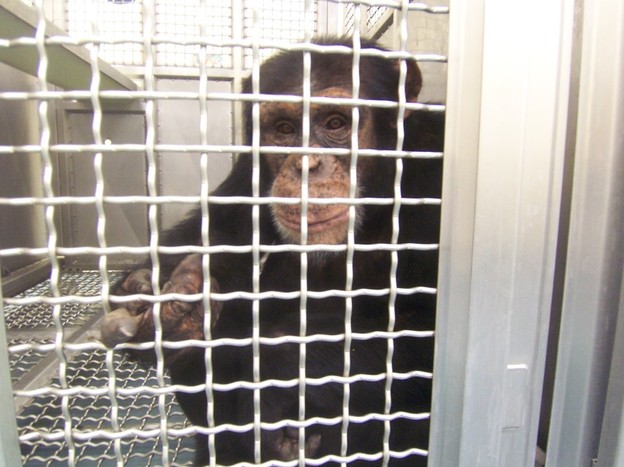
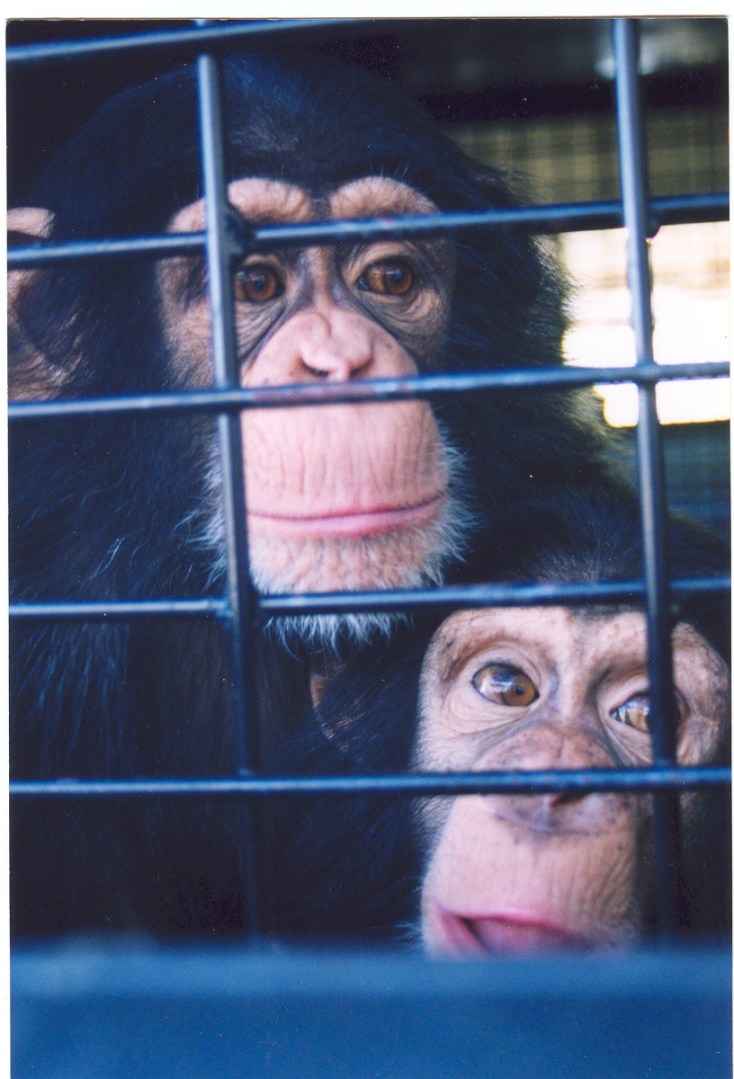
Readers have asked how Arthur and Phoenix, the two young chimps I reported on on the 18th, are doing today.

Arthur and Phoenix

Nate Leskovic with the New England Anti-Vivisection Society reports:

Arthur and Phoenix are happily living at Save the Chimps, one of the finest and largest chimpanzee sanctuaries in the world, and have the good fortune of living in an extended chimpanzee family! They are tended to by Dr. Jocelyn Bezner, one of the best chimpanzee vets in the country, and are under the care of Sanctuary Director Jen Feuerstein, a former Yerkes National Primate Research Center caregiver who has dedicated her life to helping chimpanzees rescued from research.

NEAVS President Dr. Theodora Capaldo visits the sanctuary regularly and always returns inspired and grateful for the good work of sanctuaries like Save the Chimps. To see how much Arthur and Phoenix have grown, check out their photo albums!

http://www.savethechimps.org/index.cfm?fuseaction=photo.album&id=152&

http://www.savethechimps.org/index.cfm?fuseaction=photo.album&id=123&

Good deed

Posted on September 23, 2012

Last month a California sea lion named Bazingo was reunited with the ocean after a month-long stay at the Marine Mammal Center veterinary hospital  in Sausalito, California.

Photo: Jimmi Johnson – Creativity Center


Bazingo was found near San Luis Obispo the previous month with a badly injured flipper. He was transported to the center’s veterinary facility just across the Golden Gate bridge from San Francisco where the vets found his right rear flipper infected and swollen with seeping wounds.

As sea lions can apparently adapt to life without a rear flipper, the vets decided amputation was the best option. The injured flipper was removed August 7 .

He recuperated quickly, swimming in the hospital’s pool. After a couple of weeks he was eating and doing all of the normal things wild sea lions do.

Released at Point Reyes National Seashore, he dove into the breakers, surfaced a few times and was gone. The vets are confident that Bazingo will have a productive life foraging and mating in the wild.


Learn about the work of the Marine Mammal Center.

Thousand or so to go

Posted on September 22, 2012

The National Institutes of Health announced yesterday it is retiring 110 of its 563 research chimpanzees.

Humane Society of the United States

The decision is the result of a confluence of forces. Last December a report from the Institute of Medicine said that there was almost no scientific need for doing biomedical research on chimpanzees. The NIH responded by suspending all new federally supported chimp research. This July, a bill to ban all ape research in the United States, the Great Ape Protection and Cost Savings Act, cleared a key hurdle in Congress when a Senate committee moved the legislation forward.

After years of marching in lockstep with the biomedical industry, the NIH is, apparently, trying to stay ahead of the curve on this issue. Unfortunately there are still 453 government chimps and somewhere in the neighborhood of 500 privately owned research chimps that don’t belong in laboratories. Many of them are long past their research date and are simply being warehoused. Some have been behind bars 30 and 40 years. There is simply no moral justification for this.

The NIH is no friend of primates. Keep the pressure on your representative in Congress to pass the Great Ape Protection and Cost Savings Act.


Source: Washington Post.

TV animals

Posted on September 20, 2012

To shed light on the cruelty inherent in forcing wild animals to perform for TV shows and movies, the ad firm Y&R New York created a series of ads poking fun at those in “the industry” who think it’s funny to force animals to “make pretty” for the public.

Shout out  to PETA.

Human pathogens

Posted on September 19, 2012

Young, motherless chimps need close contact. (Photo: Emory University)

ABSTRACT: Reintroduction of sanctuary apes to natural habitat is considered an important tool for conservation; however, reintroduction has the potential to endanger resident wild apes through the introduction of human pathogens. We found a high prevalence of drug-resistant, human-associated lineages of Staphylococcus aureus in sanctuary chimpanzees (Pan troglodytes) from Zambia and Uganda. This pathogen is associated with skin and soft tissue diseases and severe invasive infections (i.e. pneumonia and septicemia). Colonization by this bacterium is difficult to clear due to frequent recolonization. In addition to its pathogenic potential, human-related S. aureus can serve as an indicator organism for the transmission of other potential pathogens like pneumococci or mycobacteria. Plans to reintroduce sanctuary apes should be reevaluated in light of the high risk of introducing human-adapted S. aureus into wild ape populations where treatment is impossible. Am. J. Primatol. 00:1-5, 2012.


Source: Science Daily.

Soundscape

Posted on September 19, 2012

An emeritus professor and an acoustic ecologist from the University of Wisconsin-Madison, have recreated a “soundscape” from observational notes made by Aldo Leopold 70 years ago.

Aldo Leopold at his Sauk County shack in about 1940. (Photo: University of Wisconsin Digital Archives)

Leopold, a professor at the University of Wisconsin, who died in 1948, was a key figure in the development of the modern environmental movement. His book, Sand Country Almanac, a collection of essays describing the land around his Sauk County, Wisconsin home, is a signature achievement in American literature.

Rising before daylight at his shack in Depression-era Wisconsin, Leopold routinely took notes on the dawn chorus of birds. But that chorus no longer exists.

Changes in the landscape and the bird community around the shack, including a nearby interstate highway, airplanes, chainsaws and the other constant and varied noises of the modern world have completely change the aural ambience of the area.

The soundscape is a compressed version of the chorus described by Leopold, taking 30 minutes of notes and compressing them into five minutes of recording. Bird songs and calls were obtained from the audio collection housed at the Cornell Lab of Ornithology’s Macaulay Library.

The background sound on which the bird songs is superimposed is all Wisconsin, but the archivists struggled to find a place where human noise was as it would have been in Leopold’s time.

In the lower 48 states, there is no place more than 35 kilometers from the nearest road, making it nearly impossible to tune out the hum of human activity, even in places designated as wilderness.

Leopold wrote several well known essays about the importance of how people associate sound with a particular landscape.


Listen: Leopold soundscape


Source: University of Wisconsin-Madison

Vanishing…

Posted on September 19, 2012

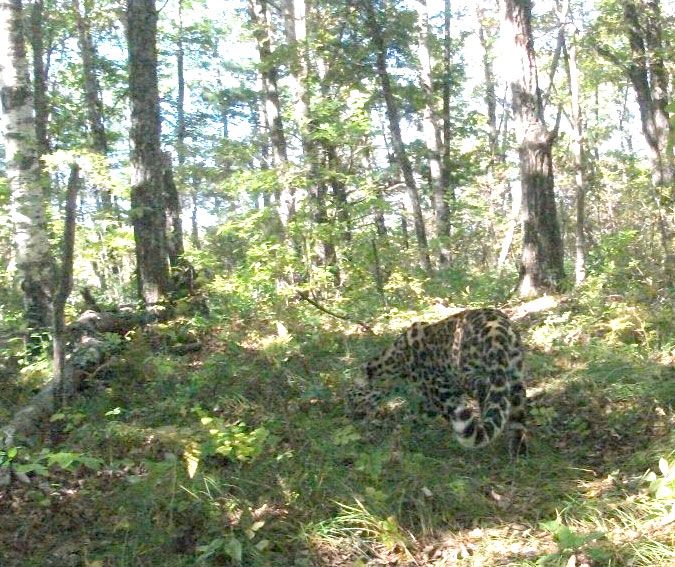
September 19, 2011–First camera trap photo of an Amur leopard in China.

(Photo: WWF-China and the Jilin Forestry Department )

The wild Amur leopard is even more endangered than its more eminent cousin, the Amur tiger. There are an estimated 7-12 Amur leopards in China. Another 20-25 are believed to live in southern Russia.


Source: World Wildlife Fund.

Vaquita

Posted on September 18, 2012

From the Wildlife Conservation Society’s “Rarest of the Rare” list of critically endangered species 2010.

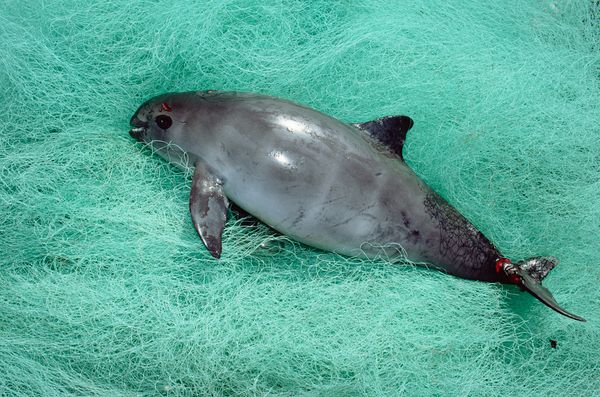
vaquita (photo: National Geographic)

Vaquita–“little cow” in Spanish–is the smallest of the cetaceans. This tiny ocean porpoise, endemic only to the northern part of the Gulf of California known as the Sea of Cortez, and rarely seen in the wild, is the species that will most probably disappear in the next years with only 150 left in the world

The greatest threat to the remaining vaquita is being caught up in fishing gear, particularly gillnets. They are also killed by commercial shrimp trawlers.


Source: sciencedaily.com

Arthur and Phoenix

Posted on September 18, 2012

In early spring 2001, Drew Weber, owner of the Lowell Spinners, a minor league affiliate of the Boston Red Sox, had an idea to boost attendance by exhibiting chimpanzees during promotional events at the Spinner’s ballpark. He contacted a Hollywood animal dealer who brokered the purchase of 2 1/2 and 2 year-old Arthur and Phoenix, from the Coulston Foundation, a notorious biomedical research laboratory, for $67,500.

Arthur and Phoenix (credit: New England Anti-vivisection Society)

Weber made a “verbal agreement” with Glenford Eldridge, one of the owners of the Greenville Wildlife Park, a “tooth and nail” roadside animal park in New Hampshire, to care for them and train them to do tricks to perform at the ballpark.

A few months after Arthur and Phoenix were delivered to the Greenville park, a park employee contacted the New England Anti-Vivisection Society (NEAVS), an animal advocacy organization dedicated to ending research on animals, to say that the chimps were not being properly cared for and that they were both suffering from repeated respiratory infections and recurring diarrhea.

NEAVS President, Dr. Theo Capaldo, traveled to Greenville to see the chimps for herself. Arthur and Phoenix were not on exhibition. The Greenville whistleblower helped her locate them in a shabby building with broken windows, which housed several exotic species in cramped, urine-soaked, wooden enclosures. “Arthur was bigger than Phoenix,” Capaldo recalled. “He seemed to derive security from her. Arthur had more of an innocence and vulnerability to him, while Phoenix was more confident and eager to explore.”

NEAVS contacted the U.S. Department of Agriculture who sent inspectors to the park. The USDA report noted that Arthur was rocking back and forth, a sign of stress in captive chimpanzees, and cited the park for non-compliance with the Animal Welfare Act for failing to provide enrichment for the chimps.

NEAVS contacted Weber and explained to him the conditions at the park and the plight of chimpanzees in entertainment and research and convinced him that keeping the chimps was, for many reasons, a boneheaded idea. First and foremost was pubic exhibition, a traumatic experience for chimpanzees. And the fact that as the chimps matured, at about age five they would become too dangerous to handle and Weber would be forced to give them up or keep them permanently behind bars.

Weber told Eldridge that he wanted to see the chimps but Eldridge would not let him onto the Park property, claiming that he owned them.

Realizing Eldridge had little concern for the chimps’ welfare, Weber agreed to let NEAVS file a lawsuit on his behalf to regain custody of Arthur and Phoenix from Greenville, with the understanding that, if successful, “ownership” of the chimps would then be transferred to NEAVS who would facilitate their transfer to sanctuary.

Weber sued for custody of the chimps, claiming Eldridge was not properly caring for them.

In Nov 2002, a New Hampshire superior court judge, satisfied that Weber was the rightful owner of the chimpanzees, and observing that “The present living arrangements [at Greenville] will probably have a detrimental effect on the chimps’ appropriate development and socialization,” ordered the wildlife park to give up the chimps to Weber. Per their agreement, Weber transferred ownership of Arthur and Phoenix to NEAVS, which funded their placement at the Center for Captive Chimpanzee Care, a widely respected sanctuary in Florida, now known as Save the Chimps.

The Greenville Wildlife Park subsequently came under criticism from local animal-rights activists, whose complaints prompted the U.S. Department of Agriculture to launch an investigation of the entire facility. The park was shuttered in November, 2003.


Source: NEAVS Website “From cage to stage to rescue!”
No way out

Posted on September 17, 2012

The African lion is a threatened species. Only 20,000 to 40,000 wild lions remain, in just 20 percent of their historical range. The vision of lion prides roaming endless savannas, unaffected by people, is a romanticized image that survives in just a few very large protected areas. As the human population continues to grow, rates of conflict with lions and other wildlife are growing.

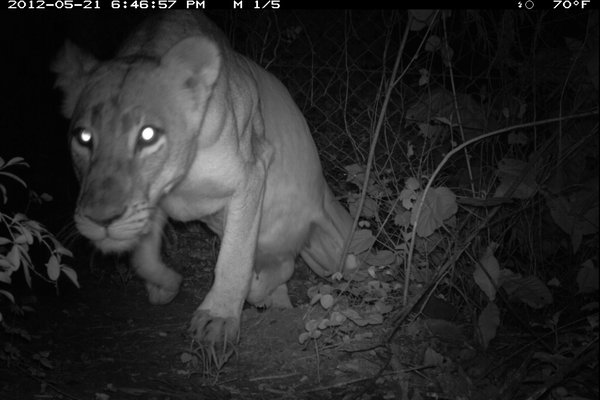
A lioness crawls through a hole in a fence in the suburbs of Nairobi, less than a mile from Nairobi National Park. (Photo: Stephanie M. Dloniak)

A recent report out of Kenya tells of a young lioness discovered living in a bushy suburb of Nairobi with a trio of 2-month-old cubs. It took 12 rangers and 3 vets from the Kenya Wildlife Service and a small fleet of vehicles more than six hours to dart her and capture the cubs. Then came the question: what to do with her?

Such situations have become so common that some wildlife experts are saying that the best solution for such lions may be euthanasia—despite the lion’s threatened status. The reasoning is unique to Africa. This lion was found in Mukoma Estate, a partly forested, developing suburb on the south side of Nairobi immediately west of Nairobi National Park, about 45 square miles of partly fenced grassland and forest less than five miles from the central business district of a city of more than three million people; baboons, warthogs and a leopard still call Mukoma home.

Many urban carnivores including coyotes, foxes, raccoons and badgers—small animals with generalist diets that allow them to eat just about anything—can be tolerated. But lions, weighing 240 to 600 pounds and eating only meat, are a direct threat to people.

Kenyan wildlife experts believe she was probably living and having cubs outside the park because there is a large lion population inside it—including a number of adult males that pose a risk of infanticide. If she was moved back into the park, she would likely move the cubs back through the fence and into the suburb again creating an ongoing problem and a continuing threat of someone being killed or injured. So returning the lions to the park was not a solution.

Translocation—moving an urban lion to a distant region—is no answer either. Lions do not welcome newcomers. Released into another park, the existing lion population would force her to the boundaries, where she would encounter livestock and people at a time when she is desperate to feed her cubs. Such a move would be a death sentence.

While appearing heartless on the surface, the utilitarian act of euthanizing some problem animals for the greater good of the species may prove critical to having any wild lions in Kenya at all.

Many years ago a renowned anthropologist I know, who spent years in Sierra Leone establishing the country’s first national wildlife park, had a chimpanzee for a pet that he’d rescued from the bush trade. When his work was completed he made plans to return to the U.S. but couldn’t find a home for the chimp. There were no sanctuaries in Africa at the time. And the chimp was habituated to humans. Leaving it uncaged meant certain death. So he put it down. The memory haunts him.

Putting down a lioness and her cubs is a call I certainly wouldn’t want to make.

The report did not say what happened to the lions.


Source: New York Times.

Western wolf update

Posted on September 16, 2012

Two coalitions of environmental groups in the U.S. filed notice September 10 in federal court in Washington that they intend to sue the U.S. Fish and Wildlife Service over the agency’s decision to end federal protections for wolves in Wyoming.

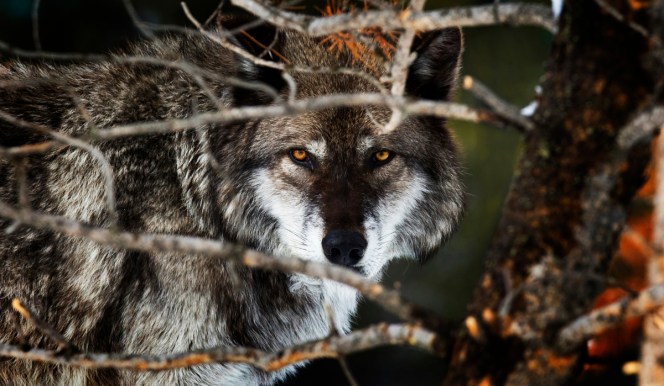
yellowstone wolf.

The groups oppose the state’s classification of the estimated 350 wolves within its borders as “predatory animals” that can be shot on sight in more than 80 percent of state when federal protections end Oct. 1.

Wyoming has also scheduled a regulated trophy wolf hunt in the remainder of the state, an area around the eastern and southern borders of Yellowstone National Park, starting next month.

Wyoming’s action is one of the latest salvos against wolves, which have slowly lost their protected status in the Rockies and Great Lakes regions over the past four and a half years after the U.S. Fish and Wildlife Service declared them “recovered”—a contention disputed by most conservation groups.

Since that time environmental, conservation and wildlife groups have filed a series of lawsuits to protect the wolf. As a result the wolves in these regions have regained and re-lost their protected status at least a half dozen times since March 2008. In the interim several hundred wolves have lost their lives while political forces worked to remove their protected status once and for all, which is pretty much where they stand today.

The groups involved include: Earthjustice, Defenders of Wildlife, Center for Biological Diversity, Natural Resources Defense Council, the Sierra Club, WildEarth Guardians, Alliance for the Wild Rockies, Biodiversity Conservation Alliance, Conservation Congress, Friends of Animals, Friends of the Clearwater, National Wolfwatcher Coalition, and Western Watersheds Project.

Wyoming’s current wolf management plan is similar to an earlier version that the federal agency repudiated after initially accepting it a few years ago. The groups claim the federal government is stopping wolf management for political reasons, not because the current plan is any better than the last one.

gray wolf

Wyoming Gov. Matt Mead and Interior Secretary Ken Salazar, both strongly tied to the ranching industry in which they grew up, have worked closely together since Mead took office last year on an agreement to end federal wolf protections. The federal government already has turned over wolf management in Idaho and Montana to those states and both have held wolf hunts.

The chance to legally shoot a wolf is apparently irresistible to hard core hunters, and states; eager to collect fees for hunting licenses. In Minnesota, more than 23,000 hunters from 33 states have applied for the 6,000 permits to shoot gray wolves that the state will issue for its fall hunting season, set to start November 3.

A spokesman for the state’s Department of Nature Resources told the Associated Press that only a few hundred of the 23,477 requests were filed by Minnesotans. The licenses, to be issued by lottery on October 14, will cost $30 for Minnesota residents and $250 for out-of-state hunters.

Minnesota has set a limit of 400 wolves that can be killed this season. The state has an estimated wolf population of 3,000 animals, the highest number in the U.S. outside of Alaska, where the species has never been protected.

To keep up on this constantly changing situation, the Defenders of Wildlife blog runs a weekly wolf news wrap-up for all things related to this species.


Source: Missoulian, Scientific American

Bear farming

Posted on September 15, 2012

New to me but a thriving business in Asia. Bear farming involves raising bears to extract a digestive juice from their gall bladders called bile, a substance used in traditional Asian Medicine for thousands of years, believed to aid ailments ranging from fevers to heart disease.

Asiatic Black Bear, aka. moon bear

The bears most commonly used on bear farms are Asiatic Black Bears known as Moon Bears because of the distinctive white or cream-colored crescent moon shape on their chests. The Asiatic Black Bear is listed as vulnerable on the World Conservation Union’s (IUCN’s) Red List of Threatened Animals.

Moonbears grow four to six feet long. Males weigh from 220 to nearly 500 pounds. Females about half that size.

The species occupies a narrow band from southeastern Iran eastward through Afghanistan and Pakistan, across the foothills of the Himalayas, to Myanmar. It occupies all countries in mainland Southeast Asia except Malaysia. It has a patchy distribution in southern China, and is absent in much of east-central China. A small remnant population exists in South Korea. They also live on the southern islands of Japan and on Taiwan and Hainan

photo: TRAFFIC

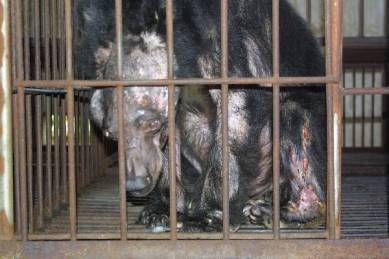
The bile is usually extracted twice a day through an implanted tube. The bears can be seen moaning and chewing their paws while being milked. Another method involves pushing a hollow steel stick through the bear’s abdomen. With the “free drip” method a permanent hole or fistula is made in the bear’s abdomen and gall bladder, from which bile drips out freely. The wound is vulnerable to infection and bile can bleed back into the abdomen, causing a high mortality rate. Sometimes the hole is kept open with a catheter, which causes severe pain. Whatever method is used, extraction of the bile is cruel and painful and leaves bears with open weeping wounds that often become infected and inflamed.

Sun Bear Bile Extraction Operation in Mong La, Shan, Myanmar. (photo: Dan Bennett)

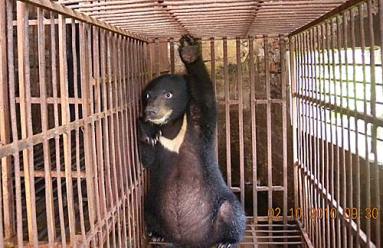
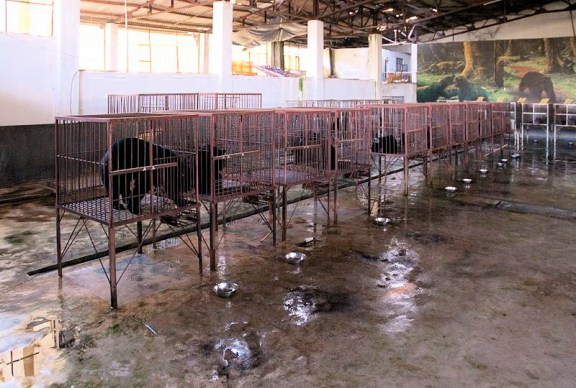
To facilitate the bile milking process, the bears are commonly kept in small extraction cages, also known as crush cages which allow for easier access to the abdomen. It also prevents the bears from being able to stand upright, or in some cases move at all. The cages shown here are typical.

Cage sizes differ from facility to facility but none are anything but cruel.

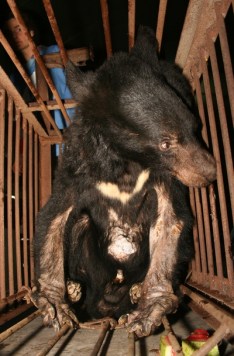
It’s hard to fathom, but bears are confined in these tiny cages for 10–12 years with little to no enrichment.

photo: thebeartruth.org

The obvious result is severe mental stress and muscle atrophy which produces the stereotypical behaviors—swaying, self biting, vocalizing–common to primates and other research animals.

thebeartruth.org

The World Society for the Protection of Animals sent researchers to 11 bile farms. They reported seeing bears moaning, banging their heads against their cages, and chewing their own paws. The mortality rate is high. Bile bears suffer from a variety of physical problems which include loss of hair, malnutrition, stunted growth, muscle mass loss, and often have their teeth and claws extracted. When the bears stop producing bile after a few years, they are usually killed for their meat, fur, paws and gall bladders. Bear paws are considered a delicacy.

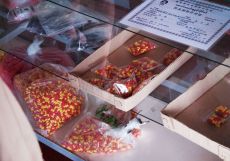
The increased availability and marketing of bile due to the growth of bear farming has created a widening demand among consumers who consider the product an essential “tonic” to promote and maintain good health, rather than a medicine simply to fight illness.

product of Sun Bear Bile Extraction Operation in Mong La, Shan, Myanmar (photo: Dan Bennett)

product of Sun Bear Bile Extraction Operation in Mong La, Shan, Myanmar (photo: Dan Bennett)

The term ‘farm’ is a misleading one, as it implies the bears are being bred and that the trade may be sustainable. Wildlife experts with the conservation group TRAFFIC have found this is not the case as many consumers believe wild bile is more potent and pure than “farmed” and cubs are routinely poached from the wild to stock the farms.

The unconscionable cruelty involved in bile farming and the threat it poses to the viability of the Moon Bear population has not gone unnoticed. The motion to phase out farming of bears for their bile has been submitted for consideration and debate at the coming IUCN World Conservation Congress.


Source: wildlifeextra.com

Peek a boo

Posted on September 15, 2012

Photo: Wildlife Conservation Society Bolivia Program

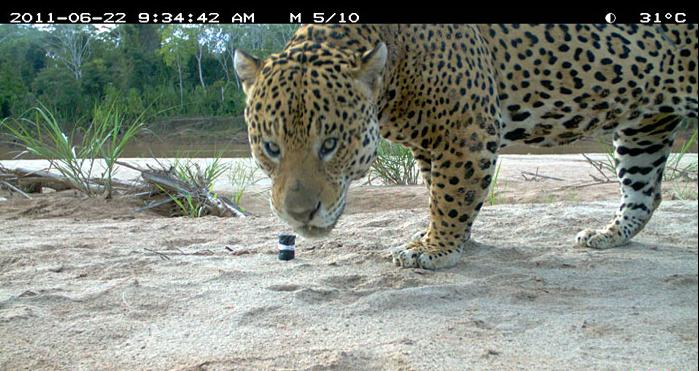
During a recent camera trap survey in Bolivia, researchers from the Wildlife Conservation Society identified 19 individual jaguars, more than any previous camera trap survey in that country. (Credit: WCS Bolivia Program)