First Light Productions

investigative journalism

Posts from the “SANCTUARY” Category

Service interruptis

Posted on September 14, 2012

photo: Amal Mongia

Air India recently announced it has stopped ferrying animals like rabbits, cats and dogs for laboratory tests, where they are experimented upon and finally killed.

Air India is now among international airlines like Air Lingus, British Airways, Cargolux, Cathay Pacific, Qantas and, recently, Air China which decline transporting rabbits, rodents, dogs, cats, primates and other creatures destined for laboratories.


Source: The New Indian Express

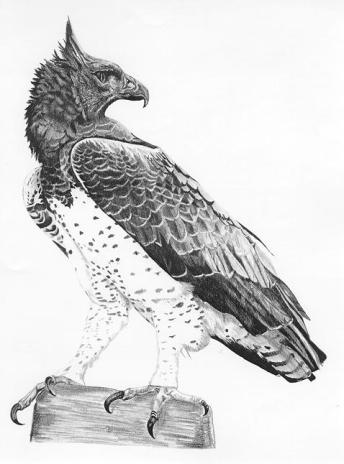
Martial Eagle

Posted on September 14, 2012

The largest of the African eagles, the Martial Eagle weighs in at almost 14 pounds with a wingspan of over 6 feet.

artist: Jana Gale Connell http://www.indigomoonarts.com/

An emblematic bird of prey that is disappearing at an alarming rate. A decline mirrored in many species on every continent.


Source: IUCN, International Union for Conservation of Nature.

More trouble for the right whale

Posted on September 14, 2012

On September 6 a federal judge gave the U.S. Navy the go-ahead to build an undersea warfare training range close to the right whales’ only known calving ground in North Florida. The facility will inundate the surrounding waters with sonar, which has a disastrous effect on whales and other marine mammals.
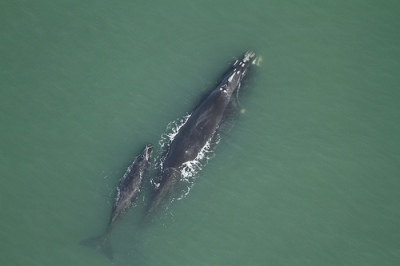
A mother right whale and her calf swimming off of Amelia Island, Florida. (Photo: FWC Fish and Wildlife Research Institute)

North Atlantic right whales are the most critically endangered species of large whale with only 300 individuals left in the world. This massive species was called the right whale by whalers because they were the “right” whale to kill. Swimming slowly close to shore, they made easy targets.

The Navy’s $100 million facility, designed to train submarines, ships, and aircraft, will span nearly 500 square miles of ocean perilously close to the calving grounds, putting whales and other sea mammals at risk of both ship strikes and sonar.

Hunting of the right whale ceased in the 1930s following the Convention for the Regulation of Whaling, the predecessor to today’s International Whaling Commission. By then it was almost too late–the right whale population was already decimated, and things haven’t improved since. Like other large mammals, right whales are slow breeders. Females do not reach sexual maturity until they are about nine years old, and they only breed every three years.

Though the threat of whaling has passed, right whales are still in terrible danger of being struck by ships or entangled in their fishing gear. In 2010 alone there were five right whales perilously entangled in fishing gear. Two did not survive.

Right whales spend much of the year in the waters off of Nova Scotia, near the Bay of Fundy, feeding on plankton. As winter arrives they migrate south along the coast to give birth to their calves in the warm waters off of southern Georgia and northern Florida. The small patch of ocean is the only known calving area for right whales.

Right whales are especially vulnerable to fatal collisions with ships because of their dark color and lack of a dorsal fin. The danger increases for calving mothers, who spend a lot of time near the surface as they give birth and as their young develop the lung capacity to dive deeper. Currently, the Navy’s only way to avoid ship strikes is by visual detection, which does not bode well for the fate of nearby whales.

Just as menacing is the threat of sonar which can be deadly for ocean mammals. Sound travels through water much faster than air, and can be deafening to marine mammals miles from the source. Loud blasts of sonar often cause whales to surface quickly, and the rapid change in pressure can lead to bleeding from the ears and eyes.

Naval sonar has been linked to multiple marine mammal deaths, notably the stranding of whales and dolphins in the Bahamas in 2000. Examinations of the stranded animals revealed internal hemorrhaging and bleeding in their ears and brains. Another stranding occurred in North Carolina’s Outer Banks in 2005, when 34 whales beached shortly after Navy sonar training. Similar problems have been reported with Orcas in Puget Sound off the coast of Washington.

Sonar can also disrupt normal whale activity like navigation or feeding, cause panic and disorientation. Even whale watching boats can cause hearing trouble and make it hard for whales to communicate.

The Navy’s refusal to give the baby whales a fighting chance by restricting sonar use during the calving season is outrageously typical of the military when it comes to environmental problems. It’s not hard to see how this court decision will likely spell disaster for right whales.


Source: Justine E. Hausheer, “The Wrong Choice for Endangered Right Whales,” audubon.org.

American beast

Posted on September 14, 2012

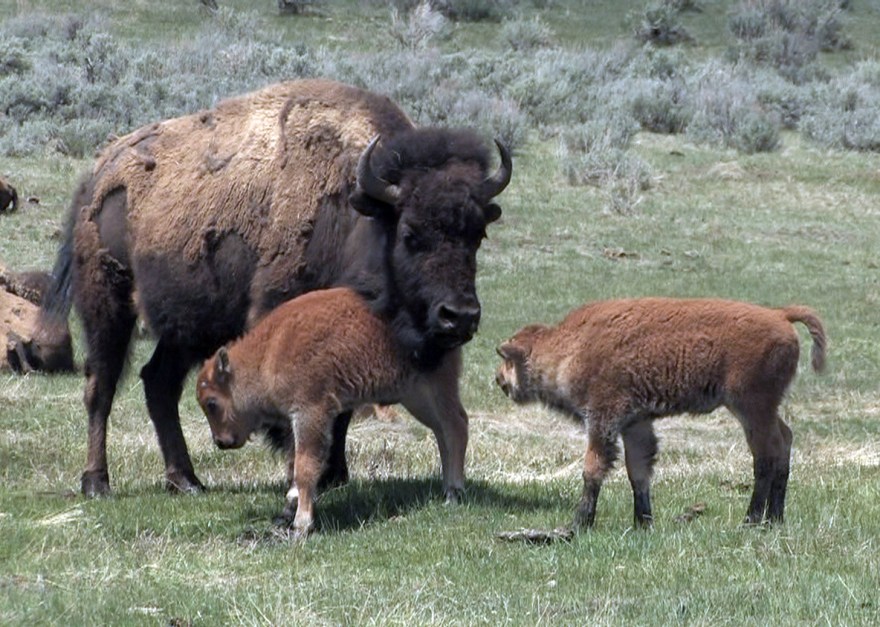
Why is it the most iconic of North American animals has no status as true wildlife?

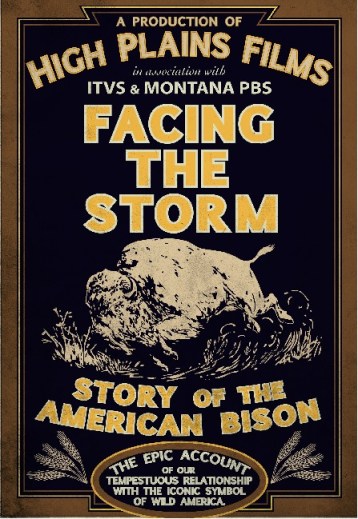
They’ve been saved from extinction, but recent history hasn’t been so romantic for the buffalo. Their storied past has given way to an uncertain future tied up in the realities of land management, bureaucracy, court trials and town-hall meetings.

Today, even as buffalo unite Indian tribes under a common cause, they divide hunters and conservationists, lawmakers and constituents, as America continues to argue what, exactly, home on the range means for the buffalo.

The film is great history. Take a look.


http://www.highplainsfilms.org/hpf/films/facing_the_storm

Bushmeat

Posted on September 13, 2012

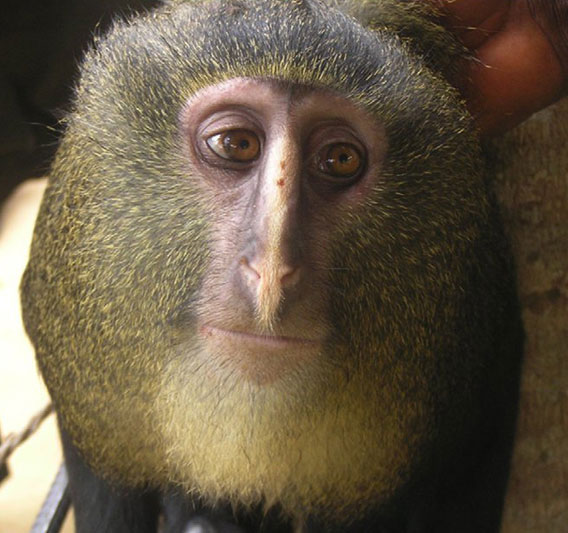
As I prepare to post about a newly “discovered” monkey, NPR beats me to the punch with the same story. With so many newly described animals being reported in the wildlife press, I can only deduce they decided to report on this one because of its face.

Captive adult male lesula (Cercopithecus lomamiensis). Photo: John Hart

The ‘lesula’ (Cercopithecus lomamiensis) inhabits the  largely unexplored old-growth rainforests of the Democratic Republic of the Congo (DRC). According to scientist and explorer, John Hart, the area is so remote that primates only come out of it as heavily smoked and unrecognizable bushmeat.

Researchers estimate the lesula habitat at around 6,500 square miles. The species is not uncommon as the region is so far untouched by logging and mining. Like many of Africa’s primate, however, the monkey is imperiled by a growing bushmeat trade.

The monkey lives in a region home to bonobos, okapi, forest elephants, and Congo peacock. The Harts originally came to the area to study bonobos, sometimes called pygmy chimps, the great apes that are closely related to chimpanzees but have unique social structures,

Researchers suggest that the lesula be listed as Vulnerable by the IUCN Red List, due to a likely decline from “uncontrolled” bushmeat hunting.

John and Terese Hart have been working with authorities to combat illegal poaching in the region and are working with the DRC government and local communities on establishing a 3,470 square mile protected area in the region known as Lomami National Park.

The lesula is only the second newly discovered monkey in Africa in the past 28 years


Source: Mongabay.com

Baghdad

Posted on September 13, 2012

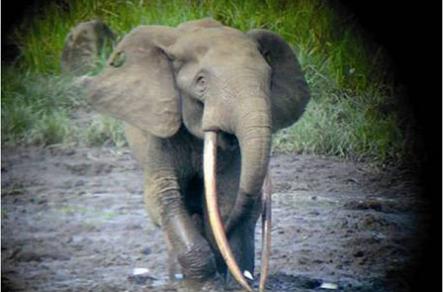
His name is Baghdad, because of the bullet scar in his ear. He lives in a national park in Gabon, and he’s one of only 20 African forest elephants left on Earth whose tusks touch the ground, making him worth about a hundred thousand U.S. dollars—dead.

Baghdad, Ivindo National Park, Gabon, Africa

Delegates to the World Conservation Congress in Jeju, South Korea, this month, appealed for aid from the International Union for Conservation of Nature (IUCN) as African elephant populations plummet.

With international crime syndicates coveting more and more elephant ivory—a symbol of wealth in booming Asia—elephant numbers have fallen to “crisis levels,” according to a June report by the Convention on International Trade in Endangered Species of Wild Fauna and Flora (CITES).
The highest rate of elephant poaching since a global ivory ban in 1989 occurred in 2011, with tens of thousands of the animals slaughtered, their ivory shuttled out of West and, increasingly, East African seaports enroute mainly to China but also to other Asian consumer countries such as Thailand.

About 472,000 to 690,000 African elephants—currently classified as vulnerable by IUCN—likely roam the continent today, down from possibly five million in the 1930s and 1940s.

African countries are in desperate need of increase protection of their wildlife, particularly elephants and rhinoceroses, as dozens of park rangers have been killed this year in Africa by well-armed poachers, including 15 in the Kenya Wildlife Service alone.

One African delegate said, “We’re going into a phase now where we’re basically at war. We’re shifting from biologists being out in these parks to military people being out there.”

Worldwide, more than 60 rangers have died this year. There are many dead who go unreported. Rangers need more funding, training, and equipment—particularly as wildlife crime tightens its grip on Africa.

The World Wildlife Fund recently launched a campaign to stop wildlife crime. One of its main goals is raising the profile of rangers, since many don’t receive the support and training they need.

Gabon, a country that’s taken a strong stance against the ivory trade, recently upped its national park staff from 100 to 500 and is in the process of adding a new military branch of 250.

Even so, poachers have become more brazen, shooting at cars carrying park staff. Poachers are have even taken to killing elephants by putting out poison, which can harm other animals as well.


Source: Christine Dell’Amore, National Geographic News, September 9, 2012.

PETA’s first action

Posted on September 12, 2012

The photograph is a startling image: a monkey held upright in a crude frame fashioned from pipes, the animal’s arms and legs splayed out from its body, ankles and wrists bound by tape.

Institute for Behavioral Research, Silver Spring, Maryland, 1981

A clamp affixed to its abdomen holds the ape’s trunk immobile, another around its neck, secured by a C-clamp, fixes its face upward toward the ceiling. Prominently tattooed on its chest is the number 25. Were the photograph created as an artwork it would hold its own alongside the iconic photo by Andres Serrano titled Piss Christ (a crucifix submerged in a glass of the artist’s urine), ironically also funded by a government grant, just as the monkey’s circumstances were supported by the National Institutes of Health.

According to Alex Pacheco who took the photo in the fall of 1981, the monkey’s name was Domitian; one of seventeen apes at the Institute for Behavioral Research (IBR) in Silver Spring, Maryland, that had been surgically crippled (a procedure known as “deafferentation”) by severing the sensory nerves to their limbs at the spinal cord (in Domitian’s case the left arm had been rendered useless). Restraint, electric shock, and withholding of food were then used to force the monkeys to try and use those limbs, to see if the neural pathways would regenerate.

Pacheco was a seasoned animal-rights activist when he arrived at the lab. (He had participated in animal rights protests in college, and crewed on the infamous anti-whaling ship Sea Shepard.) Living in Washington D.C., he volunteered to work at IBR on the night shift and was given keys. Finding that the monkeys were in poor health due to lack of veterinary care and living in squalid conditions, he set out to build a case against the lab’s director Dr. Edward Taub for cruelty to animals.

Pacheco photographed what he saw, copied lab documents and over a period of weeks snuck five primate experts and veterinarians inside to see the conditions firsthand and write affidavits testifying to what they’d observed. He took his evidence to the local police who obtained a warrant and raided the lab, seized 17 monkeys and carted away lab files. Alerted by a tip, a camera crew filmed the raid. The footage, broadcast on the CBS evening news, showed 17 cages, each holding a bewildered monkey, being carted from the building and placed in the back of a van bearing a hand lettered sign reading “People for the Ethical Treatment of Animals.” The reporter noted it was the first time the monkeys had seen natural light and fresh air since their capture in the Philippines years before.


©Mike McLeod, 2012

Unprecedented assault

Posted on September 11, 2012

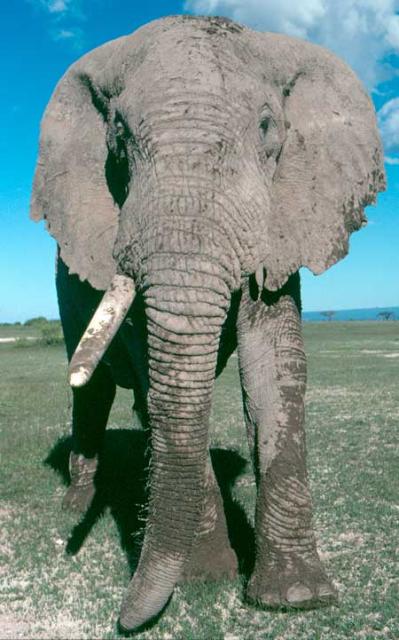
A global ban placed on the ivory trade in 1989 was widely credited with stemming a relentless slaughter of African elephants in countries such as Kenya. But elephant poaching in Africa has surged again, driven by Asian demand for tusks for use in jewelry and ornaments.

According to TRAFFIC, a conservation group which tracks trends in wildlife trading, most of the illegal African ivory winds up in China or Thailand. In 2011 there were at least 13 large-scale seizures of over 2,000 pounds of ivory, more than double the amount recorded in 2010. That figure probably represents the slaughter of some 2,500 elephants, possibly more.

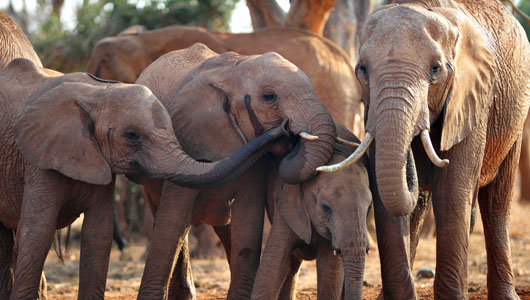
Elephants in Tsavo national park, Kenya. (Photo: ZUMA Press)

Tom Milliken, who manages TRAFFIC’s Elephant Trade Information System, said the poaching and illegal trade were consequences of China’s investment drive into Africa to secure the mineral and energy resources it needs to fuel its economic growth.

“We’ve reached a point in Africa’s history where there are more Asian nationals on the continent than ever before. They have contacts with the end use market and now they are at the source in Africa,” he told Reuters. It “all (adds) up to an unprecedented assault on elephants and other wildlife.”

Elephant poaching is particularly rampant in Democratic Republic of Congo, but killing for ivory has spread across much of Central Africa, including Zimbabwe, Zambia, northern Mozambique, Tanzania and Kenya.

Estimates of Africa’s elephant population vary widely from around 400,000 to 700,000.

Ironically, in some southern African states such as Botswana, there are large and growing populations of elephants, and in South Africa there are concerns that pachyderm numbers have swelled to the point that they are damaging the environment in enclosed reserves.


Source: Reuters Environmental Online Report

Animal Rahat

Posted on September 10, 2012

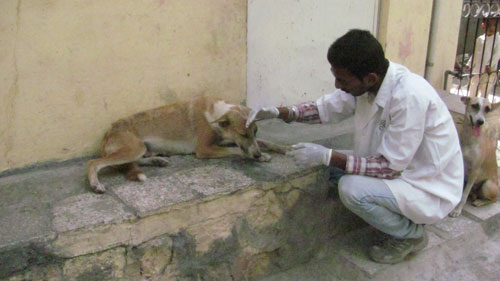
Animal Rahat is a unique program that aims to help some of the most neglected animals in the world—the bullocks, donkeys, and other working animals in India.

Animal Rahat volunteer

In addition to working animals, Animal Rahat also offers services to the many local “street dogs” who face an array of dangers, including disease, starvation, and being hit by vehicles.

Animal Rahat staffers sterilize as many dogs as they can, provide them with vaccinations whenever possible, and treat them for mange to relieve their incessant itching and hair loss caused by a weak immune system.

In August, an Animal Rahat volunteer trainee took the team to his village, where they treated 36 dogs for everything that ailed them!

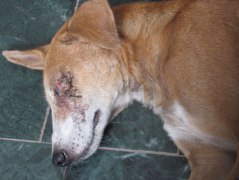
The Animal Rahat team discovered this dog languishing with an eye injury. According to local villagers, the injury happened during a scrap with another “street dog.”

Animal Rahat vets were able to find a compassionate villager, Mr. Zadbuke, who agreed to provide the dog with care and shelter for two weeks, and one of the vets returned regularly to treat the animal with antibiotics. Other than having a slight sensitivity to light in the injured eye, the dog has been recovering well, and the vets are following up on the case.


Source: http://www.animalrahat.com, via PETA.

Bears, bears…

Posted on September 9, 2012

This summer’s record breaking drought in the United States has killed off much of the food bears depend on, and the bruins have begun widening their range looking for something to eat. Drought-starved bears in Colorado have taken to burglarizing candy stores, kitchens, campsites and hotel bars. A bear wandered through a farmer’s market in downtown Aspen.

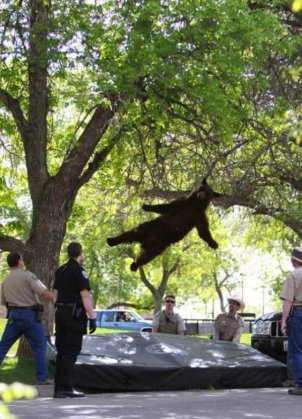
photo: Andy Duann/CU Independent

In April, a 280-pound black bear wandered on to the University of Colorado campus, climbed a tree and had to be tranquilized. Made locally famous as it was caught on film falling to the ground, it was relocated to a wilderness area about 50 miles west of Boulder. A week later, the same bear wandered onto a highway and was hit by two cars and killed.

A spokesperson for Colorado Parks and Wildlife said  that the state lacks a sufficient wilderness area to accommodate all the bears that wander into heavily populated areas. And a relocated bear often views the area where it was captured as its home range and does its best to return.

Once  a bear  hits town and they start getting to food sources, they become a “town bear.”

“A lot of them just don’t seem to care, anymore,” said a local sheriff. “They’re just wandering around.”

The increase in bear mischief is being reported across the country. From New York’s Catskills to Kentucky’s Appalachians, bears are moving into habited areas looking for food before winter falls.

Bears are not the only animals affected. The devastating drought that has effected much of the country has killed off grasses and other feed that a wide variety of wild species depend on. Wildlife officials across the country are worried about mass starvation among elk and deer populations. The problem is especially dire in the central and southern Great Plains. Sixty-three percent of the continental U.S. remains in a state of moderate to extreme drought.


Source: dailycamera.com

Sanctuary mentality

Posted on September 9, 2012

The past few weeks have brought many changes to our little corner of the world.

Spring has completely sprung, the expansion plans are moving forward, our newest residents are learning the ropes and we are preparing for the arrival of more beautiful souls. The days here at the Sanctuary tend to have a certain routine of feeding and cleaning with a sprinkling of the unexpected to keep everyone on their toes. Here, unexpected can mean any manner of mischief, medical issue or just the inclination that “something just isn’t right” with a particular resident. Luckily, almost any issue can be solved with a visit from our wonderful vet or a bit of creativity. For the rest I find myself researching the subject and becoming increasingly more frustrated by what I have started calling “farm mentality versus sanctuary mentality.”

I grew up on a small family farm, I know what the life is like, how the animals are treated and where they end up. Every year, for eleven years I spent every spring and summer feeding, grooming and documenting every aspect of my “project animals.” Rabbits, sheep, steers and pigs were not viewed as sentient beings but as projects to raise and send for slaughter. Hours were spent preparing for the show ring to demonstrate which “project” would make the best flesh for someone’s table, and the efforts were rewarded by a check after the fair week. The animals however, paid the ultimate price as many county fairs are “terminal shows” meaning that every “market” animal will end the week in a slaughter house.

The rest of the year was spent in the fields and keeping an eye on the small herd of “beef” cattle in the pasture. By farming standards those cows lived a good life. They received hay daily to supplement the pasture grass, grain in the winter and never faced the confinement common in many dairy operations and factory farms. The calves were left by their mothers’ side for six months or so and it wasn’t rare to have a cow or two around twenty years old. Yet for all of that, the cows are still separated from their calves, and the calves still face a terrifying death at a slaughterhouse. Does it really matter if the meat was happy in life when they all face the same death for humanity’s selfish purposes?

The “farm mentality” is a variant of the means being justified by the end result. The animals are raised for meat and other products so everything that is done to and for the animals must take that into account. Medications all list a “withdraw time” that a particular animal must go without the medication prior to being killed for “processing.” Many medications that are commonly used in other species are not reached for in “farmed animals” out of concern for how it will affect the desired product. This seems no different than withholding potentially helpful drugs to you or I out of a desire to use our organs after death.

Perhaps the most disconcerting is the lack of thought given to the mental state of the species being worked with. There will certainly always be times that something unpleasant must be done. Some vaccines must be done, wounds need to be treated and occasionally someone may need transported. The critical difference is in the approach. Farm mentality is results driven, the ends justify the means and patience is typically in short supply.

As a sanctuary, the duty is not only to provide the needed care but to do it in such a way that life suffers only a minimal interruption and as little stress as possible. Everything moves a little slower and many tasks take longer but here it is understood that human schedules don’t matter when compared to the peace and security of our residents.


–Cheryl Wylie, May 29th, 2012, writing in Vine Sanctuary News.

Happy cows

Posted on September 9, 2012

Life on the Bansen farm. Nicholas D. Kristof for the New York Times.

Susan Seubert for The New York Times

If you find the article firewalled, the takeaway is: “Like many farmers, Bob (a dairy farmer) frets about regulations and reporting requirements, but he also sympathizes with recent animal rights laws meant to improve the treatment of livestock and poultry. “You hate to have it go to legislation, but we need to protect the animals,” he said. “They’re living things, and you have to treat them right.”

Men with guns

Posted on September 8, 2012

September 2012–U.N. Radio reports that Congo’s army has captured a militia leader and 16 of his combatants who, in June, raided the headquarters of the Okapi Wildlife Reserve and Epulu Breeding and Research Station, situated in the northeast of the Democratic Republic of Congo.

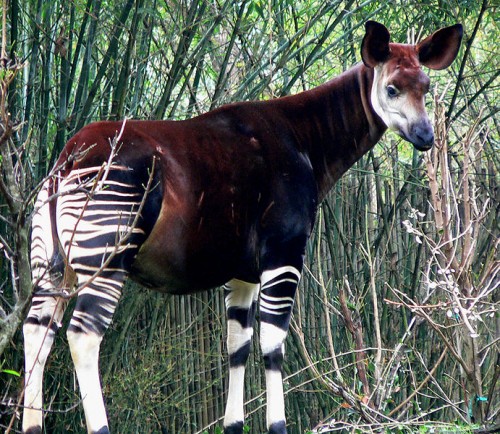
okapi (Wikimedia Commons)

The attackers, led by Paul Sadala, who goes by the alias Morgan, armed with AK-47 rifles, killed seven park staff and their family members. Others were taken hostage or are unaccounted for.

The Reserve infrastructure was completely destroyed and the 15 okapi of the station were all shot and killed, including some who had been “wildlife ambassadors” for 23 years. The Epulu station plays a central role in protecting the future of the okapi by serving as a reservoir for the infusion of new genetic stock into okapi populations in global conservation programs.

15 okapi and several rangers killed in raid on the Epulu Breeding and Research Station, Democratic Republic of Congo, June 2012.

The group, made up of ivory traffickers and illegal miners, was apparently seeking revenge on the Institute in the Congo for Conservation of Nature (ICCN) in retaliation for ICCN rangers who had disrupted elephant poaching and illegal mining activities in the Southern part of the Reserve.

The reserve is home to about 5,000 okapi–a rare giraffe-like forest creature that is only found in Democratic Republic of Congo and is a threatened species–and significant populations of leopard, elephant, chimpanzee and crocodile. Its bird life makes it one of the most important sites for bird conservation in mainland Africa. The reserve is also the home of the nomadic Mbuti pygmies.


Source: wildlifeextra.com

Insatiable demand

Posted on September 8, 2012

JAKARTA, July 31st, 2012— Acting on a tip, Indonesian police intercepted 85 endangered pangolins from smugglers in what is reported to be the first major pangolin seizure in Indonesia this year. Despite being stuffed into sacks, eighty percent of the animals were alive. The scaly anteaters were likely destined for Hong Kong or mainland China.

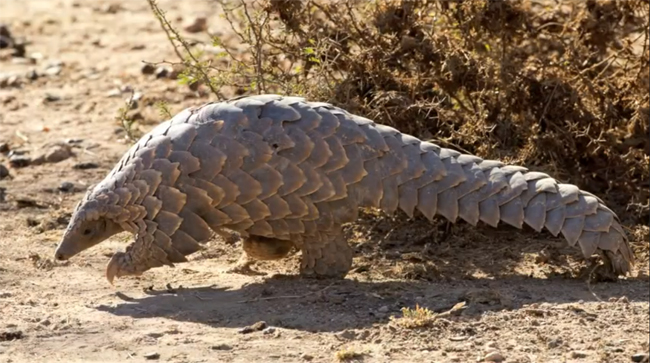
pangolin

Pangolins are approaching extinction as a result of insatiable demand (particularly from China and Vietnam) for all four pangolin species from East and Southeast Asia. The flesh of adults and babies is considered a delicacy, while the animals’ scales are used as an ingredient in traditional Chinese medicine. Such pangolin concoctions serve as a “cure-all remedy” for things like reducing swelling, improving liver function, promoting weight loss, stimulating blood circulation, enhancing lactation in breast-feeding women, and have even fallaciously been claimed to cure cancer. None of the medicinal claims made about the critters and their body parts have been backed by science.

Pangolins are disappearing at an alarming rate. In 2011 alone, an estimated 41,000-60,000 are believed to have been removed from the wild. An estimated 40,000 were killed.

Officials are working with a natural resources conservation agency to return the survivors to the wild. It is unclear how many of them may survive the reintroduction as they are known to commonly experience life-threatening complications after being removed from the wild.

Last month, Indonesia burned nearly thirteen tons of pangolin carcasses and scales seized from smugglers, thereby sending a message to consumers and profiteers that black market trade in these creatures will not be tolerated.


Source: Associated Foreign Press