First Light Productions

investigative journalism

Posts by Michael Elton McLeod

Shark fins no more

Posted on July 1, 2013

LOS ANGELES — An ancient Asian dining tradition ended today in California when the state ban on the sale or possession of shark fins went into effect.

Shark fins on sale at $600 per pound in the Chinatown section of Los Angeles, California. As of today they are illegal. (Photo: Louis Sahagun/MCT)

The delicacy which could be found in many stores in Los Angeles’ Chinatown sold for between $600 to $2,000 a pound.

Serving bowls of shark fin soup to honor guests at birthdays, banquets and weddings is an Asian tradition dating back to the Ming Dynasty, when sharks were the ultimate symbol of yang, or male energy, and serving fin soup was reserved for emperors.

Demand for the delicacy has grown with the growth of China’s middle class. As a way to meet the burgeoning demand for million of fins each year, the fishing industry took to slicing the fins off live sharks and throwing the crippled animals back into the sea to drown. The result was the death of an estimated 73 million sharks killed each year simply for their fins.

The International Union for Conservation of Nature estimates that the populations of some shark species, such as hammerheads, have been reduced by as much as 90 percent.
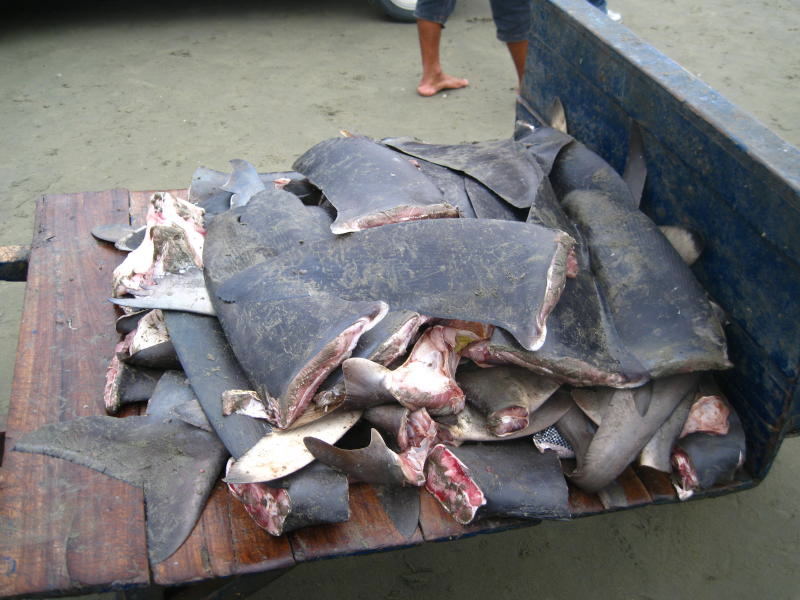

Shark fins (Photo: Rikke Johanneseen)

So far, Hawaii, Washington, Oregon, Illinois, Maryland and Delaware, and the Pacific territories Guam, American Samoa and the Northern Mariana Islands, have also enacted legislation prohibiting the sale of shark fins. New York is pursuing similar legislation.

Korean Airlines Co. and Cathay Pacific Airways Ltd. have stopped carrying shark fins as cargo.


Source: Mcclatchydc.

Urgent! Tragedy Strikes Rhino Orphanage

Posted on June 30, 2013

Tisha Wardlow's avatarFight for Rhinos

29 Saturday June- This just in from the Rhino Orphanage:

Rhino Mike butchered

A young rhino bought to act as a surrogate parent to orphaned babies has been shot and killed and his horn removed while a young female has been shot and wounded.
The five-year-old bull white rhino named Mike was killed at Legend Golf & Safari Resort in Limpopo while his fellow free-ranging surrogate parent Nana is being treated for gunshot wounds. Her condition is being assessed by specialists.
The resort is also home to The Rhino Orphanage, a centre which forms a vital part of the EWT Rhino Response Strategy, which was not breached or attacked.
Mike was donated by suppliers to health company Netcare to help raise orphans of the war being waged on South Africa’s rhino population.rhino with karen at orphan
The resort and The Rhino Orphanage were on a full security alert and now ADDITIONAL measures are being…

View original post 672 more words

Mysterious Die-offs in Florida Lagoon

Posted on June 30, 2013

EF! J Collective Everglades Office's avatarEarth First! Newswire

by Gayathri Vaidyanathan / Discovery News

At least 111 manatees, 300 pelicans, and 46 dolphins — emaciated to the point of skin and bones — were all found dead in America’s most biologically diverse estuary.

Something is seriously wrong. The northern stretches of the Indian River Lagoon of Florida has a mass murder mystery that biologists are racing to figure out. The lagoon contains more species than anywhere else in the U.S. It is a barrier island complex stretching across 40 percent of Florida’s coast, around Cape Canaveral, and consisting of the Mosquito Lagoon, the Banana River and the Indian River Lagoon.

View original post 458 more words

Translation: Go f… yourself!

Posted on June 27, 2013

Wild horse gather.

A perspective by Nevada columnist George Knapp, describing the BLM’s wild horse program, goes to the rotten heart of the federal government’s approach to, well, a lot of things.

There is a law…

Posted on June 26, 2013

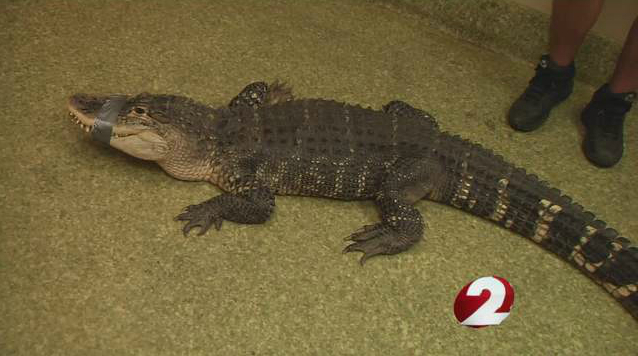
A seven-foot alligator was recently seized by animal control officers in Ohio. Authorities moved in after learning of a video posted on Facebook showing teenagers harassing the animal.

Ohio basement gator1

Ohio basement. (Photo: WDTN)

The video shows a young man laughing as he throws beer on top of the alligator, which jerks back in surprise and bites the small, hard plastic tub where he was kept.

Severely weakened by a lack of nourishment and suffering from a bone disease and loose teeth, caused by a vitamin D deficiency associated with a lack of sunlight, the animal had been confined in a basement for more than 15 years.

Ohio alligator rescue. (Photo: Lisa Powell/AP/Dayton Daily News)

A local veterinary opined that the gator should have been three feet longer but its growth had been stunted by captivity.

    A law recently enacted in Ohio makes it illegal to own exotic animals that are not registered with the state. Unsurprisingly, the alligator was not.

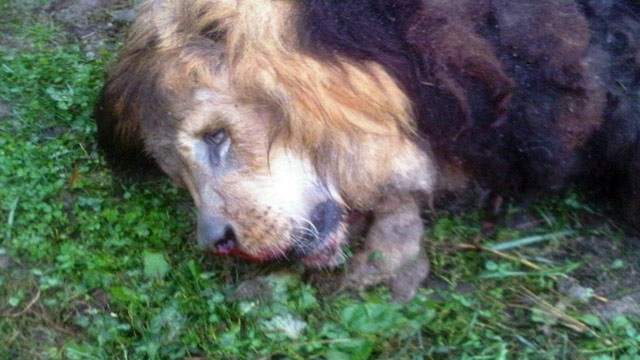
    The law was passed in response to an incident in the state two years ago when the owner of an animal preserve released all his animals then killed himself.

    Dead lion in Terry Thompson’s farm near Zanesville, Ohio, Oct. 18, 2011. (Photo: Fred Polks Jr.)

    During a night of chaos, an escaped lion killed a monkey, and bears and lions were charging at horses kept at the preserve. Fearing the animals would scatter and terrorize the town, officers shot and killed 49 animals, including 18 Bengal tigers, 17 lions, six black bears, a pair of grizzlies, three mountain lions, two wolves and a baboon.

    In regard to the alligator, authorities said that animal cruelty charges may be filed against the animal’s owner and the teenagers.

    After a period of rehabilitation the animal will be transferred to a wildlife sanctuary in Florida. Alligators can live well into their seventies. Thanks to the jerk who kept the animal in the dark for 15 years, it may not have that much life left.


    Source: Daily Dot.

50 chimps and counting. Private labs next

Posted on June 26, 2013

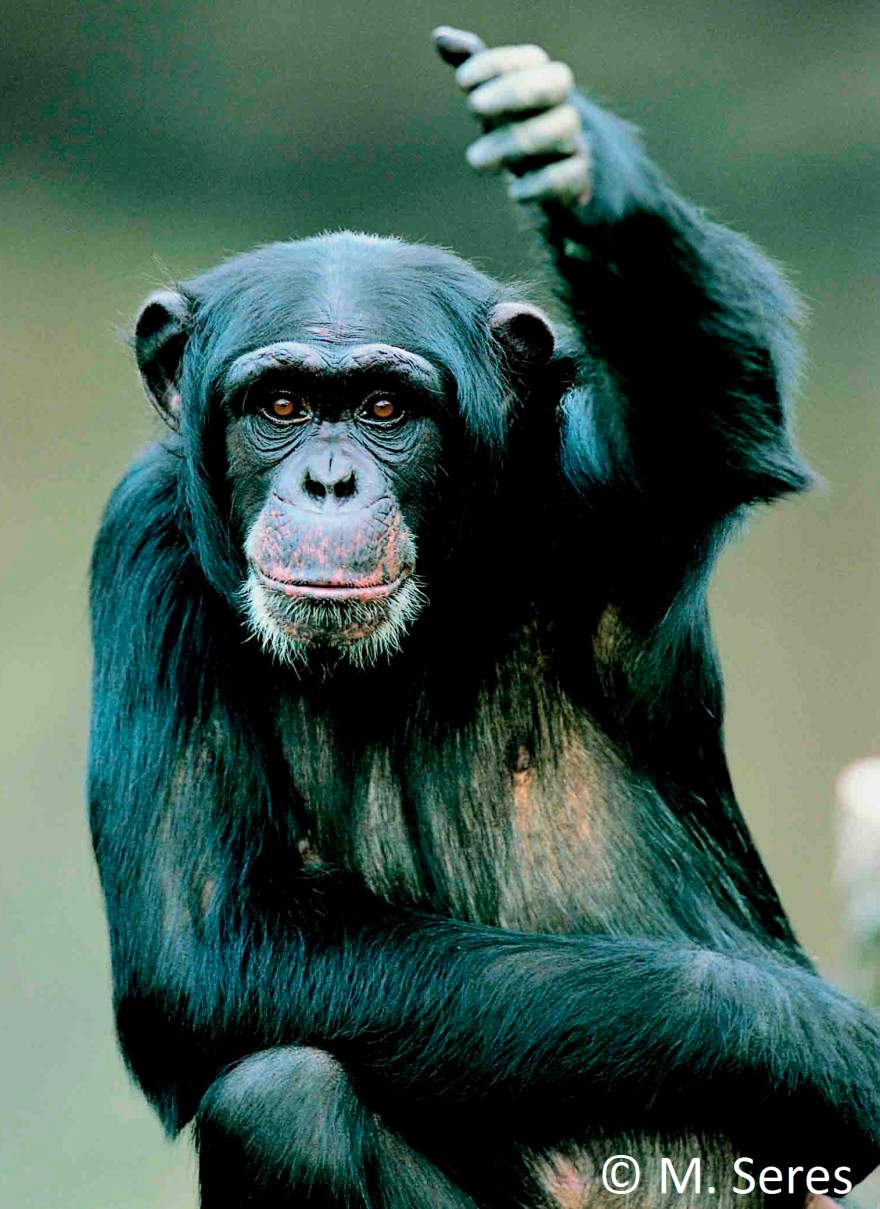
Jahaga. (Photo: Michael Seres)

NIH has made a decision to retire nearly 90% of its chimpanzees, but keeping a “reserve” population of up to 50 for “future potential research.”

Despite the fact that the Institute of Medicine has declared chimpanzees are not necessary in current medical research, the people in the white coats just can’t let go entirely.


Source: New England Anti-Vivesection Society.

Mortality Signal

Posted on June 24, 2013

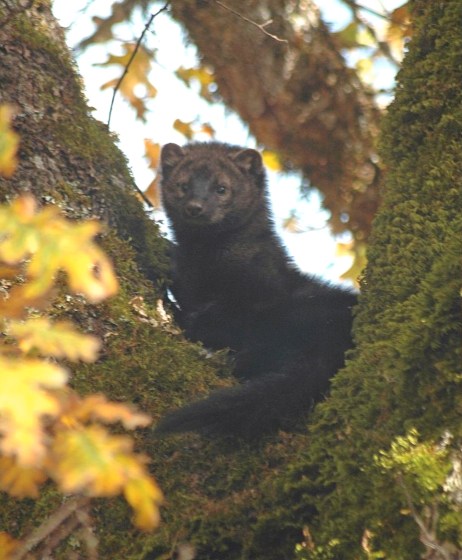
In the spring of 2012, a mortality signal on the radio collar of a Pacific fisher sent Hoopa tribal biologists scrambling to recover the animal quickly so a necropsy could be performed to determine cause of death. The field crew found the animal wasn’t dead but lethargic and lacking coordination, lurching on the ground attempting to seek cover from the approaching biologists. Beyond help the animal was humanely euthanized.

It was the sixth monitored fisher in California to die from rodent poison since 2009.

Fisher in northern California forest. (Photo: J. Mark Higley)

Necropsies and toxicological screenings of 58 fishers recovered on community and public lands in northern California revealed that nearly 80 percent of the animals had been exposed to rodenticide poisons.

Researchers suspected the poisonings were linked to marijuana grow sites hidden in the forest as the necropsied animals were not found near agricultural and urban areas where these types of pesticides are legally used to control pests. Their suspicions were confirmed when law enforcement officers who raided grow sites on public and tribal lands reported that marijuana cultivators routinely place pourable pesticides in open tuna or sardine cans to kill wildlife that damages their plants or raids their food caches.

This indiscriminate use of poisons in the wilderness has led to mass wildlife killings. Officers approaching one grow site discovered a black bear and her cubs seizing and convulsing as they slowly succumbed to the neurological effects of pesticides they’d just ingested.

More troubling, researchers’ data also showed that the fisher mortalities occurred from late April through early June, the prime-time for marijuana seedling planting and likely the period of heaviest toxicant use which is also a key time for female fishers to rear their kits. Several poisoned females left behind kits who died due to den abandonment and starvation.

    A sobering

video

    of a poisoned fisher found by biologists.
    Some of the fishers tested positive for multiple toxic compounds, many of which have been banned for use in the U.S., Canada, and the European Union.

Marijuana crops on private land in Humboldt County, California. (Photo: Jim Wilson/The New York Times)

The environmental effects of the thousands of grow sites scattered across northern Califoria—tearing up of hillsides, grading the mountaintops, diverting whole watersheds and drying out creeks—is catastrophic, further imperiling salmon runs already devastated by water problems caused by logging.

A Google Earth virtual flyover of marijuana plots and the damage they cause can be seen here.


Source: Wildlife Society News.

Hat tip: New York Times.

URGENT: please contact today to help chimpanzees, two minutes

Posted on June 23, 2013

Stacey's avatarOur Compass

BACKGROUND | SOURCE ALDF

All chimpanzees deserve protection — the ones in the wild, yes, but also the ones captive in labs, zoos, and private homes. That’s why we are rallying our supporters to comment on a proposed rule that would protect all chimpanzees under the Endangered Species Act (ESA).

Will you comment in support of the proposed rule today?

The U.S. Fish and Wildlife Service (FWS) announced its proposal to classify captive chimpanzees as endangered under the ESA — the proposed rule would end the “split-listing” of chimpanzees, which incongruously gives endangered species protections to wild members of the species residing in Africa but not to their captive counterparts living in the United States.

Among other things, the split-listing has led to cruel and unnecessary biomedical research on captive chimpanzees, as well as the routine exploitation and abuse of the species for entertainment purposes and as pets. It’s time…

View original post 130 more words

EU Agrees To Tighten Its Ban On Shark Finning

Posted on June 23, 2013

narhvalur's avatarAnn Novek( Luure)--With the Sky as the Ceiling and the Heart Outdoors

BRUSSELS (Reuters) – The European Union agreed on Thursday to tighten an existing ban on “shark finning”, or slicing fins off sharks often while they are still alive, which environmental campaigners say is cruel and threatens the survival of some species.

Once the change comes into effect, the ban will forbid shark finning by all vessels in EU waters and by all EU-registered vessels anywhere in the world, a move its supporters believe will put pressure on countries where the practice is common.

Workers lay out pieces of shark fin to dry on a rooftop of a factory building in Hong Kong January 2, 2013. REUTERS/Bobby Yip

Workers lay out pieces of shark fin to dry on a rooftop of a factory building in Hong Kong January 2, 2013. REUTERS/Bobby Yip

“Shark finning is one of the main threats to the shark population,” said Sandrine Polti, policy adviser to the…

View original post 282 more words

From National Geographic : The Last Songbirds: Horrific Hunting From Egypt To Morocco And The Mediterranean

Posted on June 23, 2013

narhvalur's avatarAnn Novek( Luure)--With the Sky as the Ceiling and the Heart Outdoors

Published: July 2013

Last Song for Migrating Birds

From glue-covered sticks in Egypt hang two lives, and a question: How can we stop the slaughter of songbirds migrating across the Mediterranean?

By Jonathan Franzen

Photograph by David Guttenfelder

In a bird market in the Mediterranean tourist town of Marsa Matruh, Egypt, I was inspecting cages crowded with wild turtledoves and quail when one of the birdsellers saw the disapproval in my face and called out sarcastically, in Arabic: “You Americans feel bad about the birds, but you don’t feel bad about dropping bombs on someone’s homeland.”

I could have answered that it’s possible to feel bad about both birds and bombs, that two wrongs don’t make a right. But it seemed to me that the birdseller was saying something true about the problem of nature conservation in a world of human conflict, something not so easily refuted. He kissed his…

View original post 5,455 more words

Making History for Elephants

Posted on June 23, 2013

Tisha Wardlow's avatarFight for Rhinos

Since the beginning of mankind, animals have had to make way for people. We come in, build, take over, and run them off their land.  But for the first time in known history, people are moving for animals.

indiaIn Assam India, an entire village is relocating to make room for the Asian Elephants. The Ran Terang village is situated in the direct corridor connecting the Nambor-Doigrung Wildlife sanctuary to the Kaziranga National Park. This “highway” is the lifeline for approximately 2,000 threatened pachyderms. By moving the village, there will be no human  interference allowing the elephants to move freely, as well as making way for other threatened species such as the tigers.

Convincing the village to move has not been easy, but the people will also benefit. In addition to not worrying about the elephants destroying their paddy crops now, the 19 families are being set up with water and…

View original post 188 more words

Bijlee Needs a Ton of Help

Posted on June 23, 2013

Tisha Wardlow's avatarFight for Rhinos

Mumbai -Bijlee the elephant has been working continuously for 51 years. She’s never stopped until now. She collapsed; with maggot infested wounds on her legs, in pain and fatigued, and lies where she fell.

The owner of Bijlee, and other elephants, has subjected them to abuse and neglect, forcing them to beg, entertain, and walk for his paycheck. She has been overworked and uncared for all her life.

bijlee getting helped up

bijlee crane lifting

The group Animals Matter to Me, has taken steps to help this injured elephant. They’ve used a crane to lift her when she falls, have brought food for her, and started treating her wounds. The first couple days, they had help from neighboring people; however the majority have left her now.

Bijlee needs help. AMTM has requested the following:

1. A vet with knowledge of treating injured elephants. From any part of the country. A contact number, a lead or any…

View original post 303 more words

NO PREVENTIVE PRINCIPLE

Posted on June 21, 2013

A landscaping company sprayed an insecticide on 55 linden trees in the parking lot of a Target big box store in the Oregon town of Wilsonville in the U.S. last Saturday to control for aphids. Within minutes, bumblebees began falling from the trees, twitching on their backs or wandering in tight circles on the asphalt. As this weekend approaches, estimates of the number of dead insects has risen to more than 50,000.

Wilsonville, Oregon, July 2013. (Photo: Oregonian)

The Oregon Department of Agriculture confirmed the bees were killed by an insecticide called Safari whose main ingredient is dinotefuran, belonging to a class of pesticides known as neonicotinoids. There are two main kinds of neonicotinoids. Safari is a member of the nitro-group which research has shown to be generally  more toxic to bees than the other type.

This totally avoidable tragedy is simply another example of the myriad of unregulated poisons that continue to be applied to the earth by people who either don’t have a clue or simply don’t care–you would think a landscaping company would be particularly careful about the poisons they’re spraying. (Target’s concern was aphids dripping their bodily fluids on customers’ cars.)

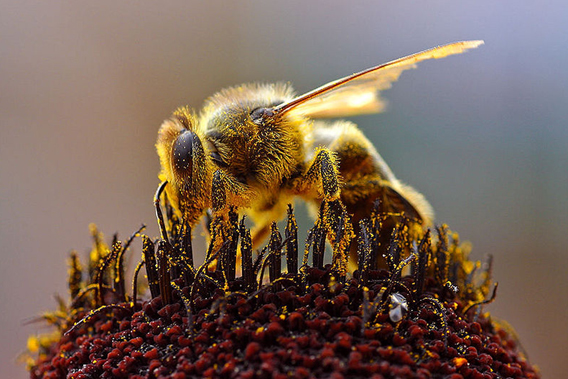
Honey bee (Apis mellifera) collecting pollen. (Photo: Jon Sullivan)

Bees and other insects pollinate three-quarters of the world’s food crops but have suffered steep declines due to habitat loss, disease and pesticide use. In April, the European Union voted to enact a two-year moratorium on the use of neonicotinoid pesticides. Where’s the U.S.? Absent as usual, concerned about stirring the wrath of the chemical industry.

A USDA survey found recently that nearly a third of managed honeybee colonies in America died out or disappeared over the last winter. But in attempting to pinpoint the cause of the bee dieoffs, the USDA has studiously avoided putting any emphasis on the potential role of pesticides.

Brief but VERY cool!

Posted on June 20, 2013

Ursus arctos syriacus


Shout out: Mongabay.com

BEDAZZLED

Posted on June 17, 2013

The keeping of exotic frogs as pets is apparently fashionable. The most popular are poison dart frogs, which come in kaleidoscopic colors. Frog-fanciers are said to collect them like stamps.

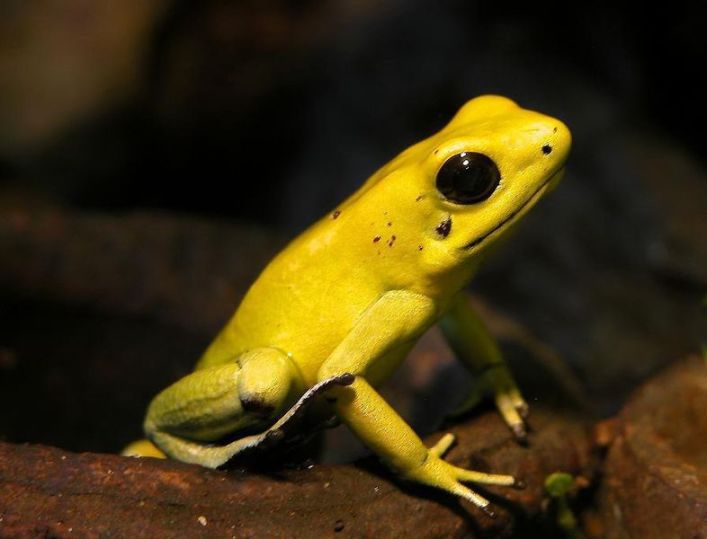
The golden poison frog, endemic to the Pacific coast of Colombia. (Photo: Wikipedia)

Poison dart frogs from the Dendrobatidae family are native to the rainforests of South America, particularly the country of Colombia, one of their last refuges.

A poison frog is not a pet you would want to touch. The amphibian’s skin is drenched in alkaloid poison. One frog contains enough to kill between 10 and 20 humans or a couple African elephants. People who have touched wild specimens directly have died.

There are no official figures on how many frogs are poached for pets each year, but it can’t be too many as there aren’t many of these bedazzled jewels left.

One species of Colombian dart frog has inadvertently evolved a perfect red circle in the middle of its back. This makes it the target of Japanese collectors keen to possess a creature that sports their national flag.

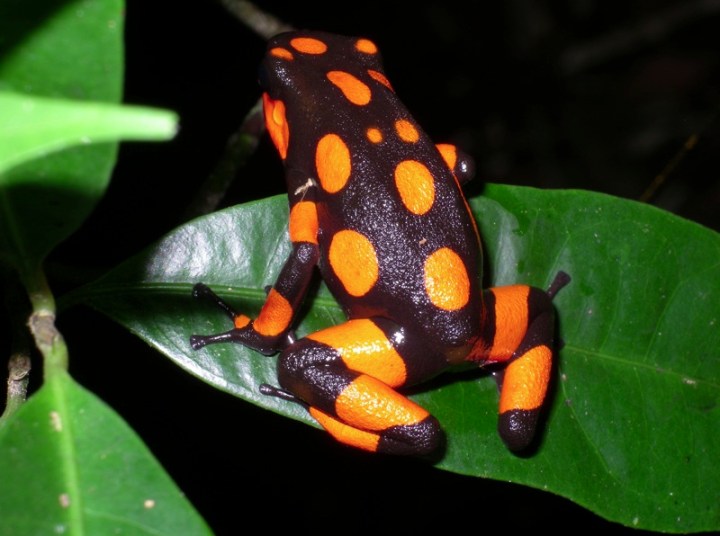
Harlequin poison dart frog (aka Halloween frog). (Photo: wikipedia)

Colombia’s frogs are prized not only for their good looks. Their skin harbors a pharmacopoeia of chemicals that scientists have been studying as potential cures for everything from cancer to HIV. A Harlequin poison dart frog secretes a toxin that blocks neuro­transmission and could play a role in treating Alzheimer’s. A new morph (one of various distinct forms of a species) could contain the chemical blueprints for dozens of other medicines. Unsurprisingly, there is evidence an organized ring of frog-nappers is supplying the pharmaceutical industry which is interested in converting their poison into pharmaceutical drugs.

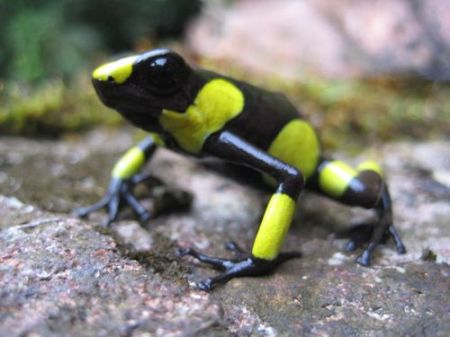
The harlequin poison dart frog has a variety of beautiful color morphs, which differ from one valley to the next in its native range. A never-before-seen morph can fetch thousands of dollars on the black market.

    Poaching for the pet and pharmaceutical trade is the least of the dangers they face. More formidable is the threat posed by the

chytrid fungus

    which has clobbered frog populations worldwide. Most devastating is the destruction of their habitats which are being destroyed by logging and pesticides.

The World Conservation Union (IUCN) lists seventy-nine species—thirty-eight percent of all of the species in the Dendrobatidae family—as being at some risk. Nineteen of the seventy-nine are considered Critically Endangered and facing an extremely high risk of extinction in the wild. Ninety-three others are listed as Data Deficient, which means that too little information is available to make a judgment about the threat of extinction.

The IUCN currently lists the poison frog as Endangered, noting its popularity in the pet trade and the loss of its habitat as likely causes for low numbers.


Shout out: Lucy Cooke.