First Light Productions

investigative journalism

Posts from the “SANCTUARY” Category

Orangutan forest

Posted on September 8, 2012

An Indonesian court has instructed the governor of Aceh province to revoke a controversial license owned by a palm oil company accused of destroying orangutan habitat and carbon-rich peatlands on the island of Sumatra.

Sumatran Orangutan in the Leuser ecosystem (photo by Rhett A. Butler)

The permit allowing PT Kallista Alam to establish a 1,605-hectare plantation in the Tripa peat swamp is controversial because it violated a country-wide moratorium on new concessions in peatlands and primary forests issued in 2011 by Indonesian president Susilo Bambang Yudhoyono. It was granted by the former Aceh governor Irwandi Yusuf more than three months after the moratorium went into effect.

Over the past 20 years Indonesia has had one of the highest rates of forest loss in the world, but in 2009 president Yudhoyono pledged to reduce deforestation as part of a commitment to slow greenhouse gas emissions.

A local environmental group — the Aceh chapter Walhi — filed suit against PT Kallista Alam and the Aceh government to test the central government’s commitment to the moratorium. The case garnered international interest for both its egregious nature — multiple regulations should have protected the land from conversion — and the presence of critically endangered orangutans.


Source: Mongabay.com and The Jakarta Post.

Global Federation of Animal Sanctuaries

Posted on September 7, 2012

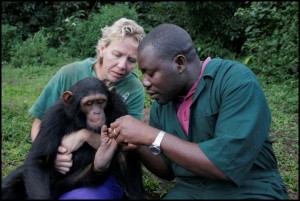
GFAS News — Stany Nyandwi, who risked his life and left his family to move 10 orphaned chimpanzees from Burundi to Kenya at the height of the civil war in 1995, then helped found both the Sweetwaters Chimpanzee Sanctuary (Kenya) and the Ngamba Island Chimpanzee Sanctuary (Uganda), received the 2011 Pan African Sanctuary Alliance Siddle-Marsden Award at the PASA Public Forum in Kent, U.K.

Stany Nyandwi (photo: PASA)

The award honors the African staff member who displays a commitment to primates, a commitment to conservation, and a commitment to excellence. Nyandwi also won the Disney Conservation Hero Award in 2008.

Vanishing feathered faces

Posted on September 7, 2012

According to the Red List of Threatened Species prepared by the International Union for Conservation of Nature, more bird species than ever are threatened with extinction. Research conducted by BirdLife International for the IUCN, found 1,227 species (12 percent) are classified as globally threatened with extinction. The Red List now lists 192 species of bird as Critically Endangered, the highest threat category, a total of two more than in the 2008 update.

Some examples.

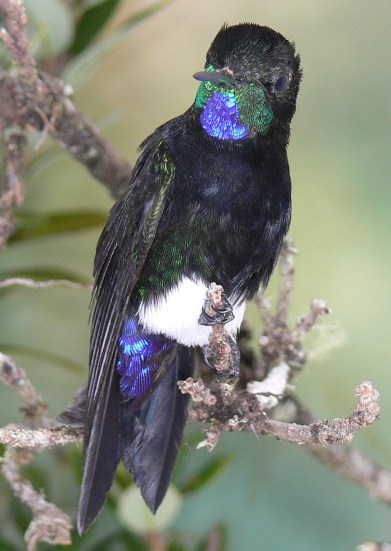
The Gorgeted Puffleg (Eriocnemis isabellae), a recently discovered iridescent hummingbird that clings to a tiny piece of cloud forest in the Pinche mountain range in south-west Colombia.

Gorgeted Puffleg (photo: Alex Cortes)

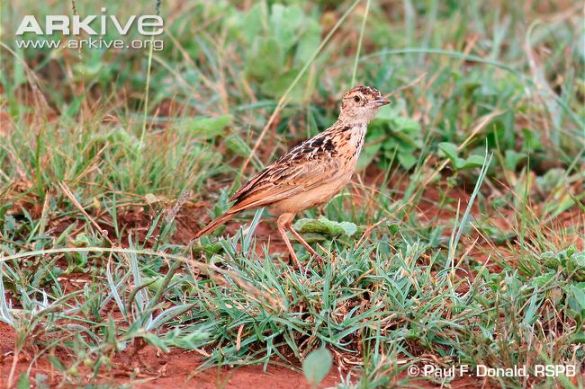
The Sidamo (Liben) Lark (Heteromirafra sidamoensis), from the Liben Plain of Ethiopia, has been recently moved from Endangered to Critically Endangered with the distinct possibility the species will become extinct in the next two to three years, becoming mainland Africa’s first bird extinction. The bird’s plight is due to the disappearance of the savannah of native grasses that traditionally covered large parts of east Africa, leaving it marooned on a tiny island of rangeland. The lark’s total population is now believed to number fewer than 250 mature individuals.

Sidamo Lark (photo: Paul F. Donald)

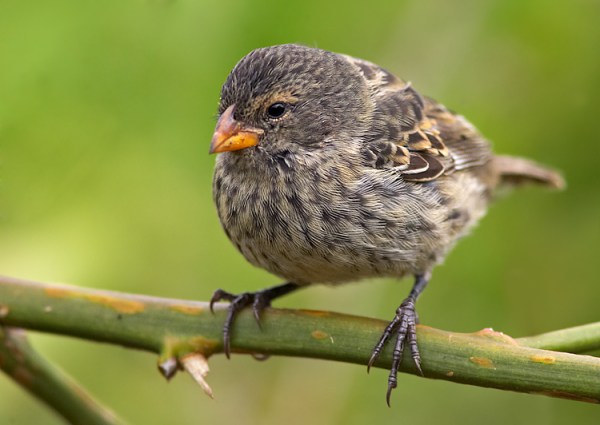
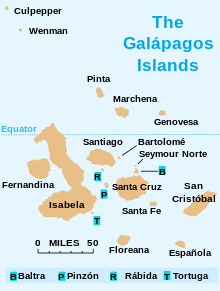
The Medium Tree-finch (Camarhynchus pauper), one of Charles Darwin’s famed finches from the Galapagos Islands. Dispiritingly, the bird’s critically endangered designation coincides with the 200th anniversary of Darwin’s birth.

Medium Tree Finch (photo: Laura L. Fellows)

The species is only found on Floreana Island at elevations above 250m in moist highland forest habitat.

The decline in the bird’s population is believed the result of an introduced parasitic fly.


A few bright spots exist.

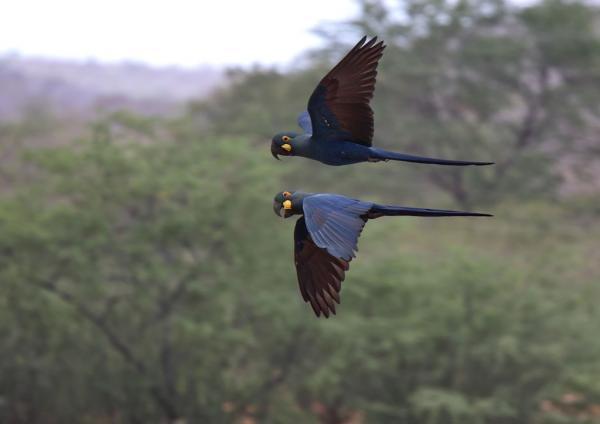
Lear’s Macaw (photo: Andy and Gill Swash WorldWildlifeImages.com)

Lear’s Macaw (Anodorhynchus leari) has been moved from Critically Endangered to Endangered. Named after the English poet, this spectacular blue parrot has increased four-fold in numbers as a result of a joint effort of many national and international non-governmental organizations, the Brazilian government and local landowners.

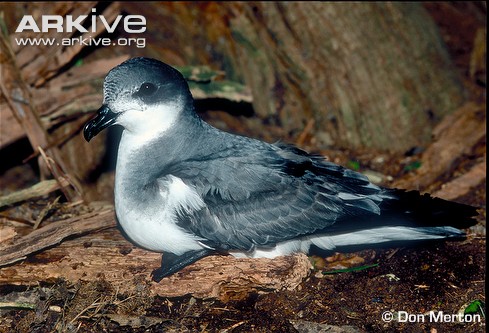
Chatham Petrel (photo: Don Merton)

In New Zealand, the Chatham Petrel (Pterodroma axillaris) has benefited from work by the New Zealand Department of Conservation and has consequently been moved from Critically Endangered to Endangered.

Mauritius Fody (photo: Nick Garbutt)

In Mauritius, the stunning Mauritius Fody (Foudia rubra) has been rescued from the brink of extinction after the translocation and establishment of a new population on a predator-free offshore island. It is now classified as Endangered, rather than Critically Endangered.


Source: IUCN.org

Free at last

Posted on September 6, 2012

A judge just signed a permanent injunction that allows Ben the Bear—who for six years had been confined to a barren concrete cage at Fayetteville, North Carolina-based roadside zoo Jambbas Ranch Tours—to reside permanently at the Performing Animal Welfare Society (PAWS) sanctuary in California.

At PAWS, Ben is thriving in a large natural habitat—one that is measured in acres, not feet and inches—where he bathes in his own pool, rubs his back on trees, and sleeps in a large straw nest under oak trees.

War zone animal

Posted on September 6, 2012

The markhor -- a majestic wild

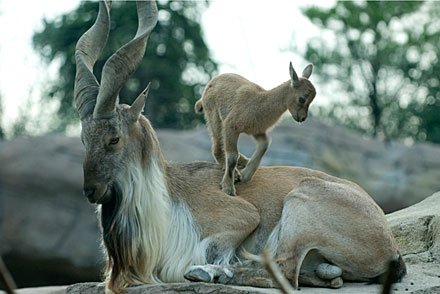
The markhor is making a remarkable comeback in Pakistan. (photo: Grahm Jones/Columbus Zoo)

Community surveys led by the Wildlife Conservation Society have revealed that markhor populations in northern Pakistan’s Kargah region in Gilgit-Baltistan have increased from a low of approximately 40-50 individuals in 1991 to roughly 300 this year. The total markhor population in Gilgit-Baltistan may now be as high as 1,500 animals, a dramatic increase since the last government estimate of less than 1,000 in 1999.

Known for their spectacular corkscrew horns that can reach nearly five feet in length, markhors are an important prey species for large carnivores such as wolves and snow leopards. They have been listed as Endangered by IUCN since 1994, with a 2008 global population estimate of less than 2,500 animals across five countries: Pakistan, Afghanistan, Tajikistan, Uzbekistan, and India. They are threatened by illegal hunting, habitat destruction, and competition from domestic goats and sheep.

They are also susceptible to disease such as a pneumonia outbreak which occurred in September and October of 2010, believed to have killed at least 65 markhors—as much as 20 percent of the population remaining in the country. Researchers believe the wild goats may have contracted the disease from domestic goats.  The outbreak emphasizes the need for continuous disease surveillance in domestic animals that have contact with valuable wildlife resources.

Much of the rebound is credited to the efforts of conservation committees and wildlife rangers throughout Gilgit-Baltistan over the last 15 years that have been monitoring and managing the region’s wildlife and forests and clamping down on Illegal hunting and logging. Their protection extends to safeguarding markhor as they travel across steep-sided mountains into different areas.


Sourced from materials provided by Wildlife Conservation Society.

Kipunji

Posted on September 6, 2012

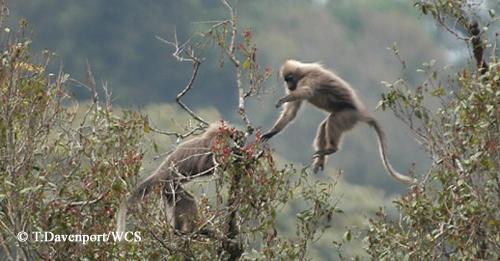
The kipunji, a monkey recently discovered in the Southern Highlands and Udzungwa Mountains of Tanzania is hanging on by a thread. The population of the large, forest-dwelling primate hovers at just 1,117 individuals. The monkey’s range is restricted to 6.82 square miles of forest in two isolated regions.

Kipunji at play in the highlands of Tanzania (photo: Tim Davenport/WCS)

The Wildlife Conservation Society is investing in the protection and restoration of the kipunji’s remaining habitat and local conservation education of local people to help safeguard the species remaining populations.

Much of the monkey’s remaining habitat is severely degraded by illegal logging and land conversion. The monkey is, no surprise, the target of poachers.

DNA analysis in 2006 revealed that the kipunji represents an entire new genus of primate–the first identified since 1923.


Sourced from materials provided by Wildlife Conservation Society, via EurekAlert!

Why Bears

Posted on September 5, 2012

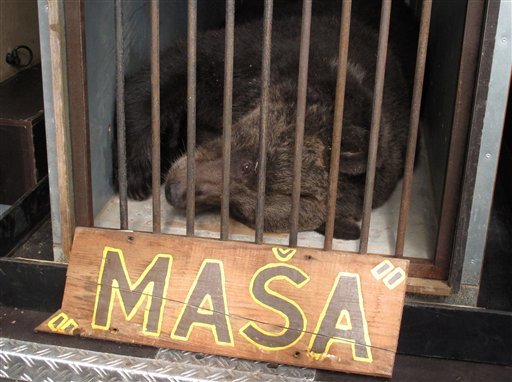
Kelme, Lithuania, Wednesday, Aug. 29, 2012 (AP) — Masa, a 20-year-old brown bear who had been living in a 160 square foot cage, was granted a measure of freedom and moved to a bear park in Germany after a campaign by animal activists to free the animal.

(PHOTO: Ricardas Vitkus / AP)

The bear was purchased as a cub by a Lithuanian businesswoman and kept outside a bar for 18 years as an attraction for customers .


(video here)

IUCN Red Book

Posted on September 5, 2012

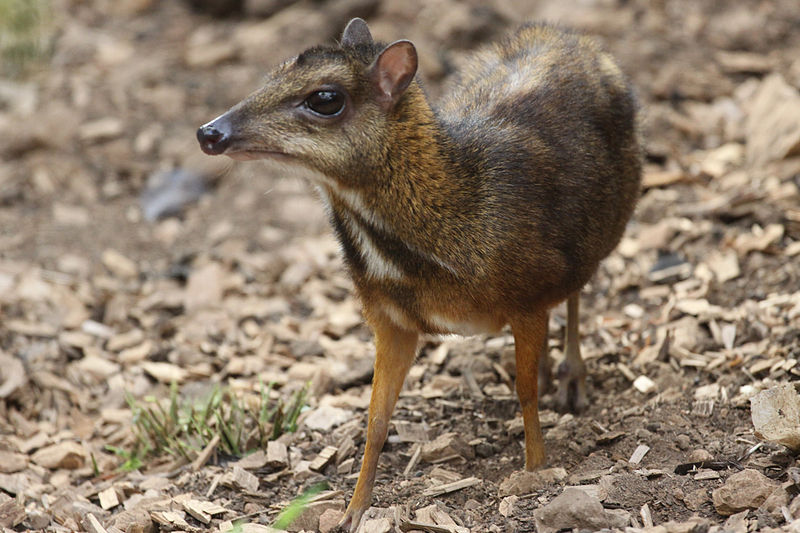
The Java mouse-deer, aka lesser Malay mouse-deer (Tragulus javanicus).

(photo: Lev G)

A species of even-toed ungulate in the Tragulidae family. At maturity it is about the size of a rabbit. It is found in forests in Java and perhaps Bali. IUCN Red List of Threatened Species.

61 miles an hour

Posted on September 2, 2012

Sarah the cheetah shattered the world record for the standing 100-meter dash, clocking a time of 5.95 seconds. (Photo: Ken Geiger, National Geographic)

Manifest Destiny

Posted on September 1, 2012

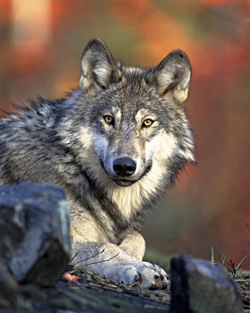
September 1, 2012 — Interior Secretary Ken Salazar announced yesterday that gray wolves in Wyoming will be taken off the endangered species list and managed under a state plan that delineates more than 80 percent of Wyoming as a “predator zone” where wolves can be shot on sight. In the remainder of the state, excluding Yellowstone and Grand Teton national parks, wolves will be designated a “trophy game animal” and hunted in large numbers. The goal of the plan is to reduce the state’s wolf population from about 270 to 100.

gray wolf (photo; Gary Kramer, USFWS)

A coalition of environmental and animal rights groups, including the Center for Biological Diversity, which has worked to protect western wolves for nearly a quarter-century, filed immediate notice of their intent to sue the federal government for stripping away the wolves’ protections under the Endangered Species Act.

The wolf-management plan, pushed by range and ranching interests, will drastically reduce wolf numbers in the northern Rockies and cut off further spread of the wolves to habitat in Colorado and Utah.

Protections for wolves in the rest of the northern Rockies, including Montana, Idaho, eastern Oregon and Washington and northern Utah, were removed by Congress via a rider on a budget bill and have been a disaster for wolf recovery. Idaho and Montana now allow hunting and trapping designed to drastically cut wolf populations, with a total of 545 wolves killed last year and more targeted for killing in the coming year.

In the short time wolves have been allowed to return — in limited numbers — to their former ranges in the West and reclaim their natural ecological role, they’ve quickly demonstrated they’re an irreplaceable keystone species. By limiting the amount of time elk spend along rivers, their presence has led to major improvements in streamside vegetation and water quality, benefiting fish, insects, birds, beavers and a broad range of other species.


Salazar has demonstrated a serious lack of concern for conservation issues. His appointment to head Interior was a clear signal to wild life advocates that trouble was in store. Salazar’s decision on the wolves is a piece with the way Interior has handled wild mustangs which, for the last two years, the feds have been rounding up and sending to long-term holding in record numbers, killing many of them in the process. Their ultimate destination is the slaughterhouse where they end up as horsemeat, a popular repast in France and other countries.

A product of five generations of ranching, Salazar represents a ranching community that remains wedded to the notion of manifest destiny: the right to claim the west for human endeavors. Their view that the west belongs to ranchers and by extension cattle, is deep and pervasive and continues to be backed by the government through subsidies and ridiculously low grazing fees. For all the talk from that group about freedom and independence they’re not about to give up their corporate welfare. By and large, wild animals interfere with their world view.


Sourced from Common Dreams with a shout out to Dreamcatcher blog.

What Does It Take

Posted on September 1, 2012

LAS VEGAS, August 2, 2012 — Two chimps — CJ and Buddy — got out of their enclosure last month, shutting down a neighborhood. Buddy was killed by police, and CJ’s owners have agonized about what to do with her ever since.

CJ

The incident focused attention on the plight of backyard chimps and other exotic animals.

The owners had agreed at one time or another that the chimps would be better off in an approved sanctuary, but they could never agree on when or where. Buddy’s death changed that.

It took this tragedy for them to finally put aside their differences and reach an agreement to send CJ to live out her life at Chimps Inc., located near Bend, Ore. It is home to seven other rescued chimps in a near idyllic setting with green grass and play features to keep the chimps mentally and physically stimulated.

The owners are giving up all rights to CJ, who will live as a chimp rather than as a half human.

The Real Deal

Posted on August 31, 2012

FYI, a brief bio of pioneer Bigfoot hunter and longtime conservationist, Peter Byrne.

Peter Byrne

International Wildlife Conservation Society Website:

Peter is a naturalized American citizen whose great interest in wildlife began in the countryside of Ireland, where he was born and grew up. When he was eighteen he joined the British Air Force and served for four years in combat service in World War II. When the war ended, he joined a British tea company in north Bengal and spent five years living and working in the great forests of north India, terrain that teemed with wildlife in those years.

In 1953 he left his tea industry work and walked from Darjeeling to Katmandu, 350 miles, to start a safari company. He ran this as a professional hunter in south west Nepal for eighteen years, before returning his hunting concession back to the Nepalese government and offering to turn it into protected area. To this end, in 1968, and to generate funding to create the new reserve, he founded, with four others – two doctors and two attorneys – the International Wildlife Conservation Society Inc., and had it registered in Washington D.C. as a not-for-profit foundation with 501 © 3 tax status.

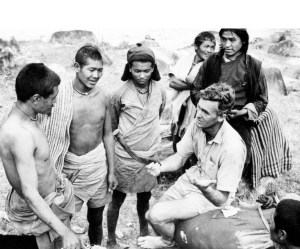
Peter Byrne, Nepal, 1957 (credit: Peter Byrne)

Returning to Nepal he spent a year encamped in the area that is today the Sukila Phanta (The White Grass Plains, or WGP) Wildlife Reserve and, working with local labor, demarcated and mapped the whole area, built roads and bridges, trained guards in wildlife protection work and provided equipment. Since that time he has spent part of every winter in the reserve, either working on conservation projects or running eco tours with clients as a means of raising money for these projects.

He is a Member of the Academy of Applied Science of Boston, MA, a Member Emeritus of the Explorers Club of New York and, since 1968, Executive Director of the International Wildlife Conservation Society.

The society was originally created for the purpose of creating a protected park out of part of a big game hunting concession operated by Peter Byrne from 1953 to 1968. The result of the society’s work is the Sukila Phanta Wildlife Reserve. Originally designed to encompass 60,000 acres, the park in recent years has been increased in size to 200,000 acres and, mainly because of its remoteness, has remained pristine and unspoiled, as well as only minimally explored.

Sukila Phanta Wildlife Reserve (photo: Peter Byrne)

The park now provides habitat for more than sixty species of mammals, three hundred and fifty species of birds, approximately twenty-seven species of fish in its jungle rivers and a large number of reptiles, including two species of saurian, and giant monitor lizards.

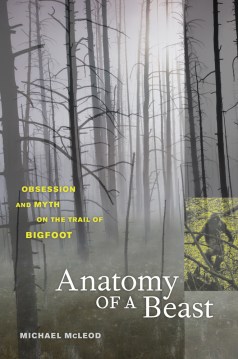
Peter is a principal character in my nonfiction book “Anatomy of a Beast: Obsession and Myth on the Trail of Bigfoot.” He hunted the yeti in Nepal beginning in the late 1940s. While on a yeti expedition in 1957 he received word that a large humanoid similar to the yeti had been reported in California. He hiked to Katmandu and caught a plane to America. So began the saga of Bigfoot.

Sanctuary War

Posted on August 31, 2012

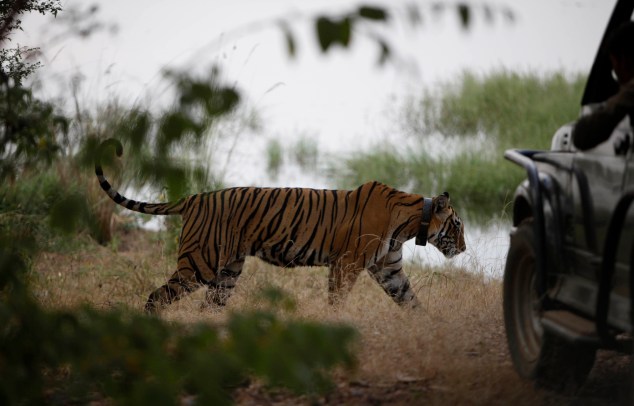
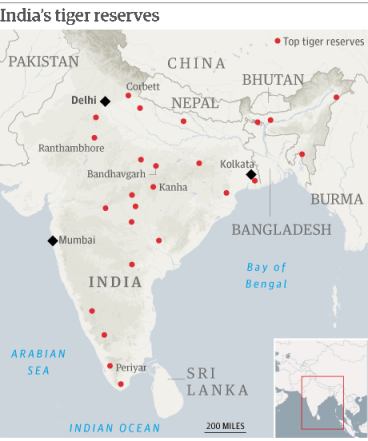
India’s supreme court has issued has issued a temporary order banning tourism in all core tiger habitats in the country until it meets again to assess whether tigers and tourists can co-exist. The decision will have ramifications for the tens, if not hundreds of thousands of Indians whose livelihoods depend on the big cats, not to mention the country’s approximately 1,700 tigers.

India tiger park

Environmentalists and conservationists claim the ban would be a total disaster putting the tigers at greater risk as it’s the presence and the revenue from tourists that protects the reserves from loggers and poachers. The problems, they say, are outside the park gates, not inside them.

The Supreme Court ruling came after an environmentalist petitioned the court to enforce the 1972 Wildlife Protection Act that says tiger reserves should have a core area that only forestry officials enter, surrounded by buffer land that can be visited by tourist vehicles. The claim is that tiger conservation is being adversely affected by mindless tourism. Several Indian states have permitted the construction of hotels and shops inside the tiger reserves and large numbers of vehicles loaded with people are traumatising the endangered species in its critical habitat.

The problem is that both the buffers and the core zones are crammed with people who desperately need work. Before tiger tourism came to the area, they made their living chopping down trees in the tiger reserve and, in some cases, poaching tigers to serve the lucrative Chinese medicine market.

If tourists are not allowed in the core tiger zones, say opponents of the ban, those economies will collapse. Guides will be affected. Mechanics who service the jeeps, the hawkers who sell T-shirts, the hoteliers, the women who make handicrafts.

The court ordered the ban after the majority of states with tiger parks failed to file zoning plans to create the buffers that define the tigers’ territories. Angered by the states’ poor response, the court banned tourism from the core zones until the states complied.

India is home to half the world’s tiger population. According to the latest census released in March 2011 by the National Tiger Conservation Authority, the current population is estimated at 1,706 – up from 1,411 in 2008, but a long way from the 45,000 tigers which reportedly roamed India 100 years ago.

Tigers are found in 18 Indian states, from the Himalayas in the north to Tamil Nadu in the south and across the north-east into Burma.

An undercover investigation by the Wildlife Protection Society of India and the Environmental Investigation Agency in 2005 revealed that the trade in tiger and leopard body parts in China continues to thrive.

The interim order has hit hard. Many tourist bookings for next season have been cancelled.

The ban will only begin to affect holidaymakers when the peak season for tiger tourism begins in October, and the country’s reserves open their doors.

Source: India Daily News.

Lead

Posted on August 31, 2012

The condor once teetered on the brink of extinction. In 1982 the total population of the species totaled just 22 birds. A captive breeding program reintroduced condors into the wild at sites in California, Arizona, and Baja California, and the population grew to nearly 400 birds by the end of 2010. A new study, which focuses on condors in California, describes a population still on the verge of collapse, sustained only by ongoing human intervention.
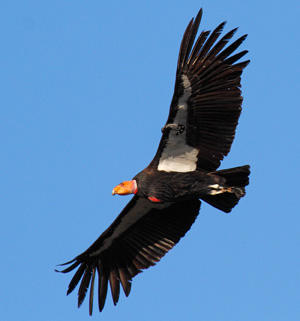
The California condor is the largest land bird in North America, with a wingspan of up to 9-1/2 feet. (Photo: Gavin Emmons)

Condors are opportunistic scavengers, feeding primarily on the carcasses of large mammals such as deer. They can ingest fragments of lead bullets from feeding on carcasses or gut piles of animals shot by hunters. Lead poisoning from ammunition was probably one of several factors that led to the near extinction of the species.

The new study shows that lead poisoning continues to prevent the species’ recovery.

California condors are tagged and monitored, trapped twice a year for blood tests, and when necessary treated for lead poisoning, and they still die from lead poisoning on a regular basis.

The researchers identify the source of the lead in a condor blood sample using a “fingerprinting” technique based on the isotope ratios found in different sources of lead. Condors raised in captivity that have not yet been released into the wild have low blood lead levels, with lead isotope ratios that fall within the range of background environmental lead in California. Most free-flying condors, however, have lead isotope ratios consistent with those found in ammunition.

The study shows that without a solution to the problem of lead poisoning, the condor population can only be sustained through intensive and costly management efforts. Since 1997, about half of all free-flying condors in California have required treatment to remove lead from their blood and supportive care until they are healthy enough to return to the wild. Each year about one in five of the birds need treatment. This usually involves capturing the birds and transporting them to a zoo where they can receive chelation therapy.

Condors are slow to reproduce–females lay one egg every other year. (Photo: Gavin Emmons)

The study found that the free-flying condor population appears to be roughly stable under current levels of intensive management. But without continued releases of captive-reared birds and interventions to treat lead-poisoning, researchers believe the condor population would again decline toward extinction, reducing the wild population in California within the next few decades, once again to just 22 birds.

The current cost of the condor program is estimated to be about $5 million per year, including the contributions of all the agencies and organizations involved in the effort. This level of management would have to continue in perpetuity to keep the population viable.

Efforts in California to address the problem of lead exposure have led to state regulations banning the use of lead ammunition in condor habitat. A partial ban went into effect in July 2008 and was later expanded. So far, however, researchers have found no evidence that the ban has resulted in a reduction in condors’ blood lead levels. The problem is that very small amounts lead have devastating consequences.

The researchers estimate that if just one half of one percent of carcasses have lead in them, the probability that each free-flying condor will be exposed is 85 to 98 percent, and one exposure event could kill a condor.

The findings suggest that greater regulation of lead-based ammunition may be necessary to protect the birds. Although alternatives to lead ammunition are available, regulations limiting the use of lead-based ammunition face stiff opposition from hunting organizations and gun-rights groups.

This research was supported by the National Park Service, Western National Park Association, and the U.S. Fish and Wildlife Service.

Source: University of California, Santa Cruz
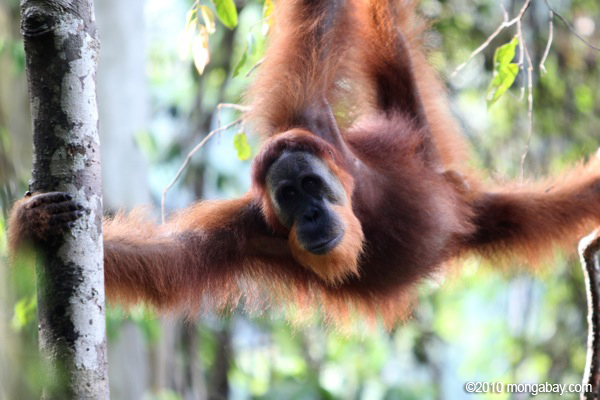
Wild Animals

Posted on August 30, 2012

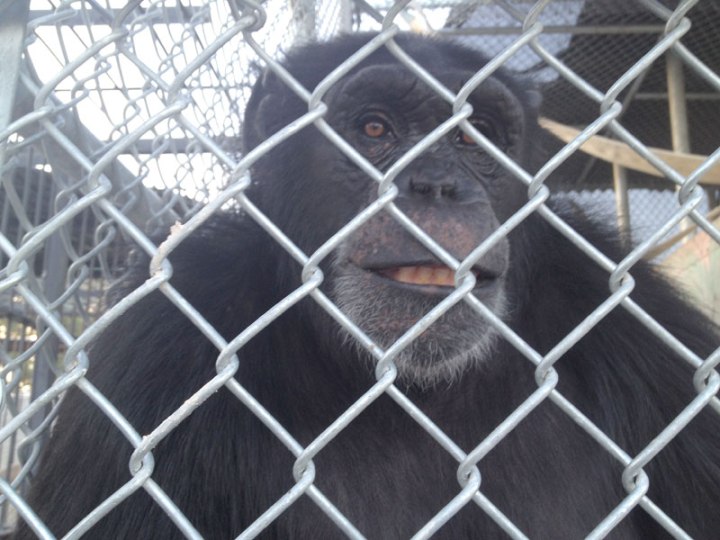
An adult male chimp is five times as strong as a human (credit: International Primate Protection Society)

In July, a human being was seriously attacked by chimpanzees at Chimp Eden, a sanctuary near Nelspruit, South Africa, founded by Jane Goodall. Although chimps are not native to that country, the facility houses orphaned apes who have been rescued from the widespread illegal trade in bushmeat and pets that occurs in many parts of Africa. The animals roam semi-wild in large fenced enclosures.

A young American graduate student studying for his masters degree in anthropology and primatology at the University of Texas, was showing a group of tourists around and they stopped at an enclosure that holds adult males. The chimps had thrown a stone at passers-by and he wanted to remove it. He stepped over a small barrier fence and went right up to the electric safety fence and retrieved the stone. As he went to climb back over the fence, two chimps grabbed his foot, pulled him down and dragged him away. They tore off some of his fingers, a testicle and mauled his head.

The sanctuary, which is home to 33 chimpanzee, was closed temporarily while the incident was investigated. The chimps were not put down. The two chimps were part of a group that had been rescued from Angola and brought to South Africa more than a decade ago. After the attack they were placed in their night enclosure and held there while sanctuary officials investigated what led to the attack and confirmed the fencing is safe.

Chimp Eden is a member of the Pan African Sanctuary Alliance, a group of 21 sanctuaries across Africa that rescues and cares for primates from illegal hunting and trade.

The lesson in all of this, one that we humans seem to have a hard time learning, is that chimpanzees and other primates are wild animals who organize their lives by rules we don’t fully understand. They are defensive of their territories in the wild and in captivity. In our interactions with them, we need to respect their essential wild natures. Caution is always a necessity.