First Light Productions
investigative journalism
Posts from the “SANCTUARY” Category
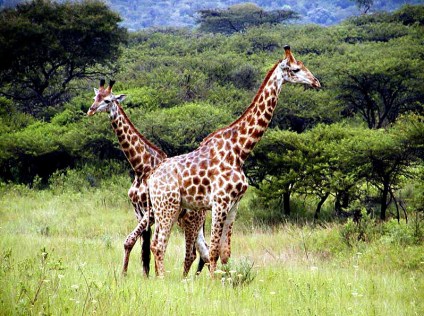
Upon the deck there stood a tall wooden case, and above the edge of the case rose the heads of two Giraffes. They were…on board the boat…and going…to a traveling menagerie. The Giraffes turned their delicate heads from the one side to the other, as if they were surprised…. The world had suddenly shrunk, changed and closed round them. They could not know or imagine the degradation to which they were sailing. For they were proud and innocent creatures, gentle amblers of the great plains; they had not the least knowledge of captivity, cold, stench, smoke, and mange, nor of the terrible boredom in a world in which nothing is ever happening. Crowds…will be coming in from the wind and sleet of the streets to gaze on the Giraffes, and to realize man’s superiority over the dumb world.
-
In the long years before them, will the Giraffes sometimes dream of their lost country? Where are they now, where have they gone to, the grass and the thorn trees, the rivers and water-holes and the blue mountains? The high sweet air over the plains has lifted and withdrawn…. As to us, we shall have to find something badly transgressing against us, before we can in decency ask the Giraffes to forgive us our transgression against them.
Isak Dinesen, Out of Africa (New York: Vintage Books, 1989).
Thanks: The Value of Life by Stephen R. Kellert.
I can’t get this image out of my mind.

Orangutan rescue, Borneo. (Video frame: International Animal Rescue)
A female orangutan isolated in the remains of a jungle that had been bulldozed down around her to plant palm oil trees, fleeing desperately from the animal that had been trying to kill her. In this case, her pursuers were there to rescue her from certain death, but experience told her to flee.
Clearing the forest had deprived her of fruit and leaves, reducing her to eating bark and stems and she was weak from hunger. On this occasion, rather than chasing her away or killing her, the palm oil company that had destroyed the forest contacted International Animal Rescue (IAR) so she could be captured and moved to a place of safety.

Starving orangutan rescue, Borneo. (Photo: International Animal Rescue)
A few minutes later members of IAR’s team in Borneo along with members of the local forestry department, covered her with a net and transported her to undisturbed jungle.
The rescuers determined that she was lactating, which meant she had lost her baby which had probably been killed not long before the rescue team arrived.
Watch the video of her rescue here.
To learn about and contribute to International Animal Rescue.

The Daily Telegraph Australia 2013-05-13: THE Federal Government has refused to release video showing endangered sea lions and other marine mammals entangled and drowned in shark fishing nets. Following a 12-month battle with the Government,The Advertiser won an appeal for still images from the videos to be released after complaining about their secret status to the Information Commissioner and agreeing to keep secret the identities of the fishermen and vessels. The Federal Government said its attempt to hide the pictures was to protect the safety of fishermen involved. The images show traumatised Australian sea lions, including pups, many with cut and… more »
Photo: Care 2.com

How far would you go to help your neighborhood? What would you do to protect it? In the US we have “neighborhood watches” for that very purpose. In northern Kenya, they have a watch group- a grass-roots squad of rangers formed to protect the elephants and rhino from poachers.
Essentially a conservation militia, these volunteer villagers are fed up and taking matters into their own hands. The ordinary citizens are arming themselves and taking to the bush to fight back. Not necessarily out of a “Have you hugged an elephant today?” attitude, but to protect the money the elephant (and rhino) bring to their villages.
The safari/tourist industry is a successful and integral money-maker for Kenyans. An economic staple, tourists bring in more than a billion dollars a year. Much of that money is contractually bound to go directly to impoverished local communities, which use it for everything from…
View original post 148 more words
Eyos, a female orangutan at the Sepilok Orangutan Rehabilitation Centre in the Malaysian Sabah District of North Borneo, was recently released into the Tabin Forest Reserve. Her reintroduction was part of a post release monitoring project sponsored by Orangutan Appeal UK, in cooperation with the Sabah Wildlife Department.
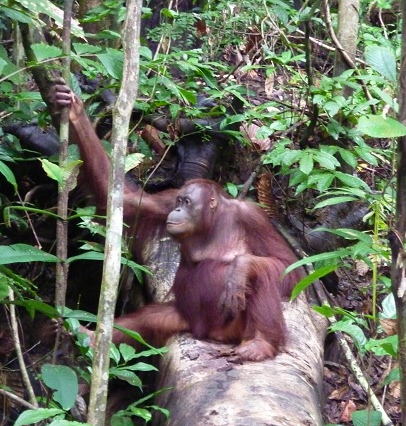
Eyos shortly after release, March 2013. (Photo: Orangutan Appeal UK)
Project Director, primatologist James Robbins, noted that Eyos was getting bullied by many of the other females at Sepilok and clearly needed her own space to live away from other orangutans.
She is the first of six orangutans the team is releasing into Tabin in 2013. All of the apes are implanted with a radio telemetry transmitter so that the team can stay in regular contact with them over the next several years. Wielding antennas, the team follows them 13 hours a day in the forest. The project is the first to use radio-telemetry to track apes in the wild.
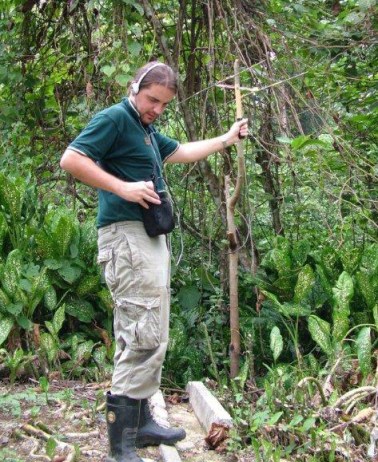
Primatologist James Robins.
The goal of the monitoring project is to obtain data on the behaviour and survival rate of the apes after their release. Orangutans had been released from Sepilok before, but prior to the monitoring project, which began in 2010, no one really knew what happened to them afterward. It was known that many had difficulty adapting to the environment and becoming independent enough to feed themselves as most had been raised by humans since they were rescued as babies.
The Tabin Forest was chosen for releases because it is a large area of protected mixed secondary and primary rainforest with a relatively small orangutan population, yet lots of food and suitable habitat available.
“Eyos is feeding really well so far and has managed to find plenty of fruits on the higher ground in the south of our release site,” Robbins writes. “She has even had some interaction with a wild male orangutan whom she approached last week. After a bit of a standoff that lasted a couple of hours, she got bored and moved on with her day! Eyos is old enough now to be a mother so over the next couple of years, with any luck, we may be reporting news of her getting pregnant with the help of a wild male orangutan!”
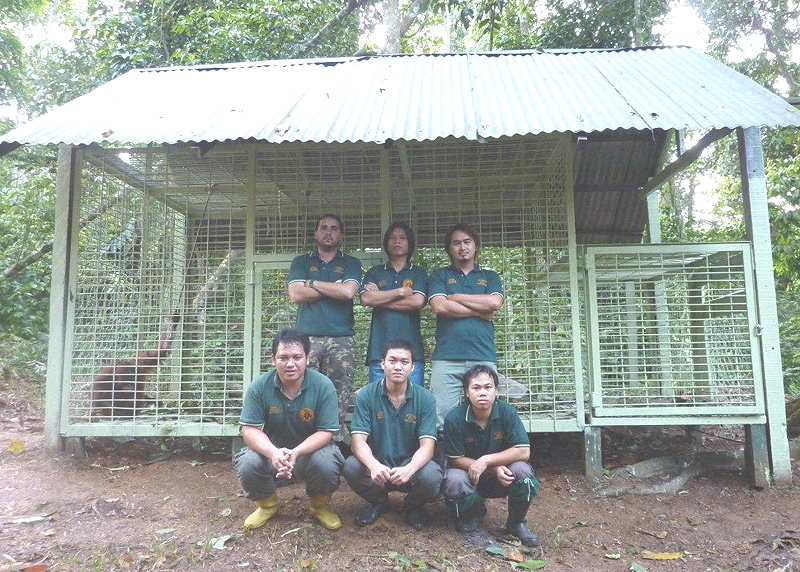
James Robins (top left) and the Tabin team.
Robins is working with the Sepilok Center to formulate a rehabilitation strategy to produce more viable candidates for release. This includes monitoring the rescued apes to ensure they acquire basic survival skills, including a good level of climbing expertise and the ability to make nests in the trees. They also learn how to forage for their food and which plants they can eat and which to be wary of. As their release times approach, they are put into the Kabili Reserve abutting the centre where they are able to visit a feeding platform on the edge of the forest to supplement their diet if they need to.
Robins is looking to compare the behavior of the released orangutans with wild orangutans. If any major deficiencies or abnormalities are noticed, these will be used to advise rehab center managers everywhere on how to most appropriately rehabilitate rescued orphans, so that all of their developmental needs can be met. The ultimate goal is always to release the rescued animals back into the wild.
So far, over a dozen orangs have been released to Tabin. Four have been returned to Sepilok for their inability to adapt. Several released apes have died.

Sepilok Orangutan Rehabilitation Centre occupies a corner of the Kabili-Sepilok rainforest reserve about 25km north of Sandakan, Borneo.
Sepilok Orangutan Rehabilitation Centre is one of only four orangutan sanctuaries in the world. It is located on 43 sq km of protected land at the edge of the Kabili Sepilok Forest Reserve. Around 25 young orphaned orangutans are housed in the nurseries, and 60 to 80 orangutans are living free in the adjacent reserve.
The facility provides medical care for apes orphaned as a result of illegal logging and deforestation, and confiscated orangutans who have been illegally caught and kept as pets. The sanctuary also harbors dozens of other wildlife species, including sun bears, gibbons, Sumatran rhinos and an occasional injured elephant.
The Centre, operated by the Sabah Wildlife Department, has become one of Sabah’s top tourist attractions. Along with its popularity have come problems. At times more than 700 visitors per day can flood the centre, with camera-clicking tourists far outnumbering the primates. Constant contact with humans has exposed the orangutans to diseases, which can make rehabilitation to the wild all but impossible. Expansion plans should solve some of the overcrowding problems.
The sanctuary receives funds from the Sabah Wildlife Department supplemented by an admission fee charged to tourists, who are allowed to visit the centre to witness the feeding times. Funds are limited and, as a result, in past years the Centre has been unable to replace much of its outdated or dilapidated equipment and staffing levels have been at a minimum.
The Supreme Court of India has ruled that a portion of the endangered Asiatic lion population in the Gir Forest be relocated to a second home in Kuno Wildlife Sanctuary in the state of Madya Pradesh (MP).
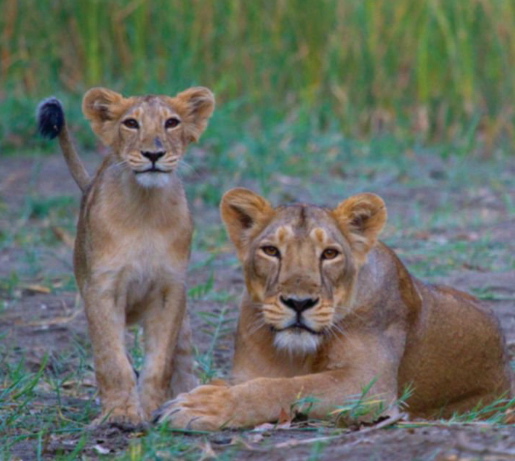
Gir Forest female and cub. (Photo-Kishore Kotecha)
The Asiatic lion was once found across large parts of central and northern India. But centuries of colonization and large-scale trophy hunting decimated the population. By the late 19th century the Asiatic lion was reduced to less than two dozen animals in the Gir Forest, in the Indian state of Gujarat.
Saved by a Prince.
After India received its independence in 1947, the district’s ruling prince placed strict restrictions on hunting the Gir lions and set up lion reserves on the southern tip of the Kathiawar Peninsula which became known as the Gir Conservation Area.
Today, the 560-square-mile Gir National Park and Wildlife Sanctuary, just a few kilometers from the Arabian Sea, holds the world’s last population of Asian (Gir) lions–around 400 animals.
Boxed in
by more than 100,000 people in villages surrounding the forest, the lions’ interactions with humans have become tenuous. With territory in short supply, the big cats have established satellite populations in wooded areas outside the park and human interaction is taking a toll.
India’s leading wildlife experts made the case that, being confined to a single location the lions were subject to extinction from an epidemic or forest fire, and the need to find a second home for the lions was flagged as a priority by the national wildlife action plan.
Researchers at the Wildlife Institute of India identified the Kuno-Palpur Wildlife Sanctuary in the central part of the country as the most promising location. It had space and, most important, potential for a large enough population of animals for the lions to feed on.
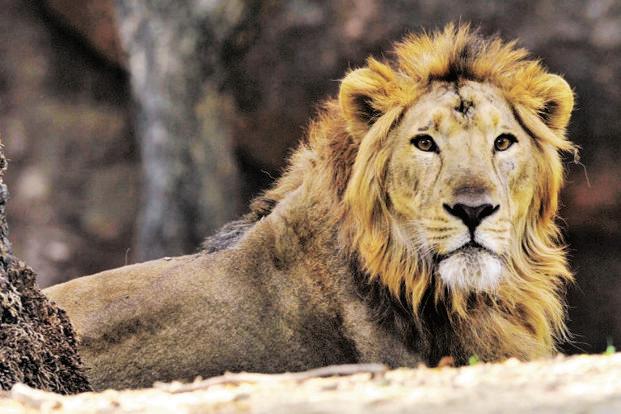
Gir forest lion. (Photo: AFP)
Unwilling to Cooperate.
Attached to the lions for social and political reasons, the state government of Gujarat has been unwilling to cooperate. Narendra Modi, the chief minister of Gujarat, made a public promise to his constituency that “Gujarat’s lions will not leave the state”. Many in Gujarat fear that Madya Pradesh, which has an extremely poor record of protecting its tigers, will not adequately protect the cats.
The Supreme Court’s judgment,
issued on April 15, concluded that Kuno had a sufficient density of prey to sustain lions, and that the state of MP had made the necessary preparations on the ground (24 villages were relocated). It therefore ordered the ministry of environment and forests “to take urgent steps for re-introduction of Asiatic lion[s] from Gir forests to Kuno”. The court asked that their order “be carried out in its letter and spirit and within a period of 6 months from today”. it added that there was a need to take urgent steps as “no species can survive on the brink of extinction indefinitely and the probabilities associated with a critically endangered species make their extinction a matter of time”.
Gujarati non-governmental organizations are mobilizing to stop any attempt at taking animals away from Gir and are preparing to file a review petition to prevent the transfer of the first lot of lions from Gir to Palpur Kuno.
John Stockwell, a Marine and former CIA agent, sent the following message to James Fallows of The Atlantic about why he no longer had any stomach for guns and shooting:

Pavel – Kiev, Ukraine. (Photo: from Italian photographer Gabriele Galimberti’s project Toy Stories — photos of children from around the world with their prized possessions)
I was around guns much of my life. Grew up in the Congo, hunting. Marine Corps recon, professional training and use. CIA paramilitary, more training and use. Three wars: upcountry in Vietnam I had a bunker full of exotic weapons that had been collected over a ten-year period but were not on the inventory and could not be taken home by our military when they left — we’d take them out and fire them every week; we carried guns everywhere we went, again upcountry just a few miles from the enemy’s battalions; then in the Angola War I hired and organized three bands of professional mercenaries, killers by definition.
In the consulate in the Katanga I had an impressive collection, bought out the weapons of the retiring elephant hunter. And I hunted. And at the family ranch in South Texas I hunted deer and javelinas.
Then I lost all interest in hunting. I killed a beautiful animal and looked at the carcass thinking how much more beautiful it had been alive. I shot a bird and had the same feeling. Both dead so I could have the dubious Freudian pleasure of pulling a trigger and killing them.
The Katanga had been flush beautiful wildlife; it had been alive, the hills crawling with beautiful animals. Then came independence and arms turned over to the new armies. And our war in the Katanga (JFK/CIA), thousands of modern semiautomatic and automatic weapons left in the hands of our disbanded army, and the animals were broadly exterminated, the rolling plains were lifeless–we could drive all day and not see an animal.
In Burundi, where I served, President Micombero got himself a helicopter. Began flying around the shores of Lake Tanganyika machine-gunning hippopotamuses in the water.
Recalling as a boy in the Congo driving with my father in a truck across the plains area. We came on a Belgian who had been hunting all day, had a camera, wanted my father to take a picture of him with his trophies. He stood with his gun and his foot on a pile of 26 heads of little gazelles he had killed. In later years we drove through the same plains, and never ever saw another antelope.
Even here in Austin, we are retired across the street from a lovely quiet park on the river. I walk my dog. Talk to the squirrels – – they sit on limbs not far above my head. Then one morning I found my neighbor down in the park with his son and a 22, killing the squirrels to “teach his son how to hunt.” I pleasantly explained to him that he could teach his son how to enjoy live animals, that the squirrels he had killed were gone, dead. (He won– the park no longer has any squirrels.)
Source: James Fallows.
The 2013 census of critically endangered Amur leopards in the Russian Far East shows that the populations of some wild groups of the big cat are growing.
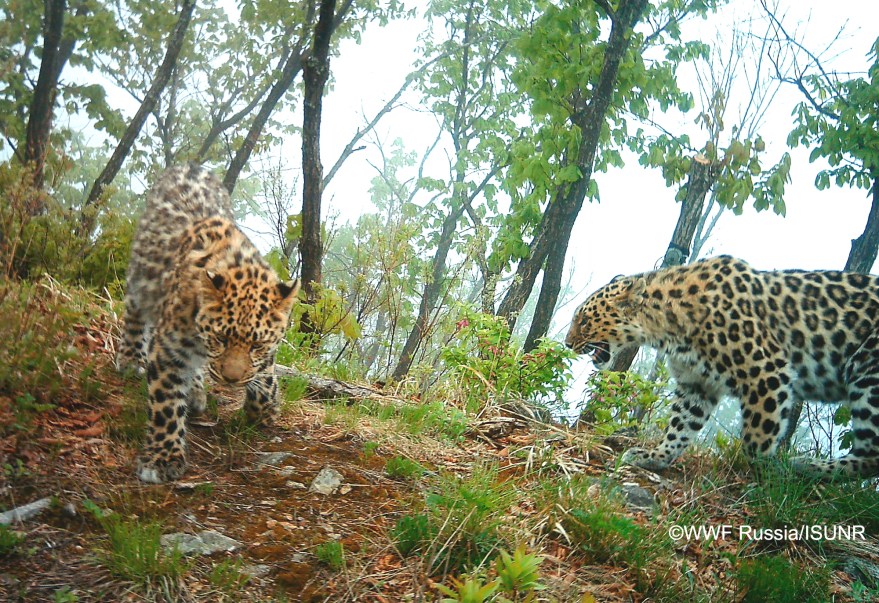
Camera trap photo of Amur leopard mother and cub, Kedrovaya Pad Nature Reserve, Primorsky Province, Russia. (Photo: WWF Russia/ISUNR
The most recent census shows “not less than 50” Far Eastern leopards now live in the Russian Far East. The 2007 census found evidence of 27-34 individuals. The leopards have expanded their territory to the north, west toward the coast, and south, where a leopard was recorded on the border with North Korea where no leopards have been observed for a century.
The leopard’s tenuous rebound is due in large part to State support for the establishment of the Poltavsky Provincial Wildlife Refuge, a large unified network of hundreds of thousands of hectares of protected areas known as “Land of the Leopard.”
Big cat competition.
The winter census also revealed 23 Amur tigers living in the territory, double the number of 5 years ago. Biologists suspect that the prey base of Amur tigers and leopards in the southwest has begun to overlap and there is growing competition between the two rare cats. Trackers in the 2013 census found two cases where a tiger chased a leopard. Only the advanced tree-climbing skill of the leopard saved them. Over the past years at least three leopards are known to have been killed by tigers.
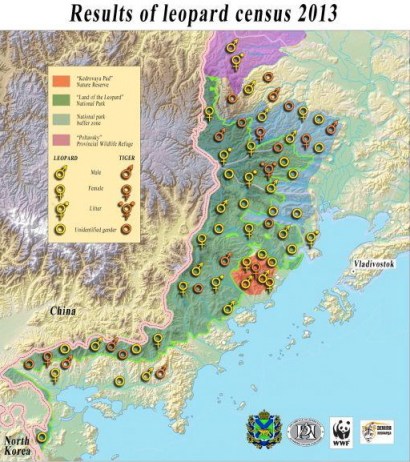
(Map: World Wildlife Fund/Russia)
Chinese border leopards.
A relatively large quantity of leopard prints were found along the border with China. The cats’ territory inside China is unknown as the Chinese have not conducted a census. Last year a minimum of 5 different leopards were photographed by camera traps in border regions; Chinese specialists suggest that 8-11 cats inhabit the Hunchun, Wangqing, and Suiyang Nature Reserves, mostly in the vicinity of leopards registered in the Russian border zone.
Census organizers express their gratitude to Russian border guards for taking active part in the census on the territory they patrol. They provided transportation, shared their excellent knowledge of the surveyed area and provided security along the routes.
Source: Wildlife Extra.
The Louisiana Court of Appeal ruled last week that the permit held by the Tiger Truck Stop in Grosse Tete, La. to house Tony, a 550-pound, 12-year-old Bengal-Siberian tiger who lives in a 40-by-80-foot pen on the premises was invalid.
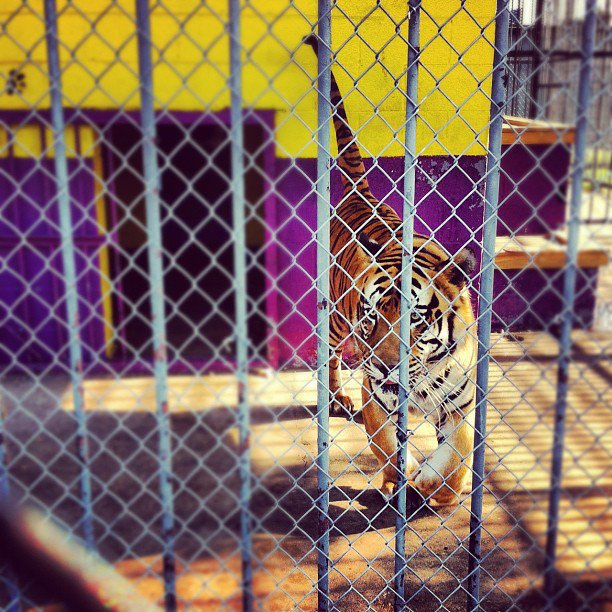
Tony. (Photo: S. Zaunbrecher)
The battle between truck stop owner, Michael Sandlin, the Animal Legal Defense Fund and other animal rights advocates to free Tony from his concrete cage, has lasted more than five years.
The three judges upheld an order barring the Louisiana Department of Wildlife and Fisheries from granting a new permit to Sandlin or the truck stop to continue housing the animal because neither could prove rightful ownership.
Tony will remain in the cage where he was born and raised until all the appeals have been completed. If the truck stop loses the right to keep the animal, he will likely be sent to an animal sanctuary.
Source: Animal Legal Defense Fund.
Last month the World Society for the Protection of Animals (WSPA) and its partner in Pakistan, the Bioresource Research Centre (PBRC), rescued two more bears from the bear baiting trade: a male Asiatic black bear named Vidaar, meaning “forest warrior,” and a female Himalayan brown bear named Lucia.

Vidaar. (Photo: BRC, Pakistan)
Both animals were in weak and starving conditions. Vidaar had been identified by PBRC in 2012 as a priority bear in need of rescue. A key part of the success of such rescue efforts has been the alternative livelihood (AL) program run by the BRC team in which a bear owner is helped to choose an alternative profession with the aim of providing him and his family with a steady and sustainable source of income, allowing the owner to give up the animal. And so it was that after months of negotiations his owner agreed to give Vidaar his freedom.
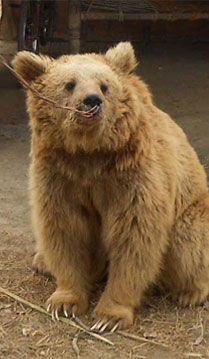
Lucia. (Photo: BRC, Pakistan)
- Lucia, meaning ‘light’, had been neglected and severely malnourished for years. She had been used for about a year in baiting. On arrival at the sanctuary she was fearful of people and cowered in her cage. She was sedated so the veterinarian could free her from her nose ring and neck rope. A health check showed that her lungs, pancreas and liver were diseased and she was suffering from infection. She was placed into the quarantine area where she received round-the-clock medical care. The bear initially began to show signs of recovery, but the infection worsened and she passed away.
- Vidaar had been used in baiting for nearly four years and had suffered a significant number of injuries.
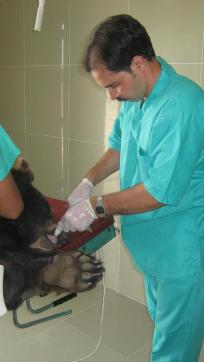
BRC Sanctuary Manager removing ring and nose ropes.
His wounds were treated and his neck rope (used to tether him to a post in baiting arenas) was removed.
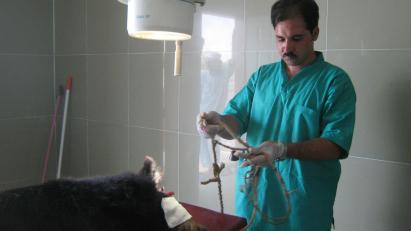
Ropes gone, free forever.
He is recovering in the quarantine area and eating well. When he is strong enough Vidaar will join the other rescued bears in the Balkasar Sanctuary.
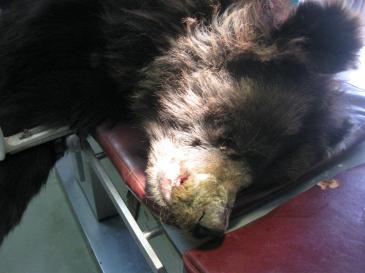
Recovering from ring/rope removal.
Bear baiting is a popular spectator sport In rural Pakistan, where thousands assemble to watch a tethered and clawless bear set upon by trained fighting dogs.
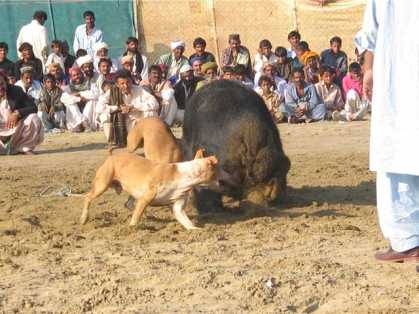
Bear baiting, Pakistan.
- The practice is banned by the Pakistan Wildlife Act and contravenes Islamic teachings, which forbid the baiting of animals, but in rural areas it is a long standing tradition. The brutal contests are organized by powerful local landlords who own and train the dogs. The bears are furnished by traditional bear owners called Kalanders.

Bear baiting, Pakistan.
- Bear baiting events are usually held during a festival or at the great dargahs or the hawelis of these landlords. They range from small events with one bear and few dogs, to gatherings featuring as many as ten bears and more than forty dogs.
- Since 1997 the WSPA and its local partner in Pakistan, the Bioresource Research Centre (PBRC) have helped reduce the number of bears being used in the brutal ‘sport’ to around 50. WSPA and PBRC have employed a number of tactics to reduce the number of bear baiting events and when possible rescue the bears. Other rescued bears:

Robin before rescue.
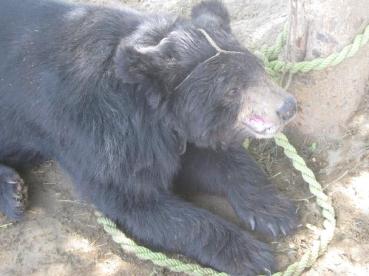
Yarrow.
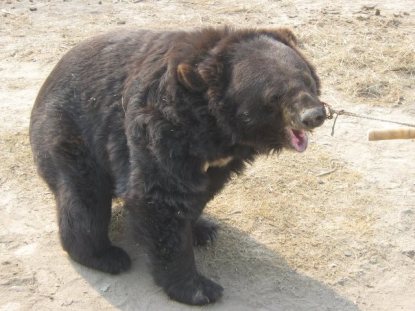
Shabnam before rescue.
The Balkasar Sanctuary has two main electrically fenced enclosures, with water pools and ponds, a clinic for health checks, treatments and minor operations, and quarantine areas.
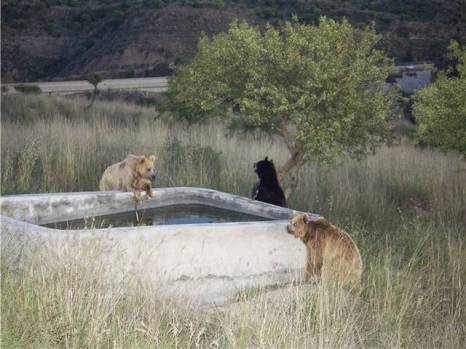
Balkasar Sanctuary for bears rescued from bear baiting.

Balkasar Research Complex and Sanctuary.
TO HELP RESCUE THESE BEARS
and support the Balkasar Research Complex and Sanctuary, become an Animal Protector with WSPA.
Banda Aceh, Sumatra.
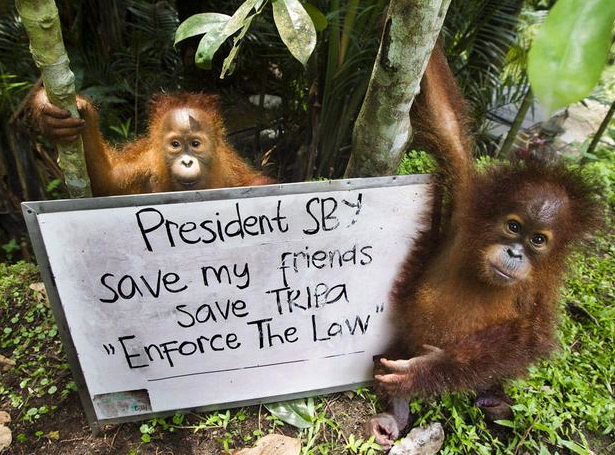
Confiscated illegal pet orangutans being cared for by the Sumatran Orangutan Conservation Programme, join with people around the world calling on “President Susilo Bambang Yudhoyono to save their friends, save Tripa and to Enforce the Law.”
Unless the destruction of the rainforest by commercial interests in Banda Ache is halted quickly, the local population of Sumatran Orangutans will soon vanish forever.
To help go to The Sumatran Orangutan Conservation Programme.
A WEST AFRICAN TALE
illustrations by Nina Frankel & Noah Woods
Once there was a blind man who lived with his sister in a hut near the forest.
Now this blind man was very clever. Even though his eyes saw nothing, he seemed to know more about the world than people whose eyes were sharp. He would sit outside his hut and talk to passersby. If there were things they wanted to know, he would tell them, and his answers were always the right ones.
People would shake their heads with amazement: “Blind man, how is it that you are so wise?” And the man would smile and say ,”Because I see with my ears.”
Well, the blind man’s sister fell in love with a hunter, and they were married. When the wedding feast was finished, the hunter came to live with his new wife. But the hunter had no…
View original post 525 more words
Well known to travelers on the main route through the forests of Parc National d’Ifrane in the Middle Atlas mountains of Morocco, is an infamous group of Barbary macaques known as the “Tourist Group.”

Macaque, Ifrane National Park, Morocco. (Photo: S. Semple)
- Coaches and cars stop in the car parks and the passengers get out and feed them. Truck drivers throw food out their windows as they pass.
Indeed, not only do the monkeys have no fear of humans, they aggressively badger them for food.

Macaques near Azrou.
Scrounging unhealthy, unnatural food has made many of the adults overweight and altered their natural behaviors .

Macaques near Azrou.
They groom each other less. As grooming in primates is about reinforcing social bonds, the lessening of grooming has led to an increase in aggressive behavior. Grooming also helps maintain a certain level of hygiene, so it’s no surprise they’ve also developed an abnormal parasite burden.
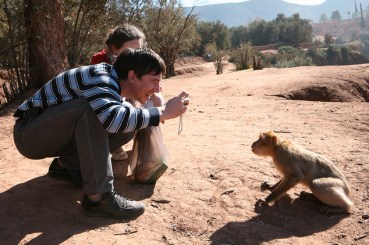
Posing for tourists in Morocco’s Middle Atlas mountains.
Cavities. (Photo: Keri Cairns)
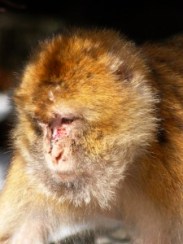
Disease. (Photo: Keri Cairns)
Many of the older monkeys have rotten teeth. A number of the troupe show other signs of poor health, such as runny noses—likely due to viruses picked up from contact with humans. As a consequence of their physiological problems, the monkeys are failing to reproduce. Last year only two out of nine adult females successfully carried a pregnancy to term.
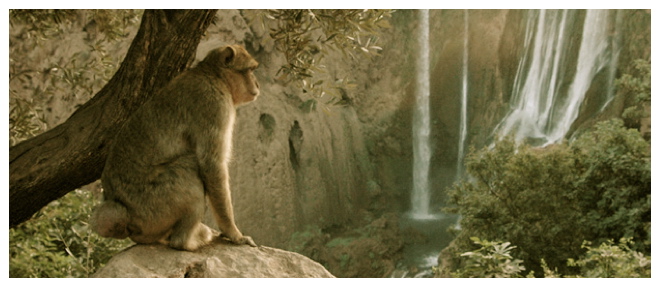
Barbary macaque at Cascades d’Ouzoud, Morocco. (Photo: Barbary Macaque Conservation)
A much larger concern than habituation is the Barbary macaques’ uncertain future as a species.
Formerly widespread throughout North Africa, wild populations today are restricted to small patches of forest and scrub areas in Morocco, Algeria and Gibraltar.
Like the other segmented macaque populations, the Tourist Group is rapidly declining.
The population of wild Barbary macaques in Morocco in 1975 was 17500. Today it is estimated to be only 5000–6000. Since 2008 the Barbary macaque is officially classified as “Endangered” on the IUCN Red List.
To save the monkeys, a dozen years ago a small group of conservationists founded the Moroccan Primate Conservation Foundation (MPC). Recently the MPC has partnered with the Moroccan ministry of Water and Forests and national and international experts to create a national conservation action plan to protect the species.
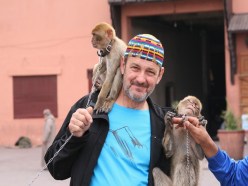
Djemaa El-Fna square, Morocco.
But, in Morocco, where the selling and use of macaques goes back centuries, changing ancient customs is an uphill slog.
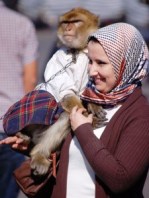
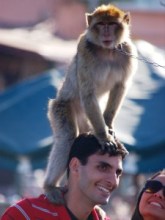
The tradition of having your picture taken with macaques and cobras in Marrakech’s teeming Jemma el Fna square, attracts millions of tourists annually.
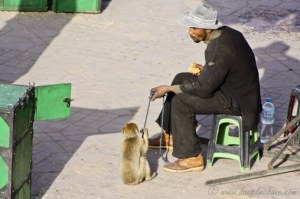
Djemaa El-Fna square, Morocco. (Photo: Daniel McBane)
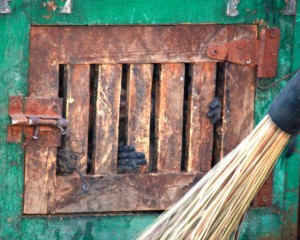
After exhibition this is home.
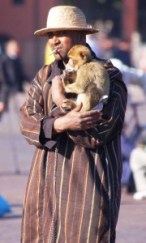
And it is understandable that issues of animal welfare and conservation are not a priority in a country with so many other more pressing issues. But MPC is trying to make people see that the loss of the Barbary macaque and its important habitat would also have disastrous consequences for the local population, such as accelerating desertification and the loss of an essential fresh water supply for Morocco.

Barbary macaques, Atlas Mtns, Morocco (Photo: Ahmed/Barbary Macaque Conservation)
The chief reason for the species’ decline is the demand for the pet trade which has decimated the population in the Atlas Mountains. The problem is Europe-wide but particularly bad in France and Spain.
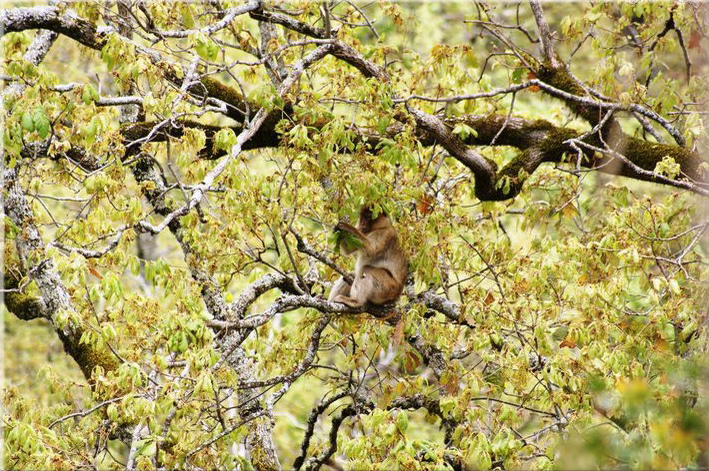
Barbary macaques, Atlas Mtns, Morocco (Photo: Ahmed/Barbary Macaque Conservation)
]

tourist group infant, Azrou, Morocco (Photo: Ben Tutton
Many buyers are Moroccan expatriates who visit their families in Morocco by the thousands every summer. Infant monkeys are on public display in market places in the larger cities of the south and are often an impulse buy for children.
One study puts the number of infants illegally exported from Morocco every year at 300. A recent questionnaire aimed at macaque owners in Catalonia, who wish to re-home their pets, revealed that the majority are Spaniards who bought their monkeys from people traveling from Morocco who smuggled them home in their luggage. There is also an active internet trade in the species
 First Light Productions