First Light Productions

investigative journalism

Posts by Michael Elton McLeod

VIRUNGA 2013

Posted on January 9, 2013

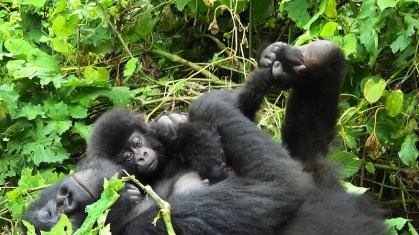
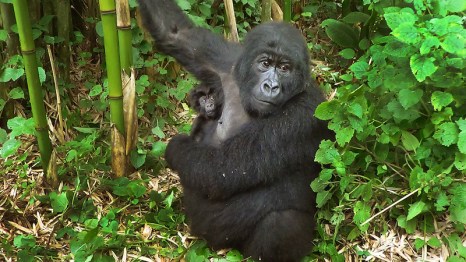
New babies

discovered in the Lulengo, Munyaga, and Kabirizi families.

Lulengo Family.

Lulengo Family.

Kabirizi Family.

Kabirizi Family.

Lulengo Family.

Lulengo Family.

At the end of last July eight ranger teams managed to find four of our seven gorilla families in one day: Humba, Rugendo, Munyaga, and half of the Kabirizi family. It was the last time that our rangers saw any of our habituated gorilla groups.

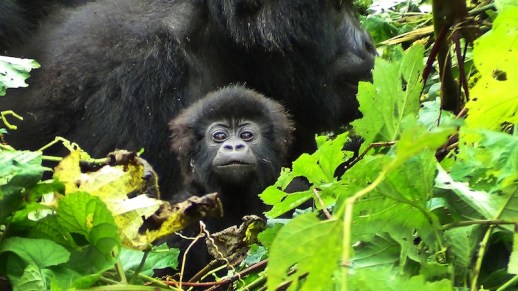
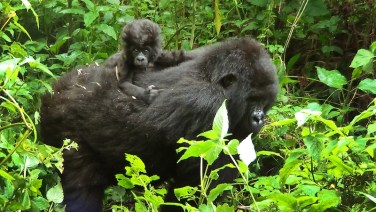
After four months of no access whatsoever to Virunga National Park’s gorilla sector, on 1 December, the rangers there negotiated entrance to Bukima for one small team to check on the mountain gorillas. They found all but one of the habituated families. And a lot of new babies.

A total to 4 newborns were identified in the Kabirizi group alone. This is quite unprecedented and brings the growth rate of this family close to 30% a year.

Kabirizi Family.

Kabirizi Family.

The natural growth for a healthy gorilla populations is more like 6%. So we’re shocked and delighted at this unexpected turn of events that brings a positive twist to the end of an otherwise incredibly difficult year.

Poaching

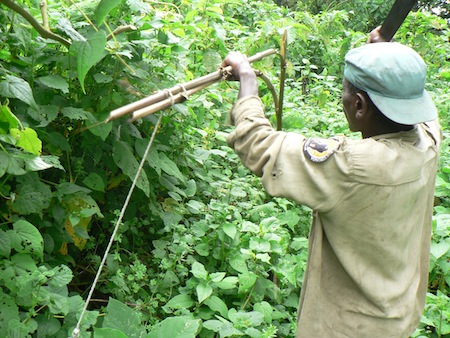
We also found that during the absence of rangers, poaching increased to a very large scale: in just 4 days of monitoring and tracking gorillas, 114 snares were dismantled, which are a danger to gorillas and other animals.

One of 114 snares found in just 4 days.

One of 114 snares found in just 4 days.

silverback-gorilla

gorillacd.org

is the Official Website for Virunga National Park in the Democratic Republic of Congo — the cd lets you know they’re in the Congo!

Virunga is the crown jewel of Africa’s national parks. It contains over 50% of sub-Saharan Africa’s biodiversity and is home to about 200 of the earth’s last 720 critically endangered mountain gorillas who are in a desperate fight for their survival. Virunga is the oldest national park in Africa.


Source: posts 6 and 28 December, 2012, by Chief Warden Innocent Mburanumwe and Emmanuel.

More rogue’s gallery

Posted on January 8, 2013

Nothing to say.

A 20-year old woman named Sean Janas recently stood before a judge in Wausau, Wisconsin and waived her right to a preliminary hearing, not challenging the charges against her. She is charged with felony mistreatment of an animal causing death, poisoning an animal and lying to police.

Sean Janas.

Sean Janas.

Mary.

Mary.

Specifically, a 4-year old dog named Mary.

According to police, Janas wrote in her diary about how she poured bleach and drain cleaner down the dog’s throat and enjoyed doing it. She also stabbed the dog who died in June after months of torture. She faces five years in prison and $30,000 in fines.


“They weren’t pets!”

In the twin cities, dog breeder Dayna Bell is accused if drowning puppies at her Bell Kennels and Farm by putting them in buckets of water.

Dayna Bell puppymiller.

Puppymiller Dayna Bell.

Dakota County Sheriff’s officers searched Bell’s kennels last year and found 10 small-breed dogs in a freezer chest. The dogs appeared to be wet, suggesting they’d drown before being frozen. Bell told authorities she didn’t know how the dogs got in the freezer, but admitted drowning them in a bucket.

Former employees at Bell Kennels and Farm said they saw Bell drown puppies by tying a cinder block to their necks then throwing them into a swimming pool.

Her defense? They weren’t pets. Facing 14 felony and two misdemeanor counts of animal cruelty, Bell and her attorney plan to use technicalities to contest the charges, using the statutory distinction between “pets” and “commercial animals” to make a case that since commercial animals are subject to different rules, she shouldn’t face felony charges.

One day after being charged, Bell posted $50,000 bail and was back at work. Bell’s husband said business had dropped about 90 percent since the allegations against his wife were first made public.

SKY ISLAND CATS (USA)

Posted on January 7, 2013

Jaguars

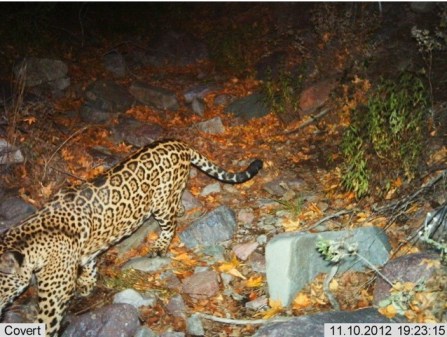
in the Santa Rita Mountains of southern Arizona downloaded from wildlife monitoring cameras late last year, as part of a Jaguar Survey and Monitoring Project led by the University of Arizona.

Male jaguar taken 11:10:12. (Photo: USFWS)

Male jaguar taken 11:10:12. (Photo: USFWS)

A total of ten jaguars were identified.

Male jaguar taken 11:10:12. (Photo: USFWS)

Male jaguar taken 11:10:12. (Photo: USFWS)

The unique spot pattern on the cat seen below (left) matched that of a male jaguar in the Whetstone Mountains photographed by a hunter in the fall of 2011, providing clear evidence that the big cats travel between southern Arizona’s “sky island” mountain ranges.

Male jaguar taken 8:25:12. (Photo: USFWS)

Male jaguar taken 10:25:12. (Photo: USFWS)

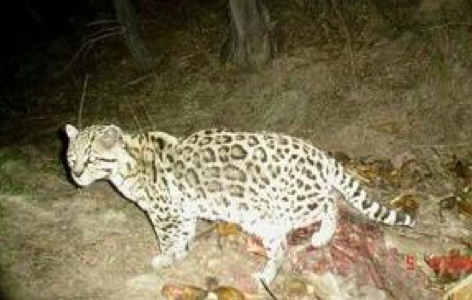
Ocelot

A new ocelot photo (showing only the hindquarters) was taken in the Huachuca Mountains by one of the UA project cameras.

Male ocelot taken 10:8:12. (Photo: USFWS)

Male ocelot taken 10:8:12. (Photo: USFWS)

Comparisons of the spot patterns revealed this to be the same male ocelot that has been reported by the Arizona Game and Fish Department and photographed in the Huachucas on the Arizona/Mexico border several times in 2011 and 2012. However, the photo was taken about 4 miles away from the previous photos, demonstrating that even the smaller cats move across the rugged landscape.

The ocelot was first spotted in 2011, and has been recorded a few times since. (Photo: USFWS/UA/DHS)

The ocelot was first spotted in 2011, and has been recorded a few times since. (Photo: USFWS/UA/DHS)

The three-year study will be accomplished under a contract with funds provided by the U.S. Department of Homeland Security to the U.S. Fish and Wildlife Service. The purpose of these funds is to address and mitigate environmental impacts of border-related enforcement activities.

The ocelot has been protected in the U.S. as endangered under the Endangered Species Act since 1982. The jaguar was listed in the U.S. in 1997.

Posted on January 7, 2013

Great images

cowen1970's avatarOf Wolves and Wild Horses

People ask me quite often what they can do to help support the wild horses and the wolves, how they can be involved and stay connected. I have a full time job in the veterinary industry and photography is a side job that I love. Wildlife and equine photographers enjoy being out in the field with the animals they photograph more than being indoors. It isn’t uncommon for us to spend hours in freezing wind or out in the beating sun to photograph an animal. I’ve hiked miles looking for something special and there have been times when I’ve come home empty handed.

To photograph the wild horses I have to drive 5 to 7 hours one way, believe me I”m not complaining because the time I get to spend out in the field with them is the most amazing moments of my life. Watching the interaction between a new…

View original post 137 more words

Air Canada

Posted on January 6, 2013

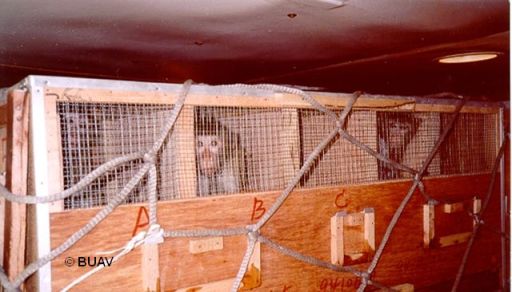
Air Canada1 has put a halt to transporting non-human primates bound for research labs. The decision went into effect December 22, The airline will now require all non-human primate shippers to sign a declaration that the animals are not intended for research or experiments.

Long-tailed macaques in a cargo hold en route to a European lab. (Photo: BUAV)

Long-tailed macaques in a cargo hold en route to a European lab. (Photo: BUAV)

Each year, thousands of macaques and other monkeys are flown into Europe and North America to supply academic and industrial research labs—more than 18,000 to the United States in 2011 alone.

By far the largest exporter of primates for research purposes is China, which last year shipped more than 70% of the research primates sent to the U.S..

Most airlines have complied

In recent years, an increasing number of airlines have taken the decision to dissociate themselves from the cruelty and suffering that are intrinsic to the trade in primates. These include British Airways, Virgin Atlantic, Northwest Airlines, Qantas Airways, South African Airways, Delta Airlines, and Eva Air.

Holdouts

The few major air carriers that still transport non-human primates are coming under unprecedented pressure to halt the practice. The remaining primate-transporting carriers include Air France, United Airlines and Air China.

Bafq cats

Posted on January 5, 2013

Despite the efforts of conservationists to protect the Asiatic cheetah and the Persian leopard, the Iranian government appears unwilling to help.

Eight adult leopards identified in Bafq. (Photo: ©ICS/YazdDoE/CACP/Panthera)

Eight adult leopards identified in Bafq. (Photo: ©ICS/YazdDoE/CACP/Panthera)

Endangered

A recently completed camera trapping program in Iran aimed at understanding the population composition and dynamism of the Asiatic cheetah and the Persian leopard across multiple reserves in central country, including the Bafq Protected Area, showed that Iran’s population of Persian leopards and cheetahs is hanging on by a thread.

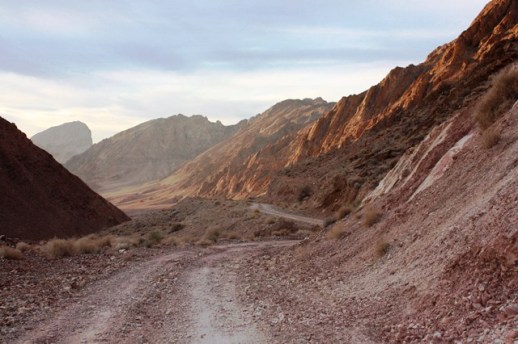
Proposed highway into the heart of the sanctuary.

The Bafq Protected Area

in the eastern part of the country, established in 1996, is one of the main habitats for the big cats. Recently, in an amazingly shortsighted pronouncement, Bafq Governor Office authorities declared that because only two leopards and 6 cheetahs were identified in the Bafq Protected Area, the area “does not have high environmental importance to continue its protection as a reserve.”

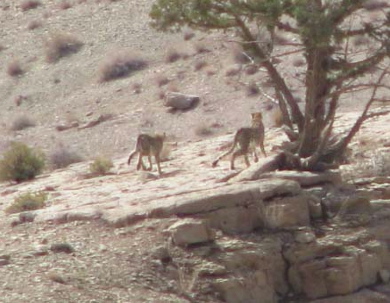
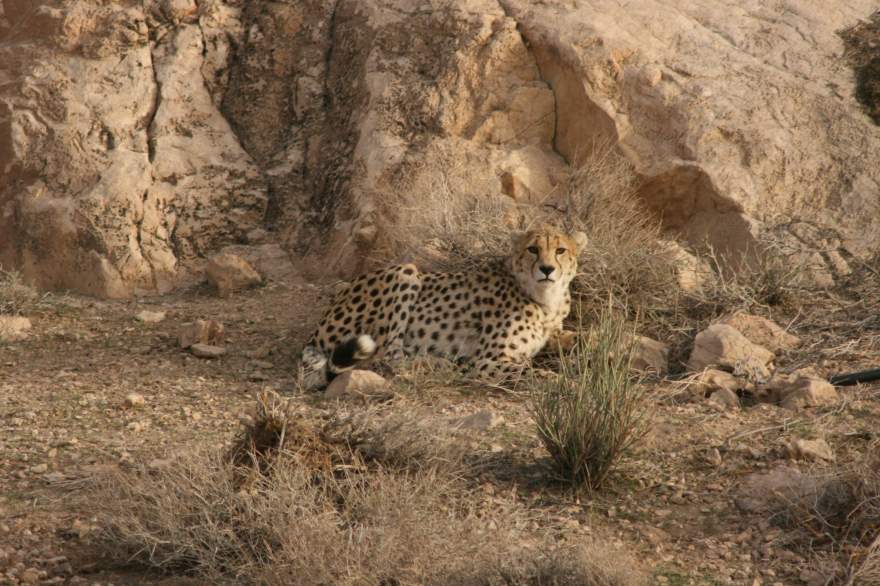
In early November 2008, Ebrahim Gholamrezapoor & Asghar Khajeie, encountered a family of 3 cheetahs in Orsestan valley of Bafq and took a few photographs.

In early November 2008, Ebrahim Gholamrezapoor & Asghar Khajeie, encountered a family of 3 cheetahs in Orsestan valley of Bafq and took a few photographs.

In contrast, investigations have revealed that the Bafq area contains the largest single populations of both the Persian leopard and the Asiatic cheetah. The cats are literally on the brink of extinction, and unless some very radical work is done to form effective biological corridors between the fragments of land where they live, clamping down on poaching and letting the habitat recover, their chances don’t look great. Their fate comes largely down to politics. Driving a new road through the center of their habitat hastens their extinction.

Cheetah Bafq Protected Area. (Photo: CACP/mr. ghoddusi, winter-2007)

Cheetah Bafq Protected Area. (Photo: CACP/mr. ghoddusi, winter-2007)

The Iranian Cheetah Society, Yazd Department of Environment (DoE) and Conservation of Asiatic Cheetah Project (CACP) have been negotiating with communities and authorities to reconsider construction of the road for more than a year, along with promoting huge media coverage to spread awareness of the road’s negative impact on threatened wildlife. The proposed Bafq road is nowadays the largest concern for Iranian environmentalists for the survival of the Asiatic cheetahs and Persian leopards.


The camera trapping program in 2012 was implemented by the Iranian Cheetah Society (ICS) and Yazd DoE in partnership with the Conservation of Asiatic Cheetah Project (CACP) and Panthera.

Moon bear news

Posted on January 4, 2013

Ricky and Joey

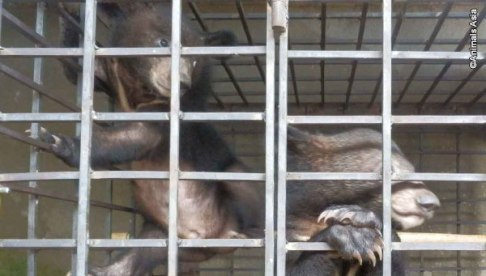
On 2 September 2012 the local police in Than Uyen District in Lai Chau Province, Vietnam spotted a motorbike in a remote village carrying two men with a cane basket.Suspicious, they stopped the bike and found two moon bear cubs in the basket. The men were arrested and told the police that they had bought the cubs for USD 1,500 and were going to resell them to an unknown buyer from the bordering province of Lao Cai. Lai Chau is approximately 450km north west of Hanoi and is a frontier province sharing much of its border with China, making it likely the cubs were on their way to a bear bile farm.

Ricky and Joey (Photo: Animals Asia)

Ricky and Joey (Photo: Animals Asia)

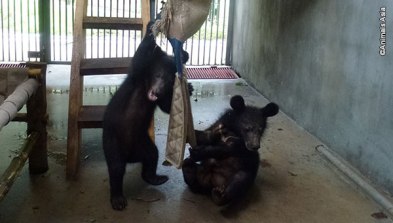
Ricky and Joey in their new den. (Photo: Animals Asia)

Ricky and Joey in their new den. (Photo: Animals Asia)

Two weeks later the cubs were transported to the Asia Moon Bear Rescue Centre at Tam Dao National Park. Renamed Ricky and Joey (originally nicknamed Lai Chau and Sin Ho), they are estimated to be around three to four months old.

Bon Bon

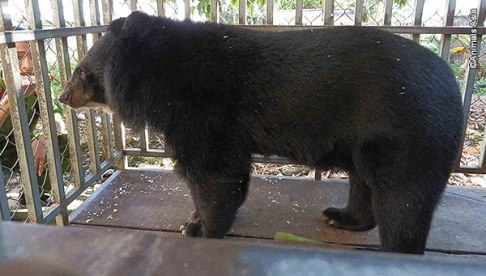
Bon Bon in the care of Sa Thay police. (Photo: Animals Asia)

Bon Bon in the care of Sa Thay police. (Photo: Animals Asia)

On December 13, Animals Asia’s Vietnam sanctuary received another a moon bear that had been destined for the bear bile trade. Nicknamed Bon Bon, he was confiscated from a trader by Vietnamese police in Sa Thay district of Kon Tum Province, close to the Cambodian border. At the time of rescue the bear weighed less than 30kg.

The Sa Thay police were extremely helpful in ensuring Bon Bon’s transfer went smoothly, even assisting with loading him into the sanctuary’s truck. (Photo: Animals Asia)

The Sa Thay police were extremely helpful in ensuring Bon Bon’s transfer went smoothly, even assisting with loading him into the sanctuary’s truck. (Photo: Animals Asia)

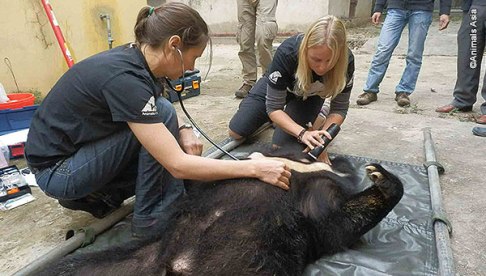
Animals Asia veterinary team.

An initial health check of Bon Bon by Animals Asia’s veterinary team revealed no major health concerns. (Photo: Animals Asia)

Tuan Bendixsen, Vietnam Director, Animals Asia said that there is a lot of work to be done to rehabilitate Bon Bon after the psychological damage he suffered. He is timid and nervous, especially when there are people around and he roars when bear workers enter the quarantine area. He also displays a number of disturbing repetitive behaviors and refuses to eat whenever humans are present.


Sanctuary Update

Animal Asia’s Vietnam Bear Rescue Centre, on the edge of Tam Dao National Park is under threat of eviction (see ANIMAL POST “MOON BEAR UPDATE” November 29, 2012) from a government official who is attempting to confiscate the land on which the sanctuary is situated in order to build his own wildlife park. The Animals Asia Foundation is waiting with baited breath for the Prime Minister to make what will hopefully be the right decision and that they be allowed to remain where they are.

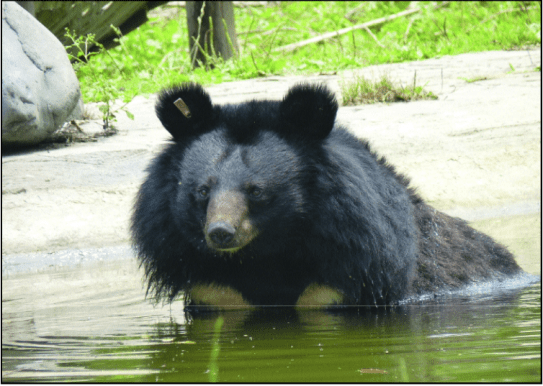
Rescued moon bear at the Animals Asia Foundation sanctuary in China (Photo: Kim Bartlett)

Rescued moon bear at the Animals Asia Foundation sanctuary in China (Photo: Kim Bartlett)

Closure of the rescue center would mean that more than 100 bears, rescued from bear bile farms and smugglers, would lose their homes. Seventy-seven Vietnamese staff would lose their jobs. Animals Asia would lose $2 million worth of investment in building and development.


Bear Farming Resolution

The International Union for Conservation of Nature (IUCN) World Conservation Congress has passed a resolution addressing the issue of bear bile farming, encouraging Korea and Vietnam to continue their efforts towards ending bear farming and calling for states to enact measure to work with the IUCN to close down illegal bear farms that do not comply with regulations, issue no further licenses or permits for such farms, prevent an increase in bear numbers on existing farms, ensure no wild-caught bears are added to the farms, and to conduct research into bear bile substitutes and establish a monitoring system to track trends in wild bear populations. The resolution also calls for a scientifically independent analysis into whether all these points have been followed—most notably, how bear farming affects the conservation of wild bears.


To donate to Animals Asia campaign to end bear bile farming CLICK HERE.

Protest can work

Posted on January 3, 2013

After drawing international criticism in July for announcing that it would be resuming whaling for “scientific research,” the South Korean government has changed its mind. 

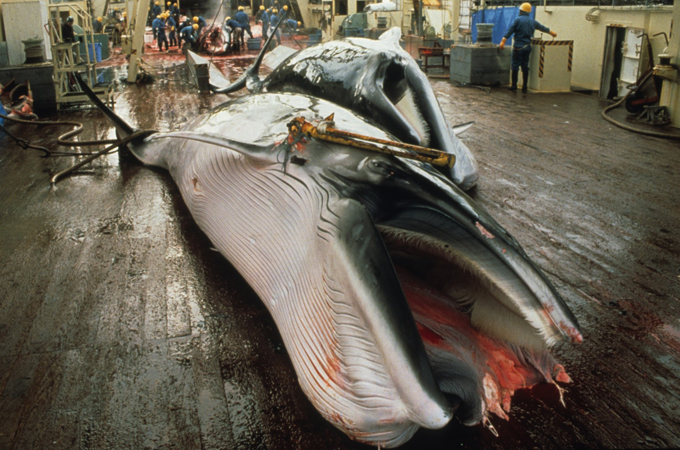
Whale processing in Ulsan, South Korea. (Photo: Greenpeace)

Whale processing in Ulsan, South Korea. (Photo: Greenpeace)

At an International Whaling Commission (IWC) meeting last July, South Korea argued that whale populations had recovered, that whales were depleting its fish stocks and that it might have to harpoon some of the mammals “for study,” in its own coastal waters. The announcement provoked anger, particularly from Australia and New Zealand, who oppose the Japanese killing hundreds of whales a year in Antarctic waters also under the guise of research.

Non-lethal Study

In an abrupt turn-around last month, Lee Se-oh, a South Korean official in charge of whaling at the Ministry of Food, Agriculture, Forestry and Fisheries, said that the government would continue to use only non-lethal means to study whales, such as installing location tracers on them. He said the decision was reached after gaining input from various organizations but wasn’t due to pressure from environmental groups. “We reached a conclusion that there’s no need to do scientific whaling if we can achieve the same results by using non-lethal means,” he said.

The ministry reportedly began to reconsider their previous decision after criticism from anti-whaling nations and an online petition that attracted more than 1,000,000 protest emails in three weeks.

A Ways to Go

South Korea allows whales to be sold for meat if they are accidentally caught in fishing nets, known as “by-catch”. Environmental groups note that fishing fleets in Korea and Japan have a high percentage of the world’s by-catch.

This decision may be little more than a smoke screen on the part of South Korea, but it was announced in quite a public manner so there is hope the moratorium is the real deal.

The IWC’s 1986 ban on commercial whaling allows member countries to hunt whales for scientific research, with the meat then sold on the open market.


Source: Guardian/UK

The road

Posted on January 2, 2013

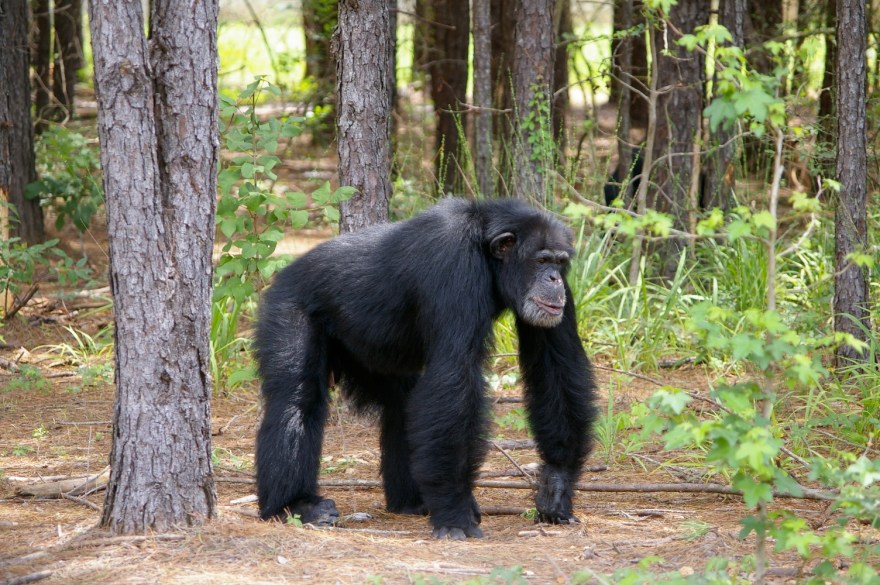
Hamlet at Chimp Haven.

Hamlet at Chimp Haven.

Over the next 12-15 months, Chimp Haven, The National Chimpanzee Sanctuary, will be welcoming 110 (soon to be ex) research chimpanzees from the New Iberia Research Center in Lafayette, Louisiana.

Fundraising Campaign

To provide housing and care for the new arrivals, the sanctuary has established a dedicated fund called The Road to Chimp Haven Campaign. The NIH, who owned the chimps, is not able to provide construction funding, but will provide 75 percent of the cost of their care.

Boys Patrol

Boys Patrol

So Far

pledges of major support include The New England Antivivisection Society, the first to step up with a pledge of $100,000; The Humane Society of the United States, $500,000; and The National Anti-Vivisection Society, $25,000. The Foundation for the NIH has announced a fund raising campaign for construction for Chimp Haven to expand its facilities.

These seed donations are a promising start but individual contributions are vital to complete the campaign to give these new people a home. Break open the piggy bank.

Chimp Haven is located 22 miles southwest of Shreveport, Louisiana, in the Eddie D. Jones Nature Park in Keithville.

DONATIONS ARE VITAL. PLEASE CONTRIBUTE IF YOU CAN.

Throw away the key

Posted on January 2, 2013

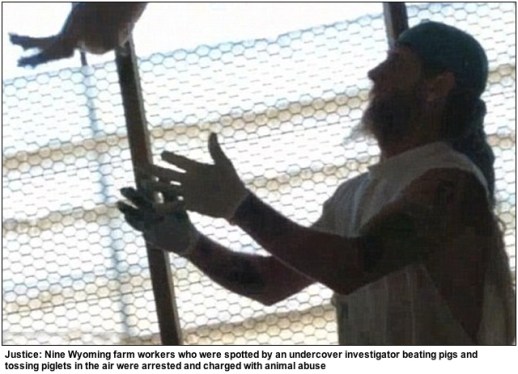
Nine employees of a pig breeding farm near Wheatland, Wyoming have been cited for cruelty to animals after an investigation of abuse by the Humane Society of the U.S. (HSUS).

abusedhogs4

The abuse at Wyoming Premium Farms LLC came to light in May following release of an HSUS undercover video.

abusedhogs2

Cited for cruelty to animals:

Wyoming Premium Farms assistant manager Shawn Colson, seven counts of cruelty to animals.
Kyla Erin Adams, two counts.
Bryan David Bienz Jr., two counts.
Jarrod Barney Juarez, two counts.
Kali E. Oseland, four counts.
Steve Perry, three counts.
Edward Raymond “Jake” Pritekel, three counts.
Richard Pritekel, four counts.
Patrick D. Rukavina, three counts.

An animal cruelty conviction in Wyoming carries a maximum penalty of up to two years in prison and/or a $5,000 fine. All nine  abusers have been reportedly fired from the farm since the allegations came to light. Their first court appearance has been scheduled for January 18.

abusedhogs3

The problem came to light in May when HSUS released footage showing workers kicking animals, hitting them with sticks and tossing piglets. Shot by undercover activists over 27 days, the video shows a bearded worker taking his anger out on a sick-looking mother pig, shouting: ‘You want to f*** with me today? I’m in no f***ing mood!’ before punching it.

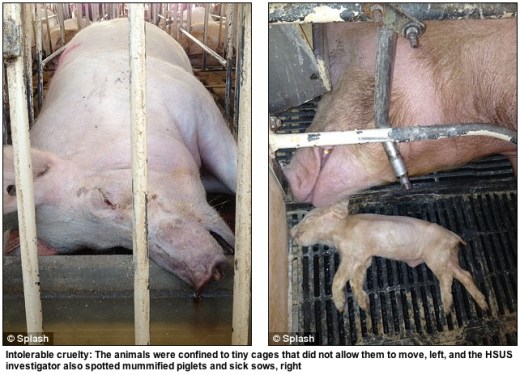
The undercover investigator also found pregnant pigs with untreated abscesses and severe rectal and uterine prolapses, mummified piglet corpses, and baby piglets who had fallen through floor slats to either hang to death or drown in manure pits. Pigs used for breeding were confined in two-foot-wide metal cages so small they can’t even turn around.

abusedhogs1

Factory Farming

The Wheatland-based pig farm does business with a subsidiary of Tyson Foods, which has tried to distance itself from the Wyoming operation.

Although companies like McDonald’s and Burger King have denounced cruel treatment of pigs that spend their lives confined to tiny crates, this type of behavior is all too common on factory farms.

The only federal laws governing animal cruelty apply to slaughterhouses, where animals may spend only minutes before being dispatched. None apply to farms, where animals are protected only by state laws.

Corporate CYA

The Huffington Post reported that some states have embraced ‘ag gag’ laws to criminalize gaining access to a farm facility under false pretenses. Minnesota’s “ag-gag” law would seek to punish not only photographers and videographers but those who distribute their work, which means organizations like the Humane Society of the United States.

Standard factory-farming practices in America are inhumane. If you’re raising and killing 10 billion animals every year, such abuse is pretty much guaranteed.


Sources (GRAPHIC stills and video):

dailymail.com.uk

Huffington Post

Zululand

Posted on January 1, 2013

(Photo: Zululand)

(Photo: Zululand)

Clive Vivier, cofounder of the Zululand rhino reserve in KwaZulu-Natal province, South Africa, has been given a green light by the US state department to buy the Arcturus T-20 drone to combat poachers who are driving the country’s rhinos toward extinction.

South African Poaching

Vivier believes that close to 1,000 rhino were killed in South Africa last year by poachers who sell their ivory rich horns to lucrative Asian markets. A significant dent in a population of around 20,000. “We’re now eating into our capital of rhino,” he said.

Around 400 rhinos were killed last year in giant Kruger national park alone, which is impossible for a limited number of rangers to guard effectively. “We need to change the rules of the game, Vivier said. “We need technology.”

The drones would enable the tracking of poachers escaping South Africa across the nation’s borders into Zimbabwe, Mozambique Botswana or Namibia.

Drone Surveillance

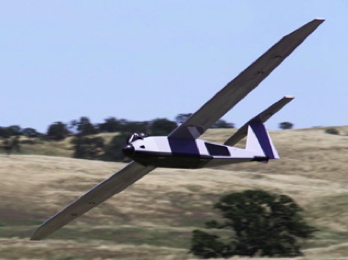
The T-20 has a 17-foot wingspan, can fly at a height of 15,000 feet with up to 65 pounds of payload and stay aloft for 16 hours without refueling. Outfitted with cameras, it can beam back live video of a full 360 degree unobstructed field of view to the operators.

Arcturus T-20 drone

Arcturus T-20 drone

While the T-20 can hold missile payloads, being a civilian, Mr Viver’s drones will not carry bombs or missiles. Its primary use will be reconnaissance of poachers.

The drone flies silent and its infrared camera will be invaluable for spotting poachers at night. “It can tell whether a man is carrying a shovel or firearm and whether he has his finger on the trigger or not,” said Vivier. “We can see the poacher but he can’t see us. We’re good at arresting them when we know where they are. Otherwise it’s a needle in a haystack.”

Vivier is now seeking clearance from local civil aviation authorities to put 30 of the drones in South African skies.


The Zululand Rhino Reserve
was established in 2004 and comprises 17 landowners who have dropped their internal fences to create a big 5, endangered species reserve. The Reserve was chosen as a release site for the World Wildlife Fund (WWF) Black Rhino Range Expansion Project.

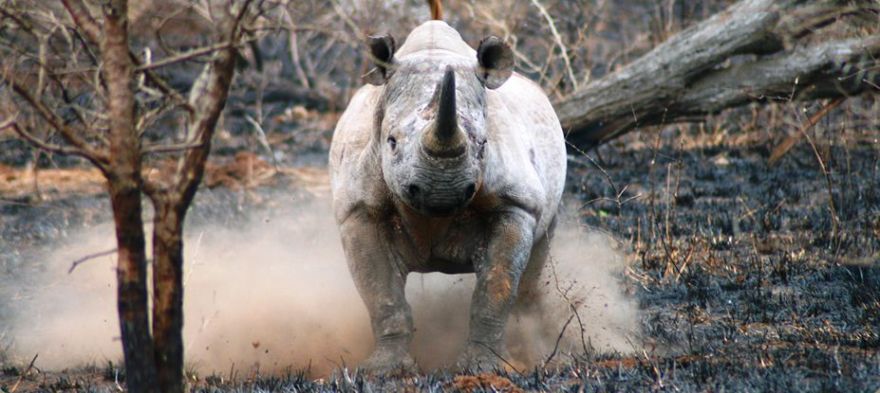
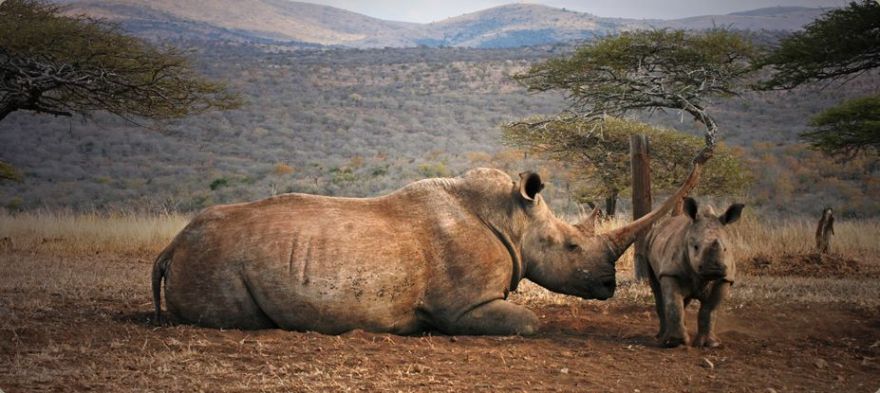
South African rhino (Photo: Zululand)

South African rhino (Photo: Zululand)

In 2005 a founder population of black rhino were released into their new home. In 2009 the reserve was proclaimed as a Nature Reserve under the Protected Areas Act 57 of 2003 acknowledging the reserve as a site of biodiversity importance that makes essential contributions to the conservation of species and habitats.

First responders

Posted on December 31, 2012

Bullets, spears, poisoned arrows and wire snares

are the weapons of choice against which Kenya’s wildlife is helpless. The victims of this war are in their hundreds, and only a few are ever found—dead, dying or painfully alive. Every month the reports of animal casualties are escalating.

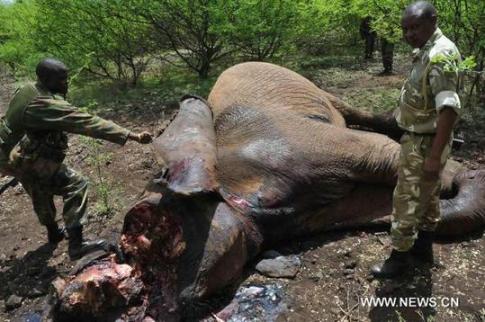
Kenyan rangers with poached elephant.

Kenyan rangers with poached elephant.

In southern Kenya, now experiencing a catastrophic and gruesome escalation of poaching for the illegal ivory trade, the David Sheldrick Wildlife Trust (DSWT) fields two mobile veterinary units that work in conjunction with the Kenya Wildlife Service (KWS), facilitating a rapid response to animals in distress due to injury, sickness or having been orphaned.

Sheldrick Wildlife Trust vet areas

Sheldrick Wildlife Trust vet areas

The Units are fully equipped to alleviate the suffering of such animals without delays that have previously occurred by treating them promptly when they are sighted before infection sets in and the animals are lost.

SheldrickWildlife1 SheldrickWildlife2 SheldrickWildlife3 SheldrickWildlife4 SheldrickWildlife5 SheldrickWildlife6 SheldrickWildlife7 SheldrickWildlife8 SheldrickWildlife9

Mustangs

Posted on December 29, 2012

The Murderers Creek mustangs coexists with elk, antelope, mule deer, bighorn sheep, cougars and bears. They have been spotted at salt licks with deer, and one mare has been frequently observed running with a herd of Rocky Mountain elk.
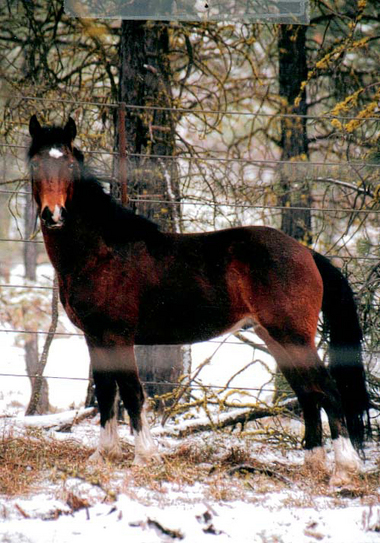
Murderers Creek "timber horse” poised for flight. (Photo: USFS)

Murderers Creek “timber horse” poised for flight. (Photo: USFS)

They are small animals, about fourteen hands (or a little more than four feet tall at the shoulder), and usually bay or brown in color. The 250 horses in the herd tend to remain in an unusual area at elevations of 4,500 to 6,500 feet the year around, despite winter snows of up to 4 feet deep, using timber thickets for shelter during storms; a beautiful and remote area of tall Douglas firs and ponderosa pines, broken only periodically by meadows of bunchgrass.

They range across lands managed by the Bureau of Land Management (BLM) and U.S. Forest Service (USFS), who are charged with allocating the rangeland to elk, deer, domestic cattle and other species, in addition to the mustangs.
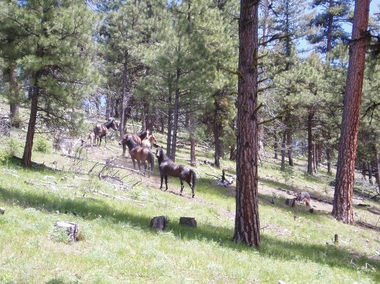
The Murderers Creek herd. (Photo: BLM)

The Murderers Creek herd. (Photo: BLM)

Claiming that the increasing size of the herd is threatening wildlife habitat and salmon-steelhead streams, the BLM has proposed reducing the herd to just 50 horses, using a combination of helicopter “gathers” and bait trapping, and offering the “excess animals” to the general public for adoption.

After requesting comments on a Preliminary Environmental Assessment of its plan, the BLM received more than 6,000 emails and letters objecting.

Advocates of protecting and preserving wild horses and burros, say the murderer’s creek herd is a prime example of how federal managers across the west are accommodating cattle ranchers who view wild horses as stealing valuable forage from their livestock and threatening their livelihood, drastically reducing the number of horses while authorizing over 5 times that number of cattle to graze the same area. Nationally, private livestock exceed wild horses on BLM lands by at least 50-1.

Horse advocates say the solution to curbing the fertility problem is using a drug called PZP to humanely manage reproduction while accommodating present wild horse population numbers by reducing livestock grazing in the complex.

The issue of roundups and long-term holding of wild horses is a huge and growing problem throughout the west, with no resolution in sight. The BLM manages 37,300 free-roaming wild horses and burros on 27 million acres in 10 Western states. As a result of a policy of rounding up the animals, there are now nearly 50,000 wild horses and burros living in 18 long-term corrals and holding pastures which are at or near capacity.

In the face of high hay prices and falling demand for horse adoption due to the sluggish economy, it’s estimated that holding wild horses long-term is costing taxpayers roughly $475 per animal annually.
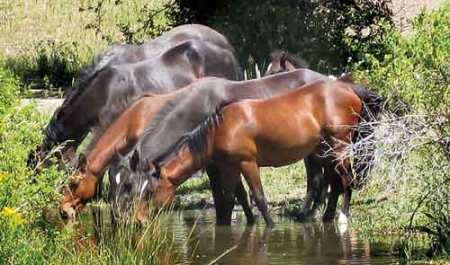
Wild horses in the Malheur National Forest. (Photo: Jeffrey Shinn, USFS)

Wild horses in the Malheur National Forest. (Photo: Jeffrey Shinn, USFS)

BLM Corral Facility in Hines, Oregon. (Photo: BLM)

BLM Corral Facility in Hines, Oregon. (Photo: BLM)

Congress effectively banned horse slaughter in 2006 when it eliminated funding for horse meat inspectors. Without inspections, slaughtering plants closed. The closures coincided with the economic downturn, leading to a dramatic rise in the number of unwanted and neglected horses, leaving rescue and rehabilitation facilities, including the BLM facilities, with limited capacity and funding. The result was an increase of 660 percent in the number of U.S.-origin horses transported to slaughter plants in Canada and Mexico.

Kill Buyers

The large number of animals in federal detention has also led to an increase in the number of “kill buyers,” who “adopt” wild horses for shipment to Canadian and Mexican slaughterhouses. A recent investigation by ProPublica revealed that since 2009 the BLM has sold nearly 2,000 wild horses to a known kill buyer in Colorado. Like all buyers, he signs contracts promising the animals will not be slaughtered. He insists he finds them good homes but refuses to provide records of the sales.

USDA vets have seen horses bearing the BLM brand in slaughter export pens, but there is no law prohibiting the transportation of horses from the U.S. into Mexico, and the agency has no authority to intervene once a horse has been sold.
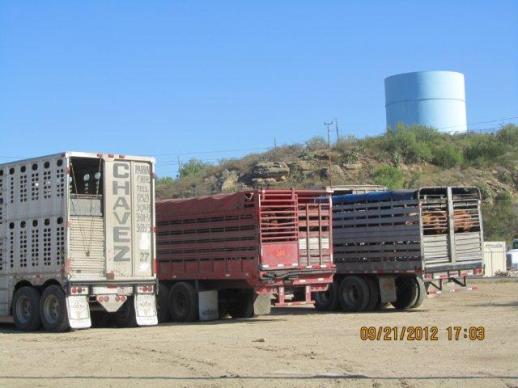
Horse trucks at Eagle Pass Export Pens, US/Mexican border.

Horse trucks at Eagle Pass Export Pens, US/Mexican border.

Horsemeat

Investigators monitoring export pens in the Texas border towns of Presidio and Eagle Pass owned by known kill buyers watch hundreds of horses each day arriving and departing with no regard given to those that are sick and injured on their way to Mexican slaughterhouses.

Critics say the BLM’s plan to impound hundreds more mustangs when its holding pens are already full demonstrates its lack of commitment to managing wild horses sustainably. As the number of wild horses captured and warehoused continues to grow it puts the mustangs in imminent danger of slaughter for the horsemeat industry. Equine advocates suspect that that may, in fact, be the BLM’s end game.

The saga continues as Congress last year lifted its ban on funding to the FDA for horsemeat inspections. Proposals for slaughterhouses have been made in several states.
OR-16

Posted on December 29, 2012

November 1, 2012

An 85-pound gray wolf was radio-collared by federal wildlife workers November 1, in the Wenaha Game Management Unit of Union County. The capture of the yearling male, dubbed OR-16, took place in northeastern Oregon’s rugged Blue Mountains north of the small sawmill town of Elgin an area where wolves weren’t known to be living.

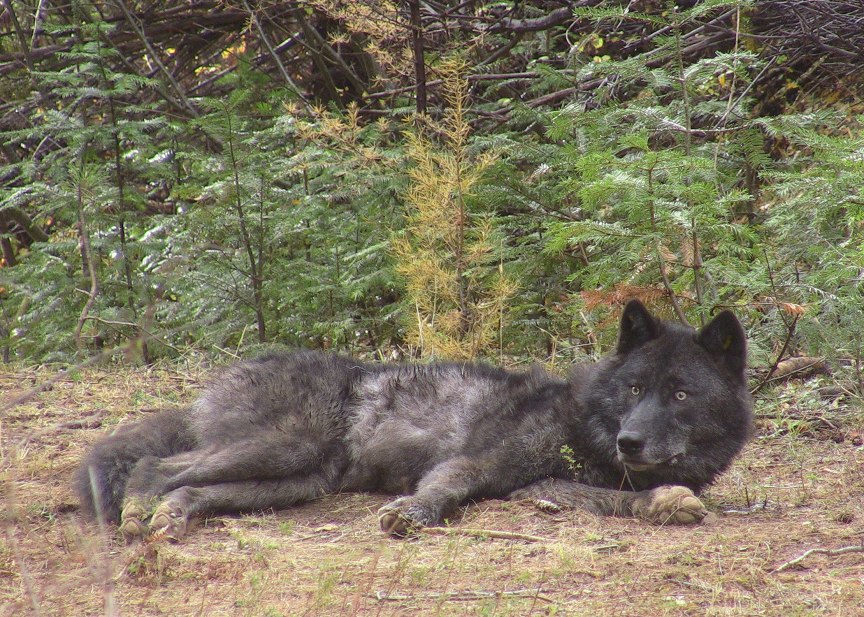
OR16 after being radio-collared. (Photo: ODFW)

It wasn’t immediately clear if the wolf belonged to one of three nearby wolf packs — the Wenaha, Walla Walla and Umatilla River packs, or represents new wolf activity. It was hoped the new radio collar would provide the answer.

The capture followed the discovery of a new wolf pack two months earlier, including a litter of five pups, in the nearby Eagle Cap Wilderness, spotted in the upper Minam River drainage.

Picture taken by remote camera Aug. 2, 2012 shows there are at least two pups for the Umatilla River wolves this year. With four individuals in the group, it is now considered a pack. (Photo: ODFW)

Picture taken by remote camera Aug. 2, 2012 shows there are at least two pups for the Umatilla River wolves this year. With four individuals in the group, it is now considered a pack. (Photo: ODFW)

A few weeks later, biologists photographed two pups with the Walla Walla pack, bringing that pack’s size to 10 wolves and the number of known reproducing wolf packs in northeastern Oregon to six.

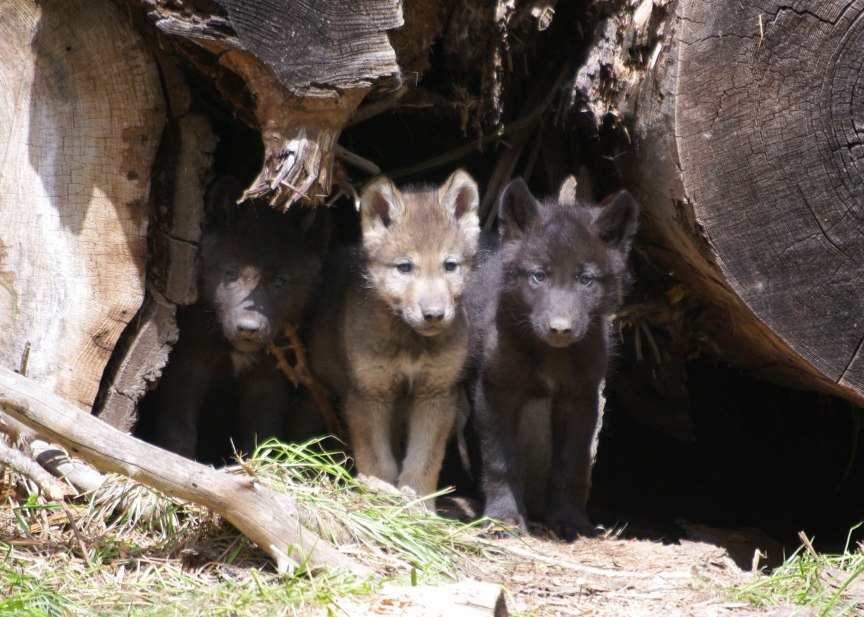
Wolf pups. Wenaha Pack, May 30, 2012. (Photo: ODFW)

Wolf pups. Wenaha Pack, May 30, 2012. (Photo: ODFW)

Biologists say the census of new wolf pups in the state is roughly 25, in contrast to a total of 29 known wolves in Oregon in December 2011.

November 16, 2012

Initial data from OR-16s radio-collar showed that he is a Walla Walla pack wolf. Satellite downloads show him traveling with OR-10, another yearling from the Walla Walla pack.

December 19, 2012

Biologists report that OR-16 has recently dispersed from the Walla Walla pack and crossed the Snake River into Idaho. Dispersal of young wolves away from their natal pack into new areas is a normal part of wolf ecology. OR-16 is the second radio-collared wolf to disperse from Oregon into Idaho.


Source: Oregon Department of Fish & Wildlife

Whale safety

Posted on December 28, 2012

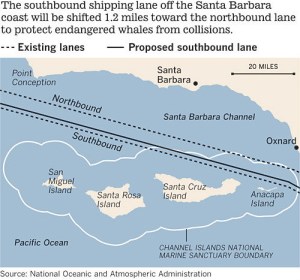
The International Maritime Organization, which governs global shipping, has approved proposals that would reroute shipping lanes along the California coast in order to protect endangered whales from collisions.

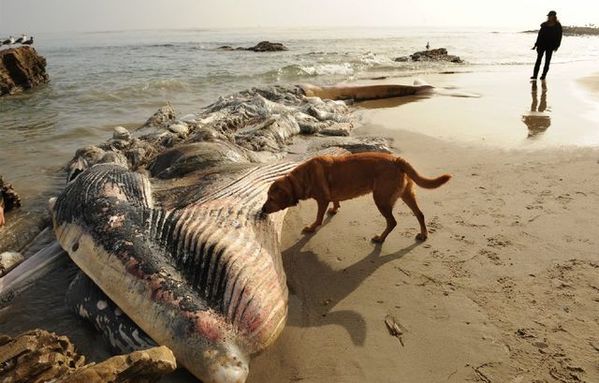
A whale carcass on Malibu's Little Dume beach. The whale had injuries consistent with being struck by a ship. (Photo: Wally Skalij/LATimes)

A whale carcass on Malibu’s Little Dume beach. The whale had injuries consistent with being struck by a ship. (Photo: Wally Skalij/LATimes)

The route adjustments were recommended by the Coast Guard and NOAA after four blue whales were thought to have been killed by ship strikes in the Santa Barbara Channel in 2007 and an additional five whales were suspected ship-strike victims off the Central and Northern California coast in 2010.

The current shipping lane traverses a steep underwater drop-off just north of the islands off Santa Barbara—where blue whales congregate to feast on krill.

shipping lane changes

Cargo vessels make about 6,000 transits through the Santa Barbara Channel a year, making it the busiest shipping channel in the continental U.S.

Scientists are uncertain whether ship strikes are hampering the recovery of blue whales, which were hunted to near extinction. Researchers see only some of the casualties, such as the 40-foot fin whale that washed up and decomposed on Malibu’s Point Dume earlier this month. An unknown number float out to sea or sink to the ocean floor. A necropsy on the Malibu whale showed it had suffered crushed vertebrae and bleeding consistent with a ship strike.

The changes are expected to go into effect late next year.


Source: LA Times